Mobile App Development
Diet and Nutrition App Development: Features Cost & Real Examples
March 21, 2026
March 21, 2026
Key Takeaways
The health and wellness market is growing rapidly, creating strong opportunities for startups to enter with diet and nutrition app development.
These apps help users track meals, improve habits, and achieve fitness goals, leading to high user engagement and retention.
Startups can build scalable business models with subscription plans, in-app purchases, and personalized services.
Key success factors include user-friendly design, accurate data tracking, and personalized recommendations.
Careful planning of features and development strategy plays a major role in long-term success.
The health and wellness market is booming, but how can startups turn this trend into a profitable opportunity? Diet and nutrition app development is helping users track meals, improve habits, and achieve fitness goals with ease.
For startups, it opens doors to scalable growth, subscription-based revenue, and strong user engagement.
In this guide, we’ll explore essential features, development costs, and real-world app examples shaping the industry.
You’ll also learn how to plan, build, and launch a successful solution that stands out.
With the right strategy, diet, and nutrition app development can become a high-ROI investment and a powerful way to tap into the growing digital health market.
Diet and nutrition apps are transforming how users manage their health and eating habits. For startups, investing in this space offers strong growth potential, recurring revenue, and high user engagement in the booming digital wellness market.
More people are actively tracking calories, fitness, and wellness goals through mobile apps. The global market is expected to reach $720.70 billion by 2035, showing massive long-term growth potential.
Diet apps generate consistent income through premium plans, coaching, and personalised features. The market is projected to grow to $27.73 billion by 2035 at a CAGR of 16.64%, highlighting strong monetisation opportunities.
Advanced technologies like AI-driven meal plans and real-time tracking are increasing user engagement. This creates opportunities for startups to build innovative, scalable solutions that stand out in a competitive health-tech ecosystem.
Diet and nutrition apps come in different types, each designed to solve specific user needs. If you plan to create a diet and nutrition app in 2026, understanding these categories helps you build a more targeted solution.
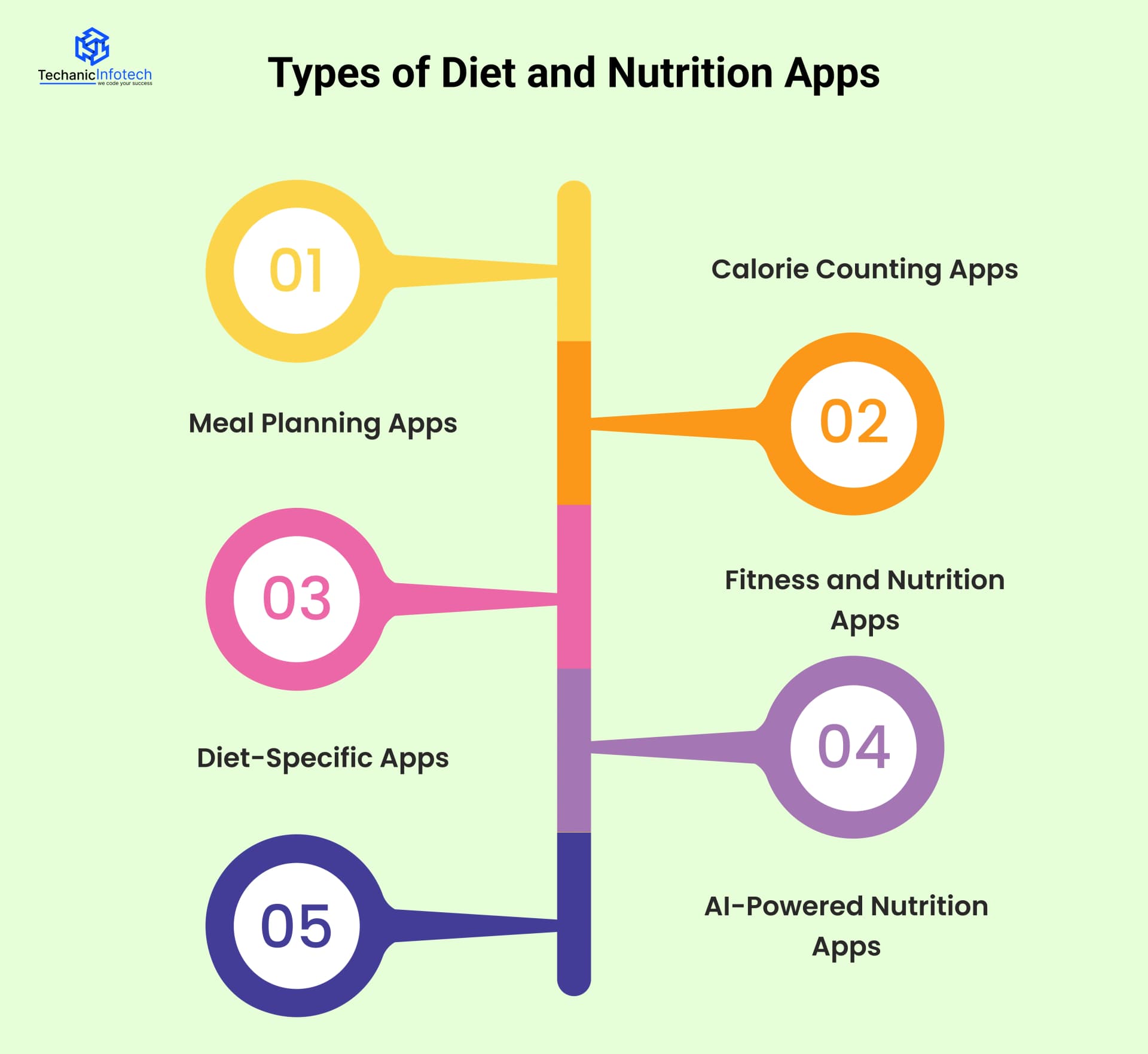
These apps help users track daily calorie intake by logging meals and snacks. They include food databases, barcode scanners, and progress charts to support weight loss or maintenance goals effectively.
Meal planning apps provide customised diet plans based on user preferences, goals, and dietary restrictions. They help users organise weekly meals, generate shopping lists, and maintain consistent, healthy eating habits.
These apps combine workout tracking with nutrition guidance. Users can monitor exercise routines, calorie burn, and food intake in one place for a complete health and fitness experience.
Focused on diets like keto, vegan, or intermittent fasting, these apps offer tailored meal plans, recipes, and tracking tools to help users follow structured diet plans easily.
These apps use advanced technology, including AI in fitness app development, to deliver personalised meal suggestions, analyse eating habits, and provide smart insights for achieving long-term health goals.
A successful diet app depends on the right diet and nutrition app features to deliver value, keep users engaged, and support healthy habits. From tracking tools to personalisation, each feature plays a key role in building a scalable solution.
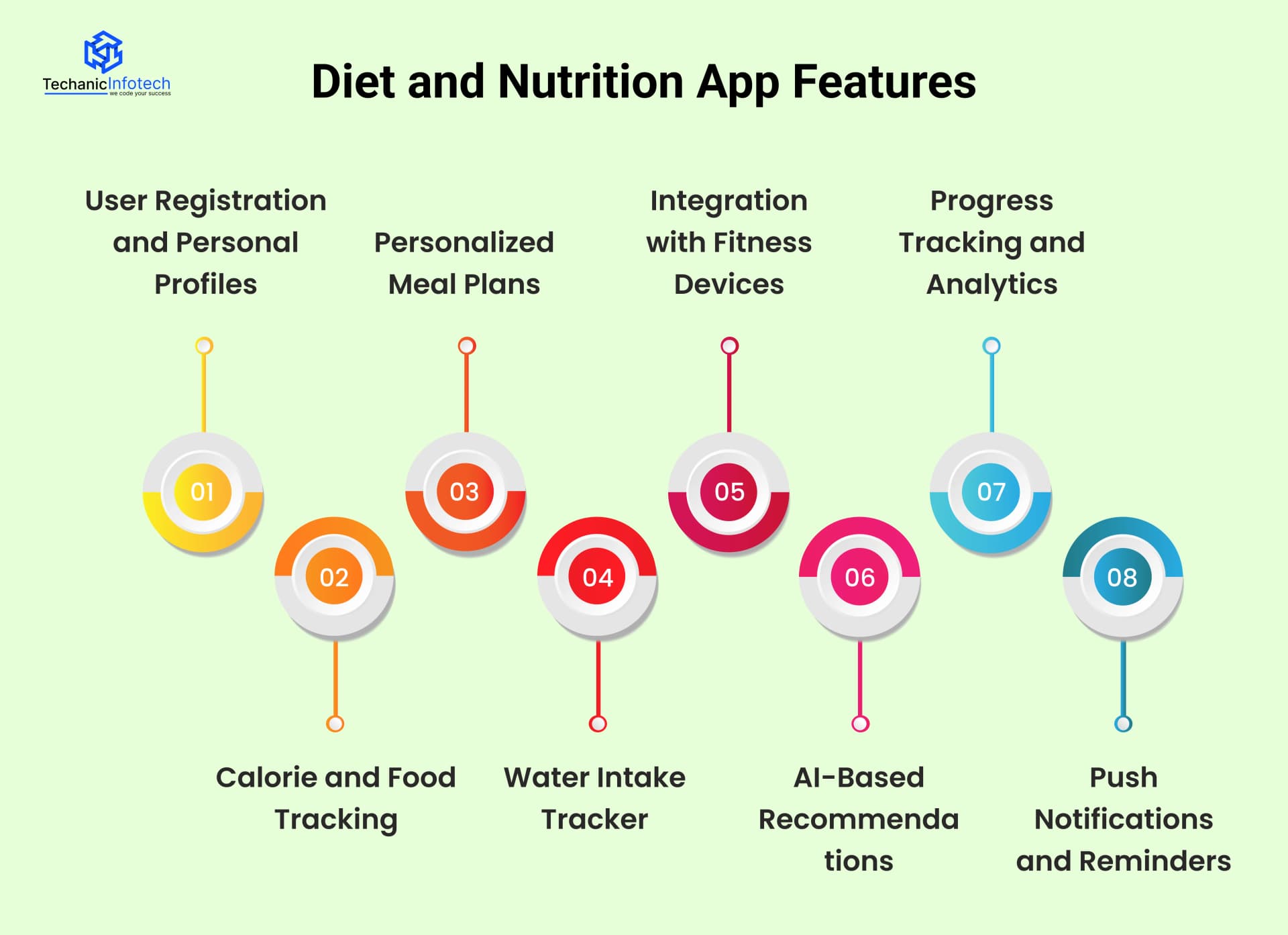
Allow users to sign up easily using email or social logins. Profiles should store personal details, dietary preferences, health goals, and restrictions, helping the app deliver personalised recommendations and improve overall engagement.
Enable users to log meals, track calories, and monitor intake. Strong calorie-tracking app development includes food databases, barcode scanners, and portion tools to make tracking simple, accurate, and effective for long-term health management.
Offer tailored meal plans based on user goals, preferences, and restrictions. Personalised diet app development helps users stay consistent, follow structured plans, and achieve better results through customised nutrition guidance and recommendations.
Include a feature that tracks daily water consumption and sends reminders. Proper hydration supports overall wellness, and this feature encourages users to maintain healthy habits and stay consistent with their daily intake goals.
Connect with wearables to track activity and calories burnt. Similar to how you build a mental health app with integrations, this feature creates a complete health ecosystem and improves user engagement and retention.
Use AI in diet and nutrition app development to analyse habits and provide smart suggestions. It can recommend meals, adjust plans, and deliver insights that help users make better decisions and stay motivated.
Show user progress through charts, reports, and insights. Tracking weight, calorie intake, and goals helps users stay motivated and clearly understand how their daily habits impact their overall health and performance.
Send reminders for meals, water intake, and goals. Like other trending mobile apps, timely notifications boost engagement, improve consistency, and help users stay committed to their diet and nutrition plans.
Building a diet and nutrition app requires a structured approach to ensure usability, performance, and scalability. If you plan to develop a fitness app, following a clear process helps you create a reliable solution that meets user needs.
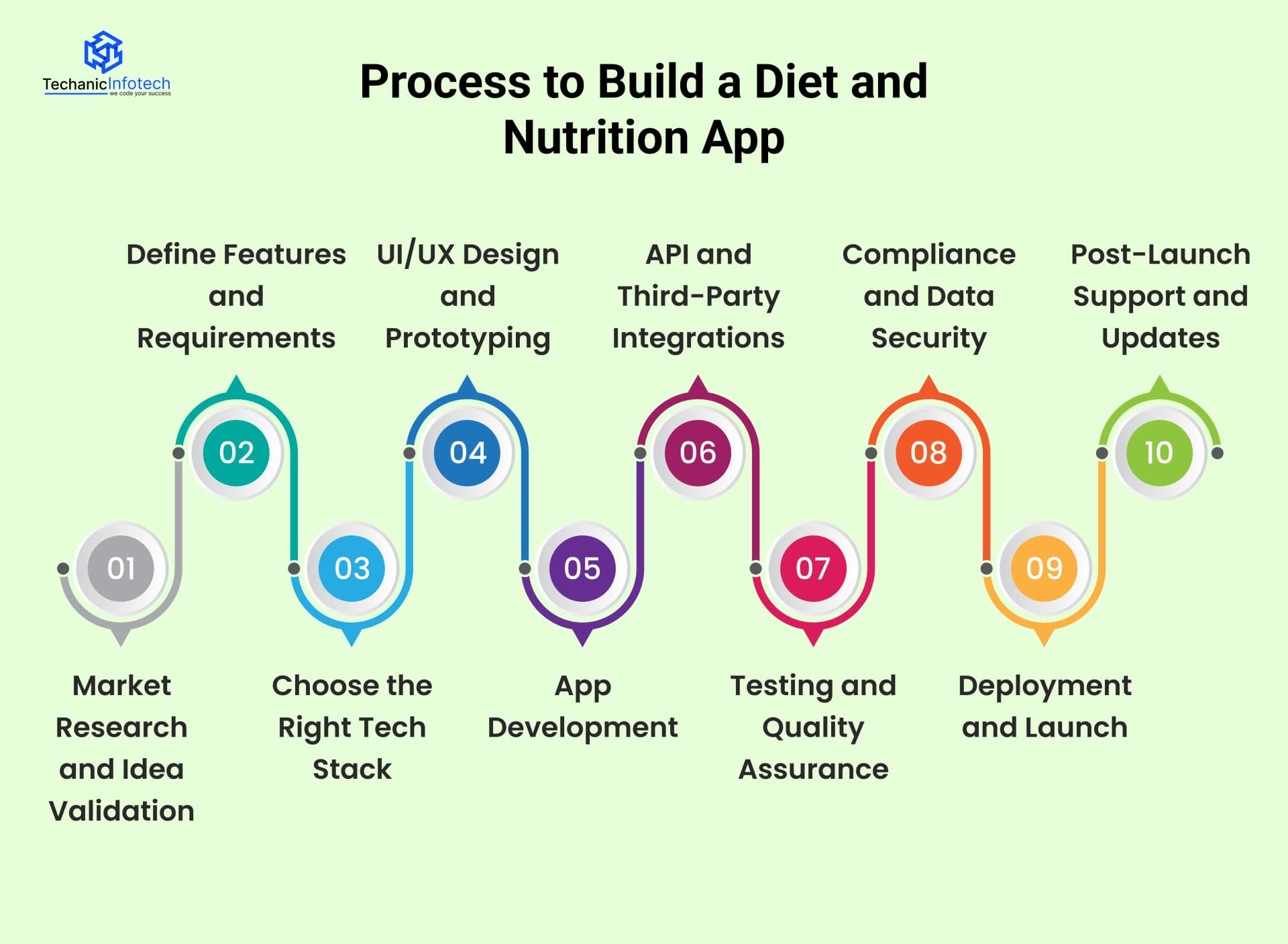
Start by researching your audience, competitors, and trends in diet and nutrition app development. Identify user pain points and validate your idea to ensure your app delivers real value and stands out.
Outline essential diet and nutrition app features like calorie tracking, meal plans, and analytics. A clear requirement document helps streamline development, align teams, and ensure your app meets user expectations effectively.
Select the right technology stack in mobile app development to ensure scalability and performance. Choose suitable frameworks, databases, and cloud services that support long-term growth and smooth functionality across devices.
Design intuitive interfaces for diet planner app development. Create wireframes and prototypes to visualise user journeys, ensuring easy navigation, accessibility, and a seamless experience for users managing their nutrition goals.
Develop core functionalities for a nutrition tracking app. Focus on building responsive interfaces and strong backend systems that handle data efficiently while delivering a smooth and reliable user experience.
Integrate APIs for food databases, wearables, and payments. Choosing the best time for mobile app development ensures you adopt modern tools and integrations that enhance functionality and improve overall app performance.
Test all features thoroughly when you build a nutrition coaching app. Perform usability, performance, and security testing to ensure the app works flawlessly and provides a smooth experience for users.
Protect user data by implementing strong security measures. When you build a minimal viable product, include basic security protocols like encryption and secure authentication to maintain trust and compliance.
Launch your app efficiently as part of fitness and nutrition app development. Monitor performance in real-time, fix early issues, and ensure your app delivers a stable and engaging experience from day one.
Provide ongoing support using reliable mobile app development solutions. Regular updates, feature enhancements, and performance improvements help your app stay competitive and aligned with evolving user needs.
Understanding the budget is essential before starting your project. The cost of creating a mobile app for diet and nutrition platforms depends on features, complexity, design, and the development team, typically ranging from basic to advanced solutions.
|
Component |
Description |
Estimated Cost (USD) |
|
Market Research & Planning |
Research, idea validation, and project roadmap |
$10,000 – $15,000 |
|
UI/UX Design |
Wireframes, prototypes, and user interface design |
$12,000 – $20,000 |
|
Frontend Development |
User-side development for app interfaces |
$15,000 – $30,000 |
|
Backend Development |
Server, database, and core functionality |
$20,000 – $40,000 |
|
Calorie Tracking Feature |
Food database, barcode scanner, and tracking tools |
$10,000 – $18,000 |
|
AI-Based Recommendations |
Personalized suggestions and smart insights |
$15,000 – $25,000 |
|
API & Third-Party Integrations |
Payment gateways, wearables, and external tools |
$10,000 – $20,000 |
|
Testing & Quality Assurance |
Functional, performance, and security testing |
$10,000 – $15,000 |
|
Deployment & Launch |
App store setup and release |
$10,000 – $12,000 |
|
Maintenance & Updates (Yearly) |
Ongoing improvements and support |
$10,000 – $20,000 |
Diet and nutrition apps are becoming essential tools for modern health management, offering users personalised guidance and real-time tracking.
For startups, diet and nutrition app development presents a strong opportunity to build scalable, user-focused solutions in a rapidly growing market.
From choosing the right features to understanding costs and development steps, every decision impacts your app’s success.
By focusing on user experience, data accuracy, and innovative technologies like AI, you can create a platform that keeps users engaged and delivers real value.
With the right strategy, diet, and nutrition app development can drive long-term growth, generate consistent revenue, and help your business stand out in the competitive health and wellness industry.
Diet and nutrition app development usually takes three to eight months. Timelines depend on features, complexity, integrations, and testing. A basic MVP launches faster, while advanced apps with AI require more time.
The cost typically ranges from $10,000 to $120,000 or more. Pricing depends on design, features, tech stack, and development team location, with advanced functionalities increasing the overall budget.
Essential features include calorie tracking, meal planning, user profiles, progress tracking, AI recommendations, and integrations with fitness devices. These features improve user engagement, personalisation, and overall app effectiveness.
Yes, it offers strong monetisation through subscriptions, premium plans, and partnerships. With growing health awareness, startups can attract users, build engagement, and generate consistent long-term revenue.
Yes, AI enhances personalisation by analysing user habits and offering tailored recommendations. It improves engagement, automates insights, and helps users achieve health goals more efficiently through smarter guidance.


Bharat Sharma is the CTO of Techanic Infotech, bringing deep technical expertise in software architecture, mobile app development, and scalable system design. He leads the engineering team with a strong focus on innovation, performance, and security.