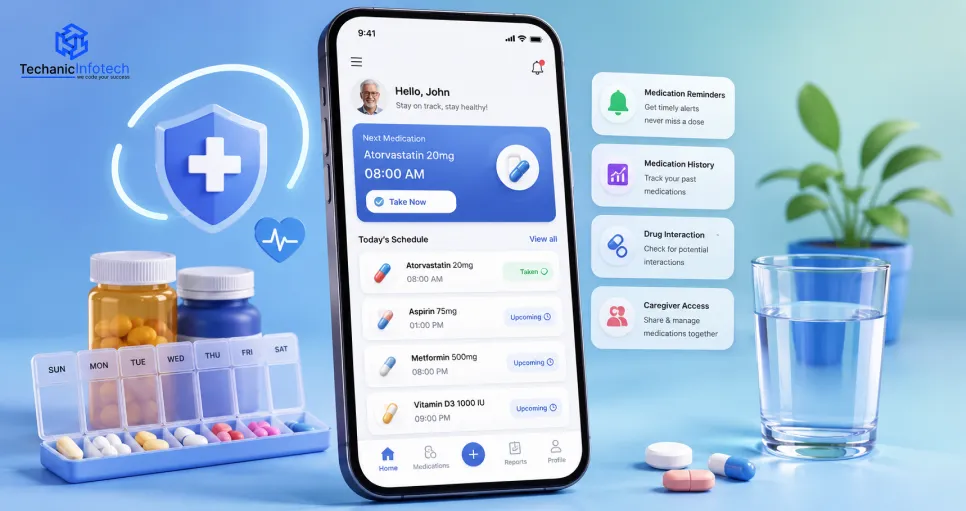
Healthcare App Development
Medication Management App Development: Features, Benefits, Cost & Types
July 23, 2026
July 23, 2026
Key Takeaways:
Medication management apps help improve treatment adherence, reduce medication errors, and simplify prescription management.
Modern platforms support patients, carers, pharmacies, and healthcare providers through a connected digital ecosystem.
AI-powered features and healthcare integrations enhance medication tracking, patient engagement, and clinical decision-making.
Development costs typically range from $8,000 to $80,000+, depending on business requirements and platform complexity.
A scalable technology foundation ensures long-term growth, security, and seamless integration with future healthcare services.
Managing medications accurately is one of the biggest challenges in modern healthcare. Whether it's forgetting to take prescribed medicines, missing refill dates, taking incorrect dosages, or managing multiple prescriptions for chronic conditions, medication errors continue to affect millions of patients worldwide. These issues not only impact treatment outcomes but also increase hospital readmissions and healthcare costs.
To address these challenges, healthcare providers, hospitals, pharmacies, and digital health startups are investing in medication management app development. These applications help patients stay on track with their prescriptions while enabling healthcare professionals to monitor medication adherence, improve communication, and deliver better patient care.
Modern medication management platforms go far beyond simple reminder applications. They combine prescription management, refill alerts, medication tracking, carer support, AI-powered insights, and health monitoring into a single digital ecosystem.
In this guide, we'll explore everything you need to know about healthcare medication app development, including app types, essential features, business benefits, technology recommendations, development challenges, investment considerations, and real-world implementation strategies.
The healthcare industry is rapidly shifting toward digital care models, making medication management applications an essential part of modern patient care. As chronic diseases become more common and treatment plans grow increasingly complex, healthcare organisations are adopting digital solutions that improve medication adherence while reducing preventable medical complications.
In developed countries, only about 50% of patients with chronic diseases take their medications as prescribed, highlighting the need for digital medication management solutions.
According to the CDC, approximately 1 in 5 new prescriptions are never filled, and nearly 50% of filled prescriptions are not taken correctly in terms of timing, dosage, or duration.
The World Health Organization (WHO) states that improving medication adherence can have a greater impact on population health than improvements in many specific medical treatments.
Medication non-adherence contributes to higher hospital admissions, poorer clinical outcomes, increased mortality, and rising healthcare costs, making digital adherence tools increasingly valuable.
One of the primary goals of medication adherence app development is helping patients follow prescribed treatment plans consistently. Automated reminders, dosage tracking, refill notifications, and carer alerts significantly reduce missed medications.
Patients living with diabetes, hypertension, heart disease, asthma, and other chronic conditions often manage multiple medications simultaneously. Digital medication applications simplify these complex treatment schedules while supporting better long-term health outcomes.
Many healthcare organisations are also investing in digital therapeutics app development to complement medication management with evidence-based digital interventions that improve patient adherence and long-term treatment outcomes.
Missed medications frequently result in avoidable complications and hospital readmissions. Digital reminders and medication tracking help patients remain compliant with treatment plans, reducing unnecessary healthcare costs.
Medication applications encourage patients to actively participate in their healthcare journey by providing personalised reminders, medication history, dosage tracking, and progress reports.
Modern platforms increasingly leverage AI integration in mobile apps to identify medication patterns, provide intelligent reminders, detect potential medication conflicts, and improve personalised patient engagement.
A medication management app is a digital healthcare solution built through mobile app development to help patients, carers, healthcare providers, and pharmacies organise, monitor, and manage medications throughout the treatment journey. Instead of relying on manual schedules or paper prescriptions, users can access medication information, receive reminders, track adherence, and monitor treatment progress through a centralised mobile or web application.
Unlike a basic reminder application, modern medication management software development solutions support the complete medication lifecycle. They help users manage prescriptions, monitor dosage schedules, record medication history, receive refill notifications, share treatment updates with healthcare professionals, and improve communication between patients and care providers.
Medication management solutions are designed to address different healthcare needs rather than serving a single purpose.
Many healthcare startups and regional providers choose custom software development for SMBs to build medication management applications that address their unique operational requirements while remaining scalable and cost-effective.
A personal medication application is designed for individual users who want to organise their daily medicines and maintain consistent treatment routines. This type of medicine reminder app development focuses on improving medication adherence through timely reminders and simple medication tracking.
Common capabilities include:
Medication reminders
Daily dosage schedules
Prescription history
Refill alerts
Progress tracking
Best for: Individual users and patients managing long-term medications.
Carers often manage medications for elderly family members, children, or patients with chronic illnesses. These applications allow carers to monitor medication schedules remotely while receiving notifications if a dose is missed.
Key features include the following:
Multi-patient management
Missed dose alerts
Shared medication schedules
Remote monitoring
Caregiver notifications
Best for: Families, home healthcare providers, and assisted living services.
Hospitals require advanced platforms that support medication administration across multiple departments while reducing prescription errors and improving patient safety.
Hospital-focused Medication Management Software development solutions typically include the following:
Electronic medication records
Prescription verification
Medication administration tracking
Doctor and nurse dashboards
Inventory monitoring
Best for: Hospitals, clinics, and healthcare institutions.
Pharmacies use medication applications to simplify prescription management, automate refill requests, and improve communication with patients.
Typical functionality includes the following:
Digital prescription management
Refill reminders
Medicine availability
Online ordering
Customer notifications
Best for: Retail pharmacies and pharmacy chains.
Large healthcare organisations often require centralised platforms capable of managing medications across multiple hospitals, pharmacies, healthcare providers, and patient groups. These enterprise solutions support advanced reporting, compliance management, analytics, and seamless third-party integrations.
Best for: Healthcare enterprises, insurance providers, and multi-location healthcare networks.
A successful medication management app development solution should do much more than remind users to take medicines. It should simplify prescription management, improve medication adherence, reduce treatment errors, and help healthcare providers monitor patient progress more efficiently. The following features create a complete medication management ecosystem.
The heart of every medication management application is a smart reminder engine. Users receive personalised notifications based on dosage schedules, meal timings, prescription instructions, and time zones. Flexible reminder settings ensure patients never miss critical medications.
The application records whether medications are taken, skipped, or delayed. Advanced medication tracking app development capabilities generate adherence reports that help both patients and healthcare professionals evaluate treatment consistency over time.
Automated refill reminders notify users before medications run out or prescriptions expire, helping patients continue treatment without interruption.
The application can notify users about potential drug interactions, duplicate medications, allergy risks, and incorrect dosage combinations, helping reduce medication-related errors and improving patient safety.
Modern healthcare medication app development solutions integrate with pharmacies, hospitals, and healthcare systems, allowing users to refill prescriptions, access medication records, and synchronise treatment information without switching platforms.
Using AI integration in mobile apps, the platform can recommend optimal reminder schedules, identify adherence risks, answer medication-related questions, predict missed doses, and deliver personalised health insights based on user behaviour.
Interactive dashboards provide medication history, adherence scores, treatment trends, symptom logs, and downloadable reports that patients can easily share with healthcare professionals during follow-up consultations.
Medication management applications create value far beyond sending reminder notifications. They improve treatment adherence, strengthen communication between patients and healthcare providers, and reduce the administrative burden associated with medication management.
One of the biggest advantages of a medication management application is its ability to help patients consistently follow their prescribed treatment plans. Automated reminders, refill alerts, and medication tracking significantly reduce missed doses, improving treatment effectiveness and overall health outcomes.
Incorrect dosages, duplicate medications, and forgotten prescriptions can lead to serious health complications. Medication management platforms help minimise these risks by organising prescriptions, maintaining medication histories, and providing timely reminders throughout the treatment journey.
Instead of relying on handwritten notes or memory, patients actively participate in managing their medications through digital schedules, adherence reports, symptom tracking, and health progress dashboards. This increased engagement encourages greater responsibility for long-term health management.
Patients living with long-term conditions often manage multiple medications simultaneously. Integrating medication tracking with chronic disease management software development enables healthcare providers to monitor treatment plans more effectively, coordinate ongoing care, and improve long-term patient outcomes.
Healthcare professionals gain access to medication history, adherence trends, refill patterns, and patient-reported symptoms through centralised dashboards. Some organisations also combine these insights with AI symptom checker app development solutions to provide more informed treatment recommendations and identify potential health risks earlier.
Better medication adherence helps prevent avoidable complications, emergency visits, and hospital readmissions. By improving treatment consistency and enabling early intervention, healthcare organisations can reduce operational costs while delivering better patient outcomes.
Building a medication management app requires careful planning, secure healthcare integrations, and a user-centric approach. Following a structured development process helps healthcare organisations create a reliable platform that improves medication adherence, enhances patient engagement, and supports long-term scalability.
Begin by identifying the application's objectives and target audience, whether it's patients, carers, pharmacies, hospitals, or healthcare providers. Define the core features, compliance requirements, and business goals to establish a clear development roadmap.
Create wireframes and intuitive UI/UX designs that simplify medication tracking, prescription management, refill reminders, and patient engagement. A well-designed interface improves usability and encourages consistent app usage.
Select scalable technologies that support healthcare integrations, cloud infrastructure, secure authentication, AI capabilities, and cross-platform compatibility. Choosing the right technology stack ensures long-term performance and security.
Build essential functionalities such as medication reminders, prescription management, adherence tracking, refill notifications, carer access, pharmacy integration, and healthcare APIs. At this stage, businesses should also evaluate the overall software app development cost to prioritise features and align development with their budget.
Conduct comprehensive testing to ensure performance, security, usability, and compliance with healthcare standards. After successful deployment, continuously monitor the application, release updates, improve existing features, and introduce new capabilities based on user feedback and evolving healthcare requirements.
Building a successful medication management application requires more than an attractive interface. Since these platforms handle sensitive medical information, prescription records, reminder notifications, and healthcare integrations, the technology foundation must prioritise security, scalability, reliability, and performance.
|
Technology Layer |
Recommended Technologies |
|
Mobile Development |
Flutter, React Native, Swift, Kotlin |
|
Backend |
Node.js, Python, Java, .NET |
|
Database |
PostgreSQL, MongoDB, MySQL |
|
Cloud Infrastructure |
AWS, Microsoft Azure, Google Cloud |
|
Authentication & Security |
OAuth 2.0, JWT, Firebase Authentication |
|
Push Notifications |
Firebase Cloud Messaging (FCM), OneSignal |
|
AI & Analytics |
OpenAI APIs, TensorFlow, Google Vertex AI |
|
Healthcare Integration |
HL7, FHIR APIs |
|
Payment Integration |
Stripe, Razorpay, PayPal |
The cost of building a medication management application depends on the platform's objectives, user base, healthcare integrations, and level of automation. Rather than investing in every advanced capability from the beginning, many healthcare organisations adopt a phased investment strategy, launching a focused solution first and expanding it as the product gains adoption.
Estimating the Healthcare App Development Cost early helps healthcare organisations prioritise essential features, plan budgets effectively, and build a scalable medication management solution.
A starter solution focuses on the core functionality required to help patients manage medications effectively. It typically includes medication reminders, prescription management, refill notifications, user authentication, and basic medication tracking.
Estimated Investment: $8,000–$25,000
Ideal for:
Healthcare startups
Pharmacies
Individual healthcare providers
MVP launches
Early-stage digital health products
As the platform grows, businesses can introduce intelligent automation, career access, pharmacy integrations, analytics dashboards, adherence monitoring, and AI-driven health insights. These capabilities create a more engaging experience while improving operational efficiency.
Estimated Investment: $25,000–$50,000
Ideal for:
Growing healthcare businesses
Digital health companies
Multi-clinic healthcare providers
Pharmacy chains
Healthcare startups, pharmacies, and growing providers can also benefit from custom software development for SMBs to build medication management platforms tailored to their workflows, budgets, and long-term growth plans.
Enterprise-grade platforms support hospitals, healthcare networks, insurance providers, and large pharmacy organisations with advanced reporting, compliance management, cloud scalability, AI-powered automation, and seamless integration with healthcare systems.
Estimated Investment: $50,000–$80,000+
Ideal for:
Large hospitals
Healthcare enterprises
National pharmacy networks
Multi-location healthcare organizations
A speciality healthcare provider managing patients with chronic illnesses faced a common challenge: many patients forgot to take medications on time, resulting in lower treatment adherence, more frequent hospital visits, and increased support requests from carers.
To address these issues, the organisation invested in medication management app development, creating a mobile platform that combined medication reminders, prescription tracking, refill notifications, and adherence monitoring into a single application.
Before launching the platform, the provider struggled with:
Frequent missed medication doses.
Limited visibility into patient adherence.
High administrative workload for follow-up calls.
Manual prescription tracking.
Low patient engagement between appointments.
The organisation introduced a medication management platform featuring:
Smart medication reminders
Digital prescription storage
Medication adherence tracking
Caregiver notifications
Refill reminders
Progress dashboards
AI-powered reminder optimization
The platform was later integrated with virtual healthcare services and remote patient monitoring tools. Many healthcare providers also collaborate with telemedicine app development companies. They are integrating virtual consultations, remote patient monitoring, and digital care services into medication management platforms. Enabling doctors to review medication adherence before consultations and deliver more personalised treatment recommendations.
As healthcare continues its digital transformation, medication management app development has become an essential investment for healthcare providers, pharmacies, hospitals, and digital health startups. These applications go beyond simple reminder tools by improving medication adherence, streamlining prescription management, supporting remote patient monitoring, and strengthening communication between patients and healthcare professionals.
Whether you're planning a medicine reminder app development solution for consumers or a comprehensive enterprise medication platform, investing in the right technology, security framework, and user experience will help deliver better health outcomes while improving operational efficiency.
Medication management app development is the process of building digital applications that help users manage prescriptions, receive medication reminders, track adherence, monitor treatment progress, and improve communication with healthcare providers.
Medication management app development is the process of building digital applications that help users manage prescriptions, receive medication reminders, track adherence, monitor treatment progress, and improve communication with healthcare providers.
The medication management app cost generally ranges from $8,000 to $80,000+, depending on the application's complexity, healthcare integrations, AI capabilities, security requirements, and customisation.
The medication management app cost generally ranges from $8,000 to $80,000+, depending on the application's complexity, healthcare integrations, AI capabilities, security requirements, and customisation.
Essential features include medication reminders, prescription management, medication tracking, refill notifications, carer support, adherence reports, health dashboards, secure authentication, and healthcare system integrations.
Essential features include medication reminders, prescription management, medication tracking, refill notifications, carer support, adherence reports, health dashboards, secure authentication, and healthcare system integrations.
Patients, carers, hospitals, pharmacies, healthcare providers, insurance companies, and digital health startups can all benefit from medication management solutions.
Patients, carers, hospitals, pharmacies, healthcare providers, insurance companies, and digital health startups can all benefit from medication management solutions.
Yes. Using AI integration in mobile apps, developers can build intelligent reminder systems, predict adherence risks, identify potential medication conflicts, provide personalised health recommendations, and automate patient engagement.
Yes. Using AI integration in mobile apps, developers can build intelligent reminder systems, predict adherence risks, identify potential medication conflicts, provide personalised health recommendations, and automate patient engagement.
Development typically takes 2 to 8 months, depending on the feature set, healthcare integrations, compliance requirements, and overall project complexity.
Development typically takes 2 to 8 months, depending on the feature set, healthcare integrations, compliance requirements, and overall project complexity.


Neha Sharma is a tech expert at heart who loves exploring new technologies and turning complex ideas into easy-to-understand content. With a passion for learning and writing, she enjoys sharing insights on emerging tech, digital products, and innovation that help businesses stay ahead.