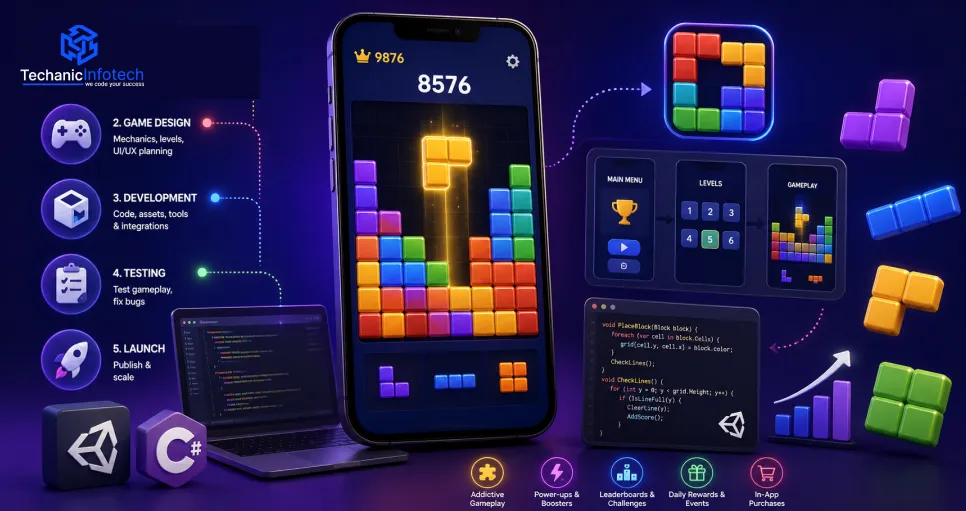
The mobile gaming industry continues to experience remarkable growth, with puzzle and casual games attracting millions of players worldwide. Their simple gameplay, engaging mechanics, and quick play sessions make them appealing to users of all ages, driving high retention and download rates across app stores.
As a result, Block Blast Game Development has become an attractive opportunity for startups, gaming studios, and entrepreneurs looking to enter the mobile gaming market. Whether you're planning Block Blast Clone game development, a unique puzzle game development project, or a feature-rich Block Blast-like game development solution, investing in a well-designed puzzle game can help you capture a rapidly growing audience.
By combining intuitive gameplay, engaging levels, rewarding progression systems, and scalable architecture, businesses can create highly addictive games that generate long-term user engagement and sustainable revenue.
The demand for casual puzzle games has increased significantly over the past few years as mobile users seek entertaining experiences that are easy to learn yet challenging to master. Games like Block Blast have demonstrated how simple mechanics can achieve millions of downloads through engaging gameplay and effective monetisation.
The global mobile gaming market continues to expand, with puzzle games consistently ranking among the most downloaded categories on both Android and iOS. Their accessibility and broad audience make mobile puzzle game development an attractive investment for startups and gaming companies.
Unlike many competitive games, puzzle games encourage daily engagement through progressively challenging levels, rewards, achievements, and regular content updates. Strong retention leads to higher lifetime user value and increased monetisation opportunities.
The popularity of casual game development continues to rise because these games require minimal learning time while providing enjoyable experiences for players of all skill levels. This broad appeal helps developers reach a global audience.
Puzzle games can generate revenue through in-app purchases, rewarded advertisements, premium subscriptions, cosmetic items, booster packs, and seasonal events. A well-balanced monetisation strategy supports sustainable business growth without compromising the player experience.
Businesses investing in puzzle mobile app development can capitalise on increasing smartphone adoption, expanding mobile gaming communities, and continuous demand for innovative puzzle experiences. With the right product strategy and engaging gameplay, a Block Blast-inspired game has significant potential to achieve long-term success in the global gaming market.
The success of a Block Blast-style game lies in its simple yet highly engaging gameplay. Players should be able to understand the mechanics within minutes while remaining challenged enough to keep playing for longer sessions. A balanced gameplay loop is one of the most important aspects of successful block puzzle game development.
Players drag different block shapes onto the game board to complete horizontal or vertical lines. The intuitive controls make the game accessible for players of all ages while creating an enjoyable puzzle-solving experience.
Completed rows and columns disappear from the board, rewarding players with points and creating additional space for new blocks. Combo bonuses and streak multipliers encourage strategic thinking and increase player engagement.
The game should gradually become more challenging by introducing increasingly complex block combinations and limited board space. A smooth difficulty curve keeps players motivated without making the gameplay frustrating.
Unlike level-based games, an endless mode allows players to continue playing until no valid moves remain. Leaderboards and high-score challenges encourage repeat gameplay and healthy competition.
Daily rewards, missions, achievements, and unlockable themes motivate users to return regularly. These progression systems improve retention and increase long-term player engagement.
A successful Block Blast Clone game development project should combine engaging gameplay with modern features that improve usability, player retention, and monetisation. Below are the essential features every puzzle game should include.
Allow players to create accounts and securely save their game progress across multiple devices. Cloud synchronisation ensures users never lose their achievements or game history.
Introduce daily puzzles, weekly tournaments, seasonal events, and limited-time rewards to keep the gameplay fresh and encourage users to return consistently.
Global and regional leaderboards motivate players to compete with others. Social sharing features allow users to post achievements and invite friends, helping increase organic downloads.
Offer boosters, themes, power-ups, coins, and cosmetic upgrades through an integrated in-app store. These optional purchases enhance the player experience while creating additional revenue opportunities.
Allow users to enjoy the game without an internet connection. Offline support improves accessibility and ensures uninterrupted gameplay during travel or in areas with limited connectivity.
Smart notifications can remind users about daily rewards, unfinished challenges, new events, and special promotions, helping improve player retention and engagement.
Modern puzzle games increasingly leverage AI integration in mobile apps to analyse player behaviour, personalise difficulty levels, recommend rewards, and optimise gameplay experiences. AI can also help identify churn risks and improve long-term player retention through intelligent engagement strategies.
Integrate analytics tools to monitor user retention, session duration, in-app purchases, ad performance, and gameplay behaviour. These insights help developers continuously optimise game balance and improve monetisation.
Choosing the right technology stack is essential for building a smooth, responsive, and scalable puzzle game. The right tools help developers deliver high-quality graphics, seamless gameplay, secure backend services, and efficient post-launch updates.
|
Component |
Recommended Technologies |
|
Game Engine |
Unity, Unreal Engine |
|
Programming Languages |
C#, C++, Java, Kotlin, Swift |
|
Backend |
Node.js, Python, .NET |
|
Database |
Firebase, MongoDB, PostgreSQL |
|
Cloud Platform |
AWS, Google Cloud, Microsoft Azure |
|
Analytics |
Firebase Analytics, Unity Analytics |
|
Ads & Monetization |
Google AdMob, Unity Ads, AppLovin |
|
Notifications |
Firebase Cloud Messaging (FCM) |
|
Version Control |
Git, GitHub, GitLab |
Among modern game engines, Unity game development remains one of the most popular choices for building puzzle and casual games. It offers cross-platform compatibility, excellent 2D rendering capabilities, a vast asset ecosystem, and robust performance optimisation, making it ideal for developing Block Blast-like games.
A scalable backend ensures smooth gameplay, cloud synchronisation, analytics tracking, user authentication, and future feature expansion. Developers should also plan for regular updates, seasonal events, and additional game modes without compromising performance.
Developing a successful Block Blast-inspired game requires a structured workflow that balances gameplay quality, technical performance, and time-to-market. Following a systematic development process helps reduce risks while ensuring a polished final product.
Define the game concept, target audience, monetisation strategy, gameplay mechanics, and technical requirements before development begins.
Many gaming startups choose to build a minimum viable product by developing the core gameplay loop, scoring system, and basic UI first. Launching an MVP allows developers to gather user feedback, validate gameplay mechanics, and improve the product before adding advanced features.
Design intuitive game screens, engaging animations, visual effects, sound effects, and responsive controls that create an enjoyable player experience.
Develop the gameplay mechanics, scoring algorithms, reward systems, leaderboards, cloud synchronisation, advertisements, and in-app purchase functionality.
Perform gameplay testing, performance optimisation, compatibility testing, bug fixing, and balancing to ensure the game runs smoothly across different devices.
After publishing the game, monitor player behaviour, release regular updates, introduce new challenges, and optimise monetisation strategies based on user feedback. Working with an experienced mobile app development company that offers comprehensive mobile app development services helps ensure continuous maintenance, performance improvements, and long-term success after launch.
A successful puzzle game should combine engaging gameplay with a balanced monetisation strategy that generates revenue without negatively affecting the player experience. Below are some of the most effective monetisation models for Block Blast-like games.
In-App Purchases: Offer boosters, extra moves, coins, hints, and premium themes that help players progress while enhancing their overall gaming experience.
Rewarded Video Ads: Rewarded advertisements allow players to watch short videos in exchange for extra lives, power-ups, or in-game currency. This format increases engagement while maintaining a positive user experience.
Banner and Interstitial Ads: Strategically placed banner and interstitial advertisements provide additional revenue without interrupting gameplay excessively. Proper ad frequency helps maintain player retention.
Subscription Plans: Premium subscriptions can offer ad-free gameplay, exclusive levels, bonus rewards, and early access to new features, creating a recurring revenue stream.
Seasonal Events and Limited-Time Offers: Introducing limited-time challenges, themed events, and exclusive in-game items encourages repeat engagement while driving additional purchases.
The Block Blast game development cost typically ranges from $10,000 to $100,000+, depending on gameplay complexity, visual assets, multiplayer functionality, AI capabilities, cloud infrastructure, and platform support. A simple puzzle game requires a lower investment, while an advanced solution with sophisticated progression systems, analytics, and monetisation features involves a higher development budget.
|
Game Type |
Estimated Cost |
Development Timeline |
|
Basic Puzzle Game |
$10,000–$20,000 |
2–3 Months |
|
Standard Block Puzzle Game |
$20,000–$45,000 |
3–5 Months |
|
Advanced Casual Puzzle Game |
$45,000–$75,000 |
5–7 Months |
|
Enterprise Gaming Platform |
$75,000–$100,000+ |
7–10 Months |
Before estimating the total investment, businesses should also evaluate the overall mobile app development cost, especially when planning cross-platform releases. Gaming startups and independent studios can further optimise their budgets through custom software development for SMBs, enabling them to build scalable gaming products while effectively managing development expenses.
A gaming startup wanted to launch a casual puzzle game inspired by the simplicity and engagement of Block Blast while introducing its own visual identity and progression system. The primary objective was to create an easy-to-learn game that would keep players engaged through rewarding gameplay and regular content updates.
The development team began by building a minimum viable product that included the core puzzle mechanics, score tracking, and basic user interface. After collecting player feedback during beta testing, new features such as daily challenges, leaderboards, in-app purchases, and rewarded advertisements were gradually introduced.
Using Unity game development, the team optimised game performance across Android and iOS devices while integrating analytics to monitor player behaviour and retention. Within a few months of launch, the game achieved strong user engagement, increased session durations, and generated consistent revenue through a combination of in-app purchases and rewarded video ads.
Developing a Block Blast-like game presents an exciting opportunity for startups and gaming studios to enter the rapidly growing casual gaming market. By combining engaging gameplay mechanics, intuitive design, scalable technology, and effective monetisation strategies, businesses can create games that attract and retain players over the long term.
Success depends on understanding player behaviour, continuously improving the gaming experience, and adopting a structured development approach that supports future updates and business growth.
Block Blast game development involves creating a puzzle game where players strategically place blocks, clear rows or columns, earn points, and progress through increasingly challenging gameplay.
The Block Blast game development cost generally ranges from $10,000 to $100,000+, depending on features, platform support, design complexity, and customisation.
Unity is one of the most popular game engines for developing puzzle games because of its cross-platform support, 2D capabilities, extensive asset library, and excellent performance.
Development usually takes 2 to 10 months, depending on the game's complexity, feature set, artwork, backend requirements, and testing process.
Popular monetisation strategies include rewarded video ads, in-app purchases, premium subscriptions, banner ads, interstitial ads, and seasonal in-game events.
Yes. AI can personalise gameplay, optimise difficulty levels, recommend rewards, analyse player behaviour, and improve long-term engagement through intelligent game balancing.
Yes. Launching an MVP allows developers to validate gameplay mechanics, gather player feedback, and refine the game before investing in advanced features.
Yes. Modern game engines such as Unity allow developers to build cross-platform games that can be deployed on both Android and iOS with a shared codebase.


Bharat Sharma is the CTO of Techanic Infotech, bringing deep technical expertise in software architecture, mobile app development, and scalable system design. He leads the engineering team with a strong focus on innovation, performance, and security.