Key Takeaways
Wedding planning software centralises event management, vendor coordination, and client communication.
Essential modules include budgeting, task management, guest lists, analytics, and AI-powered planning tools.
Building an MVP first helps validate the product before investing in advanced functionality.
A scalable and secure platform improves operational efficiency and enhances the overall client experience.
The wedding industry has evolved significantly over the past decade, with couples expecting personalised experiences, seamless planning, and digital convenience throughout their wedding journey. At the same time, wedding planners, event coordinators, venues, decorators, photographers, caterers, and other vendors are looking for smarter ways to manage bookings, timelines, budgets, and client communication.
As a result, wedding planner software development has become an essential investment for businesses aiming to streamline operations and deliver exceptional customer experiences. Modern digital solutions help automate repetitive tasks, centralise event information, improve collaboration, and simplify the overall planning process.
Whether you're developing a platform for wedding planners, event management agencies, or venue operators, investing in wedding planning software development can improve productivity, reduce administrative workload, and create a more organised planning experience. This wedding planner software development guide explains everything you need to know, from essential features and development strategies to cost considerations and best practices.
Managing weddings involves coordinating multiple vendors, tracking budgets, handling client requests, scheduling events, and ensuring every detail is executed flawlessly. Relying on spreadsheets, phone calls, and manual documentation often leads to communication gaps, missed deadlines, and operational inefficiencies.
Modern Wedding Management Software helps businesses simplify these complex processes by bringing every aspect of wedding planning into a single digital platform.
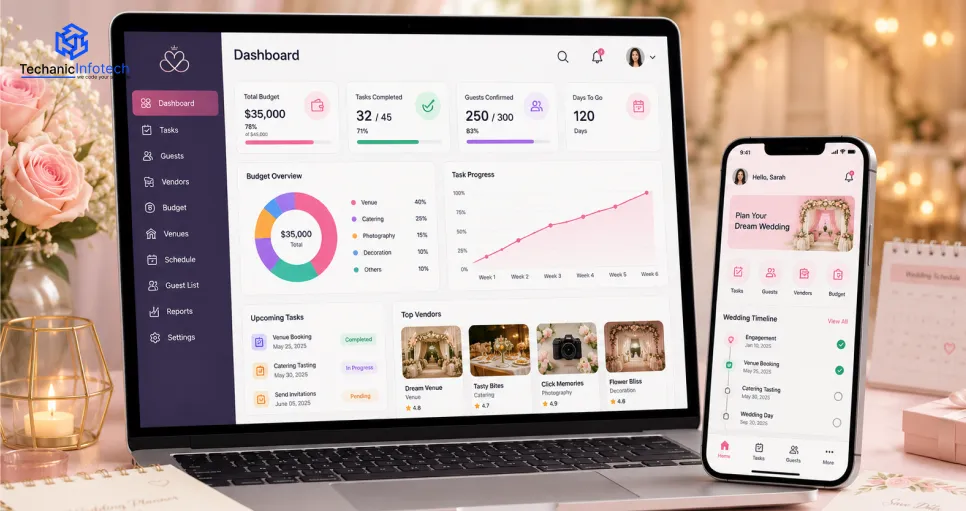
A centralised platform enables planners to manage timelines, guest lists, vendor coordination, task assignments, and event schedules from one dashboard, reducing manual effort and improving organisation.
Wedding planners regularly work with photographers, decorators, florists, caterers, entertainers, and venues. Digital collaboration tools improve communication, document sharing, and progress tracking, ensuring everyone stays aligned throughout the planning process.
The software helps planners monitor budgets, track payments, generate invoices, and manage expenses in real time, allowing better financial control for both planners and clients.
Clients can access event updates, approve quotations, review contracts, track planning progress, and communicate directly with planners through a dedicated portal, creating a more transparent and engaging experience.
Automating routine administrative tasks such as scheduling, reminders, invoicing, and document management allows wedding businesses to focus more on delivering exceptional events while scaling their operations efficiently.
Successful wedding planner software development goes beyond simple scheduling. A modern solution should help planners, vendors, and clients collaborate efficiently while automating time-consuming tasks. Below are the essential modules every wedding planning platform should include.
The software should allow planners to create detailed client profiles, manage multiple events, track planning progress, and maintain all event-related information from a centralised dashboard.
A built-in budgeting module enables planners to create cost estimates, monitor expenses, manage invoices, track payments, and ensure projects remain within budget throughout the planning process.
Efficient vendor management helps planners organise contracts, monitor vendor availability, assign responsibilities, and maintain communication with photographers, caterers, decorators, florists, entertainers, and venues. Businesses building comprehensive event-planning software development solutions often include vendor onboarding and performance-tracking features.
Wedding planners can assign tasks, create checklists, schedule activities, set deadlines, and monitor progress in real time. Automated reminders help ensure every milestone is completed on schedule.
The platform should simplify guest management by allowing planners to organise invitations, monitor RSVPs, manage seating arrangements, and maintain guest preferences through one centralised system.
Built-in messaging, email integration, and push notifications keep clients, vendors, and planning teams updated about approvals, schedule changes, payment reminders, and upcoming events.
Comprehensive reporting dashboards provide insights into bookings, revenue, vendor performance, customer satisfaction, and operational efficiency. These analytics help businesses make informed decisions and improve overall service quality.
Many businesses now integrate AI into mobile apps to automate wedding-planning tasks such as budget recommendations, vendor suggestions, intelligent scheduling, guest communication, and personalised planning insights, helping planners save time while delivering exceptional customer experiences.
For businesses looking to expand their platform with vendor listings and online booking capabilities, integrating event management software features alongside marketplace app development functionality can create a comprehensive ecosystem that connects planners, vendors, and clients within a single platform.
Developing scalable wedding planning software requires careful planning, modern technologies, and a user-centric approach. Whether you're building a platform for wedding planners, event agencies, or venue operators, following a structured development strategy helps ensure long-term success.
Begin by identifying your target users, business objectives, and the problems your software will solve. Defining the project scope early helps prioritise features and establish a clear development roadmap.
Before investing in full-scale development, many businesses choose to create a minimum viable product with essential features. This approach allows planners to validate market demand, gather user feedback, and refine the product before expanding functionality.
Selecting the appropriate frameworks, databases, cloud infrastructure, and APIs is essential for building secure and scalable software. Referring to a mobile app tech stack guide helps businesses choose technologies that support long-term performance and future growth.
Once planning is complete, developers build the frontend, backend, vendor management system, payment gateways, communication tools, analytics dashboard, and third-party integrations. Businesses seeking custom wedding planner software development often work with an experienced mobile app development company to ensure the solution is tailored to their operational needs.
Before launch, conduct extensive testing to verify functionality, security, usability, and performance. After deployment, continuously monitor user feedback, release updates, and scale the platform as business requirements evolve. Many organisations also collaborate with the best full-stack development companies to ensure long-term maintenance, scalability, and technical support.
The success of your wedding planner software development project depends not only on the features you build but also on the expertise of your development partner. An experienced team can help transform your business idea into a secure, scalable, and user-friendly solution while reducing development risks and ensuring faster time-to-market.
When evaluating a development partner, consider the following factors:
Choose a company with experience in developing event management or business automation solutions. Familiarity with the wedding industry helps developers understand common workflows, vendor coordination, scheduling challenges, and customer expectations.
Your development partner should have expertise in modern technologies, cloud infrastructure, API integrations, and scalable software architecture. Reviewing their portfolio and technical capabilities can help you assess whether they're the right fit for your project.
Every wedding business has unique requirements. Look for a team that specialises in custom wedding planner software development and can build features tailored to your workflows instead of relying solely on generic templates.
Software requires regular maintenance, security updates, performance optimisation, and feature enhancements after launch. Partnering with experienced event app development companies ensures your platform continues to evolve as your business grows.
The cost of wedding planner software development varies depending on the size of the platform, the number of user roles, customisation requirements, and the technologies used during development. While a basic solution can be built with essential planning features, more advanced platforms that support vendor marketplaces, AI automation, analytics, and third-party integrations require a higher investment.
Below is an estimated cost breakdown based on the project scope.
|
Software Type |
Estimated Cost |
Development Timeline |
|
Basic Wedding Planner Software |
$10,000-$25,000 |
2-3 Months |
|
Standard Wedding Management Software |
$25,000-$50,000 |
3-4 Months |
|
Advanced Wedding Planning Platform |
$50,000-$80,000 |
5-7 Months |
|
Enterprise Wedding Management Solution |
80,000-$100,000 |
7-10 Months |
The final budget is influenced by several technical and business requirements, such as:
The number of user panels (planner, client, vendor, and admin)
Custom workflows and automation features
Payment gateway and calendar integrations
Cloud hosting and database architecture
Security and compliance requirements
AI-powered planning and recommendation features
Post-launch maintenance and feature enhancements
Before starting development, businesses should define their long-term goals and prioritise the features needed for the initial release. This approach helps control the overall software development cost while ensuring the product remains scalable. If your project includes both web and mobile experiences, it's also worth evaluating the mobile app development cost during the planning stage. Growing businesses can further optimise their investment by exploring software development for SMBs, which focuses on building cost-effective yet scalable software solutions.
The wedding industry continues to embrace digital transformation, making wedding planner software development an essential investment for planners, event agencies, venues, and service providers. A well-designed solution helps streamline event planning, simplify vendor coordination, improve client communication, and automate everyday operations.
Whether you're building a simple planning platform or a comprehensive wedding management software solution, focusing on scalability, security, and user experience is key to long-term success. By choosing the right development strategy and technology partner, businesses can create a future-ready platform that delivers exceptional value for both planners and clients.
Wedding planner software development is the process of creating digital software that helps wedding planners, event agencies, and venues manage clients, vendors, budgets, schedules, guest lists, and other event planning activities from a centralised platform.
The wedding planner software cost generally ranges from $10,000 to $100,000+, depending on the project's complexity, required features, integrations, and customisation.
Essential features include client management, vendor management, budgeting, task scheduling, guest list management, communication tools, payment tracking, analytics, and AI-powered planning assistance.
Development typically takes 2 to 10 months, depending on the software's complexity and customisation requirements.
Yes. AI can automate vendor recommendations, budget planning, guest management, scheduling, personalised suggestions, and other planning tasks to improve efficiency and user experience.
Wedding planners, event management agencies, venues, decorators, photographers, caterers, florists, and other wedding service providers can all benefit from digital wedding planning solutions.
Yes. Custom wedding planner software development allows businesses to build a solution tailored to their workflows, branding, and operational requirements while providing greater flexibility and scalability as the business grows.
Absolutely. Modern wedding planning platforms can include vendor onboarding, booking management, communication tools, and payment tracking, making it easier to manage multiple vendors from a single dashboard.


Abhishek Jangid is the CEO of Techanic Infotech, with extensive experience in mobile app and web development. He specializes in helping businesses turn innovative ideas into scalable digital solutions through strategic planning and modern technology.