Video Streaming App Development
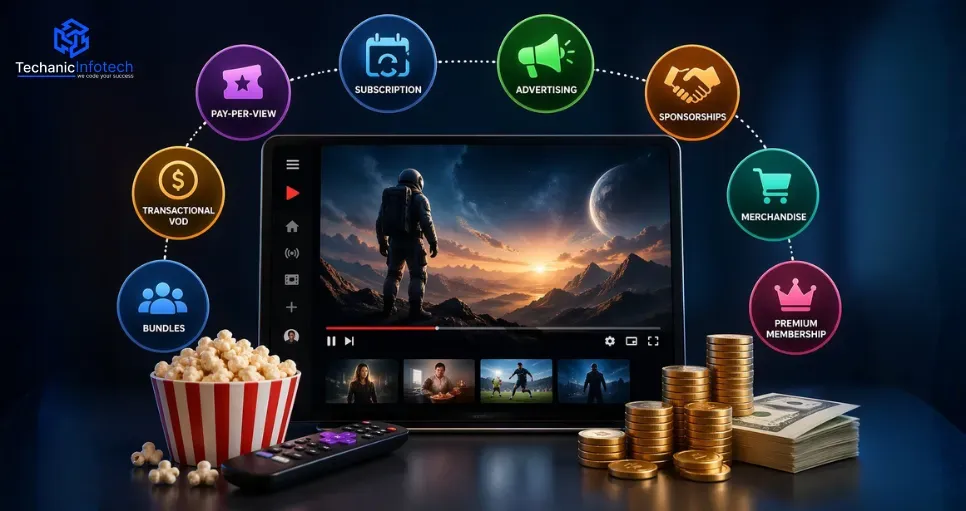
Video Streaming App Monetization: 8 Revenue Models to Maximize Profits
April 22, 2026
April 22, 2026
The video streaming industry is growing rapidly, and choosing the right video streaming app monetization strategy is key to long-term success. If you are building an OTT platform or a niche content app, your revenue model will directly impact growth and profitability.
Today, businesses are exploring different ways to monetize streaming apps, from subscriptions to ads and premium content. Understanding the right streaming app business model helps you attract users while generating consistent revenue.
In this guide, we’ll break down the most effective OTT revenue strategies and help you choose the best approach to maximize your video platform revenue.
If you plan to develop a video streaming app, choosing the right monetization strategy is key to long-term success. The way you earn from your platform will impact user growth, engagement, and overall revenue. A smart video streaming app monetization approach helps you balance user experience with profitability.
SVOD (Subscription Video on Demand) is a model where users pay a fixed monthly or yearly fee to access unlimited content. It is one of the most widely used video streaming app monetization strategies and forms the base of many successful OTT platforms.
Recurring Revenue: Predictable income every month
High User Retention: Subscribers stay longer if content is valuable
Better User Experience: No ads, uninterrupted viewing
Stronger Brand Loyalty: Builds long-term customer relationships
Platforms with exclusive or original content
Businesses looking for stable and long-term revenue
OTT platforms aiming to build a loyal user base
From our experience, this OTT revenue model works best when content is updated regularly and personalized recommendations are used.
AVOD (Ad-Supported Video on Demand) allows users to access content for free while the platform earns money through ads. This is a popular way to monetize streaming apps without charging users directly.
Free Access for Users: Attracts a large audience quickly
High Traffic Growth: More users = more ad revenue
Scalable Revenue Model: Earnings grow with viewership
Lower Entry Barrier: Easy for users to start using the platform
Platforms targeting mass audiences
Businesses focusing on rapid user growth
Content platforms with high daily engagement
In the streaming app business model, AVOD works best when ad placement is optimized to avoid disrupting user experience.
TVOD (Transactional Video on Demand), also known as pay-per-view, allows users to pay for specific content instead of subscribing. It is commonly used for premium or exclusive content.
High Revenue Per Content: Users pay individually
Flexible Pricing: Charge based on content value
No Long-Term Commitment: Users pay only when needed
Ideal for Premium Content: Works well for exclusive releases
Platforms offering exclusive or high-demand content
Events like live shows, sports, or new movie releases
Businesses aiming to maximize video platform revenue per user
From our experience, this OTT monetization model performs best when combined with subscription or ad-based strategies.
The freemium model offers a mix of free and paid content. Users can access basic video streaming app features or content for free, while premium features require payment. This is a popular video streaming app monetization strategy to attract users first and convert them later.
Easy User Acquisition: Free access brings more users
Higher Conversion Potential: Users upgrade after experiencing value
Balanced Revenue Model: Combines free traffic with paid users
Better Engagement: Users explore before committing
Platforms looking to build a large user base quickly
Businesses focusing on conversion-based growth
Apps offering both basic and premium content layers
From our experience, this streaming app business model works best when premium features are clearly valuable and worth upgrading.
The hybrid model combines multiple revenue strategies like subscriptions, ads, and pay-per-view. It is one of the most effective OTT monetization approaches as it maximizes earning opportunities from different user segments.
Multiple Revenue Streams: Reduces dependency on one model
Higher Profit Potential: Monetizes both free and paid users
Flexible User Options: Users can choose how they want to pay
Better Market Adaptability: Adjust strategies based on performance
Platforms targeting diverse audiences
Businesses aiming to maximize video platform revenue
Apps with both premium and free content offerings
In the OTT revenue model, hybrid strategies often deliver the highest returns when executed properly.
This model allows users to buy additional features, content, or upgrades within the app. It includes things like exclusive videos, downloads, ad-free viewing, or early access content.
Additional Revenue Layer: Earn beyond subscriptions or ads
User Flexibility: Pay only for what they want
Increased Engagement: Users interact more with premium features
Scalable Monetization: Add new features over time
Platforms with engaged and active users
Apps offering extra features or exclusive content
Businesses looking to boost streaming app monetization without forcing subscriptions
From our experience, combining in-app purchases with freemium or subscription models significantly increases overall revenue.
This model involves partnering with brands to promote their products or services within your platform. It can include sponsored content, brand placements, or collaborations with influencers. It is a growing part of video streaming app monetization, especially for platforms with a strong audience base.
High Revenue Potential: Brands pay premium for visibility
No Cost for Users: Monetization without charging users
Stronger Brand Partnerships: Long-term collaboration opportunities
Content Monetization: Earn from existing content
Platforms with high traffic or niche audiences
Apps with strong creator or influencer presence
Businesses looking to boost video platform revenue without relying only on users
From our experience, this streaming app business model works best when your platform has a clearly defined audience and engagement.
This model allows users to interact with creators during live streams and send virtual gifts, tips, or donations. Platforms earn a percentage from these transactions. It is a highly engaging way to monetize streaming apps.
Real-Time Revenue: Earnings during live sessions
High User Engagement: Interactive experience keeps users active
Creator Incentives: Encourages creators to produce more content
Scalable Income: More engagement leads to higher revenue
Platforms focused on live content or creator interaction
Apps targeting younger, highly engaged audiences
Businesses aiming to increase OTT monetization through engagement
In our experience, this model performs extremely well when combined with subscription or freemium strategies.
The success of your video streaming app monetization strategy depends on multiple factors. Even with the right streaming app business model, your revenue can vary based on how well you manage these key areas.
Here are the most important factors explained in simple terms:
Content is the core of any streaming platform. High-quality and unique content attracts users and keeps them engaged. If your content stands out, users are more likely to subscribe or pay for it. In any OTT revenue model, strong content directly increases user retention and revenue.
A smooth and easy-to-use platform improves engagement. If your app is slow, confusing, or difficult to navigate, users may leave quickly. Good UI/UX design, fast loading speed, and mobile optimization play a major role in improving video platform revenue.
Choosing the right way to monetize streaming apps is critical. Whether you use subscriptions, ads, or a hybrid model, your strategy should match your audience and content. A poor monetization choice can reduce conversions and revenue.
The number of users on your platform directly affects revenue. More users mean more subscriptions, ad views, and purchases. Growing your audience through marketing and SEO is essential for scaling your platform.
Pricing plays a big role in user decisions. If your subscription cost is too high, users may not convert. If it’s too low, you may lose potential revenue. Finding the right balance is key in any OTT monetization strategy.
For ad-based models, how you place ads matters. Too many ads can harm user experience, while too few may reduce earnings. Optimizing ad placement helps maximize revenue without affecting engagement.
A fast and reliable platform keeps users engaged. Slow loading times or buffering issues can lead to drop-offs. Performance directly impacts how long users stay and how much revenue you generate.
Your app should work smoothly across different devices like smartphones, tablets, and smart TVs. Better accessibility increases usage and improves overall revenue potential.
Strong marketing strategies help attract new users. SEO, social media, and paid ads are important for growth. Without proper promotion, even a great platform may struggle to generate revenue.
Keeping users active is just as important as acquiring them. Mobile app features like recommendations, notifications, and personalized content help improve engagement. Higher retention leads to better video streaming app monetization results.
Maximizing revenue is not just about choosing a model, it’s about how well you execute your video streaming app monetization strategy. From our experience, small optimizations can significantly improve your overall video platform revenue.
Here are practical tips to help you grow profits:
Don’t rely on a single model. Combine subscriptions, ads, and pay-per-view to capture revenue from different user segments. This approach increases earnings and reduces risk.
Content drives everything. Invest in exclusive, engaging, and regularly updated content. Unique content helps attract users and encourages them to pay or stay longer on your platform.
Offer flexible pricing options like monthly, yearly, and discounted plans. Test different pricing strategies to find what works best for your audience and improves conversions.
A fast, smooth, and easy-to-use app keeps users engaged. Reduce buffering, improve navigation, and ensure mobile optimization. Better experience leads to higher retention and more revenue.
Use AI or analytics to recommend content based on user behavior. Personalized suggestions increase watch time, which directly impacts OTT monetization through subscriptions and ads.
Keep your existing users happy. Offer loyalty benefits, exclusive content, or special discounts to retain subscribers. Retention is more cost-effective than acquiring new users.
If you’re using ads, place them smartly. Avoid interrupting user experience while still maximizing ad revenue. Use targeted ads to increase effectiveness.
Track user behavior, content performance, and revenue metrics. Data helps you understand what works and where to improve, making your streaming app business model more effective.
Make your app available on mobile, web, and smart TVs. More accessibility means more users and higher revenue opportunities.
Collaborate with content creators and brands to expand your reach and add new revenue streams. Partnerships can boost both engagement and monetization.
Choosing the right video streaming app monetization strategy depends on your content, audience, and business goals. There is no one-size-fits-all approach, so you need to evaluate a few key factors before deciding the best streaming app business model.
Start by analyzing your users. Are they willing to pay for content, or do they prefer free access? If your audience is price-sensitive, an ad-supported model may work better. For premium audiences, a subscription model is more suitable.
A reliable video streaming app development company can also help you study user behavior and choose the right monetization strategy based on your target market.
The type of content you offer plays a big role. Exclusive or high-quality content works well with subscription or pay-per-view models. On the other hand, general or entertainment content can perform better with ads.
Decide whether you want consistent income or high short-term profits. Subscription models provide steady revenue, while transactional models can generate higher earnings per content. Your choice should align with your business objectives.
User experience should always be a priority. Too many ads can frustrate users, while high subscription costs may reduce conversions. Choose a model that balances revenue and user satisfaction.
Instead of using multiple models at once, start with one strategy and test its performance. Once your platform grows, you can add more monetization methods like hybrid models.
Look at what similar platforms are doing. Understanding competitor strategies can give you insights into what works and what doesn’t in your niche.
Even with a strong video streaming app monetization plan, small mistakes can reduce your revenue and user growth. From our experience, avoiding these common issues can significantly improve your results.
Mistake: Using only one model like subscriptions or ads limits your earning potential.Solution: Adopt a hybrid approach by combining subscriptions, ads, and pay-per-view. This helps you earn from different types of users and increases overall video platform revenue.
Mistake: Setting prices too high or too low can reduce conversions or profits.Solution: Test different pricing tiers and offer flexible plans (monthly, yearly, discounts). A balanced pricing strategy improves your OTT revenue model performance.
Mistake: Too many ads can frustrate users and lead to drop-offs.Solution: Optimize ad placement and frequency. Focus on relevant and non-intrusive ads to maintain user experience while still generating revenue.
Mistake: Slow loading, poor navigation, or buffering issues can drive users away.Solution: Invest in UI/UX improvements, faster loading speeds, and smooth performance. A better experience directly boosts streaming app business model success.
Mistake: Not updating content regularly or offering low-quality content.Solution: Focus on high-quality, fresh, and engaging content. Strong content keeps users active and increases monetization opportunities.
Mistake: Making decisions without understanding user behavior.Solution: Use analytics tools to track performance, user engagement, and revenue.
Data-driven decisions help improve your video streaming app monetization strategy.
Mistake: Focusing only on acquiring new users and ignoring existing ones.Solution: Improve retention with personalized content, notifications, and loyalty programs. Retained users generate more long-term revenue.
The streaming industry is evolving quickly, and new trends are shaping how platforms earn revenue. To stay competitive, businesses need to adapt their video streaming app monetization strategies based on changing user behavior and technology. Here are the key trends to watch in 2026:
More platforms are moving toward hybrid models that combine subscriptions, ads, and pay-per-view. This approach helps maximize video platform revenue by serving both free and paid users. It also gives users flexibility in how they consume content.
Ad-supported models (AVOD) are becoming more popular as users look for free content. Platforms are focusing on smarter and targeted ads to improve results. This trend is making it easier to monetize streaming apps without relying only on subscriptions.
AI is playing a major role in recommending content based on user preferences. Personalized suggestions increase watch time and engagement, which directly improves revenue. It also helps platforms deliver better ad targeting and user experience.
Live streaming is growing rapidly, especially with features like tipping, virtual gifts, and paid live events. This trend is helping platforms generate real-time income and increase user interaction.
Platforms are focusing more on regional and niche content to attract specific audiences. This helps improve engagement and retention, making monetization more effective. Niche platforms often see higher conversions compared to general platforms.
Some platforms are exploring blockchain and cryptocurrency for secure and transparent transactions. This can help overcome payment limitations and provide more flexibility for global users.
Streaming services are increasingly offering bundled subscriptions with other platforms or services. This helps attract more users and improve retention while increasing overall OTT monetization.
Choosing the right video streaming app monetization strategy is essential for building a profitable platform.
From subscriptions and ads to hybrid models and live streaming, each approach offers unique benefits. The key is to align your streaming app business model with your content, audience, and long-term goals.
From our experience, the most successful platforms focus on flexibility, user experience, and continuous optimization. As trends evolve, adopting new strategies like personalization and hybrid monetization can help increase video platform revenue.
With the right approach, you can effectively monetize streaming apps and build a scalable, future-ready business.
Video streaming app monetization refers to the methods used to generate revenue from a streaming platform, such as subscriptions, ads, or pay-per-view content.
You can monetize streaming apps using models like subscriptions (SVOD), ads (AVOD), pay-per-view (TVOD), or a hybrid approach combining multiple strategies.
There is no single best model. The ideal OTT revenue model depends on your audience, content type, and business goals. Many platforms use hybrid models for better results.
SVOD is subscription-based, AVOD is ad-supported, and TVOD is pay-per-view. Each model offers a different way to generate video platform revenue.
Startups often begin with freemium or ad-supported models to attract users and then introduce subscriptions or premium features later.
They can earn through ads, sponsorships, in-app purchases, and brand collaborations as part of their streaming app business model.
Yes, hybrid models combine multiple revenue streams, helping maximize video streaming app monetization and reduce dependency on one source.
Content is the most important factor. High-quality and unique content increases engagement, retention, and overall revenue.
Yes, even small platforms can succeed by targeting niche audiences and using the right OTT monetization strategies.
A good user experience improves engagement and retention, which directly increases revenue and conversions.
You can increase revenue by improving content quality, optimizing pricing, using multiple monetization models, and focusing on user retention.
Trends include hybrid models, AI-driven personalization, live streaming monetization, and targeted advertising.


Shailendra is a dedicated professional known for his strong client-focused approach and clear understanding of business needs. He brings a thoughtful understanding of client needs and focuses on building long-term relationships through clear communication and quality-driven work. With a blend of strategic thinking, content expertise, and a hands-on approach, Shailendra plays a key role in shaping content that aligns with both business goals and user expectations.