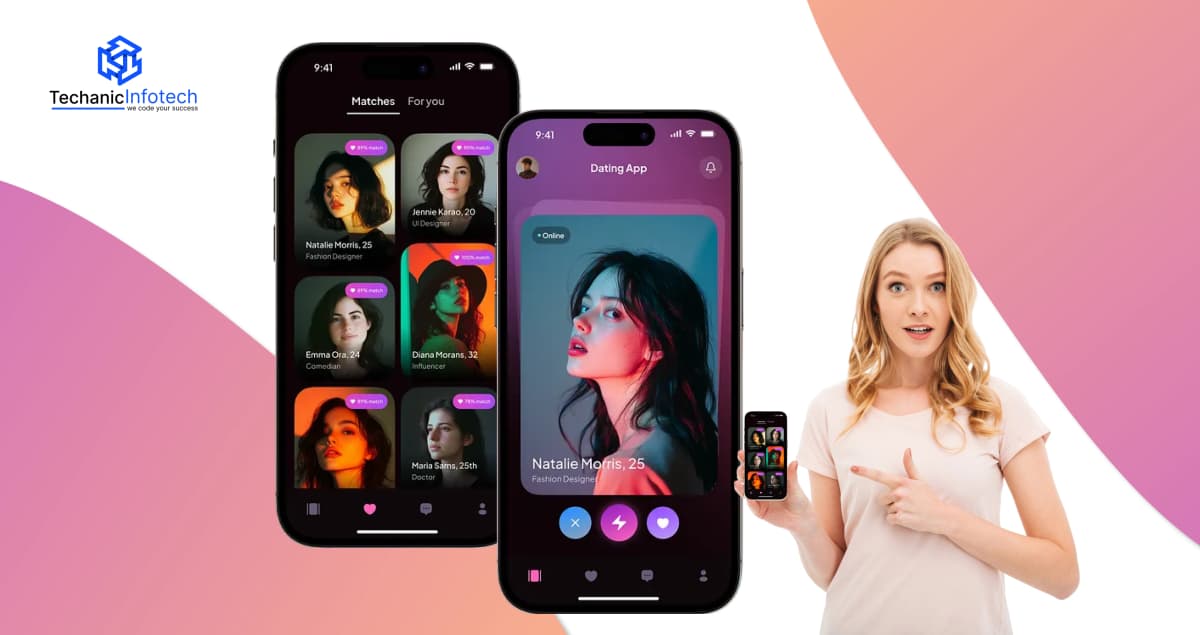
Have you ever wondered why dating apps feel so addictive and engaging? Why do users keep swiping, checking matches, and coming back daily?
The answer lies in gamification.
Modern dating platforms are no longer just about finding matches, they are designed like interactive experiences. With the rise of digital relationships, apps are using game-like elements such as rewards, streaks, badges, and challenges to keep users engaged.
The global dating app market is growing rapidly, with over 350 million users worldwide and $19.33 billion in revenue in 2033. At the same time, user retention has become a major challenge, pushing companies to adopt smarter engagement strategies.
This is where gamification in dating apps is changing the game.
Gamified dating apps means using game-like elements to make the app more engaging, interactive, and enjoyable for users. Instead of just browsing profiles, users experience features that feel similar to playing a game, such as swiping, earning rewards, unlocking features, or maintaining streaks.
In simple terms, gamification turns the dating experience into something fun and addictive. For example, swipe-based matching systems, badges for activity, profile boosts, and daily login rewards are all common gamification elements used in modern dating apps.
These features are designed to encourage users to spend more time on the app and interact more frequently. When users receive instant feedback, like a match notification or a like, it creates excitement and motivates them to continue using the platform.
From a dating app development perspective, gamification is not just about adding fun elements. It is about understanding user behavior and designing experiences that keep users engaged over time.
When implemented correctly, gamification helps improve user engagement, increase retention, and make the overall dating experience more dynamic and enjoyable.
The role of gamification in dating apps has become a key strategy because it helps platforms keep users engaged, active, and coming back regularly. In a highly competitive market, simply offering matches is not enough, apps need to create experiences that feel interactive and rewarding.
Below are the main reasons why gamification matters.
Gamification makes the app more interactive through features like swiping, rewards, and instant feedback. 22% higher retention rates on average. Additionally, around 15% of users report feeling “addicted” to swiping experiences, which highlights how powerful these mechanics are.
Dating apps often face high drop-off rates. Gamified features like daily streaks, rewards, and notifications encourage users to return regularly, helping apps maintain an active user base.
Game-like elements use psychological triggers such as rewards and progress tracking. This creates a habit loop where users keep coming back to check matches, messages, or rewards.
Dating can sometimes feel stressful or repetitive. Gamification adds fun elements like animations, badges, and challenges, making the experience more enjoyable and less overwhelming.
Gamification motivates users to take actions such as liking profiles, sending messages, or completing their profiles. This leads to better engagement across the platform.
Features like matches, likes, and achievements give users a sense of validation. This emotional connection increases user satisfaction and encourages continued usage.
Gamification has become a powerful tool in dating apps to keep users active and interested. Instead of just browsing profiles, users interact with the app in a more engaging and enjoyable way.
Below are some key ways gamification improves user engagement.
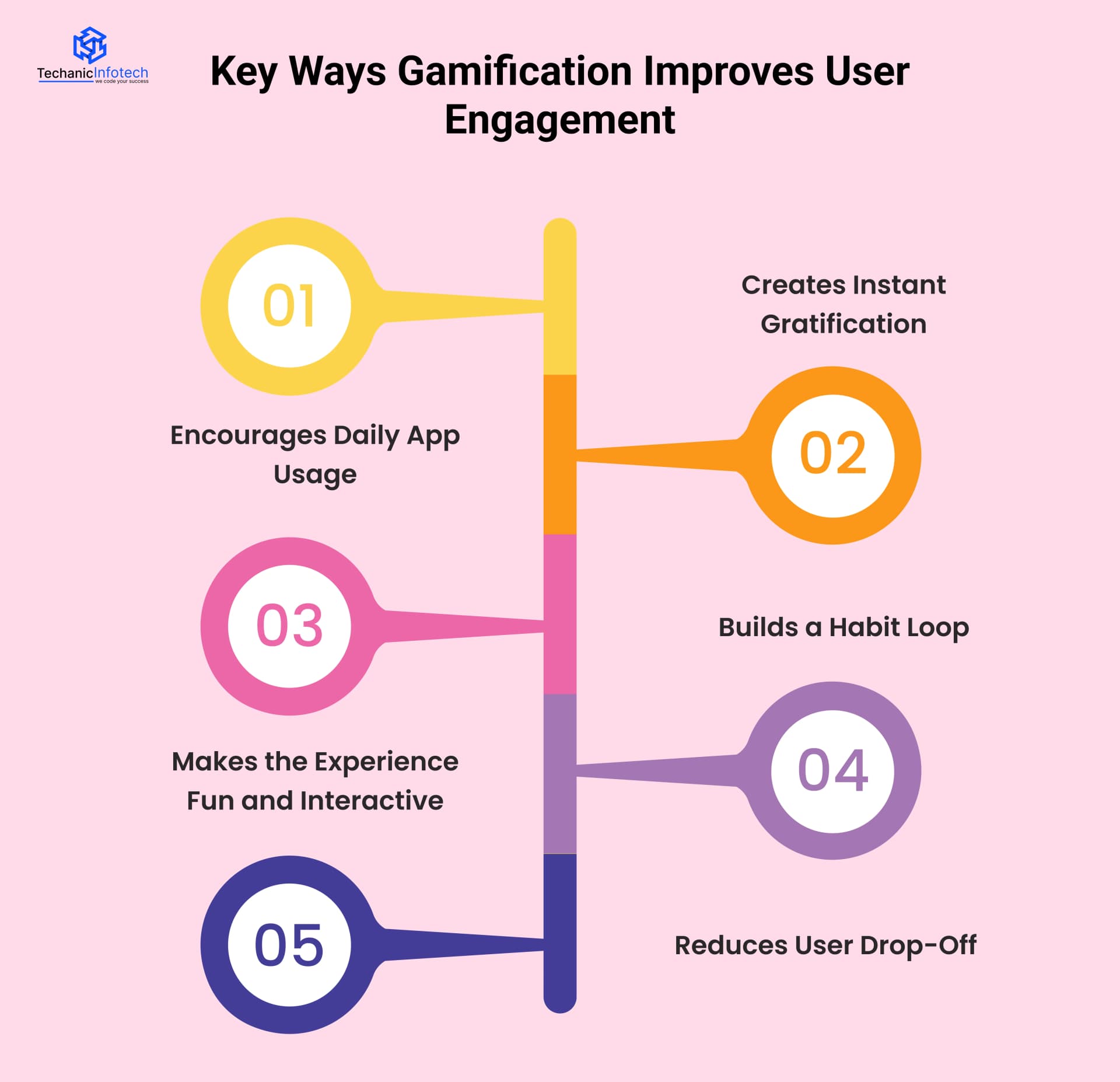
One of the biggest reasons gamification works is instant feedback. Dating app features like matches, likes, and animations give users immediate results for their actions.
When a user gets a match, it:
Triggers excitement
Encourages more interaction
Keeps them engaged for longer
This quick reward system creates a strong “reward loop” where users feel motivated to continue using the app. The faster the feedback, the more engaging the experience becomes.
Gamification encourages users to open the app regularly. Features like daily rewards and streaks give users a reason to come back every day.
Common examples include:
Daily login rewards
Streak bonuses for consistent usage
Limited-time challenges
These features create a sense of routine. According to industry insights, platforms like Tinder saw a noticeable increase in daily active users after introducing such gamified elements.
From our development experience, daily engagement features are one of the most effective ways to improve long-term user retention.
Gamification uses simple psychological principles to build user habits. Elements like rewards, achievements, and progress tracking make users feel a sense of progress.
This creates a loop: Action – Reward – Repeat
For example, a user swipes profiles (action), gets a match (reward), and continues swiping again. Over time, this behavior becomes a habit, and users return to the app without even thinking about it.
Dating apps can sometimes feel repetitive or stressful. Gamification adds fun elements that make the experience more enjoyable.
Features like:
Quizzes
Compatibility games
Personality tests
make the app feel more like entertainment rather than just a utility. This is especially important for younger users who prefer interactive and engaging platforms.
User drop-off is a common challenge in dating apps. Many users stop using the app after a short period if they lose interest.
Gamification helps reduce this by:
Keeping users engaged for longer sessions
Providing continuous motivation through rewards
Creating reasons to return regularly
Apps that lack engagement features often feel boring, which leads to higher drop-off rates. On the other hand, gamified apps keep users involved and active.
User retention is one of the biggest development challenges for dating apps, and gamification plays a key role in keeping users active over time.
By using rewards, emotional triggers, and personalized experiences, apps can encourage users to return regularly.
Here’s how gamification improves retention.
Gamified reward systems such as points, coins, and unlockable features motivate users to stay active. When users earn rewards for actions like swiping, logging in, or completing profiles, they feel a sense of progress.
This creates a strong motivation to continue using the app because users don’t want to “lose” what they have earned. Over time, this builds a habit where users keep returning to maintain their progress and unlock more benefits.
Dating apps heavily rely on emotional connection, and gamification enhances this through social validation. Features like likes, matches, and profile views give users positive feedback.
This creates a psychological effect where users feel the following:
Valued
Seen
Appreciated
These feelings motivate users to stay on the platform and continue interacting. The more validation users receive, the more likely they are to return and stay engaged.
Gamification also introduces a sense of competition. Features like leaderboards, profile rankings, and badges make users feel like they are part of a system where they can achieve status.
People naturally want to stand out or “win,” which encourages them to stay active and improve their presence on the app. This competitive element keeps users engaged for longer periods.
Modern gamified systems use AI to personalize the user experience. Apps can suggest better matches, recommend actions, and customize rewards based on user behavior.
This makes the app feel more relevant and engaging for each user. When users see content tailored to their preferences, they are more likely to continue using the platform regularly.
Gamification features are what make dating apps feel interactive, engaging, and sometimes even addictive.
These features are carefully designed to keep users involved while making the experience fun and easy to use. Many successful dating platforms already use these techniques to improve engagement and retention.
Below are some of the most popular gamification features used in modern dating apps, along with real-world examples.
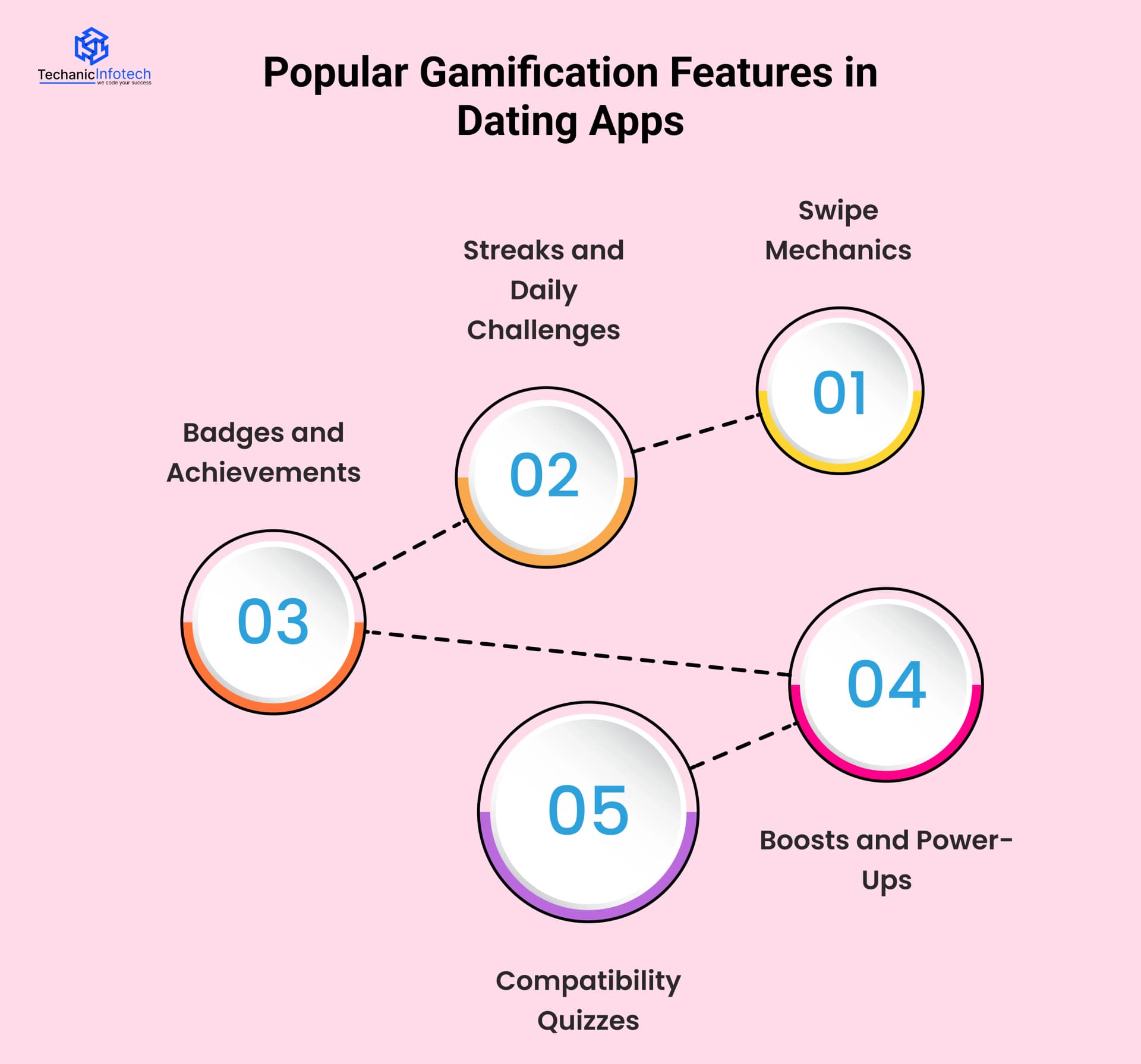
The swipe feature is one of the most iconic examples of gamification. It allows users to quickly like or pass profiles with a simple gesture.
Simple interaction
Fast decisions
Continuous loop
Popular apps like Tinder and Bumble use swipe mechanics to create a fast and engaging experience. It feels like playing a game, which keeps users coming back for more.
These features encourage users to open the app regularly and stay consistent.
Login streaks
Daily interaction goals
Rewards for consistency
Tinder introduced streaks to increase daily usage, which significantly boosted user activity. These features help build habits and improve retention.
Users earn badges for completing certain actions on the app.
Profile activity
Number of matches
Profile completion
Apps like OkCupid and Hinge use profile completion and activity indicators to reward users. This creates a sense of progress and encourages users to stay active.
These are premium features that increase visibility and improve match chances.
Profile boosts
Super likes
Visibility upgrades
Tinder’s Boost and Super Like features are popular examples. They add excitement to the experience while also creating strong monetization opportunities.
These features make the dating experience more interactive and meaningful.
Personality tests
Fun quizzes
Matching games
OkCupid is well known for using detailed questionnaires to improve match quality. These features not only improve engagement but also help users find better connections.
Adding gamification to a dating app requires the right strategy and understanding of user behavior. It’s not just about adding fun features; it’s about creating meaningful interactions that keep users engaged.
Here are simple steps to integrate gamification effectively.
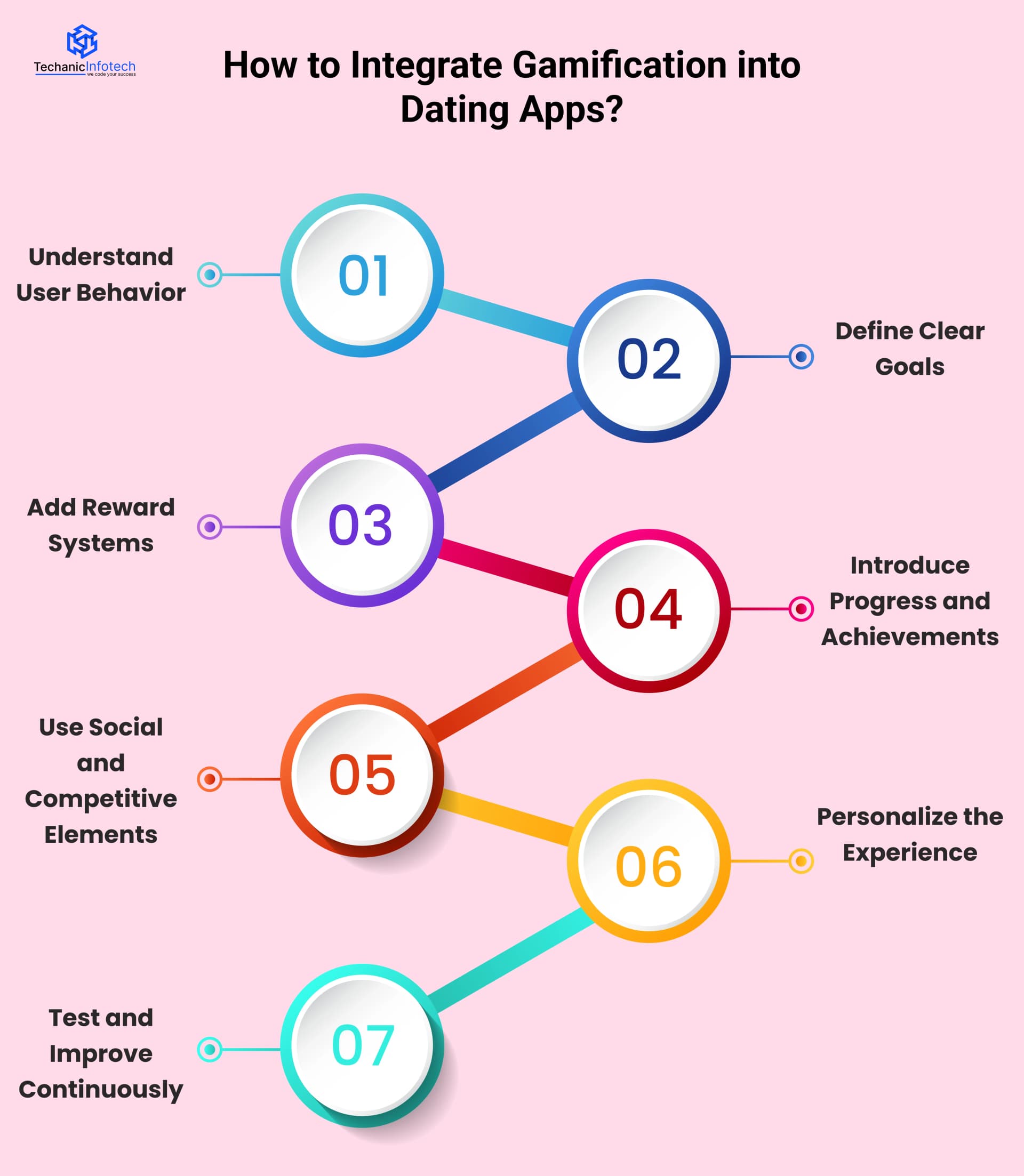
Start by analyzing how users interact with your app. Identify what actions you want to encourage, such as swiping, messaging, or profile completion. This helps you design gamified features that match real user needs.
Decide what you want to achieve with gamification. It could be improving engagement, increasing retention, or boosting user activity. Clear goals help you choose the right features.
Introduce rewards like points, badges, or coins for completing actions. For example, users can earn rewards for daily logins, matches, or completing their profiles. This motivates users to stay active.
Show users their progress through levels, achievements, or milestones. This creates a sense of accomplishment and encourages them to continue using the app.
Add features like leaderboards, rankings, or profile highlights. These elements create friendly competition and make the app more engaging.
Use AI or user data to suggest matches, rewards, or activities based on user behavior. Personalization makes the experience more relevant and enjoyable.
After adding gamification features, monitor how users respond. Collect feedback and improve the system regularly to keep it effective and engaging.
The cost to integrate gamification into a dating app depends on the type and complexity of features you want to add. Simple features like swipe mechanics, basic rewards, or notifications can cost around $3,000 to $10,000. These are easier to implement and require less development time.
However, advanced gamification features such as AI-based recommendations, real-time challenges, leaderboards, or interactive quizzes can increase the cost to $10,000 to $30,000 or more. These features require more backend logic, design work, and testing.
The overall dating app development cost also depends on factors like app complexity, platform (iOS, Android, or both), and the experience of the development team.
From our experience, starting with basic gamification features and scaling gradually is the best way to manage cost while improving user engagement effectively.
At Techanic Infotech, as an experienced dating app development company, we have worked on multiple social and interactive platforms, and one thing is very clear, gamification works only when it is implemented thoughtfully.
From our experience, gamification should never feel forced. When apps overuse game-like elements, it can reduce authenticity and make the experience feel less genuine. Users come to dating apps to build connections, so the focus should always remain on meaningful interactions rather than just engagement.
We strongly believe that balance is the key. Gamification should enhance the user journey, not dominate it. Features like rewards, streaks, or badges should support user actions, not distract them from the core purpose of the app.
Another important factor is understanding user psychology. Instead of adding too many features, it’s more effective to design experiences based on how users think and behave. Simple, well-designed interactions often perform better than complex systems.
At Techanic Infotech, we focus on building apps where retention comes from a smooth and enjoyable experience, not just rewards. This approach helps create dating platforms that users trust, enjoy, and continue using over time
While gamification improves engagement and retention, it also comes with certain challenges. If not implemented carefully, it can negatively impact user experience and trust.
Below are some common challenges along with practical solutions.
Some apps become too game-like, which can lead to superficial interactions and reduce meaningful connections between users. When users focus more on rewards than real conversations, the purpose of the app gets lost.
Solution: Keep a balance between fun and functionality. Gamification should support meaningful interactions, not replace them. Focus on features that encourage genuine connections, such as compatibility-based matches and conversation prompts.
Gamification can create addictive patterns. Features like endless swiping and unpredictable rewards can make users spend excessive time on the app without meaningful outcomes.
Solution: Design ethical gamification. Limit excessive usage by adding features like swipe limits, meaningful match suggestions, or reminders that encourage healthy usage. Focus on quality interactions instead of endless engagement.
Many apps rely on gamification to promote paid features like boosts, super likes, or premium memberships. Sometimes, this can feel overwhelming or even manipulative for users.
Solution: Offer value-driven monetization strategies. Instead of pushing paid features aggressively, provide clear benefits and optional upgrades. Ensure that free users can still have a good experience without feeling forced to pay.
Too many gamification features can confuse or overwhelm users. If the app becomes too complex, users may lose interest and stop using it.
Solution: Keep the experience simple and intuitive. Introduce features gradually and focus on usability. A clean design with a few well-implemented gamification elements works better than adding too many features at once.
Gamification in dating apps is continuously evolving as new technologies and user expectations shape the industry. The focus is shifting from simple engagement tactics to more personalized, immersive, and meaningful experiences.
Below are some key dating app trends that will define the future of gamification in dating apps.
Artificial intelligence is playing a major role in improving gamification. Apps can now analyze user behavior to offer personalized matches, rewards, and suggestions. AI in dating apps helps create smarter experiences that feel more relevant to each user, increasing both engagement and retention.
AR and VR in dating apps are expected to transform how users interact. Virtual dates, interactive environments, and immersive experiences can make online dating more realistic and engaging, going beyond simple swiping.
Future dating apps will focus more on meaningful connections rather than just quick matches. Gamification will include features like compatibility games, conversation starters, and emotional intelligence-based matching to improve relationship quality.
Dating apps are moving towards community-based features such as group activities, events, and shared experiences. These gamified social elements help users connect in a more natural and less pressured way.
Voice-based interactions and real-time engagement features are becoming more popular. Users may interact through voice prompts, live sessions, or interactive games, making the experience more human and engaging.
Gamification has become a powerful strategy in modern dating apps, helping platforms improve user engagement and retention in a highly competitive market.
By adding features like rewards, streaks, and interactive experiences, apps can keep users active and motivated. However, the key lies in balance, gamification should enhance the experience without affecting meaningful connections.
When implemented thoughtfully, it not only makes the app more engaging but also builds long-term user loyalty. As dating apps continue to evolve, businesses that use gamification strategically will be better positioned to create engaging, user-friendly, and successful platforms.
Gamification means adding game-like features such as rewards, streaks, and swiping to make dating apps more engaging and interactive.
It keeps users active by offering instant rewards, interactive features, and continuous feedback, making the app more enjoyable.
Yes, features like daily streaks, rewards, and progress tracking encourage users to return regularly and stay longer on the app.
Popular features include swipe mechanics, badges, streaks, boosts, quizzes, and leaderboards.
Yes, features like profile boosts, premium badges, and in-app purchases create strong monetization opportunities.
Yes, overuse can lead to addictive behavior, reduced authenticity, and user fatigue if not implemented carefully.
It can cost between $3,000 and $30,000+, depending on the complexity of features and integrations.
Yes, but it should be used carefully to enhance user experience without affecting meaningful interactions.


Abhishek Jangid is the CEO of Techanic Infotech, with extensive experience in mobile app and web development. He specializes in helping businesses turn innovative ideas into scalable digital solutions through strategic planning and modern technology.