Dating App Development
AR/VR in Dating App Development: Use Cases, Features, and Benefits
February 17, 2026
February 17, 2026
Not long ago, dating apps were simple. You swiped, matched, chatted, and hoped the conversation went somewhere.
But as online dating became mainstream, user expectations changed.
People started wanting more than profiles and photos; they wanted real connection, authenticity, and experiences that felt closer to meeting in person.
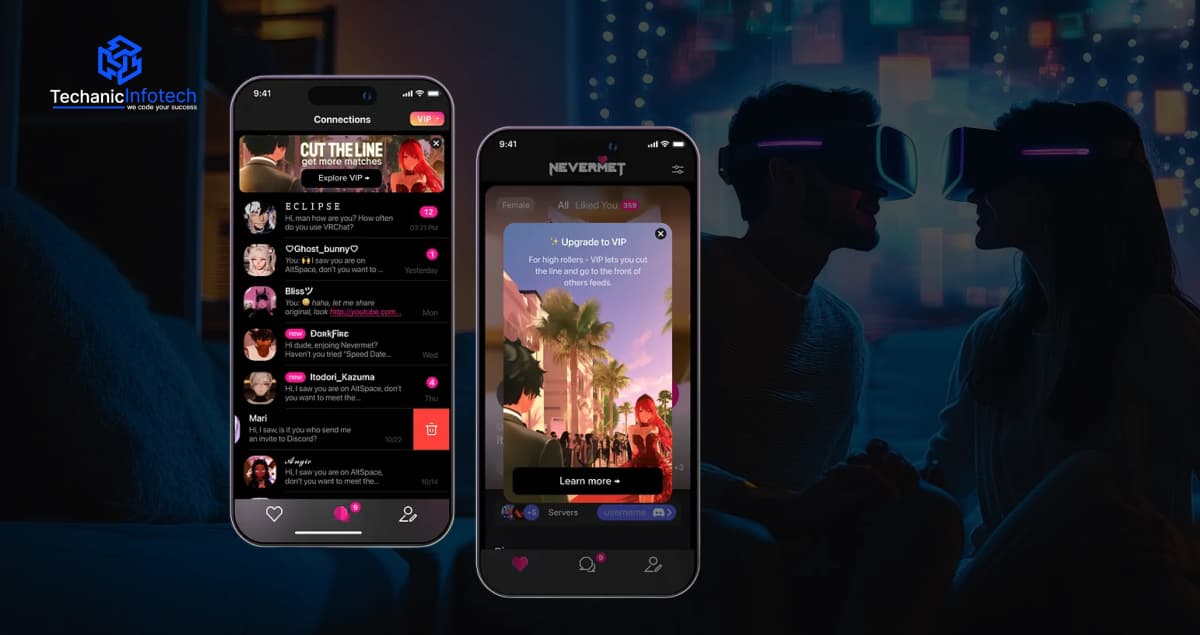
This shift is why AR/VR in dating apps is gaining attention today.
With AR and VR dating app development, platforms are moving toward richer, more interactive experiences.
Features like live AR filters, virtual first dates, and shared immersive spaces are redefining how people connect.
These immersive dating apps help users express themselves better, build trust, and reduce the gap between online and real-life interaction.
As dating app development with AR/VR grows, immersive technology is no longer experimental, it’s becoming essential.
Augmented Reality (AR) and Virtual Reality (VR) are immersive technologies, but they work in different ways.
AR adds digital elements to the real world through a smartphone camera, think face filters, effects, or interactive overlays. In top dating apps,
AR is often used to enhance profiles, make conversations fun, or add playful icebreakers without taking users out of their real environment.
VR, on the other hand, creates a completely virtual space. Users step into a digital world where they can interact using avatars. In the context of dating apps,
VR enables virtual dates, shared environments, and social experiences that feel closer to real-life meetings. While AR is easier to adopt, VR offers deeper immersion.
Dating apps are turning to AR and VR to solve real user problems and stand out in a crowded market.
Traditional dating apps often feel repetitive. Swiping and texting alone no longer create excitement. Immersive tech helps apps offer richer, more engaging experiences that feel closer to real-life interaction.
AR and VR allow users to express emotions, reactions, and personality more naturally. Virtual dates and shared activities help people connect emotionally before meeting offline.
Immersive features keep users active for longer periods. Interactive filters, virtual environments, and shared experiences reduce boredom and increase daily usage time.
Fake profiles are a major challenge in dating apps. AR-based verification and VR interactions make it harder to hide behind edited photos or false identities, improving trust.
Immersive dating allows users to meet virtually without sharing personal locations or contact details. This creates a safer environment, especially for first interactions.
The dating app market is crowded. AR and VR help platforms stand out by offering experiences that traditional swipe-based apps can’t match.
Virtual dating environments allow people in different cities or countries to spend time together. This makes immersive tech especially valuable for global dating platforms.
AR and VR enable premium mobile app features such as paid virtual dates, exclusive environments, and custom avatars, opening new monetization options.
Gen Z and younger millennials are more open to immersive experiences. Dating apps using AR and VR naturally attract these audiences.
Immersive tech aligns with future trends like metaverse dating and AI-driven virtual interactions, helping apps stay relevant long-term.
Overall, immersive technology helps dating apps build deeper connections, safer interactions, and stronger engagement in a fast-changing digital landscape.
Augmented Reality is changing how people interact on dating platforms by making profiles and conversations more expressive and engaging.
Instead of relying only on photos and text, AR dating app features help users show their personality in creative ways.
Below are the key ways AR is being used in modern dating apps, explained simply.
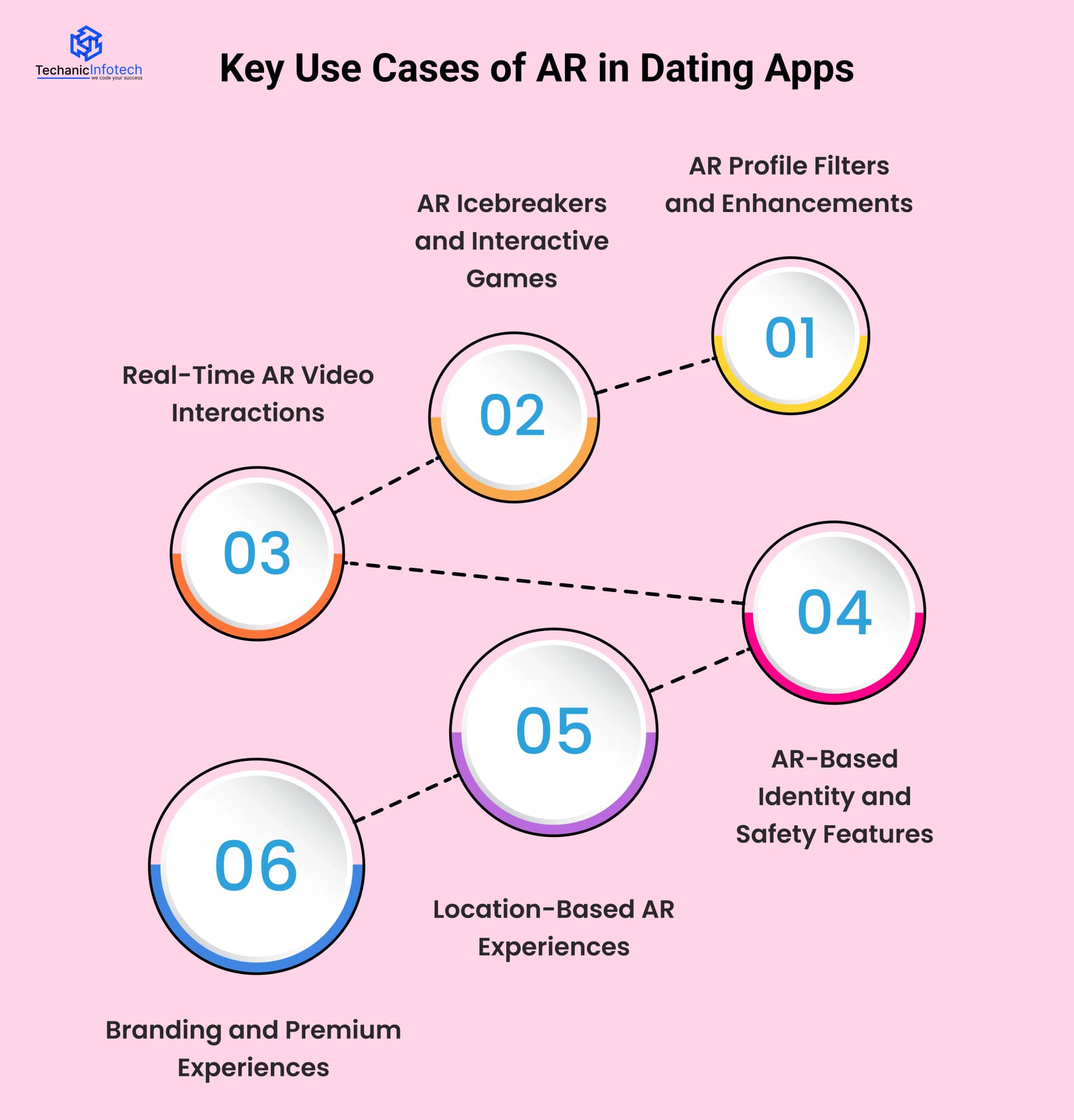
One of the most common uses of AR in dating apps is profile enhancement. AR filters allow users to add subtle effects, animations, or themed overlays to their photos and videos.
Unlike heavy photo editing, AR feels more natural and interactive.
This helps users present themselves confidently while keeping profiles fun and engaging.
These features are now a core part of AR/VR in dating apps focused on self-expression.
Starting a conversation can be awkward. AR helps solve this by introducing interactive icebreakers like mini games, quizzes, or shared AR experiences.
Users can play simple AR-based games together during chats, making conversations less forced and more natural.
These experiences increase engagement and reduce drop-offs, making them valuable in dating app development with AR/VR.
Some dating apps use AR during live video chats. Users can apply real-time effects, virtual backgrounds, or prompts during calls.
This makes video interactions more comfortable, especially for first-time conversations. It also adds a layer of safety and fun, encouraging users to interact beyond text without pressure.
AR can also support trust and safety. For example, apps may use AR gestures or live camera interactions to verify that a user is real.
This helps reduce fake profiles and catfishing. As trust becomes a major challenge, AR plays an important role in AR and VR dating app development focused on authenticity.
Some apps experiment with AR features tied to real-world locations. Users might discover nearby matches through AR maps or see shared virtual markers in public places.
These experiences blend online dating with offline environments, making connections feel more real and contextual.
AR is also used to create premium features, such as exclusive filters, seasonal themes, or sponsored experiences. These not only improve user experience but also open new monetization opportunities for immersive dating apps.
Overall, AR adds creativity, safety, and engagement to dating platforms. As AR/VR app development continues to grow, AR will remain one of the most accessible and impactful technologies shaping the future of dating apps.
Virtual Reality is taking online dating beyond chats and video calls by creating shared digital spaces where users can interact more naturally.
Unlike AR, which enhances the real world, VR places users inside fully immersive environments. This makes
VR dating app development especially powerful for building deeper connections and more realistic interactions.
Below are the key ways VR is being used in modern dating apps.
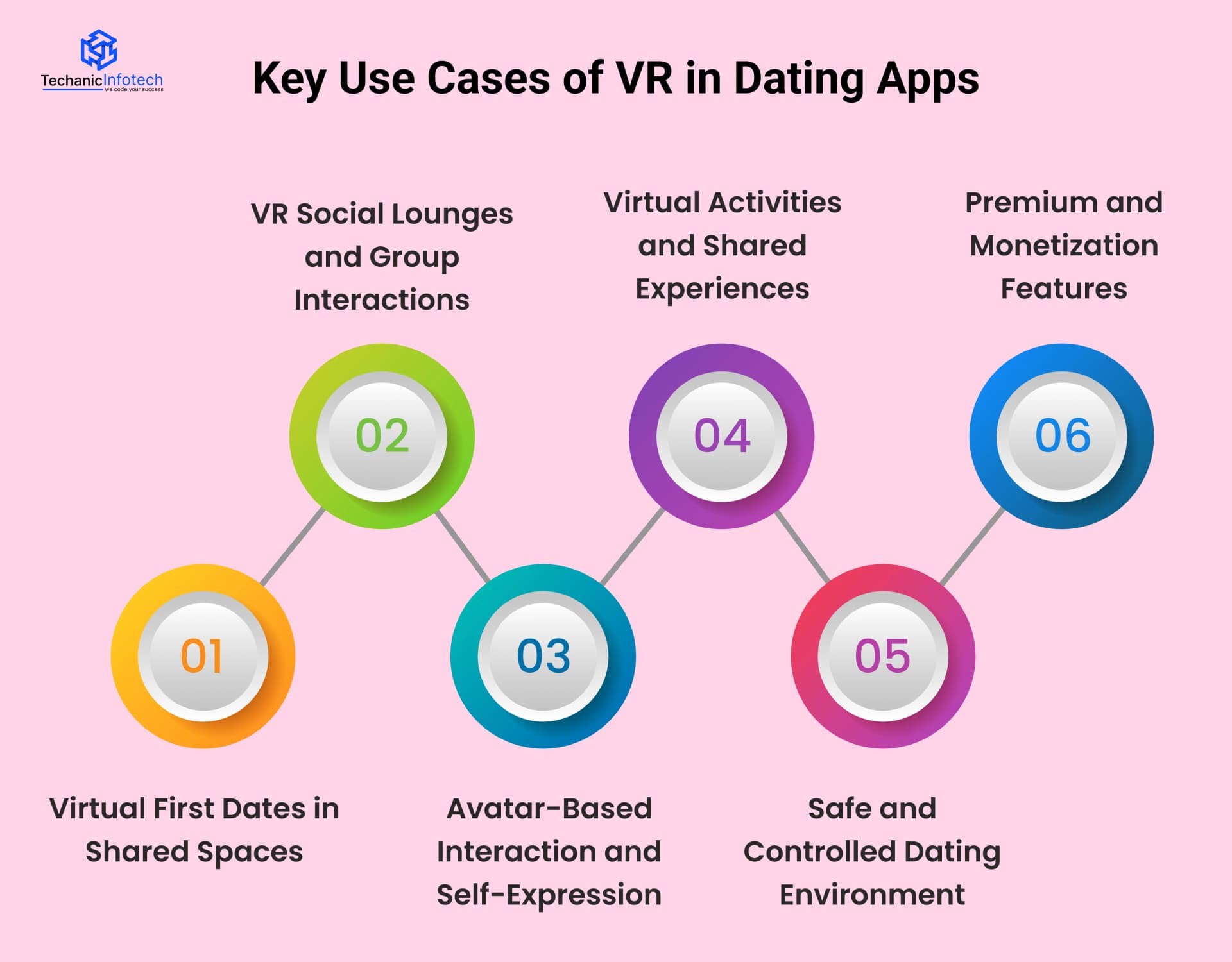
One of the most popular VR dating app use cases is virtual first dates. Instead of meeting in a cafe or restaurant, users can meet in a virtual setting like a beach, park, or coffee shop.
These shared environments help users talk, move around, and interact as avatars, making the experience feel closer to an in-person date.
This is especially useful for long-distance connections or users who prefer meeting virtually first.
Some dating apps use VR to create social lounges where multiple users can interact together. These spaces allow group conversations, events, or casual hangouts.
Group VR environments reduce pressure compared to one-on-one chats and help users connect naturally.
This approach supports immersive dating apps that focus on community-driven experiences rather than only private messaging.
VR allows users to create avatars that represent them in virtual spaces. These avatars can reflect personality through appearance, gestures, and movements.
This helps users express themselves beyond photos and text. In dating app development with AR/VR, avatars also add a layer of comfort, especially for users who feel shy or hesitant during early interactions.
VR dating apps often include shared activities such as virtual games, tours, or interactive experiences. Doing activities together helps break the ice and creates shared memories.
These moments strengthen emotional connection and make conversations feel more natural, which is a major advantage of virtual dating app technology.
Safety is another reason dating apps are adopting VR. Virtual spaces allow users to meet without sharing real-world locations or personal details.
Users can leave interactions instantly if they feel uncomfortable. This makes VR a strong option for apps prioritizing user safety and trust.
VR also opens doors for premium features like exclusive virtual locations, special events, or customized avatars.
These features help apps generate revenue through monetization strategies while offering unique experiences users can’t get from traditional dating platforms.
Overall, VR is helping dating apps move from simple conversations to meaningful, experience-based connections.
As AR and VR dating app development evolves, VR will play a growing role in shaping the future of online dating.
AR and VR are helping dating apps move beyond basic profiles and text conversations. By adding immersive experiences,
these technologies allow users to interact in more meaningful and realistic ways. This shift is changing how people connect, communicate, and build trust on dating platforms.
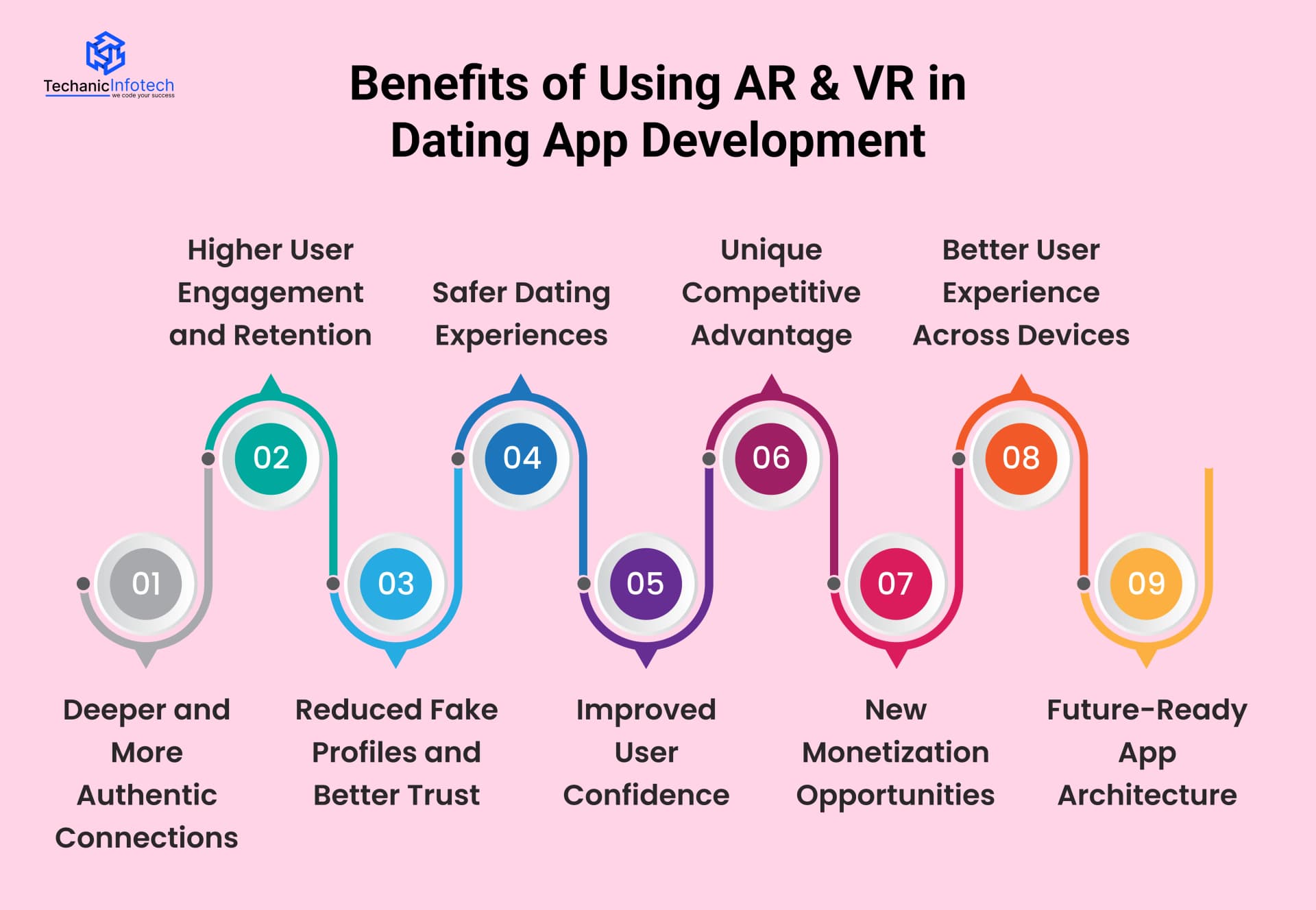
AR and VR help users move beyond static profiles and text-based chats. Immersive interactions allow people to express emotions, body language, and personality more naturally, leading to stronger and more genuine connections.
Interactive AR filters, virtual dates, and shared VR experiences keep users active for longer periods. These features reduce boredom and app fatigue, which are common problems in traditional dating apps.
AR-based verification features and VR interactions make it harder for users to hide behind fake photos or identities. This improves platform trust and increases confidence among users.
Virtual interactions allow users to connect without sharing real locations or personal details. This creates a controlled and safe environment, especially during early conversations and first meetings.
Avatars, filters, and virtual settings help users feel more comfortable expressing themselves. This is especially helpful for users who are shy or nervous about real-time video or in-person meetings.
Dating apps that use AR/VR stand out in a crowded market. Immersive features help platforms differentiate themselves from swipe-only competitors.
AR and VR open doors to premium features such as exclusive virtual locations, paid experiences, and customizable avatars, creating additional revenue streams.
AR works smoothly on smartphones, while VR supports deeper immersion on compatible devices, allowing apps to cater to different user preferences.
Investing in AR and VR prepares dating apps for future trends like metaverse dating and AI-driven virtual interactions, ensuring long-term relevance.
Overall, AR and VR are transforming mobile app development by making connections more engaging, secure, and experience-driven.
While both AR and VR enhance dating app experiences, they serve very different purposes. AR focuses on enhancing real-world interactions, while VR creates fully immersive virtual environments.
Understanding the difference helps businesses choose the right technology based on budget, user adoption, and app goals.
|
Comparison Factor |
AR in Dating Apps |
VR in Dating Apps |
|
Cost Impact |
Lower development and maintenance cost. AR features can be added gradually without rebuilding the entire app. |
Higher dating app development cost due to immersive environments, 3D assets, and advanced interactions. |
|
User Adoption |
High adoption because AR works directly on smartphones without extra devices. |
Moderate adoption since users need VR headsets or compatible hardware. |
|
Hardware Dependency |
Requires only a smartphone camera and AR support (ARKit/ARCore). |
Requires VR headsets and higher hardware performance. |
|
Development Complexity |
Moderate complexity; easier to integrate into existing dating apps. |
High complexity due to 3D environments, real-time interactions, and performance optimization. |
|
User Experience |
Enhances real-world interactions with digital overlays and effects. |
Creates fully immersive virtual dating environments. |
|
Scalability |
Easier to scale across devices and user bases. |
Scaling requires more infrastructure and performance planning. |
Techanic Infotech helps dating apps evolve from simple swipe-based platforms into immersive digital experiences.
By combining AR and VR technologies with user-focused design, the team builds dating apps that feel more interactive, secure, and engaging.
From AR profile features and interactive icebreakers to VR-based virtual dates and social spaces, Techanic Infotech focuses on features that add real value for users.
Our dating app development company follows a structured development approach to ensure smooth performance, scalability, and safety.
With experience in modern app technologies, Techanic Infotech supports businesses in creating immersive dating apps that improve user engagement, build trust, and stand out in a competitive market.
AR and VR are redefining how dating apps create connections in a digital-first world.
As user expectations shift from simple swiping to meaningful experiences, immersive technologies are becoming a key differentiator for modern dating platforms.
From AR-based profile interactions to VR-powered virtual dates, these features help improve engagement, trust, and emotional connection between users.
While adopting AR or VR requires thoughtful planning and the right technical approach, the long-term benefits outweigh the effort.
Dating apps that invest in immersive experiences today are better positioned to meet future user demands and stand out in an increasingly competitive dating app market.
AR and VR help dating apps create more interactive and engaging experiences. AR enhances real-world interactions through filters and effects, while VR enables immersive virtual dates and shared digital spaces.
AR adds digital elements to the real world using a smartphone camera, making it easy to adopt. VR creates fully immersive environments where users interact through avatars in virtual spaces.
AR features are generally more affordable and easier to integrate. VR features require more development effort and infrastructure, which can increase costs.
AR works on most modern smartphones. VR typically requires headsets or compatible devices, which can affect user adoption.
Immersive features make interactions more fun and meaningful, helping users connect emotionally and spend more time on the app.
Yes. AR-based interactions and VR experiences make it harder to rely on fake images, improving authenticity and trust.


Abhishek Jangid is the CEO of Techanic Infotech, with extensive experience in mobile app and web development. He specializes in helping businesses turn innovative ideas into scalable digital solutions through strategic planning and modern technology.