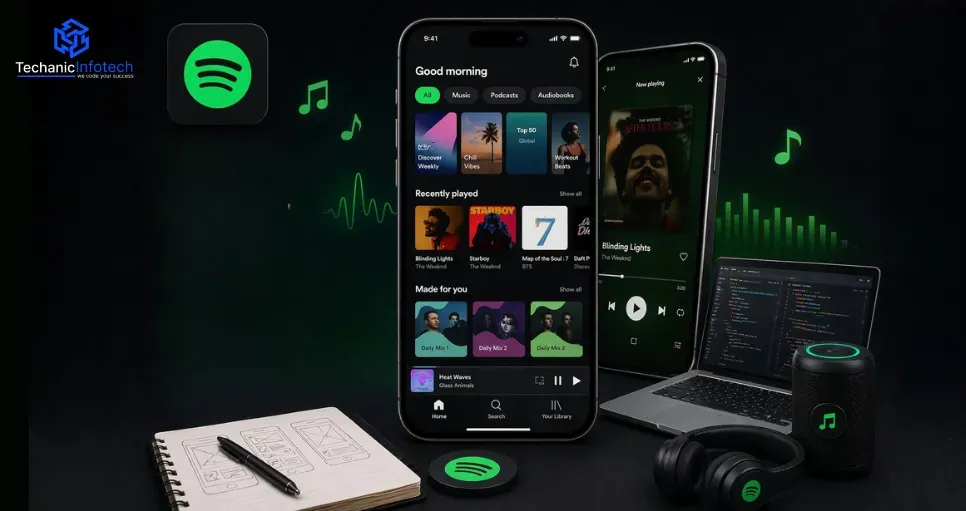
Music Streaming App Development
How to Build an App Like Spotify: Step-by-Step Guide for 2026
April 16, 2026
April 16, 2026
Key Takeaways
Building a Spotify-like app requires the right mix of features, user experience, and scalable technology to ensure long-term success and user retention.
The mobile app development cost can start around $8,000 for an MVP and increase based on advanced features, integrations, and overall complexity.
Licensing is a critical factor, as legal music streaming requires proper agreements with labels, artists, and distributors.
Monetisation strategies like subscriptions, ads, and premium features help generate consistent revenue and support business growth.
Starting with an MVP and scaling gradually allows startups to reduce risk, optimise costs, and improve the app based on real user feedback.
Music streaming has completely transformed how people discover, play, and share their favourite tracks.
From personalised playlists to smart recommendations, apps today deliver seamless listening experiences across devices.
But what does it really take to build something similar? If you’re planning to develop an app like Spotify, you need more than just a sleek interface; you need the right features, technology, and strategy.
So, how can you turn your idea into a successful music streaming platform?
In this guide, we’ll break down everything you need to know, including core features, development steps, estimated costs, and proven monetization strategies to help you get started with confidence.
Spotify dominates the music streaming industry with massive growth and revenue. But how big is its market impact? Let’s explore key stats shaping its business model and future growth.
Spotify reached over 751 million monthly active users globally in 2025, showing strong user growth and global dominance in music streaming platforms.
The platform generated €17.1 billion in total revenue in 2025, highlighting its strong monetization strategy driven by premium subscriptions and ads.
Premium subscribers crossed 290 million in 2025, proving Spotify’s ability to convert free users into paid customers while maintaining consistent growth and strong user engagement worldwide.
Building a successful music streaming platform starts with understanding essential Spotify-like app features that users expect today.
From seamless playback to smart personalization, these features define usability, engagement, and scalability while helping your app compete effectively in the modern digital music market.
A smooth onboarding experience is one of the most important mobile app features in a music streaming platform.
Users should sign up using email, phone numbers, or social accounts. Profile management lets users customize preferences, follow artists, save playlists, and manage subscriptions.
This data also helps track listening behaviour, enabling personalised recommendations and notifications that improve engagement, loyalty, and long-term user retention.
An intelligent search and discovery system is critical when you build a music streaming app like Spotify. Users should easily find songs, albums, artists, podcasts, or genres.
Advanced discovery features such as mood-based playlists, trending tracks, and new releases keep content fresh.
A strong discovery experience reduces drop-offs, increases listening time, and ensures users consistently find music that matches their taste.
High-quality streaming is the foundation of Spotify clone app development. Users expect fast loading, minimal buffering, and adaptive audio quality based on network conditions.
Offline playback is essential for premium users, allowing downloads for uninterrupted listening without internet access.
This feature significantly improves usability for travellers and commuters while enhancing overall user satisfaction and perceived app value.
Personalisation is a defining element of successful Spotify app development.
AI-driven algorithms analyse user behaviour, listening history, and preferences to deliver accurate song and playlist recommendations. Features like custom mixes and weekly discoveries keep users engaged.
Strong personalisation increases session duration, improves content discovery, and builds emotional connections between users and the platform.
Playlist functionality empowers users to control their listening experience. Users should be able to create, edit, share, and collaborate on playlists easily.
Smart playlist suggestions based on activity or mood add extra value. This feature encourages repeat usage, social sharing, and deeper engagement, turning casual listeners into loyal, long-term users of the app.
A flexible monetization system supports sustainable growth. The app should offer free and premium plans with secure payment gateways.
Premium features like ad-free listening, offline downloads, and enhanced audio quality encourage upgrades.
Transparent billing, easy renewals, and simple plan management help build trust and reduce churn among paying users.
Analytics and engagement tools are essential in mobile app development for music streaming platforms.
Analytics track user behaviour, popular content, and listening trends. Push notifications inform users about new releases, personalised playlists, or updates.
When used thoughtfully, these tools increase engagement, improve retention, and help businesses continuously refine the app experience.
Estimating the mobile app development cost is essential before building a streaming platform like Spotify. On average, an app like Spotify can be built for around $8,000, depending on features, design, and overall development complexity.
|
Development Element |
Description |
Estimated Cost |
|
UI/UX Design |
Clean layout, user flow, and interactive design |
$300 – $500 |
|
Frontend Development |
App interface and user-side functionality |
$500 – $800 |
|
Backend Development |
Servers, database, and core logic setup |
$800 – $1,200 |
|
Music Streaming Engine |
Audio processing and real-time streaming |
$700 – $1,000 |
|
Third-party Integrations |
Payment gateways, APIs, and analytics tools |
$300 – $600 |
|
Testing & QA |
Performance checks and bug fixing |
$200 – $400 |
|
Deployment |
App store launch and configuration |
$150 – $300 |
|
Maintenance & Updates |
Ongoing support and feature improvements |
$400 – $700 |
This music streaming app development guide explains the complete process of building a Spotify-like platform, from early planning to post-launch growth.
Each step focuses on usability, scalability, and performance to help businesses create a competitive music streaming app that meets modern user expectations.
Begin with in-depth market research to understand user needs, competitors, and gaps. Analyze pricing models, user behaviour, and expected music streaming app development cost.
This step helps validate demand, define goals, reduce financial risk, and ensure your app idea aligns with real market opportunities.
Clearly outline your MVP by selecting essential Spotify-like app features such as streaming, search, playlists, and recommendations.
Separating must-have features from optional ones prevents scope creep, speeds up development, and ensures early users receive real value from the first release.
Select a monetization strategy that aligns with current mobile app development trends, such as freemium models, subscriptions, or ads.
Consider free trials, pricing tiers, and upgrade benefits. A flexible revenue model supports sustainable growth without compromising user experience.
Licensing is a core part of music streaming app development. Secure rights from labels, publishers, or aggregators and ensure proper royalty distribution.
Legal compliance protects your app from takedowns and builds long-term trust with content owners and users alike.
Follow a proven mobile app design guide to create an intuitive and visually appealing interface. Focus on easy navigation, quick access to music, and consistent branding.
Strong UI/UX design improves engagement, reduces churn, and enhances overall listening satisfaction.
Choosing the right tools is critical. A reliable mobile app tech stack guide helps you decide between native or cross-platform development, backend frameworks, databases, and cloud services. The right stack ensures scalability, performance, and smoother future upgrades.
A solid backend is the foundation of audio streaming app development. It manages user data, content libraries, playlists, and real-time streaming.
Scalable architecture ensures fast load times, minimal downtime, and a seamless listening experience as your user base grows.
Thorough testing ensures performance, security, and reliability before launch. If your goal is to build a Spotify alternative app, testing across devices and networks is essential. This step helps eliminate bugs, improve speed, and protect user data.
Publish your app by following best practices on how to publish an app on App Store and Google Play. Monitor analytics, user feedback, and engagement metrics. Continuous updates and scaling strategies help your app grow and remain competitive over time.
Turning your app into a revenue-generating platform requires the right strategy. From subscriptions to ads, smart monetization methods help drive consistent growth and long-term business sustainability.
Offer a free version with limited features while encouraging users to upgrade for ad-free listening, offline access, and better quality. This model helps attract users and convert them into paying subscribers.
Integrate audio, display, and video ads within the free version of your app. This strategy helps recover the cost to build a music streaming app while generating steady revenue from non-paying users.
Create multiple subscription levels with different pricing and features. Offering flexible plans, like individual, family, or student options, increases accessibility and encourages users to choose suitable plans.
Collaborate with brands, artists, and influencers to promote content or run sponsored campaigns. These partnerships boost revenue, expand reach, and create engaging experiences within your app ecosystem.
Use anonymized user data to provide valuable insights to artists and labels. A music streaming app development company can integrate analytics dashboards, promotional tools, and audience insights to unlock new monetization opportunities while maintaining user privacy and platform trust.
Developing a music streaming platform is a strategic investment that combines technology, creativity, and user-focused design.
To develop an app like Spotify, businesses must carefully balance feature selection, performance, licensing, and scalability while keeping user experience at the center.
From smart recommendations to seamless audio playback, every element plays a role in building long-term engagement.
Success also depends on choosing the right tech stack, controlling development costs, and planning for future growth.
With the right roadmap, experienced development team, and clear monetization strategy, a Spotify-like app can stand out in a competitive market.
A well-executed approach not only attracts users but also creates sustainable revenue opportunities and long-term brand value.
Developing a Spotify-like app usually takes 4 to 8 months, depending on features, platform choice, design complexity, licensing requirements, and the experience of the development team.
The minimum cost typically starts around $8,000 for an MVP with basic features. Advanced functionality, scalability, and licensing can increase the budget up to $80,000 or more.
Yes, music licenses are mandatory. Apps must secure rights from labels, publishers, or aggregators to stream music legally and ensure proper royalty payments to rights holders.
Yes, startups can build a Spotify alternative app by focusing on niche audiences, unique features, and smart monetization while starting with an MVP to reduce initial development risk.
Most businesses start with iOS and Android to reach a wider audience. Cross-platform development helps reduce cost and time while maintaining a consistent user experience.
Key features include user registration, music search, playlist creation, offline listening, personalized recommendations, and a smooth audio streaming experience to keep users engaged and returning regularly.
Revenue comes from subscriptions, ads, in-app purchases, and partnerships. Premium plans, ad-free listening, and exclusive content are common strategies to generate consistent income.
Yes, apps can scale over time by upgrading servers, adding features, and improving performance. Starting with an MVP allows gradual expansion based on user demand and feedback.
Common technologies include React Native or Flutter for frontend, Node.js for backend, cloud services like AWS, and streaming protocols for smooth audio delivery and performance.
User experience is critical. A clean interface, fast loading speed, and personalized recommendations directly impact user retention, engagement, and overall success of the app.


Abhishek Jangid is the CEO of Techanic Infotech, with extensive experience in mobile app and web development. He specializes in helping businesses turn innovative ideas into scalable digital solutions through strategic planning and modern technology.