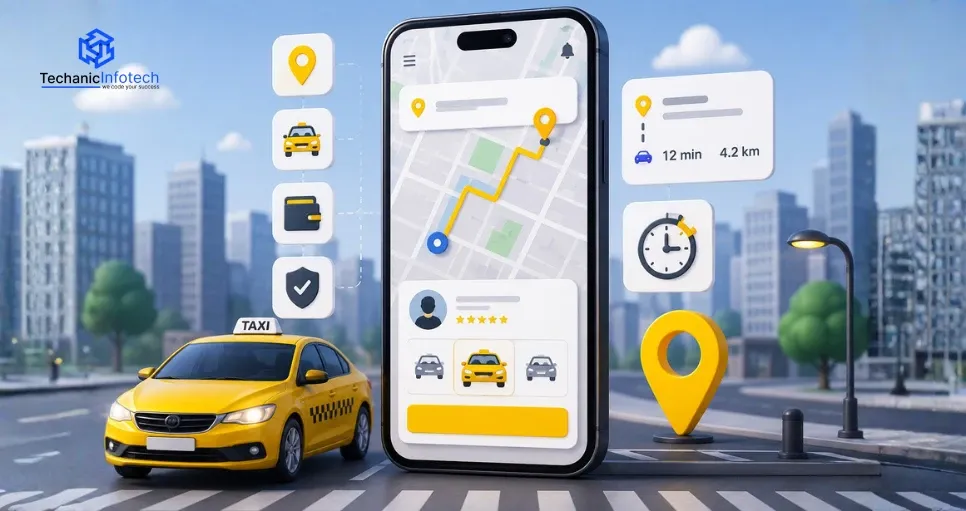
The global ride-hailing industry has transformed the way people travel, with millions of users relying on taxi booking platforms every single day. What once started as a convenience-based service has now evolved into a rapidly growing digital ecosystem driven by smart technology, real-time connectivity, and changing customer expectations.
For entrepreneurs and startups, this market represents far more than just impressive statistics. It offers a powerful business opportunity with long-term scalability, recurring revenue potential, and strong demand across urban and suburban regions alike.
As digital transportation continues to expand in 2026, businesses are actively investing in innovative mobility solutions that improve user convenience, optimize driver operations, and deliver seamless booking experiences. From AI-powered route optimization to integrated digital payments and advanced user analytics, modern taxi platforms are becoming smarter and more efficient than ever before.
If you are planning to create a taxi app, understanding the latest industry trends, essential features, development process, and growth strategies is crucial before entering this competitive market.
In this complete guide, you will discover everything you need to know about building a successful taxi booking platform, including key technologies, estimated development costs, monetization opportunities, and expert insights to help your business stand out in the evolving mobility industry.
Let’s explore how you can turn your taxi app idea into a scalable and future-ready business solution.
A taxi booking app is a digital platform that allows users to book rides directly through their smartphones with just a few taps. These applications connect passengers with nearby drivers in real time, making urban transportation faster, smarter, and more convenient than traditional taxi services.
Modern taxi platforms use advanced technologies such as GPS tracking, route optimization, AI-driven dispatch systems, and secure digital payments to deliver a seamless travel experience. Users can easily select pickup and drop-off locations, view estimated fares, track drivers live, and make cashless payments without any hassle.
Unlike traditional cab booking methods, today’s ride-hailing solutions are designed to offer greater flexibility, transparency, and safety. Customers can schedule rides instantly, choose vehicle types based on their preferences, monitor trip progress in real time, and even share ride details with friends or family for added security.
In 2026, the demand for smart mobility solutions continues to rise as consumers increasingly prefer app-based transportation services for daily commuting, airport transfers, corporate travel, and on-demand rides. Features like AI-powered chat support, multi-payment integration, driver ratings, ride history, and loyalty programs have become essential for delivering a premium user experience.
Popular platforms like Uber, Lyft, and Ola have already transformed the transportation industry by setting new standards for convenience and accessibility.
As the industry continues to evolve, businesses and startups are actively investing in innovative mobility solutions to strengthen their market presence. This growing demand is one of the key reasons why many entrepreneurs are exploring opportunities in taxi app development and launching feature-rich transportation platforms tailored to modern user expectations.
The transportation industry is evolving rapidly, and digital mobility solutions are becoming an essential part of modern urban lifestyles. As users increasingly prefer fast, secure, and app-based commuting services, investing in a taxi platform has become a highly profitable business opportunity for startups and enterprises alike.
Here are some of the biggest reasons why businesses are choosing to enter the ride-hailing market in 2026:
The global ride-hailing industry continues to generate massive revenue due to rising smartphone usage and the increasing demand for on-demand transportation services. Consumers now prefer instant booking experiences that offer convenience, transparency, and cashless payments.
When businesses create a taxi app with user-focused features and seamless functionality, they gain the potential to build a scalable digital platform capable of generating recurring revenue through ride commissions, surge pricing, subscriptions, and in-app partnerships.
A well-designed transportation platform can quickly become a part of users’ daily routines, especially in high-demand urban markets.
Modern consumers expect faster and more efficient commuting experiences. Traditional taxi services are gradually being replaced by intelligent mobility platforms that provide real-time tracking, automated bookings, and digital payment options.
As smart cities continue to expand worldwide, the demand for technology-driven transportation services is expected to grow significantly. Businesses investing in mobile app development for transportation solutions are positioning themselves to meet this growing market demand while improving accessibility and customer convenience.
The shift toward digital-first commuting has created enormous opportunities for innovative ride-booking platforms.
The ride-hailing market is highly competitive, but businesses that focus on innovation and customer experience can establish a strong market presence. Modern users are no longer satisfied with basic booking functionality. They expect advanced features, personalized experiences, and enhanced safety measures.
By integrating features such as AI-powered ride matching, smart fare estimation, multilingual support, and real-time driver analytics, businesses can create a differentiated platform that attracts and retains loyal users.
Partnering with an experienced taxi booking app development company can help businesses build scalable and feature-rich applications that stand out in a crowded market.
Artificial intelligence is reshaping the future of mobility platforms in 2026. Businesses are increasingly leveraging AI-driven technologies to improve operational efficiency, reduce wait times, and deliver smarter customer experiences.
Advanced solutions such as predictive route optimization, automated customer support, intelligent pricing algorithms, and driver behavior analysis are becoming standard features in modern transportation platforms.
Collaborating with an experienced AI development company or chatbot development company allows businesses to integrate intelligent automation into their applications, improving both user engagement and operational performance.
One of the biggest advantages of launching a ride-booking platform is the ability to generate revenue through multiple business models. Beyond ride commissions, businesses can monetize their platforms through premium memberships, advertising partnerships, subscription plans, cancellation charges, and dynamic pricing strategies.
Effective taxi app monetization strategies help businesses maximize long-term profitability while maintaining a competitive user experience.
Modern transportation platforms are highly scalable and can expand into multiple service categories over time. Businesses can gradually introduce additional services such as bike rentals, corporate transportation, delivery solutions, airport transfers, and even integrated digital wallet systems.
With the right mobile app tech stack and ongoing mobile app maintenance, businesses can continuously improve performance, add new features, and adapt to changing customer expectations without rebuilding the platform from scratch.
As the mobility industry continues to evolve, investing in innovative transportation technology is no longer just an option it has become a strategic move for businesses looking to build future-ready digital solutions.
The next step is understanding which features are essential for building a successful and scalable taxi booking platform in today’s competitive market.
The success of leading ride-hailing platforms is not just based on branding or marketing, it is driven by user-focused features that improve convenience, safety, and overall customer experience.
When businesses plan to create a taxi app, one of the most important factors is building a feature-rich platform that encourages users to return again and again. In today’s competitive mobility industry, customers expect fast booking experiences, real-time updates, secure transactions, and personalized services.
To successfully design a taxi booking app in 2026, businesses must focus on advanced functionality that enhances both rider satisfaction and operational efficiency.
Here are some of the most important features every modern taxi platform should include:
A personalized onboarding experience plays a major role in improving customer retention. User profiles allow passengers to securely save personal details, preferred payment methods, favorite locations, and ride preferences for faster future bookings.
Modern platforms built through professional Mobile app development practices often include AI-based personalization features that recommend ride options based on user behavior and travel history.
A well-optimized profile system helps businesses deliver a smoother and more customized user experience.
Real-time tracking has become one of the most essential features in modern transportation applications. Users expect complete visibility of their rides, including driver location, estimated arrival time, live route updates, and trip progress monitoring.
Advanced GPS integration combined with intelligent mapping technologies improves transparency and increases user confidence during every trip.
Many businesses now partner with an experienced AI development company to implement predictive route optimization and reduce passenger wait times.
Cashless payments are now a standard expectation for users worldwide. A successful ride-booking platform should support multiple payment options, including debit cards, credit cards, UPI, digital wallets, online banking, and in-app credits.
Businesses often collaborate with an experienced e-wallet app development to integrate secure and scalable payment systems that improve transaction speed and user convenience.
Smooth payment processing not only improves customer satisfaction but also strengthens trust and platform reliability.
Ride scheduling allows users to book transportation services in advance based on their travel requirements. Whether users need airport transfers, corporate rides, or event transportation, scheduled booking features improve convenience and trip planning.
In 2026, modern transportation platforms are increasingly using predictive algorithms and automation to optimize scheduled ride allocation and driver availability.
This feature significantly enhances the overall user experience while improving operational management for businesses.
Providing users with access to previous ride details, invoices, payment summaries, and trip history improves transparency and financial tracking.
Digital receipts simplify expense management for both individual users and corporate clients. Organized ride records also help customer support teams resolve disputes faster and improve service quality.
This functionality is considered a core component of scalable Mobile app Maintenance strategies because it improves long-term user engagement and operational efficiency.
Transparent pricing is essential for building customer trust. Fare estimation features allow users to view approximate ride costs before confirming bookings, helping them make informed travel decisions.
Modern pricing systems use AI-powered calculations based on traffic conditions, distance, demand fluctuations, and estimated travel time to provide more accurate fare predictions.
This feature improves transparency while minimizing pricing-related dissatisfaction among users.
Smooth communication between riders and drivers is critical for ensuring a hassle-free travel experience. In-app chat and calling features enable passengers and drivers to coordinate pickup locations, share updates, and resolve trip-related concerns instantly.
Many businesses now work with a professional chatbot development company to integrate AI-powered customer support systems that provide instant assistance and automate common user queries.
This improves response times while reducing support workload.
Ratings and reviews help maintain service quality and platform credibility. After every trip, users can share feedback about drivers, ride experiences, vehicle cleanliness, and overall service satisfaction.
This feature encourages accountability while helping businesses monitor service standards more effectively.
A transparent review system also builds trust among new users and improves customer retention over time.
Push notifications keep users informed about booking confirmations, driver arrivals, ride updates, promotional offers, and payment confirmations in real time.
Smart notification systems improve user engagement while ensuring passengers never miss important trip-related information.
Businesses using advanced mobile app tech stack solutions often integrate AI-driven notifications to personalize communication and improve customer interaction.
User safety has become a top priority in modern transportation applications. Features such as SOS buttons, emergency contact sharing, live trip sharing, and driver verification systems help create a safer ride experience for passengers.
In 2026, many platforms are also implementing AI-powered fraud detection and real-time safety monitoring tools to strengthen platform security.
By integrating these advanced features, businesses can build a scalable, user-friendly, and future-ready transportation platform capable of competing in the rapidly growing mobility industry.
A successful ride-booking platform is not only built for passengers it must also provide drivers with a seamless, efficient, and user-friendly experience. A well-designed driver panel helps improve ride management, operational performance, driver satisfaction, and overall platform reliability.
When businesses create a taxi app, optimizing the driver experience becomes equally important for maintaining smooth daily operations and delivering high-quality transportation services.
Below are the key driver panel features every modern taxi platform should include in 2026:
Real-time ride request management allows drivers to instantly receive nearby booking requests and accept rides without delays. This feature helps reduce passenger wait times while improving ride allocation efficiency.
Advanced ride assignment systems powered by intelligent algorithms automatically connect drivers with the most suitable passengers based on location, availability, traffic conditions, and estimated arrival time.
Businesses working with a professional taxi app development company often integrate AI-driven dispatch systems to optimize ride distribution and improve operational performance.
Efficient navigation is one of the most important features for drivers. Integrated GPS tracking and smart route optimization help drivers choose the fastest and safest routes while avoiding traffic congestion and unnecessary delays.
Modern transportation platforms use AI-powered mapping technologies to provide real-time traffic updates, predictive routing, and dynamic route adjustments for improved efficiency.
Companies investing in advanced Mobile app tech stack solutions can significantly enhance navigation accuracy and reduce ride completion times.
A dedicated earnings dashboard enables drivers to monitor their daily, weekly, and monthly income in real time. This feature provides detailed insights into completed rides, incentives, bonuses, cancellations, and payment history.
Clear financial analytics help drivers better manage their schedules and maximize earning opportunities during peak demand hours.
A transparent dashboard system also improves driver engagement and increases platform trust.
Driver profile management allows drivers to securely update personal information, upload documents, manage vehicle details, and control availability status directly from the app.
Keeping driver profiles updated improves platform transparency and enhances passenger confidence during ride bookings.
Professional Android app development services and iOS app development services typically include secure profile management systems with document verification and real-time approval workflows for smoother onboarding.
Reliable support systems are essential for resolving driver concerns quickly and efficiently. In-app support features allow drivers to contact customer service teams, report issues, and receive assistance without leaving the application.
Many businesses now integrate AI-powered support systems through experienced chatbot development solutions to automate common queries and provide faster response times.
This improves driver satisfaction while reducing operational workload for support teams.
Ride history management helps drivers access previous trip details, payment summaries, customer ratings, and route information whenever required.
Detailed trip analytics allow drivers to monitor performance trends, identify peak earning periods, and improve operational productivity over time.
This feature also supports long-term mobile app maintenance strategies by improving transparency and platform usability.
Flexible availability controls allow drivers to manage their working hours more efficiently. Drivers can switch between online and offline modes, schedule shifts, and set ride preferences based on location or trip distance.
This feature improves driver flexibility while helping businesses manage fleet operations more effectively.
A two-way rating system helps maintain professional service standards across the platform. Drivers can receive passenger feedback, monitor ratings, and improve service quality based on user reviews.
Positive ratings encourage better driver performance and strengthen trust within the transportation ecosystem.
Modern ride-booking platforms increasingly offer instant payout options and integrated digital wallets for drivers. Secure wallet systems simplify transaction management and improve payment accessibility.
Businesses looking to build a P2P payment app can integrate scalable payment solutions that support instant withdrawals, driver incentives, bonuses, secure transfers, and multi-currency transactions for a smoother financial experience.
Driver safety remains a major priority in modern transportation platforms. Features such as emergency alerts, trip sharing, identity verification, and real-time safety monitoring help create a secure environment for drivers during active rides.
In 2026, AI-powered fraud detection and automated risk monitoring systems are becoming standard safety components in modern ride-booking applications.
A strong driver panel ultimately improves operational efficiency, enhances service quality, and creates a more reliable experience for both drivers and passengers.
A powerful admin panel is the backbone of every successful ride-booking platform. While passengers and drivers interact with the front-end application, administrators manage the entire ecosystem behind the scenes to ensure smooth operations, security, performance, and business growth.
An advanced admin dashboard helps businesses monitor operations in real time, manage users efficiently, track financial activities, and maintain service quality across the platform.
Here are the key admin panel features every modern transportation platform should include in 2026:
A centralized dashboard gives administrators complete visibility into platform performance, ride activity, user engagement, revenue generation, and operational efficiency.
Modern analytics systems provide real-time insights into booking trends, peak traffic hours, cancellation rates, customer behavior, and driver performance. These insights help businesses make data-driven decisions and improve long-term operational strategies.
AI-powered analytics tools are also becoming increasingly popular for predicting demand patterns and improving resource allocation.
Efficient account management is essential for maintaining trust and service quality within the platform. Admins should be able to manage passenger accounts, approve driver registrations, verify uploaded documents, monitor activity, and resolve disputes quickly.
A streamlined management system improves onboarding efficiency while helping businesses maintain high safety and compliance standards.
Strong account verification systems also reduce fraudulent activity and improve overall platform reliability.
Ride monitoring and transaction control are critical for maintaining operational transparency and financial accuracy. Administrators should be able to monitor active rides, manage completed trips, review cancellations, and oversee all payment activities through a centralized system.
Automated transaction tracking helps businesses maintain accurate financial records while simplifying refund processing and dispute management.
A well-structured management system improves platform efficiency and enhances the user experience for both passengers and drivers.
Marketing tools integrated within the admin panel allow businesses to create promotional campaigns, referral rewards, discount offers, and loyalty programs to improve customer acquisition and retention.
Targeted promotional strategies help increase app engagement while encouraging repeat bookings from existing users.
In 2026, many transportation platforms are using AI-driven customer segmentation to deliver personalized offers based on user behavior and ride history.
Continuous system monitoring is essential for maintaining application stability, performance, and security. Admins should be able to monitor server activity, app uptime, API performance, and technical errors in real time.
A well-optimised taxi booking app tech stack plays a major role in improving platform scalability, operational efficiency, and long-term performance management.
Regular updates, bug fixes, and security improvements help ensure a smooth and uninterrupted user experience across the platform. Businesses that prioritize proactive maintenance and performance optimization are better positioned to scale their applications successfully in competitive markets.
Revenue management tools help administrators monitor commissions, driver payouts, taxes, incentives, and platform earnings through detailed financial reports.
Understanding how taxi apps make money is essential for building a profitable transportation platform, as automated revenue tracking simplifies accounting operations while improving financial transparency across the platform.
This feature becomes especially important as businesses expand operations across multiple regions and payment systems.
A dedicated support management system enables administrators to handle user complaints, technical issues, refund requests, and emergency situations more efficiently.
Fast issue resolution improves customer satisfaction and strengthens overall platform credibility.
Many modern platforms are now integrating AI-powered support systems to automate ticket management and improve response times.
Security management tools help administrators monitor suspicious activity, prevent fraudulent transactions, and protect sensitive user information.
Advanced platforms in 2026 will increasingly use AI-based fraud detection systems, encrypted data storage, and real-time risk monitoring to strengthen platform security.
Strong security infrastructure is essential for building long-term trust among users and drivers.
Admin panels should also allow businesses to manage app banners, announcements, promotional messages, and push notifications from a centralized interface.
This helps businesses improve user communication, promote new features, and maintain active engagement with customers.
A feature-rich admin panel ultimately helps businesses manage operations more efficiently, improve platform performance, and deliver a reliable experience across the entire transportation ecosystem.
Building a successful ride-booking platform in 2026 requires much more than basic app functionality. Today’s users expect fast performance, AI-powered features, secure payments, real-time tracking, and a seamless user experience across every device.
Whether you are a startup, enterprise, or transportation business, understanding the right development approach is essential if you want to develop a Taxi App that can compete in the modern mobility industry.
Below is a complete step-by-step guide that explains how to build a scalable, future-ready, and feature-rich transportation platform.
Before starting development, clearly identify your business objectives, target audience, and app type. Decide whether you want to launch:
A traditional taxi booking platform
A ride-sharing application
A corporate transportation solution
An airport transfer service
A bike or scooter rental platform
Understanding your business model helps define your platform architecture, required features, and long-term monetization strategy.
At this stage, businesses should also identify:
Revenue sources
Target regions
User pain points
Driver acquisition strategy
Competitive advantages
A clear roadmap helps streamline the entire mobile app development process.
Thorough market research helps businesses understand industry trends, customer expectations, and competitor strategies.
Analyze leading ride-hailing platforms to identify:
Popular features
Pricing strategies
Customer engagement models
Safety standards
Monetization approaches
Studying user reviews can also help identify gaps in existing platforms and uncover opportunities for innovation.
In 2026, businesses are increasingly focusing on AI-driven personalization, electric vehicle integration, and smart mobility features to differentiate themselves in competitive markets.
Feature planning is one of the most critical stages when businesses design a taxi app.
Your platform should include:
Real-time ride tracking
Secure payments
Driver and passenger profiles
Fare estimation
Push notifications
Ride scheduling
Ratings and reviews
In-app communication
Emergency safety tools
Multi-language support
Advanced platforms may also include:
AI-powered route optimization
Smart pricing systems
Voice assistant integration
Predictive ride matching
Automated customer support
Choosing the right feature set directly impacts user retention and platform scalability.
Choosing the right backend and frontend technologies is essential for building a stable and scalable application.
A modern taxi booking app tech stack typically includes the following:
React Native or flutter
Node.js or Python for backend development
Firebase for real-time databases
Google Maps API for navigation
Cloud infrastructure for scalability
AI and analytics tools for automation
Selecting scalable technologies improves performance, security, and long-term maintainability.
User experience plays a major role in the success of modern mobility platforms. Your application should provide a clean, intuitive, and responsive interface that simplifies the booking process for both riders and drivers.
Key design priorities include:
Easy navigation
Fast booking flow
Minimal loading time
Real-time updates
Simple payment process
Accessible design elements
A professional user interface improves engagement and helps build long-term customer trust.
The passenger app is the primary interface users interact with daily. Development should focus on performance, speed, convenience, and security.
Essential rider-side functionality includes:
Account registration
GPS-based location detection
Instant ride booking
Ride scheduling
Secure payment integration
Driver tracking
Ride history
Push notifications
Businesses offering premium experiences often integrate AI-powered personalization and automated support systems to improve customer satisfaction.
The driver app should help drivers efficiently manage rides, navigation, earnings, and communication.
Core driver features include:
Ride request management
GPS navigation
Route optimization
Earnings dashboard
Availability controls
Wallet management
Trip analytics
Ratings and feedback
Professional Android app development services and iOS app development services help ensure smooth performance across all major devices and operating systems.
Secure and flexible payment processing has become a standard requirement for transportation applications.
Modern platforms support:
Credit and debit cards
Digital wallets
UPI payments
Contactless transactions
Corporate billing
Subscription payments
Businesses planning to build a P2P payment app alongside transportation services can also integrate wallet transfers, instant payouts, and multi-currency support to improve transaction flexibility.
Security-focused payment infrastructure increases customer trust and reduces transaction-related issues.
Artificial intelligence is transforming the transportation industry in 2026. Businesses are increasingly partnering with an experienced AI development company to improve efficiency and automate operations.
AI integration can help with:
Dynamic pricing
Driver allocation
Fraud detection
Route prediction
Customer behavior analysis
Smart recommendations
Many businesses also collaborate with a professional chatbot development company to automate customer support and improve response times through AI-powered virtual assistants.
Testing ensures your platform performs smoothly under real-world conditions. Every feature should be tested for functionality, security, speed, compatibility, and scalability before launch.
Testing stages typically include:
Functional testing
Performance testing
Security testing
Device compatibility testing
GPS accuracy testing
Payment testing
User experience testing
A stable and bug-free application improves launch success and reduces operational risks.
Once development and testing are complete, the next step is deployment.
Businesses should optimize:
App store descriptions
Screenshots
Keywords
App performance
Security compliance
Understanding how to publish an app on App Store and Google Play Store properly is essential for improving visibility and attracting early users.
A strong launch strategy should also include:
Influencer marketing
Paid advertising
Referral campaigns
Social media promotions
Driver onboarding campaigns
Launching the app is only the beginning. Continuous optimization and upgrades are necessary for long-term success.
Ongoing mobile app Maintenance includes:
Performance optimization
Security updates
Bug fixing
Feature enhancements
API monitoring
Server maintenance
Businesses should continuously analyze user feedback, ride patterns, and operational performance to improve the platform over time.
Once the platform gains traction, businesses can expand services and improve profitability through advanced taxi app monetisation strategies.
Revenue opportunities may include:
Ride commissions
Surge pricing
Subscription plans
Advertising partnerships
Corporate accounts
Loyalty programs
Premium ride categories
Understanding the cost to create taxi app infrastructure and long-term scaling requirements is equally important for maintaining sustainable business growth.
A properly planned and optimized ride-booking platform can evolve into a highly scalable digital transportation ecosystem capable of serving millions of users globally.
Choosing the right taxi booking app tech stack is one of the most important decisions during the development process. The technologies you select directly impact your app’s speed, scalability, security, real-time performance, and overall user experience.
Modern transportation platforms require powerful frontend frameworks, scalable backend systems, secure payment integration, and real-time communication technologies to handle thousands of concurrent users efficiently.
A well-optimized tech stack helps businesses deliver a smooth booking experience, accurate ride tracking, secure transactions, and long-term platform stability.
Here’s a simplified and modern tech stack commonly used for building scalable taxi booking applications in 2026:
|
Component |
Recommended Technologies |
Purpose |
|
Frontend Development |
Flutter, React Native |
Cross-platform app development for Android and iOS using a single codebase |
|
Native App Development |
Swift (iOS), Kotlin (Android) |
Delivers high-performance native mobile applications |
|
UI/UX Design |
Figma, Adobe XD |
Creates intuitive and user-friendly app interfaces |
|
Backend Development |
Node.js, Python |
Handles server-side logic, APIs, and real-time data processing |
|
Database Management |
PostgreSQL, MongoDB |
Stores user data, ride history, payments, and analytics securely |
|
Real-Time Communication |
WebSockets, Firebase |
Supports live ride tracking and instant updates |
|
GPS & Navigation |
Google Maps API, Mapbox |
Enables route optimization, live tracking, and location services |
|
Payment Integration |
Stripe, PayPal |
Processes secure online payments and wallet transactions |
|
Cloud Infrastructure |
AWS, Google Cloud |
Ensures scalability, data storage, and high app availability |
|
Push Notifications |
Firebase Cloud Messaging |
Sends ride alerts, booking updates, and promotional notifications |
|
AI & Automation |
OpenAI APIs, TensorFlow |
Supports smart pricing, chatbot support, and predictive analytics |
Modern businesses investing in mobile app development cost are increasingly integrating AI-powered technologies to improve ride allocation, customer engagement, fraud detection, and operational efficiency.
The right combination of technologies not only improves app performance but also helps businesses scale faster while maintaining security and reliability in competitive markets.
One of the most common questions businesses ask before entering the mobility industry is, "What is the actual cost to create taxi app solutions in 2026?”
The overall development cost usually ranges between $15,000 to $90,000+, depending on the complexity of the platform, feature requirements, technology selection, and development approach.
A basic ride-booking application with essential functionality will naturally cost less compared to an advanced platform integrated with AI automation, real-time analytics, smart payment systems, and scalable cloud infrastructure.
Several important factors directly influence the total development cost, including:
App complexity and feature set
UI/UX design quality
Backend infrastructure
Real-time GPS integration
Payment gateway implementation
Security systems
AI-powered automation features
Cross-platform compatibility
Third-party API integrations
Post-launch maintenance and scaling
For example, simple functionalities like user registration, ride booking, and notifications require relatively lower investment. However, advanced features such as intelligent route optimization, live driver tracking, dynamic pricing algorithms, wallet integration, and automated customer support can significantly increase overall development expenses.
Businesses investing in professional Mobile app development services often focus on scalability and long-term performance rather than just initial launch costs. Choosing the right architecture and technologies from the beginning helps reduce future operational expenses and improve platform stability as the user base grows.
The ride-hailing industry continues to evolve rapidly, creating massive opportunities for businesses looking to enter the digital transportation market. From intelligent ride management and AI-powered automation to secure payment systems and scalable infrastructure, modern taxi platforms are transforming the way people travel in 2026.
However, building a successful transportation platform requires much more than just launching an application. Businesses need the right development strategy, advanced features, scalable technologies, and a seamless user experience to stand out in today’s competitive market.
By understanding the complete development process, selecting the right technology stack, implementing user-focused features, and planning effective monetization strategies, businesses can build a future-ready platform capable of long-term growth and profitability.
Whether you are a startup planning your first mobility solution or an enterprise looking to expand transportation services, investing in a well-optimized taxi booking platform can unlock significant business potential.
A basic taxi app usually takes 2–4 months to develop, while advanced platforms with AI features may require 6 months or more.
The Cost to create taxi app solutions typically ranges from $15,000 to $90,000+, depending on features, design, and development complexity.
Popular technologies include Flutter, React Native, Node.js, Python, Firebase, PostgreSQL, and Google Maps API for building scalable ride-booking platforms.
Real-time GPS tracking improves ride accuracy, passenger safety, navigation, and driver coordination while reducing waiting times.
Key features include ride tracking, secure payments, ride scheduling, push notifications, fare estimation, ratings, and emergency safety tools.
Understanding how Taxi Apps Make Money is important, as platforms generate revenue through ride commissions, surge pricing, subscriptions, ads, and premium services.
Yes, AI helps improve route optimization, smart pricing, fraud detection, automated support, and ride management efficiency.
Regular Mobile app Maintenance helps improve app security, fix bugs, optimize performance, and support future updates.
Yes, frameworks like Flutter and React Native help reduce development time and support both Android and iOS platforms efficiently.
An experienced taxi app development company helps build scalable, secure, and high-performing applications with long-term technical support.


Abhishek Jangid is the CEO of Techanic Infotech, with extensive experience in mobile app and web development. He specializes in helping businesses turn innovative ideas into scalable digital solutions through strategic planning and modern technology.