Mobile App Development
HR App Development: Features, Benefits, and Development Process in 2026
July 1, 2026
July 1, 2026
As businesses continue to embrace digital transformation, managing employees efficiently has become a top priority. Traditional HR processes often involve manual paperwork, fragmented communication, and time-consuming administrative tasks that reduce productivity and increase operational costs.
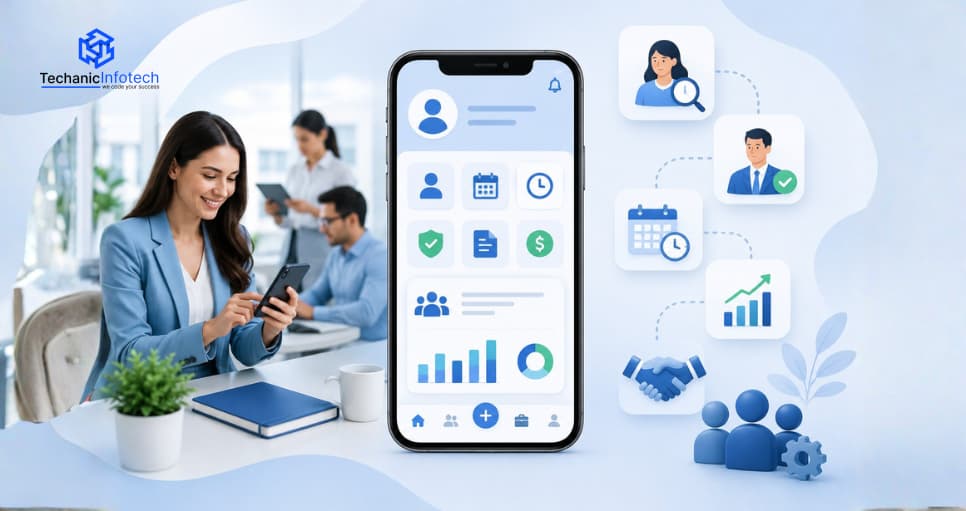
This is where HR app development plays a crucial role. Modern HR applications help organisations automate workforce management, employee onboarding, attendance tracking, payroll processing, performance monitoring, and internal communication through a centralised platform.
Whether you're a startup, SMB, or enterprise, investing in human resource app development can significantly improve operational efficiency, employee engagement, and decision-making capabilities.
HR app development refers to the process of building mobile and web-based applications that help organisations manage human resources, workforce operations, employee records, and business workflows digitally.
Modern HR management app development solutions combine multiple HR functions into a single platform, allowing businesses to streamline daily operations and improve employee experiences.
These applications are commonly used for:
Employee onboarding
Attendance and leave management
Payroll processing
Performance tracking
Recruitment management
Employee communication
Workforce analytics
Many organisations partner with a professional mobile app development company to build scalable and customised HR solutions that align with their business requirements and long-term growth objectives.
As businesses expand, workforce management app development becomes increasingly important for maintaining productivity, transparency, and employee satisfaction.
The demand for HR app development is increasing rapidly as organisations invest in cloud-based HR solutions, AI-powered automation, and workforce management platforms. The following statistics highlight the market's strong growth potential:
Current Market Size (2024): The global Human Resource Management (HRM) market was valued at approximately USD 27.5 billion in 2024.
Market Forecast (2030): The HRM market is projected to reach around USD 60.5 billion by 2030, driven by increasing adoption of digital HR technologies.
Growth Rate: The global HRM market is expected to grow at a compound annual growth rate (CAGR) of 14.4% between 2025 and 2030.
5-Year Outlook: Over the next five years, businesses are expected to accelerate investments in AI-powered recruitment, payroll automation, employee self-service portals, workforce analytics, and cloud-based HR platforms to improve operational efficiency.
10-Year Industry Outlook: Over the next decade, HR applications are expected to evolve into intelligent workforce management platforms, with AI-driven hiring, predictive analytics, employee experience management, and automated compliance becoming standard features across organisations.
The success of any HRMS app development project depends largely on the functionality it offers. Below are some essential features in mobile app solutions designed for HR management.
Employees should have access to a centralised profile containing personal details, employment history, certifications, contact information, and company records.
HR applications can automate attendance management through biometric integrations, GPS tracking, geofencing, and digital timesheets.
Employees can submit leave requests, view leave balances, and track approvals through the application, reducing manual administrative work.
Automated payroll processing helps organisations manage salaries, deductions, reimbursements, tax calculations, and payslip generation efficiently.
Digital onboarding simplifies document submission, policy acknowledgements, training schedules, and employee introductions.
Managers can conduct evaluations, set goals, monitor KPIs, and provide continuous feedback through integrated performance management systems.
Built-in recruitment tools help HR teams manage job postings, candidate applications, interview scheduling, and hiring workflows.
Real-time messaging, announcements, and company updates improve collaboration and employee engagement.
Organisations increasingly leverage AI integration in mobile apps to automate resume screening, employee support, workforce analytics, predictive hiring, and performance assessments.
Comprehensive dashboards provide valuable insights into employee productivity, workforce trends, retention rates, and organisational performance.
Investing in employee management app development provides organisations with a powerful digital solution to streamline HR operations, improve workforce productivity, and enhance employee engagement. From automating routine administrative tasks to providing valuable workforce insights, HR applications deliver long-term business value across organisations of all sizes.
One of the biggest advantages of HR app development is automation. HR teams can automate attendance tracking, leave approvals, payroll processing, onboarding, and employee record management. This reduces manual effort, minimises errors, and allows HR professionals to focus on strategic initiatives such as talent development and workforce planning.
Modern employees expect quick and convenient access to workplace resources. Through HR mobile app development, employees can view payslips, request leave, track attendance, update personal information, and communicate with HR teams anytime and anywhere, leading to higher satisfaction and engagement.
A centralised HR platform enables organisations to monitor employee attendance, productivity, performance metrics, and workforce allocation in real time. This makes workforce management app developments an essential investment for businesses seeking greater visibility into their operations.
Automating repetitive HR tasks significantly reduces paperwork, administrative overhead, and operational expenses. Organisations can save valuable time and resources while improving overall process efficiency.
Manual HR processes often result in errors and inconsistent records. HR applications maintain centralised and accurate employee data, helping businesses improve reporting accuracy and comply with labour regulations and company policies.
Advanced reporting and analytics dashboards provide HR managers and executives with real-time workforce insights. Access to accurate data helps businesses make informed decisions regarding hiring, employee performance, retention strategies, and resource planning.
Integrated recruitment tools streamline candidate management, interview scheduling, and onboarding workflows. This helps organisations attract top talent and ensure a smooth onboarding experience for new employees.
HR applications facilitate seamless communication through announcements, notifications, messaging systems, and feedback channels. Better communication helps improve collaboration and strengthen workplace culture.
Modern organisations are increasingly adopting AI integration in mobile apps to automate resume screening, employee support, workforce analytics, and performance evaluations. AI-powered capabilities improve efficiency while enabling more data-driven HR operations.
A well-developed custom HR app development solution can easily scale alongside your organisation. Whether you're expanding your workforce, opening new locations, or introducing new HR processes, the application can adapt to evolving business requirements without major disruptions.
Developing a successful HR application requires a structured and strategic approach. Each stage focuses on creating a secure, scalable, and user-friendly solution that meets organisational workforce management needs.
The process begins with identifying business goals, workforce challenges, user requirements, user roles, and feature priorities. This stage helps define the scope of the HR management app development project and ensures that the final product aligns with business objectives.
Businesses analyse competitors, industry trends, and employee expectations to create a clear development roadmap. Many organisations start by creating a minimum viable product (MVP) to validate their idea before investing in a full-scale HR solution.
Designers create intuitive user interfaces that simplify navigation for employees, HR teams, and management personnel. A well-designed interface improves adoption rates and enhances the overall employee experience.
Choosing the right technologies is essential for security, scalability, and performance. A comprehensive mobile app tech stack guide can help businesses select the most suitable frameworks, databases, cloud services, and infrastructure.
Developers build the frontend and backend systems while integrating payroll software, attendance tools, ERP systems, communication platforms, and third-party APIs. Partnering with experienced best full-stack development companies can help ensure smooth integration and long-term scalability.
The application undergoes extensive testing to ensure functionality, security, compatibility, and performance across different devices and operating systems. Thorough testing helps identify and resolve issues before launch.
After launch, regular updates, monitoring, security patches, and feature enhancements help maintain system performance and adapt to evolving business needs. Ongoing maintenance is crucial for keeping the HR application reliable, secure, and aligned with changing workforce requirements.
Selecting the right technology stack directly impacts application performance, security, and scalability.
Frontend Technologies:
React Native
Flutter
Swift (iOS)
Kotlin (Android)
Backend Technologies:
Node.js
Python
Java
.NET
Database Solutions:
PostgreSQL
MySQL
MongoDB
Cloud Platforms:
AWS
Microsoft Azure
Google Cloud
AI and Analytics Technologies
Organisations increasingly integrate AI into mobile apps to deliver predictive workforce analytics, automated workflows, and intelligent employee support systems.
Businesses can also consult the best full-stack development companies when selecting technology partners that can deliver end-to-end HR software solutions. Keeping up with emerging mobile app development trends ensures that HR applications remain competitive, secure, and future-ready.
The HR app development cost typically ranges from $10,000 to $100,000+, depending on application complexity, feature requirements, integrations, security standards, and customisation needs.
The final investment depends on the type of HR solution you want to build and the functionalities included.
|
App Type |
Estimated Cost Range |
Development Timeline |
|
Basic HR App |
$10,000 - $25,000 |
4 - 7 Weeks |
|
Mid-Level HR Management App |
$25,000 - $45,000 |
6 - 10 Weeks |
|
Advanced HRMS App |
$45,000 - $70,000 |
7-12 Weeks |
|
Enterprise HR Platform With AI |
$70,000 - $ 100,000+ |
10 - 15 Weeks |
Businesses should also consider broader mobile app development cost factors such as long-term maintenance, scalability requirements, and future feature enhancements.
Organisations looking for tailored solutions often benefit from custom software development for SMBs, which provides flexibility while keeping development costs manageable.
As businesses continue to modernise their operations, HR mobile app development has become a valuable investment for improving workforce management, employee engagement, and organisational efficiency.
From attendance tracking and payroll automation to AI-powered analytics and performance management, modern HR applications help businesses streamline operations while enhancing employee experiences.
Whether you're building a basic HR management solution or an enterprise-grade platform, investing in professional HR software development can help your organisation stay competitive, scalable, and future-ready.
HR app development involves creating mobile and web applications that help businesses manage employees, payroll, attendance, recruitment, and workforce operations digitally.
An HR app should include employee management, attendance tracking, payroll processing, leave management, recruitment tools, communication features, and analytics dashboards.
The HR app development cost generally ranges from $10,000 to $100,000+ depending on complexity, features, integrations, and customisation requirements.
Most HR applications take between 2 and 10 months to develop, depending on the project's scope and functionality.
Yes. AI can automate recruitment, employee support, workforce analytics, performance tracking, and predictive decision-making processes.
HRMS solutions improve efficiency, reduce manual work, enhance employee experiences, improve data accuracy, and support better workforce management.
Yes. Creating a minimal viable product allows businesses to validate their concept, gather user feedback, and reduce development risks before launching a full-featured HR solution.


Bharat Sharma is the CTO of Techanic Infotech, bringing deep technical expertise in software architecture, mobile app development, and scalable system design. He leads the engineering team with a strong focus on innovation, performance, and security.