iOS app development in 2026 is more strategic than ever. Businesses are leveraging Apple’s ecosystem to target high-value users, increase revenue, and build scalable applications.
With innovations in AI, AR/VR, 5G, and privacy-first architecture, iOS apps now deliver faster, smarter, and highly secure experiences.
Companies across healthcare, finance, retail, and e-commerce are investing in apps to improve user engagement, retention, and monetization. Success in iOS development requires understanding current trends, costs, processes, and best practices.
This guide offers practical insights to assist businesses in developing future-ready iOS apps that prioritize performance, user experience, and App Store visibility.
iOS app development is creating applications exclusively for Apple devices such as iPhone, iPad, and Apple Watch using Swift, SwiftUI, or Objective-C. Developers use Xcode and Apple frameworks to build apps optimized for performance, reliability, and security.
iOS apps are distributed through the App Store, ensuring global reach and quality control. They are known for smooth user experiences, strong privacy compliance, and high retention rates.
Build apps for iOS devices.
Swift and SwiftUI for coding
Distributed via App Store
Strong performance and security
Optimized UX and UI
iOS apps attract premium users who spend more and engage consistently. Apple’s ecosystem ensures seamless integration, faster updates, and reduced device fragmentation, improving app reliability. Strong privacy measures increase trust, boosting retention and downloads.
Businesses gain higher ROI due to in-app purchases, subscriptions, and premium features. iOS is ideal for companies looking for long-term engagement, scalable architecture, and a cutting-edge mobile app tech stack.
Premium users boost revenue.
Seamless ecosystem integration
Strong privacy and security
Higher retention and engagement
Scalable, future-ready apps
iOS development trends in 2026 focus on AI, AR, 5G, and privacy-first mobile app design. These innovations enhance user experience, improve performance, and enable businesses to build smarter, more engaging applications.
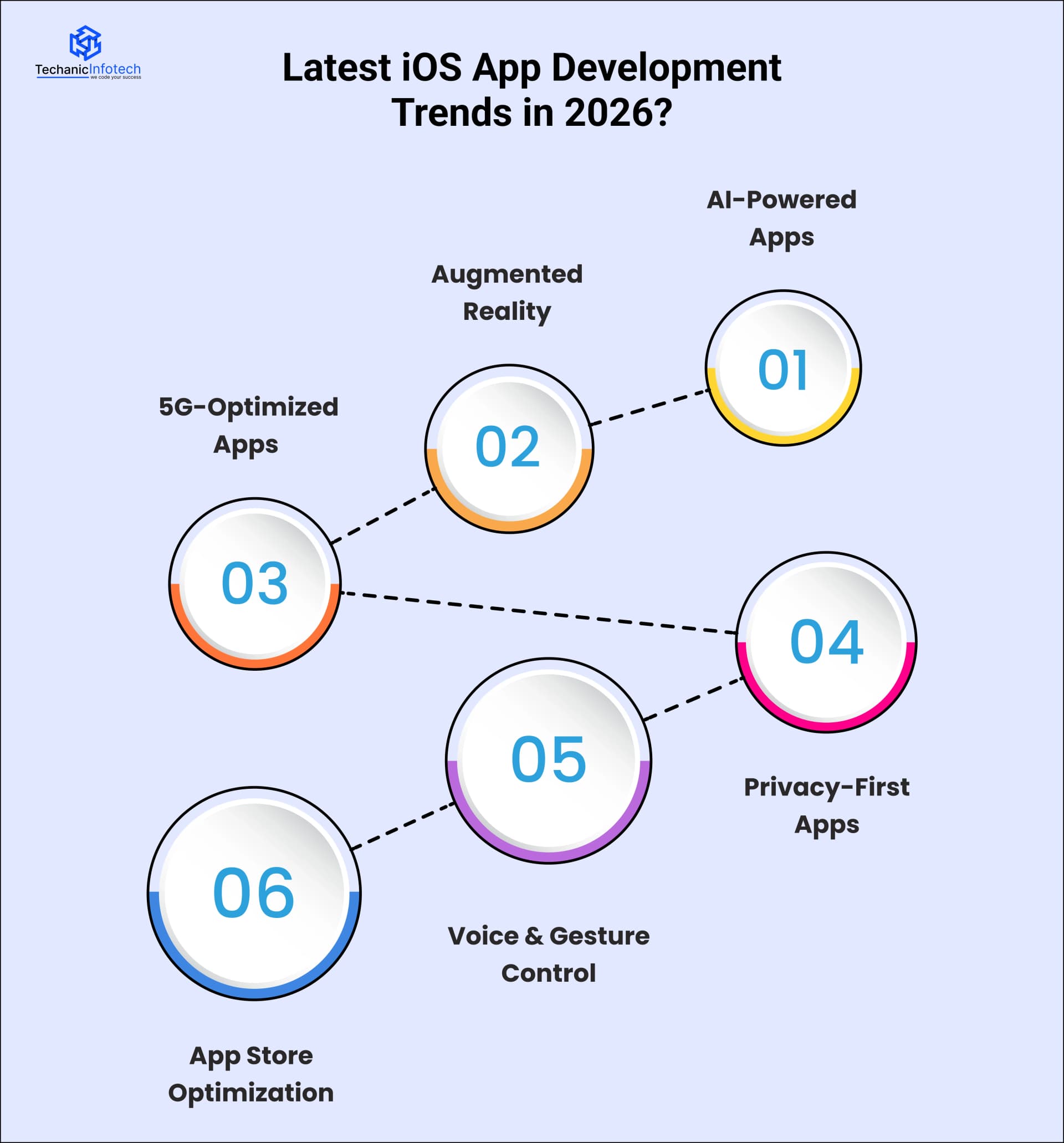
AI integration enables apps to personalize content, predict user behavior, and automate workflows, delivering intelligent recommendations. Businesses can increase engagement, optimize user retention, and improve overall app performance through AI-driven insights.
AR features create immersive experiences in gaming, e-commerce, and education. Users interact with virtual objects in real environments, enhancing engagement, driving conversions, and boosting brand loyalty.
5G connectivity enables real-time data processing, faster app load times, and smooth streaming. It enhances cloud-based functionalities, ensuring low-latency experiences for interactive, large-scale, or multiplayer applications.
Apps adhering to Apple’s strict privacy guidelines protect user data and build trust. Transparent data handling increases adoption, boosts retention, and improves app reputation globally.
Voice assistants and gesture navigation offer intuitive, hands-free interactions. These mobile app features improve accessibility, reduce friction in navigation, and enhance user satisfaction across diverse demographics.
Optimizing app title, keywords, and visuals improves discoverability. ASO helps apps rank higher in search results, increases organic downloads, and drives more consistent engagement from targeted users.
The iOS app development process includes idea validation, research, design, development, testing, and launch. A structured approach ensures quality, performance, and successful deployment in the competitive app store.
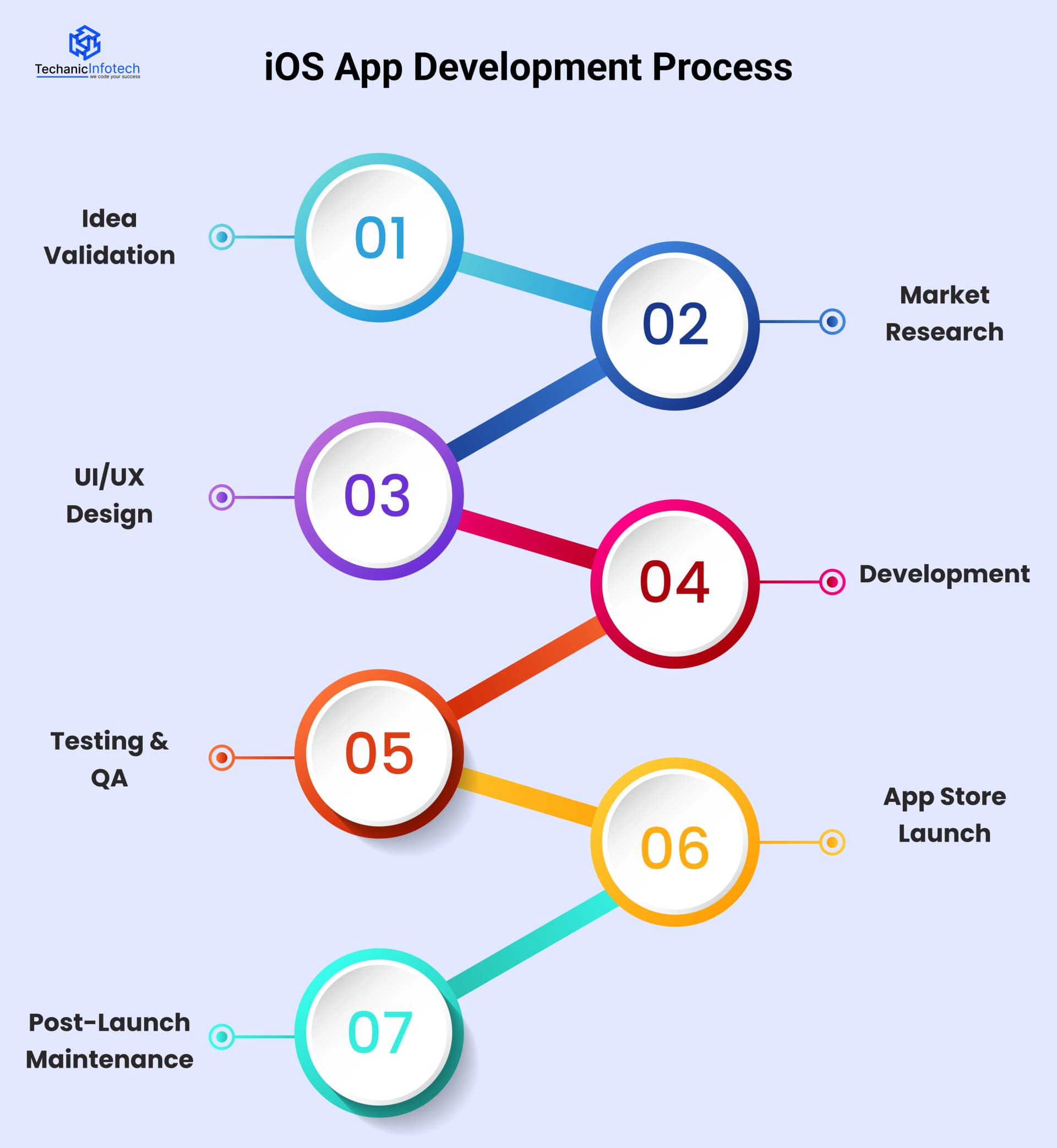
Validate your app concept by analyzing target users, competitors, and market demand. This ensures your idea solves a real problem, reducing development risks and guiding feature prioritization.
Perform thorough research to identify competitors, user needs, monetization opportunities, and market gaps. Insights inform strategy, marketing, and functionality decisions for a successful app launch.
Develop wireframes, prototypes, and mockups focused on intuitive navigation and usability. Following Apple’s Human Interface Guidelines ensures an appealing, user-friendly interface for higher engagement.
Implement frontend features using Swift/SwiftUI and backend functionalities with secure APIs or cloud infrastructure. Efficient coding practices improve the performance, scalability, and future mobile app maintenance.
Conduct rigorous functional, usability, and security testing. Identifying and fixing bugs before launch ensures optimal performance, reliability, and a smooth user experience across Apple devices.
Submit the app following Apple’s guidelines for review. Optimizing metadata, visuals, and descriptions increases approval chances and enhances discoverability in the App Store.
Regular updates, bug fixes, and feature improvements sustain engagement, address user feedback, and ensure the app stays compatible with new OS versions and devices.
iOS app development costs in 2026 vary based on complexity, features, and expertise. Businesses must plan budgets carefully to balance quality, scalability, and long-term return on investment.
Apps with basic features and a minimal design are ideal for MVPs. Costs include design, development, and App Store submission, providing startups with a cost-effective market entry. These mobile app development costs usually range between $10,000 and $90,000+.
Apps with medium complexity range from $30,000 to $60,000 with advanced features, multiple screens, payment integration, and moderate UI complexity. Costs cover development, QA, and cloud backend services.
Feature-rich apps with AI, AR, real-time interactions, custom backend, and multiple integrations. Costs are between $60,000 and $90,000+ and include professional UI/UX, extensive testing, and ongoing maintenance.
Custom graphics, animations, and branded interfaces enhance user experience but increase hours and cost.
When it comes to hiring iOS developers or agencies, ensure high-quality coding, optimized performance, and adherence to Apple guidelines, impacting overall cost.
Costs vary by region; offshore developers are cheaper, while US/Europe-based developers offer premium quality at higher rates.
Regular updates, bug fixes, and feature expansion are necessary for long-term usability, adding to ongoing app costs.
iOS apps generate revenue through subscriptions, in-app purchases, ads, and freemium models. Choosing the right strategy helps businesses maximize profits while maintaining user engagement and satisfaction.
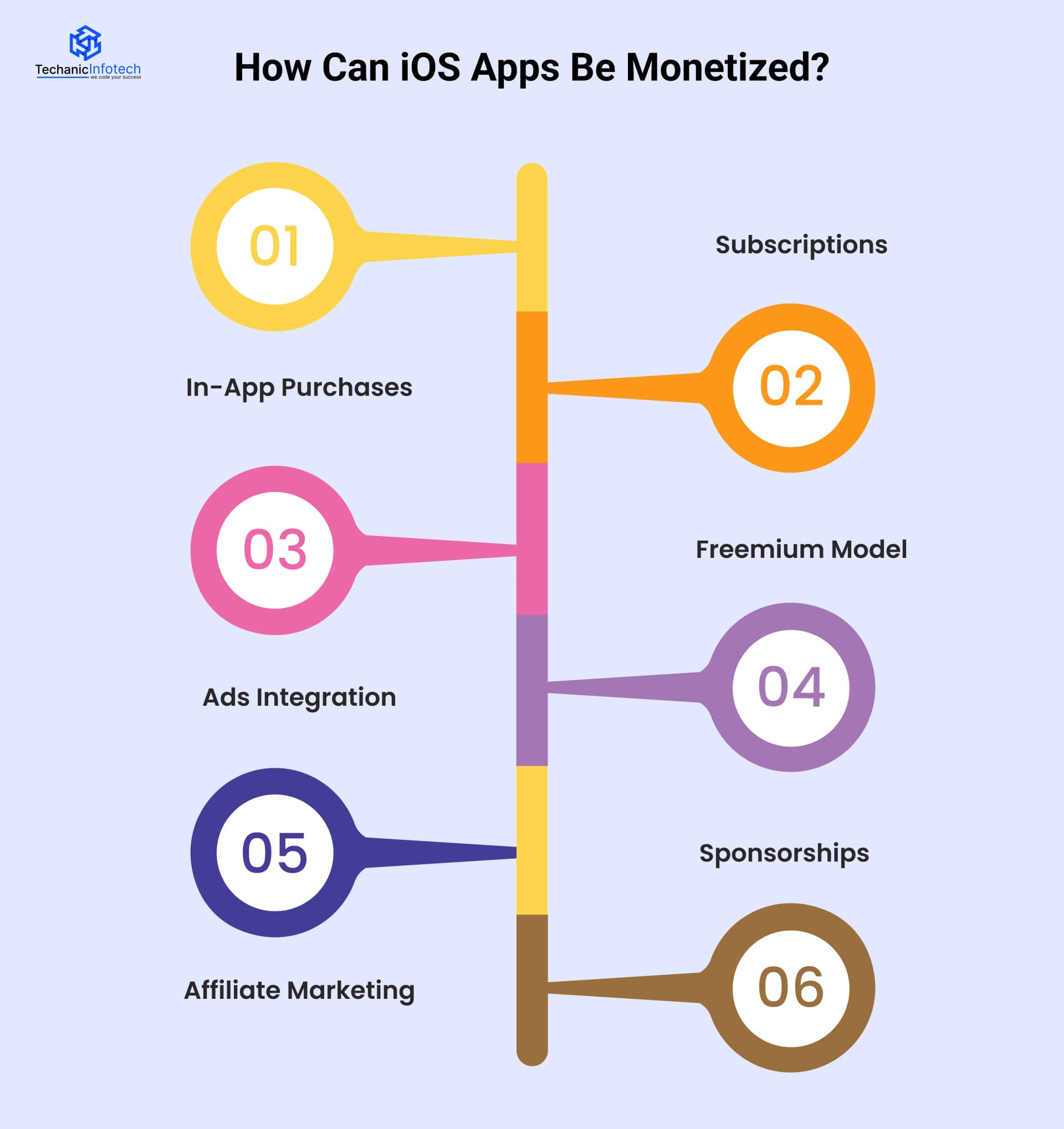
Offer recurring premium content, features, or services. Subscriptions create predictable revenue, enhance user retention, and encourage long-term engagement.
One-time purchases unlock extra content, tools, or functionalities. They provide flexible revenue options while maintaining a free base app for wider adoption.
Apps are free with optional paid upgrades. Freemium attracts more users, encourages upgrades, and balances engagement with monetization potential.
Display banner, interstitial, or video ads. Ads monetize free apps effectively while generating revenue without disrupting the core user experience.
Partner with brands to feature sponsored content or promotions. Sponsorships enhance credibility, create partnerships, and provide additional revenue streams.
Promote third-party products or services within the app. Businesses earn commissions while offering relevant value to users.
iOS development with a reliable mobile app development company presents challenges like strict guidelines, high costs, and device compatibility. Overcoming these issues requires strategic planning, continuous updates, and adherence to Apple’s standards.
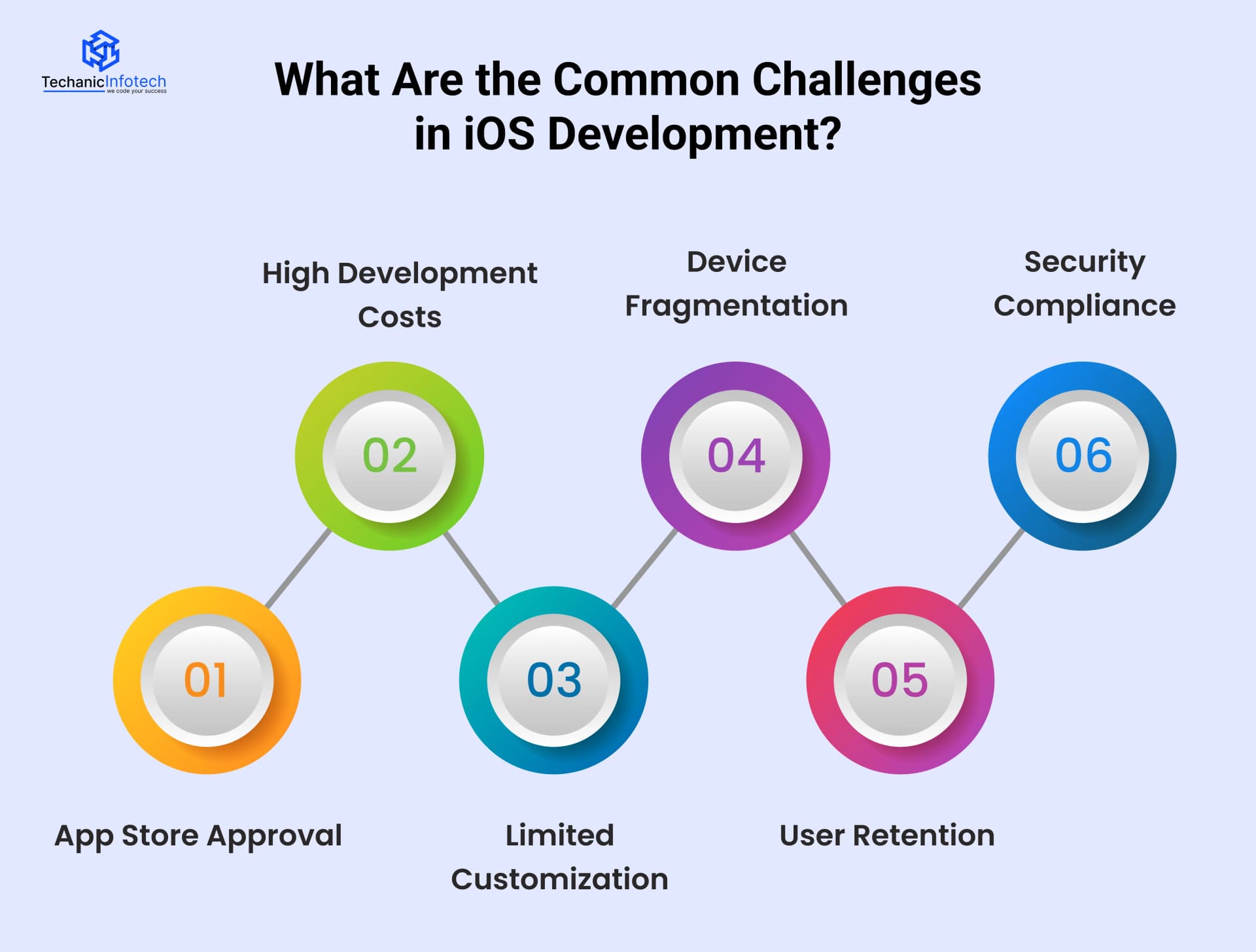
Strict guidelines can delay launches. Non-compliance leads to rejections, requiring revisions and additional testing to meet Apple’s quality standards.
Complex features, professional design, and backend infrastructure increase minimum viable product development budgets. Proper planning ensures ROI justifies investment.
Apple’s ecosystem limits OS-level access. Developers must work within Apple’s constraints for design and functionality.
Supporting multiple iPhone and iPad models, screen sizes, and OS versions adds testing and development complexity.
Maintaining engagement after download requires continuous updates, feature enhancements, and push notification strategies.
Apps must meet Apple’s privacy regulations and global standards, requiring encrypted storage, secure APIs, and user consent management.
AI is transforming iOS apps by enabling personalization, automation, and predictive insights. It enhances user experience, improves engagement, and helps businesses deliver smarter, more efficient applications.
AI analyzes user behavior to deliver custom content, notifications, and recommendations, improving engagement and loyalty.
AI predicts user behavior, app usage patterns, and churn risks, helping businesses optimize features and marketing campaigns.
AI automates repetitive tasks, such as notifications and in-app suggestions, improving operational efficiency and enhancing user experience.
Chatbots and voice assistants provide immediate support, enhance usability, and reduce response times, boosting satisfaction.
AI identifies suspicious activity, detects fraud, and strengthens security protocols in real time, ensuring user trust.
AI dynamically adjusts the UI based on user preferences and usage trends, creating an adaptive and engaging experience.
Future apps will leverage AI to deliver highly personalized experiences, predictive insights, and smart automation, ensuring superior engagement, retention, and business growth across industries.
Augmented and virtual reality will create immersive experiences in gaming, e-commerce, and education, revolutionizing how users interact with digital content in real-world contexts.
Natural navigation using voice and gesture controls will enhance accessibility, streamline user interactions, and improve adoption for diverse demographics and device types.
Apps will seamlessly integrate across iPhone, iPad, Mac, and Apple Watch, offering consistent experiences and sustaining engagement across multiple touchpoints.
Recurring revenue models will dominate monetization, allowing continuous feature updates and stable revenue streams, aligning business goals with evolving user expectations.
Future apps will prioritize user privacy with stronger encryption, secure APIs, and compliance with global data protection laws to build trust and long-term engagement.
iOS app development in 2026 is crucial for businesses seeking premium users, high ROI, and scalable, secure applications.
Leveraging trends like AI, AR/VR, 5G, and privacy-first design ensures apps are future-ready.
By following structured processes, selecting the right tech stack, and adopting effective monetization strategies, companies can overcome challenges, sustain engagement, and maximize revenue.
Investing in high-quality UI/UX, App Store optimization, and continuous maintenance guarantees app success and long-term growth.
Businesses embracing iOS development today position themselves as industry leaders, delivering innovative, engaging, and profitable solutions within Apple’s robust ecosystem.
Developing applications for Apple devices using Swift, SwiftUI, or Objective-C, distributed via the App Store, focusing on security, performance, and smooth user experience.
Developing applications for Apple devices using Swift, SwiftUI, or Objective-C, distributed via the App Store, focusing on security, performance, and smooth user experience.
Costs range from $10,000 for simple apps to $90,000+ for complex apps with AI, AR, multiple integrations, and custom design, depending on features and developer expertise.
Costs range from $10,000 for simple apps to $90,000+ for complex apps with AI, AR, multiple integrations, and custom design, depending on features and developer expertise.
Typically, the duration is 2–9 months, depending on app complexity, the number of features, custom UI/UX, and the testing process for quality assurance.
Typically, the duration is 2–9 months, depending on app complexity, the number of features, custom UI/UX, and the testing process for quality assurance.
Swift is the primary language for modern iOS apps; Objective-C is still used for legacy apps. SwiftUI is leveraged for building efficient, responsive interfaces.
Swift is the primary language for modern iOS apps; Objective-C is still used for legacy apps. SwiftUI is leveraged for building efficient, responsive interfaces.
iOS offers higher revenue, premium users, and strong privacy, while Android reaches a larger audience. The choice depends on business goals and target demographics.
iOS offers higher revenue, premium users, and strong privacy, while Android reaches a larger audience. The choice depends on business goals and target demographics.
AI, AR/VR, 5G, privacy-first apps, voice/gesture navigation, App Store optimization, and immersive user experiences are the key trends shaping 2026.
AI, AR/VR, 5G, privacy-first apps, voice/gesture navigation, App Store optimization, and immersive user experiences are the key trends shaping 2026.
Xcode, Swift, SwiftUI, Firebase or Node.js backends, MongoDB/PostgreSQL databases, and APIs for payments, analytics, and third-party integrations.
Xcode, Swift, SwiftUI, Firebase or Node.js backends, MongoDB/PostgreSQL databases, and APIs for payments, analytics, and third-party integrations.
Through subscriptions, in-app purchases, freemium models, ads, sponsorships, and affiliate marketing, optimizing revenue while engaging users effectively.
Through subscriptions, in-app purchases, freemium models, ads, sponsorships, and affiliate marketing, optimizing revenue while engaging users effectively.
App Store approval, high costs, OS limitations, device fragmentation, user retention, and security compliance are the most common challenges developers face.
App Store approval, high costs, OS limitations, device fragmentation, user retention, and security compliance are the most common challenges developers face.
Yes, it offers access to premium users, high ROI, scalable architecture, innovative features, and a secure ecosystem, making it a strategic investment.
Yes, it offers access to premium users, high ROI, scalable architecture, innovative features, and a secure ecosystem, making it a strategic investment.


Abhishek Jangid is the CEO of Techanic Infotech, with extensive experience in mobile app and web development. He specializes in helping businesses turn innovative ideas into scalable digital solutions through strategic planning and modern technology.