Live monitoring apps are powerful digital tools that allow users to track data, activities, or systems in real time.
These apps collect information from devices, sensors, servers, or networks and instantly display it on dashboards or mobile interfaces.
Businesses and individuals rely on live monitoring applications to improve efficiency, ensure safety, and respond quickly to problems.
With the rapid growth of IoT devices, cloud computing, and real-time data processing, live monitoring apps have become more advanced and widely adopted.
Live monitoring apps play a crucial role in modern digital systems by providing real-time insights and continuous tracking.
They help businesses improve efficiency, enhance safety, and make faster, data-driven decisions.
Live monitoring apps provide instant data updates, allowing businesses and users to make quick decisions.
Real-time insights help detect issues immediately, reduce downtime, improve productivity, and ensure smoother operations across industries.
These apps continuously track systems, devices, or environments.
In industries like security, healthcare, and transportation, live monitoring helps detect unusual activity instantly and allows quick responses to emergencies or potential threats.
By monitoring systems continuously, organizations can identify inefficiencies or performance issues quickly.
This helps reduce operational delays, improve productivity, and ensure that equipment and services function properly at all times.
Live monitoring apps can detect early warning signs of equipment failures.
Businesses can perform mobile app maintenance before breakdowns occur, which helps avoid costly repairs, reduce downtime, and extend the lifespan of machines.
These apps collect large volumes of real-time data that can be analyzed for trends and patterns.
This data helps organizations improve strategies, optimize resources, and make informed long-term decisions.
Live monitoring apps operate through a structured process that includes collecting, processing, and transmitting real-time data.
These systems transform raw information from devices and sensors into meaningful insights displayed through dashboards and alerts.
Live monitoring apps gather information from various sources such as sensors, GPS devices, servers, IoT devices, or software systems.
This data is continuously transmitted to the app's backend system for processing.
Once the data is collected, backend systems process it using algorithms and cloud services.
The system filters, analyzes, and organizes the information before displaying it to users through dashboards or notifications.
Data is transmitted using real-time communication technologies such as WebSockets, APIs, or streaming protocols.
These technologies ensure that updates reach the user instantly without needing manual refresh.
The processed data is displayed in user-friendly dashboards using charts, graphs, and real-time indicators.
These visual tools help users easily understand system performance and identify issues quickly.
When the system detects unusual activity or threshold limits are exceeded, it automatically sends alerts through push notifications, SMS, or emails, enabling users to respond immediately.
Live monitoring applications include several essential mobile app features that enable real-time tracking, instant alerts, and data visualization.
These capabilities help users monitor systems effectively, identify issues quickly, and maintain smooth operations.
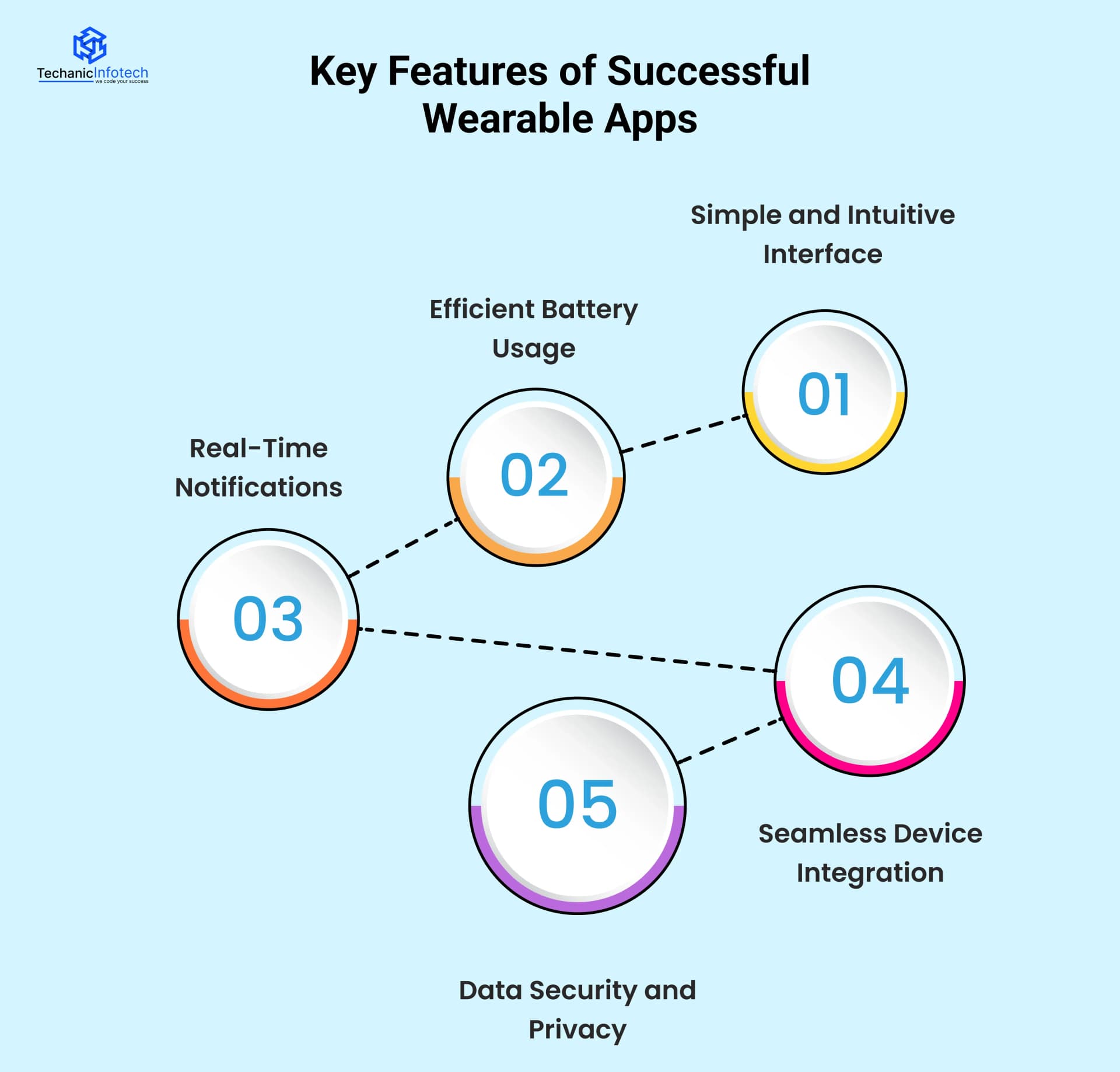
Live monitoring apps provide continuous updates without delays.
Users can see live system performance, device status, or location tracking instantly, which helps in making faster decisions.
Interactive dashboards display key metrics using charts, graphs, and indicators.
These analytics tools help users understand mobile app development trends, system performance, and potential issues through visual data representation.
The app automatically sends notifications when abnormal activities or predefined conditions occur.
Alerts ensure users are informed immediately and can take action before problems escalate.
Secure login systems ensure only authorized users can access sensitive monitoring data.
Role-based access control allows organizations to manage permissions for different users or departments.
Live monitoring apps store historical data for future analysis.
Users can review past trends, compare performance, and identify patterns that help improve long-term decision-making and planning.
Considering the mobile app development timeline for a live monitoring app requires a combination of modern technologies.
Frontend frameworks, backend systems, cloud platforms, databases, and real-time communication tools work together to deliver reliable and scalable monitoring solutions.
Frontend technologies such as React, Angular, and Vue.js are used to build interactive dashboards and user interfaces.
These frameworks help create responsive and dynamic applications for mobile and web platforms.
Backend systems handle data processing, storage, and user management.
These mobile app tech stack like Node.js, Python, Java, and .NET, are commonly used to build scalable and reliable backend infrastructures.
Technologies like WebSockets, MQTT, and Firebase enable real-time data transfer between servers and applications.
These systems ensure users receive instant updates without refreshing the app.
Cloud services such as AWS, Google Cloud, and Microsoft Azure provide scalable infrastructure for storing data, processing information, and managing real-time monitoring systems efficiently.
Databases like PostgreSQL, MongoDB, and Redis store monitoring data and system logs. They help manage large volumes of real-time and historical data efficiently.
Building a live monitoring app involves multiple mobile app development processes, from requirement analysis to deployment.
Each phase ensures the application is reliable, secure, and capable of handling real-time data efficiently.
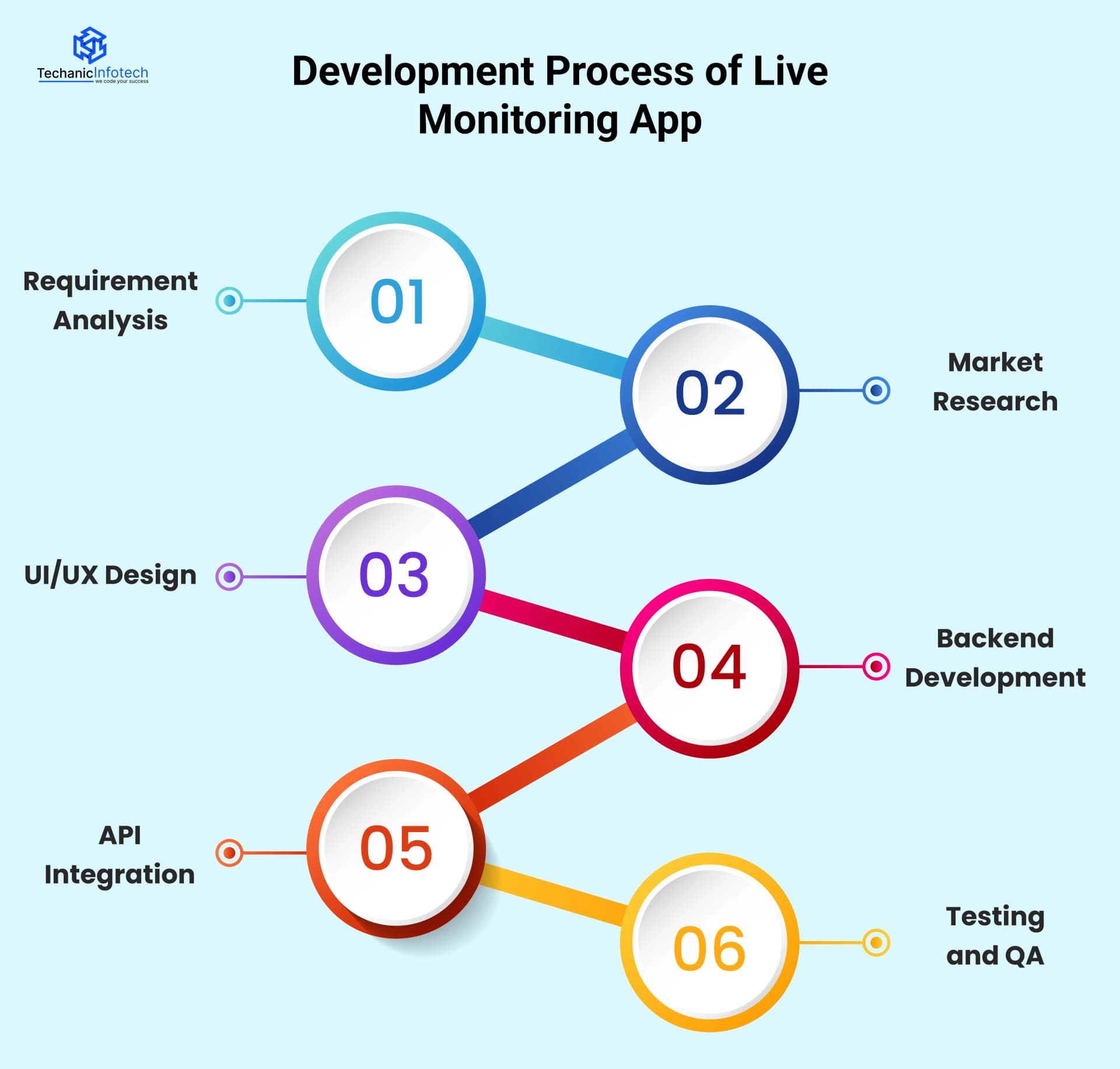
Developers first analyze the project requirements, target users, and features needed in the monitoring app. This stage helps define the project scope and technical specifications.
Research helps understand competitors, market demand, and user expectations. This information helps developers build features that solve real-world problems and provide better user experiences.
Designers create wireframes and prototypes for dashboards and interfaces. A good UI/UX design ensures that users can easily access monitoring data and navigate the app smoothly.
Backend development focuses on building the server infrastructure, database management, and data processing systems needed to handle real-time monitoring and analytics.
Developers integrate APIs and IoT systems to connect the app with devices, servers, or external platforms that provide monitoring data.
Testing ensures the app performs well under different conditions. Developers test for bugs, performance issues, security vulnerabilities, and data accuracy before launching the application.
Despite the benefits, developing live monitoring apps with the help of mobile app development services comes with several technical challenges.
Handling large data volumes, ensuring real-time performance, maintaining security, and integrating multiple devices require strong infrastructure and expertise.
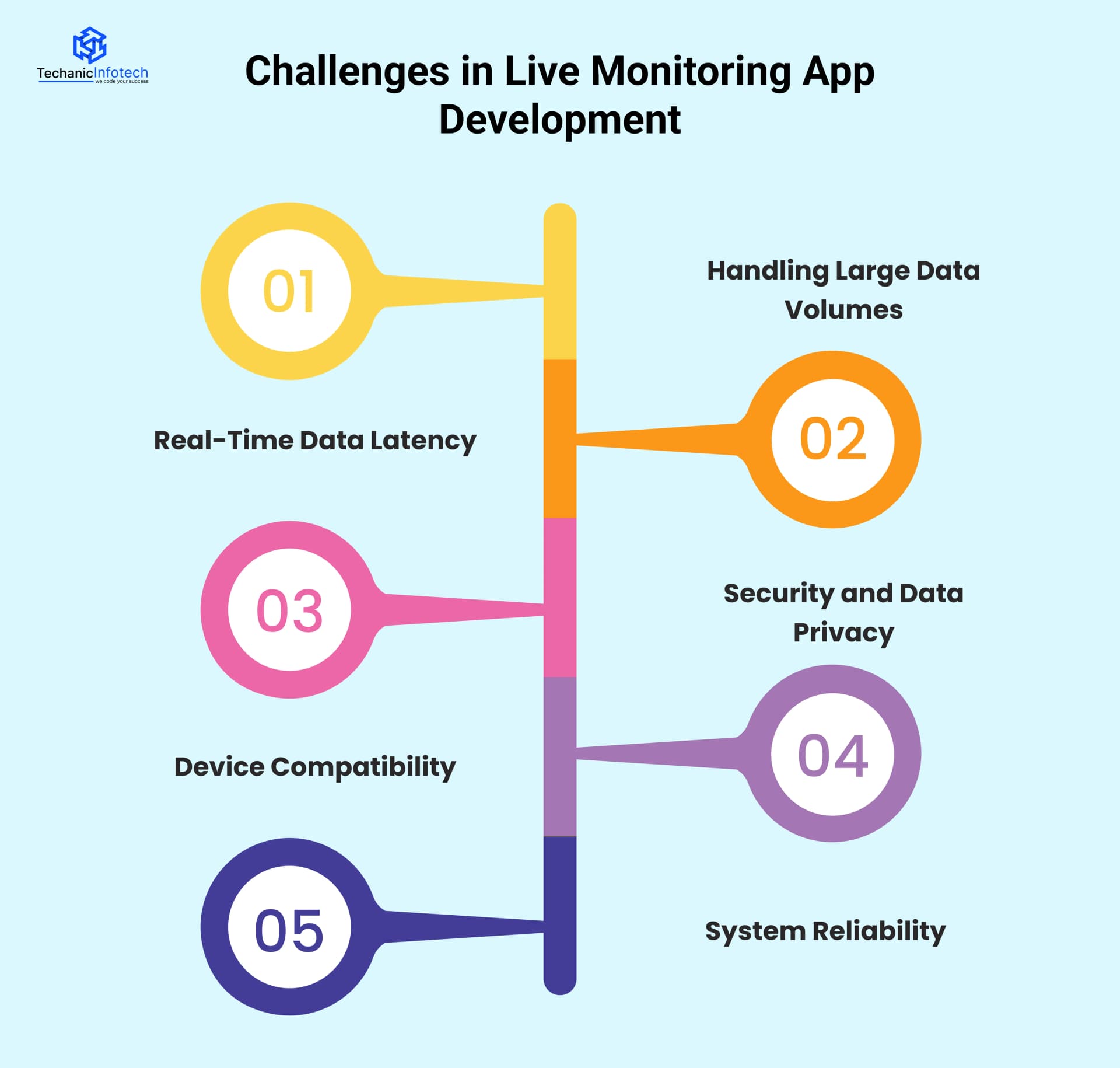
Live monitoring apps generate huge amounts of data continuously. Managing, processing, and storing this data efficiently requires scalable databases and cloud infrastructure.
Maintaining instant data updates without delays can be challenging. Developers must use efficient communication protocols and optimized backend systems to reduce latency.
Monitoring apps often deal with sensitive data. Strong encryption, authentication systems, and compliance with data protection regulations are essential to prevent breaches.
Integrating multiple IoT devices, sensors, and platforms can be complex. Developers must ensure compatibility across different hardware systems and operating environments.
Monitoring apps must operate continuously without downtime. Ensuring system reliability requires strong infrastructure, failover systems, and continuous monitoring.
The mobile app development cost for a live monitoring app varies depending on the application’s complexity, feature set, integrations, infrastructure requirements, and long-term support.
Typically, development costs range from $10,000+ for basic solutions to $90,000+ for advanced enterprise platforms.
A basic live monitoring app includes essential features such as simple real-time tracking, basic dashboards, limited device or system integrations, and standard notifications.
These solutions are suitable for startups or small businesses and generally cost between $10,000 and $25,000.
Medium-level monitoring apps offer enhanced functionality such as advanced dashboards, multiple device integrations, detailed analytics, customizable alerts, and role-based user access.
These apps support growing businesses and typically require a budget of $25,000 to $60,000.
Advanced monitoring applications include enterprise-grade capabilities such as AI-powered analytics, large-scale IoT integrations, predictive maintenance features, advanced data visualization, multi-platform compatibility, and robust security systems. Development costs usually range from $60,000 to $90,000+.
After deployment, continuous maintenance is essential to ensure optimal performance, security, and system stability.
Regular bug fixes, performance monitoring, and technical support typically cost around 15–20% of the initial minimum viable product development budget annually.
Live monitoring apps require frequent updates to introduce new features, improve system performance, enhance security measures, and maintain compatibility with evolving technologies.
Annual update and enhancement costs generally range from $2,000 to $15,000+.
Since live monitoring apps process and store large volumes of real-time data, a reliable cloud infrastructure is necessary.
Expenses for cloud hosting, server scaling, and data storage typically range from $200 to $2,000+ per month, depending on usage.
Live monitoring apps have become an essential tool for businesses and individuals who need instant access to real-time data.
From healthcare and security to logistics and smart homes, these applications help monitor systems, track performance, and respond quickly to issues.
As industries continue to adopt digital transformation and connected devices, the demand for live monitoring apps will continue to grow.
Businesses that invest in reliable, scalable, and user-friendly monitoring solutions can gain better control over their operations and deliver improved services to their customers.
A live monitoring app is a software application that tracks and displays real-time data from devices, systems, or networks. It helps users monitor performance, detect issues, and receive instant alerts.
A live monitoring app is a software application that tracks and displays real-time data from devices, systems, or networks. It helps users monitor performance, detect issues, and receive instant alerts.
Industries such as healthcare, logistics, manufacturing, IT, smart homes, and security commonly use live monitoring apps to track systems, devices, and operational activities in real time.
Industries such as healthcare, logistics, manufacturing, IT, smart homes, and security commonly use live monitoring apps to track systems, devices, and operational activities in real time.
Developing a live monitoring app can take anywhere from three to nine months, depending on complexity, features, integrations, and the development team's experience.
Developing a live monitoring app can take anywhere from three to nine months, depending on complexity, features, integrations, and the development team's experience.
Developing a live monitoring app can take anywhere from three to nine months, depending on complexity, features, integrations, and the development team's experience.
Developing a live monitoring app can take anywhere from three to nine months, depending on complexity, features, integrations, and the development team's experience.
Yes, when developed with proper security measures such as encryption, secure APIs, authentication systems, and data protection standards, live monitoring apps can provide highly secure data management.
Yes, when developed with proper security measures such as encryption, secure APIs, authentication systems, and data protection standards, live monitoring apps can provide highly secure data management.
Yes, many live monitoring apps are designed to integrate with IoT devices such as sensors, cameras, wearable devices, and smart home equipment to collect real-time data and provide continuous monitoring.
Yes, many live monitoring apps are designed to integrate with IoT devices such as sensors, cameras, wearable devices, and smart home equipment to collect real-time data and provide continuous monitoring.


Bharat Sharma is the CTO of Techanic Infotech, bringing deep technical expertise in software architecture, mobile app development, and scalable system design. He leads the engineering team with a strong focus on innovation, performance, and security.