Key Takeaway
Ticket booking apps are increasingly popular as users prefer quick and convenient digital ticket purchasing.
Real-time availability, secure payments, and seat selection improve user experience and platform efficiency.
Development cost varies based on features, platforms, and infrastructure requirements.
A strong backend ensures smooth performance during high user traffic and multiple bookings.
Businesses can earn through service fees, advertisements, and event partnerships.
The demand for digital ticketing solutions has grown rapidly as users prefer booking tickets online for movies, concerts, travel, and events.
Businesses are now investing in modern ticketing platforms to offer convenient, fast, and secure booking experiences. Understanding the ticket booking app development cost is essential for companies planning to launch their own platform.
The overall cost can vary depending on several factors, including app features, design complexity, platform choice, and development team expertise.
From basic booking functionality to advanced features like real-time seat selection, secure payment gateways, and user notifications, every element affects the final budget.
This pricing guide explains the key factors that influence development expenses and helps businesses estimate the investment required to build a scalable and efficient ticket booking app.
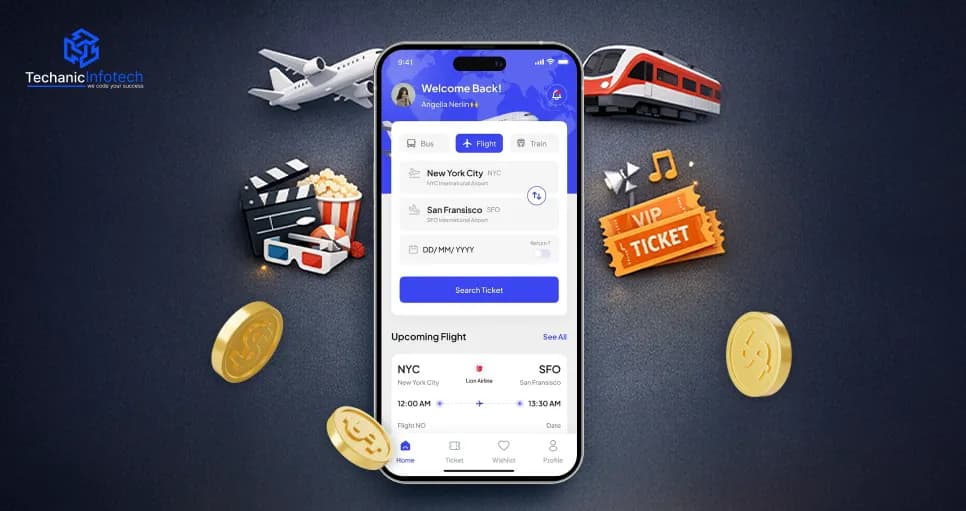
A ticket booking app is a digital platform that allows users to search, select, and purchase tickets for events, travel, or entertainment directly from their smartphones or computers.
These apps simplify the booking process by providing real-time availability, secure payment options, and instant confirmation.
Users can browse different categories such as movies, concerts, flights, buses, or sports events and reserve their seats within minutes.
For businesses, ticket booking apps help streamline operations, manage reservations efficiently, and reach a larger audience online.
With features like seat selection, notifications, and digital tickets, these apps provide a convenient and seamless booking experience for modern users.
Understanding the ticket booking app cost by features helps businesses plan development effectively. The right combination of tools, performance, and usability ensures a ticket booking app delivers a smooth and reliable experience.
A simple registration system allows users to create accounts, save personal details, and manage bookings easily. Profile management helps users track reservations, access digital tickets, and receive personalized recommendations.
Real-time search functionality allows users to quickly find movies, events, or travel tickets. Displaying updated seat availability prevents double bookings and helps users make faster booking decisions.
Secure payment integration is one of the most important mobile app features in a ticket booking platform. Supporting credit cards, wallets, and online banking ensures safe, convenient, and smooth transactions.
Interactive seat selection allows users to choose preferred seats before completing reservations. Advanced booking tools improve convenience and influence the overall cost to develop a ticket booking app.
Push notifications and instant booking confirmations keep users updated about reservations, reminders, and event changes. These communication tools can also impact the overall ticket booking platform development cost.
The cost of developing a ticket booking app depends on several technical and business factors. Understanding these elements helps businesses estimate budgets accurately and plan a scalable ticketing platform.
A well-designed interface improves usability and customer satisfaction. Custom UI/UX design with interactive elements, animations, and easy navigation requires more design effort, which can increase overall development costs.
Choosing between Android, iOS, or cross-platform development directly affects the cost of the online ticket booking app. Building apps for multiple platforms requires more development resources, increasing both time and total project investment.
The number and complexity of features significantly influence development costs. Advanced tools like seat selection, live updates, payment integration, and push notifications require additional coding, testing, and backend support.
A strong backend system manages databases, user accounts, and ticket inventory. Scalable architecture ensures smooth performance during heavy traffic, which can increase the event ticket booking app development cost.
Ticket booking apps often integrate payment gateways, notification services, and analytics tools. These integrations improve functionality but may require additional setup, licensing fees, or customization costs.
Post-launch maintenance keeps the app secure and functional. Regular updates, performance improvements, and bug fixes affect long-term costs and depend heavily on the project's overall mobile app development timeline.
Understanding the ticket booking app development cost in 2026 helps businesses plan investments effectively. Development expenses vary based on platform choice, features, scalability, and design complexity required to build a modern ticket booking solution.
A basic app includes registration, event listings, search tools, and booking functionality. The overall ticket booking app development cost depends on how many features, integrations, and scalability options businesses plan to include.
|
App Version |
Estimated Cost |
Scope |
|
Basic Version |
$30,000 |
Core booking features and simple interface |
|
Standard Version |
$130,000 |
Improved design and additional functionalities |
|
Advanced Version |
$230,000 |
Enhanced scalability and performance |
A well-designed interface improves navigation and user engagement. Businesses should also plan a mobile app maintenance strategy to keep design elements updated, functional, and optimized for evolving user expectations.
|
App Version |
Estimated Cost |
Scope |
|
Basic Design |
$30,000 |
Simple layout and standard UI |
|
Custom Design |
$130,000 |
Interactive interface and user-friendly design |
|
Premium Design |
$230,000 |
Fully customized and brand-focused UI/UX |
Choosing the right platform affects development complexity. Businesses planning cross-platform solutions often evaluate the custom ticket booking app development cost to decide between Android, iOS, or multi-platform app development.
|
App Version |
Estimated Cost |
Scope |
|
Single Platform |
$30,000 |
Android or iOS app development |
|
Dual Platform |
$130,000 |
Development for both Android and iOS |
|
Cross-Platform |
$230,000 |
Unified development with broader compatibility |
A strong backend manages ticket inventory, user data, and booking operations. Building scalable infrastructure contributes significantly to the overall mobile app development cost for a ticket booking platform.
|
App Version |
Estimated Cost |
Scope |
|
Basic Backend |
$30,000 |
Database and user management |
|
Scalable Backend |
$130,000 |
Cloud integration and improved performance |
|
Enterprise Backend |
$230,000 |
High-traffic server infrastructure |
Secure payment processing is essential for ticketing platforms. Integrating multiple payment gateways influences the overall ticket reservation app development cost, especially when supporting global transactions and different payment methods.
|
App Version |
Estimated Cost |
Scope |
|
Basic Payment Setup |
$30,000 |
Single payment gateway |
|
Multi-Payment Integration |
$130,000 |
Multiple payment options |
|
Advanced Payment System |
$230,000 |
Global payments and fraud protection |
Businesses often start with minimum viable product development to launch quickly with essential features. Later, they can add advanced tools like notifications, analytics dashboards, and real-time booking updates.
|
App Version |
Estimated Cost |
Scope |
|
Basic Features |
$30,000 |
Limited advanced tools |
|
Enhanced Features |
$130,000 |
Notifications and analytics |
|
Premium Features |
$230,000 |
AI recommendations and automation |
Testing ensures the platform performs reliably. Functional testing, security audits, and performance evaluations help eliminate bugs and deliver a stable ticket booking application before launch.
|
App Version |
Estimated Cost |
Scope |
|
Basic Testing |
$30,000 |
Functional testing |
|
Advanced Testing |
$130,000 |
Performance and security testing |
|
Enterprise Testing |
$230,000 |
Complete QA and automation testing |
After deployment, regular updates and monitoring keep the platform secure and scalable. Continuous improvement and updates are an important part of the mobile app development process.
|
App Version |
Estimated Cost |
Scope |
|
Basic Maintenance |
$30,000 |
Bug fixes and minor updates |
|
Extended Support |
$130,000 |
Regular updates and monitoring |
|
Premium Support |
$230,000 |
Continuous improvements and scaling |
Managing the ticket booking app development cost requires strategic planning and smart resource allocation. Businesses can reduce expenses by prioritizing essential features, selecting efficient technologies, and following a streamlined development approach.
Launching with a minimum viable product allows businesses to release core features first. This strategy reduces initial development expenses while enabling companies to test the market before investing in advanced functionalities.
Selecting the right technology stack helps improve development efficiency and long-term scalability. Following a reliable mobile app tech stack guide ensures developers choose frameworks, databases, and tools that reduce complexity and costs.
Focusing on the most important features helps control development expenses. Businesses can start with ticket booking, payment integration, and user management, then gradually add advanced features based on user demand.
Cloud-based systems help reduce server costs and support scalable growth. Efficient infrastructure planning can lower the overall ticket reservation app development cost while maintaining reliable performance during peak booking periods.
Using third-party APIs for payments, notifications, and analytics reduces development effort. Instead of building every feature from scratch, businesses can integrate reliable services to save both time and budget.
Working with a reliable mobile app development company helps optimize project planning, technology selection, and development workflow. Experienced teams can identify cost-saving opportunities while maintaining the quality and performance of the app.
Developing a modern ticket booking platform requires careful planning, the right technology, and a clear understanding of user needs.
Businesses should evaluate essential features, design requirements, platform selection, and scalability before starting the development process.
Each of these elements plays an important role in determining the overall ticket booking app development cost.
By prioritizing core features, using scalable infrastructure, and adopting efficient development strategies, companies can control expenses while building a reliable and user-friendly platform.
Starting with a minimum viable product and gradually adding advanced functionalities is also a smart approach for managing budgets.
With proper planning and the right development partner, businesses can create a powerful ticket booking solution that delivers convenience for users while supporting long-term growth in the digital ticketing market.
The cost to develop a ticket booking app typically ranges from $30,000 to $150,000 or more, depending on features, platform selection, design complexity, and the development team’s expertise.
Developing a ticket booking app usually takes three to six months. The timeline depends on the app’s features, platform compatibility, testing requirements, and overall development complexity.
Essential features include user registration, real-time ticket availability, secure payment integration, seat selection, push notifications, and booking management. These tools help create a smooth and reliable ticket booking experience.
Yes, modern ticket booking apps can manage multiple events, travel bookings, or entertainment tickets. Advanced platforms allow businesses to organize categories, manage inventory, and track bookings efficiently.
Businesses can reduce development costs by starting with a minimum viable product, prioritizing core features, using cross-platform development, and integrating third-party services instead of building every feature from scratch.


Bharat Sharma is the CTO of Techanic Infotech, bringing deep technical expertise in software architecture, mobile app development, and scalable system design. He leads the engineering team with a strong focus on innovation, performance, and security.