Food Delivery App Development
Food Truck App Development Cost: : A Detailed Breakdown in 2026
February 27, 2026
February 27, 2026
Developing a mobile solution for modern food businesses requires clear budgeting and strategic planning, especially as entrepreneurs increasingly rely on digital platforms to streamline operations.
Understanding the cost of food truck app development is essential for anyone looking to enhance customer engagement, simplify order management, and improve overall business efficiency.
A well-built food truck app can include features such as real-time location tracking, digital menus, online ordering, mobile payments, loyalty programs, and inventory monitoring, each of which influences the final investment.
This detailed breakdown helps founders, startups, and small food truck owners analyze exactly where their budget goes, what features matter most, and how to avoid unnecessary expenses.
With the right approach, you can build a scalable, feature-rich food truck app without overspending.
Investing in a food truck app is a smart move as mobile ordering keeps growing. With rising demand for convenience, brands want clarity on the cost to develop a food truck app and long-term ROI.
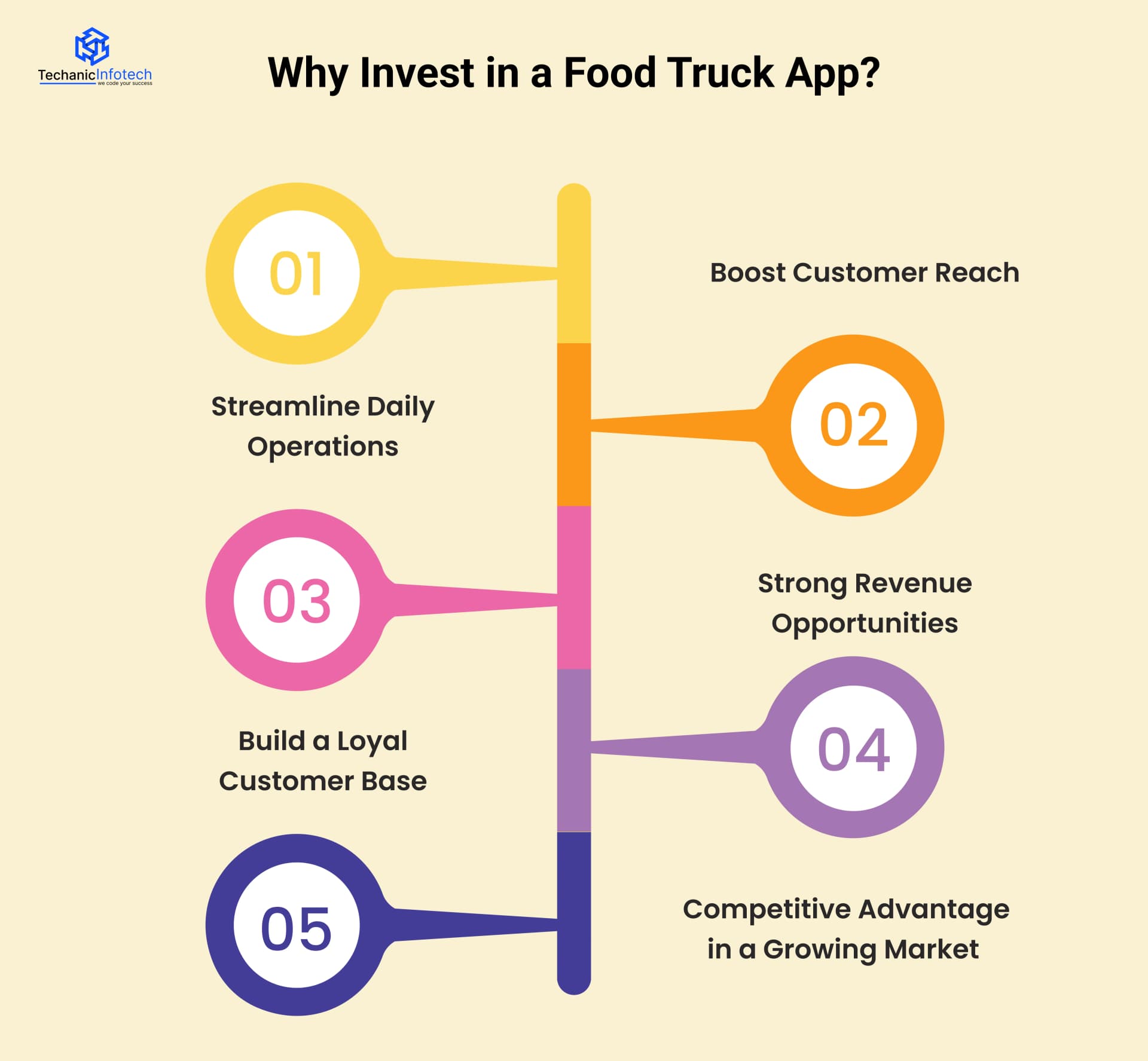
A food truck app helps you attract more customers by improving visibility, location tracking, and ease of ordering. It creates a direct connection that keeps people coming back and increases daily sales.
From inventory updates to real-time menus, an app reduces manual tasks and eliminates common roadblock issues. This smoother workflow saves time, lowers errors, and helps owners stay focused on serving customers.
App features like mobile payments, pre-orders, and promotions open new revenue streams. Understanding the on-demand food truck app cost helps owners invest smarter and earn more through digital convenience and faster customer turnaround.
A dedicated app supports loyalty programs, rewards, and tailored deals that make customers feel valued. This boosts repeat visits and strengthens long-term relationships with people who enjoy your food truck experience.
As more food trucks go digital, having your own app sets you apart. It positions your business as modern, efficient, and customer-first, helping you stay competitive in a fast-evolving mobile food landscape.
Understanding what drives food truck app pricing helps owners plan smarter. Costs shift based on tech choices, app complexity, and advanced features, especially if you plan to build an Artificial Intelligence app for smarter automation.
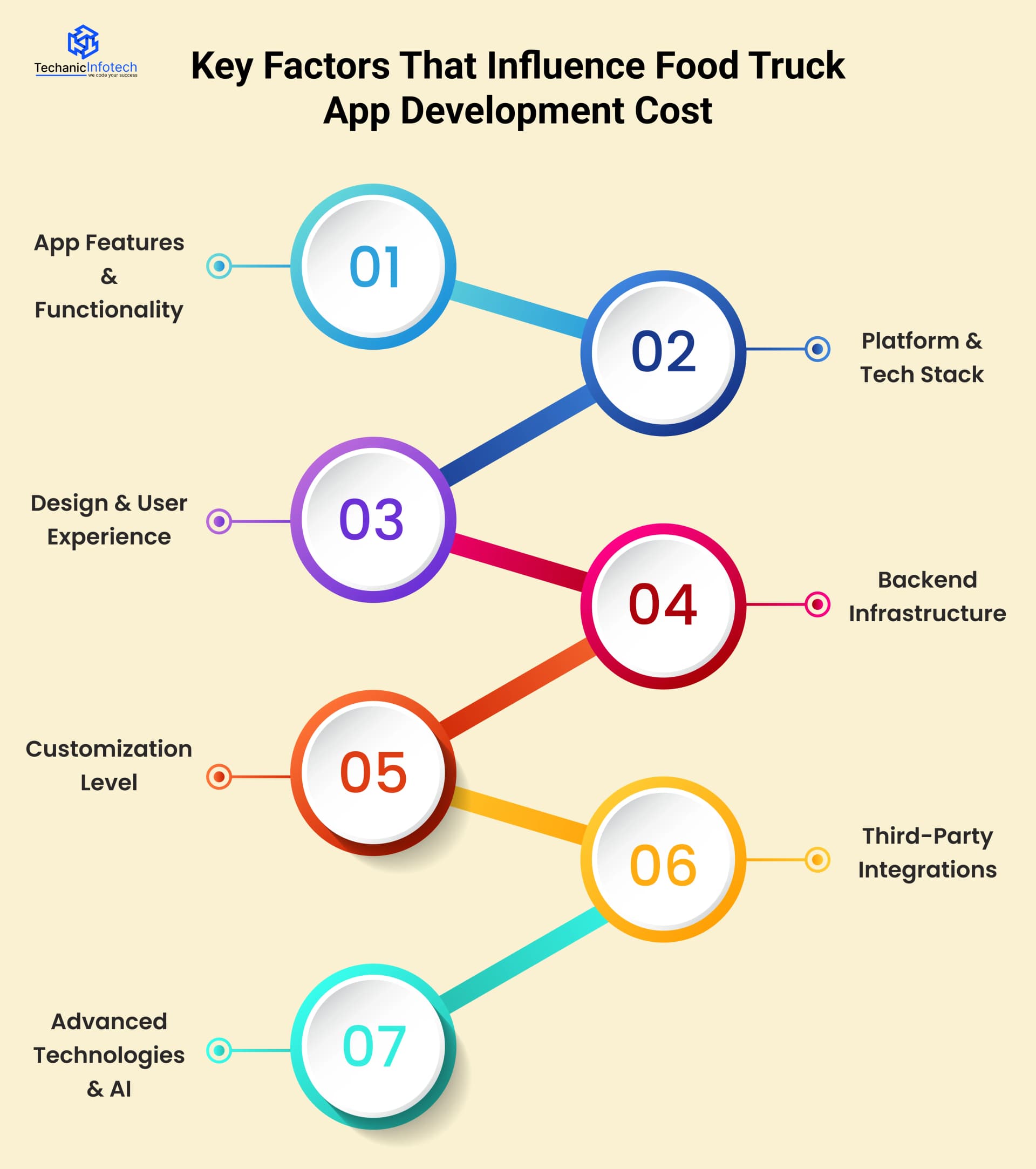
The depth of mobile app features like GPS tracking, orders, payments, and personalization directly affects development time and price. More advanced functionality requires additional engineering, increasing both complexity and overall investment.
Your choice of iOS, Android, or both impacts the food truck marketplace app cost. Cross-platform builds are often more efficient, while native apps require separate codebases and higher development hours.
UI and UX quality influence timelines and your food truck app development budget. Custom visuals, animations, and intuitive layouts demand more design work, raising overall costs but boosting user satisfaction and engagement.
Real-time order sync, menu updates, analytics, and payment processing need a strong backend. More complex server logic, APIs, and integrations lead to higher development costs and longer project timelines.
A fully tailored solution increases the cost of custom food truck app development. Custom dashboards, branded flows, and unique features require additional coding, making the app more scalable but also more expensive to create.
Connecting with payment gateways, mapping tools, loyalty systems, or POS platforms raises costs. Each integration requires API work, testing, and security reviews to ensure smooth and reliable app performance.
Adding automation, predictive analytics, or intelligent recommendations increases the development scope. These enhancements rely on specialized AI app development services, which cost more but deliver long-term efficiency and higher customer engagement.
Understanding food delivery app expenses helps businesses budget smarter. This food truck app pricing breakdown highlights how features, development choices, and technology shape overall costs, giving you clarity before investing in a full-scale mobile platform.
Strong planning reduces risks and speeds development. Researching competitors and mapping features ensures clarity and supports a predictable mobile app development timeline, helping you avoid delays and unexpected costs during the build.
|
Element |
Details |
Estimated Cost |
Timeline |
|
Requirement Analysis |
Core needs definition |
$13,000 |
2–3 weeks |
|
Market Research |
Competitor & audience study |
$13,000 |
1–2 weeks |
|
Feature Mapping |
Outlining MVP features |
$13,000 |
1 week |
|
App Roadmap |
Project planning |
$13,000 |
1 week |
Clear, intuitive design boosts user satisfaction. Following a solid mobile app design guide ensures smooth navigation, clean visuals, and a polished experience that keeps users engaged and encourages frequent ordering.
|
Element |
Details |
Estimated Cost |
Timeline |
|
Wireframes |
App structure concepts |
$26,000 |
1–2 weeks |
|
UI Design |
Visual elements |
$26,000 |
2–3 weeks |
|
Prototype |
Clickable mockup |
$26,000 |
1 week |
|
Revisions |
Final updates |
$26,000 |
1 week |
Building core ordering features requires clean coding and optimization. Trends in food truck app development in 2026 emphasize speed, personalization, and seamless checkout experiences to support growing mobile-first dining behavior.
|
Element |
Details |
Estimated Cost |
Timeline |
|
Frontend Code |
App screens |
$39,000 |
4–6 weeks |
|
Authentication |
Login & signup |
$39,000 |
1–2 weeks |
|
Ordering System |
Add-to-cart, checkout |
$39,000 |
3–4 weeks |
|
User Profile |
Account settings |
$39,000 |
1 week |
Restaurants rely on a strong dashboard to manage orders and menus. These tools significantly influence food truck app development cost, shaping both the project scope and long-term performance of the platform.
|
Element |
Details |
Estimated Cost |
Timeline |
|
Menu Manager |
Add/edit dishes |
$52,000 |
3–4 weeks |
|
Order Console |
Live order tracking |
$52,000 |
2–3 weeks |
|
Analytics |
Basic insights |
$52,000 |
1–2 weeks |
|
Inventory Tools |
Stock controls |
$52,000 |
1–2 weeks |
A driver app requires stable tracking, earnings tools, and navigation. These features directly impact food truck booking app development cost, as real-time operations demand precise engineering and strong mobile capabilities.
|
Element |
Details |
Estimated Cost |
Timeline |
|
Map Integration |
Route optimization |
$65,000 |
3 weeks |
|
Delivery Flow |
Pickup to drop-off |
$65,000 |
3–4 weeks |
|
Wallet |
Earnings & payouts |
$65,000 |
2 weeks |
|
Availability |
Online/offline toggle |
$65,000 |
1 week |
The admin dashboard centralizes control, letting owners track users, restaurants, payments, and performance. It’s essential for smooth operations and maintaining consistent service quality across the entire food delivery ecosystem.
|
Element |
Details |
Estimated Cost |
Timeline |
|
User Management |
Customer controls |
$78,000 |
2–3 weeks |
|
Restaurant Oversight |
Vendor approvals |
$78,000 |
2 weeks |
|
Reports |
Analytics & insights |
$78,000 |
1–2 weeks |
|
Settings |
Platform customization |
$78,000 |
1 week |
The backend drives real-time updates, data handling, and security. Following a mobile app tech stack guide helps you choose frameworks that support speed, scalability, and long-term platform growth.
|
Element |
Details |
Estimated Cost |
Timeline |
|
Server Setup |
Hosting configuration |
$91,000 |
1–2 weeks |
|
API Development |
Data connections |
$91,000 |
4–6 weeks |
|
Database |
Secure storage |
$91,000 |
2–3 weeks |
|
Real-time Sync |
Live updates |
$91,000 |
1–2 weeks |
Integrating payments, maps, SMS, and push notifications enhances usability. These add-ons increase development time but improve customer convenience and contribute to a more polished and reliable delivery experience.
|
Element |
Details |
Estimated Cost |
Timeline |
|
Payment Gateway |
Stripe/PayPal |
$104,000 |
1–2 weeks |
|
Maps |
GPS routing |
$104,000 |
1 week |
|
Notifications |
Push setup |
$104,000 |
1 week |
|
SMS API |
Alerts & updates |
$104,000 |
1 week |
Testing guarantees smooth performance across devices. Fixing bugs, testing speed, and improving security protect your platform from breakdowns and help deliver a polished, dependable user experience from day one.
|
Element |
Details |
Estimated Cost |
Timeline |
|
Functional Testing |
Feature checks |
$117,000 |
2–3 weeks |
|
Performance Tests |
Speed & load |
$117,000 |
1–2 weeks |
|
Security Tests |
Vulnerability fixes |
$117,000 |
1 week |
|
Device Testing |
Multi-device checks |
$117,000 |
1–2 weeks |
Launching the app is just the start. A clear mobile app maintenance strategy ensures smooth performance, regular updates, fast fixes, and ongoing optimization as your platform and customer base grow.
|
Element |
Details |
Estimated Cost |
Timeline |
|
App Store Launch |
iOS & Android |
$130,000 |
1 week |
|
Monitoring |
Performance watch |
$130,000 |
Ongoing |
|
Bug Fixes |
Post-launch issues |
$130,000 |
Ongoing |
|
Updates |
Feature improvements |
$130,000 |
Ongoing |
Reducing app costs starts with smarter planning and clear priorities. Understanding mobile food truck app development cost helps teams budget effectively while still delivering a high-quality app that performs well and scales smoothly over time.
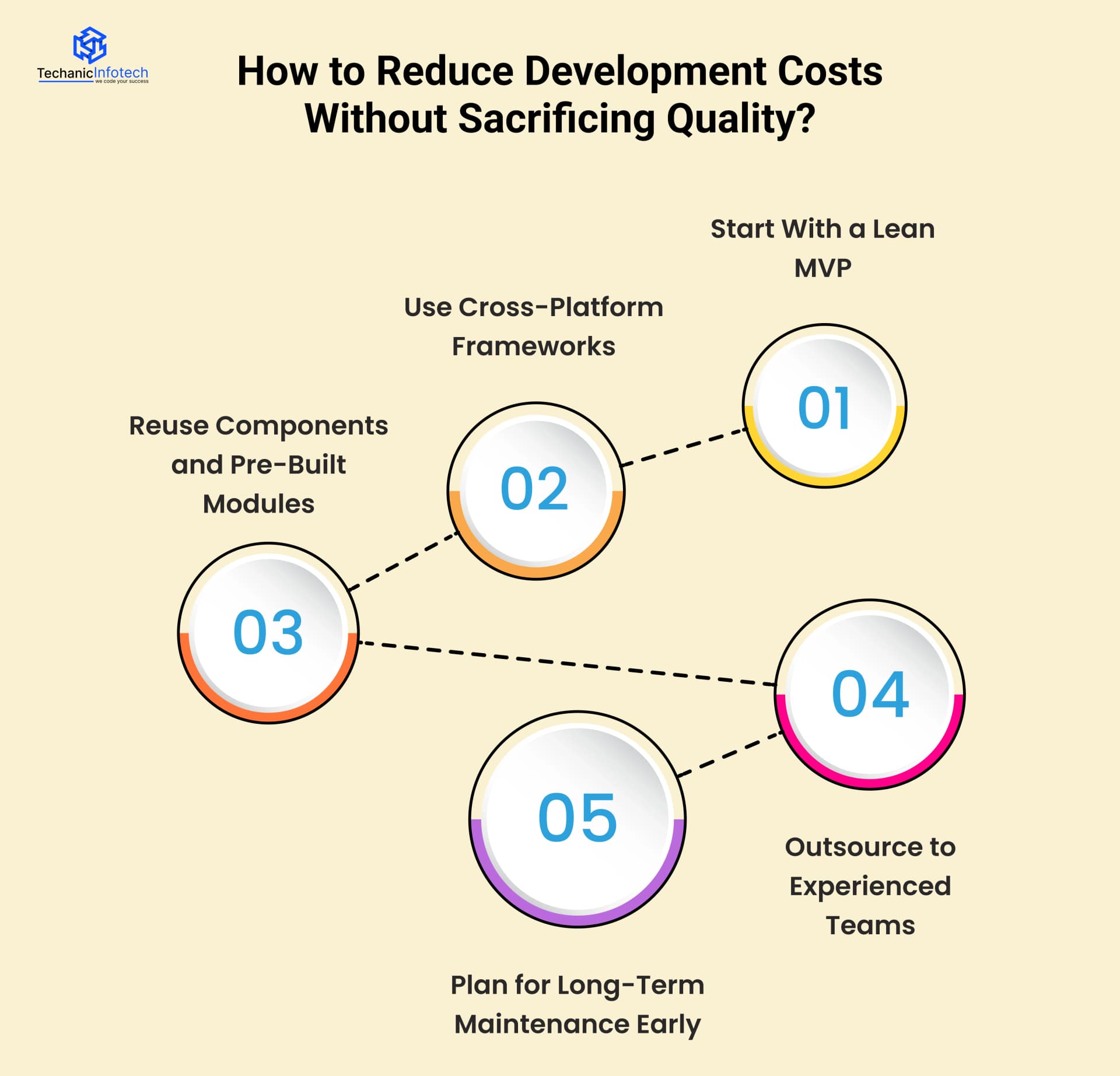
Focusing on a simple, essential feature set supports efficient minimum viable product development. This approach saves time, cuts early expenses, and lets you validate user needs before expanding the app further.
Cross-platform tools allow one codebase for both iOS and Android. This reduces engineering hours, lowers the overall cost to develop a food truck app, and speeds up future updates without limiting performance.
Leveraging proven modules, templates, and libraries speeds development. These reusable building blocks reduce testing time, boost stability, and free more of your budget for unique features that enhance customer experience.
Working with skilled developers who follow modern mobile app development trends reduces mistakes and rework. Their experience ensures better code quality, smoother workflows, and faster delivery at a more cost-efficient rate.
Designing scalable architecture from the start lowers future expenses. Clean code, organized documentation, and planned updates reduce technical debt, helping your app stay stable and cost-effective as it grows.
Future technologies are reshaping how apps are built and priced. As innovation accelerates, understanding food truck app development cost becomes essential for planning smarter and preparing for the next wave of digital expectations.
Smarter recommendations and dynamic menus are becoming part of the mobile app development process. These AI-driven features boost engagement but require more engineering time, training data, and continuous optimization, increasing overall project investment.
Advanced tracking increases transparency and convenience. Building accurate GPS routing, live updates, and predictive ETAs raises the on-demand food truck app cost due to complex backend systems and real-time data processing.
Hands-free ordering is rising as users embrace convenience. Integrating voice assistants and conversational AI adds technical complexity, pushing development costs higher but delivering a premium, modern customer experience that strengthens retention.
Emerging delivery models require advanced APIs, mapping tools, and automation logic. These innovations significantly influence mobile app development cost, as they demand stronger infrastructure and compliance with evolving regulatory standards.
Rising digital payments require stronger protection. Biometric login, encrypted transactions, and AI-driven fraud tools enhance security but add development time and testing requirements, increasing the overall investment needed for long-term stability.
A well-planned food truck app can become a powerful growth engine, helping businesses streamline operations, improve customer service, and stay competitive in a rapidly evolving market.
As technology continues to shape how customers order, track, and engage with food services, understanding your food truck app development cost becomes essential for smart decision-making.
The right approach balances features, performance, scalability, and long-term maintenance without overspending.
By choosing efficient tools, prioritizing must-have functions, and working with experienced developers, you can build an app that supports both immediate goals and future expansion.
Investing in smart, flexible technology today positions your food truck business to adapt quickly, serve customers better, and thrive in a digital-first food service landscape.
Development cost depends on features, design complexity, platforms, integrations, and backend needs. Advanced tools like AI, real-time tracking, and customization increase pricing, while simpler MVP builds help reduce overall expenses.
Most food truck apps take 3–6 months to develop. Timelines vary based on features, design, team size, testing, and the number of platforms included in the project scope.
You don’t always need separate apps, but dedicated modules improve usability. Customer, driver, and restaurant interfaces help streamline operations, create smoother workflows, and offer better control for each user type.
Yes. Real-time GPS tracking is a popular feature that lets customers find nearby trucks, follow routes, and receive delivery updates. It requires a strong backend infrastructure to maintain accuracy and performance.
Start with a lean MVP, use cross-platform frameworks, reuse pre-built modules, and work with experienced developers. Planning and prioritizing essential features helps control budget while maintaining excellent quality.


Abhishek Jangid is the CEO of Techanic Infotech, with extensive experience in mobile app and web development. He specializes in helping businesses turn innovative ideas into scalable digital solutions through strategic planning and modern technology.