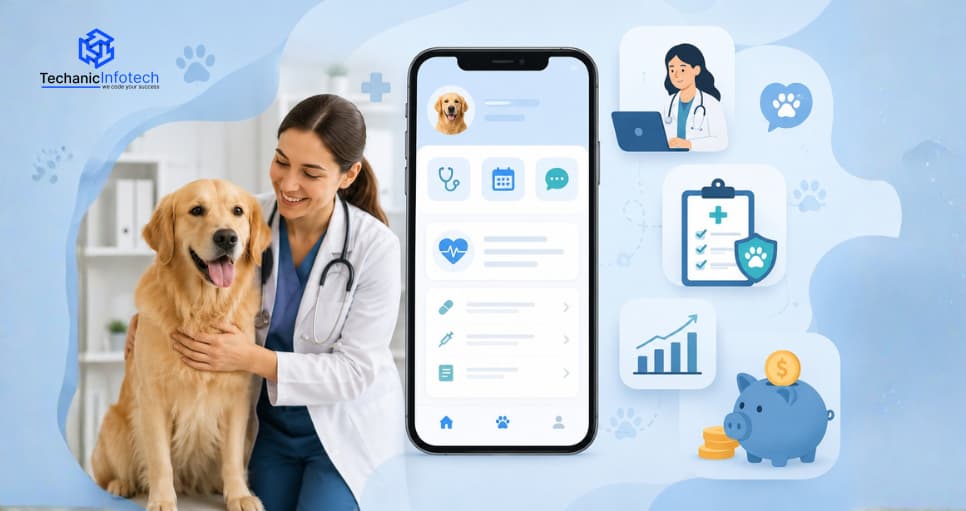
The veterinary industry is rapidly embracing digital transformation as pet ownership continues to rise worldwide. Modern pet owners expect convenient access to veterinary consultations, appointment scheduling, medical records, prescription management, and emergency support through mobile applications.
As a result, veterinary app development has become a strategic investment for veterinary clinics, animal hospitals, pet care startups, and healthcare providers looking to improve service delivery and customer engagement.
Whether you're planning a telemedicine platform, pet wellness application, or clinic management solution, understanding the essential features, benefits, and costs involved can help you make informed business decisions.
The growing demand for digital pet healthcare solutions is driving significant investment in veterinary app development and telemedicine technologies. Here are some key industry statistics highlighting this growth:
Approximately 66% of U.S. households own at least one pet, creating a growing demand for accessible veterinary services.
The global pet care market is expected to surpass $350 billion by 2027, driven by increasing pet ownership and spending on animal healthcare.
Veterinary telemedicine adoption has grown significantly in recent years as pet owners seek convenient access to professional consultations.
More than 70% of pet owners prefer online appointment scheduling and digital communication with veterinary clinics.
Mobile healthcare applications continue to be among the fastest-growing segments in the healthcare technology industry.
AI-powered healthcare solutions are becoming increasingly popular, encouraging the adoption of AI integration in mobile apps for symptom analysis, health monitoring, and personalised care recommendations.
Digital health records and automated appointment management systems help veterinary clinics reduce administrative workloads and improve operational efficiency.
'Veterinary app development' refers to the creation of mobile and web applications designed specifically for veterinarians, animal healthcare providers, pet owners, and veterinary clinics.
These applications help streamline operations, improve patient care, and enhance communication between pet owners and veterinary professionals. Modern veterinary mobile app development solutions often include telemedicine capabilities, appointment booking systems, health record management, and AI-powered health monitoring tools.
Businesses offering vet app development services focus on building customised solutions that address the unique requirements of the veterinary and pet care industries. Partnering with an experienced mobile app development company can help veterinary businesses build secure, scalable, and user-friendly applications tailored to their operational needs and growth objectives.
Investing in veterinary clinic app development offers significant advantages for veterinary practices, animal hospitals, pet care businesses, and startups. Beyond improving patient care, veterinary apps help streamline operations, enhance customer satisfaction, and create new growth opportunities.
Veterinary apps provide easy access to pet medical histories, vaccination records, treatment plans, and diagnostic reports. This allows veterinarians to make informed decisions quickly and deliver more accurate, personalised care for every patient.
Modern pet owners value convenience. Through veterinary mobile app development, users can book appointments, access medical records, receive reminders, attend virtual consultations, and communicate with veterinary professionals from a single platform.
Veterinary applications can generate additional income through telemedicine consultations, subscription-based wellness plans, premium services, online pharmacies, and pet product sales.
Automating appointment scheduling, billing, patient record management, and customer communication reduces administrative workload. This enables veterinary staff to focus more on patient care and less on routine operational tasks.
Features such as appointment reminders, vaccination alerts, personalised pet care recommendations, and loyalty programmes help maintain regular engagement with pet owners. Increased engagement often leads to higher customer retention and repeat visits.
With veterinary telemedicine app development, clinics can provide consultations to pet owners in remote or underserved areas. This expands the clinic's service area without requiring additional physical locations
Successful veterinary applications combine convenience, healthcare management, and seamless communication. Below are some of the most important features in mobile apps developed for veterinary services.
Pet owners should be able to create comprehensive profiles for their pets, including vaccination records, medical history, allergies, medications, breed details, age, and previous treatments. This feature helps veterinarians access important information quickly and provide better care and health reports.
A robust vet appointment booking app development solution allows users to schedule, reschedule, or cancel appointments directly from the app. Automated reminders can also reduce missed appointments and improve clinic efficiency.
One of the fastest-growing areas in veterinary telemedicine app development is virtual consultations. Video calls enable veterinarians to assess pets remotely and provide professional guidance without requiring in-person visits.
Digital medical records allow veterinary professionals to securely store and access patient information, treatment history, diagnostic reports, and prescriptions. This improves operational efficiency and supports accurate treatment decisions.
Veterinary apps can streamline prescription handling by offering digital prescriptions, medication reminders, refill requests, and pharmacy integrations. This helps pet owners stay on track with treatment plans.
Integrated payment gateways allow users to pay consultation fees, purchase medications, or book services directly through the application. Secure payment processing enhances user convenience and business efficiency.
Emergency support features enable pet owners to quickly contact veterinarians, locate nearby animal hospitals, or access urgent care services during critical situations.
Modern veterinary applications increasingly utilise AI integration in mobile apps to analyse pet health data, monitor symptoms, track behavioural changes, and provide personalised health recommendations. AI-driven insights can help identify potential health concerns before they become serious.
Building a successful veterinary application requires a structured development approach.
The project begins with market research, competitor analysis, and feature planning. During this phase, many businesses choose to start with an MVP development strategy to validate their concept before investing in a full-scale product.
Choosing the right technologies is critical for performance and scalability. A well-planned mobile app tech stack guide can help businesses select suitable frameworks, databases, cloud services, and security solutions.
The UI/UX design phase focuses on creating an intuitive and user-friendly experience for both pet owners and veterinary professionals.
During the development stage, developers build the application's frontend and backend infrastructure while implementing core features. This includes appointment scheduling, pet profile management, telemedicine functionality, payment gateways, notifications, and cloud-based data storage.
A comprehensive mobile app testing process is conducted to ensure the application performs reliably across different devices, screen sizes, and operating systems. Quality assurance teams evaluate functionality, security, performance, usability, and compatibility to identify and resolve issues before launch.
After launch, ongoing mobile app maintenance is essential to address bugs, release updates, improve security, and introduce new features. Regular maintenance helps keep the veterinary app competitive and aligned with evolving user needs.
The overall cost of veterinary app development typically ranges from $8,000 to $90,000+. However, the final investment depends on the type of application you want to build, the number of features required, UI/UX complexity, telemedicine functionality, AI integrations, and third-party services.
The table below provides an estimated cost breakdown by app category and development requirements.
Estimated Cost Breakdown:
|
Add Type |
Estimated Cost Range |
Development Timeline |
|
Basic Veterinary App |
$8,000 - $20,000 |
2-3 Months |
|
Medium-Complexity Veterinary App |
$20,000 - $45,000 |
3-5 Months |
|
Veterinary Telemedicine App |
$45,000 - $70,000 |
5-7 Months |
|
Advanced Veterinary platform with AI Features |
$70,000 - $90,000+ |
7-10 Months |
Businesses evaluating project budgets should also understand the broader factors that affect mobile app development cost, including development timelines, technology choices, and long-term maintenance requirements.
The demand for digital veterinary solutions continues to grow as pet owners increasingly seek convenient and accessible healthcare services for their animals. Through effective veterinary software development, businesses can improve patient care, streamline operations, and create new revenue opportunities.
Whether you're building a telemedicine platform, pet wellness application, or clinic management system, investing in professional veterinary app development can help future-proof your business and meet evolving customer expectations.
By leveraging modern technologies, AI-powered capabilities, and user-centric design, veterinary organisations can deliver exceptional digital experiences while enhancing animal healthcare outcomes.
Veterinary app development involves creating mobile applications that help veterinary clinics, animal hospitals, and pet care businesses manage appointments, medical records, telemedicine consultations, and pet healthcare services digitally.
A veterinary app should include pet profiles, appointment booking, telemedicine consultations, electronic medical records, payment integration, prescription management, notifications, and customer support features.
The veterinary app development cost typically ranges from $8,000 to $90,000+. The final cost depends on factors such as app complexity, platform selection, telemedicine features, AI integration, third-party APIs, and customisation requirements.
Development timelines generally range from 2 to 10 months, depending on the project's scope, feature set, integrations, and testing requirements.
Veterinary telemedicine apps enable remote consultations, improve accessibility to healthcare services, reduce clinic workload, and provide greater convenience for pet owners.
Yes. AI can be used for symptom analysis, health monitoring, predictive insights, automated reminders, personalised recommendations, and customer support features.
Yes. An MVP development approach allows businesses to launch essential features quickly, gather user feedback, validate market demand, and reduce initial development costs before building a full-scale application.


Bharat Sharma is the CTO of Techanic Infotech, bringing deep technical expertise in software architecture, mobile app development, and scalable system design. He leads the engineering team with a strong focus on innovation, performance, and security.