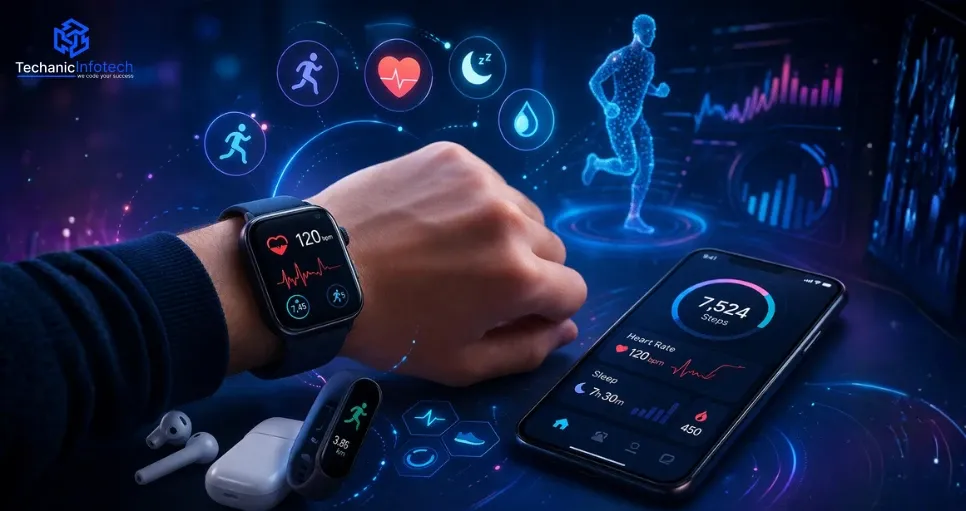
Wearable technology is rapidly transforming the digital landscape by bringing smart functionality directly to users’ wrists, clothing, and even eyewear.
From tracking health metrics to delivering real-time notifications, wearable apps are redefining how people interact with technology in their daily lives.
Businesses are increasingly investing in wearable app development to create seamless, personalized, and data-driven experiences for users.
Wearable apps are not just an extension of mobile applications; they represent a new wave of digital interaction that prioritizes convenience, connectivity, and real-time insights for users on the move.
Market size or wearable technology in 2025 is estimated at USD 84.53 billion
By 2030, the wearable technology market is projected to reach USD 176.77 billion
The compound annual growth rate (CAGR) from 2025 to 2030 is 15.9%
The AI-driven segment is anticipated to achieve the highest CAGR of 18.4%
The Asia-Pacific region is expected to witness the fastest growth, with a CAGR of 18.9%
Wearable applications are reshaping the digital ecosystem by providing instant access to information and services directly from devices people wear daily.
Their growing popularity is pushing businesses to explore new opportunities in this fast-evolving market.
Wearable apps allow users to access critical information instantly without opening a smartphone.
Notifications, health metrics, navigation, and reminders appear in real time, helping users stay informed and make quick decisions during everyday activities.
The increasing focus on personal health and wellness is driving the demand for wearable applications.
These apps track heart rate, sleep, physical activity, and stress levels, empowering users to monitor and improve their health proactively.
Wearable apps are designed for quick interactions and minimal input.
Their intuitive interfaces enable users to perform tasks easily, such as checking messages or tracking fitness goals, making the mobile app tech stack more accessible and convenient.
Modern wearable apps integrate seamlessly with smartphones, IoT devices, and cloud platforms.
This connectivity creates a unified digital ecosystem where users can control smart homes, track fitness, and manage schedules effortlessly.
The global demand for wearable devices is increasing rapidly as more people adopt smart gadgets.
This expanding user base encourages businesses and developers to invest in wearable applications and innovative digital services.
Minimum viable product development for a successful app requires focusing on simplicity, performance, and user convenience.
Since wearable devices have limited screen space and battery capacity, apps must be designed to deliver efficient functionality while ensuring a smooth user experience.
Wearable apps should have a clean interface with minimal interactions.
Users must be able to quickly access information through simple gestures, voice commands, or taps without navigating complex menus or lengthy processes.
Battery efficiency is critical for wearable devices.
Apps should be optimized to consume minimal power by limiting background processes, managing sensor usage carefully, and reducing unnecessary data synchronization.
Effective wearable apps deliver instant notifications and alerts.
Whether reminding users about meetings, health goals, or messages, real-time communication keeps users informed without requiring them to check their smartphones constantly.
Successful wearable apps integrate smoothly with smartphones, cloud platforms, and other connected devices.
This ensures synchronized data, improved functionality, and a consistent user experience across multiple digital platforms.
Wearable devices collect sensitive personal information, especially health data.
Strong encryption, secure authentication, and compliance with privacy regulations are essential to protect user information and build trust.
Wearable app like mental health app development, offer businesses innovative ways to engage customers and collect valuable insights.
By leveraging wearable technology, companies can enhance customer experiences, improve services, and unlock new revenue opportunities.
Wearable apps allow businesses to interact with customers through instant notifications, reminders, and personalized updates.
This direct communication channel strengthens brand engagement and keeps users connected to products and services.
Wearable devices generate significant data about user behavior, health, and preferences.
Businesses can analyze this information to understand customer needs better and improve their products or services.
Companies can create subscription services, premium app features, or wearable-integrated products.
These new offerings open additional revenue streams while providing customers with enhanced digital experiences.
Investing in the mobile app development process helps businesses stay ahead in a technology-driven market.
Innovative wearable solutions differentiate brands and position them as leaders in digital transformation.
Healthcare organizations can use wearable apps to monitor patient health remotely.
This improves patient care, reduces hospital visits, and enables proactive treatment through continuous health monitoring.
Wearable applications rely on advanced technologies that enable data collection, processing, and connectivity.
These technologies help wearable devices deliver real-time insights, seamless integration, and intelligent functionality.
IoT connects wearable devices to other smart devices and cloud platforms.
This connectivity allows data sharing, remote monitoring, and automation, enabling users to manage health metrics, smart homes, and daily activities efficiently.
AI helps wearable apps analyze large amounts of data collected from sensors.
It enables predictive insights, personalized recommendations, and intelligent health monitoring, improving the overall value of wearable applications.
Bluetooth and wireless communication technologies allow wearable devices to sync with smartphones and other devices.
This ensures seamless data transfer, app functionality, and real-time updates.
Cloud platforms store and process the large volumes of data generated by wearable devices.
They enable secure data access, real-time analytics, and synchronization across multiple devices and applications.
Wearables rely heavily on sensors such as accelerometers, gyroscopes, heart rate monitors, and GPS.
These sensors collect real-time data about user movements, health metrics, and environmental conditions.
Building a wearable application requires careful planning, design, and technology integration.
Developers must consider device limitations, user behavior, and seamless connectivity to deliver an efficient and engaging wearable experience.
The first step is understanding user needs by following the AI-driven fitness app development trends.
Businesses should identify the target audience, analyze competitors, and validate the app concept before investing in development.
Developers must choose the appropriate wearable platform, such as a smartwatch operating system or a specialized wearable device.
Mobile app development company selection affects compatibility, development tools, and overall app functionality.
Wearable devices have limited screen space, so the design must focus on simplicity.
Interfaces should prioritize essential features and enable quick interactions through gestures or voice commands.
Developers build the core functionality of the wearable app, including notifications, health tracking, and device connectivity.
Efficient coding ensures smooth performance and minimal battery consumption.
Testing is crucial to ensure the app works smoothly across devices.
Developers check performance, battery usage, and sensor accuracy while fixing bugs and optimizing the application.
Although wearable technology offers numerous benefits, developing wearable apps presents unique challenges.
Developers must overcome technical limitations and ensure a seamless user experience across devices.
Wearable devices have very small displays, making it challenging to present detailed information.
Developers must design minimalistic interfaces that communicate essential information clearly and quickly.
Wearable devices have smaller batteries compared to smartphones.
Apps must be optimized to reduce power consumption and avoid draining the device quickly.
Different wearable devices operate on various platforms and hardware configurations.
Ensuring compatibility across devices can be complex and requires careful testing and development strategies.
Wearable apps often collect sensitive health and personal data.
Ensuring secure storage, encrypted communication, and compliance with privacy regulations is essential to protect users.
Wearable devices rely heavily on wireless connectivity. Weak signals or connection interruptions can affect app functionality and user experience.
To create effective wearable applications, besides considering the mobile app development timeline, developers must follow specific design and development practices that focus on usability, efficiency, and seamless integration with other devices.
Wearable apps should allow users to complete tasks quickly through small interactions. Glances, taps, or voice commands ensure efficient user experiences.
Since wearable screens are small, apps should focus on delivering only the most important functionalities instead of complex features that overwhelm users.
Efficient coding, sensor management, and background process control help reduce battery consumption and improve device performance.
Wearable apps should integrate smoothly with smartphones, cloud services, and other smart devices to provide a connected digital ecosystem.
Wearable apps should use location, activity, and time-based data to deliver relevant information or alerts when users need them the most.
Wearable app development is rapidly shaping the future of digital technology by bringing smart capabilities directly into everyday life.
From health monitoring to productivity enhancements, wearable applications provide real-time insights and seamless connectivity that improve user experiences.
As wearable devices continue to evolve, businesses and developers have an opportunity to create innovative solutions tailored to personal and professional needs.
By leveraging advanced technologies such as IoT, AI, and cloud computing, developers can unlock the full potential of wearable ecosystems.
The mobile app development process includes idea validation, UI/UX design, development, testing, deployment, and post-launch maintenance to ensure a high-performing application.
The mobile app development timeline can range from 2–6 months for basic apps and 6–12+ months for complex apps, depending on features, integrations, and platforms.
Minimum viable product development focuses on building a basic version of an app with core features to test the idea, gather user feedback, and reduce initial development costs.
A mobile app tech stack typically includes frontend frameworks (Flutter, React Native), backend technologies (Node.js, Python), databases, and cloud services.
App development costs vary widely, typically ranging from $10,000 to $150,000+ depending on complexity, features, platform, and development team location.
UI/UX design ensures the app is intuitive, user-friendly, and engaging, which improves user retention and overall app success.
Current trends include AI-driven apps, IoT integration, wearable app development, super apps, and personalized user experiences.
Choose a mobile app development company based on experience, portfolio, client reviews, technical expertise, and their ability to understand your business needs.
Cross-platform development allows apps to run on both Android and iOS using a single codebase, reducing development time and cost.
To ensure security, use data encryption, secure APIs, authentication protocols, regular updates, and compliance with data protection standards.


Bharat Sharma is the CTO of Techanic Infotech, bringing deep technical expertise in software architecture, mobile app development, and scalable system design. He leads the engineering team with a strong focus on innovation, performance, and security.