Ecommerce App Development
The Right Time to Launch a Mobile App for Your Ecommerce Business
February 4, 2026
February 4, 2026
Launching a mobile app for your e-commerce business is a strategic decision that can significantly impact growth, customer retention, and revenue.
While having a mobile app is no longer optional for competitive brands, launching it at the wrong time can lead to poor adoption, wasted resources, and missed opportunities.
The right timing ensures your app aligns with customer demand, operational readiness, and market conditions.
Businesses that plan their launch strategically benefit from stronger user engagement, smoother onboarding, and faster ROI.
Factors such as seasonal trends, technical preparedness, audience behavior, and business maturity all influence the success of an app launch.
North America accounted for over 36% market value share of the market in 2023
The e-commerce market in the U.S. is projected to grow at a CAGR of 16.4% from 2024 to 2030.
By model type, the business-to-business (B2B) segment accounted for the largest market share, around 70% in 2023.
By product, the consumer electronics segment accounted for a significant market share of around 15% in 2023.
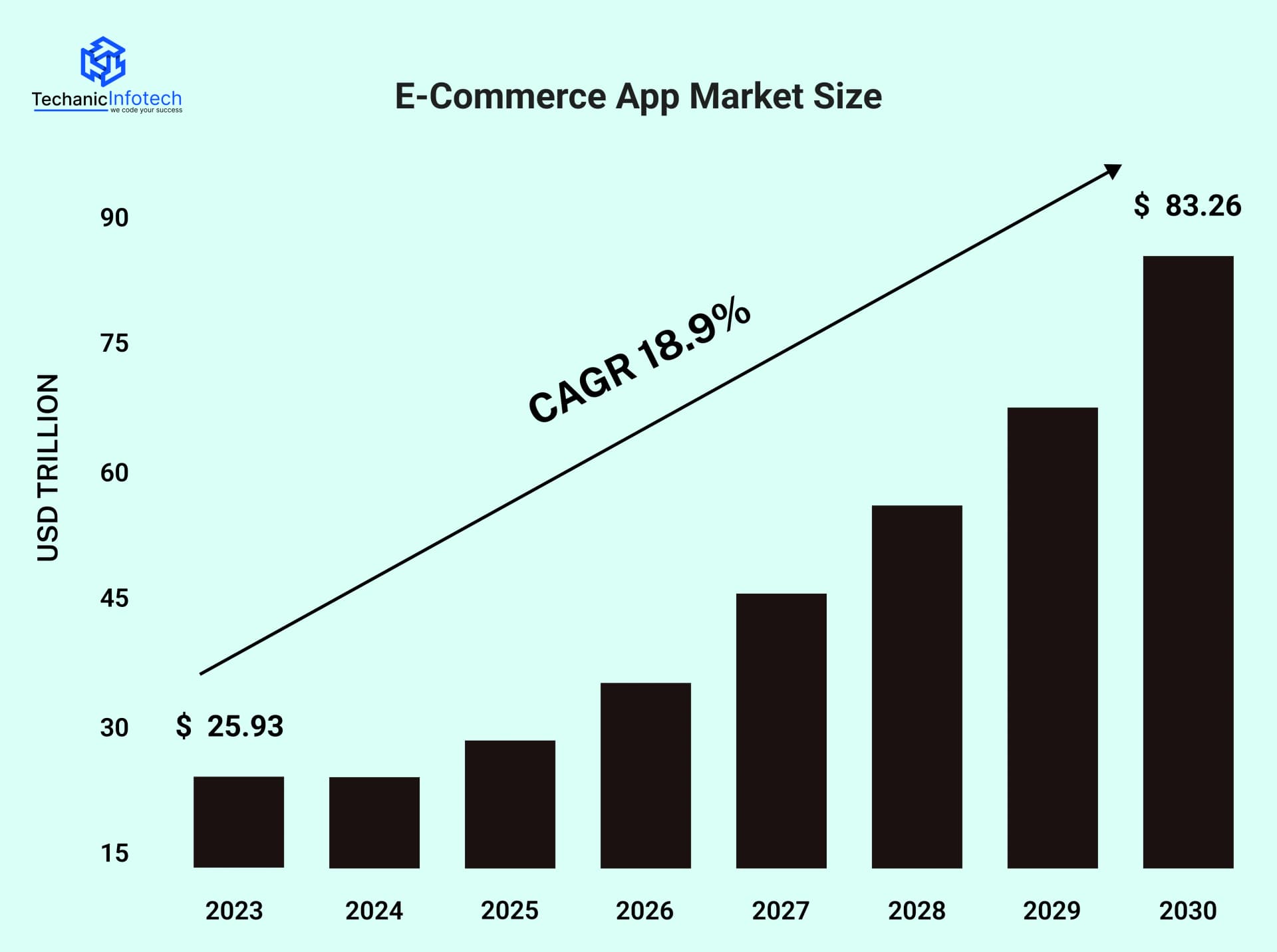
The global e-commerce market was valued at USD 25.93 trillion in 2023 and is expected to grow to USD 83.26 trillion by 2030, representing a compound annual growth rate (CAGR) of 18.9% from 2024 to 2030.
Launching when your audience actively shops online increases downloads and engagement. Timing your app release with high customer demand ensures better adoption and meaningful user interactions from day one.
A well-timed launch ensures your inventory, logistics, payment systems, and customer support are fully prepared, preventing negative user experiences caused by technical or fulfillment issues.
Launching during peak promotional periods maximizes marketing ROI. Campaigns perform better when customers are already in a buying mindset and receptive to new shopping platforms.
Strategic timing allows you to enter the market before competitors or during underserved periods, helping your app gain visibility and establish brand authority faster.
Apps launched at the right time benefit from higher conversion rates, repeat purchases, and faster monetization, turning mobile app development cost into measurable business growth sooner.
Choosing the right e-commerce app type ensures alignment with your business goals, target audience, and features, leading to better user experience, scalability, and long-term growth.
Here are the key ways to choose the right e-commerce mobile app that aligns with your business goals, target audience, and long-term growth strategy:
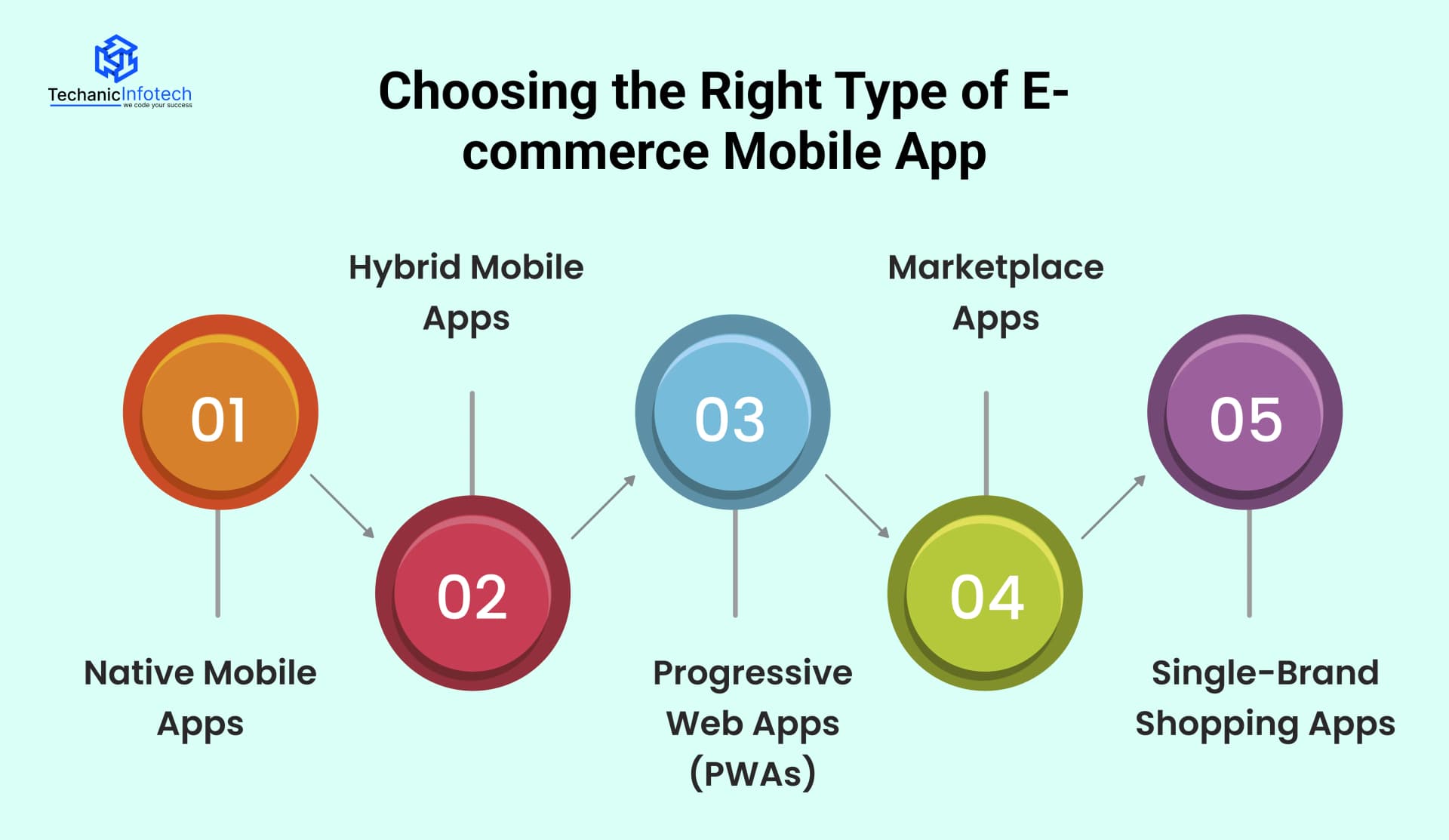
Native mobile apps deliver exceptional performance, speed, and reliability.
Built specifically for each platform, they enable rich user experiences, advanced mobile app features like push notifications and offline access, and long-term scalability for brands focused on sustained growth.
Hybrid mobile apps offer a balance between cost efficiency and performance.
Using a single codebase across platforms, they enable faster development, easier maintenance, and broader reach, making them ideal for startups and mid-sized businesses exploring mobile solutions.
Progressive Web Apps provide app-like experiences directly through web browsers.
They are lightweight, cost-effective, and easy to deploy, offering fast loading, offline capabilities, and cross-device accessibility without requiring installation from app stores.
Marketplace apps connect multiple vendors and customers within a single platform.
They demand scalable architecture, secure payment systems, and advanced admin controls, making them well-suited for large e-commerce businesses managing diverse products and high user traffic.
Single-brand shopping apps are tailored to showcase a specific brand’s identity.
They focus on personalization, loyalty programs, and seamless repeat purchases, helping businesses strengthen customer relationships and increase retention through consistent and engaging mobile experiences.
Choosing the right launch timeframe for an e-commerce mobile app can significantly influence downloads and much more.
The following are the timeframes for launching an E-commerce mobile app successfully.
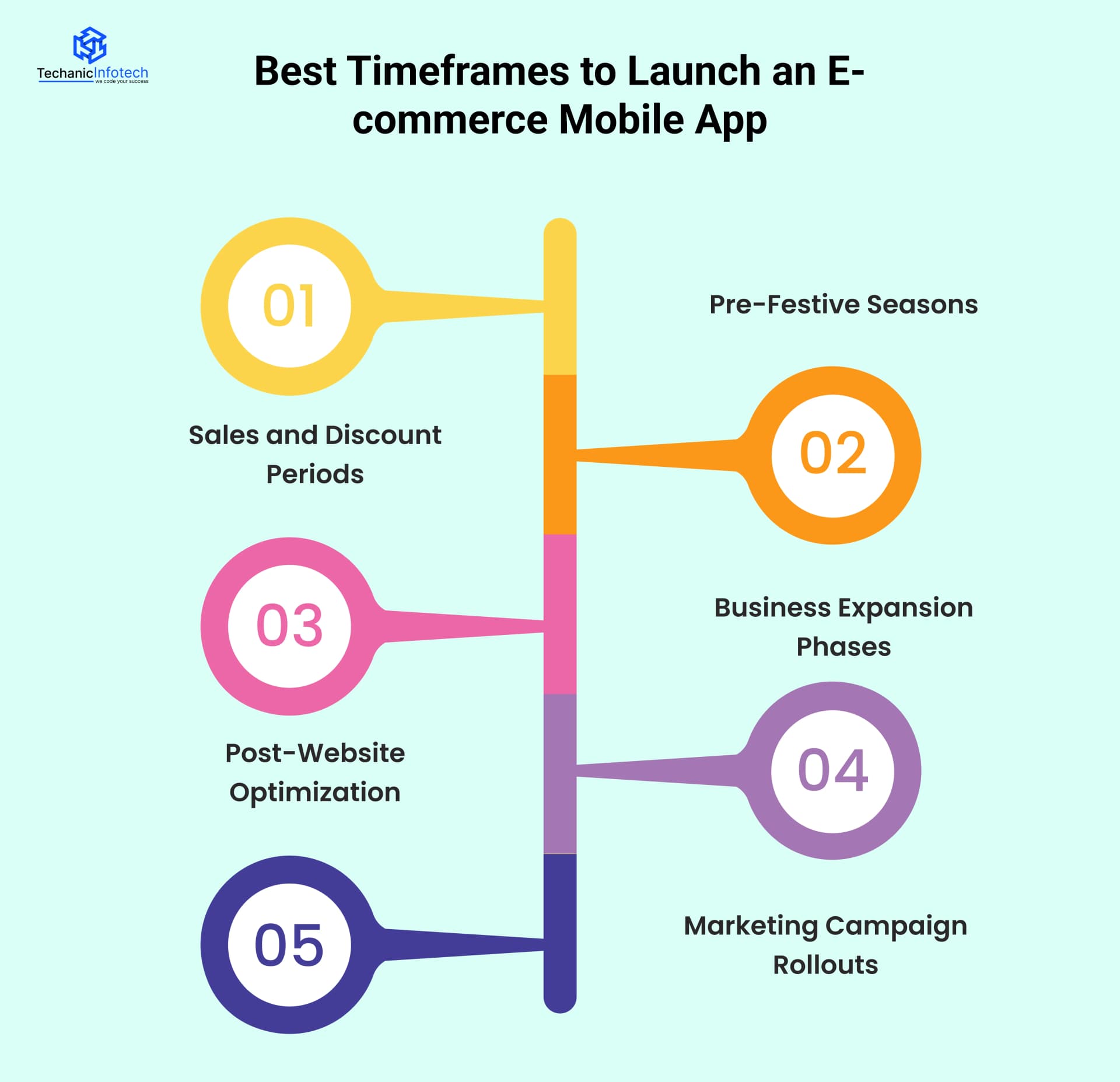
Launching your app before major festive seasons provides ample time for testing, optimization, and performance tuning.
This ensures the app remains stable, responsive, and fully prepared to handle increased traffic and high shopping demand during peak festive periods.
Launching during major sales or discount events attracts price-sensitive users actively seeking deals.
Exclusive app-only offers encourage downloads, registrations, and first-time purchases, helping brands quickly build a user base and drive immediate conversions during high-intent shopping windows.
Releasing an app during business expansion or product line growth supports rising customer demand.
It enables seamless browsing, faster transactions, and improved engagement across new offerings, ensuring a consistent customer experience while scaling operations efficiently.
Once your website achieves stable performance and usability, launching a mobile app ensures consistency across digital touchpoints.
This approach prevents app users from facing unresolved issues, delivering a smoother, more reliable experience that strengthens trust and usability.
Aligning app launches with major marketing campaigns amplifies visibility and impact.
Unified messaging across digital channels increases awareness, boosts installs, and drives engagement, ensuring marketing efforts work cohesively to maximize reach and return on investment.
Timing matters in app launches; understanding seasonal trends helps teams plan features, marketing, and more.
The following are the mobile app development trends and their impact on the app launching process.
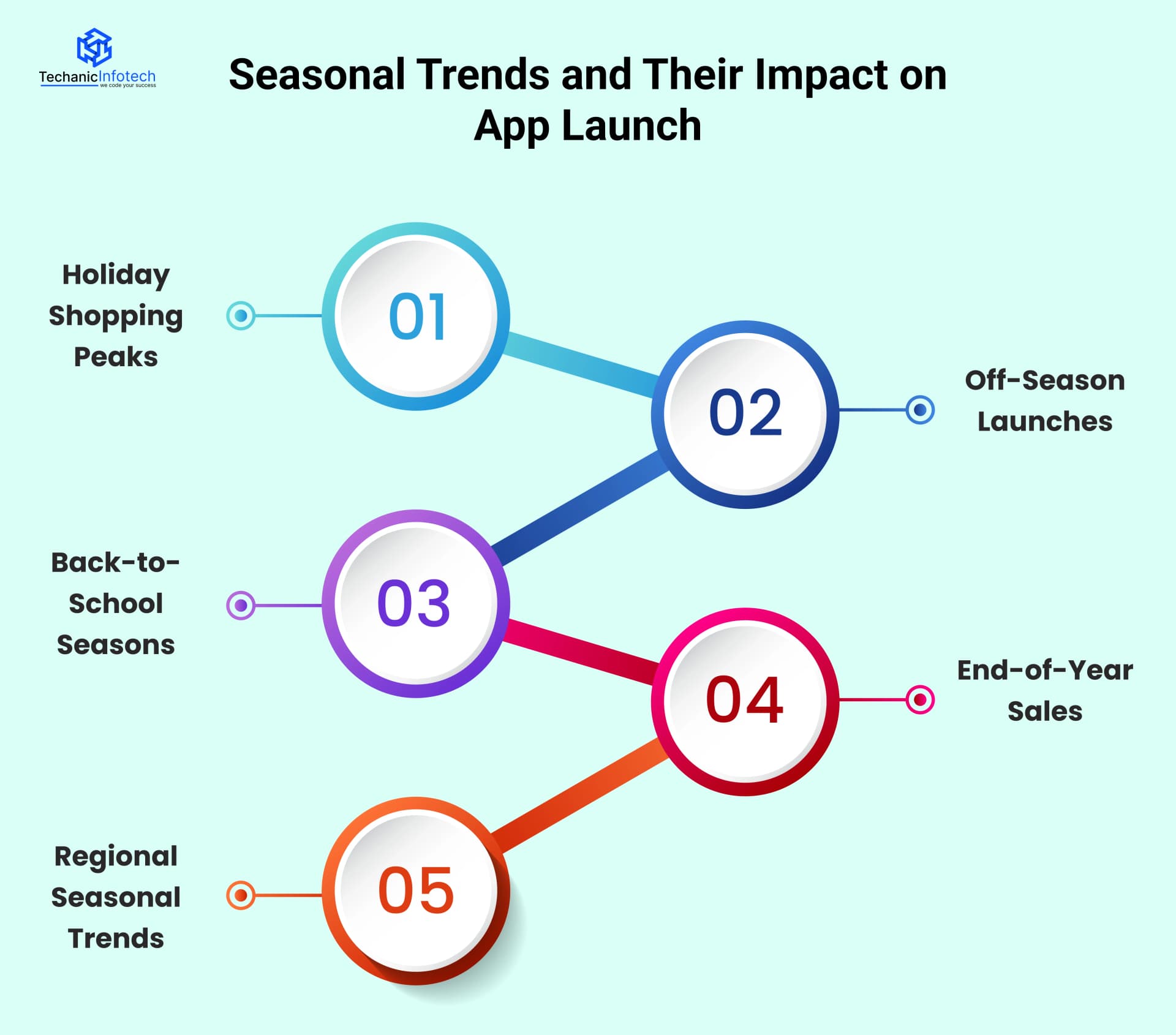
Holiday shopping peaks create surges in consumer activity, making them ideal for app launches focused on rapid adoption.
High intent purchasing, frequent promotions, and social buzz increase engagement, transactions, and visibility, helping apps gain momentum quickly during competitive festive periods.
Off-season launches occur during lower traffic periods, allowing teams to test features more safely.
Reduced pressure enables smoother rollouts, quicker bug fixes, deeper user feedback analysis, and iterative improvements before scaling, ensuring stability and readiness for future high-demand seasons successfully.
Back-to-school seasons present strong opportunities for app launches, especially in electronics and fashion.
Aligning releases with student and parent purchasing cycles boosts relevance, targeted marketing effectiveness, and conversion rates, as consumers actively seek deals, upgrades, and essential products during periods.
End-of-year sales periods are ideal for launching apps that leverage heightened consumer spending.
Shoppers expect discounts and promotions, driving higher downloads and conversions.
Strategic timing helps apps benefit from gift buying, bonuses, and a strong intent-to-purchase mindset among global audiences.
Understanding regional seasonal trends is critical for app launches. Local holidays, climate, and cultural habits influence buying behavior.
Tailoring launch timing and messaging to these factors increases relevance, trust, and engagement, ensuring the app resonates authentically with target regional audiences.
Launching an app is more than hitting publish; this pre-launch checklist helps you avoid costly mistakes.
The following is the checklist for launching successful mobile e-commerce apps.
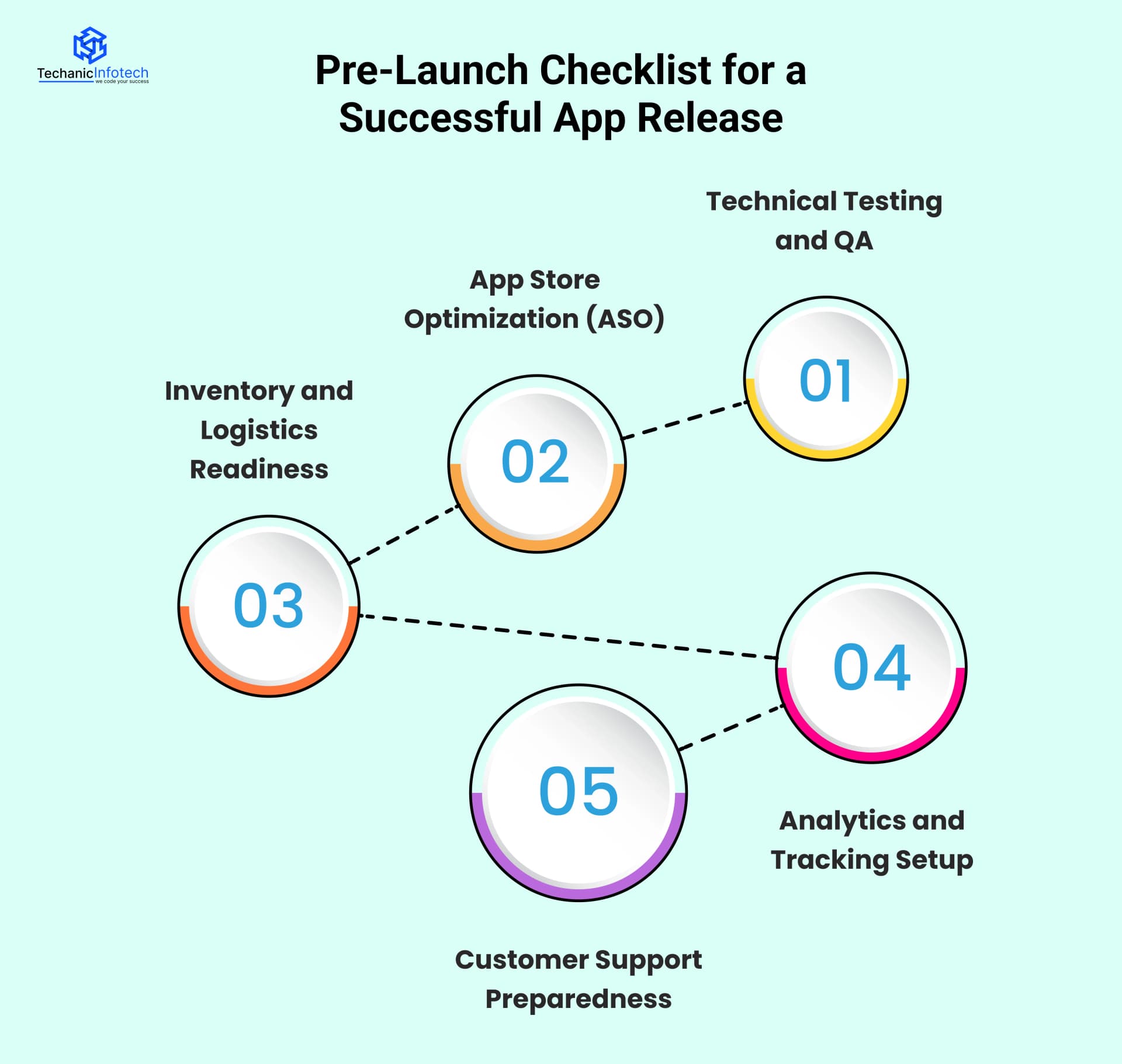
Conduct comprehensive quality assurance to validate app performance, security, and compatibility across devices, operating systems, and network conditions.
Rigorous testing minimizes crashes, prevents vulnerabilities, and ensures a smooth, reliable user experience before and after launch.
Strengthen App Store Optimization by refining titles, descriptions, keywords, screenshots, and preview videos.
Effective ASO improves search rankings, boosts visibility, attracts the right audience, and drives higher organic downloads while clearly communicating the app’s value proposition.
Ensure inventory levels and logistics systems are fully prepared to handle increased demand post-launch.
Accurate stock management, reliable delivery partners, and contingency planning help prevent delays, cancellations, and customer dissatisfaction during peak usage and promotional periods.
Set up robust analytics and tracking tools before launch to capture installs, user behavior, conversions, and retention.
Early data insights enable informed decisions, performance optimization, campaign evaluation, and continuous improvements aligned with user needs and business goals.
Prepare customer support teams with app knowledge, workflows, and escalation processes.
Well-trained support ensures quick resolution of technical issues, improves user satisfaction, builds trust, and encourages positive reviews, helping maintain strong engagement during critical launch phases.
Timing can make or break a launch. Releasing too early risks poor traction, while launching too late invites missed opportunities.
Learn the common mistakes founders should avoid at launch time.
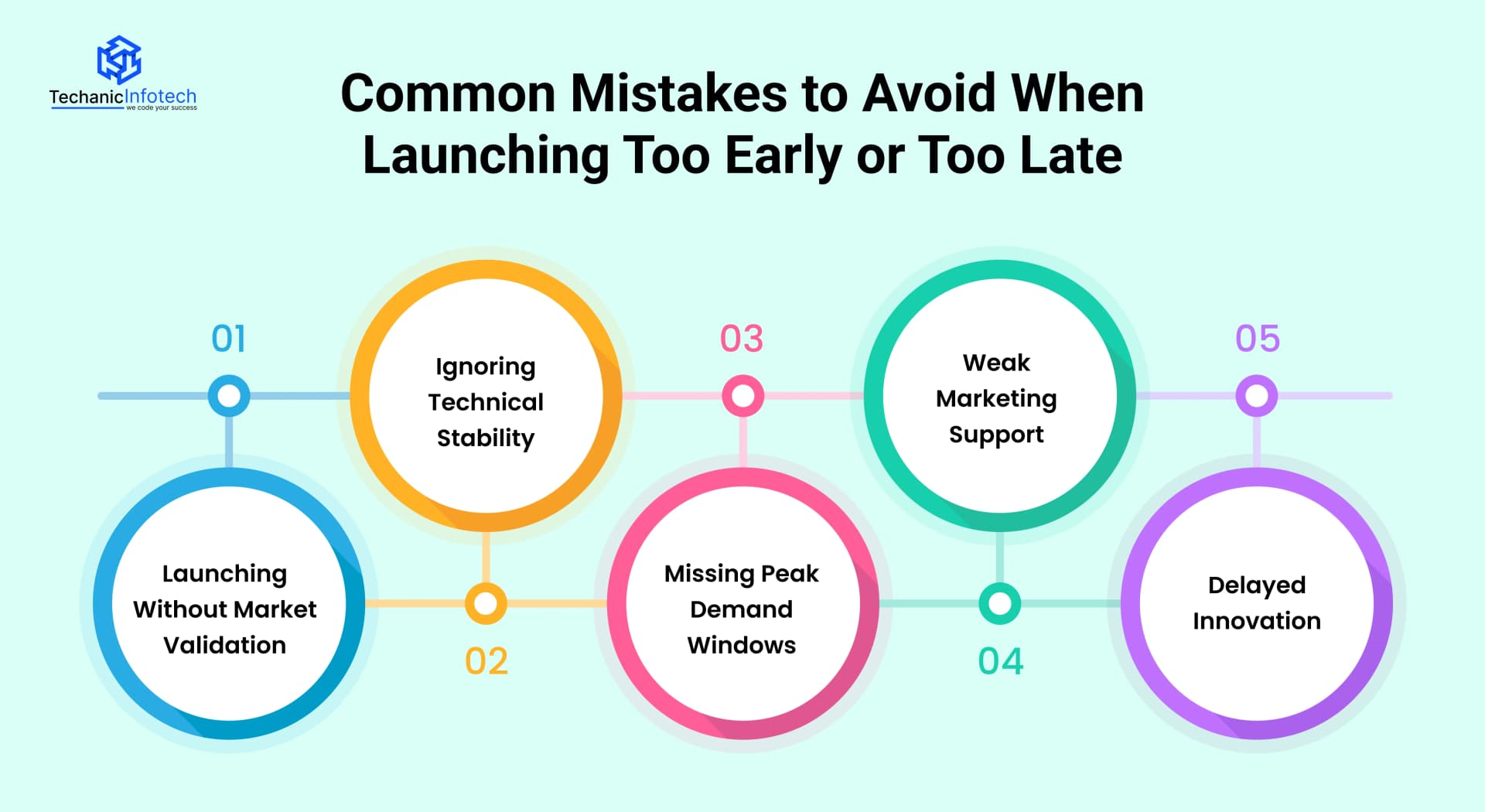
Launching an app without proper market validation often leads to low adoption and poor engagement.
Without understanding real customer needs and demand, mobile app development efforts may be wasted, resulting in limited returns and weak long-term sustainability.
Ignoring technical stability at launch can seriously harm user trust and brand reputation.
Bugs, crashes, and slow performance frustrate users, increase uninstall rates, and generate negative reviews that are difficult to recover from later.
Missing peak demand windows reduces an app’s ability to gain rapid traction.
Launching after major shopping seasons means lower visibility, fewer conversions, and missed revenue opportunities that could have accelerated early growth.
Weak marketing support can cause even high-quality apps to fail at launch.
Without strong promotion and awareness campaigns, potential users may never discover the app, resulting in low downloads and minimal initial engagement.
Delaying innovation allows competitors to enter the market first and shape user expectations.
Late launches reduce differentiation, increase competition, and make it harder to capture attention, loyalty, and meaningful market share.
A mobile app accelerates e-commerce growth by delivering seamless shopping experiences, personalized engagement, and much more.
The following are the ways that explain mobile apps that accelerate e-commerce growth:
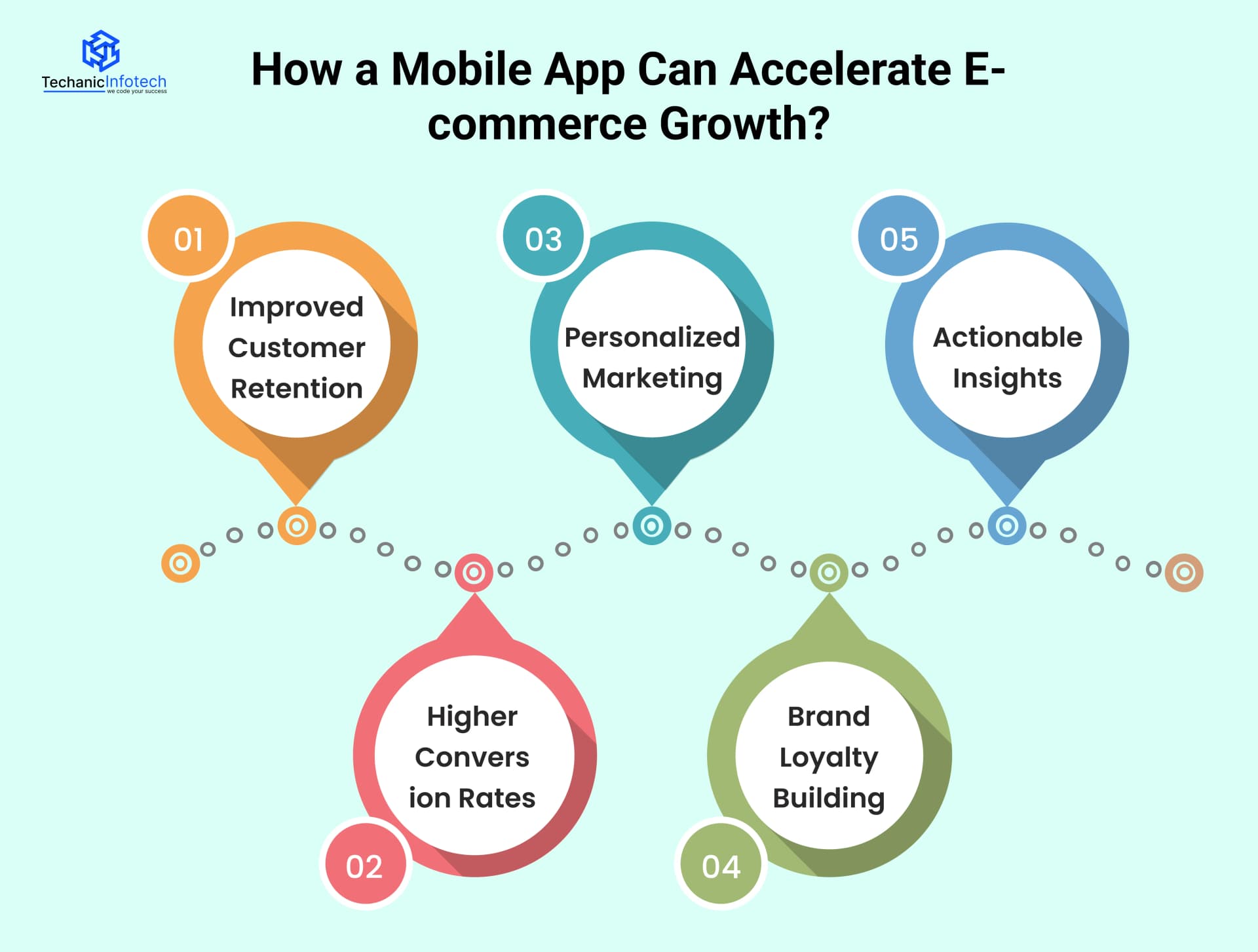
Mobile apps foster long-term relationships by offering personalized experiences, loyalty rewards, and timely push notifications.
These features keep customers engaged, encourage repeat purchases, and make users feel valued and connected to the brand.
With features like streamlined checkout, saved payment details, and personalized preferences, apps significantly reduce friction in the buying process.
This convenience minimizes drop-offs and increases the likelihood of users completing transactions successfully.
Apps utilize real-time user data, behavior patterns, and preferences to deliver highly targeted offers and recommendations.
This personalized approach increases relevance, boosts engagement, and improves the effectiveness of marketing campaigns.
Having a dedicated app provides direct access to customers, reinforcing brand visibility and recall.
Consistent interactions within the app help create a strong brand ecosystem, fostering trust, emotional connection, and long-term customer loyalty.
Mobile apps generate detailed analytics on user behavior, preferences, and engagement patterns.
These insights enable businesses to make data-driven decisions, refine strategies, improve user experience, and optimize overall performance and growth.
Techanic Infotech stands out as a trusted e-commerce app development company due to its deep technical expertise, client-centric approach, and proven delivery record.
The company specializes in scalable, secure, and high-performance mobile apps tailored to diverse e-commerce needs.
With a strong focus on user experience, Techanic Infotech builds apps optimized for speed, conversions, and long-term growth.
Their team follows industry best practices, agile development methodologies, and the latest technologies to ensure reliability and innovation.
From strategic consultation and design to post-launch support and optimization, Techanic Infotech offers end-to-end solutions.
Their commitment to transparency, quality assurance, and on-time delivery makes them a reliable partner for businesses seeking sustainable e-commerce success.
Launching an e-commerce mobile app at the right time is a strategic move that directly influences adoption, revenue, and customer satisfaction.
Businesses that align their app launch with market demand, seasonal trends, and operational readiness gain a significant competitive advantage.
From choosing the right app type to avoiding common timing mistakes, every decision plays a role in long-term success.
A well-planned launch supported by strong technical foundations and marketing strategies ensures better engagement and faster ROI.
Partnering with an experienced development company further strengthens outcomes by minimizing risks and maximizing performance.
Ultimately, timing your e-commerce app launch thoughtfully transforms it from a digital tool into a powerful growth engine.
The best time is before peak shopping seasons or major sales events, allowing testing and optimization while maximizing user adoption and revenue opportunities.
Startups should launch an app once they validate demand, stabilize operations, and have consistent traffic to ensure sustainable growth.
Development timelines typically range from 3 to 6 months, depending on features, platform requirements, and customization needs.
Yes, seasonal launches align with customer buying behavior, increasing downloads, engagement, and conversion rates.
Experienced developers ensure technical stability, scalability, security, and compliance, reducing risks and improving long-term app performance.


Abhishek Jangid is the CEO of Techanic Infotech, with extensive experience in mobile app and web development. He specializes in helping businesses turn innovative ideas into scalable digital solutions through strategic planning and modern technology.