Ecommerce App Development
Top eCommerce Business Models with Examples: A Complete Guide
February 6, 2026
February 6, 2026
The global e-commerce industry has transformed how businesses sell and how consumers shop, creating limitless opportunities for startups and enterprises alike.
With rapid digital adoption, mobile commerce, and evolving customer expectations, selecting the right eCommerce business model has become a critical success factor.
Each model offers distinct advantages, revenue mechanisms, and operational requirements. Understanding these models helps businesses scale efficiently, reduce risks, and maximize profitability.
Whether you are launching a niche marketplace, a subscription platform, or a direct-to-consumer brand, the foundation of your success depends on choosing the right approach.
This guide explores the most effective eCommerce business models, their benefits, and how to select the best one for sustainable digital growth.
Global e-commerce app revenue reached $3.88 trillion in 2023, representing an 8.1% increase compared to the previous year, highlighting continued momentum in digital commerce worldwide.
Approximately 10% of global ecommerce activity took place in the United States, positioning it behind China in terms of total ecommerce spending.
In 2023, 7.6% of total retail sales in the US were generated through mobile ecommerce, while the UK saw a significantly higher share at 16.8%.
Amazon remained the most popular e-commerce retailer in both the US and UK in 2023, maintaining its dominant position across these key markets.
Downloads and usage of e-commerce apps have increased steadily over the past two years, with particularly strong growth observed during the coronavirus pandemic.
Considering e-commerce business models is important because they define how a business operates, generates revenue, scales efficiently, and meets customer expectations while staying competitive in a fast-evolving digital marketplace.
Choosing the right eCommerce business model clearly defines how a company generates revenue by outlining pricing strategies, monetization channels, and profit margins.
This clarity ensures long-term financial sustainability while aligning business objectives with customer expectations and evolving market demand.
A well-structured business model helps minimize operational risks related to inventory management, logistics, and supply chain coordination.
It enables businesses to allocate resources efficiently, reduce unnecessary overhead costs, and respond quickly to market fluctuations or disruptions.
Different eCommerce models provide distinct pathways for growth, making the right choice essential for sustainable expansion.
A suitable model allows businesses to scale operations seamlessly, enter new markets, and manage increasing customer demand without sacrificing performance or service quality.
The chosen business model directly influences how customers interact with a brand across touchpoints.
Models such as subscription-based or marketplace platforms enhance personalization, convenience, and trust, resulting in higher customer satisfaction, loyalty, and retention.
A deep understanding of eCommerce business models empowers companies to differentiate themselves in crowded digital markets.
By adopting a model that supports innovation and addresses customer needs effectively, businesses can build a strong competitive edge and long-term brand value.
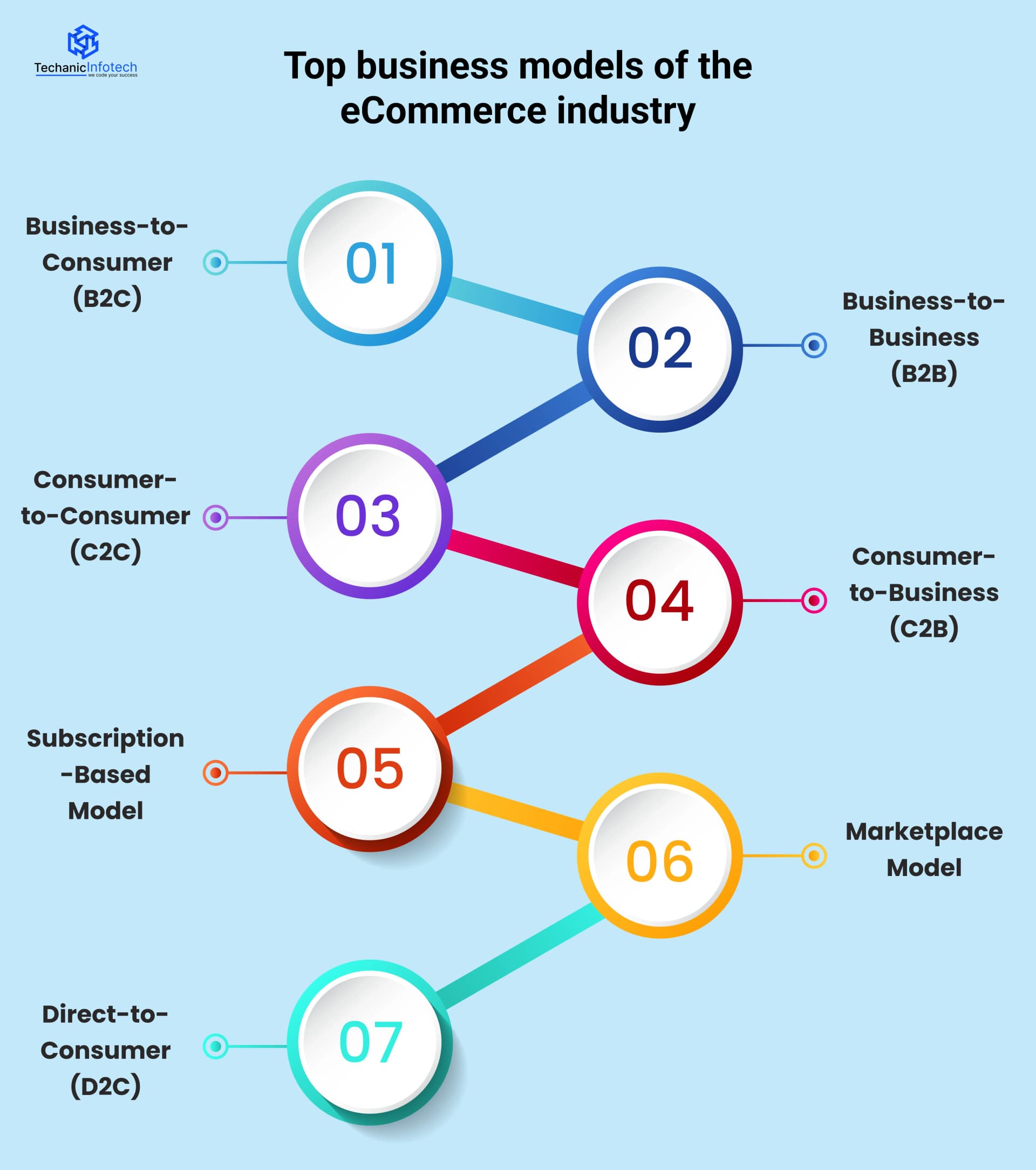
The eCommerce industry operates on diverse business models, each designed to meet specific market needs and customer behaviors.
Understanding these models in eCommerce app development helps businesses choose the right structure for revenue generation, scalability, and long-term growth.
Below are the seven most widely used eCommerce business models shaping the digital commerce landscape today.
The B2C model involves businesses selling products or services directly to individual consumers through online platforms.
It prioritizes seamless user experience, fast delivery, competitive pricing, and personalized marketing to attract customers, drive impulse purchases, and build strong brand loyalty in highly competitive digital markets.
Amazon: Sells millions of products online, offering fast shipping, recommendations, and easy returns.
Nike: Directly sells shoes and apparel online, providing exclusive launches, personalized experiences, and loyalty rewards.
B2B eCommerce focuses on online transactions between businesses rather than individual consumers.
It typically involves bulk purchasing, negotiated pricing, long-term supplier relationships, and repeat orders.
Advanced integrations with ERP and CRM systems improve efficiency, streamline procurement, and support complex sales cycles.
Alibaba: Connects millions of consumers with products directly from brands and sellers, offering easy navigation, secure payments, and fast delivery.
Salesforce Commerce Cloud: Enables brands to sell directly to consumers online with personalized experiences, AI-driven recommendations, and integrated marketing tools.
The C2C model enables individuals to sell products or services directly to other consumers through online marketplaces.
These platforms act as intermediaries, offering secure payments, listings, and dispute resolution while earning revenue through commissions, transaction fees, or premium seller services.
eBay: Enables users to sell items directly to other consumers through auctions or fixed-price listings, earning revenue from transaction fees.
Facebook Marketplace: Allows individuals to list products for sale locally, connecting buyers and sellers easily without inventory management.
C2B eCommerce reverses the traditional sales model by allowing individuals to offer value to businesses.
This includes freelance services, digital content, or influencer promotions.
Businesses benefit from flexible talent and cost efficiency, while individuals gain access to global opportunities and competitive compensation.
Upwork: Freelancers provide services like writing, design, and programming to businesses, earning revenue through project fees and commissions.
Fiverr: Individuals sell specialized services to companies, with the platform managing payments, gig listings, and service delivery for seamless transactions.
The subscription-based model charges customers recurring fees for ongoing access to products or services.
It creates predictable revenue streams, improves customer retention, and strengthens long-term relationships.
This model is popular for digital services, consumables, and memberships requiring continuous engagement.
Netflix: Offers unlimited streaming of movies and TV shows for a monthly subscription, providing personalized recommendations and seamless multi-device access to retain customers.
Spotify: Provides music streaming through monthly or yearly subscriptions, allowing users to create playlists, discover personalized tracks, and enjoy ad-free experiences, generating consistent recurring revenue.
Marketplace platforms bring together multiple buyers and sellers within a single digital ecosystem.
The platform owner facilitates transactions, manages trust mechanisms, and earns commissions without holding inventory.
This model is highly scalable and benefits from network effects as user participation grows.
Amazon Marketplace: Allows third-party sellers to list products alongside Amazon’s own inventory, reaching millions of consumers while Amazon earns commissions and fees.
Etsy: Connects individual artisans and small businesses with buyers globally, facilitating transactions, secure payments, and seller visibility, generating revenue through listing and transaction fees.
The D2C model allows manufacturers or brands to sell directly to consumers without intermediaries.
It provides complete control over branding, pricing, and customer relationships while leveraging data insights to personalize experiences, improve marketing efficiency, and build strong brand communities.
Warby Parker: Sells eyewear directly through its website and retail stores, bypassing traditional distributors.Customers can try frames at home, enjoy personalized recommendations, and benefit from competitive pricing.
Glossier: Offers skincare and beauty products directly to consumers online, focusing on community-driven marketing, influencer engagement, and personalized shopping experiences, building strong brand loyalty.
Selecting the right eCommerce business model is essential for building a profitable and scalable online business.
The following key factors help ensure your chosen model aligns with your goals, market demand, and operational capabilities.
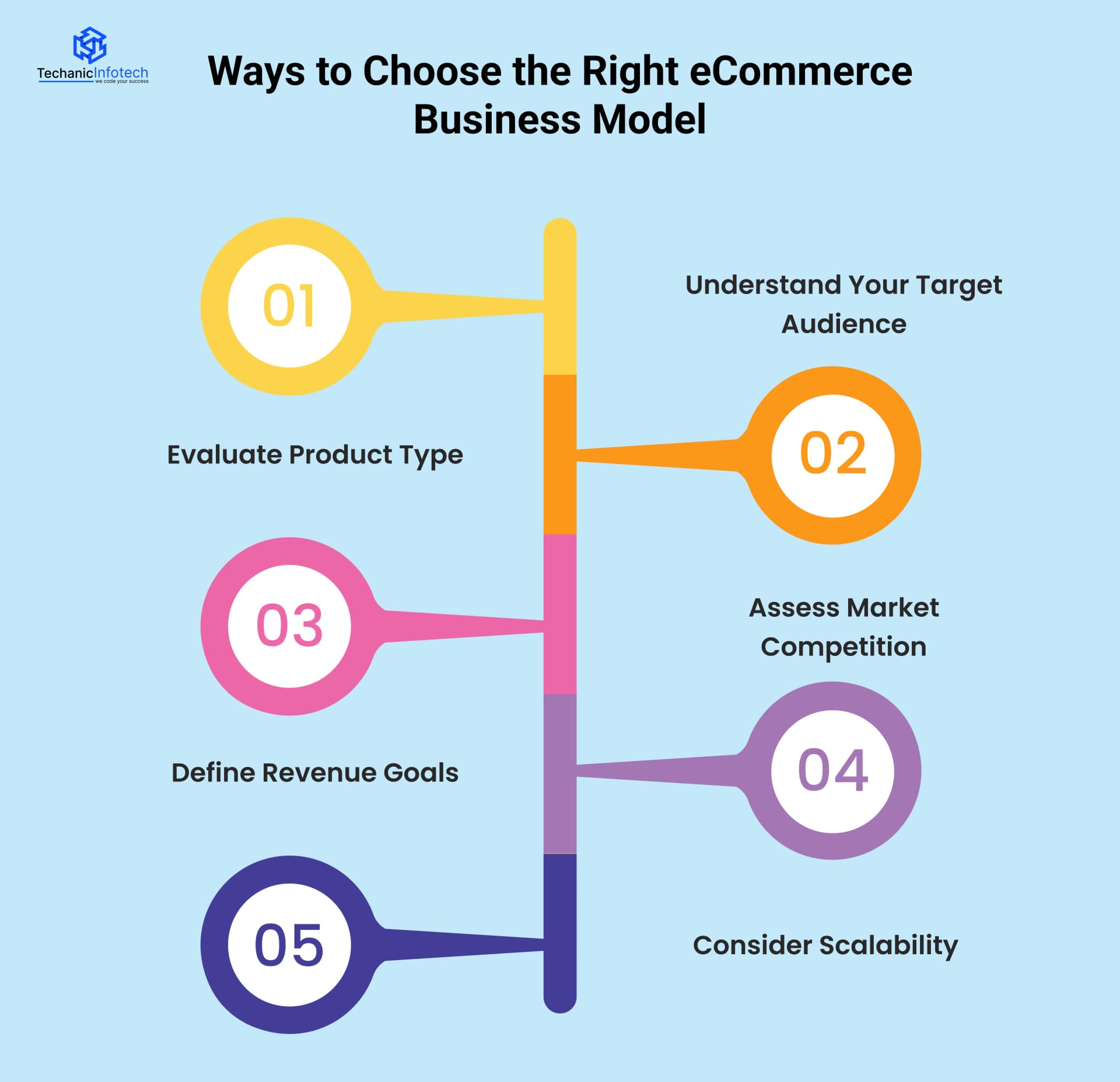
Thoroughly analyze customer behavior, preferences, demographics, and purchasing habits.
Understanding how and why your audience shops enables you to align your eCommerce business model with their expectations, buying journey, and long-term engagement patterns.
Different product types, such as digital goods, physical products, or services, require distinct business models.
Selecting the right structure ensures efficient inventory management, smooth delivery processes, and effective pricing strategies that support profitability and customer satisfaction.
Carefully study competitors to understand their strengths, weaknesses, and business models.
This analysis helps identify market gaps and opportunities, allowing you to design a differentiated eCommerce model that attracts customers and builds a strong competitive position.
Clearly define whether your business aims for recurring revenue, one-time sales, or commission-based income.
Establishing precise revenue goals helps guide your choice of business model and ensures financial sustainability and predictable cash flow.
Choose an eCommerce business model that can support future growth and expansion.
The right model enables you to scale operations, enter new markets, and handle increasing demand without adding high mobile app development cost or operational complexity.
Selecting the right eCommerce business model requires strategic evaluation of multiple factors that directly impact profitability, scalability, and customer satisfaction.
Below are the key aspects to consider, each explained clearly and concisely.
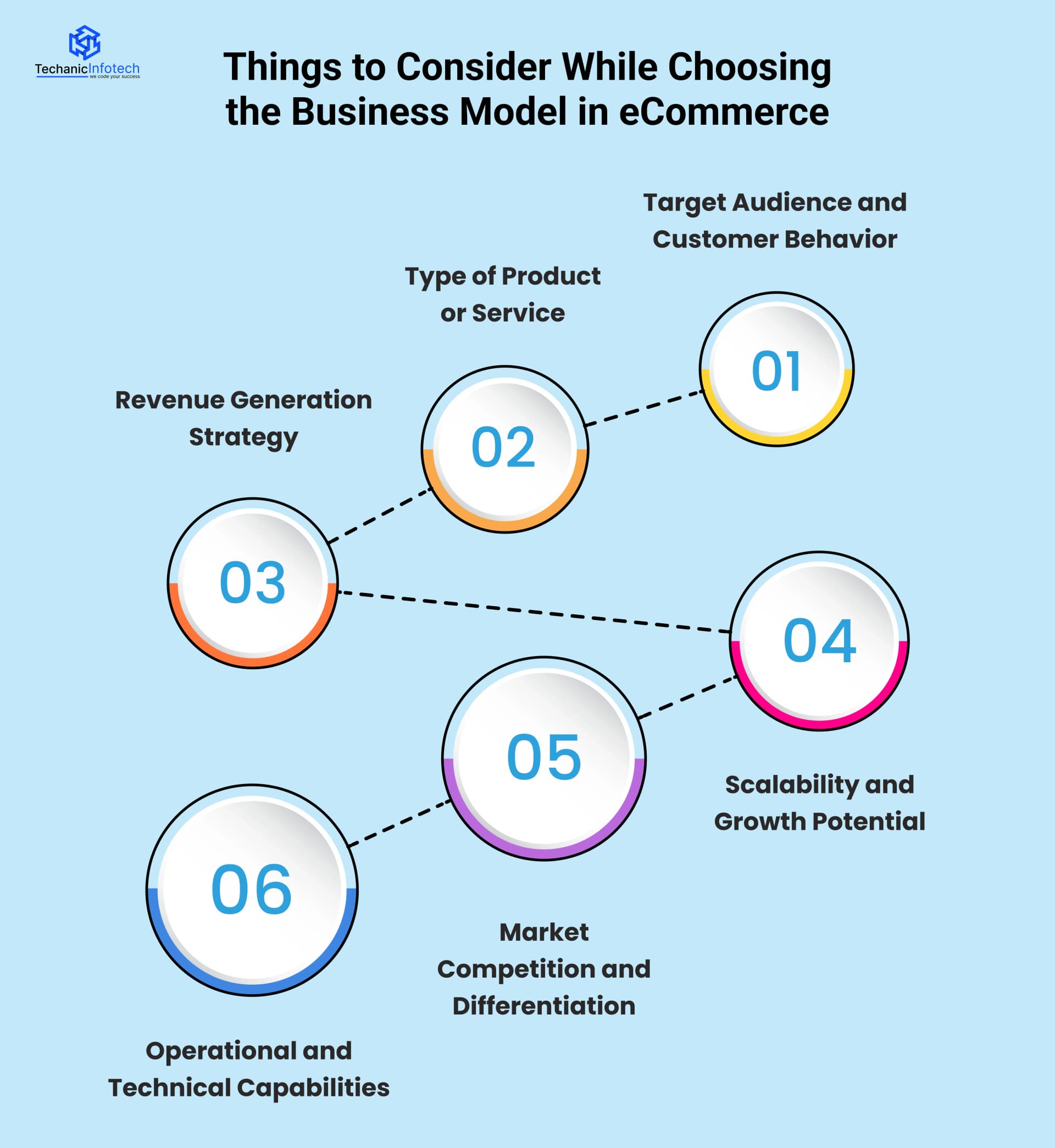
Understanding your target audience is critical when choosing an e-commerce business model.
A business model aligned with customer behavior improves engagement, conversions, and long-term loyalty.
Different products demand different business models.
Physical goods require inventory and logistics planning, while digital products or services may suit subscription or C2B models. Your product type influences pricing, delivery, and operational structure.
Define how your business will make money through direct sales, subscriptions, commissions, or advertisements.
A clear revenue strategy ensures financial sustainability and helps you select a model that supports consistent cash flow and profit margins.
Choose a business model that supports future expansion.
Consider whether it allows easy onboarding of new customers, sellers, or markets without significantly increasing operational complexity or costs.
Analyze competitors to understand what business models dominate your niche.
Selecting a model that offers unique value or improved customer experience helps differentiate your brand and strengthen market positioning.
Assess your available resources, technical expertise, and budget. Some models require advanced technology, logistics management, or vendor coordination.
Choosing a model aligned with your capabilities ensures smoother execution and long-term success.
Techanic Infotech is an eCommerce app development company that specializes in building high-performance, scalable, and user-centric eCommerce applications tailored to modern business needs.
With deep expertise in mobile and web app development, the company delivers secure, feature-rich platforms that drive conversions and enhance customer engagement.
From custom UI/UX design and AI-powered recommendations to seamless payment gateways and robust backend systems, Techanic Infotech ensures end-to-end development excellence.
Their agile development approach allows faster time-to-market while maintaining quality and performance.
Whether you’re launching a startup or scaling an enterprise solution, Techanic Infotech helps transform your eCommerce vision into a future-ready digital product.
Choosing the right eCommerce business model is the foundation of a successful digital venture.
Each model offers unique advantages, revenue streams, and growth opportunities depending on your product, audience, and goals.
By understanding market dynamics, customer behavior, and scalability requirements, businesses can create sustainable and profitable platforms.
Investing in the right technology partner further strengthens execution and long-term success.
As e-commerce continues to evolve, businesses that adopt flexible, customer-focused models will remain competitive.
A strategic approach combined with innovative app development ensures not just market entry, but long-term digital leadership.
Profitability depends on industry and execution. Subscription and D2C models often generate higher margins due to recurring revenue and direct customer relationships.
B2C and marketplace models are popular for startups due to lower entry barriers and faster customer acquisition opportunities.
Yes, hybrid models are common. Businesses often combine D2C with subscriptions or marketplaces for diversified revenue streams.
Mobile apps improve user experience, engagement, and conversions, making them essential for modern eCommerce growth strategies.
Focus on the right business model, technology scalability, data analytics, customer experience, and strategic partnerships to support long-term growth.


Abhishek Jangid is the CEO of Techanic Infotech, with extensive experience in mobile app and web development. He specializes in helping businesses turn innovative ideas into scalable digital solutions through strategic planning and modern technology.