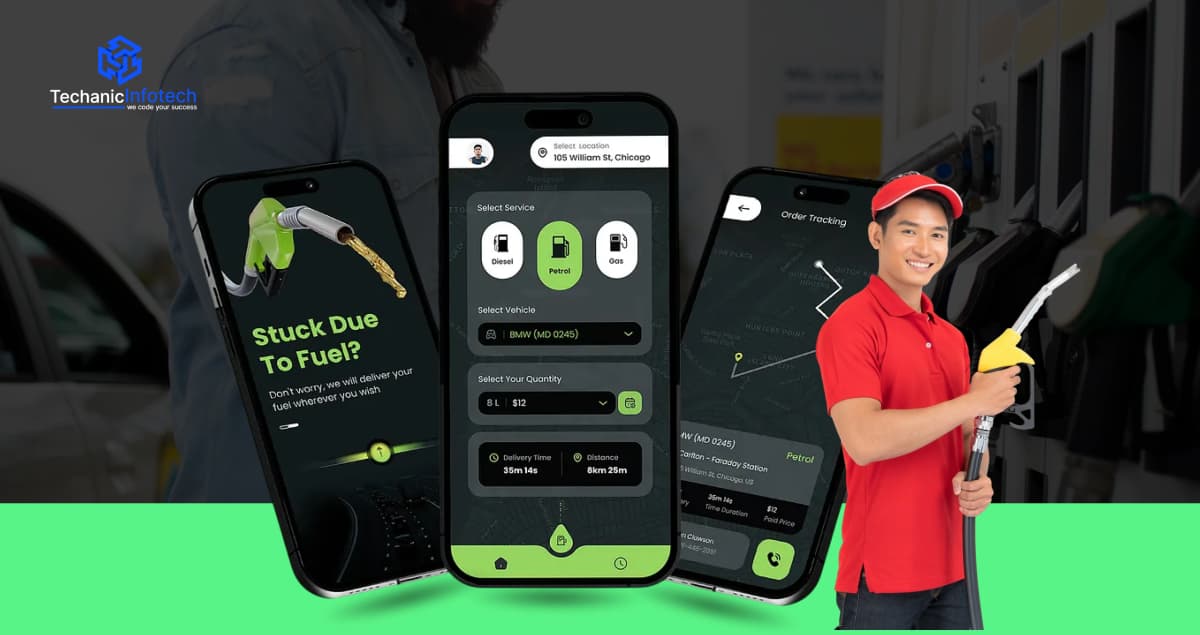
Fuel Delivery App Development
Top Features Every Successful Fuel Delivery App Must Have
January 6, 2026
January 6, 2026
Fuel delivery apps are transforming how people refuel their vehicles by making fuel accessible anytime, anywhere, without visiting a petrol station.
As more users and businesses shift to mobile convenience, understanding the right fuel delivery app features becomes essential for success. From seamless ordering to real-time tracking and secure payments, the best apps combine technology, safety, and convenience into one experience.
This guide explores the most important on-demand fuel delivery app features, including the essential features users expect today, plus the advanced functionalities that drive efficiency and trust.
If you’re comparing common fuel delivery app features or planning the next big innovation, these must-have features for a fuel delivery platform will help shape a strong, market-ready product.
Fuel delivery apps are rapidly gaining adoption worldwide due to a mix of digital convenience, mobile accessibility, and operational efficiency. Below are the major reasons behind their rise:
Users can order fuel anytime from their phones, no queues, no gas station trips. This shift aligns with broader on-demand trends where people expect services instantly and on location.
The global on-demand fuel delivery market was valued at around USD 3.2 billion in 2024 and is projected to reach USD 11.98 billion by 2033, driven by mobile refueling services and increased fleet reliance.
Fleet operators now refuel multiple vehicles simultaneously at job sites or parking hubs, reducing downtime and improving productivity. This makes the model ideal for logistics, mobility, and delivery businesses.
Mobile fuel demand is expected to expand from USD 5.84 billion in 2025 to USD 11.93 billion by 2035, reflecting rapid business and consumer adoption.
People working long hours or living in crowded urban areas prefer doorstep tank refills instead of driving to fuel stations, especially during peak hours.
Fuel delivery apps provide tracking, invoicing, secure payments, and transparent pricing, advantages traditional stations lack.
Building a fuel delivery app isn’t just about coding, it’s about designing a reliable experience that users can trust. The features you choose directly determine whether the app succeeds, scales, or struggles.
Here’s why:
Great features make navigation smooth, orders fast, and payments simple. If users can’t order fuel in seconds or face confusion while browsing the app, they will abandon it. The right fuel delivery app functionalities ensure ease, clarity, and speed, leading to repeat customers.
Behind the scenes, the best fuel delivery app features like scheduling tools, route optimization, and delivery tracking reduce manual work and save fuel costs. They help drivers move faster, admins manage orders easily, and the entire fuel delivery app workflow runs on autopilot. Without these features, operations become slow, disorganized, and costly.
Fuel delivery involves risk, compliance, and regulations. Secure payments, GPS accuracy, identity verification, and safety alerts are not optional, they are critical. The right features of fuel delivery apps protect users, drivers, and businesses while building long-term trust.
The industry is growing fast, and customers have choices. Offering only basic fuel delivery app features is not enough. Advanced tools, such as subscription plans, loyalty rewards, live tracking, and digital invoices, give your app an edge and help it stand out in the market.
As your user base grows, the app needs to manage more vehicles, locations, drivers, and delivery zones. Scalable features prevent crashes, delays, and order failures. They ensure the app stays fast and reliable even during peak demand.
Manual processes lead to mistakes, wrong fuel type, wrong address, delivery delays, or payment failures. Common fuel delivery app features like automated order validation, driver dashboards, and customer confirmation screens prevent errors and increase accuracy.
Every added feature opens a new earning channel. Subscriptions, surge pricing, referrals, analytics, and business fleet accounts all create opportunities for consistent income. Strong features = strong monetization.
Users stay loyal to platforms that feel secure, modern, fast, and accessible. Features like rating systems, chat support, offers, and profile history make users feel valued and understood.
To build a reliable and user-friendly fuel delivery platform, certain features are absolutely essential. These are the core tools that make ordering fuel safe, fast, and convenient for customers while keeping operations smooth for drivers and admins.
Users must be able to sign up quickly using email, phone, or social logins. Profiles store order history, vehicle details, saved addresses, and payment preferences.
GPS-enabled tracking helps customers follow delivery status and allows drivers to locate vehicles accurately. This reduces delays and prevents delivery errors.
Users should be able to choose fuel type, quantity, preferred time, and delivery address. Flexible scheduling supports instant or planned deliveries.
Multiple payment methods, cards, wallets, UPI, and net banking, ensure smooth and safe fuel purchases.
Push alerts update users about order confirmation, driver arrival, estimated delivery time, and payment receipts. This keeps communication clear.
Admin must be able to assign orders, monitor driver activity, and track vehicles in real time. This keeps operations organized.
Users get instant downloadable invoices, and both customers and admins can access past transactions anytime.
Top fuel delivery apps must include safety checklists, driver verification, and compliance approvals to ensure secure transportation of fuel.
This feature builds trust, improves service quality, and provides feedback for future improvements.
A fuel delivery business relies on the seamless coordination of three major panels, User App, Driver App, and Admin Dashboard. Each panel has a unique purpose, workflow, and feature set. When these work together, the result is a safe, fast, and error-free delivery system.
Below is a detailed breakdown of what each panel must include to ensure operational efficiency, customer satisfaction, and long-term scalability.
The user app defines the entire customer experience. It must feel intuitive, transparent, and safe. Beyond basic ordering and payment, here are key user-side features that add value and improve engagement:
Users should be able to save multiple vehicles and delivery locations. This is especially useful for households with multiple cars or users who refuel at home and work.
The app can recommend fuel options based on previous orders, vehicle history, and performance preferences. This makes reordering faster and more accurate.
Instead of choosing random volumes, users can enter vehicle model or tank capacity, and the app estimates fuel quantity and cost. This eliminates guesswork.
Fuel delivery involves flammable material. An emergency call button and auto-alerts add reassurance and build trust.
Users may want to change delivery time, address, or quantity. Allowing edits before dispatch reduces cancellations and improves convenience.
A loyalty system encourages repeat orders. Rewards, referrals, cashback, and promotional discounts improve retention.
Quick access to help removes stress and prevents customer churn, especially when delivery timing or payment needs attention.
Many users prefer prepaid monthly refills or discounted subscription bundles. This ensures steady revenue and long-term loyalty.
These user-focused top fuel delivery app features convert first-time downloads into long-term engagement, the heart of fuel delivery success.
Drivers are the operational backbone of a fuel delivery service. The driver panel must simplify daily tasks, accelerate deliveries, and maintain safety standards.
The app should automatically choose the fastest route based on traffic, vehicle location, and delivery priority. This lowers fuel consumption, improves delivery speed, and reduces stress.
Drivers should be able to accept new requests, view upcoming bookings, and plan their day efficiently. A clear schedule prevents confusion and delays.
Drivers must operate only within approved delivery regions. Geo-fencing prevents safety risks and unauthorized drops.
Before leaving the facility, drivers must complete an inspection checklist, pressure check, leak test, cylinder locking, fire extinguisher status, etc. These steps reduce accidents.
Drivers can upload photos, collect signatures, or record OTP codes for delivery confirmation. This prevents fraud and improves accountability.
A driver wallet system tracks daily earnings, bonuses, trip payouts, and incentives. This transparency increases motivation.
If network coverage is poor, drivers should still view orders and update delivery status. Syncing later ensures data accuracy.
If something goes wrong, like delays, traffic blocks, or vehicle issues, drivers can report incidents instantly. This helps the admin respond faster.
The driver app ensures safety, accuracy, and efficiency in every trip, qualities that fuel delivery demands.
The admin panel controls the entire ecosystem, customers, drivers, vehicles, deliveries, payments, safety guidelines, and finances. It must provide complete visibility and smart decision-making tools.
Admins can view delivery vehicles on maps, track order status, and monitor driver activity. This reduces delays and boosts operational control.
Fuel quality, quantity, pressure, and temperature sensors help prevent loss, leakage, contamination, or theft. IoT integration elevates platform reliability.
Fuel prices change. Admins need flexible tools to update prices by region, vehicle type, order time, and demand. Surge pricing helps balance high-load periods.
Admins can assign, reschedule, re-route, or cancel requests instantly. Automated dispatch ensures faster decisions and reduces manual errors.
Only licensed, trained drivers must handle fuel. The admin panel stores identification data, expiry dates, and safety certificates.
Stock levels at fuel stations or warehouses must be updated in real time. Low inventory alerts prevent interruptions.
Data reports highlight:
delivery speed
customer retention
revenue
peak hours
driver productivity
operational cost
These insights improve planning and profitability.
Admins can manage environmental compliance documents, emergency response plans, route risk scores, and fuel handling protocols, protecting business and public safety.
Admin must review customer complaints, driver claims, and billing disputes, ensuring fairness and trust.
The admin dashboard turns a complex fuel logistics chain into a manageable, automated, and scalable system.
If you’re planning to build a fuel delivery app, studying successful platforms is a smart starting point. Below are leading apps in the global fuel delivery space, each known for powerful features, great UX, and reliable service.
CAFU is one of the most successful fuel delivery platforms in the Middle East, offering on-demand refueling for cars, boats, bikes, fleets, and homes. Its clean mobile app design and fast delivery model make it a user favorite.
Top Features:
Real-time GPS tracking
Zero-delivery fee subscription model
Refueling without user presence
Multiple fuel types supported
Digital receipts & history
Fuel Me provides commercial and consumer fuel delivery services across the US, focusing heavily on logistics and fleet automation. It offers seamless 24/7 support and enterprise-grade tools.
Top Features:
Fuel inventory tracking
Fleet management dashboard
Real-time analytics
Emergency refueling
Order automation tools
Yoshi is more than a fuel delivery app; it offers maintenance, car wash, interior cleaning, and tire services. It mixes convenience with premium customer care.
Top Features:
Multi-service vehicle care
On-location refueling
Custom refill schedules
Membership subscription plans
Car maintenance tracking
EzFill delivers fuel to individuals, commercial fleets, and marine customers. Its business model focuses on maximizing order efficiency and delivery speed.
Top Features:
Fleet management tools
Instant ordering
Route optimization
Real-time communication
Recurring delivery scheduling
Booster Energy is known for sustainable fuel delivery with eco-friendly routing and tech-driven operations. It supports diesel, gasoline, and fleet refueling solutions.
Top Features:
Eco-focused delivery routes
AI-powered dispatching
Enterprise fleet refueling
Paperless invoicing
Smart fuel usage insights
Fuel delivery apps require precision, from GPS tracking and secure payments to compliance, fleet management, and real-time operations.
At Techanic Infotech, we specialize in building scalable, efficient, and feature-rich on-demand fuel delivery platforms tailored to your business model. Our trusted fuel delivery app development company combines deep industry experience with world-class technology to deliver powerful mobile apps that run smoothly and grow effortlessly.
Whether you want to integrate AI routing, IoT fuel monitoring, subscription modules, or advanced safety systems, we help turn your idea into a reliable working product. From UX design and development to testing, deployment, and long-term support, Techanic Infotech handles everything end-to-end.
If you're ready to launch a secure, modern fuel delivery app that users love, we’re here to make it happen.
Fuel delivery apps are changing the way people access fuel, making refueling faster, easier, and fully mobile. But the success of any fuel delivery platform depends on the features it offers. From user-friendly ordering and secure payments to GPS tracking, driver tools, fleet management, IoT sensors, and automation, every feature plays a unique role in improving safety, reliability, and efficiency. The right features not only enhance user experience but also streamline operations, reduce costs, and boost long-term growth.
As fuel delivery continues to expand globally, innovative apps with smart design and powerful functionality will lead the future. If you’re planning to build a fuel delivery app, focusing on strong features is the smartest first step toward success.
Core features include user profiles, real-time GPS tracking, fuel ordering, scheduling, secure payments, invoice history, and customer support.
AI routing, IoT monitoring, EV charging support, subscription models, safety analytics, and blockchain-based payments make platforms future-ready and competitive.
The user app handles booking and payments, the driver app manages routing and delivery, and the admin panel oversees fleet, fuel inventory, pricing, safety, and analytics.
Yes. Many apps include fleet dashboards, recurring fuel orders, reporting tools, and bulk pricing systems tailored for logistics and enterprise clients.
Absolutely. Stronger features improve performance, reduce manual work, support higher order volume, and lower long-term operational costs, making the platform more scalable.


Bharat Sharma is the CTO of Techanic Infotech, bringing deep technical expertise in software architecture, mobile app development, and scalable system design. He leads the engineering team with a strong focus on innovation, performance, and security.