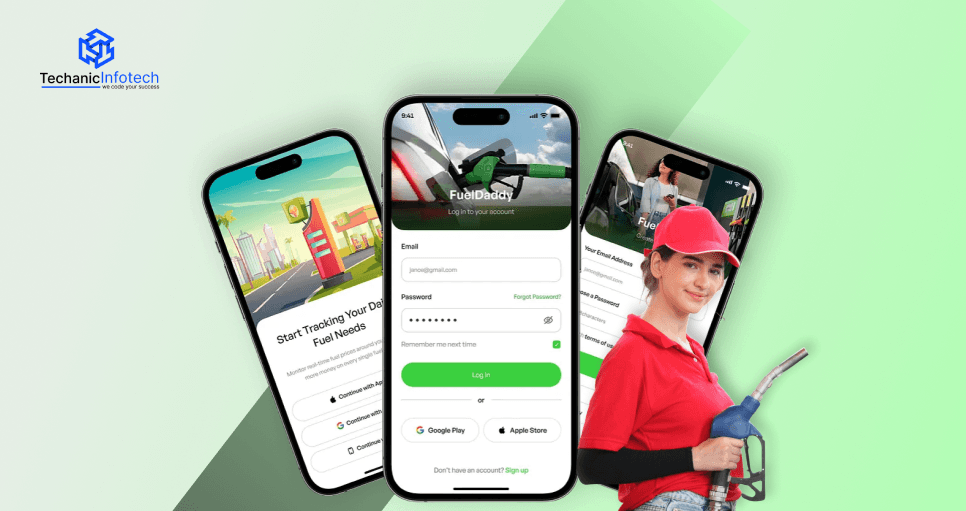
Building a fuel delivery app needs clear planning, safety approvals, and the right technology. Before starting, check local rules, licenses, and partnerships with fuel suppliers.
Focus on simple booking, real-time tracking, secure payments, and a smooth delivery process for users and drivers.
If you want to understand how to develop a fuel delivery app, begin with an MVP that includes customer and driver apps, route navigation, price estimates, and order history.
Add an admin panel to manage orders and track deliveries. Test carefully, launch in one city first, and scale step by step with customer feedback and improvements.
An on-demand fuel delivery app is a service that lets users order petrol or diesel to their location instead of visiting a fuel station.
Customers can use the app to select their fuel type, enter the quantity, share their location, and make an online payment. A trained driver delivers the fuel safely and completes the refill on-site.
These apps are useful for car owners, businesses, and fleet vehicles that need quick and reliable fuel access.
If you plan to create a fuel delivery app, focus on easy booking, real-time tracking, secure payments, and safety rules to build trust and smooth operations.
Fuel delivery functions similarly to most food or grocery delivery apps, but instead of meals, they deliver petrol or diesel directly to vehicles or business sites. The process is simple and follows a few steps from order to delivery. Here is how it works:
Users sign up using a phone number or email. They add basic details like vehicle type, fuel type, and preferred delivery location.
The user chooses petrol or diesel, enters the quantity, and confirms the delivery location using GPS or manual address entry.
The app shows the cost, delivery time, and available delivery slots. Users can choose instant or scheduled delivery based on their needs.
Once everything looks right, the user confirms the booking and makes an online payment through cards, wallets, or UPI.
The system sends the request to a trained fuel truck driver. The driver accepts the job and follows the safest route to the user's location.
Users can track the driver live on the map until arrival. This improves trust and keeps users updated.
The driver checks the safety area, dispenses fuel, and completes delivery. The customer verifies through an OTP or signature and receives a digital invoice.
Users can rate the service and report issues if needed.
If you want to build a fuel delivery app, start with a simple version that covers these core steps and slowly add advanced features based on feedback.
The global mobile fuel delivery market is projected to grow from approximately USD 5.84 billion in 2025 to USD 11.93 billion by 2035, at a CAGR of around 7.4%.
The on-demand fuel delivery market was estimated at around USD 3.1 billion in 2024, with projections reaching USD 6.4 billion by 2031, at a CAGR of about 6.8%.
A large opportunity exists in the commercial/fleet sector (construction, logistics, generators) that values on-site refuelling and minimal downtime.
Regionally, Asia-Pacific shows strong growth potential due to rising vehicle ownership and urbanisation; North America currently leads in infrastructure and early adoption.
Service models beyond direct delivery, like subscriptions, scheduled top-ups, remote location refuelling, plus tech integrations (route optimisation, IoT sensors), increase monetisation and competitive edge.
Understanding the different types of fuel delivery apps is an important part of any fuel delivery app development guide, as it helps businesses choose the right model and build features based on real customer needs.
These apps are designed to deliver fuel directly to vehicles, fleets, or equipment without requiring people to visit fuel stations. Each type targets different users and offers unique benefits.
These apps work like common service-based platforms where users can open the app, request fuel, share their location, and get refuelling within minutes.
They are mainly used by car, bike, and truck owners who run out of fuel on the road or prefer convenient refuelling at home or office.
These apps help save time, reduce waiting in queues at fuel stations, and offer real-time updates on delivery status.
The business model includes easy ordering, quick response, transparent pricing, and digital payment support.
Fleet-based fuel delivery apps are designed specially for businesses that manage large vehicle fleets, including logistics companies, cab services, school buses, agriculture, mining, and emergency transport.
These companies often require bulk and scheduled refuelling because downtime affects daily operations.
Many businesses choose these platforms as part of their fuel delivery app development business, which includes route optimisation, consumption tracking, automated billing, and fuel analytics to control costs.
This type of app usually allows pre-booking and subscription plans for daily or weekly delivery.
Construction sites, highways, emergency repair teams, generators, industrial machinery, and remote areas without nearby fuel stations rely on special delivery apps.
These apps allow fuel suppliers to send tank trucks to remote or off-road locations to support equipment like cranes, loaders, and power generators.
They help avoid delays due to fuel shortages, allowing projects to continue smoothly.
Many government agencies and disaster-response teams also use this model because it provides quick supplies in difficult locations.
In this model, existing fuel suppliers or entrepreneurs buy a ready-to-use branded solution from a development company.
White-label fuel delivery apps are pre-built products that can be customised with business branding and launched faster and at a lower cost.
Fuel franchises also use these apps to manage operations across multiple cities or fuel stations.
Key features include inventory management, delivery tracking, automated report generation, and customer management dashboards. This type is ideal for companies that want quick market entry.
Hybrid apps combine consumer and business features, offering on-demand refuelling for individuals and scheduled bulk delivery for businesses.
Many startups prefer this model because it expands the customer base and increases revenue potential. This structure is helpful when companies plan to develop a fuel delivery app that meets multiple needs, from emergency support to recurring supply.
Hybrid platforms also integrate advanced features like IoT-based tank monitoring, subscription refuelling, EV charging, and carbon-tracking analytics.
Understanding the essential features of fuel delivery app solutions is important for building a smooth and effective platform.
A successful fuel delivery app must provide a simple ordering experience for customers, easy navigation tools for drivers, and strong management control for business owners.
These features help deliver services quickly, securely, and efficiently while maintaining transparency and trust. Below are the core components every fuel delivery app should include:
Customer experience is the heart of any service business, and fuel delivery apps are no exception.
When planning to develop a fuel delivery app, focusing on user comfort and faster service is necessary.
A good customer app allows users to order fuel easily from their phone and get delivery at their location without any hassle.
Easy registration and login: Users should be able to register quickly through mobile number, email, or social logins.
Location tracking & map integration: Live GPS makes it easy for customers to share the exact delivery location and track the driver in real time.
Simple fuel order placement: Users can choose fuel type, quantity, delivery timing, and payment mode in just a few taps.
Multiple secure payment options: Support for UPI, cards, wallets, and cash-on-delivery.
Real-time order status updates: Push notifications to track request, dispatch, and arrival.
Order history: Helps users repeat previous orders without entering details again.
Ratings & reviews: Allows customers to share feedback and improve service quality.
Customer support/chat: Quick help for issues or emergencies.
Drivers play an important role because they complete the fuel delivery operations. The driver app must be built with tools that help them deliver safely and on time.
Smooth navigation, real-time scheduling, and safety controls are key elements.
Profile verification & authentication: Ensures vehicle and document validation before they start working.
Delivery request management: Drivers can accept or reject orders based on availability.
GPS navigation: Accurate route guidance to reach customers faster and reduce delays.
Fuel loading and delivery confirmation: Enables digital proof with OTP or e-signature.
Earnings & payout dashboard: Drivers can track completed deliveries and income.
In-app messaging: Direct communication with customers or admin for smooth coordination.
Safety instructions & emergency assistance: Helps in handling safe fuel transport.
The admin dashboard controls all operations, customers, drivers, payments, fuel stock, and business reporting. It is the backbone of the entire fuel delivery service.
User and driver management: Add, remove, or verify customer and driver accounts.
Order and delivery tracking: Monitor fuel trucks, deliveries, and real-time route movement.
Fuel inventory management: Track fuel stock, purchase orders, and refill requirements.
Payment & transaction management: View transaction reports and process refunds or settlements.
Pricing control: Adjust fuel charges based on fuel rates or delivery distance.
Analytics and reporting: Daily, weekly, and monthly insights to support decisions.
Complaint handling & customer support tools: Manage service requests smoothly.
To compete in the growing market, businesses need modern features that improve efficiency and customer experience. Many companies plan to create an on-demand fuel delivery app with unique features that help them stand out from traditional fuel sellers and other competitors.
Subscription or scheduled fuel delivery plans
AI-based demand prediction
IoT-enabled fuel tank monitoring
Digital compliance and safety certification
Loyalty rewards and referral programs
Multi-currency & multilingual support
Integration with EV charging and carbon tracking
Understanding real market examples helps businesses estimate growth possibilities and plan operations, especially when calculating the cost to develop a fuel delivery app.
The success of leading U.S. companies proves that the fuel delivery business has strong demand and long-term potential.
Below are five successful fuel delivery apps in the USA and what makes each one stand out.
Booster is one of the most successful brands in the U.S. market and a strong example of scalable fuel delivery apps.
Instead of targeting only individual vehicle owners, Booster mainly focuses on commercial fleets, logistics companies, corporate offices, and service vehicles.
Their model helps businesses reduce downtime by refueling all vehicles at their parking location, removing the need for drivers to visit fuel stations.
Booster also supports eco-friendly fuel options like renewable diesel and uses a subscription-based service structure. This ensures predictable revenue and long-term business partnerships.
EzFill is one of the fastest-growing fuel delivery apps in the United States, operating primarily in Florida.
What makes EzFill unique is its hybrid approach, which serves both consumer vehicles and commercial clients, including marine, aviation, construction, and fleet operators.
The app offers scheduled and emergency refuelling services, allowing customers to plan and avoid fuel shortages.
EzFill is also a publicly listed company, which shows strong market trust. Their growth highlights the power of a wide service network and diversified customer targeting.
Fuelster focuses mainly on consumer vehicle refuelling and operates in cities like Los Angeles and Las Vegas.
Users simply order fuel through the app, share their vehicle location, and receive delivery at standard gas station prices.
Fuelster’s approach is built around convenience, transparency, and safety. Certified drivers follow strict delivery protocols, enabling users to trust the service.
Their success proves that even a consumer-only model can work well in busy urban regions where people value time and service speed.
Yoshi stands out because it offers more than fuel delivery. The app allows customers to request car care services such as oil changes, tire inspection, and car washing.
It uses a subscription model where users pay a monthly fee for weekly car servicing at home or office. This business structure increases customer loyalty and long-term revenue.
Yoshi shows how adding extra services to fuel delivery creates a unique position and attracts users who want complete vehicle care in one place.
FuelBuddy is quickly expanding in the U.S. market and focuses on both personal and commercial fuel delivery needs. It includes features like online fuel tracking, digital payments, and real-time delivery monitoring.
FuelBuddy targets fleets, residential users, industries, and corporate offices. This multi-segment model increases stability and customer reach.
Their progress shows that anyone willing to create a mobile app for fuel delivery can succeed by offering flexible services and strong operational systems.
A clear and well-planned development process is important for building a successful fuel delivery platform.
With a proper design guide for fuel delivery apps, businesses can offer smooth ordering, safe delivery operations, and a simple user experience from day one.
Below is an easy and understandable breakdown of the complete development process in 8 steps.
The first step is to understand the target customers and decide where your business will operate.
Research the demand in your region, fuel regulations, competition, fuel storage partnerships, and pricing possibilities. You must decide if you want to serve individual vehicle owners, commercial fleets, construction sites, or all of them.
This is also the stage to finalize your business model, whether you prefer on-demand delivery, subscription-based delivery, or corporate contracts. A clear plan helps in estimating investment, resources, and service structure.
The next step is deciding which platform you will build for: Android, iOS, or both. The choice depends on user demographics, budget, and launch timeline.
At this stage, you should list the essential features like user registration, fuel order placement, real-time tracking, secure payments, driver navigation, and admin management.
Advanced features such as subscription refueling, fuel analytics dashboards, IoT-based tank monitoring, EV charging support, and automated billing can be added later.
Having a clear platform and feature plan reduces delays and ensures the mobile app meets real market needs.
In the third step, designers create layouts of how the app screens will look and how users will move through the app from point A to point B.
A user should be able to request fuel in just a few taps. Clear buttons, clean menus, and simple navigation are essential. Many businesses hire a fuel delivery app development company to design wireframes and prototypes that match the business model.
During this phase, the customer app, driver app, and admin dashboard designs are finalized so that developers can start working based on the approved visuals.
This step includes the actual coding and system building. Developers build the backend where ordering, delivery management, pricing, payments, and fuel inventory run.
Real-time GPS tracking, route optimization, and driver allocation are integrated to manage fuel deliveries smoothly. The development team also connects multiple payment gateways (UPI, cards, wallets) and builds secure login authentication.
Special attention is given to safety and regulatory requirements, as fuel delivery involves real-world operations. In this stage, the customer app, driver app, admin dashboard, and databases work together as a single system.
Before the app goes live, it must go through testing to ensure everything works properly.
Functional testing checks features, performance testing checks speed, security testing protects user data, and usability testing ensures the app is easy to use.
Fuel delivery requires compliance with safety regulations such as fuel transport standards, driver certifications, and tanker safety measures.
Testing also includes validating OTP-based delivery confirmation, real-time tracking accuracy, and automatic payment updates. After internal testing, beta testing is done with a small group of real users to gather feedback.
Once testing is complete, the app is launched on the Google Play Store, Apple App Store, or both, depending on your chosen platform selection, maintenance, and marketing strategy.
During deployment, the development team makes sure the app meets the app store guidelines and passes approval checks without rejection.
The launch is usually supported by promotions like social media campaigns, business tie-ups, referral offers, and corporate outreach. This helps create awareness and attract early users.
A fuel delivery business cannot rely only on app downloads. It needs continuous marketing and communication to build long-term users and business contracts.
Some helpful strategies include digital ads, local community promotion, partnerships with offices, logistics companies, construction contractors, and fleet operators.
A good marketing plan also encourages users to subscribe or schedule fuel refills instead of ordering once in a while.
Positive user reviews and fast delivery responses help build trust, which is important in this type of service industry.
Once the app is launched and running, the real work begins. You must regularly add feature upgrades, fix bugs, support new operating systems, and improve performance based on customer feedback.
As the business grows, you may need to expand to new cities, add more fuel types, include EV charging, or offer new delivery plans.
Long-term performance depends on strong operational support, driver training, fuel supplier partnerships, and customer retention.
With consistent updates and improvements, it becomes easier to develop a fuel delivery app that remains competitive and delivers long-term growth.
Understanding the development cost of a mobile app is important before planning a fuel delivery business. The estimated cost to develop a fuel delivery app ranges from $35,000 to $180,000, depending on features, platform, complexity, and hourly rates of the development team.
A basic app with limited features is more affordable, while a full-scale solution with real-time tracking, automated billing, and multiple fuel types costs more.
Building a fuel delivery app involves several elements, such as UI/UX design, backend development, API integration, payment gateway setup, and driver-side dashboards.
Each component adds to the total cost. Also, the selected development approach, whether hiring freelancers, an in-house team, or an experienced agency, directly influences the final budget.
Integrating advanced features like route optimization, order scheduling, fleet management dashboard, push notifications, and subscription-based fuel plans will increase time and effort.
Similarly, a mobile app built for both Android and iOS will cost more than developing for one platform at a time.
|
Component |
Estimated Cost (USD) |
|
UI/UX Design |
$4,000 – $12,000 |
|
Mobile App Development {Frontend} |
$12,000 – $45,000 |
|
Backend % API Development |
$8,000 – $40,000 |
|
Payment Gateway & GPS Integration |
$3,000 – $12,000 |
|
Admin and Driver Panel |
$5,000 – $30,000 |
|
Testing % Quality Assurance |
$3,000 – $15,000 |
|
Deployment & Launch |
$1,5000 – $6,000 |
|
Maintenance & Support (Yearly) |
$5,000 – $25,000 |
When planning to develop a fuel delivery app, it is equally important to understand how the business will make money from day one. Fuel delivery startups can earn from multiple revenue streams instead of depending on fuel prices alone. Choosing the right model depends on the target audience, fuel type, region, and long-term business goals.
Customers pay a small fee for doorstep fuel delivery. This model works because people prefer paying a small additional amount instead of traveling to gas stations, especially during emergencies or busy hours. It ensures consistent earnings even when fuel margins fluctuate.
This is one of the most effective monetisation models for recurring cash flow. Businesses can offer monthly or yearly subscription packages that include benefits like free delivery, priority slots, discounted fuel prices, and early access to offers. It increases customer loyalty and retains long-term users.
Similar to ride-hailing platforms, fuel delivery apps can add surge pricing during peak times, late-night deliveries, or remote locations. This method allows startups to balance demand and supply while increasing profits during high-order periods.
Many delivery companies, hospitals, construction sites, and logistics firms require daily fuel for their vehicles and machinery. Offering bulk orders at a slightly discounted rate can bring large and stable revenue. This model also strengthens business partnerships.
Some businesses prefer storing fuel at their location. Startups can earn by installing small fuel tanks and offering regular refilling services. This delivers a predictable monthly income and minimizes competition since not many companies provide this service.
If the fuel delivery startup collaborates with existing fuel stations, it can charge a commission on every order delivered from those stations. This model reduces infrastructure costs and increases market reach without needing to manage fuel depots.
Once the app has an active user base, startups can earn by showing promotional banners of automotive brands, insurance companies, oil products, or vehicle service providers. This works well when ads are relevant to customers and not overwhelming.
To expand offerings and guide users with a complete guide to fuel delivery app development, startups can add services like engine oil replacement, car wash booking, battery check-up, and tire services. These optional add-ons increase order value and improve the overall customer experience.
Choosing the right tech stack is very important to make a fuel delivery app that is fast, scalable, and secure. The technology you choose directly affects app performance, development cost, and user experience.
To build a simple and smooth interface for customers and drivers, frameworks like React Native, Flutter, and Swift/Kotlin are commonly used. These help in creating mobile screens that load fast and work well on both iOS and Android devices.
A strong backend is needed to create a fuel delivery app that handles user authentication, fuel orders, payment processing, and GPS tracking. Technologies like Node.js, Python (Django/Flask), Java Spring Boot, and Ruby on Rails are popular. They allow quick development and easy scaling when user traffic increases.
Databases store all important data such as user profiles, delivery history, pricing, and fuel inventory. PostgreSQL, MySQL, and MongoDB are commonly used because they are secure, fast, and reliable.
Using Google Maps API, Mapbox, and OpenStreetMap helps track fuel trucks, estimate delivery time, and find customer locations accurately. This feature builds trust by showing live delivery status.
Secure payment options are necessary for smooth transactions. Popular choices include Stripe, PayPal, Razorpay, Braintree, and Cashfree to support credit/debit cards, wallets, and UPI.
Cloud platforms like AWS, Google Cloud, and Microsoft Azure are ideal for hosting because they manage high traffic and store app data safely.
To improve engagement and support fuel delivery app development business, tools like Firebase Cloud Messaging, OneSignal, Twilio, and SendGrid are best for alerts, OTP verification, and delivery updates.
Planning to make a fuel delivery app also requires understanding the challenges that come with the business and how to solve them. Knowing the risks early helps in developing a stable, safe, and user-friendly platform.
Fuel is a hazardous material, so strict safety standards are mandatory.
Challenge: Following local laws and safety rules for fuel handling and transport.
Solution: Work with certified fuel partners, train delivery drivers, and follow government safety guidelines to avoid legal issues.
Creating a fuel delivery platform can get expensive. Businesses often look for affordable fuel delivery app development aids without losing quality.
Challenge: Balancing cost and quality during development.
Solution: Start with an MVP (basic features), expand later based on feedback, and use cloud-based hosting to avoid heavy upfront spending.
Managing fuel trucks, deliveries, and driver schedules is not simple.
Challenge: Drivers running late or missing deliveries affects customer trust.
Solution: Use GPS tracking, automated scheduling, and route optimization tools to ensure faster and timely fuel delivery.
Fuel prices change often and can affect profit margins.
Challenge: Offering competitive pricing while managing revenue.
Solution: Use dynamic pricing to adjust fuel cost in the app automatically based on live market rates.
To build a fuel delivery app, handling personal data and online payments safely is a top priority.
Challenge: Risk of data leaks or payment fraud.
Solution: Use encryption, secure payment gateways, OTP logins, and regular security audits to protect user information and transactions.
The future of fuel delivery is changing fast, and knowing these trends is helpful while planning to develop a fuel delivery app. The market is moving toward faster, safer, and more automated fueling experiences for both individual users and large fleets.
Fuel delivery apps are starting to use AI and IoT sensors to improve delivery accuracy and reduce delays. These technologies can track fuel levels in real time, optimize delivery routes, and monitor trucks to avoid safety risks. This trend helps provide reliable service and lower operational costs.
As fuel delivery app development grows, apps are shifting from simple “order and deliver” to multi-service models. Customers will be able to request instant delivery when needed or schedule deliveries for regular intervals. Subscription plans bring ease to users and consistent revenue for businesses.
There is a rising global push for cleaner transport. Future fuel delivery apps may support biodiesel, ethanol, CNG, hydrogen, or even mobile EV charging. This expands the customer base and makes the business future-ready as fuel preferences evolve.
More logistics, taxi, manufacturing, and construction businesses prefer doorstep fuel delivery for their fleets. Apps will add fuel usage reports, bulk delivery plans, and fleet management dashboards to attract commercial customers and secure high-value contracts.
To develop a fuel delivery app, safety and compliance will become even more important. Future apps will include secure payments, strong data encryption, GPS-based monitoring of trucks, and automated compliance checks to meet government fuel transport regulations.
If you want to launch your own fuel delivery business, Techanic Infotech can help you build a secure and easy-to-use app.
As a trusted fuel delivery app development company, we understand every part of the fuel delivery market and provide complete support from planning to launch.
Our team creates customer apps, driver apps, and an admin dashboard with real-time tracking, safe payments, scheduling, and fuel order management.
Whether you need basic features or a full advanced solution, we design apps based on your budget and business goals.
We also support post-launch updates, maintenance, and marketing. With Techanic Infotech, you get an app that works smoothly and is ready to scale as your business grows.
Fuel delivery apps are opening a new future for the fuel and mobility industry, giving users and businesses a faster and safer way to refuel.
The success of this business depends on understanding customer needs, choosing the right features, and using strong technology to deliver fuel reliably and on time.
Anyone planning to develop a fuel delivery app should focus on safety standards, GPS tracking, secure payments, and a smooth user experience.
It also helps to start with an MVP, launch quickly, and then improve based on user feedback.
With proper planning, the right technology team, and a smart marketing approach, a fuel delivery app can scale fast and become a profitable model with high demand in the coming years.
A fuel delivery app allows users to order fuel to their location instead of visiting a fuel station.
Users place an order through the app, and a delivery truck brings fuel to their location using GPS-based navigation.
Yes, safety rules and certified trucks ensure secure fuel transport and delivery.
They earn through delivery fees, subscription plans, surge pricing, and business partnerships.
Usually 3 to 8 months, depending on features and complexity.
The estimated cost ranges from $35,000 to $180,000 based on features and platforms.
Yes, approvals and compliance with safety regulations are required to operate legally.


Shailendra is a dedicated professional known for his strong client-focused approach and clear understanding of business needs. He brings a thoughtful understanding of client needs and focuses on building long-term relationships through clear communication and quality-driven work. With a blend of strategic thinking, content expertise, and a hands-on approach, Shailendra plays a key role in shaping content that aligns with both business goals and user expectations.