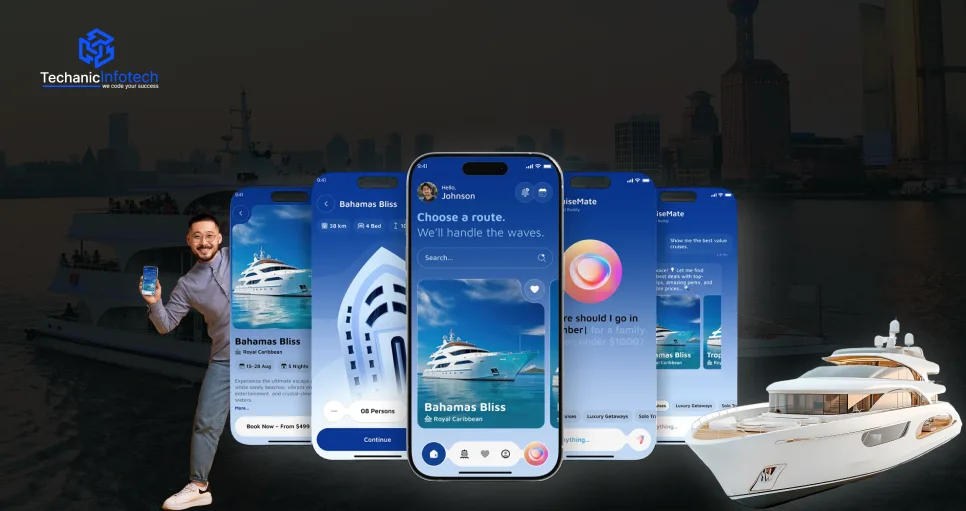
A yacht is no longer limited to luxury vacations; with the proper app, it can be booked as quickly as a cab or hotel. If you want to create a yacht rental app, this article will help you figure out the fundamentals in simple terms.
We'll go over the steps of creating a yacht rental app, including what features you need, how pricing works, and which tech stack to use.
Whether you want to build a yacht rental app for a single area or establish a worldwide network, proper preparation is essential. Every aspect counts, from the search, booking, and payment process to the captain's information and live availability. This yacht rental app development guide will serve as a road map for your trip to create a seamless, secure, and premium experience for your consumers.
A yacht rental app is a digital platform that allows users to browse, book, and manage yacht rentals from their phone, just like booking a cab or vacation stay.
Instead of calling multiple operators or visiting marinas, users can instantly check available yachts, compare prices, choose a captain, and make secure payments, all in one place. These apps make luxury travel more accessible, organized, and convenient.
Most yacht rental apps also include options for private parties, corporate events, island tours, sunset trips, and long-distance cruises. Users can filter yachts based on size, capacity, features, amenities, and budget.
For owners, the platform provides an easy way to list their yachts, manage availability, receive bookings, and earn income. This makes the app equally useful for renters and owners.
User Registration: Users sign up using their phone number, email, or social login. They create a profile to save preferences and booking history.
Explore Available Yachts: The app shows a list of yachts with photos, features, capacity, crew details, pricing, and availability calendars. Filters make it easy to find the perfect yacht for the trip.
Booking a Yacht: Once a user selects a yacht, they choose the date, time, trip type, and additional services, such as catering, DJs, decorations, or water activities.
Add Crew or Captain (Optional): Some apps let users pick a captain or hire a crew, depending on the type of yacht and rental rules.
Secure Payment: Users pay through the app using cards, wallets, UPI, or other digital methods. The app confirms the booking instantly.
Trip Execution: On the day of the trip, users receive instructions, marina details, and a point of contact. Some apps also offer live tracking and weather updates.
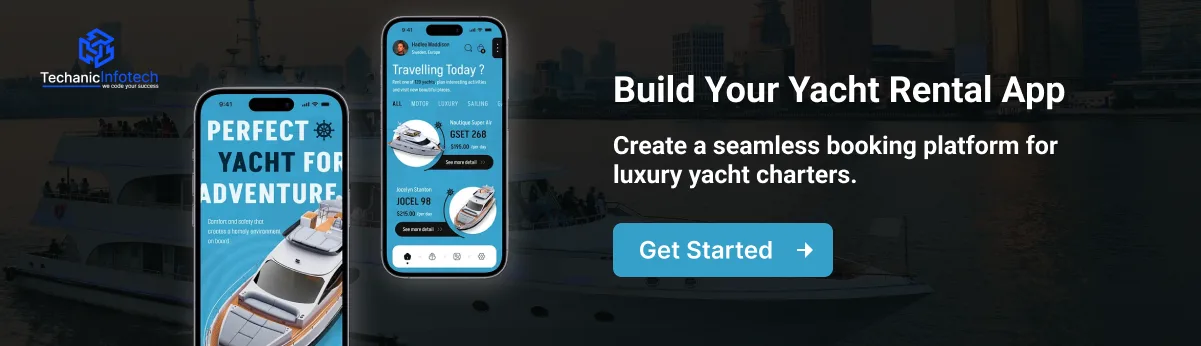
The global demand for luxury travel and on-demand booking apps is rising fast, and the yacht rental industry is becoming one of the most profitable niches.
If you're thinking about building a digital product in the travel or leisure market, here’s why investing in boat rental app development is a smart move:
People now prefer unique, premium travel experiences instead of traditional vacations. Yacht outings for parties, birthdays, corporate events, and weekend escapes are becoming popular, especially among young travelers.
Yacht rentals generate higher profits compared to regular rentals. With an app, you can earn through commissions, service fees, surge pricing, premium listings, and event-based packages.
Once you develop a yacht rental app, expanding to new locations becomes simple. You don’t need physical offices; you just onboard local yacht owners and scale your business digitally.
Unlike taxi or bike rental apps, the yacht rental market is still untapped. Fewer competitors mean higher chances of becoming a leading platform in your region.
Countries with strong tourism, Dubai, Maldives, Greece, Miami, Bali, Goa, already see high demand. Your app can attract premium clients and frequent travelers with ease.
A digital system manages bookings, payments, calendars, cancellations, and communication automatically. This reduces manual work and increases accuracy.
The app helps yacht owners reach more customers, receive more bookings, and manage their fleet with ease, encouraging more owners to join the platform.
People love booking everything online, cabs, food, hotels, and now yachts. Investing in this space aligns perfectly with modern consumer behaviour.
Luxury tourism, private experiences, and app-based rentals are all on the rise. A well-built app gives you a long-term business with scalable revenue.
Before you create a yacht rental app, it’s important to understand the different models available in the market. Each type serves a different audience and offers unique features.
Choosing the right app type will help you target your ideal customers and build a platform that fits your business needs.
Here are the most common types of yacht rental applications:
This model works just like Airbnb, but for yachts. Individual yacht owners list their boats, set prices, and manage availability. Users can browse and book directly from owners.
Best for: Markets with many private yacht owners.
Benefits:
Large yacht variety
Affordable pricing
Good for owners wanting extra income
P2P apps are perfect if you want to create a boat rental app with low operational costs.
These apps are built for businesses already offering yacht services. The company owns the yachts and provides everything, crew, maintenance, tours, and customer support.
Best for: Established charter companies.
Benefits:
Full control over quality
Verified fleet and professional crew
Premium pricing
This type helps companies manage bookings, schedules, and operations digitally, improving customer experience.
A marketplace app connects charter companies, private owners, and customers in one place. It’s a hybrid version of P2P + professional fleets.
Best for: Entrepreneurs who want to build a yacht rental app for multiple regions.
Benefits:
Huge yacht selection
Greater revenue potential
Ideal for scaling to new locations
This model is similar to how platforms like Airbnb and GetMyBoat operate.
In this model, users can book yachts instantly for short trips, parties, or last-minute events. The experience is similar to booking a cab—quick, simple, and automated.
Best for: Tourist-heavy cities with high daily demand.
Benefits:
Instant booking
Real-time availability
Perfect for urgent or spontaneous plans
This is ideal if you want to create an on-demand yacht rental app with fast booking features.
These apps focus on business clients who need yachts for meetings, corporate events, or team outings.
Benefits:
Higher pricing
Repeat bookings
Specialized services like catering and branding
This model targets premium clients and is perfect for luxury-focused brands.
To develop a yacht rental app that feels smooth, premium, and user-friendly, you need the right mix of features for users, yacht owners, and the admin team. Here’s a clear breakdown of the must-have features panel-wise:
Easy Registration & Login: Users should be able to sign up quickly using email, phone number, or social accounts.
Yacht Search & Filters: Filters like price, capacity, type of yacht, location, dates, and amenities help users find the perfect match.
High-Quality Yacht Profiles: Each yacht should have photos, specifications, amenities, reviews, captain info, and pricing.
Real-Time Availability Calendar: Helps users book instantly without back-and-forth communication.
Instant Booking & Secure Payments: Card, wallet, UPI, Apple Pay, or any local payment method should be supported for smooth checkout.
Add-ons & Custom Packages: Users can choose catering, music systems, decorations, and water activities.
GPS Navigation to Marina: Easy directions to the boarding location.
Live Chat & Support: Users should be able to chat with the captain, owner, or customer support.
Ratings & Reviews: Helps build trust and guides future customers.
Yacht Listing Management: Owners can upload photos, set pricing, update availability, and manage details anytime.
Booking Management: View upcoming bookings, accept or decline requests, and adjust availability.
Earnings Dashboard: Track daily, weekly, and monthly income from bookings.
Calendar Management: Set blocked dates, custom pricing, or offer discounts easily.
Captain & Crew Management: Add or assign captains, list qualifications, and manage schedules.
Chat With Customers: Answer questions directly to improve bookings.
Document Upload: Insurance papers, licenses, and certifications for verification.
User & Yacht Owner Management: Approve profiles, handle disputes, and ensure platform safety.
Yacht Verification System: Verify licenses, ownership documents, and safety certifications.
Booking & Payment Management: Monitor all bookings, refunds, receipts, and earning reports.
Commission & Pricing Controls: Set platform commission, surge pricing, taxes, or service fees.
Analytics Dashboard: View popular locations, top-performing yachts, user activity, and growth metrics.
Notifications & Alerts; Send updates about bookings, offers, weather, or safety guidelines.
CMS for Blogs & Banners: Manage app content, offers, and promotional banners easily.
If you're planning to create a yacht rental app but don’t know where to start, this detailed guide will walk you through every stage, from idea validation to launch and maintenance.
Building a yacht rental application is not just about writing code; it’s about creating a smooth booking experience, connecting owners and customers, and offering a premium, safe, and reliable service.
This yacht rental app development guide breaks everything down in simple language so you can confidently plan your project.
The first step in how to develop a yacht rental app is understanding your core idea and who you want to serve. Decide whether you want to create a yacht rental app for luxury charters, party yachts, corporate events, or simple day rentals.
You also need to pick your launch locations and target users, such as tourists, premium customers, or yacht owners. This clarity helps you build a yacht rental app with the right features from the start and sets a strong direction for your entire mobile application development process.
Key decisions to make here:
Do you want a peer-to-peer marketplace like Airbnb?
A charter company app for your own fleet?
A multi-owner marketplace?
A fully on-demand yacht rental app?
Study your target locations (Dubai, Miami, Maldives, Greece, Goa, Bali, etc.) and understand their tourism season, user preferences, and local regulations.
This stage shapes how you will develop a yacht rental app that fits your business goals.
To make a yacht rental app that stands out, study existing platforms like GetMyBoat, Boatsetter, and Click&Boat. Analyze their features, pricing, customer pain points, and strengths.
Market research helps you understand what users expect and what gaps you can fill. This step is crucial in any yacht rental app development guide because it ensures your idea is practical and competitive.
Understand:
Their business models
App features
Pricing structure
User complaints
What customers love
Seasonal trends
This helps you create a yacht rental application that fills market gaps and delivers a smoother experience than competitors.
The next step is selecting a business model that fits your goals. You can earn through commissions, subscription fees, premium listings, event packages, or add-on services.
Picking the right model early helps you develop a yacht rental app with the correct booking flow, payment structure, and pricing rules. If you want to build a yacht rental app as a marketplace, peer-to-peer platform, or on-demand service, your monetization strategy influences the entire backend setup and long-term growth.
Your business model defines how you will make money. Common models include:
Commission-based (earn % on each booking)
Subscription for yacht owners
Premium yacht listings
Add-on services (catering, DJ, decorations, water sports)
Hourly or dynamic pricing
Choosing the right model early helps in planning features and backend workflows.
Before you begin full development, create a list of must-have features for users, yacht owners, and admins. Knowing your features early helps your yacht rental app with clear functions and no confusion.
It also ensures your development team understands the exact scope. This step is essential in any step-by-step guide to yacht rental app development.
Before you build a yacht rental app, finalize the must-have features for each panel:
User side: registration, search, filters, yacht details, bookings, payments, reviews, GPS, notifications.Owner side: yacht listing, pricing, availability, calendar, chat, earnings dashboard.Admin side: user management, bookings control, commission setup, analytics, verification system.
These features form the backbone of your yacht rental application development process.
The success of your app depends heavily on the technologies you choose. A reliable tech stack ensures fast performance, secure payments, and smooth booking experiences.
If you want to create an on-demand yacht rental app using Flutter or React Native, or build a high-end native app with Swift and Kotlin, the right stack matters.
A professional boat rental app development company can guide you in selecting the best backend, database, and cloud hosting for your needs. Choosing the right tech foundation helps you develop a yacht rental app that scales easily as your business grows.
Tech stack matters for speed, performance, and scalability.
Front-End (Mobile App Development)
iOS: Swift
Android: Kotlin
Cross-platform: Flutter / React Native (cost-effective)
Backend
Node.js
Python
PHP Laravel
Java Spring Boot
Database
PostgreSQL
MongoDB
MySQL
Cloud Hosting
AWS
Google Cloud
Microsoft Azure
APIs & Integrations
Map APIs
Weather APIs
Payment gateways
Image optimization
Notification services
Choosing the right tech stack ensures your app runs smoothly and handles high traffic during peak seasons.
Good UI/UX design is the heart of successful yacht rental app development. Before you create an application, you need wireframes, user flows, and screen designs that feel premium, simple, and easy to use.
Since yacht rental is a luxury service, the app must look clean, modern, and visually appealing. Smooth navigation, high-quality images, and minimal steps to book a yacht help users trust your platform. This stage ensures you build a yacht rental app that feels intuitive from the first tap and sets a strong foundation for development.
Good UX should include:
Clean home screen
Minimalistic search flow
High-quality images
Calendar-based booking
Easy checkout
Smooth transitions
Simple menus
Clear pricing
Designing wireframes and prototypes helps you visualize your app before development begins.
Once the designs are ready, the development phase begins. The front end handles what users see, buttons, screens, animations while the backend manages bookings, payments, profiles, calendars, and security.
This is a major step because it brings your idea to life. A strong backend ensures your platform runs smoothly even during peak times.
If you want to create an on-demand yacht rental app or a multi-owner marketplace, this phase requires clean, scalable code built by a skilled team or a professional yacht rental app development company.
Includes:
App layout
Buttons
Filters
Booking flow
Payment screens
Notifications
Everything visible to the user is part of front-end development.
Includes:
User authentication
Yacht database
Booking engine
Payment systems
Commission engine
Chat & notifications
Calendar system
Owner dashboard
Admin CMS
This stage takes time and requires clean, secure, scalable code.
During this phase, your team uses Agile or Scrum for faster development and weekly progress updates.
A yacht rental app needs multiple integrations to function efficiently:
Payments: Stripe, PayPal, Razorpay
Maps: Google Maps, Mapbox
Notifications: Firebase
Weather Forecast API
SMS & Email services
Live chat support
These integrations bring your app closer to a full-featured rental platform.
Testing is crucial before launch. A professional QA team checks every feature to ensure your app is fast, secure, and error-free. They test payments, login, searching, booking, cancellation, chat, and notifications on multiple devices.
This step ensures your platform performs flawlessly, especially for premium users. As part of yacht rental application development, thorough testing helps you avoid bugs that could affect bookings. It makes your platform reliable and ready for real customers.
Before launching, your app must be tested thoroughly:
Functionality testing
UI/UX testing
Payment testing
Security checks
API testing
Load testing
Device compatibility testing
This ensures the app works perfectly on all devices and in all conditions. No luxury customer wants a buggy booking app, testing is critical.
The final stage in how to build a yacht rental app is launching it in two phases. First, a beta launch allows a small group of users to test the app and share feedback.
After improvements, you go for a full public launch on the Play Store and App Store. Marketing, onboarding campaigns, and initial promotions begin here. This step completes your step-by-step guide to yacht rental app development and introduces your new platform to the market with confidence.
Launch your app in two phases:
Limited users
Collect feedback
Fix bugs
Improve features
Publish your app on:
Apple App Store
This is where marketing and app branding also begin.
Launching your platform is only the beginning. To successfully develop a boat rental app that stays competitive, you must invest in ongoing maintenance and support.
This includes fixing bugs, improving performance, updating features, enhancing security, and ensuring the app works smoothly on new Android/iOS versions.
Regular maintenance also helps you add new yacht categories, locations, and booking options as your business grows. A reliable yacht rental app development company ensures your app stays fast, secure, and user-friendly. Without proper support, even the best-built app can struggle in the long run.
After launch, you must:
Update features regularly
Fix bugs
Add new locations
Improve performance
Scale server capacity
Monitor bookings & analytics
Maintenance keeps your platform stable, reliable, and competitive.
If you are new to tech, hiring a professional yacht rental app development company like Techanic Infotech ensures your app is built with quality, scalability, and security in mind. They handle everything, design, architecture, development, testing, and deployment.
The cost to develop a yacht rental app usually ranges between $15,000 to $80,000, depending on the app’s complexity, design quality, and the features you want to include.
If you choose basic features like user login, yacht listings, search filters, booking, payments, and reviews, the development cost will stay on the lower side. This is ideal for startups that want an MVP (Minimum Viable Product).
However, if you want an advanced, premium-level platform with features like real-time yacht tracking, multi-location support, AI-based yacht recommendations, dynamic pricing, crew management, 360° yacht tours, and multi-language support, the mobile app development cost moves toward the higher range. These features require additional backend work, more integrations, and a more polished UI/UX design.
The cost also depends on the development approach:
Hiring freelancers: Cheapest but risky
Building with an in-house team: Reliable but expensive
Partnering with a boat rental app development company: Best for quality, scalability, and long-term support
Where your team is located also affects pricing. Developers in the US or UK charge more, while teams in India offer high-quality development at affordable rates.
A yacht rental app has multiple strong revenue streams because it targets a premium audience and a high-value service market. If you plan your monetization model properly, your platform can generate consistent income from every booking, event, and service add-on. Here are the most effective ways to monetize your yacht rental application:
This is the most common and profitable model. You earn a percentage from every yacht rented through the app. Whether it’s 5%, 10%, or 20%, commissions offer steady revenue without owning any yachts. This model works perfectly for marketplace and peer-to-peer rental apps.
Yacht owners can pay a monthly or yearly subscription to list their yachts and gain priority visibility. Higher-tier plans can offer benefits like premium placement, data insights, custom pricing tools, and advanced analytics. This ensures recurring revenue.
Yacht owners can promote their listings by paying for top positions or highlighted placements. This is similar to promoted posts on Airbnb or TripAdvisor. It helps owners get more bookings while generating extra income for the app.
You can charge a small service fee to users during checkout. This fee covers platform maintenance, customer support, and transaction processing. Even a small fee can generate significant revenue over time.
Yacht rentals often require additional amenities. You can offer:
Catering
DJs
Decorations
Water sports equipment
Photography or drone shoots
Crew upgrades
These extras bring in additional revenue for both the platform and the yacht owners.
Offer special packages for business clients looking for corporate events, meetings, or team outings. Corporate users usually pay higher prices and book more frequently.
If you want extra revenue, you can add minimal and relevant ads, such as travel services, hotels, or event organizers. Keep ads non-intrusive to maintain a premium experience.
Allow small yacht clubs, event planners, or resorts to use your technology under their own brand for a fee. This creates an additional B2B income stream.
Building a yacht rental app can be highly profitable, but it also comes with unique challenges that you must understand before launching your platform. From legal complexities to technical hurdles, here are the main challenges you may face and why they matter.
Unlike cars or bikes, yachts are limited in number and often booked for long durations. Keeping availability updated in real time is a big challenge. If two users try booking the same yacht at once, it can lead to conflicts or cancellations. Your backend system must support live syncing, instant updates, and accurate calendars.
Yacht pricing depends on multiple factors: size, location, route, season, crew services, fuel charges, and event-specific add-ons. Setting up a flexible pricing engine that adjusts based on all these variables is technically challenging. Your platform must handle dynamic pricing, hourly charges, flat rates, and premium packages without confusion.
The yacht rental industry has strict rules regarding licensing, insurance, safety equipment, and operational permissions. Compliance requirements vary from region to region. Ensuring that yacht owners upload correct documents and meet all regulations is time-consuming but essential for building trust and safety.
Yacht rentals are heavily affected by weather. Sudden storms, high tides, or rough seas can lead to cancellations or rescheduling. Your app must be able to handle refunds, partial refunds, automated cancellation policies, and real-time weather alerts to avoid customer dissatisfaction.
Yacht rentals involve premium experiences and high-value assets. Verifying yacht owners, captains, and crew members is crucial. Fake listings or unqualified captains can cause serious risks. A strong verification system, ID checks, and document approval workflow are necessary to maintain a secure platform.
Users expect a premium UI/UX that matches the luxury nature of yachts. Slow pages, poor filters, or unclear pricing instantly lead to drop-offs. Achieving a smooth end-to-end experience, from browsing to payment to boarding, is a challenge that requires experienced designers and developers.
By planning ahead and building your app with the right strategy, technology, and team, you can overcome these challenges and create a successful, trust-based yacht rental platform.
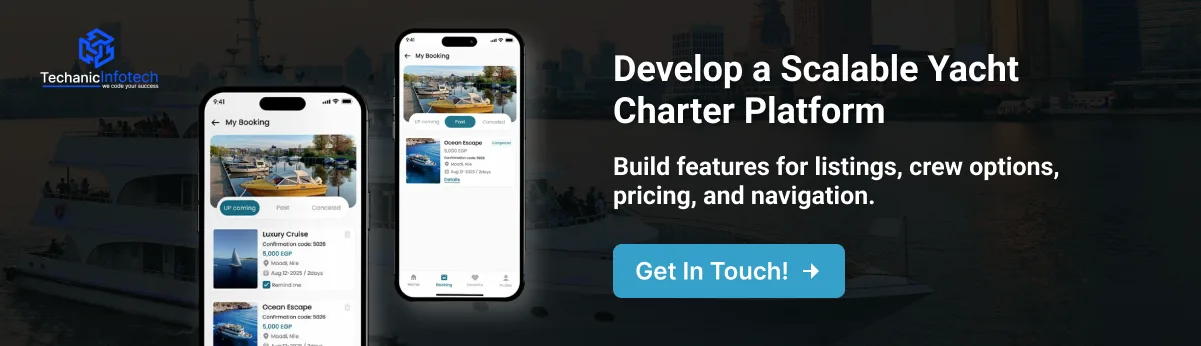
Building a luxury-focused platform like a yacht rental app requires more than coding; it needs strong design, advanced booking architecture, smooth payments, and a flawless user experience. As a leading mobile app development company, Techanic Infotech helps you turn your idea into a fast, secure, and scalable digital product.
Our team handles everything end-to-end: research, UI/UX design, development, backend architecture, payment integration, third-party APIs, weather modules, and yacht verification systems. We specialize in building on-demand platforms, so you get real-time bookings, live availability, and high-performance features tailored to luxury travel.
We focus on helping you with boat rental app development that stands out, scales globally, and delivers a premium experience from day one.
The yacht rental industry is growing rapidly as more users prefer unique, premium travel experiences. With the right idea, strong features, and a well-planned development strategy, you can build a powerful digital platform that connects yacht owners and renters with ease.
A successful app requires attention to detail, from UI/UX design and real-time availability to pricing models, crew selection, and regulations. By understanding the market, choosing the right tech stack, and focusing on seamless user experience, you can launch a competitive product in this luxury niche.
The cost to develop a yacht rental app typically ranges from $15,000 to $80,000, depending on features, platforms, and complexity. Advanced features like real-time tracking or dynamic pricing increase the total cost.
A basic yacht rental app takes 2–3 months, while an advanced multi-owner or on-demand app may take 4–6 months depending on the tech stack, features, and development team size.
Key features include yacht search, detailed yacht profiles, real-time availability, booking, secure payments, captain selection, reviews, owner dashboard, and admin controls.
You can monetize through commissions, subscription plans for yacht owners, featured listings, service fees, premium add-ons, corporate packages, and optional in-app advertising.
Yes. With a marketplace model, yacht owners list their yachts on your platform, and you earn commissions on bookings. This is the easiest and most cost-effective way to enter the market.
A professional development team ensures smooth UX, secure payments, strong backend systems, and scalability. Companies like Techanic Infotech help you build a premium, reliable platform from start to finish.
Flutter or React Native for mobile apps, Node.js or Laravel for backend, and AWS/Google Cloud for hosting are commonly used. They offer speed, flexibility, and easy scalability.


Bharat Sharma is the CTO of Techanic Infotech, bringing deep technical expertise in software architecture, mobile app development, and scalable system design. He leads the engineering team with a strong focus on innovation, performance, and security.