Courier Delivery App Development
How to Develop a Courier Delivery App? Full Overview
December 6, 2025
December 6, 2025
Courier delivery apps have become a major part of everyday life. From sending documents to delivering parcels and packages, people now prefer fast, reliable, and trackable delivery services, right from their smartphones. Businesses are also shifting to digital solutions because they offer better efficiency, transparency, and customer experience.
If you are exploring how to develop a courier delivery app for your business, you are already moving in the right direction. Modern courier platforms come with real-time tracking, route optimization, secure payments, automated order management, and seamless communication between customers, drivers, and admins.
This blog is a complete guide to courier delivery app development, covering essential features, steps, technologies, cost, and expert tips. This guide will help you understand everything needed to get started efficiently and professionally.
The courier and delivery space is booming and building a courier delivery app now can position you to ride this growth.
Here are some convincing reasons why investing in a courier / parcel delivery app makes sense:
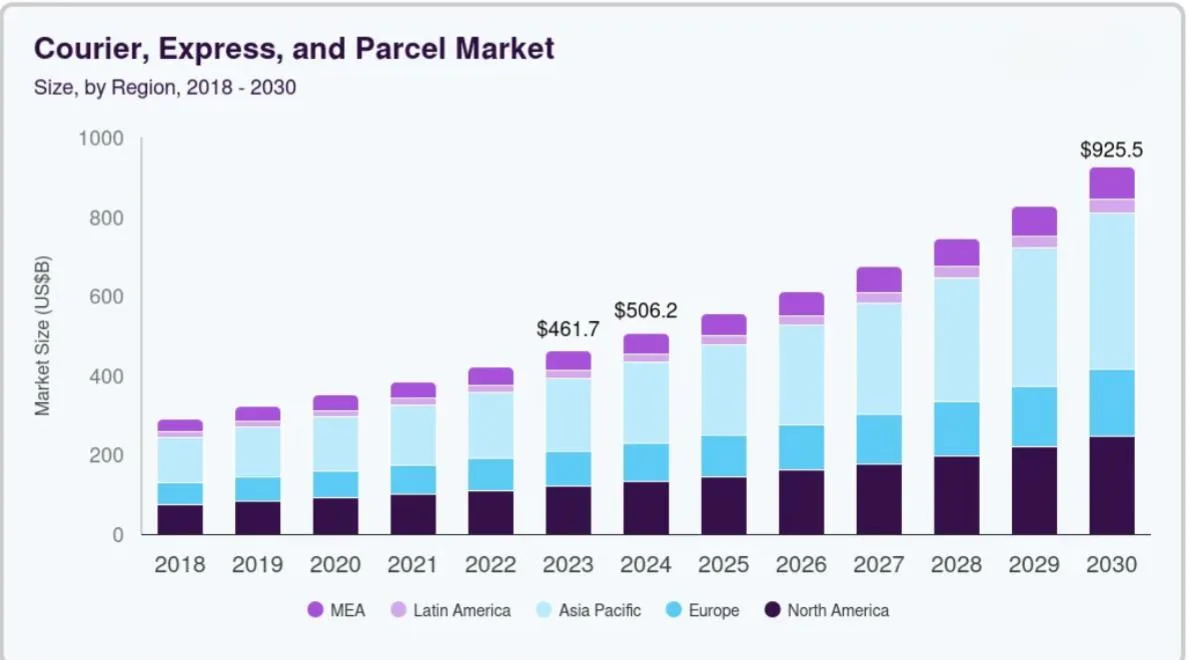
The global courier, express, and parcel (CEP) market was valued at about USD 461.69 billion in 2023, and is projected to nearly double by 2030, reaching around USD 925.48 billion. Grand View Research
This growth shows huge demand for parcel and courier services worldwide, meaning a well-built on-demand courier app can tap into a rapidly expanding market.
The “last mile” delivery segment earned around USD 143.1 billion in 2023, and forecasts expect it to rise to USD 258.7 billion by 2030, at roughly 8.8% CAGR. Grand View Research
As e-commerce and online shopping continue to expand, customers expect fast, reliable deliveries. That makes a courier delivery app especially relevant and profitable.
Global parcel shipping volume continues to explode. More online purchases and cross-border trade mean more parcels which translates to more demand for efficient courier services.
If you build a courier app now, you ride this trend towards higher parcel volumes and stronger demand for delivery services.
The broader courier and delivery services market was estimated at USD 507.4 billion in 2024, with projections showing it could reach USD 895.2 billion by 2034, growing at a 5.8% CAGR. Fact.MR
Such long-term growth indicates stability and ongoing opportunity, ideal for building a sustainable, profitable courier delivery application.
With consumer expectations shifting toward faster delivery, many providers are offering same-day or express delivery services. This shift highlights a gap in traditional logistics and a strong need for digital-first courier solutions that offer tracking, convenience, and speed.
A good courier delivery app can leverage this demand by offering on-demand, real-time and efficient delivery services, standing out in the crowded market.
Before you start planning how to develop a courier delivery app, it’s important to understand the different types of courier and parcel delivery applications available in the market.
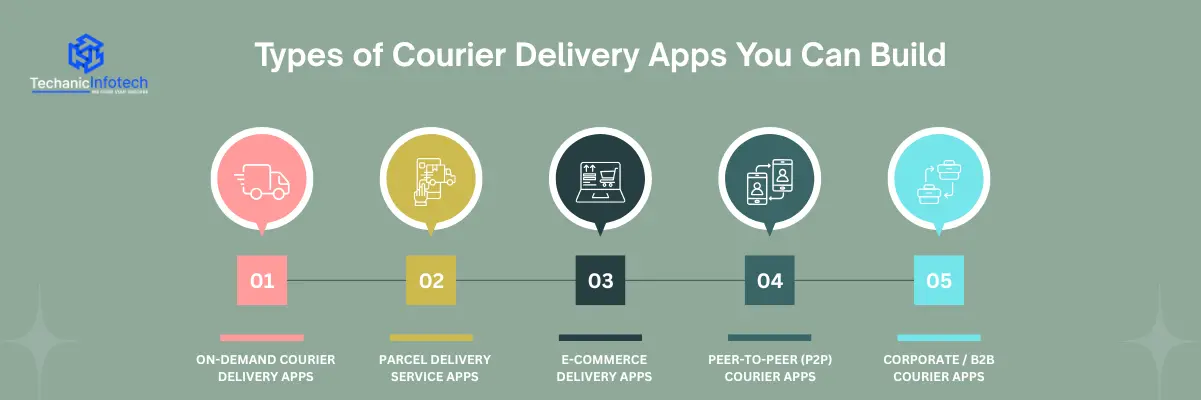
Each type works differently, serves different users, and requires a unique set of features. Choosing the right model helps you create a courier delivery application that matches your business goals.
These apps allow customers to book delivery services instantly, similar to Uber, but for parcels. Users can request a pickup, track the courier in real-time, and receive quick door-to-door delivery.
Best for: startups and businesses wanting to create an on-demand courier delivery app that offers fast, local deliveries.
These apps focus on scheduled or long-distance parcel deliveries. Users can book domestic or international shipments, compare prices, choose delivery speed, and schedule pickups.
Best for: businesses like logistics companies, courier brands, or anyone wanting to develop a parcel delivery app with tracking and shipment management.
These are designed for online stores that need a dedicated system to manage their own delivery operations. They integrate with e-commerce platforms to manage orders, assign drivers, and optimize routes.
Best for: e-commerce brands looking to build a courier app for fast and controlled deliveries.
Users deliver parcels for other users, similar to ride-sharing but for packages. The sender posts a delivery request, and nearby individuals accept and earn.
Best for: new-age businesses wanting to make a courier delivery app with low operational cost, as drivers are users themselves.
These apps help businesses manage internal shipments, document transfers, bulk deliveries, and inter-office courier needs.
Best for: enterprises wanting an internal logistics solution with strong admin control.
Building a successful courier delivery application requires a clear plan, the right features, and a structured development process.
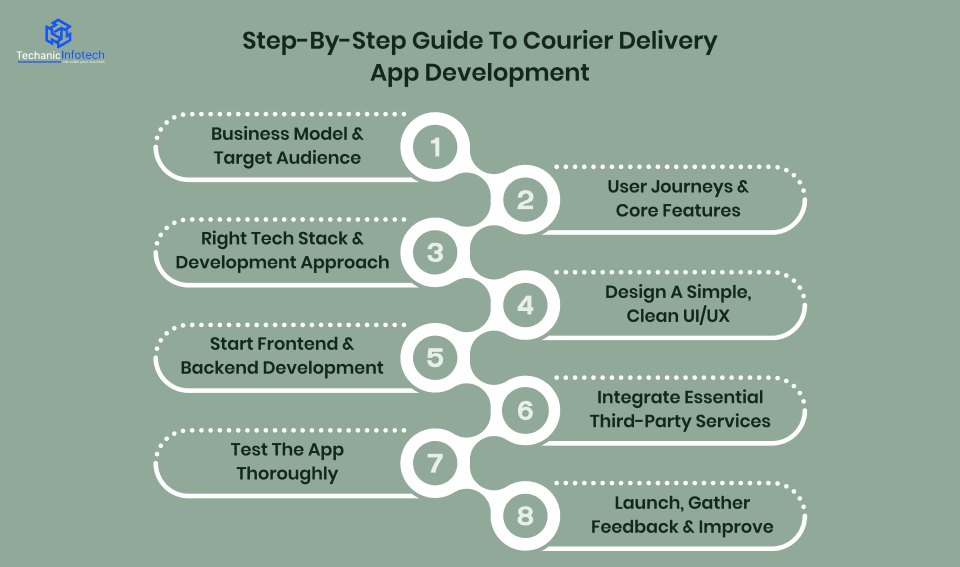
Following these steps will help you develop your app efficiently and avoid costly mistakes.
The first step in how to develop a courier delivery app is getting clarity on who you’re building for and how you’ll make money.
Decide if you want to create a courier delivery app for on-demand local deliveries, long-distance parcel shipping, eCommerce logistics, peer-to-peer delivery, or B2B/corporate use.
Define your target users: individuals, small businesses, online stores, or enterprises. Then decide your revenue model, per-delivery charges, subscription plans, commissions from delivery partners, or a mix of all.
This clarity will shape your features, pricing, and tech decisions later. A clear business model is the backbone of any successful courier delivery app development project.
Once your model is clear, the next step in this courier delivery app development guide is to map out how each user will use the app, customers, drivers, and admins.
For customers, think about:
How they create a booking
How they select pickup/drop locations
How they track parcels
How they pay and get updates
For drivers, define:
How they get orders
How navigation and delivery flow will work
How they update status
For admins, plan dashboards, analytics, and control over pricing, users, and deliveries. Writing these flows down helps you create a courier delivery application with a smooth, logical experience instead of random features.
To build a courier delivery app that performs well and scales, you need the right technology stack. You can go for:
Native apps (Swift for iOS, Kotlin for Android) – best performance
Cross-platform (Flutter, React Native) – faster and more cost-effective
On the backend, you’ll need robust tech (Node.js, Laravel, Django, etc.), real-time tracking (maps + GPS), and secure databases. At this stage, it’s smart to consult a courier delivery app development company if you don’t have an in-house team.
The tech choices you make now will impact performance, cost, timelines, and your ability to create an on-demand courier delivery app that can grow with your business.
Good design is critical if you want to make a courier delivery app that people actually enjoy using. Your UI/UX should be clean, clear, and easy to understand, even for non-technical users.
Focus on:
A simple home screen with clear “Book Delivery” action
Easy address input (saved addresses, map selection)
Clear tracking screen with live status
Simple menus for history, payments, and support
For drivers, screens must be minimal and action-focused so they can use the app while on the move. A well-designed interface makes your courier delivery application development more successful and reduces support requests later.
Once designs are ready, your developers can build a courier app by working on the frontend (what users see) and backend (what powers the system).
Frontend:
Customer app (Android/iOS or cross-platform)
Driver app
Admin web panel
Backend:
Order management
User & driver management
Real-time tracking and route updates
Pricing, commissions, and payouts
Notification system (SMS, push, email)
This is the core phase of courier delivery app development, where your idea turns into a working product.
To develop a courier delivery app that performs reliably in real-world conditions, integrating high-quality third-party services is essential.
Start by adding robust Maps and GPS APIs so users can track parcels in real time and drivers receive accurate route guidance. Secure payment gateways must also be integrated to support online payments, refunds, and multiple transaction modes.
Additionally, SMS and email services are required for sending OTPs, delivery alerts, and important notifications to customers and drivers. Push notification tools ensure users receive instant updates about order status, driver arrival, or payment confirmations.
These integrations play a major role in helping you create a mobile app that feels smooth, fast, and professional, ultimately improving the overall user experience.
Before launching your product, thorough testing is essential to ensure a smooth and reliable user experience.
A professional courier delivery app development process must include both manual and automation testing to identify bugs, performance issues, payment failures, and tracking inaccuracies. Test the entire booking flow, from entering pickup details to confirming delivery, and ensure your live GPS tracking works correctly across different locations and devices.
Running real-world pilot tests with a small audience helps validate your parcel delivery app development and ensures a smoother full-scale launch.
Once you’re confident, launch the first version (MVP) of your app on the Play Store and App Store. Promote it in your target area, onboard some delivery partners, and start taking real orders.
Collect feedback from:
Customers (ease of booking, pricing, tracking)
Drivers (app speed, route clarity, earnings)
Admins (control, reports, manual overrides)
Use this feedback to improve features, design, and performance. This is how you turn a basic build into a strong, scalable product using a step-by-step guide to courier delivery app development.
To develop a courier delivery app that runs smoothly and delivers a great user experience, you must include essential features for every panel, customers, drivers, and admins.
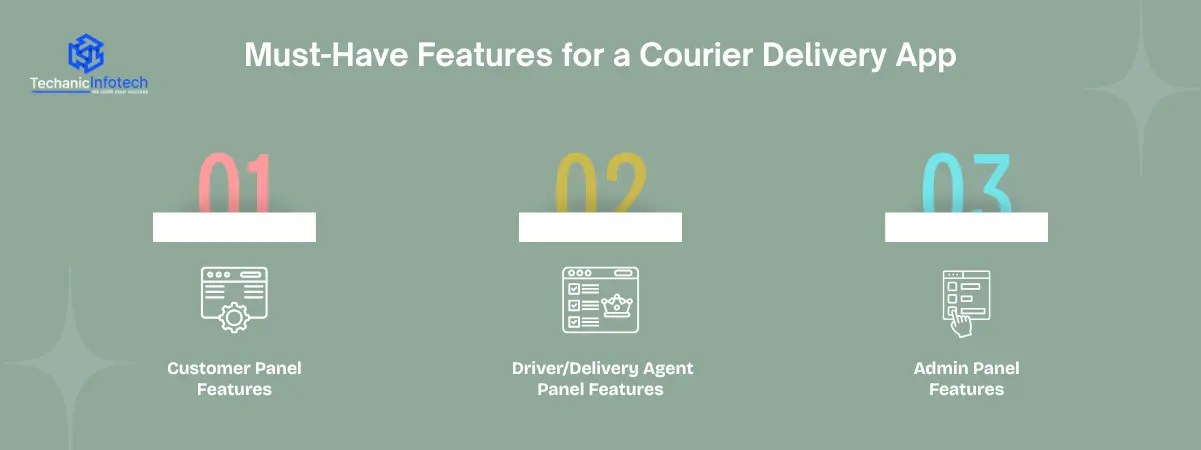
These features help streamline bookings, tracking, payments, delivery management, and communication. Below is a breakdown of must-have functionalities for each user group.
User Registration & Login: Easy sign-up using email, phone number, or social accounts.
Parcel Booking: Users can choose pickup and drop locations, package size, and delivery type.
Real-Time Tracking: Allows customers to track their package on the map and stay informed about delivery status.
Fare Estimation: Shows delivery cost before booking based on distance, weight, or urgency.
Multiple Payment Options: Support for cards, wallets, UPI, and cash on delivery.
Delivery History: Users can view past shipments, invoices, and status details.
These features create a simple, reliable experience for anyone wanting to create a courier delivery app.
Easy Login & Verification: Drivers register and upload documents for verification.
Delivery Requests: Agents receive new orders with parcel details and can accept or reject them.
Navigation & Route Optimization: GPS-based navigation helps drivers deliver faster and saves fuel.
Earnings Dashboard: Shows total earnings, bonuses, trip history, and payouts.
These tools help drivers manage daily tasks efficiently when you build a courier app or develop a parcel delivery app.
Order Management Dashboard: Admins can monitor all shipments, status, and delivery timing.
User & Driver Management: Admins verify drivers, manage customer accounts, and handle disputes.
Real-Time Analytics: Reports on deliveries, performance, earnings, and customer trends.
Pricing & Commission Control: Admins set delivery charges, surge pricing, and commissions.
Admin tools are crucial for anyone planning to create an on-demand courier delivery application.
| App Type / Complexity | Features Included | Estimated Cost Range |
| Basic Courier Booking App | Order creation, basic tracking, simple UI, payment integration | $15,000 – $25,000 |
| Advanced Courier Delivery App | Real-time route optimization, delivery scheduling, multi-driver management, wallet system, analytics | $50,000 – $70,000 |
| Enterprise-Level Courier Platform | Multi-city support, warehouse integration, fleet management, AI-based planning, high scalability | $80,000 – $90,000+ |
| Overall Average Cost | Depends on features, tech stack, complexity, location, and development team experience | $15,000 – $90,000 |
The cost to develop a courier delivery app depends on the features you choose, the complexity of the platform, the tech stack, and the experience level of your development team. On average, building a courier or parcel delivery app ranges between $15,000 and $90,000.
A simple courier booking app with basic features, order creation, tracking, and payments, starts around $15,000–$25,000.
If you want to create a courier delivery application with advanced features like real-time route optimization, multi-driver management, wallet system, delivery scheduling, and analytics, the cost can go up to $50,000–$70,000.
A fully scalable, enterprise-level platform similar to big delivery companies (FedEx, DHL, Delhivery) with multi-city support, warehouse integration, fleet management, and AI-based route planning may cost $80,000–$90,000 or more.
Your total budget also depends on your overall mobile app development cost, which varies by:
App platforms (Android, iOS, or both)
Native vs cross-platform development
UI/UX design quality
Third-party integrations (maps, notifications, payment gateways)
Backend complexity and scalability
Developer location (USA, Europe, India, etc.)
If you choose an experienced app development company, you get accurate planning, better performance, and long-term scalability, reducing costly mistakes later.
Building a reliable courier or parcel delivery app requires strong technical expertise, smooth workflows, and scalable architecture.
At Techanic Infotech, we specialize in courier delivery app development and help businesses launch powerful, user-friendly solutions tailored to their delivery model. From designing intuitive customer and driver interfaces to integrating advanced features like real-time tracking, route optimization, secure payments, and automated order management, we handle it all.
As a leading courier delivery app development company, we ensure your platform is fast, secure, and ready for high-volume operations. Whether you want to build a simple MVP or a full-scale logistics application, our team provides complete end-to-end development, testing, and post-launch support.
Building a courier delivery app opens the door to a fast-growing industry where speed, convenience, and real-time tracking matter more than ever.
With the right strategy, strong features, and a clear development roadmap, you can create a courier delivery app that delivers seamless experiences for customers, drivers, and businesses.
From choosing your business model to integrating essential services and testing thoroughly, each step plays a crucial role in ensuring long-term success. As demand for on-demand deliveries continues to rise, now is the perfect time to launch your own solution. And if you need expert support, Techanic Infotech is here to turn your courier app idea into a scalable, high-performance product
A basic courier delivery app takes 8–12 weeks, while a feature-rich platform with real-time tracking, route optimization, and multiple dashboards may take 4–6 months, depending on complexity.
The cost typically ranges from $15,000 to $90,000, depending on features, platforms, design, backend complexity, and the development team's expertise. Advanced logistics apps may cost more.
Must-have features include parcel booking, live tracking, digital payments, notifications, driver management, route optimization, earnings dashboards, and a powerful admin panel.
Yes. You can develop separate native apps or choose cross-platform development (Flutter/React Native) to launch faster and reduce cost without compromising performance.
Apps generate revenue through delivery charges, commissions, surge pricing, business partnerships, subscription plans, ads, convenience fees, and premium delivery services.


Shailendra is a dedicated professional known for his strong client-focused approach and clear understanding of business needs. He brings a thoughtful understanding of client needs and focuses on building long-term relationships through clear communication and quality-driven work. With a blend of strategic thinking, content expertise, and a hands-on approach, Shailendra plays a key role in shaping content that aligns with both business goals and user expectations.