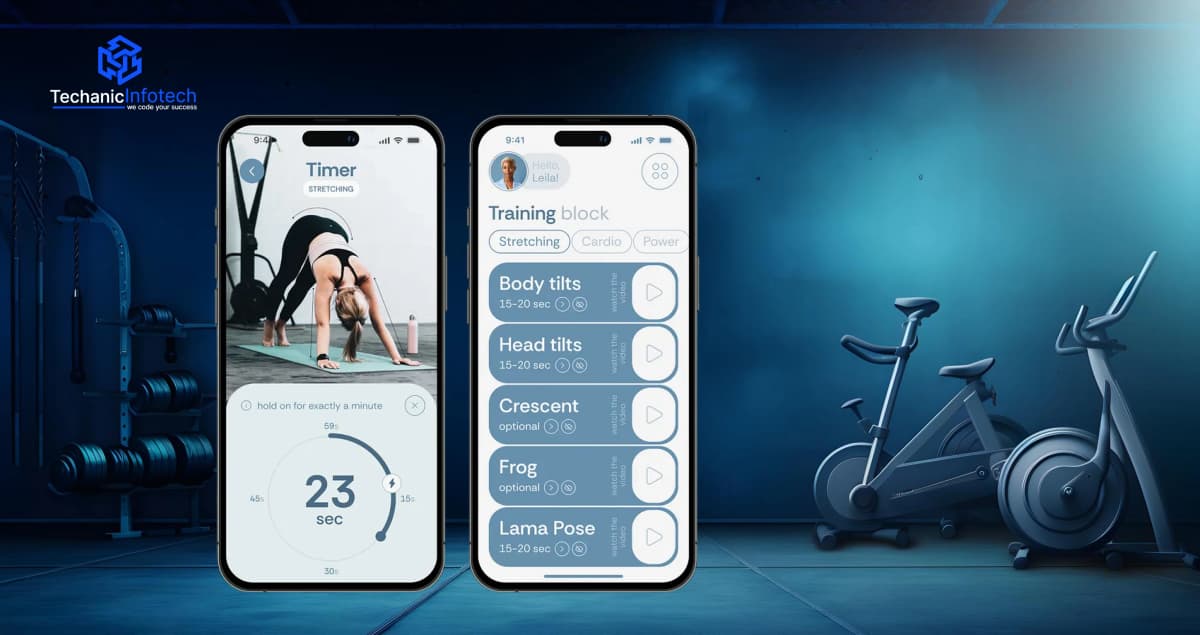
The fitness industry is evolving fast, and mobile apps are now at the centre of how people track progress and stay motivated. From personalized workout plans to real-time activity tracking, users expect fitness apps to be smart, simple, and reliable.
If you’re planning to develop a fitness app, it’s important to understand that success goes beyond just a good idea.
You need the right strategy, features, technology stack, and development process to stand out in a crowded market.
This step-by-step guide walks you through everything you need to know, from validating your app idea and choosing the right feature to development, cost planning, and launch.
Whether you’re a startup or an established business, this guide will help you build a fitness app that users trust and keep coming back to.
The fitness app space continues to expand as more people embrace digital fitness tools to stay healthy and active.
Mobile devices and wearable tech make tracking workouts and progress easier than ever, while personalization features boost engagement.
This section highlights key market and user trends that show why it’s the right time to develop a fitness app.
The global fitness app market is projected to grow from $10.74 to over $40B by 2034, showing strong long-term expansion.
Fitness and health apps recorded 3.6 billion downloads worldwide in 2024, up more than 6% year-over-year.
Fitness apps generated $3.98B in revenue in 2024, an 11% increase from 2023.
Around 74% of Americans use at least one fitness app, indicating high domestic adoption.
60% of users replaced gym memberships with app-based workouts, showing shifting habits.
Wearable tech adoption for fitness tracking has grown by 21% over recent years.
Understanding the types of fitness apps available in the market helps you choose the right concept based on user needs, business goals, and monetization potential.
Each app type serves a different audience, from beginners to fitness enthusiasts and professionals.
Below are seven popular types of fitness apps, explained clearly to guide your development strategy.
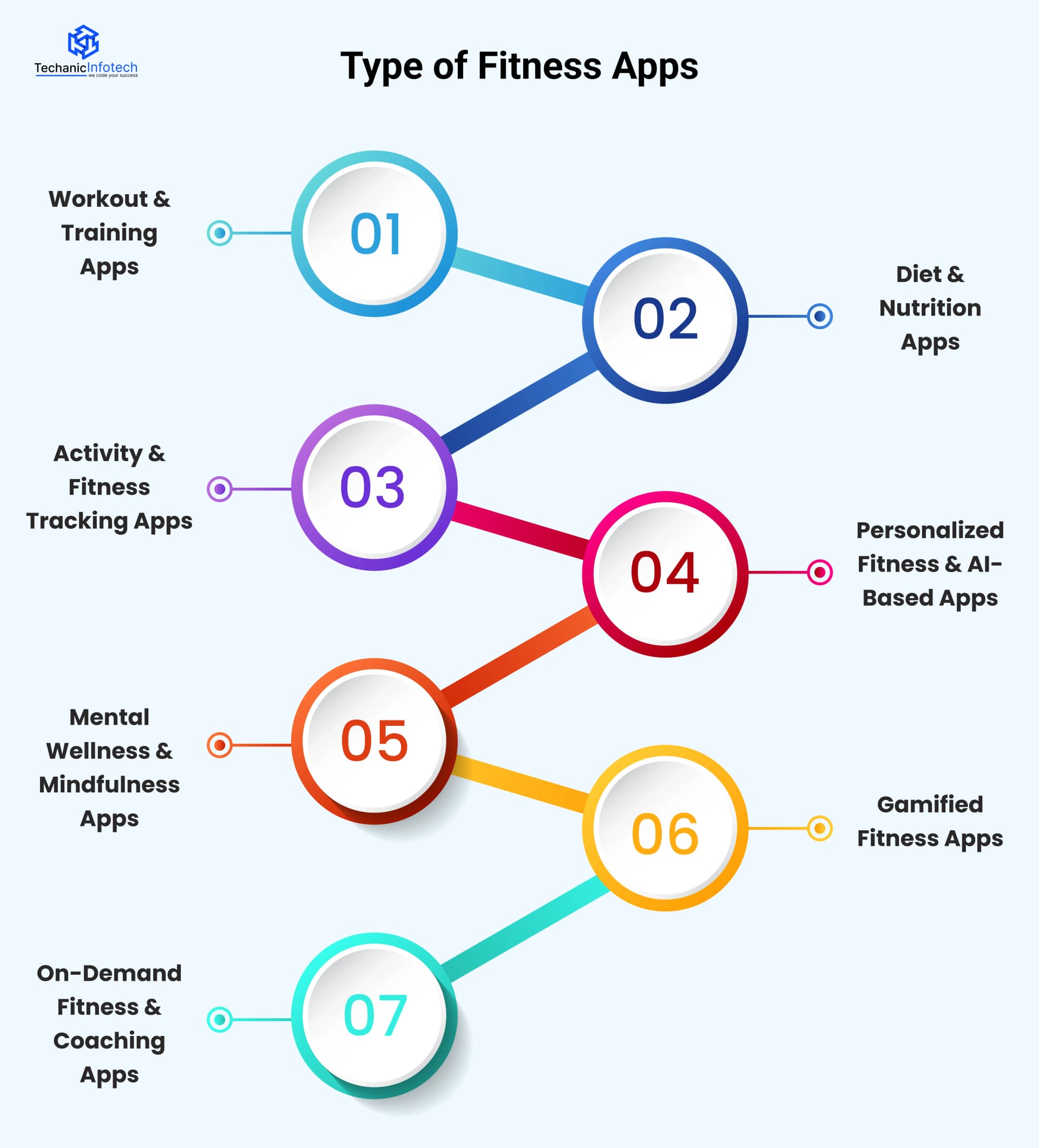
Workout and training apps focus on guided exercise routines for strength training, cardio, yoga, HIIT, or home workouts. Popular examples include Nike Training Club and Freeletics.
These apps often provide video tutorials, structured workout plans, and progress tracking, making them ideal for users who want flexible, at-home fitness solutions.
Diet and nutrition apps help users manage calorie intake, track meals, and follow healthy eating plans. Apps like MyFitnessPal and Lifesum allow users to log food, scan barcodes, and set nutrition goals.
These apps work well when paired with fitness tracking features for a more holistic health experience.
These apps track daily activities such as steps, distance, heart rate, and calories burned. Strava and Google Fit are strong examples.
They often integrate with wearables and smartphones, providing real-time insights and performance analytics that keep users motivated.
Personalized fitness apps use AI and user data to recommend workouts and health plans. Apps like Fitbod adapt routines based on progress and recovery.
When developing a fitness app in this category, personalization and data accuracy are key to long-term user retention.
Mental wellness apps focus on stress relief, meditation, and overall mental health. Headspace and Calm combine guided meditation, breathing exercises, and sleep tools.
These apps complement physical fitness by supporting emotional and mental well-being.
Gamified fitness apps use challenges, rewards, and competitions to make workouts fun. Zombies, Run! and Sweatcoin motivate users through points, badges, or real-world rewards. This type works especially well for younger users and social fitness communities.
On-demand fitness apps connect users with live or recorded sessions from trainers. Peloton and ClassPass are well-known examples.
If your goal is to create an on-demand fitness app, focus on video streaming quality, scheduling, trainer profiles, and subscription models.
Understanding the features of the fitness app is essential if you want to create a product that users actually enjoy using.
A well-being fitness app goes beyond basic workouts; it motivates users, tracks progress, and adapts to individuals' goals.
Below is a complete breakdown of must-have features that create a fitness app functional, engaging, and competitive in today’s market.
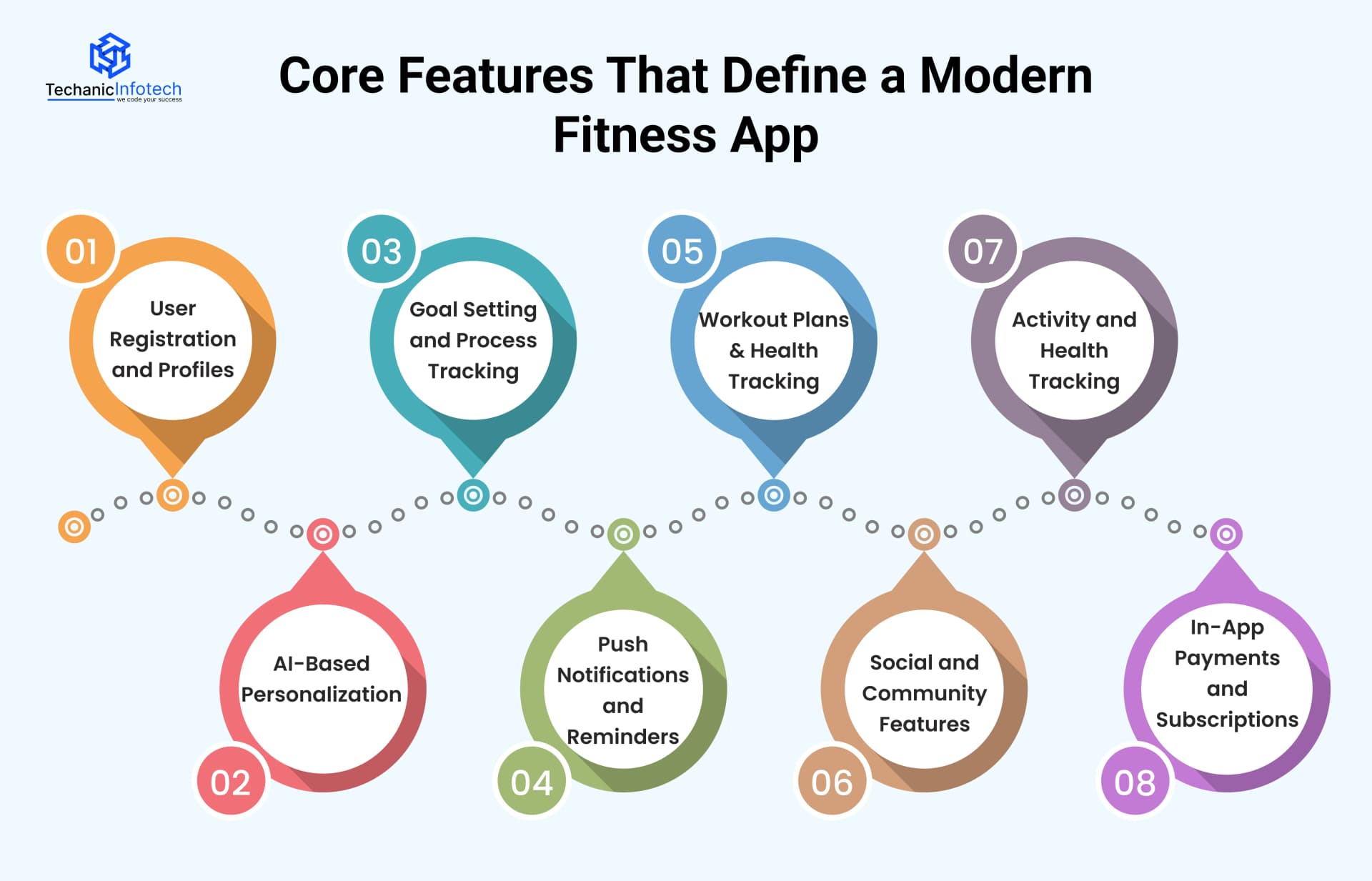
A smooth onboarding process sets the tone for the entire app experience. Users should be able to sign up using email, phone number, or social logins.
Personal profiles store key data such as age, weight, fitness goals, activity level, and preferences, allowing the app to tailor recommendations effectively.
Clear goals keep users motivated. This feature allows users to set weight, workout, or habit-based goals and monitor progress through charts and summaries.
If you plan to build a fitness app, this feature is non-negotiable, as it directly impacts retention and long-term engagement.
A strong exercise library with videos, images, and step-by-step instructions helps users train safely and confidently. The workout plan should cater to beginners, intermediate users, and advanced athletes, covering strength training, cardio, yoga, and flexibility routines.
Integration with smartphones and wearables allows real-time tracking of steps, calories burned, heart rate, sleep patterns, and workouts. Accurate data collection makes the app more reliable and valuable for users who care about measurable results.
Personalized recommendations powered by AI improve user satisfaction. Based on behavior, progress, and preferences, the app can suggest workouts, rest days, or diet tips. This level of customization is becoming a core expectation in modern workout app development.
Smart reminders help users stay consistent without feeling overwhelmed. Notifications can include workout reminders, hydration alerts, goal milestones, or motivational messages to keep users engaged daily.
Community features allow users to share progress, join challenges, or compete with friends. Leaderboards, achievements, and group challenges create a sense of accountability and help position your product as a top fitness app in a crowded market.
Monetization features such as premium plans, one-time purchases, or trainer subscriptions ensure long-term revenue. Secure payment gateways and transparent pricing build trust and encourage upgrades.
Understanding the process of developing a fitness app is essential if you want to build a product that users trust, enjoy, and keep coming back to.
From planning the core idea to launching a polished app, each step plays a key role in long-term success.
Below are ten important steps that explain how to approach fitness app development in a clear, practical way.
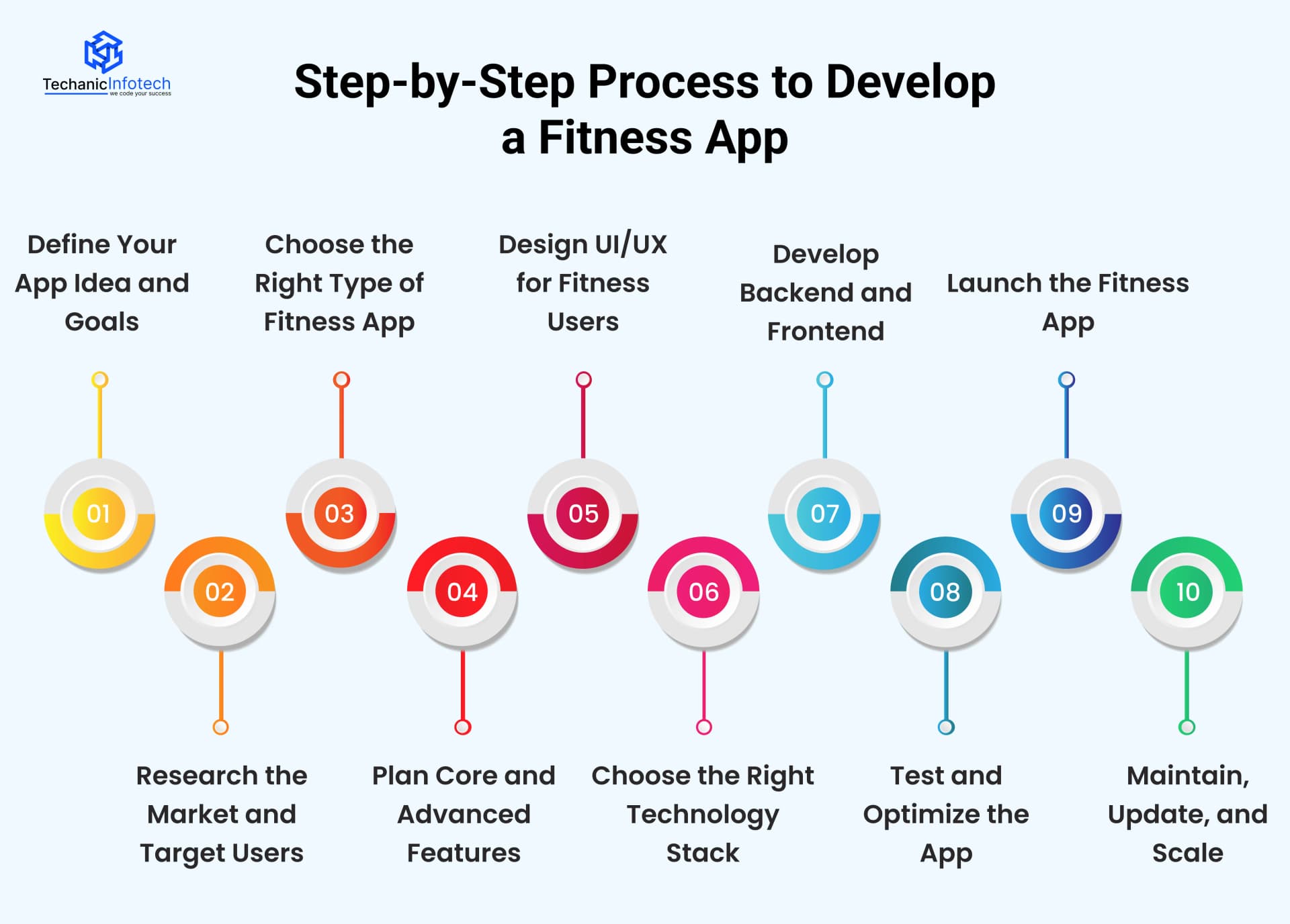
The first step is to clarify why you want to create a mobile app and what problem it will solve. Decide whether your app focuses on workouts, nutrition, activity tracking, or virtual coaching. Clear goals help guide design, features, and development decisions.
Study existing fitness apps to understand what works and where gaps exist. Analyze competitors, user reviews, and pricing models.
This research helps you shape a unique value proposition and avoid building features users don’t actually need.
|
Research Focus |
Key Questions |
|
Competitors |
What features do top apps offer? |
|
Target Users |
Who will use the app and why? |
|
Market Gaps |
What problems remain unsolved? |
Decide what category your app falls into before you create a fitness app. Options include workout training, diet tracking, habit building, or on-demand coaching. Choosing the right type keeps development focused and aligned with user expectations.
Outline essential features such as user profiles, goal tracking, workout plans, and notifications. You can later add advanced features like AI recommendations, wearables integration, or social challenges to improve engagement.
A clean and intuitive interface is critical in gym workout app development. Users should easily navigate workouts, track progress, and view results without confusion. Good mobile app design boosts retention and keeps users motivated.
|
UI Element |
Purpose |
|
Dashboard |
Shows progress at a glance |
|
Workout Screens |
Guides exercises clearly |
|
Analytics |
Displays performance trends |
Select technologies based on performance, scalability, and budget. Popular choices include React Native or Flutter for cross-platform apps and cloud services for backend scalability. A strong mobile app tech stack ensures smooth performance as your user base grows.
This stage turns designs into a working product. Developers build the frontend that users interact with and the backend that handles data, logic, and integrations. Secure APIs and databases are essential for handling sensitive fitness and health data.
Before launch, thoroughly test the app to identify bugs, usability issues, and performance gaps. Regular testing helps you confidently develop a fitness app that works across devices and operating systems.
|
Testing Type |
Goal |
|
Functional Testing |
Ensure features work correctly |
|
Performance Testing |
Check speed and stability |
|
Security Testing |
Protect user data |
Once testing is complete, launch the app on the App Store and Play Store. Optimize app store listings with clear descriptions, screenshots, and keywords to improve visibility and downloads.
Post-launch work is just as important. Monitor user feedback, release updates, add new features, and improve performance over time. Regular updates help your fitness app stay relevant and competitive.
Understanding the cost to develop a mobile app depends on multiple factors, including app complexity, features, design, and development approach.
The estimated cost to develop a fitness app is $15,000 - $80,000.
Before estimating a budget, it’s important to understand how different choices impact overall investment and how they align with your product goals, and how to develop a fitness app efficiently.
|
App Type |
Feature Scope |
Estimated Cost Range |
|
Basic Fitness App |
Workout plans, user profiles |
$15,000 – $30,000 |
|
Mid-Level App |
Tracking, wearables, subscriptions |
$30,000 – $60,000 |
|
Advanced Fitness App |
AI, live sessions, analytics |
$60,000 – $100,000+ |
|
Feature |
Description |
Cost Impact |
|
User Registration |
Email, social login |
Low |
|
Activity Tracking |
Steps, calories, heart rate |
Medium |
|
Video Workouts |
Pre-recorded or live |
Medium–High |
|
Wearable Integration |
Apple Watch, Fitbit |
High |
|
AI Recommendations |
Personalized plans |
High |
Choosing the right platform affects both reach and cost.
Single Platform (iOS or Android)
Lower initial cost and faster launch
Cross-Platform Development
Shared codebase, cost-effective long-term
Native Development (iOS + Android)
Higher cost, better performance, and UX
Development rates vary depending on the team structure:
Freelancers: Lower upfront cost, limited scalability
In-house team: Higher cost, full control
Development company: Balanced cost, expertise, and scalability
App maintenance and updates
Cloud hosting and backend services
Third-party APIs and tools
Security and compliance measures
Several elements influence the total development cost. Each plays a direct role in timelines and resource allocation.
App type (basic, advanced, or on-demand)
Number of features and integrations
UI/UX design complexity
Platform choice (iOS, Android, or both)
Development team location
Choosing the right revenue strategy is just as important as building the app itself. With the right monetisation models, a fitness app can generate consistent income while still delivering real value to users.
Below are the most effective ways fitness apps earn money today, explained in a practical and easy-to-understand way.
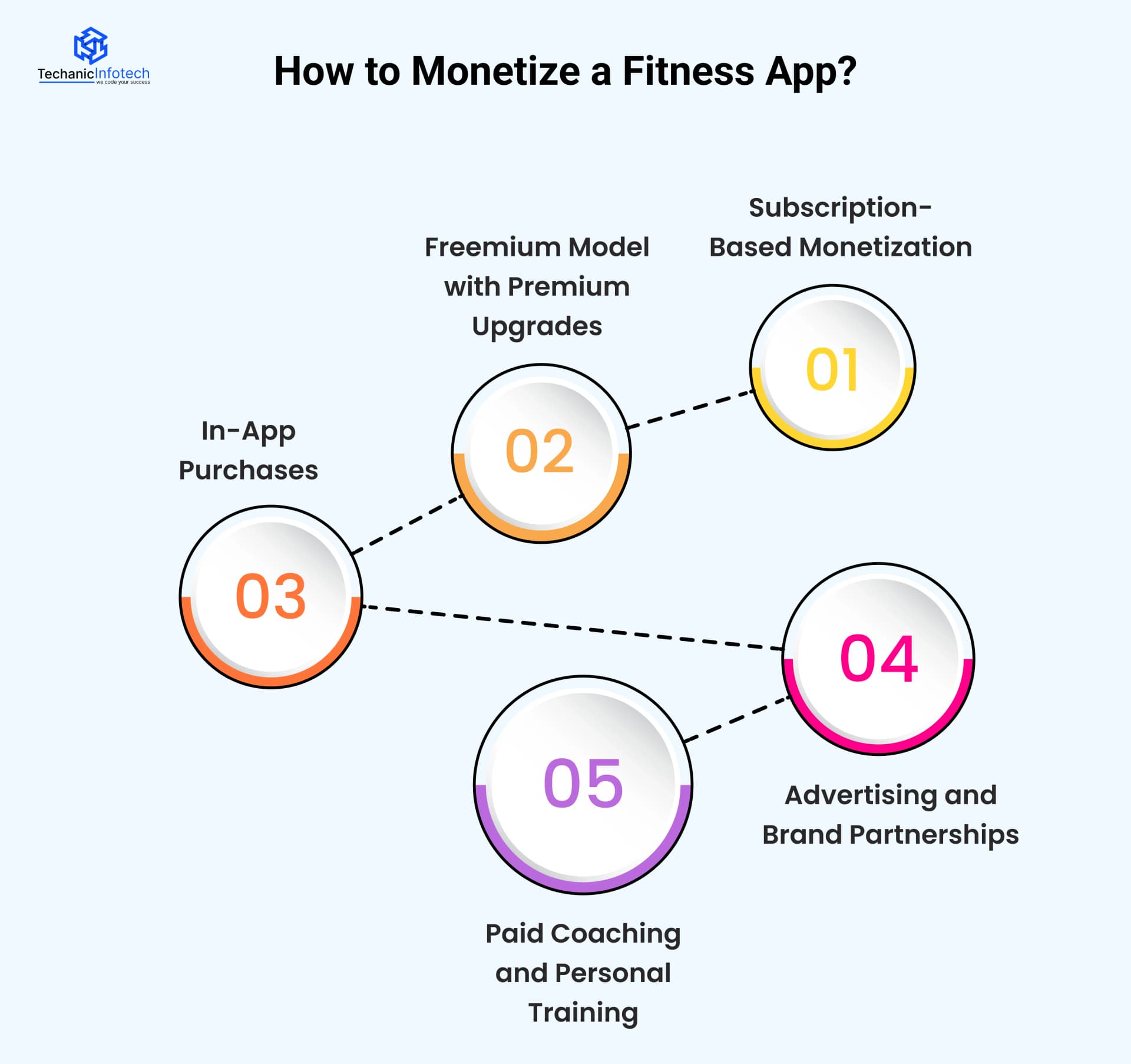
Subscriptions are one of the most popular monetization strategies in fitness apps. Users pay a weekly, monthly, or yearly fee to access premium features such as personalized workout plans, advanced analytics, and exclusive video content.
This model works well because fitness is an ongoing habit, not a one-time need. Subscriptions also help app owners build predictable, recurring revenue.
The freemium approach allows users to download the app for free and access basic features, while advanced tools are locked behind a paywall.
According to many insights shared in a fitness app development guide, this model lowers entry barriers and boosts downloads. Once users see value, they’re more likely to upgrade for features like custom meal plans, trainer support, or progress reports.
In-app purchases let users buy specific features or content without committing to a subscription.
This works especially well if you’re learning how to create a fitness app focused on flexibility. Examples include:
One-time workout programs
Specialized diet plans
One-on-one coaching sessions
This model gives users control while creating multiple revenue touchpoints.
Fitness apps with a large user base can earn through in-app ads or partnerships with fitness brands. Sponsored workouts, gear recommendations, or wellness product placements feel natural when aligned with user interests. The key is moderation; ads should enhance the experience, not interrupt it.
Offering live or on-demand access to certified trainers is another strong monetization option. Users are willing to pay more for expert guidance and accountability. A solid design guide for fitness app UX is essential here, ensuring booking, video calls, and progress tracking feel seamless and intuitive.
Building a fitness app requires more than just great design; it demands performance, security, and scalability.
At Techanic Infotech, we help businesses turn ideas into reliable digital fitness solutions backed by a proven fitness app development guide.
From intuitive UI/UX to advanced features like AI-driven personalization and wearable integration, our team ensures your app meets modern user expectations.
As an experienced fitness app development company, we focus on secure architecture, smooth performance, and future-ready scalability.
Whether you’re launching a startup app or upgrading an existing platform, Techanic Infotech delivers end-to-end development tailored to your goals.
Partner with us to build a high-performance fitness app that keeps users engaged and supports long-term growth.
Building a successful fitness app takes more than just a great idea. It requires clear planning, the right features, strong technology, and a deep understanding of user behavior.
From market research and design to development, testing, and launch, every step plays a key role in long-term success.
If you’re looking to make a fitness app that users trust and engage with daily, focusing on performance, security, and scalability is essential.
This complete guide to fitness app development is designed to help startups and businesses move forward with confidence.
With the right development approach and expert support, you can turn your fitness app concept into a reliable digital product that delivers real value and stands out in a competitive market.
The timeline depends on features, platform, and complexity. A basic fitness app may take 3–4 months, while advanced apps with AI, wearables, and custom workouts can take 6–9 months.
Core features include user profiles, workout plans, progress tracking, notifications, and payment integration. Advanced apps often add AI personalization, wearable support, and community features.
The cost varies based on design, functionality, and tech stack. Simple apps cost less, while feature-rich, scalable apps require a higher investment. The estimated cost to develop a fitness app is $15,000 - $80,000
Yes. Most modern fitness apps support wearables like Apple Watch, Fitbit, and Garmin to track steps, heart rate, calories, and workouts in real time.
For a wider reach, building for both platforms is ideal. Many businesses start with one platform and later expand using cross-platform development for faster scaling.


Bharat Sharma is the CTO of Techanic Infotech, bringing deep technical expertise in software architecture, mobile app development, and scalable system design. He leads the engineering team with a strong focus on innovation, performance, and security.