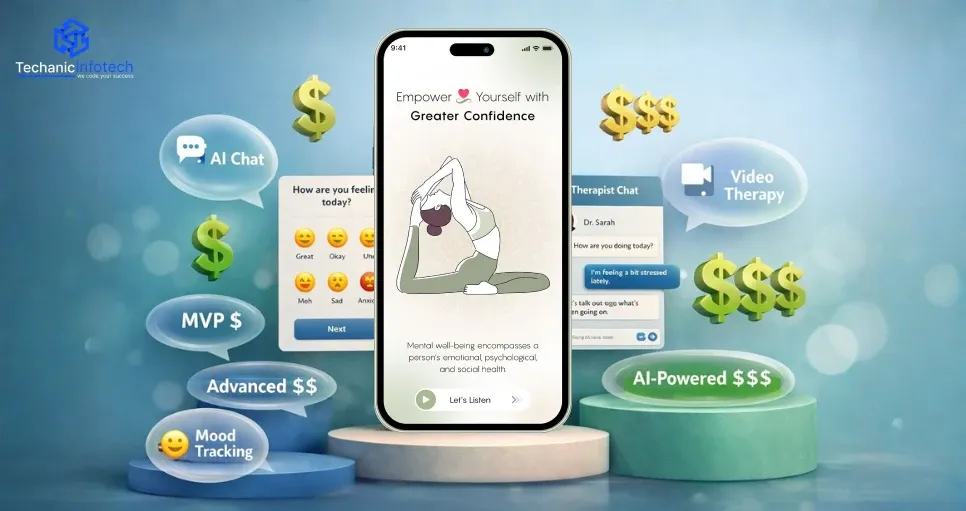
Healthcare App Development
Mental Health App Development Cost : Everything You Need to Know
April 1, 2026
April 1, 2026
Key Takeaways
The mental health app development cost typically ranges between $9,000 to $120,000+, depending on features and complexity.
The type of app (meditation, therapy, CBT, or community) directly impacts the overall cost.
Core features like mood tracking and meditation are budget-friendly, while AI and video consultations increase cost.
The mental health app cost by features varies significantly based on functionality and integrations.
Platform choice (iOS, Android, or cross-platform) plays a major role in cost estimation.
UI/UX design is critical for user engagement and directly affects development cost.
Security and compliance (HIPAA, GDPR) are essential and can increase the budget.
Third-party integrations like payment gateways and video APIs add to the total cost.
Development team location can reduce costs by up to 40–60% if chosen wisely.
Maintenance and updates require ongoing investment (15–20% yearly)
Have you ever wondered how much it really costs to build an app that helps people feel calmer, more in control, and supported every day?
Mental health apps are no longer just a trend, they’ve become a daily support system for millions. With this growing demand, understanding the mental health app development cost has become one of the most important steps for businesses entering this space.
On average, the cost to develop a mental health app can range between $9,000 to $120,000, depending on features, complexity, and technology choices.
If you’re planning to build a mental wellness app, it’s important to know where your budget will go. From selecting the right features to understanding the mental health app cost by features, every decision impacts the final investment.
In this mental health app development cost guide, we’ll break down everything in a simple and practical way to help you plan better.
The mental health app industry is growing rapidly, driven by increasing awareness, digital adoption, and demand for accessible support.
Here are some important stats that highlight this growth:
The global mental health apps market is expected to reach around $8.64 billion in 2026, showing strong growth compared to previous years.
The market is projected to grow with estimates reaching over $30–$40 billion by 2034–2035.
With rising mental health awareness and smartphone usage, millions of users are actively using these apps. In developed regions, a large portion of smartphone users now have access to mental health apps.
Digital therapy and consultation apps are among the fastest-growing segments, as users prefer remote and on-demand support instead of traditional in-person therapy.
Markets like India are also growing quickly, with expected growth rates of 15%–18% CAGR, driven by increasing awareness and mobile usage.
A mental health app is a digital platform designed to support users in managing their emotional well-being. These apps offer features like meditation, mood tracking, therapy sessions, and self-help tools, all accessible from a smartphone.
Today, many businesses are investing in mental health app development to provide accessible and affordable mental wellness solutions.
But how does a mental health app actually work? Let’s break it down step by step:
The process starts when a user signs up and shares basic details like age, goals, stress levels, or mental health concerns. This helps the app create a personalized experience.
Most apps include a short questionnaire or mental health assessment. Based on the responses, the app suggests relevant content such as meditation sessions, therapy options, or self-help programs.
Users can then access features like guided meditation, mood tracking, journaling, or therapy sessions. These are key mental health app features that keep users engaged and supported daily.
The app tracks user activity, mood changes, and progress over time. This helps users understand their patterns and improve their mental well-being.
To keep users consistent, the app sends reminders for activities like meditation, journaling, or therapy sessions. This improves user retention and habit-building.
Some apps connect users with certified therapists through chat or video calls. This adds an extra layer of support for users who need professional guidance.
The cost of mental health app development can vary depending on the type of app, features, and level of complexity. If you’re planning to develop a mental health app, it’s important to have a clear idea of your budget before starting.
On average, a basic app with limited features like mood tracking and simple content can cost around $9,000 to $25,000.
A mid-level app with features like user profiles, notifications, and basic analytics may range between $25,000 to $60,000.
For advanced apps that include AI recommendations, video consultations, and strong security systems, the cost can go beyond $60,000 to $120,000+.
Several factors affect the overall mental health app cost, such as design complexity, number of features, platform (iOS, Android, or both), and the development team’s location. Security and compliance requirements can also increase the cost, especially for apps that handle sensitive user data.
From our experience, it’s always better to start with an MVP development. This helps you launch faster, test your idea, and then scale your app based on real user feedback. Investing smartly in the beginning can help you control costs while building a successful app.
When planning your budget, it’s important to understand how each feature contributes to the overall cost to build a mental health app. Not every feature is necessary in the beginning, and choosing the right ones can help you control expenses.
Below is a breakdown of common features along with their estimated costs to give you a clearer picture of where your investment goes:
|
Feature |
Description |
Avg Cost |
|
Personalized User Experience |
Every user has different mental health needs. A good app should offer personalized recommendations based on user input, behavior, and goals. |
$2,000 – $6,000 |
|
Mood Tracking & Journaling |
Mood tracking helps users understand their emotional patterns over time. Journaling features allow them to express thoughts and reflect on their feelings. |
$2,000 – $5,000 |
|
Guided Meditation & Relaxation |
Meditation sessions, breathing exercises, and calming audio content help users manage stress and anxiety. |
$3,000 – $8,000 |
|
Therapy & Counseling Support |
Offering access to certified therapists through chat or video calls adds real value. It helps users get professional guidance when needed. |
$8,000 – $20,000 |
|
Push Notifications & Reminders |
Consistency is key in mental wellness. Reminders for meditation, journaling, or check-ins help users stay on track and build healthy habits over time. |
$1,000 – $3,000 |
|
Data Privacy & Security |
Since mental health data is sensitive, strong security measures are essential. Features like encryption and secure login build trust and ensure user information stays protected. |
$5,000 – $15,000 |
|
Progress Tracking & Insights |
Users should be able to see their progress over time. Visual reports and insights help them stay motivated and understand improvements in their mental well-being. |
$2,000 – $6,000 |
|
AI-Based Personal Recommendations |
AI can analyze user behavior, mood patterns, and activity history to provide personalized suggestions. This includes recommending meditation or content based on individual needs. |
$5,000 – $15,000 |
|
Voice & Emotion Recognition |
Some advanced apps use voice analysis or facial recognition to detect emotional states. This helps the app respond with relevant suggestions. |
$8,000 – $20,000 |
|
Gamification Features |
Adding elements like rewards, streaks, and progress badges can motivate users to stay consistent. Gamification encourages users to build healthy habits. |
$2,000 – $6,000 |
|
Wearable Device Integration |
Integration with smartwatches or fitness bands allows the app to track heart rate, sleep patterns, and activity levels. |
$4,000 – $10,000 |
|
Community Support & Forums |
Creating a safe space where users can connect, share experiences, and support each other can increase engagement. |
$3,000 – $8,000 |
|
Multi-Language & Accessibility Support |
To reach a wider audience, the app should support multiple languages and accessibility features like voice guidance and simple navigation. |
$2,000 – $5,000 |
When planning mental health app development, the type of app you choose has a direct impact on the overall cost. Each category comes with different features, complexity, and development requirements. Understanding this helps you estimate the cost to develop a mental health app more accurately.
Here are the most common types of mental health apps along with their estimated costs:
These apps focus on helping users reduce stress and anxiety and improve focus through guided meditation and relaxation techniques. They usually include features like breathing exercises, sleep stories, and calming audio sessions.
If you want to build a mental wellness app that attracts a wide audience, this is one of the most budget-friendly options. These apps are relatively simpler to develop and suitable for beginners as well as experienced users.
Therapy apps connect users with licensed professionals through chat, audio, or video calls. These apps are designed for users who need expert support for mental health issues like anxiety, depression, or stress.
When you develop a mental health app in this category, security, real-time communication, and compliance increase the cost. Features like video calls, scheduling, and secure messaging make this one of the most expensive app types.
Mood tracking apps help users monitor their emotions over time. Users can log their daily feelings, activities, and triggers, which helps them understand patterns in their mental health.
These apps are simple but effective, making them a cost-efficient option. Adding analytics and insights can slightly increase the cost to create a mental wellness app but also improve user engagement.
These apps are based on self-help techniques and Cognitive Behavioral Therapy (CBT). They guide users through structured programs to manage stress, negative thoughts, and emotional challenges.
Features like interactive exercises, quizzes, and personalized plans increase development effort. This makes them a mid-range option in terms of cost to build a mental health app.
Community-based apps focus on connecting users with others facing similar challenges through forums and discussion groups.
These apps require moderation systems, user management, and real-time interactions, which increase complexity. Proper safety features are also important, adding to the overall budget.
When estimating the mental health app development cost, it’s important to understand that pricing is not fixed. Several factors directly impact how much you’ll spend. From our experience, these elements can significantly increase or reduce your overall budget depending on how you plan your app.
The platform you choose directly affects the cost to develop a mental health app. Building for a single platform (iOS or Android) is more budget-friendly.
However, if you want to reach a wider audience, developing for both platforms increases cost. Cross-platform technologies like Flutter or React Native can help reduce expenses while maintaining quality.
|
Platform |
Description |
Avg. Cost |
|
iOS App Development |
Building the app only for Apple devices. Suitable for a premium user base and better monetization potential. |
$5,000 – $15,000 |
|
Android App Development |
Targets a wider audience globally. Requires optimization for multiple devices and screen sizes. |
$5,000 – $15,000 |
|
Both (Native Apps) |
Separate apps for iOS and Android. Offers best performance but increases cost significantly. |
$15,000 – $40,000+ |
|
Cross-Platform (Flutter/React Native) |
Single codebase for both platforms. Reduces development time and overall cost. |
$8,000 – $25,000 |
UI/UX design plays a huge role in mental health apps. The interface should feel calm, simple, and easy to use. A cluttered or confusing design can negatively impact user experience.
However, creating a smooth and visually appealing design requires wireframes, prototypes, and multiple iterations, which adds to the cost. The more customized and polished your design is, the higher your development budget will be.
|
Element |
Description |
Avg. Cost |
|
Wireframing |
Basic layout and structure of the app screens to define user flow and navigation. |
$500 – $2,000 |
|
Prototyping |
Interactive design that shows how the app will function before development begins. |
$1,000 – $3,000 |
|
Custom UI Design |
Creating visually appealing, calm, and user-friendly interfaces tailored for mental health apps. |
$2,000 – $6,000 |
|
User Experience Optimization |
Improving usability, navigation, and engagement based on user behavior. |
$1,500 – $4,000 |
|
Design Testing & Iterations |
Refining the design through feedback and multiple revisions. |
$1,000 – $3,000 |
Choosing the right technology stack plays a major role in deciding the overall cost to develop mental wellness. The technologies you select affect performance, scalability, and development time.
For example, cross-platform frameworks can reduce cost, while advanced backend or AI integrations can increase it.
|
Component |
Technologies |
Avg. Cost |
|
Frontend (Mobile App) |
Flutter, React Native, Swift, Kotlin |
$5,000 – $20,000 |
|
Backend Development |
Node.js, Python, Java (Spring Boot) |
$5,000 – $25,000 |
|
Database |
MySQL, MongoDB, PostgreSQL |
$2,000 – $10,000 |
|
Cloud Services |
AWS, Google Cloud, Azure |
$2,000 – $8,000 |
|
APIs & Integrations |
Twilio, Stripe, Firebase |
$3,000 – $15,000 |
|
AI & Machine Learning |
TensorFlow, OpenAI APIs |
$5,000 – $20,000 |
|
Security Tools |
OAuth, SSL, JWT |
$3,000 – $10,000 |
|
Analytics Tools |
Firebase Analytics, Mixpanel |
$1,000 – $5,000 |
|
DevOps & Deployment |
Docker, Kubernetes, CI/CD Tools |
$2,000 – $8,000 |
Security is one of the biggest cost factors when you build a mobile app. Since these apps handle sensitive data, you must follow regulations like HIPAA or GDPR.
Implementing features like encryption, secure login, and data protection increases development effort. Strong security is not optional, it’s a necessary investment that directly impacts the overall cost to develop a mental health app.
|
Component |
Description |
Avg. Cost |
|
Data Encryption |
Protects sensitive user data during storage and transmission. |
$2,000 – $6,000 |
|
Secure Authentication |
Includes multi-factor authentication, biometric login, and secure access control. |
$1,500 – $5,000 |
|
HIPAA Compliance |
Ensures secure handling of health-related data for US users. |
$5,000 – $15,000+ |
|
GDPR Compliance |
Required for handling user data in Europe with strict privacy rules. |
$3,000 – $10,000 |
|
Secure APIs |
Protects communication between frontend and backend systems. |
$2,000 – $6,000 |
|
Regular Security Audits |
Identifies vulnerabilities and ensures ongoing data protection. |
$2,000 – $8,000 |
App testing ensures your app runs smoothly before launch. This includes checking for bugs, performance issues, and usability problems.
A well-tested app reduces future maintenance costs, but thorough testing itself requires time and resources. In any mental health app development cost guide, testing is an essential step that should not be skipped.
|
Component |
Description |
Avg Cost |
|
Functional Testing |
Ensures all features work correctly across the app. |
$1,000 – $3,000 |
|
Performance Testing |
Checks app speed, responsiveness, and load handling. |
$1,000 – $3,000 |
|
Usability Testing |
Tests how easy and user-friendly the app is. |
$500 – $2,000 |
|
Bug Fixing & Debugging |
Identifies and fixes errors before launch. |
$1,000 – $4,000 |
|
Cross-Platform Testing |
Ensures the app works smoothly on different devices and OS versions. |
$1,000 – $3,000 |
Third-party integrations can significantly impact the mobile app development cost. These include payment gateways, video calling APIs, chat systems, analytics tools, and notification services.
For example, integrating therapy sessions with video calls or payment systems increases both development time and cost. The more integrations you add, the higher your mental health app cost by features becomes.
|
Integration |
Description |
Avg Cost |
|
Payment Gateway (Stripe, PayPal) |
Enables in-app payments and subscriptions. |
$1,500 – $5,000 |
|
Video/Chat APIs (Twilio, Agora) |
Supports therapy sessions via video or chat. |
$3,000 – $10,000 |
|
Push Notifications (Firebase) |
Sends reminders and alerts to users. |
$500 – $2,000 |
|
Analytics Tools (Google Analytics, Mixpanel) |
Tracks user behavior and app performance. |
$1,000 – $3,000 |
|
Wearable Integration |
Connects with smart devices for health tracking. |
$2,000 – $6,000 |
The location of your mobile app development company plays a major role in deciding the overall mental health app development cost. Different regions have different hourly rates based on talent availability, demand, and living costs.
From our experience, many businesses reduce the cost to build a mental wellness app by choosing offshore or hybrid teams. The key is to balance cost with quality, communication, and experience rather than just going for the cheapest option.
|
Country/Region |
Hourly Rate |
Avg Project Cost |
|
USA |
$80 – $150+ |
$60,000 – $120,000+ |
|
UK |
$70 – $120 |
$50,000 – $110,000 |
|
Western Europe |
$60 – $100 |
$40,000 – $100,000 |
|
Eastern Europe |
$40 – $80 |
$30,000 – $80,000 |
|
India |
$20 – $50 |
$9,000 – $60,000 |
Launching your app involves deploying it on the App Store and Google Play, setting up servers, and optimizing performance.
A well-planned launch helps avoid technical issues and reduces unexpected costs later. This phase may seem small but plays an important role in the overall mental wellness app development cost.
|
Component |
Description |
Avg. Cost |
|
App Store Deployment |
Publishing an app on the App Store and Google Play. |
$500 – $1,500 |
|
Server Setup & Hosting |
Setting up backend servers and cloud infrastructure. |
$1,000 – $3,000 |
|
App Store Optimization (ASO) |
Optimizing app listing for better visibility and downloads. |
$500 – $2,000 |
|
Performance Optimization |
Ensuring the app runs smoothly post-launch. |
$500 – $2,000 |
After launch, ongoing maintenance is required to keep your app running smoothly. This includes bug fixes, updates, and adding new features.
When you develop a mental health app, regular updates ensure better performance and user retention. From our experience, businesses should always allocate a portion of their budget for long-term maintenance.
|
Component |
Description |
Avg Cost |
|
Bug Fixes & Updates |
Regular fixes and improvements after launch. |
$1,000 – $5,000/year |
|
Feature Enhancements |
Adding new features based on user feedback. |
$2,000 – $10,000/year |
|
Server Maintenance |
Managing servers, uptime, and performance. |
$1,000 – $4,000/year |
|
Security Updates |
Keeping the app secure with regular patches. |
$1,000 – $3,000/year |
When planning mental health app development, it’s important to think about how your app will generate revenue. A clear monetization strategy helps you recover the mental health app development budget and build a sustainable business.
Here are the most common ways mental health apps make money:
This is one of the most popular ways to earn revenue. Users pay a monthly or yearly fee to access premium features like guided meditation, therapy sessions, or personalized plans. If you build a mental wellness app, offering different pricing tiers (basic and premium) can attract more users.
In this model, the app is free to download, but advanced features are paid. For example, basic mood tracking may be free, while detailed insights or therapy content requires payment. This approach helps you grow your user base quickly.
Users can buy specific content or features inside the app. This can include premium meditation sessions, courses, or one-time access to special programs. It gives users flexibility without forcing a subscription.
Many apps connect users with licensed therapists. You can charge users per session or take a commission from each consultation. This is a strong revenue stream if you develop a mental health app focused on professional support.
Companies are investing in employee wellness programs. You can partner with organizations and offer your app as part of their employee benefits. This creates a steady and long-term revenue source.
Some apps earn through ads, but this should be used carefully. Too many ads can affect user experience, especially in mental health apps where users expect a calm environment.
Building a mental health app is not just about creating features, it's about making smart decisions that balance value and cost. The mental health app development cost can range from $9,000 to $120,000, depending on the app type, features, technology, and team you choose.
From our experience, the best approach is to start with essential features, launch faster, and scale based on user feedback. This helps you control costs while building a product users actually need.
If you plan it right, investing in mental health app development can not only be profitable but also create a meaningful impact in people’s lives.
The cost to develop a mental health app usually ranges from $9,000 to $120,000+, depending on features, complexity, and development team.
The cost to develop a mental health app usually ranges from $9,000 to $120,000+, depending on features, complexity, and development team.
Key factors include features, platform choice, UI/UX design, security requirements, third-party integrations, and team location.
Key factors include features, platform choice, UI/UX design, security requirements, third-party integrations, and team location.
It typically takes 3 to 9 months, depending on the app’s complexity and features.
It typically takes 3 to 9 months, depending on the app’s complexity and features.
Essential features include mood tracking, meditation, user profiles, notifications, and secure login.
Essential features include mood tracking, meditation, user profiles, notifications, and secure login.
Yes, starting with an MVP, using cross-platform development, and choosing the right development team can help reduce costs.
Yes, starting with an MVP, using cross-platform development, and choosing the right development team can help reduce costs.
It depends on your target audience. Cross-platform is often the most cost-effective option for startups.
It depends on your target audience. Cross-platform is often the most cost-effective option for startups.
These apps handle sensitive user data, so strong security ensures privacy and builds user trust.
These apps handle sensitive user data, so strong security ensures privacy and builds user trust.
They generate revenue through subscriptions, in-app purchases, therapy sessions, and corporate partnerships.
They generate revenue through subscriptions, in-app purchases, therapy sessions, and corporate partnerships.
AI-based features can add $5,000 to $20,000+ to the total cost to build a mental wellness
AI-based features can add $5,000 to $20,000+ to the total cost to build a mental wellness
Yes, if your app handles user health data in specific regions, compliance is mandatory.
Yes, if your app handles user health data in specific regions, compliance is mandatory.
Maintenance usually costs 15–20% of the total development cost per year.
Maintenance usually costs 15–20% of the total development cost per year.
Yes, with growing demand, investing in mental health app development can be both profitable and impactful.
Yes, with growing demand, investing in mental health app development can be both profitable and impactful.


Neha Sharma is a tech expert at heart who loves exploring new technologies and turning complex ideas into easy-to-understand content. With a passion for learning and writing, she enjoys sharing insights on emerging tech, digital products, and innovation that help businesses stay ahead.