Key Takeaways
The growing demand for digital health solutions is making workout and training app development a valuable opportunity for startups, fitness brands, and gyms.
The workout app development cost can vary widely depending on app complexity, features, and the technology used.
A basic workout app with simple tracking features may cost around $20,000–$40,000, while more advanced fitness platforms can reach $80,000–$150,000 or more.
Including the right training app development features, such as workout tracking, personalized plans, and wearable integrations, can significantly improve user engagement and retention.
Businesses investing in AI fitness workout app development can provide personalized recommendations, smart analytics, and virtual coaching for users.
Choosing the right workout app tech stack and development strategy is essential for building a scalable and high-performance fitness platform.
Keeping up with workout app development trends in 2026 will help businesses create innovative fitness apps that stand out in the competitive digital health market.
The global fitness industry is rapidly shifting toward digital solutions. From guided workouts to
AI-powered personal training, mobile apps have become essential tools for people who want to stay healthy and track their progress conveniently. As demand grows, businesses and startups are increasingly investing in workout and training app development to tap into this expanding market.
If you are planning to build a basic workout tracker or a full-scale AI fitness platform, understanding the workout app development cost, required features, and development process is critical.
In this blog, we will explore everything you need to know about fitness workout app development, including key features, technology stack, cost factors, and emerging trends shaping the industry.
Fitness apps are no longer limited to step counters or calorie trackers. Today’s platforms offer personalized training programs, video-based workouts, progress analytics, and even
AI-powered recommendations. As technology and health awareness continue to grow, the demand for digital fitness solutions is rising rapidly. Investing in workout and training app development allows businesses to tap into a booming market while delivering convenient, personalized fitness experiences to users.
Here are some key facts and figures that highlight why fitness training app development is a strong investment opportunity:
According to Grand View Research, the global fitness app market was valued at $12.12 billion in 2025 and is expected to grow at a compound annual growth rate of over 13% from 2026 to 2033.
A report by Statista shows that the number of fitness app users worldwide is projected to reach over 1 billion users by 2027, indicating massive adoption of digital fitness platforms.
Research from Allied Market Research estimates that the global fitness app industry could reach $14.7 billion by 2026, driven by increasing smartphone usage and growing health awareness.
A workout and training app is a mobile or web application designed to help users plan, monitor, and improve their fitness routines. These apps provide workout plans, track exercise progress, offer virtual coaching, and sometimes connect with wearable devices like smartwatches.
Common types of workout apps include:
Personal trainer apps
Workout tracking apps
Home workout apps
Gym training apps
AI-powered coaching apps
Many popular platforms such as Nike Training Club, Strava, and Fitbod demonstrate how powerful fitness training app development can be when the right features and user experience are implemented.
Before starting custom workout app development, businesses must first decide what type of fitness experience they want to offer.
Different types of apps focus on different user needs, such as guided workouts, activity monitoring, or personalized training. Choosing the right app category helps define the feature set, user journey, and overall fitness app development process.
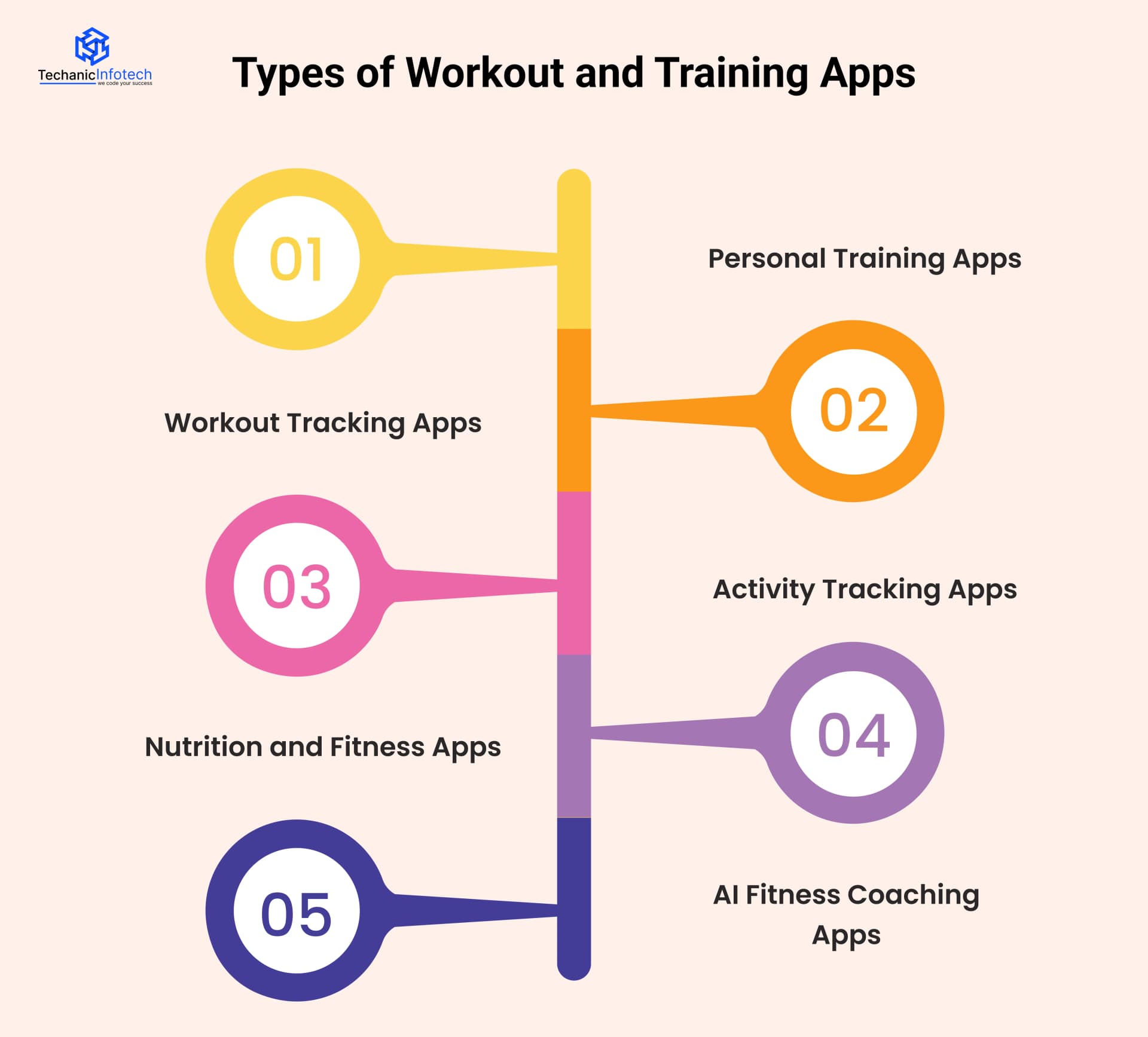
These apps simulate the experience of working with a professional trainer. Users receive guided workout sessions, structured fitness programs, and progress monitoring.
Trainers can also create personalized training plans based on user goals, fitness level, and performance data. This model is popular in personal training app development because it allows users to receive professional guidance from anywhere.
Workout tracking apps focus on monitoring exercise routines and physical progress.
Users can log workouts, track sets and repetitions, measure calories burned, and analyze performance over time.
These apps play a key role in workout tracking app development, helping users stay motivated and improve their fitness consistency.
Activity tracking apps monitor daily movement such as steps walked, distance run, and calories burned. These apps often integrate with GPS and wearable devices to collect real-time fitness data and provide accurate health insights.
These apps combine workout tracking with nutrition management. Users can track calorie intake, create meal plans, and monitor dietary goals alongside their fitness routines.
AI-powered apps analyze user data to create personalized workout recommendations. These platforms adjust training intensity and suggest exercises automatically, making them a growing trend in AI fitness workout app development.
When planning training app development features, you should focus on both user experience and performance tracking.
Here are the key features every fitness app should include.
User Registration and Profiles: Users should be able to create profiles with personal details such as age, weight, fitness goals, and activity level. This information helps in generating personalized workout plans.
Workout Plans and Programs: The app should offer multiple training programs, including strength training, cardio workouts, flexibility exercises, and endurance routines.
Progress Tracking: Tracking user progress is essential for engagement. The app should display metrics such as calories burned, workout duration, steps, and improvement over time.
Video Tutorials and Exercise Guides: Interactive video content helps users perform exercises correctly and reduces the risk of injury.
Workout Scheduler: A scheduling feature allows users to set workout reminders and manage their training routines.
Integration with Wearables: Connecting the app with devices like smartwatches and fitness trackers improves accuracy in data tracking.
AI-Based Recommendations: Advanced AI fitness app development includes smart suggestions based on user performance, fitness goals, and workout history.
Social and Community Features: Users enjoy sharing achievements, participating in challenges, and engaging with a fitness community.
In-App Purchases and Subscription Plans: Many fitness apps generate revenue through premium workout plans, personalized coaching, and exclusive content.
Building a successful fitness platform requires more than just adding workout videos and tracking features.
A well-planned fitness training app development process ensures that the application provides real value to users while remaining scalable and engaging. From understanding user needs to integrating wearable devices and AI-based recommendations, every stage plays a critical role in creating a reliable digital fitness solution.
Below is a detailed step-by-step process businesses should follow:
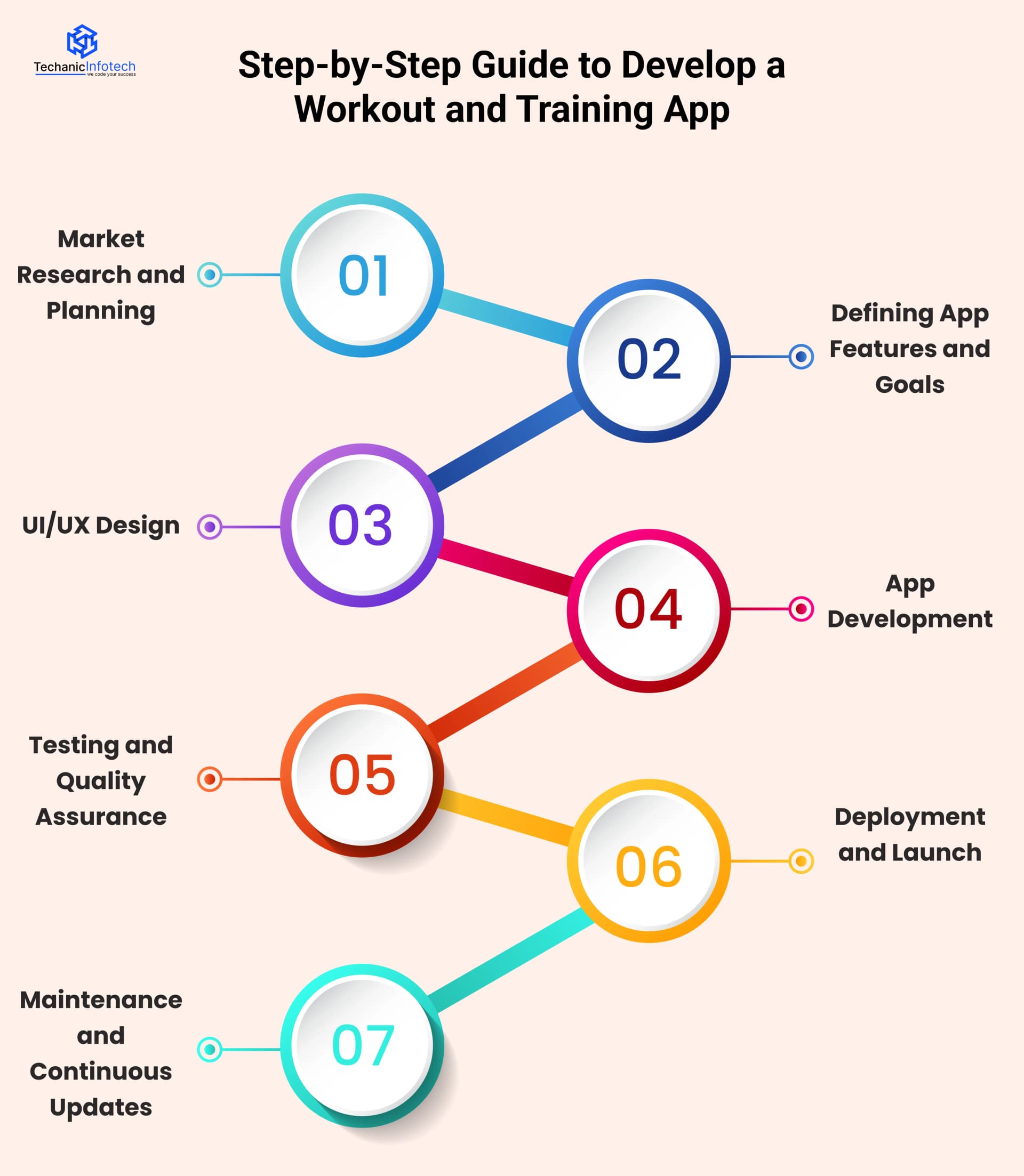
The first step in mobile app development is understanding the market and identifying the target audience. Fitness apps serve different types of users, such as beginners, athletes, gym members, or people focusing on home workouts.
Businesses must analyze existing fitness apps to understand what features users expect and where there are gaps in the market.
During this stage, companies should study competitor platforms like workout tracking apps, home workout apps, and personal trainer apps. Analyzing user reviews, ratings, and feature sets helps identify what works well and what users feel is missing.
For example, some users may want better progress tracking, while others may prefer personalized training plans. Market research also helps define the business model, monetization strategy, and the overall vision for the app.
Once research is complete, the next step is defining the app’s core mobile app features and functionality. Businesses need to decide whether the app will focus on workout tracking app development, guided workout programs, or a complete personal fitness ecosystem.
At this stage, product teams create a feature roadmap that outlines essential capabilities such as workout plans, exercise tracking, progress analytics, and wearable device integration.
If the goal is to build a personal training app development platform, features like trainer dashboards, live coaching sessions, and custom training plans may also be included.
Defining the scope early helps avoid unnecessary development complexity and ensures the project stays aligned with business goals.
User experience is extremely important in workout and training apps because users interact with the app frequently during exercise sessions. The interface should be simple, visually appealing, and easy to navigate, even when users are in the middle of a workout.
Design teams typically create wireframes and prototypes that show how users will interact with the app. For example, users should be able to quickly start a workout session, log exercises, or view their progress without navigating through multiple screens.
Fitness apps also benefit from motivational design elements such as progress charts, achievements, and daily reminders. A well-designed interface helps users stay engaged and encourages consistent app usage.
This stage involves building the technical components of the application. A fitness app development company creates both the frontend interface that users interact with and the backend infrastructure that manages data and app functionality.
During custom workout app development, developers integrate several important features such as exercise tracking, progress analytics, and personalized workout plans. Many fitness apps also connect with wearable devices to collect health data such as heart rate, steps, and calories burned.
Backend systems are built to manage user profiles, workout history, performance data, and subscription services. APIs may also be integrated to support third-party services such as wearable devices or payment systems.
Before launching the app, thorough app testing is necessary to ensure it performs reliably across different devices and operating systems. Fitness apps must handle large amounts of user data, including workout logs and health metrics, so accuracy is critical.
Testing teams check various aspects such as performance, security, and user experience. They verify that workout tracking features record data correctly, wearable integrations function properly, and workout programs load smoothly.
This stage also helps identify bugs or technical issues that could affect the user experience.
Once testing is complete, the app is prepared for release on the Apple App Store and Google Play Store. Developers configure the server environment, finalize app store listings, and ensure that the application meets platform guidelines.
The launch stage often includes marketing activities such as influencer collaborations, fitness community promotions, and social media campaigns to attract early users.
A successful launch strategy helps generate initial downloads and build momentum for the app.
After launch, development does not stop.
Fitness apps require regular updates to maintain performance, fix bugs, and introduce new features. As user behavior changes and new fitness trends emerge, apps must evolve to remain competitive.
App maintenance strategies may include adding new workout programs, improving analytics dashboards, or integrating advanced features such as AI-powered coaching. Continuous improvements ensure that the app remains engaging and useful for users over time.
By following this structured approach, businesses can build scalable and user-focused workout applications that deliver real value in the growing digital fitness market.
Choosing the right workout app tech stack is essential for building a scalable, secure, and high-performing fitness platform. The app tech stack determines how well the app handles user data, integrates with wearable devices, and delivers real-time performance tracking.
Below are the commonly used technologies for developing fitness workout apps.
|
Technology Layer |
Tools / Technologies |
Purpose |
|
Frontend Development |
React Native, Flutter, Swift (iOS), Kotlin (Android) |
Used to build the user interface and ensure smooth performance across mobile devices. These technologies help create responsive and engaging workout app interfaces. |
|
Backend Development |
Node.js, Python, Django, Ruby on Rails |
Handles server-side operations such as user authentication, workout data processing, analytics, and API management. |
|
Database |
MongoDB, PostgreSQL, Firebase |
Stores user profiles, workout logs, progress data, and other application information securely. |
|
Cloud Services |
AWS, Google Cloud, Microsoft Azure |
Provides scalable infrastructure, data storage, and computing power for handling large numbers of users. |
|
Third-Party Integrations |
HealthKit, Google Fit, Wearable Device APIs, Payment Gateways |
Enables integration with fitness trackers, health monitoring tools, and payment systems for subscriptions and premium features. |
A well-planned technology stack ensures that the workout app can support real-time performance tracking, wearable integrations, and scalable user growth.
One of the most common questions businesses ask is about fitness app development costs. The cost depends on multiple factors, including features, platform, and development complexity.
A simple fitness tracker with basic workout logging and progress tracking features can cost between $20,000 and $40,000.
Apps with advanced features like workout plans, video tutorials, and wearable integrations may cost between $40,000 and $80,000.
Platforms with AI-based recommendations, real-time analytics, and personalized coaching can cost $80,000 to $150,000 or more.
Several elements influence the total workout app development cost:
Number of features
App platform (iOS, Android, or both)
UI/UX design complexity
Integration with wearables
Use of AI and machine learning
Maintenance and updates
Working with an experienced development team can help optimize cost and improve development efficiency.
A successful fitness app should not only provide value to users but also generate sustainable revenue for the business. During workout and training app development, it is important to plan monetization strategies that align with the user experience while supporting long-term growth.
Below are some common ways fitness apps generate revenue.
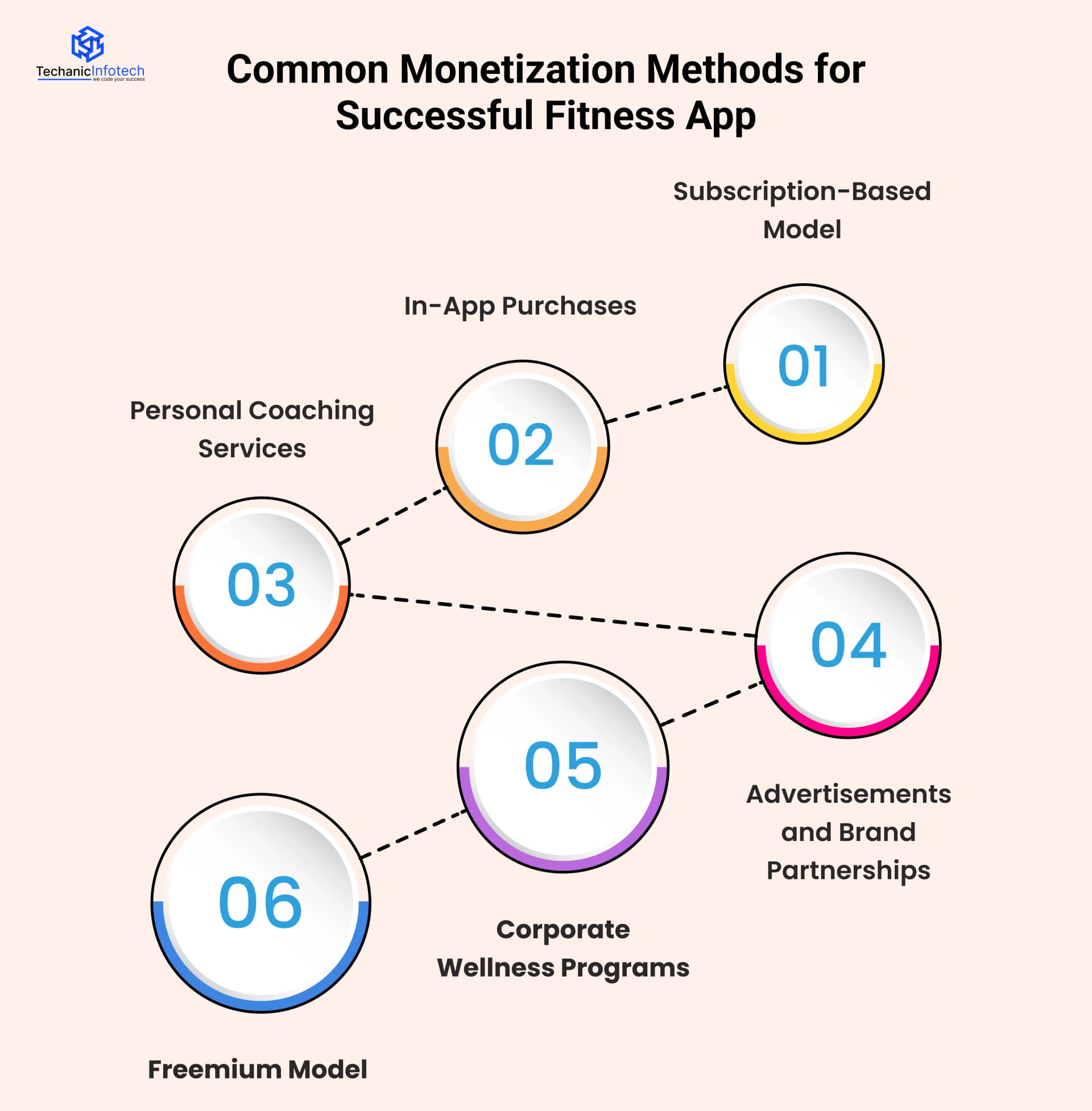
One of the most popular monetization strategies is offering monthly or yearly subscription plans. Users can access premium workout programs, advanced tracking features, and personalized coaching by subscribing to the app. This model provides consistent recurring revenue for the platform.
Fitness apps can offer additional content through in-app purchases. Users may buy specialized workout programs, nutrition guides, meditation sessions, or premium exercise plans tailored to their goals.
Many platforms allow certified trainers to offer one-on-one coaching sessions through the app. Users can pay for personalized workout plans, live training sessions, or direct consultations with professional trainers.
Fitness apps can generate revenue by displaying advertisements from health and wellness brands. Partnerships with fitness equipment companies, supplement brands, or sportswear companies can also create additional income opportunities.
Businesses increasingly invest in employee wellness programs. Fitness apps can partner with organizations to provide customized health and workout programs for employees, generating enterprise-level revenue.
Many apps offer basic features for free while charging for advanced functionality such as AI coaching, detailed analytics, or exclusive workout programs. This model helps attract users while encouraging upgrades to premium plans.
The demand for digital fitness solutions is growing rapidly, making workout and training app development an excellent opportunity for startups and businesses.
By incorporating the right training app development features, leveraging advanced technologies, and focusing on user experience, companies can build powerful platforms that help users achieve their fitness goals.
Whether you are building a workout tracking app or exploring AI fitness workout app development, understanding the development process and cost structure will help you make informed decisions.
With the right workout app tech stack, strategic planning, and innovative features, businesses can create engaging fitness platforms that stand out in the competitive market.
As the industry continues to evolve, embracing the latest workout app development trends in 2026 will play a key role in building successful and future-ready fitness applications.
The workout app development cost usually ranges from $20,000 to $150,000 or more, depending on the features, platform (iOS or Android), and complexity of the application.
The development timeline typically ranges between 2 to 6 months depending on the app’s functionality, integrations, and design complexity.
Common training app development features include workout plans, exercise tracking, performance analytics, wearable device integration, user profiles, and subscription management.
Yes, most fitness apps integrate with platforms like Apple HealthKit, Google Fit, and wearable device APIs to track steps, heart rate, and other health metrics.
A typical workout app tech stack may include technologies like React Native, Flutter, Node.js, Python, MongoDB, AWS, and wearable device APIs to ensure scalability and performance.


Bharat Sharma is the CTO of Techanic Infotech, bringing deep technical expertise in software architecture, mobile app development, and scalable system design. He leads the engineering team with a strong focus on innovation, performance, and security.