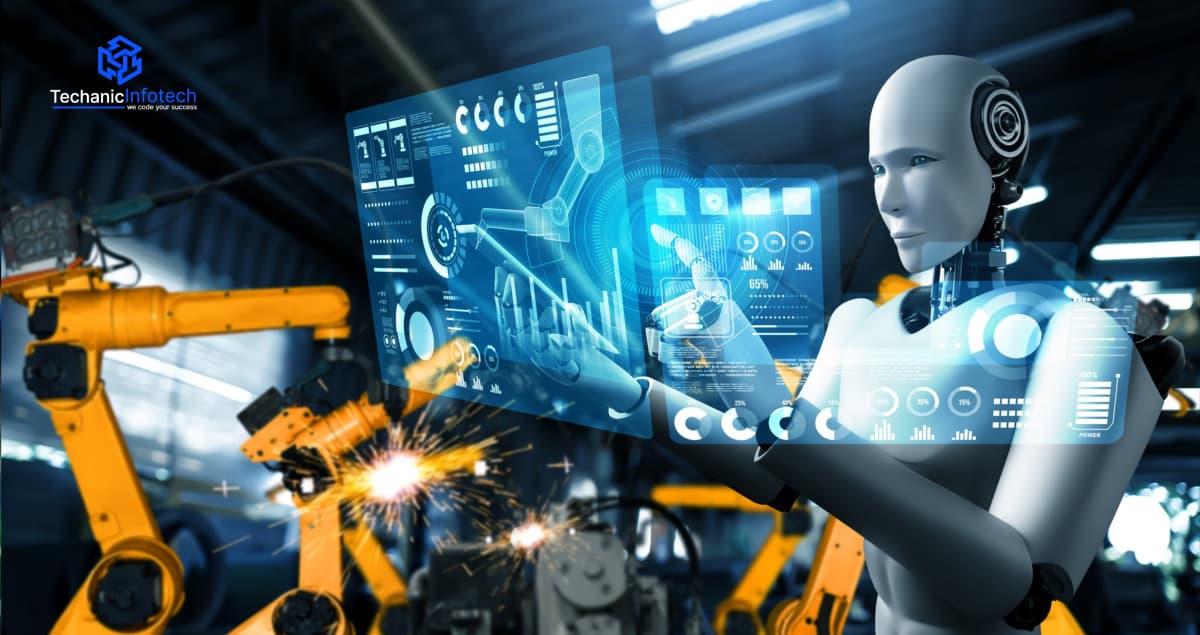
Artificial Intelligence (AI) is rapidly transforming the manufacturing industry, ushering in a new era of smart, efficient, and data-driven production.
By integrating advanced technologies such as machine learning, computer vision, and predictive analytics, manufacturers can optimize operations, reduce costs, and improve product quality.
AI enables real-time decision-making, enhances supply chain management, and minimizes downtime through predictive maintenance.
From automated inspection systems to intelligent robotics on the factory floor, its applications are vast and impactful.
As global competition intensifies, adopting AI is no longer optional but essential for innovation and growth.
This article explores the key benefits, practical use cases, and real-world examples of AI in manufacturing.
Artificial Intelligence in manufacturing refers to the use of advanced data-driven technologies to enhance production processes, improve efficiency, and enable smarter decision-making across operations, systems, and supply chains.
AI in manufacturing is powered by Machine Learning (ML) for predictive insights, Computer Vision for automated inspection and defect detection, and Robotics for precision tasks and assembly.
AI connects with existing systems such as ERP, MES, and IoT devices, enabling seamless data flow across machines, sensors, and software.
This integration supports real-time monitoring, predictive maintenance, and end-to-end process optimization.
Traditional automation operates on fixed rules and pre-programmed logic, while AI adapts dynamically using data.
AI-driven systems can learn from patterns, handle variability, and improve over time, making them more flexible and efficient.
AI leverages large volumes of production data to identify inefficiencies, forecast demand, and optimize resource allocation, enabling smarter and faster decision-making.
AI systems assist workers by automating repetitive tasks, providing insights, and improving safety, allowing humans to focus on complex and strategic activities.
AI solutions can easily scale across multiple production lines and adapt to changing product requirements, supporting mass customization and agile manufacturing.
AI delivers significant advantages in manufacturing by improving efficiency, reducing costs, enhancing product quality, and enabling predictive insights that help businesses optimize operations and stay competitive in evolving markets.
AI streamlines manufacturing processes by analyzing real-time data, identifying bottlenecks, and optimizing workflows.
It enables faster production cycles, reduces manual intervention, and ensures better resource utilization, ultimately improving overall productivity and operational performance across the factory floor.
AI uses sensor data and machine learning models to predict equipment failures before they occur.
This reduces unexpected downtime, extends machinery lifespan, and lowers maintenance costs by allowing manufacturers to schedule repairs proactively rather than reacting to breakdowns.
With AI-powered computer vision and analytics, manufacturers can detect defects and inconsistencies in real time.
This ensures consistent quality, reduces waste, and enhances customer satisfaction by delivering products that meet strict standards and specifications.
AI helps reduce costs by optimizing energy usage, minimizing material waste, and improving labor efficiency.
Automated processes and predictive insights lower operational expenses, making production more economical while maintaining high output and quality levels.
AI improves workplace safety by monitoring environments, identifying potential hazards, and enabling predictive risk assessment.
It can automate dangerous tasks and provide real-time alerts, reducing accidents and ensuring a safer working environment for employees.
AI enhances supply chain efficiency by forecasting demand, managing inventory, and optimizing logistics.
It improves coordination between suppliers and manufacturers, reduces delays, and ensures the timely delivery of materials and finished goods.
AI enables quick and informed decision-making by analyzing large volumes of data in real time.
It provides actionable insights, allowing managers to respond promptly to changes, improve planning, and make strategic decisions with greater accuracy and confidence.
AI is applied across various manufacturing functions, from predictive maintenance to quality control, helping organizations automate processes, reduce waste, and improve decision-making through real-time data and intelligent systems.
AI analyzes sensor data from machinery to predict equipment failures before they occur.
This reduces downtime, extends asset life, and lowers maintenance costs by enabling timely, condition-based servicing instead of relying on fixed maintenance schedules.
AI-powered vision systems inspect products in real time, identifying defects with high accuracy.
This improves product consistency, reduces waste, and enhances customer satisfaction by ensuring only high-quality items pass through the production line.
AI uses historical sales data, market trends, and external factors to predict future demand.
Accurate forecasts help manufacturers plan production efficiently, avoid overproduction or stockouts, and align supply chain operations with market needs.
AI optimizes inventory levels by analyzing demand patterns, lead times, and supply variability.
It ensures the right materials are available at the right time, minimizing storage costs, reducing waste, and improving overall supply chain efficiency.
AI monitors and analyzes production processes to identify inefficiencies and bottlenecks.
It recommends adjustments in real time, improving throughput, reducing waste, and enhancing overall operational performance across manufacturing systems.
AI-driven robots perform repetitive and complex tasks with precision and speed.
They improve productivity, reduce human error, and enhance workplace safety by handling hazardous operations, while enabling flexible automation in dynamic manufacturing environments.
AI tracks and analyzes energy usage across manufacturing facilities to identify inefficiencies.
It suggests optimal energy-use patterns, reduces costs, and supports sustainability goals by minimizing waste and lowering overall environmental impact.
Implementing artificial intelligence in manufacturing offers significant benefits, including improved efficiency, automation, and enhanced decision-making.
However, organizations face several challenges that must be addressed with effective solutions to ensure successful and sustainable AI adoption.
Implementing artificial intelligence in manufacturing demands substantial upfront capital investment in advanced hardware, specialized software, infrastructure upgrades, and skilled personnel, making it difficult for small and medium enterprises to adopt quickly.
Solution: Organizations can overcome this by adopting phased implementation strategies, leveraging cloud-based AI mobile app development services, forming strategic partnerships, and utilizing government subsidies or financial incentives to distribute costs and demonstrate return on investment gradually.
AI systems rely heavily on large volumes of high-quality, structured, and consistent data, but manufacturing environments often face issues like incomplete, inconsistent, or unorganized data, limiting the effectiveness and accuracy of AI models.
Solution: Top AI app development companies should invest in robust data management practices, including data cleaning, standardization, integration of IoT devices, and establishing strong data governance frameworks to ensure the availability of accurate, consistent, and reliable datasets.
Many manufacturing firms operate on outdated legacy systems that lack compatibility with modern AI technologies, creating difficulties in seamless integration, data exchange, and real-time analytics, ultimately slowing down digital transformation efforts.
Solution: Businesses can implement middleware solutions, APIs, and adopt gradual modernization approaches, enabling AI tools to integrate with existing systems without complete replacement, thereby ensuring continuity, cost efficiency, and minimal disruption.
The adoption of AI technologies requires specialized technical knowledge and skills, which many existing employees may lack, creating a significant workforce gap and resistance to adopting new digital tools and processes.
Solution: Organizations should focus on continuous training, upskilling programs, workshops, and collaborations with educational institutions, while also hiring AI chatbot developers to support teams and facilitate smoother adoption of advanced technologies.
Increased connectivity of AI systems and industrial networks exposes manufacturing operations to higher risks of cyberattacks, data breaches, and unauthorized access, potentially disrupting production processes and compromising sensitive business information.
Solution: Companies must implement strong cybersecurity measures such as data encryption, multi-factor authentication, regular system audits, network monitoring, and employee awareness programs to protect infrastructure and ensure secure AI deployment.
Successful AI implementation in manufacturing requires careful planning, clear strategies, and continuous improvement.
Focusing on key factors ensures efficient adoption, optimized performance, and long-term operational success.
Organizations must establish well-defined, strategic objectives before implementing AI in manufacturing.
Clearly articulated, measurable goals aligned with business priorities help guide deployment, optimize resource utilization, ensure focused execution, and enable accurate assessment of AI-driven performance outcomes.
Selecting the most suitable AI tools and technologies is critical for successful implementation.
Organizations should carefully evaluate scalability, interoperability, cost-effectiveness, and usability, ensuring that chosen solutions align with operational requirements and integrate seamlessly with existing manufacturing infrastructure.
A comprehensive and well-structured data strategy is fundamental to AI success.
Manufacturers must emphasize efficient data collection, storage, processing, and governance, ensuring data accuracy, consistency, security, and accessibility to support reliable insights and effective AI-driven decision-making.
A skilled workforce of AI tools used in software development is essential for leveraging AI technologies effectively.
Organizations should invest in continuous training, reskilling, and upskilling initiatives, fostering technical expertise, encouraging adaptability, and enabling employees to collaborate efficiently with advanced AI-driven systems and processes.
Successful AI implementation requires ongoing monitoring, evaluation, and refinement.
Organizations must continuously track system performance, identify inefficiencies, update algorithms with new data, and implement improvements to ensure adaptability, sustained efficiency, and long-term value generation in manufacturing operations.
Artificial Intelligence is revolutionizing manufacturing by enhancing efficiency, reducing the cost of voice AI development, and improving product quality through data-driven decision-making.
Key technologies like machine learning, computer vision, and robotics enable predictive maintenance, process optimization, and real-time monitoring.
AI-driven systems outperform traditional automation by adapting to changing conditions and continuously improving.
While challenges such as high investment, data quality, and workforce skills exist, the long-term benefits outweigh the barriers. As Industry 4.0 evolves, AI adoption is becoming essential for competitiveness.
Manufacturers that strategically implement AI will gain agility, innovation, and sustainable growth, positioning themselves as leaders in an increasingly digital and automated industrial landscape.
AI in manufacturing refers to the use of advanced algorithms and technologies to automate processes, analyze data, and improve decision-making across production and operations.
AI improves efficiency by optimizing workflows, reducing downtime through predictive maintenance, and enabling real-time monitoring and faster decision-making.
Key benefits include increased productivity, cost reduction, improved product quality, enhanced safety, predictive maintenance, and better supply chain management.
Predictive maintenance uses AI and sensor data to anticipate equipment failures before they occur, allowing timely repairs and minimizing unexpected downtime.
AI uses computer vision and data analytics to detect defects in real time, ensuring consistent product quality and reducing waste.
Initial implementation can be costly, but long-term savings from efficiency, reduced downtime, and improved quality often justify the investment.
Yes, small manufacturers can adopt AI through scalable and cloud-based solutions, making it more accessible and cost-effective.
Industries such as automotive, electronics, pharmaceuticals, and food and beverage widely use AI for automation, quality control, and supply chain optimization.
Common challenges include high initial costs, data quality issues, integration with legacy systems, workforce skill gaps, and cybersecurity risks.
The future includes smart factories, autonomous systems, digital twins, and stronger human-AI collaboration, driving innovation and highly flexible production systems.


Bharat Sharma is the CTO of Techanic Infotech, bringing deep technical expertise in software architecture, mobile app development, and scalable system design. He leads the engineering team with a strong focus on innovation, performance, and security.