Music Streaming App Development
AI Music Streaming App Development for NextGen User Experiences
February 9, 2026
February 9, 2026
Ever wondered how your music app seems to know exactly what you want to listen to next? That’s the power of AI in music streaming apps at work.
Today, artificial intelligence in music apps is changing the way users discover, enjoy, and connect with music.
From personalized playlists to mood-based recommendations, AI music streaming technology helps platforms understand listener behavior better than ever.
With machine learning in music streaming, apps analyze listening habits to improve music recommendation algorithms and deliver smarter suggestions.
This level of AI personalization in music apps is what turns regular platforms into AI-powered music apps and truly smart music streaming platforms.
In this blog, we’ll explore how AI is reshaping music streaming and why it matters for users and businesses alike.
Music streaming platforms are rapidly adopting AI because listener expectations have changed. Users no longer want to scroll endlessly to find songs. They expect apps to understand their taste and deliver the right music instantly.
This is where AI in music streaming apps plays a major role.
One of the biggest reasons platforms use artificial intelligence in music apps is personalization. With millions of tracks available, AI helps apps analyze listening behavior, search history, skips, and likes to deliver accurate recommendations.
Advanced music recommendation make discovery easier and keep users engaged for longer periods.
Another key reason is user retention. AI-driven music apps use smart notifications, personalized playlists, and mood-based suggestions to keep listeners coming back. Through machine learning, platforms continuously learn from user interactions and improve recommendations over time.
Additionally, AI allows platforms to create unique user experiences, making them stand out in a competitive market.
As a result, smart music platforms use AI not just to improve listening experiences, but also to grow faster, increase engagement, and stay relevant in an evolving digital music landscape.
Artificial intelligence is no longer a background feature in music apps, it’s at the core of how modern platforms work.
From discovering new songs to creating the perfect playlist, AI in music apps is shaping every part of the listening experience.
Below are the key ways artificial intelligence in music apps is being used today.
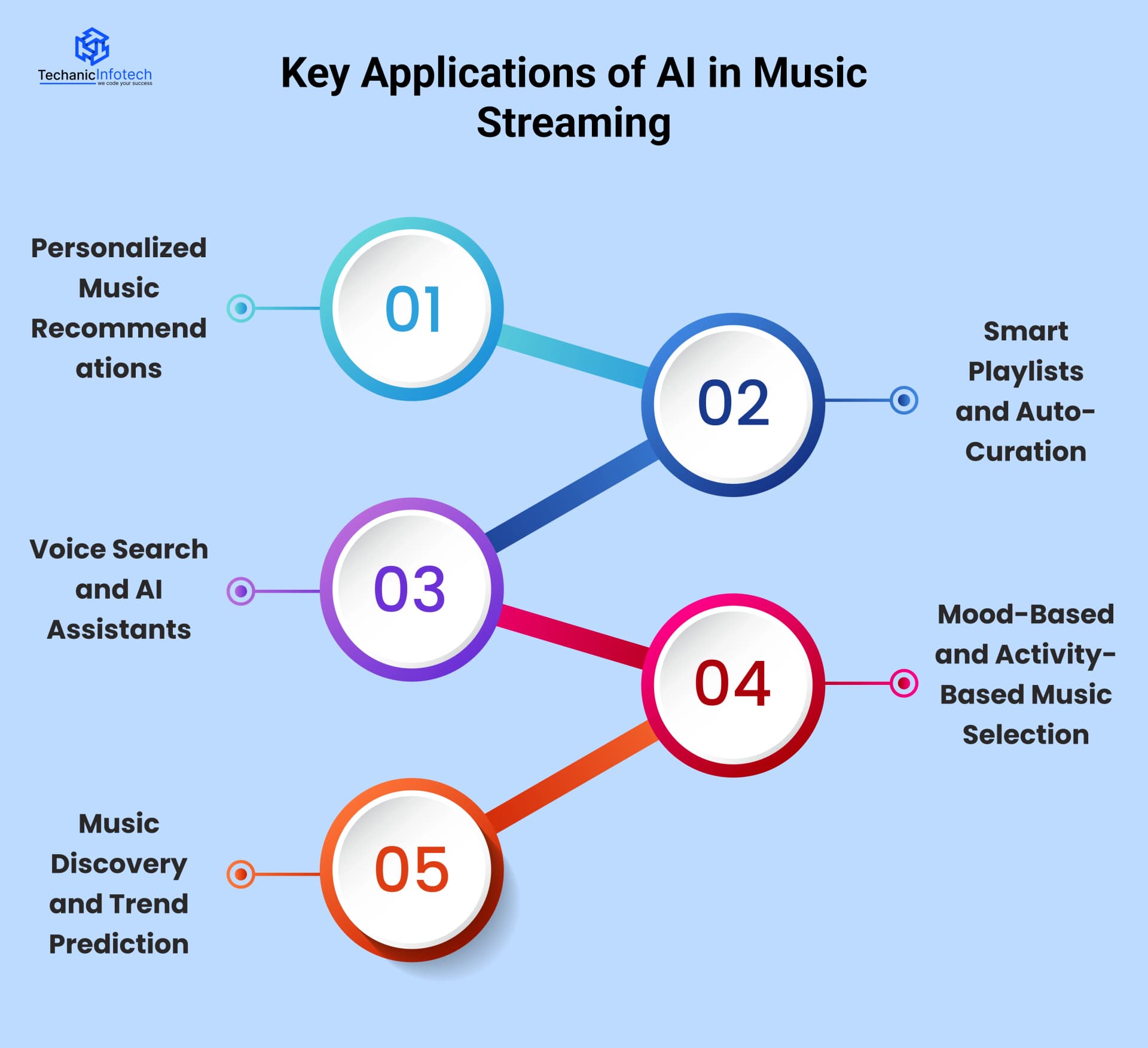
Personalization is one of the most important applications of music streaming app development. Music apps analyze what users listen to, how often they skip songs, which tracks they save, and even the time of day they listen.
Using ML in music streaming apps, apps continuously learn user preferences and improve recommendations.
These recommendations help users discover songs and artists that match their taste, even if they’ve never heard of them before.
This level of AI personalization is makes listening feel more personal and keeps users engaged longer.
Smart playlists are another powerful feature of AI-powered music apps. Instead of manually creating playlists, users get automatically curated lists based on their listening habits.
AI can build playlists for workouts, relaxation, travel, or even specific genres.
Through AI music streaming technology, these playlists update regularly, adding fresh tracks while removing songs users no longer enjoy.
This automatic curation saves time for listeners and ensures they always have something new to explore on smart music streaming platforms.
Voice search has become increasingly popular, especially with smart devices and wearables. With artificial intelligence in music apps, users can search for songs using natural language instead of typing exact titles.
For example, users can say things like “play relaxing music” or “play my favorite workout songs.” AI understands intent and context, making search more intuitive.
This feature improves accessibility and makes AI-driven music apps easier to use while multitasking.
One of the most exciting uses of AI in music apps is mood and activity-based music selection. AI analyzes listening patterns, time of day, and user behavior to suggest music that matches emotions or activities.
Whether someone is feeling stressed, energetic, or relaxed, AI personalization in music apps helps deliver the right soundtrack. Apps can also recommend music for activities like studying, running, driving, or sleeping.
This emotional and contextual understanding makes music feel more connected to daily life.
AI also plays a major role in helping users discover new music and predicting trends. Using ML in music apps, platforms analyze global listening data to identify rising artists, popular genres, and emerging music styles.
These insights help apps promote new tracks to the right audience at the right time. Music algorithms not only benefit listeners but also help artists reach users who are most likely to enjoy their music.
This makes smart music platforms more dynamic and future-ready.
Together, these applications show how deeply AI in music streaming apps is transforming the way people listen, discover, and connect with music.
Artificial intelligence has changed how music apps work for both listeners and platforms.
While users enjoy more personalized and convenient music experiences, streaming platforms benefit from better engagement, smarter insights, and long-term growth.
AI-powered app development has completely changed how users experience music streaming. With AI in music streaming apps, listeners enjoy a more personal, convenient, and engaging journey.
Here are the key benefits for users:
Highly personalized listening experience: Through AI personalization in music apps, users receive song and playlist recommendations based on their taste, listening history, and behavior.
Faster music discovery: Advanced music recommendation algorithms help users discover new songs, artists, and genres without spending time searching manually.
Mood and activity-based suggestions: AI understands context and emotions, recommending music for workouts, relaxation, travel, focus, or sleep.
Smart playlists that update automatically: With AI-powered music apps, playlists refresh regularly, adding new tracks users are likely to enjoy.
Better search with voice commands: Voice search powered by artificial intelligence in music apps allows users to find music using simple, natural language.
Less repetition, more variety: ML in music streaming reduces repetitive song suggestions and keeps the listening experience fresh.
Hands-free and accessible experience: AI assistants make music apps easier to use while driving, exercising, or multitasking.
AI doesn’t just benefit listeners, it plays a major role in helping platforms grow, compete, and innovate. Here’s how smart music streaming platforms benefit from AI:
Higher user engagement and retention: Personalized recommendations keep users active longer, increasing session time and reducing churn.
Improved content organization: AI music streaming technology helps platforms automatically tag, classify, and manage massive music libraries.
Data-driven decision making: AI analyzes listening trends and user behavior, helping platforms make smarter content and marketing decisions.
Better artist promotion and discovery: AI connects new and emerging artists with the right audience using predictive insights.
Scalable personalization: Platforms can deliver unique experiences to millions of users at scale using machine learning.
Increased revenue opportunities: Better personalization improves ad targeting, subscription upgrades, and overall monetization.
Competitive advantage: Platforms using advanced AI-powered music apps stand out in a crowded market by offering smarter and more engaging experiences.
Overall, AI creates a win-win situation, users enjoy smarter music experiences, while platforms grow faster and operate more efficiently.
Machine learning plays a central role in how modern music streaming apps work. It is the technology that allows apps to learn from user behavior and improve over time.
With machine learning in music streaming, platforms can understand listening patterns, preferences, and habits to deliver better experiences.
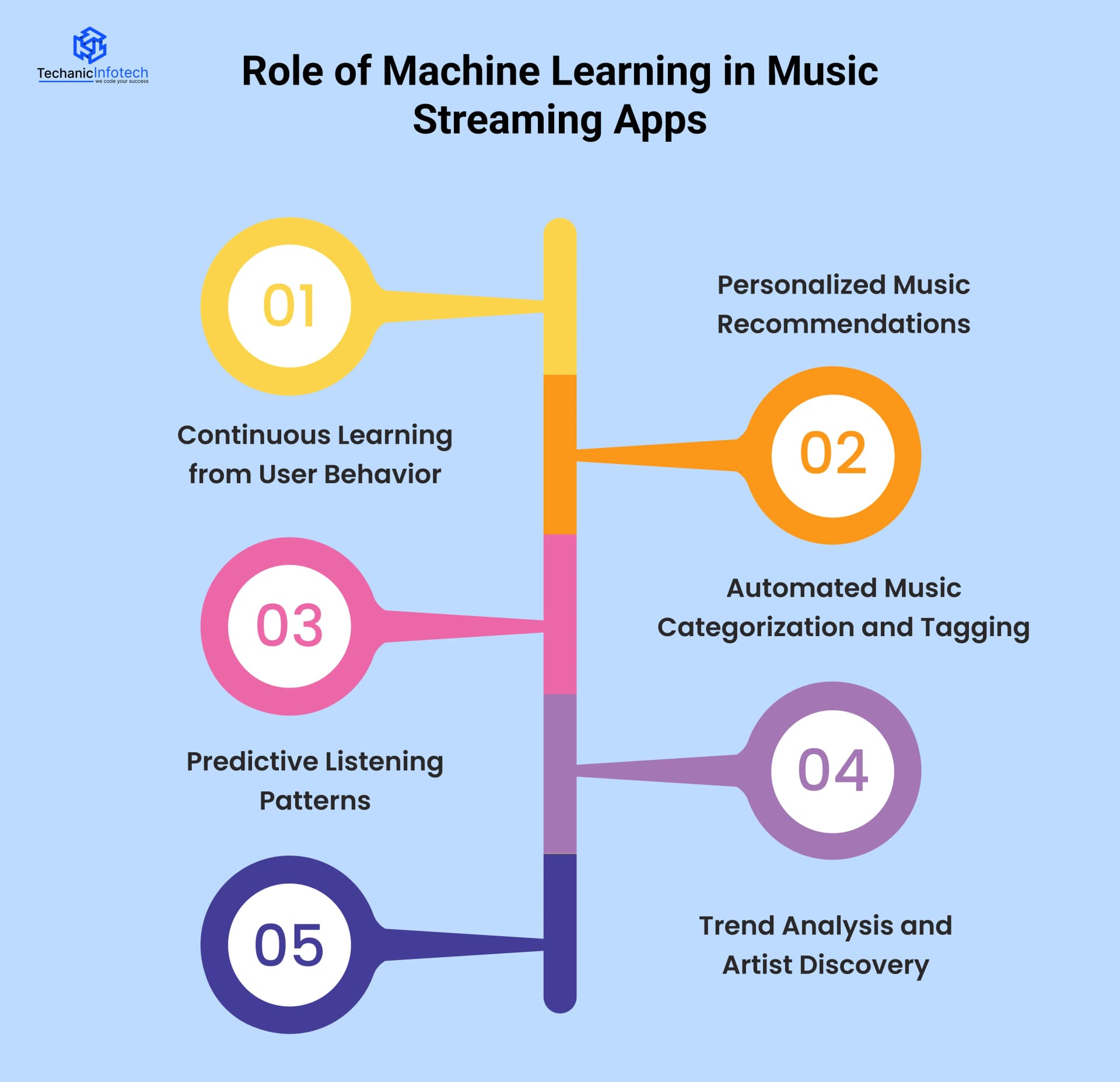
By analyzing data such as liked songs, skipped tracks, playlists, and listening duration, machine learning models power advanced music recommendation algorithms.
These algorithms continuously adjust suggestions as user tastes change, making recommendations more accurate and relevant.
Machine learning allows music streaming apps to learn continuously from how users interact with the platform.
Every action, such as playing a song, skipping a track, liking a playlist, or replaying a favorite, provides valuable data.
Using machine learning in music streaming, apps analyze this behavior to understand changing user preferences over time.
This process improves search accuracy and helps create smarter playlists. Automated tagging also supports better AI in music streaming apps by ensuring content is organized correctly, allowing users to discover music easily and enabling smart music streaming platforms to scale efficiently.
Machine learning can predict what a listener might want to hear next based on past activity, time of day, or even seasonal trends. This level of AI personalization in music apps keeps users engaged and encourages longer listening sessions.
Machine learning is also used for trend analysis and artist discovery. By studying global listening data, platforms can identify emerging artists and popular genres early.
This benefits both listeners and creators by promoting fresh content.
Top music streaming platforms rely on artificial intelligence to deliver smarter, faster, and more personalized listening experiences.
Below are the most relevant AI-powered features commonly used by leading music apps today.
Personalized Recommendations: AI analyzes listening history, likes, skips, and search behavior to suggest songs, albums, and artists that match individual taste.
Smart Playlists: Automatically curated playlists such as daily mixes, genre-based lists, or discovery playlists that update regularly based on user behavior.
Mood and Context Detection: AI recommends music based on mood, time of day, location, or activity like workouts, studying, or relaxation.
Voice Search and Voice Assistants: Enables users to search and play music using natural voice commands, improving accessibility and hands-free usage.
Audio Analysis and Song Tagging: Machine learning analyzes tempo, rhythm, energy, and genre to categorize tracks accurately and improve discovery.
Music Discovery Algorithms: AI helps users discover new artists and tracks by identifying patterns and matching similar listener profiles.
Personalized Notifications: Sends smart alerts for new releases, playlist updates, or concerts based on user interests.
Fraud and Streaming Abuse Detection: AI monitors unusual activity to protect platforms from fake streams and manipulation.
These AI-powered mobile app features turn regular platforms into smart music streaming platforms, improving user engagement while helping apps scale efficiently in a competitive market.
Artificial intelligence is no longer just a concept in music streaming, top platforms are using it every day to improve user experience, boost engagement, and personalize listening.
Here are real-world examples of how popular music apps use AI to stay ahead of the curv
Spotify uses advanced AI in music streaming apps to power features like Discover Weekly and Daily Mix.
These playlists analyze listening history, skips, likes, and contextual data to deliver highly relevant track suggestions tailored to each user’s taste.
This level of AI personalization in music apps keeps users engaged week after week.
Apple Music uses machine learning to refine recommendations and suggest playlists based on mood, genre preferences, and listening patterns.
By combining human editorial curation with music recommendation algorithms, Apple Music enhances both discovery and user satisfaction.
YouTube Music leverages AI to recommend songs based on listening behavior, time of day, and even user activity.
The platform’s AI analyzes visual and audio content across its broader ecosystem to suggest relevant music, making it one of the smarter AI-powered music apps available.
With built-in AI assistants like Alexa, Amazon Music offers robust voice search and AI assistants that understand natural language requests.
Users can ask for songs by mood, activity, or lyrics, making the streaming experience more interactive and hands-free.
Deezer’s Flow feature uses machine learning to blend favorite tracks with new recommendations in a continuous personalized station.
It adapts over time, learning from how users interact with the music.
SoundCloud applies AI to identify rising trends, new artists, and genre shifts.
Its recommendation engine helps listeners explore emerging music and gives creators insights into how their tracks resonate with audiences.
Adding AI to a music app doesn’t mean rebuilding everything from scratch. You can introduce AI features gradually, based on your goals and budget.
Below is a simple, step-by-step approach to help you do it the right way.
Start by deciding why you want AI.
Do you want better music recommendations, smart playlists, voice search, or mood-based music?
Clear goals help you choose the right AI features instead of adding unnecessary complexity.
AI works on data. Your app should be able to collect data like listening history, likes, skips, search behavior, and playlist activity.
Make sure this data is stored securely and follows privacy rules. Clean and structured data is the foundation of effective AI.
Select AI features that match your app’s stage. For early-stage apps, start with basic recommendations or smart playlists.
Advanced apps can add mood detection, voice search, or trend prediction later. This phased approach keeps mobile app development manageable.
Implement machine learning models that analyze user behavior and music patterns. These models help power music recommendations, playlist curation, and discovery.
You can use pre-built models or customize them based on your app’s needs.
To improve music categorization, use AI to analyze audio features like tempo, genre, mood, and energy.
This helps your app tag songs accurately and improve search and discovery results.
Connect AI outputs to the user interface. This is where AI personalization in music apps happens, showing recommended tracks, playlists, and notifications based on individual preferences.
AI improves over time. Test recommendations, track user engagement, and refine models regularly. Continuous learning ensures your app stays relevant as user tastes change.
Once core AI features perform well, expand to advanced use cases like trend prediction, artist insights, or voice assistants. Scaling gradually helps control music streaming app development cost and performance.
By following these steps, you can build a smart, user-focused, and scalable AI-powered music app.
Techanic Infotech helps businesses turn music app ideas into smart, AI-powered platforms that users love.
From personalized recommendations and smart playlists to advanced analytics, the music streaming app development company focuses on building AI features that actually improve the listening experience.
With experience in AI music streaming technology and app development, Techanic Infotech follows a clear, step-by-step approach to keep development smooth and cost-effective.
Whether you’re launching a new music app or upgrading an existing one with AI, they help you choose the right features, technologies, and roadmap to build a scalable and future-ready music streaming app.
Artificial intelligence is reshaping how music streaming apps work, making them smarter, more personal, and more engaging.
From accurate music recommendations and smart playlists to mood-based listening and voice search, AI helps apps understand users better and deliver what they truly enjoy.
At the same time, AI enables music platforms to improve engagement, discover new trends, and scale efficiently. As listener expectations continue to rise, using AI is no longer optional, it’s essential. Businesses that adopt AI in their music apps can create richer user experiences, stand out in a competitive market, and build future-ready music streaming platforms.
AI in music streaming apps refers to the use of artificial intelligence to analyze user behavior, music patterns, and listening habits to deliver personalized recommendations, playlists, and smarter search experiences.
AI uses machine learning to study likes, skips, listening time, and preferences. These insights power music recommendation algorithms that suggest songs and artists users are most likely to enjoy.
Yes. AI helps identify listening trends and matches emerging artists with the right audience, improving music discovery for both listeners and creators.
Most music apps use secure data practices and follow privacy regulations. AI systems are designed to personalize experiences while protecting user data.
The cost depends on the features you want, such as recommendations, voice search, or mood detection. Basic AI features can be added at a lower cost, while advanced AI capabilities require a higher investment.


Abhishek Jangid is the CEO of Techanic Infotech, with extensive experience in mobile app and web development. He specializes in helping businesses turn innovative ideas into scalable digital solutions through strategic planning and modern technology.