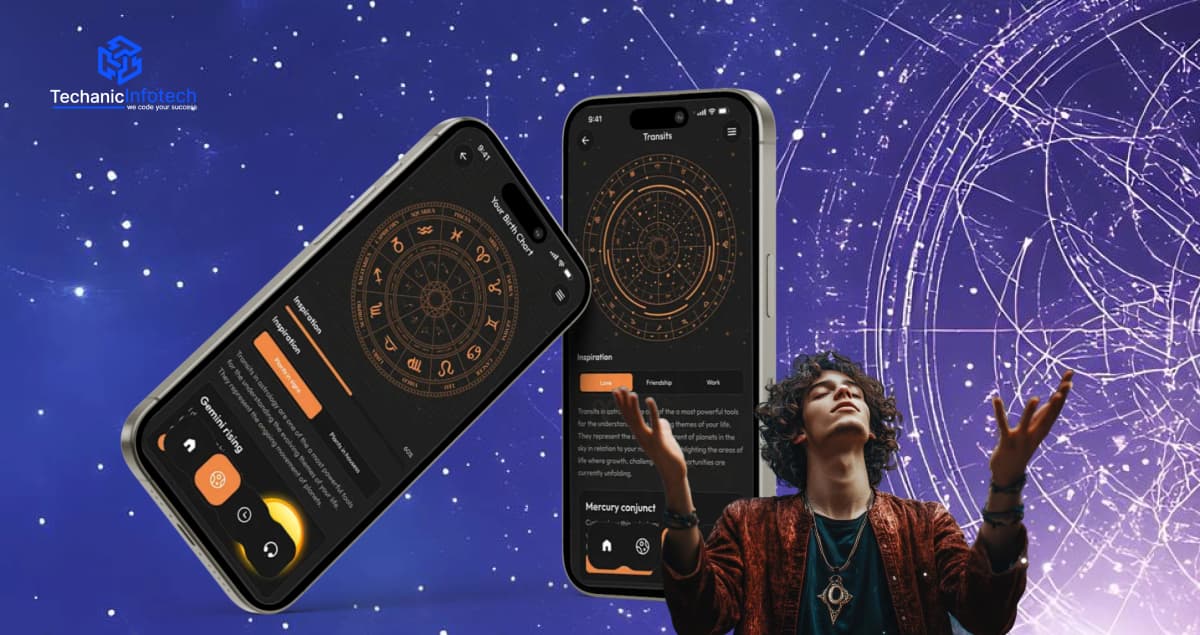
The astrology app industry has grown in recent years by transforming ancient astrological practices into a scalable and profitable digital business.
With increasing interest in self-discovery, mental wellness, and personalized guidance, these astrology apps have found a strong and loyal user base worldwide.
These apps provide daily horoscopes, birth chart analysis, tarot readings, matchmaking, and one-on-one consultations with the best mobile experiences.
From a business perspective, astrology apps generate revenue through multiple astrology app monetization models, making them highly adaptable and sustainable.
Common revenue streams and astrology app business models usually include an astrology app subscription model for premium content, in-app purchases for personalized reports, paid consultations with professional astrologers, advertising partnerships, and e-commerce sales of digital or spiritual products.
The astrology app market is rapidly evolving into a multi-billion-dollar digital industry as users increasingly turn to mobile platforms for personalized spiritual insights, horoscopes, and one-on-one consultations.

According to industry research, the global astrology app market was valued at around USD 3 billion in 2024 and is projected to reach approximately USD 9 billion by 2030, growing at a compound annual growth rate (CAGR) of about 20% between 2025 and 2030, as per reports by MarkNtel Advisors.
Growth is not limited to global trends; regional adoption is surging as well. For example, the Indian astrology app market was valued at USD 163 million in 2024 and is forecast to expand to about USD 1.8 billion by 2030, with an exceptionally high CAGR of nearly 49% during the same period.
These demographic trends, paired with evolving monetization strategies like in-app purchases, premium subscriptions, and live consultations, position astrology apps as highly engaging and revenue-driven digital products.
Astrology apps usually rely on flexible or scalable business models to attract users in terms of generating consistent revenue.
The following are the common and effective business models generally used by successful astrology apps.

The freemium model allows users to access basic features such as daily horoscopes, zodiac insights, or limited birth chart details for free.
Advanced features like detailed compatibility reports or personalized predictions are locked behind a paywall. This astrology app business model helps to build a large user base quickly and later convert free users into paying customers.
These astrology app subscription models charge users monthly or annually for premium access. Benefits often include ad-free experiences, detailed astrology reports, AI-driven forecasts, and exclusive content.
Recurring payments ensure steady revenue, improve customer retention, and encourage long-term engagement, making this model ideal for focusing on consistent, high-value astrology app user acquisition.
Apps using this model connect users with professional astrologers for live consultations via chat, voice, or video calls.
Users pay per session or per minute, allowing highly personalized guidance on relationships, career, or life choices. This model creates a direct revenue stream while leveraging expert credibility and trust.
A marketplace platform hosts multiple astrologers and offers users a variety of expertise. The app earns a commission on each session or transaction.
This astrology app business model scales efficiently, attracts a diverse audience, and increases engagement by giving users options, while the platform maintains quality control through verified astrologers.
Content-driven apps focus on blogs, videos, tutorials, and learning modules related to astrology. Revenue comes from subscriptions, premium content, or advertising.
This astrology app business model strengthens user retention, educates audiences, and builds authority, making the app a go-to resource for astrology enthusiasts seeking long-term engagement.
Some apps sell personalized reports, e-books, or spiritual merchandise like crystals or gemstones. Digital products, courses, and physical goods provide additional revenue streams.
Integrating digital products enhances astrology app monetization, strengthens brand loyalty, and allows apps to offer value beyond standard readings or horoscopes.
Astrology apps usually become one of the highly lucrative digital businesses because of their diverse astrology app earning methods and opportunities.
Developers can leverage multiple revenue streams while developing an astrology app that maximizes profitability by providing value for the users.
The following is the key horoscope app revenue model explained in-depth.

In-app purchases are one of the most popular ways astrology apps generate revenue. Users can buy personalized reports, detailed birth charts, tarot card readings, love and career forecasts, or compatibility insights.
Meanwhile, these purchases offer instant, tangible value, encouraging frequent spending. In-app purchases are scalable, as apps can continuously introduce new reports, seasonal predictions, or limited-time offerings to keep users engaged and generate recurring income.
Subscriptions provide recurring revenue by offering users access to premium content, ad-free experiences, or exclusive astrology app features.
Astrology apps often have tiered subscriptions, monthly, quarterly, or yearly, unlocking AI-generated forecasts, live chat with astrologers, and advanced astrological insights.
This astrology app subscription model also helps build user loyalty, as paying members are more likely to return regularly to access daily horoscopes, progress reports, or guided meditations.
Astrology app earning methods ensure a predictable cash flow, which is essential for scaling the business in the astrology field.
Many apps offer live, one-on-one consultations with professional astrologers via chat, voice, or video. Users pay per session or per minute for personalized guidance on love, career, finances, or personal growth.
This horoscope app revenue model leverages expert credibility and allows the app to earn either a direct fee or commission from each session.
Paid consultations are especially attractive because they provide high perceived value and a direct astrology app monetization channel for the app, creating a win-win for both users and astrologers.
Advertising provides a secondary revenue stream for astrology apps, particularly those with large free user bases. Apps can display native ads, banner ads, or video ads, often targeted based on user demographics and interests.
Additionally, brand partnerships allow apps to promote relevant products such as wellness, spiritual, or lifestyle brands.
Sponsored content or affiliate marketing can also generate revenue without affecting the user experience significantly. Monetizing through ads complements other revenue streams, making the business more financially resilient.
Some top astrology apps integrate e-commerce features to sell spiritual or astrology-related products, such as gemstones, crystals, ritual items, or digital guides.
E-books, astrology courses, and personalized digital charts can also be sold directly within the app. This model diversifies income beyond subscriptions or in-app purchases and creates additional touchpoints for user engagement.
These astrology app earning methods, offering curated products enhances the app’s brand value and encourage repeat purchases.
Astrology apps can host virtual events, webinars, or workshops featuring renowned astrologers. Users pay to attend live sessions or access recorded content later.
These events provide an interactive experience, foster community, and create a sense of exclusivity.
Revenue from workshops can be substantial, especially when combined with limited-time offers, early-bird pricing, or bundled subscription perks.
By combining these multiple horoscope app revenue models, such as in-app purchases, subscriptions, paid consultations, advertising, e-commerce, and events, astrology apps create a diversified and sustainable business model.
This multi-layered approach maximizes profitability by ensuring long-term engagement, customer loyalty, and astrology app scalability in a growing digital market.
The astrology app has grown rapidly in terms of popularity, where it offers personalized horoscopes, compatibility insights, and spiritual guidance.
Effective pricing strategies are essential for attracting users, maximizing revenue, and providing value, balancing accessibility with premium features and exclusive content

This strategy allows users to pay only for specific astrology services they want, such as personalized horoscopes, tarot readings, or compatibility reports. It is ideal for users who seek occasional insights rather than committing to long-term access. This approach can increase revenue per transaction while keeping the app accessible to casual users.
Tiered access offers multiple levels of content access, such as basic, advanced, and premium. Each level provides progressively more detailed or exclusive astrology insights. This encourages users to upgrade to higher tiers as they explore the app. It creates flexibility for different budgets while maximizing user engagement and retention.
One-time unlocks let users pay a single fee to access specific features permanently, like a full natal chart or yearly astrology report. This appeals to users who prefer owning content without recurring payments. It provides upfront revenue for the app and satisfies users seeking long-term, uninterrupted access to premium features.
Offering a free version with ads allows users to access basic content while generating revenue from advertisements. Users who want an uninterrupted experience can pay a one-time or periodic fee to remove ads. This strategy expands the user base while monetizing free users effectively, balancing accessibility and profitability.
Apps can use discounts, festival offers, or loyalty rewards to attract new users and encourage engagement. Limited-time promotions create urgency, increasing conversions and user retention. Seasonal pricing can also adjust fees based on demand, making premium features more appealing at strategic times, ultimately boosting both revenue and app visibility.
Astrology apps are gaining immense popularity, offering personalized horoscopes, tarot readings, and compatibility insights. A strong technology foundation and clear cost structure are essential for smooth performance, scalability, and long-term profitability.
Using cross-platform frameworks like Flutter or React Native reduces development time and cost to develop an astrology app while supporting both iOS and Android. Approximately $3,000 can be allocated for coding, design, and platform integration.
Cloud services such as AWS or Google Cloud manage data storage, user authentication, and server scalability, allowing smooth performance as users grow. Around $2,500 is needed for backend and infrastructure management.
Secure databases like Firebase or MongoDB efficiently store user profiles, birth charts, and premium content. Allocating $3,000 ensures fast data retrieval, reliable functionality, and strong data security.
AI algorithms generate personalized horoscopes, tarot readings, and predictions, while analytics tools track user behavior to optimize engagement and monetization. This integration costs about $1,500.
Secure payment systems like Stripe or PayPal handle subscriptions, one-time payments, and feature unlocks reliably, with roughly $2,500 budgeted for setup and integration.
Marketing efforts, including social media campaigns, ads, and influencer promotions, can cost $2,500 to attract users and encourage premium subscriptions.
Maintenance and updates, covering bug fixes, performance improvements, and content refreshes, require about $1,000 to ensure smooth ongoing operation.

Techanic Infotech is known as the best astrology app development company for developing astrology apps focused on maximizing revenue and user engagement. Their team combines expertise in AI and cloud infrastructure to create apps with personalized horoscopes, compatibility reports, and premium features.
They design apps with intuitive user interfaces, seamless payment integrations, and secure data storage. By leveraging analytics, Techanic Infotech helps clients understand user behavior and optimize monetization strategies.
Their apps support dynamic pricing, pay-per-feature models, and tiered access to cater to various audiences. With a strong focus on scalability and security, they ensure apps handle high traffic while protecting sensitive user data.
Choosing Techanic Infotech guarantees a professional, revenue-driven astrology app that attracts users, encourages upgrades, and delivers long-term profitability in a competitive market.
Astrology apps are a growing segment in the digital market that offer personalised guidance, horoscopes, and spiritual insights. The success of an app usually depends on combining effective technology, secure infrastructure, and strategic monetisation methods.
By integrating AI-driven predictions, scalable cloud systems, flexible pricing strategies such as pay-per-feature, tiered access, and promotional offers, considering the astrology app business model, developers can maximize engagement and revenue.
Choosing a specialized development partner like Techanic Infotech ensures professional design, secure payment systems, and user-friendly interfaces.
Their expertise in analytics-driven decision-making and scalable architecture empowers apps to attract users, encourage upgrades, and maintain long-term profitability.
Personalized horoscopes, birth charts, compatibility reports, tarot readings, AI predictions, user-friendly design, secure payments, and regular content updates contribute to a successful astrology app.
Revenue comes from premium subscriptions, pay-per-feature services, one-time unlocks, ad-supported free versions, seasonal promotions, and tiered access to exclusive content.
Cross-platform frameworks like Flutter or React Native, cloud services such as AWS or Google Cloud, and secure databases like Firebase or MongoDB ensure efficiency and scalability.
By implementing SSL, encryption, secure APIs, and GDPR compliance, astrology apps protect personal information and payment details while maintaining trust and credibility.
Techanic Infotech offers AI-driven predictions, scalable architecture, secure payment integration, user-friendly design, and analytics-based monetization strategies for revenue-focused astrology apps.


Neha Sharma is a tech expert at heart who loves exploring new technologies and turning complex ideas into easy-to-understand content. With a passion for learning and writing, she enjoys sharing insights on emerging tech, digital products, and innovation that help businesses stay ahead.