Food Delivery App Development
Beverage App Development in 2026: Features, Costs, Benefits, and Trends
June 20, 2026
June 20, 2026
One tap can now turn a simple drink craving into a complete brand experience.
The beverage industry is changing fast, and customers expect more than just a menu on their phones. From personalised coffee orders to quick delivery and loyalty rewards, beverage apps are helping businesses build stronger customer relationships and increase repeat sales.
In 2026, beverage app development is becoming a smart investment for cafes, restaurants, and drink brands looking to stay competitive. This guide covers the key features, development costs, benefits, and latest trends shaping the future of beverage apps.
A simple drink order has turned into a complete digital experience.
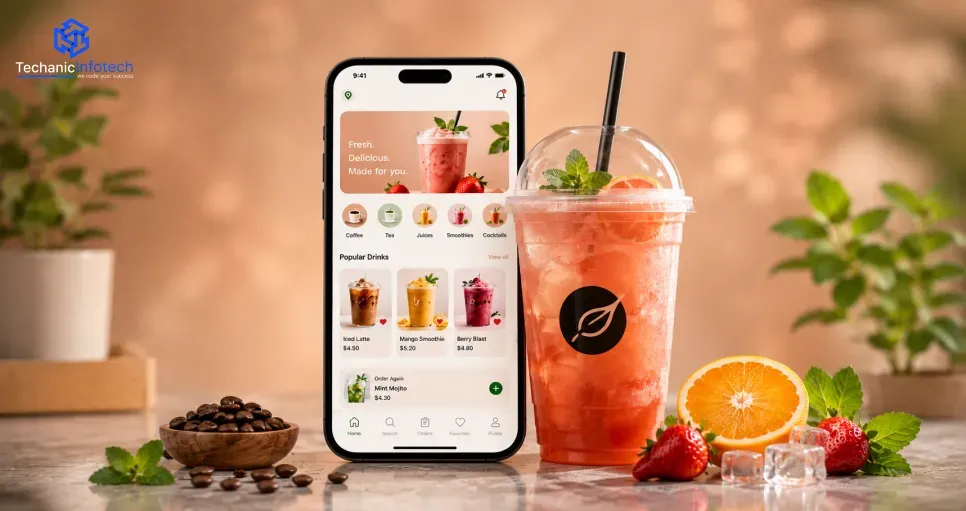
A beverage app is a mobile application that helps people order, customise, and discover drinks like coffee, juices, tea, smoothies, and other beverages. It allows users to check menus, make payments, track orders, and get rewards from their favourite brands.
The beverage market is growing quickly as customers prefer faster ordering and personalised experiences. According to Statista Market Insights, the global beverages market is expected to reach $217.99 billion in revenue in 2026 and grow to $283.40 billion by 2030. The market is also expected to reach 1.2 billion users by 2030, showing strong demand for digital beverage solutions.
AI-powered drink suggestions are creating personalised customer experiences with smarter ordering choices and recommendations.
Custom beverage options let users control flavours, ingredients, sugar levels, and nutritional preferences easily.
Mobile ordering and quick pickup are improving convenience through faster digital experiences for busy customers.
Loyalty programmes help beverage brands increase repeat orders with rewards, memberships, and exclusive offers.
Subscription-based drink services make daily coffee, juice, and beverage plans easier for regular users.
Health-focused beverages are gaining popularity with clean ingredients, wellness benefits, and nutrition tracking features.
Smart inventory systems help businesses reduce waste and manage beverage supplies more efficiently.
Contactless payments are becoming common with secure checkout options and seamless digital transactions.
Sustainability features are growing as brands adopt eco-friendly packaging and responsible beverage practices.
Modern mobile app development trends are influencing beverage apps with automation, personalisation, and better user journeys.
Customers now want their favourite drinks with less waiting and more convenience. Drink ordering app development helps cafes, restaurants, and beverage brands offer faster service, improve customer experience, and create a direct digital connection.
A drink-ordering app makes it simple for customers to explore menus, customise drinks, and place orders anytime. This quick process helps businesses get more orders and increase daily sales.
Modern food and beverage app development focuses on making ordering faster, improving customer engagement, and helping brands deliver better digital experiences.
Rewards, points, and special offers encourage customers to return again and again. Many brands use loyalty features to turn casual buyers into regular customers.
Apps allow beverage businesses to communicate with customers directly through updates, offers, and personalised messages. It reduces dependence on third-party platforms and builds brand trust.
Working with an on-demand app development company helps businesses build apps with useful features, secure payments, and smooth user experiences that match customer needs.
Digital ordering helps reduce long queues and makes pickup faster. Customers get a smoother experience, while staff can manage orders with less pressure.
People like drinks made to their taste. Apps allow users to choose sugar levels, sizes, flavors, milk options, and extra toppings easily.
Businesses can understand buying patterns, popular drinks, and peak hours through app insights. These details help improve menus, promotions, and overall service quality.
A beverage app can track ingredients, monitor inventory levels, and send low-stock alerts. This helps reduce waste and keeps daily operations running smoothly.
Businesses can promote combos, premium drinks, and add-ons through the app. Simple suggestions like extra toppings or larger sizes can increase order value. Understanding mobile app development costs helps businesses prepare better before starting their project.
With beverage e-commerce app development, brands can sell drinks online while managing customers, payments, and orders from one place. The right digital solution creates a stronger market presence.
Large beverage brands need better control across locations. An app helps manage menus, orders, and customer experiences from one place.
Customers expect smooth checkout options today. Apps can include cards, wallets, Apple Pay, Google Pay, and other secure payment methods.
Building a beverage app is not just about adding a menu and an order button. A good food and beverage app development process needs planning, design, coding, testing, and regular updates to create a smooth user experience.
Every app starts with a clear idea. The team first understands the business needs and customer expectations.
They decide:
App type:
Coffee shop app
Drink delivery app
Beverage brand app
Restaurant drink ordering app
Target customers
Business goals
Main features
Competitor apps
This step creates the base for the complete project.
Before development starts, the team studies the market.
They check:
Popular beverage apps
Customer buying habits
Latest drink trends
Useful app features
Common features include:
Loyalty rewards
Fast checkout
Drink customization
Delivery tracking
This helps create an app that matches customer needs.
The team prepares a complete feature plan. It shows what users and businesses can do inside the app.
Customer features:
Sign up and log in
Drink menu
Search options
Custom drink choices
Cart and checkout
Payments
Order tracking
Reviews
Rewards
Business features:
Manage drinks
Handle orders
Track inventory
Create offers
View sales reports
Design makes the app simple and enjoyable. The team creates screens that feel easy to use.
They prepare:
App layout
Wireframes
User flow
Screen designs
Clickable prototype
A clean design helps customers order drinks without confusion.
The right technology helps the app run smoothly. A proper mobile app tech stack guide helps businesses pick tools for better speed and performance.
Common choices include:
Flutter
React Native
Swift
Kotlin
Node.js
Python
Java
PostgreSQL
MongoDB
MySQL
AWS
Google Cloud
Azure
Now developers start building the app.
App screens
Menu pages
Cart
Checkout
User profile
User accounts
Orders
Payments
Notifications
Data storage
This stage turns the design into a working app.
Integrations make the app more useful for customers and businesses.
Common integrations:
Stripe
PayPal
Apple Pay
Maps
Store locator
POS systems
Inventory software
For brands offering drinks like beer or wine delivery, alcohol delivery app development may need extra checks and age verification features.
Testing helps find problems before launch.
The team checks:
App speed
Security
Payments
Order flow
Different devices
The goal is to give customers a smooth ordering experience.
After testing, the app goes live on the following:
Google Play Store
Apple App Store
Businesses also work on:
App Store Optimization
Marketing campaigns
Customer awareness
Many brands use professional food delivery app development services to prepare apps that are ready for real users.
An app needs care after launch.
Regular work includes:
Fixing bugs
Adding new features
Improving speed
Updating security
Checking customer feedback
Continuous updates help the app stay useful as customer needs change.
A successful beverage app needs more than just an online menu. The right beverage app features help customers order faster, help businesses manage daily tasks, and create better experiences. From simple ordering to smart recommendations, these features make the app more useful and competitive.
Modern beverage apps are also using AI integration in mobile apps to improve suggestions, automate tasks, and create more personal experiences for users.
|
Customer Features |
Admin Features |
Advanced Features |
|
Digital Beverage Menu
|
Beverage Management
|
AI Drink Recommendations
|
|
Drink Customization
|
Inventory Management
|
Subscription Plans
|
|
Search and Filters
|
Order Management
|
AR Drink Menu
|
|
Online Ordering
|
Analytics Dashboard
|
Voice Ordering
|
|
Secure Payments
|
CRM Features
|
Multi-Location Support
|
|
Order Tracking
|
Social Sharing
| |
|
Loyalty and Reviews
|
MVP Planning
|
For brands planning a new product, starting with how to build a minimal viable product helps test the idea before investing in a full-scale app. It saves time and gives real customer feedback.
Building a successful beverage delivery app development solution looks simple from the outside, but businesses face many challenges behind the scenes. From smooth ordering to secure payments, every part needs proper planning to deliver a better customer experience.
Customers expect accurate updates after placing an order. Delays or wrong status updates can hurt trust.
Solution: Businesses should add real-time tracking, live notifications, and clear order stages. This helps customers know when their drink is prepared and delivered.
A complicated app can make users leave quickly. Customers want simple menus, fast checkout, and easy navigation.
Solution: Focus on clean UI design, quick search, and simple ordering steps. A user-friendly experience keeps customers coming back.
Drinks need careful handling because temperature and quality matter. Late delivery can affect customer satisfaction.
Solution: Use smart delivery management, location tracking, and better route planning. Many businesses work with experienced top food delivery app development companies to improve delivery workflows.
Payment issues can stop users from completing orders. Security is a major concern for digital transactions.
Solution: Use trusted payment gateways, encryption, and secure checkout methods. A safe payment process builds customer confidence.
Running out of popular drinks creates a poor customer experience. Manual stock updates can also cause mistakes.
Solution: Add inventory management tools that track ingredients, update availability, and reduce waste.
As orders grow, apps need to handle more users without slowing down. Poor planning can create performance problems.
Solution: Choose a strong backend, cloud services, and flexible technology. Planning the mobile app development timeline early helps teams manage development stages better.
Customers enjoy apps that remember their favourite drinks and suggest useful options.
Solution: Businesses can use customer data, recommendations, and smart features to create more personalised experiences.
Getting new customers is harder than keeping existing ones. Without engagement, users may switch to other brands.
Solution: Add loyalty points, rewards, subscriptions, and special offers to encourage repeat orders.
Many beverage brands are entering the digital space. Standing out takes more than a basic ordering app.
Solution: Businesses should focus on better service, strong branding, and features that solve real customer problems.
Launching the app is only the first step. Customer needs and technology keep changing.
Solution: Regular updates, bug fixes, and performance improvements help the app stay useful and competitive.
The beverage app development cost depends on the app type, features, design, technology, and business goals. A simple drink ordering app costs less, while a large platform with AI, delivery, and multiple stores needs more investment. In 2026, businesses usually spend between $10,000 and $90,000+ based on their requirements.
|
App Type |
Estimated Cost |
Development Timeline |
Suitable For |
|
MVP Beverage App |
$10,000 – $25,000 |
2–4 months |
Startups testing their beverage idea |
|
Basic Beverage Ordering App |
$15,000 – $35,000 |
3–5 months |
Small cafes and local drink brands |
|
Mid-Level Beverage App |
$30,000 – $65,000 |
5–7 months |
Growing businesses with ordering and loyalty features |
|
Advanced Beverage App |
$60,000 – $85,000 |
7–10 months |
Large brands with delivery, analytics, and automation |
|
Enterprise Beverage Platform |
$90,000+ |
10–12+ months |
Multi-location beverage companies |
The final budget changes based on the features and complexity of the app.
Main cost factors include:
Custom UI/UX design - $2,000 – $10,000
Mobile app platform (iOS, Android, or both) - $5,000 – $25,000
Backend development - $8,000 – $30,000
Payment integration - $1,500 – $8,000
Delivery tracking - $3,000 – $15,000
Admin dashboard - $5,000 – $20,000
Inventory management - $3,000 – $12,000
AI recommendations - $8,000 – $25,000
Third-party integrations - $2,000 – $15,000
A basic MVP usually includes only core features like a menu, ordering, payments, and user accounts. It helps businesses test customer demand before building a bigger product.
A full-scale beverage platform needs more work. Features like loyalty programmes, real-time tracking, multiple stores, and smart analytics increase development time and cost.
A smart beverage mobile app development plan is not only about getting downloads. Businesses need a clear revenue model that turns daily orders, customer loyalty, and digital experiences into steady income.
Customers pay for drinks, add-ons, and upgrades directly inside the app.
Extra toppings
Premium ingredients
Special drink options
Monthly or weekly drink packages create recurring revenue for brands.
Coffee memberships
Discount plans
Regular order benefits
Apps can earn by adding delivery fees on customer orders.
Distance-based pricing
Express delivery fees
Priority delivery options
Businesses can charge partners for featured placements and sponsored offers.
Featured drinks
Seasonal promotions
Paid visibility
Reward systems increase repeat purchases and improve customer retention.
Paid memberships
Reward upgrades
Exclusive deals
Adding more services through multi-service super app development creates extra earning opportunities.
Food ordering
Grocery services
Multiple daily needs
Customer behaviour data helps businesses improve offers and increase sales.
Purchase trends
Customer preferences
Sales patterns
Businesses can create white-label solutions and earn from digital platforms.
Brand-specific apps
Partner solutions
Business licensing
Understanding food delivery app development cost helps businesses choose profitable features.
Better budgeting
Smart feature selection
Faster returns
The beverage industry is moving beyond simple drink ordering. Customers now expect speed, personalisation, rewards, and smooth digital experiences. A well-planned beverage app can help brands increase sales, build stronger customer relationships, and manage daily operations better.
With the right features, technology, and business strategy, beverage e-commerce app development helps cafes, restaurants, and drink brands create a strong online presence. From AI-powered suggestions to loyalty programmes and smart inventory tools, the future of beverage apps is focused on convenience and customer satisfaction.
A beverage app helps customers order drinks, customise choices, make payments, track orders, and receive rewards. For businesses, it improves sales, customer loyalty, inventory control, and direct communication.
The beverage app development cost usually ranges from $10,000 to $90,000+. The price depends on features, app complexity, design, integrations, platform, and business requirements.
A basic beverage app may take around 2–5 months, while advanced apps with AI, delivery tracking, and multiple locations can take 7–12+ months.
A good beverage app should have digital menus, drink customisation, online ordering, secure payments, delivery tracking, loyalty rewards, inventory tools, and analytics dashboards.
Yes. AI can suggest drinks based on customer preferences, past orders, and buying habits. It helps create personalised experiences and increases repeat purchases.
Yes. Small businesses can start with an MVP app that includes basic ordering, payments, and customer features. It helps test ideas before investing more.
Apps increase revenue through repeat orders, subscriptions, premium drinks, add-ons, delivery charges, loyalty plans, and personalised offers.
Common technologies include Flutter, React Native, Swift, Kotlin, Node.js, Python, databases like MongoDB or PostgreSQL, and cloud platforms.
Yes. Advanced beverage apps can manage multiple branches, location-based menus, inventory, orders, and customer data from one system.
Major trends include AI recommendations, drink subscriptions, smart inventory, AR menus, voice ordering, contactless payments, and personalised customer experiences.


Abhishek Jangid is the CEO of Techanic Infotech, with extensive experience in mobile app and web development. He specializes in helping businesses turn innovative ideas into scalable digital solutions through strategic planning and modern technology.