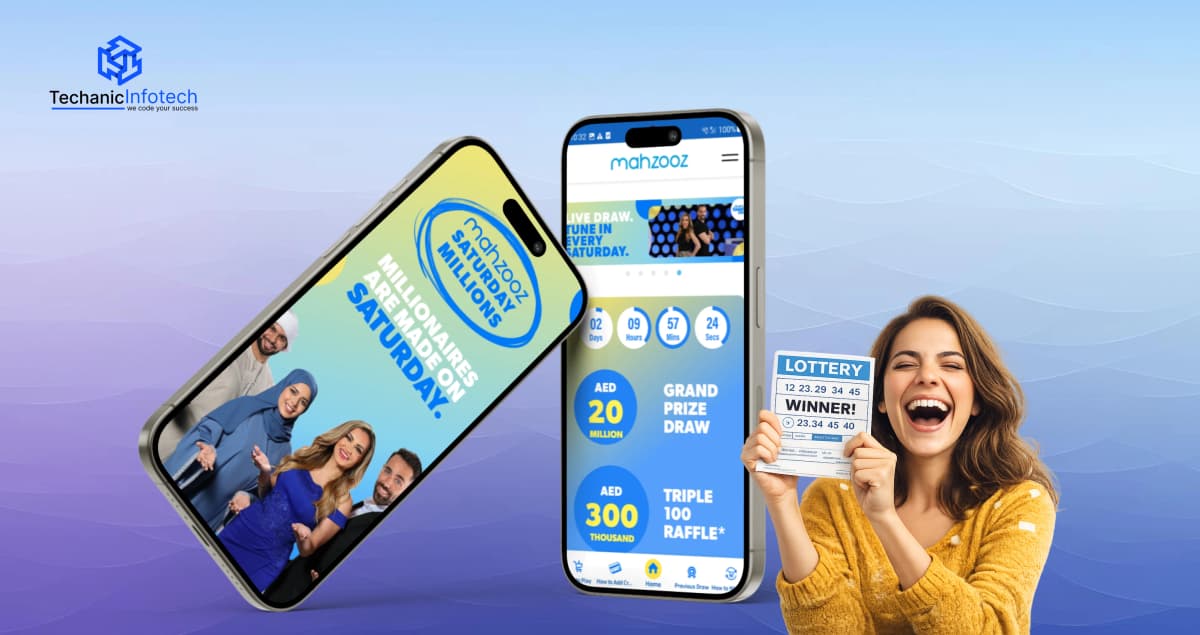
Lottery apps like Mahzooz have changed how people participate in draws by making the process digital, simple, and transparent.
The global lottery market was valued at around USD 353.29 billion in 2024 and is expected to grow to nearly USD 484 billion by 2030, showing steady expansion and demand.
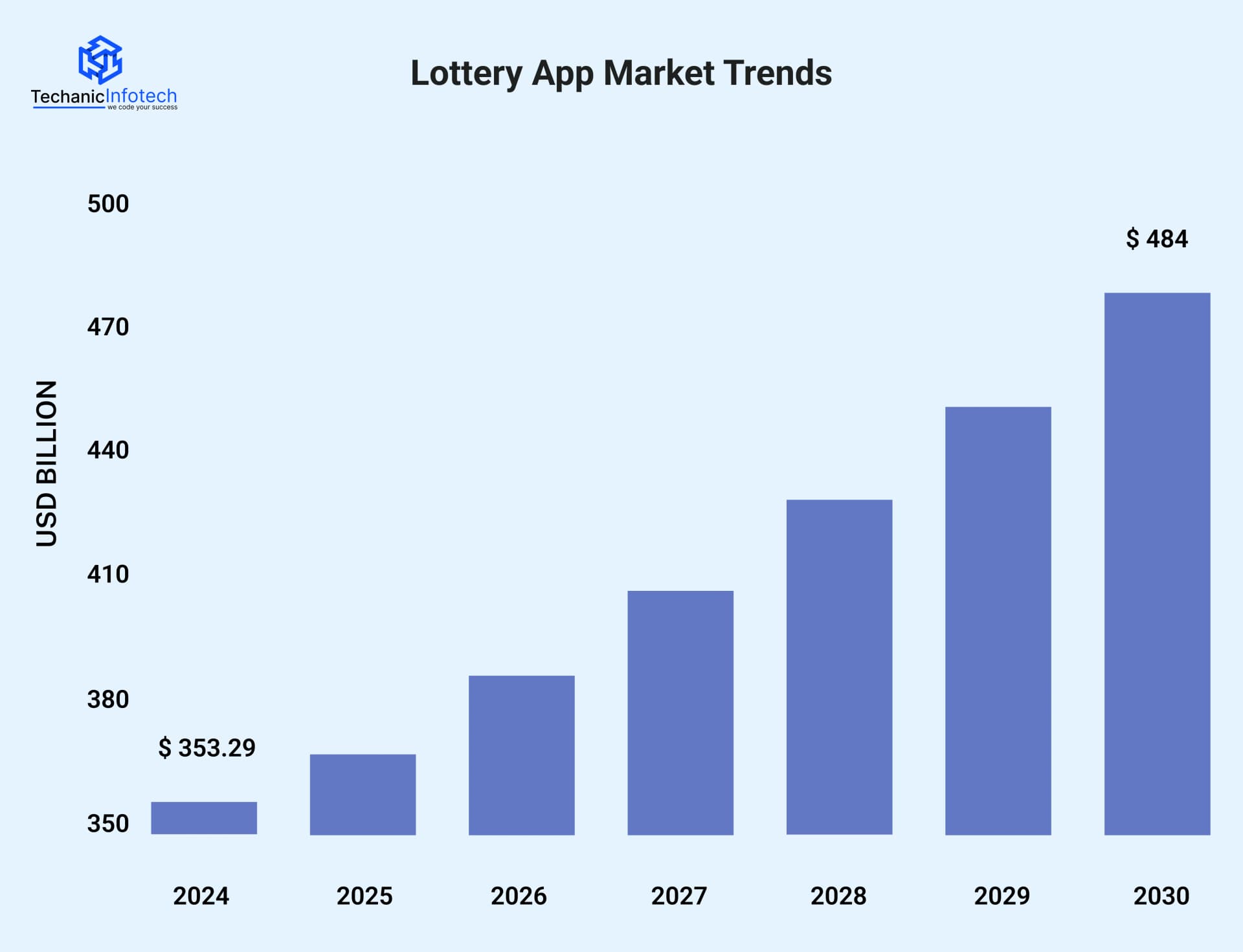
Meanwhile, online lottery platforms are rapidly gaining ground as more users prefer buying tickets and checking results through mobile apps and digital systems.
If you are planning a similar platform, the first thing you may wonder is the cost to create an app like Mahzooz.
On average, the overall cost to build a lottery app like Mahzooz ranges between $10,000 and $90,000+, depending on features, security needs, platform choice, and compliance requirements.
The cost to develop an app like Mahzooz can vary based on whether you want a basic lottery system or a fully compliant platform with secure payments and automated draws.
In this blog, we’ll break down what affects the final budget in simple terms.
Mahzooz is a digital platform that allows users to participate in lottery draws online instead of using physical tickets.
Users can register, select numbers, make payments, and view draw results directly through the app.
Mahzooz gained popularity by combining weekly draws with digital convenience and transparency.
One key fact about Mahzooz-style apps is that they often follow a draw-based model and operate under strict regional rules and compliance standards.
These apps usually include automated number selection, secure payment processing, and real-time result updates.
By offering ease of access and clear prize distribution, lottery apps like Mahzooz attract a large number of regular users.
A lottery app like Mahzooz follows a clear and structured flow that makes it easy for users to participate while ensuring fairness and transparency.
Below is a step-by-step explanation of how such an app works.
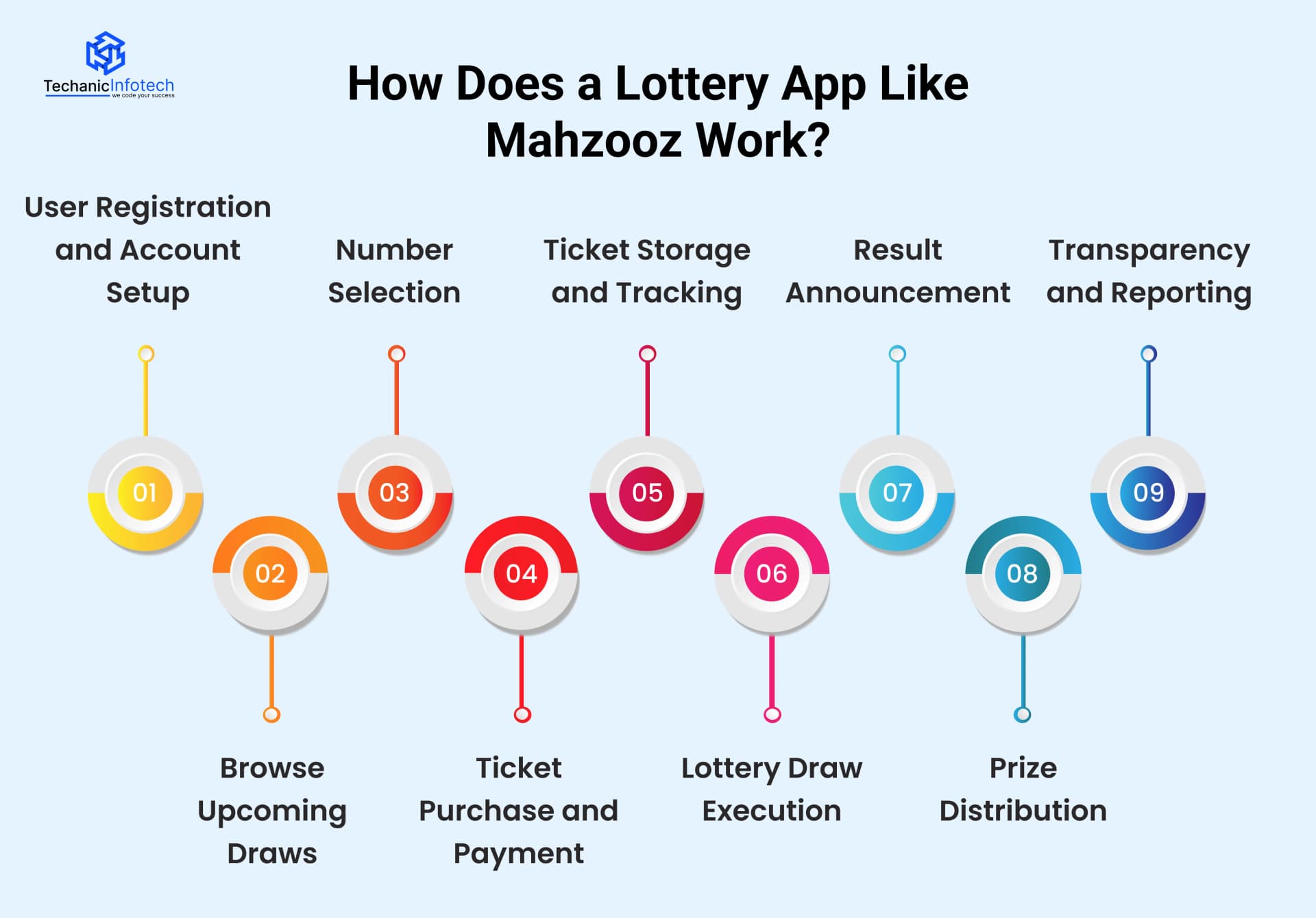
Users begin by creating an account using their email address or phone number. Identity verification is often required to meet legal and regional compliance rules.
This step helps ensure that only eligible users can participate in lottery draws.
Once registered, users can view upcoming lottery draws directly within the app. Each draw includes clear information such as draw date, ticket price, prize amount, and rules.
This transparency builds trust and encourages participation.
Users select their lottery numbers manually or use an auto-pick option. The app clearly shows how many numbers can be selected and confirms entries before submission.
After selecting numbers, users purchase tickets through secure payment gateways. Payments are processed instantly, and users receive a digital confirmation within the app.
Purchased tickets are stored digitally in the user’s account. Users can view active tickets, past entries, and upcoming draw details at any time.
The draw is conducted automatically at a scheduled time using a system designed to ensure randomness and fairness. Results are generated without manual intervention.
Results are updated in real time and displayed in the app. Users also receive notifications informing them whether they have won or not.
Winners are notified and prizes are processed according to the platform’s payout rules. Smaller prizes may be credited directly, while larger winnings may require verification.
The app maintains draw history, winner information, and prize distribution details to ensure transparency and user confidence.
To create a successful lottery app like Mahzooz, the right set of features is crucial. These features ensure smooth user experience, trust, security, and long-term engagement.
Below are the key features every Mahzooz-style lottery app should include.
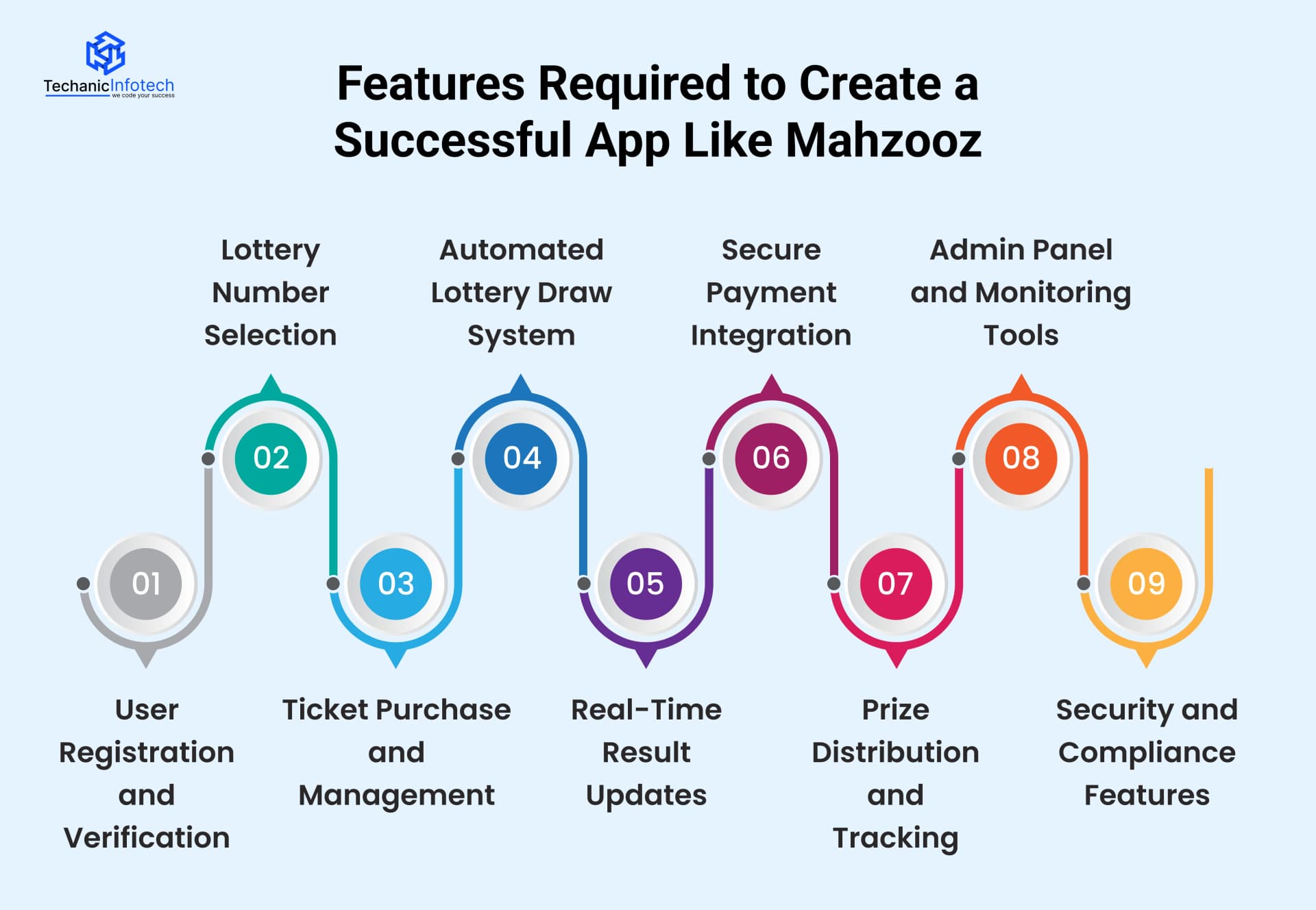
User Registration and Verification: A secure sign-up and login system helps verify users and meet regional compliance requirements. This ensures only eligible users participate in lottery draws.
Lottery Number Selection: Users should be able to select numbers manually or use an auto-pick option. The process must be simple, quick, and error-free.
Ticket Purchase and Management: The app should allow users to purchase tickets easily and store them digitally. Users must be able to view active tickets, past entries, and draw details.
Automated Lottery Draw System: A reliable and automated draw system ensures fairness and transparency. The draw process should run without manual intervention.
Real-Time Result Updates: Results should be updated instantly within the app. Push notifications help inform users as soon as results are available.
Secure Payment Integration: Secure payment gateways are essential for handling ticket purchases and prize payouts safely.
Prize Distribution and Tracking: The app should clearly show winnings and manage prize payouts smoothly, including verification for larger prizes.
Admin Panel and Monitoring Tools: Admins need tools to manage users, draws, payments, and reports efficiently.
Security and Compliance Features: Data encryption, fraud detection, and compliance controls are critical to protect users and meet legal standards.
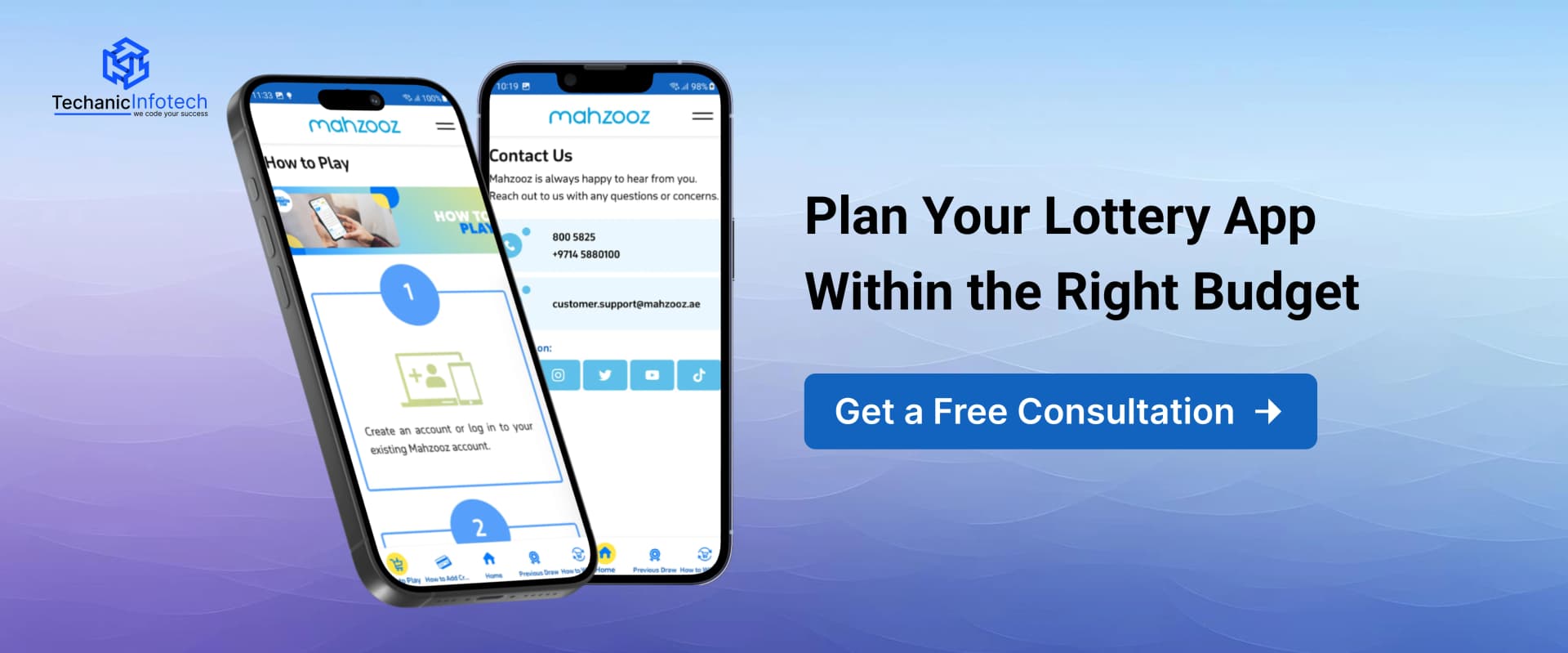
The average cost to develop a lottery app like Mahzooz usually ranges between $10,000 and $90,000+. The final budget depends on how simple or advanced the app needs to be.
A basic lottery app with essential features such as user registration, number selection, ticket purchase, and result display sits on the lower end of the cost range.
On the other hand, a feature-rich Mahzooz-like app with secure payment systems, automated draws, compliance checks, admin controls, and scalable backend infrastructure requires a higher investment.
Platform choice (Android, iOS, or cross-platform), UI/UX quality, security standards, and third-party integrations also play a major role in cost variation.
Businesses planning to develop a lottery app similar to Mahzooz often start with a minimum viable product (MVP) and gradually add advanced features.
This approach helps manage initial development costs while allowing room for future scaling.
Below is a rough cost breakdown by mobile app development stage to help you understand where the budget is typically allocated.
|
Development Stage |
Description |
Average Cost |
|
Planning & Requirement Analysis |
App flow, features, compliance planning |
$2,000 – $5,000 |
|
UI/UX Design |
App layout, user journey, visual design |
$3,000 – $10,000 |
|
Frontend Development |
User-facing app development |
$5,000 – $25,000 |
|
Backend Development |
Servers, databases, draw logic |
$6,000 – $30,000 |
|
Payment Integration |
Secure transactions and confirmations |
$3,000 – $10,000 |
|
Admin Panel Development |
User, draw, and payout management |
$4,000 – $15,000 |
|
Testing & Quality Assurance |
Performance, security, and bug testing |
$2,000 – $8,000 |
|
Deployment & Launch |
App release and server setup |
$1,000 – $4,000 |
Several factors play an important role in determining the cost to create a lottery app like Mahzooz.
Understanding these elements helps businesses plan budgets more accurately.
|
Cost Factor |
Average Cost |
Impact on Overall Cost |
|
App Features Complexity |
$6,000 – $30,000 |
Very High |
|
Platform Selection |
$8,000 – $25,000 |
High |
|
UI/UX Design Quality |
$3,000 – $12,000 |
Medium |
|
Lottery Draw Logic & Automation |
$4,000 – $15,000 |
High |
|
Third-Party Integrations |
$2,000 – $8,000 |
Medium |
|
Testing & Compliance Audits |
$3,000 – $10,000 |
Medium |
|
Development Team Expertise |
Varies by region |
High |
|
Maintenance & Ongoing Support (Annual) |
$3,000 – $12,000 / year |
Medium |
The number and type of mobile app features you include have the biggest impact on the cost to develop an app like Mahzooz.
A basic lottery app with user registration, number selection, ticket purchase, and result display costs much less.
However, as you add advanced features such as automated draws, real-time result updates, notifications, prize tracking, and user history, development time increases.
More complex features also require additional backend logic, testing, and security checks. Admin features like draw management, user verification, and reporting further raise the Mahzooz clone app development cost.
Simply put, the more functionality your app offers, the higher the overall development budget.
Platform choice plays a major role in determining the cost to build a lottery app like Mahzooz. Developing the app for a single platform, such as iOS or Android, is more cost-effective. It requires less development effort and testing.
If you want to reach a wider audience, building the app for both platforms increases the mobile app development cost.
Cross-platform development can reduce expenses by using a shared codebase, but it still involves additional testing and performance optimization.
Choosing the right platform depends on your target audience, timeline, and available budget.
UI/UX design affects both user experience and development cost. A simple and standard design is more affordable, while a custom, visually polished design increases the cost to develop an app similar to Mahzooz.
Lottery apps need clear layouts, easy navigation, and transparent information display. Features like animated draw results, interactive dashboards, and smooth transitions require more design and development effort.
Investing in good UI/UX improves user trust and engagement, but it also adds to the overall Mahzooz app development cost.
Lottery draw logic is one of the most critical components in a Mahzooz-like app find it's central part. The system must ensure that every draw is fair, random, and transparent.
Automated draw logic removes manual intervention and reduces the risk of errors or disputes.
Building this system requires secure algorithms, scheduled draw execution, result generation, and winner verification.
Additional features such as draw history, result announcements, and automated prize calculation further increase complexity.
Because of these requirements, lottery draw automation significantly impacts the cost to build an app like Mahzooz.
Third-party integrations add functionality but also increase development cost.
Lottery apps often rely on external services for payment processing, SMS and email notifications, analytics, and identity verification. Each integration requires setup, testing, and ongoing maintenance.
The more third-party services you include, the higher the app development cost becomes. Integrations must also work smoothly with the core system to avoid downtime or transaction failures.
While they add cost, these integrations improve user experience and operational efficiency.
App testing and quality assurance ensure that the lottery app works reliably across all scenarios.
This includes functional testing, performance testing, and security testing. Lottery apps also require compliance audits to meet regional legal and regulatory standards.
These processes increase development time but are essential to prevent errors, ensure fairness, and protect user data. Skipping proper testing can lead to legal risks and user trust issues.
As a result, testing and compliance audits play a significant role in the overall cost to develop a lottery app like Mahzooz.
The location and experience of the development team directly affect the cost to create an app like Mahzooz.
Teams in different regions charge different hourly rates based on market standards and expertise levels.
Highly experienced teams with prior experience in lottery or compliance-driven apps usually charge more, but they also deliver better code quality, security, and scalability.
Choosing a skilled team may increase the initial Mahzooz-like app development cost, but it reduces long-term risks, rework, and maintenance issues.
Building the app is only the first step. Regular app maintenance is required to keep the lottery app secure, stable, and compliant.
his includes bug fixes, performance improvements, server monitoring, and feature updates.
Ongoing support adds to the overall cost to develop a lottery app like Mahzooz, but it ensures smooth operations and long-term user trust.
Apps without proper maintenance often face downtime, security risks, and compliance problems, making this an essential ongoing investment.
Lottery apps like Mahzooz follow a well-planned monetization strategy that balances user participation with sustainable revenue. Instead of relying on a single income source, these platforms use multiple revenue streams.
Below are the most common ways top lottery apps generate money.
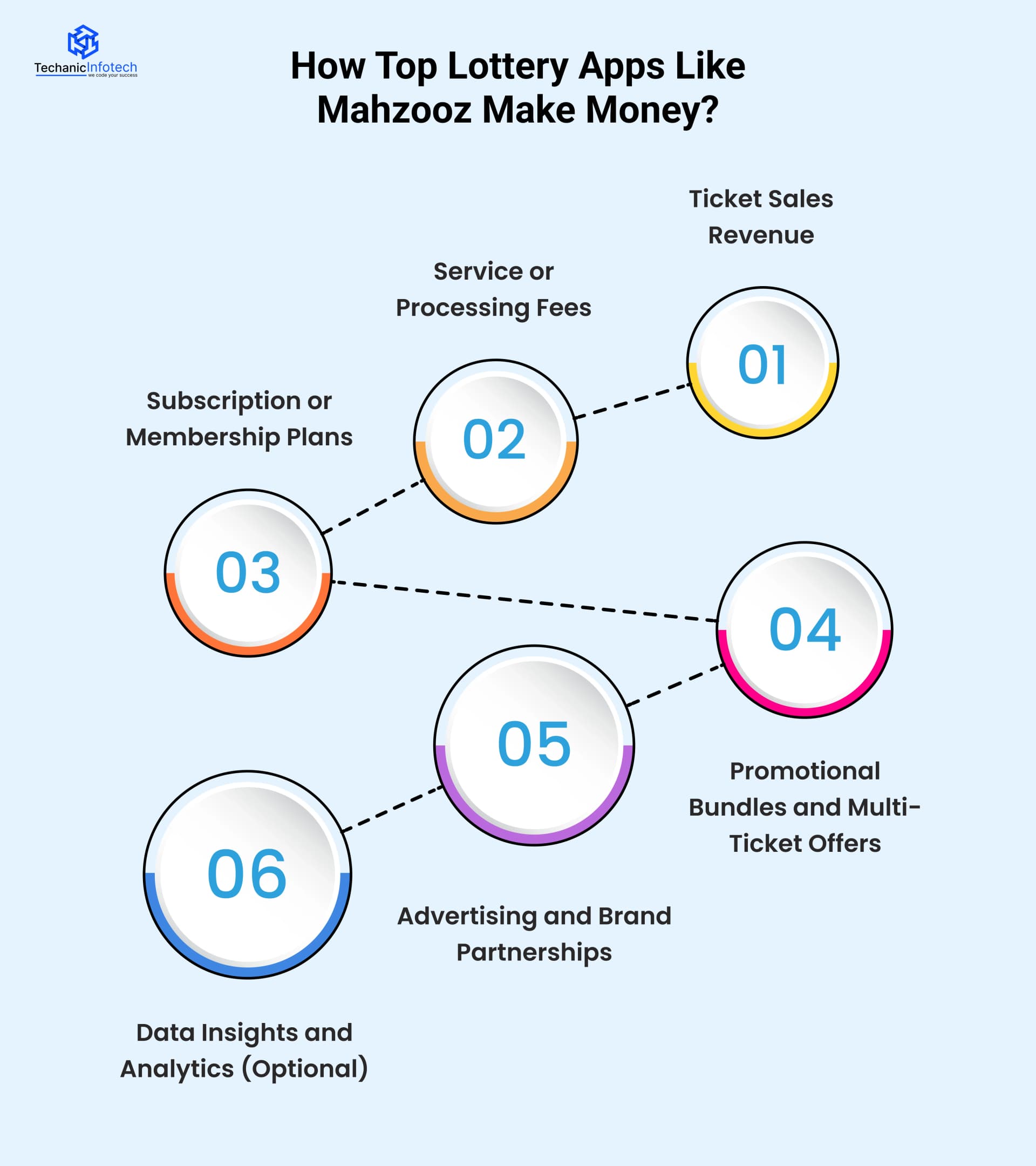
The primary source of income for lottery apps is ticket sales. Users purchase tickets for each draw, and a portion of this amount goes toward prizes, while the remaining part contributes to platform revenue, operations, and causes (if applicable).
Some lottery apps charge a small service or processing fee per transaction. This fee helps cover payment processing, platform maintenance, and operational costs. While small per user, it becomes significant with high participation.
Certain lottery platforms offer subscription-based models where users pay a monthly or yearly fee to participate in multiple draws or receive added benefits. This provides predictable and recurring revenue.
Apps often promote discounted ticket bundles or multi-draw packages. These encourage users to buy more tickets at once, increasing overall revenue while offering perceived value to users.
Lottery apps with large user bases may display ads or partner with brands for promotions. Sponsored banners, featured content, or brand collaborations add an additional revenue stream without affecting core functionality.
In some cases, anonymized user insights and performance data help platforms improve operations and partnerships. While not always a direct revenue source, it supports long-term monetization strategies.
Techanic Infotech helps businesses build secure, scalable, and user-friendly applications tailored to complex use cases.
With experience in developing transaction-based and compliance-focused platforms, the team understands the core requirements of lottery apps like Mahzooz.
Techanic Infotech offers end-to-end services, including planning, UI/UX design, backend development, and post-launch support.
Our mobile app development company follows a transparent development process, focusing on performance, security, and long-term scalability.
By combining technical expertise with a business-driven approach, Techanic Infotech helps clients manage costs while building reliable and future-ready lottery applications.
Building a lottery app like Mahzooz requires careful planning, the right features, and a clear understanding of development costs.
The total cost depends on factors such as app functionality, platform choice, security requirements, and compliance standards.
While a basic app can be developed with a lower budget, a scalable and secure lottery platform requires a higher investment.
By understanding the cost breakdown and key factors involved, businesses can make informed decisions and avoid unexpected expenses.
Partnering with an experienced development company helps ensure quality, compliance, and long-term success for your lottery app.
The cost to develop a lottery app like Mahzooz usually ranges between $10,000 and $90,000+. The final cost depends on features, security, platform choice, and compliance requirements.
Key factors include app features, platform selection, UI/UX design, draw automation, payment integration, security, and regulatory compliance.
On average, development takes 3 to 6 months, depending on app complexity, testing needs, and approval requirements.
Yes, many businesses start with an MVP (basic version) and add advanced features later to manage costs and reduce risk.
Yes, lottery apps must follow regional laws, payment regulations, and data protection rules. Compliance is a critical part of development.
They generate revenue through ticket sales, service fees, subscriptions, promotions, and partnerships.
The choice depends on your target audience. Many businesses prefer cross-platform apps to reach both Android and iOS users.


Bharat Sharma is the CTO of Techanic Infotech, bringing deep technical expertise in software architecture, mobile app development, and scalable system design. He leads the engineering team with a strong focus on innovation, performance, and security.