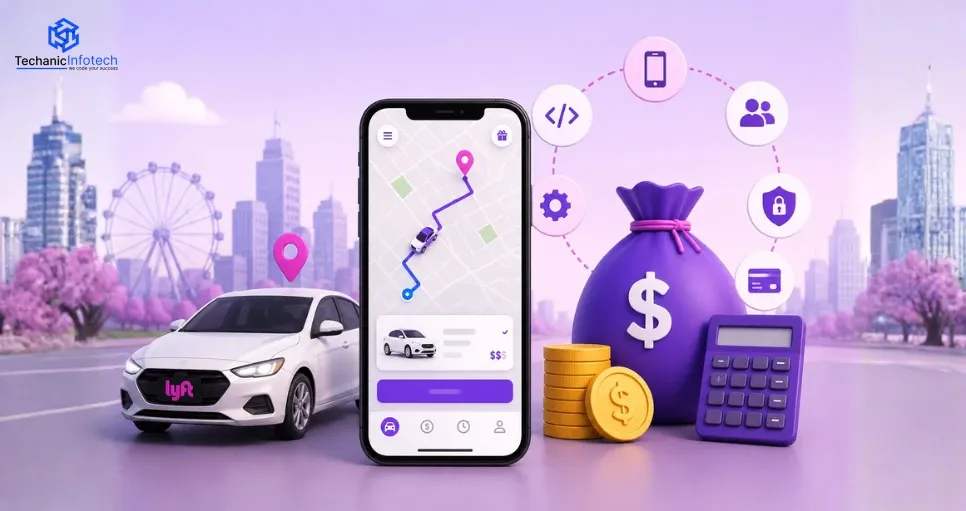
Key Takeaways
The cost to develop an app like Lyft can range between $10,000 to $70,000+ depending on app complexity and features.
Features like GPS tracking, ride-sharing, and secure payment systems significantly impact development costs.
UI/UX design and backend infrastructure are critical for user engagement and app scalability.
Regular maintenance and testing are essential for long-term app performance and security.
Monetization strategies like ride commissions and surge pricing help generate recurring revenue.
Proper planning and experienced developers can help businesses build scalable and profitable taxi booking applications.
The ride-sharing industry has completely transformed the way people travel in recent years.
Apps like Lyft have made transportation faster, safer, and more convenient by allowing users to book rides directly from their smartphones within seconds.
As the demand for smart mobility solutions continues to increase, many startups and businesses are now planning to invest in taxi booking app development.
According to Statista, the global ride-hailing market is expected to reach over $212 billion by 2029, showing massive growth opportunities for businesses entering this industry.
Because of this rapid market growth, one common question businesses ask is:
“How Much Does It Cost to Develop an App Like Lyft?”
On average, the cost to develop an app like Lyft can range between $10,000 to $70,000+ depending on app complexity, feature requirements, platform selection, UI/UX design, backend infrastructure, and integrations.
Advanced features like AI-powered route optimization, real-time GPS tracking, ride-sharing, multilingual support, and secure payment gateways can further increase the overall development cost.
In this blog, we’ll break down everything you need to know about Lyft-like app development cost, including major cost factors, development timeline, monetization strategies, and essential features required to build a successful ride-sharing application.
Before understanding the development cost, let’s first understand what Lyft actually is.
Lyft is one of the most popular ride-sharing and taxi booking applications that allows users to book rides quickly and conveniently through mobile devices.
The process is simple.
Users install the app, enter their pickup and destination locations, choose the ride type, and connect with nearby drivers instantly.
Lyft offers multiple ride categories ranging from affordable ride options to premium luxury rides.
With secure payment systems, real-time tracking, and user-friendly navigation, Lyft has become one of the most preferred transportation apps worldwide.
Today, millions of users rely on ride-sharing apps for daily commuting, airport transfers, business travel, and city transportation.
According to Grand View Research, the global ride-sharing market is growing at a CAGR of 16.2%, driven by smartphone adoption and increasing urban transportation demand.Source: Grand View Research Ride Sharing Market
As demand for digital transportation services continues to rise, businesses investing in taxi booking apps have strong long-term growth opportunities.
If you are planning to create an app like Lyft, one of the biggest questions will naturally be:
“How Much Does It Cost to Create a Taxi Booking App Like Lyft?”
On average, the Lyft clone app development cost ranges between $10,000 to $70,000+ depending on the app’s complexity and feature requirements.
Businesses should consult an experienced taxi booking app development company to get accurate cost estimation and scalable app solutions.
The final development cost can vary based on:
Features and functionalities
Platform selection
UI/UX design
Backend infrastructure
Third-party integrations
Security implementation
Development team location
Businesses comparing development budgets often explore the cost to build a taxi app like FREE NOW before finalizing project requirements
Here’s a quick breakdown of the estimated cost:
|
Feature Level |
Estimated Cost |
|
Basic Taxi Booking App |
$10,000 - $25,000 |
|
Advanced Taxi Booking App |
$25,000 - $45,000 |
|
Complex Lyft-like App |
$45,000 - $70,000+ |
The overall budget depends on whether you want a basic ride-booking solution or a highly advanced platform with AI integrations, ride-sharing features, and real-time tracking systems.
Businesses aiming to create scalable mobility platforms often invest more in backend architecture and cloud infrastructure for better long-term performance.
The exact cost to develop an app like Lyft depends on several important factors.
Each factor impacts the overall budget differently.
Let’s understand them in detail.
Complexity is one of the biggest cost-affecting factors in taxi booking app development.
A basic ride-booking app with simple features will naturally cost less.
However, integrating advanced functionalities like ride-sharing, AI-based pricing, route optimization, and analytics dashboards increases both development time and cost.
The more advanced your application becomes, the higher the development expenses will be.
Businesses looking for scalable solutions usually invest heavily in advanced backend systems and cloud infrastructure.
Modern platforms increasingly use AI in taxi app development for route optimization and dynamic pricing.
Features directly impact the success and usability of your application.
Basic features are less expensive to develop, while advanced functionalities increase the overall development budget.
Advanced taxi booking app features improve user engagement and overall ride-booking experience.
Important features for Lyft-like app development include:
Ride booking
Real-time GPS tracking
Driver & passenger profiles
In-app payments
Push notifications
Ride-sharing functionality
Ratings & reviews
Admin dashboard
Here’s a feature-wise cost breakdown:
|
Feature |
Description |
Estimated Cost |
|
Ride Booking |
Core functionality for booking rides |
$5,000 - $8,000 |
|
Real-Time GPS Tracking |
Live ride tracking & navigation |
$8,000 - $12,000 |
|
In-App Payments |
Payment gateway integration |
$5,000 - $10,000 |
|
Ratings & Reviews |
Driver & passenger ratings |
$3,000 - $6,000 |
|
Ride-Sharing |
Shared ride functionality |
$8,000 - $12,000 |
|
Push Notifications |
Real-time ride updates |
$3,000 - $5,000 |
|
Admin Dashboard |
App management & analytics |
$10,000 - $15,000 |
Integrating advanced technologies such as AI and predictive analytics can further increase the development cost.
Businesses planning future scalability should carefully prioritize features during the initial development phase.
Development team location significantly affects the total app development budget.
Developers in countries like the USA, UK, and Germany generally charge higher hourly rates compared to countries like India or Ukraine.
However, many offshore development teams provide excellent quality solutions at more affordable pricing.
Here’s a comparison of average hourly development rates:
|
Country |
Average Hourly Cost |
|
United States |
$49 - $99/hour |
|
United Kingdom |
$39 - $70/hour |
|
Germany |
$30 - $70/hour |
|
India |
$20 - $50/hour |
|
Ukraine |
$25 - $50/hour |
Businesses often choose offshore development teams to reduce development expenses while maintaining quality standards.
UI/UX design plays a major role in the success of ride-sharing applications.
A simple interface may reduce development cost, but advanced interactive designs improve user engagement and retention.
Taxi booking apps require intuitive navigation, clean layouts, and smooth booking experiences.
Here’s how different UI/UX components impact the budget:
|
UI/UX Component |
Description |
Estimated Cost |
|
Wireframing |
App structure & flow planning |
$1,000 - $3,000 |
|
Prototyping |
Interactive mockups |
$2,000 - $5,000 |
|
Visual Design |
Branding & visual elements |
$5,000 - $15,000+ |
|
Interaction Design |
Animations & transitions |
$5,000 - $10,000 |
|
Usability Testing |
User experience testing |
$2,000 - $5,000 |
A strong design strategy helps businesses create better user experiences and improve customer retention rates.
Testing is essential to ensure the app performs smoothly across devices and platforms.
Ride-sharing apps handle real-time transactions, live GPS tracking, and user data, making testing extremely important.
Testing helps identify:
Bugs
Performance issues
Security vulnerabilities
UI/UX problems
Here’s the estimated testing cost breakdown:
|
Testing Type |
Description |
Estimated Cost |
|
Basic Testing |
Functional testing |
$2,000 - $5,000 |
|
Usability Testing |
User experience analysis |
$3,000 - $6,000 |
|
Security Testing |
Data protection testing |
$4,000 - $7,000 |
|
Performance Testing |
App load & performance testing |
$5,000 - $8,000 |
|
Full Testing |
Complete QA testing |
$8,000 - $12,000+ |
Comprehensive testing helps businesses deliver stable and high-performing applications.
App development does not end after launch.
Ongoing maintenance and updates are essential for improving app performance and fixing technical issues.
Annual maintenance generally costs around 15% to 20% of the total development budget.
Maintenance services usually include:
Bug fixing
Security updates
Feature upgrades
Server management
Performance optimization
Here’s the estimated maintenance cost:
|
Maintenance Type |
Description |
Estimated Annual Cost |
|
Basic Maintenance |
Bug fixes & minor updates |
$3,000 - $5,000 |
|
Regular Maintenance |
Security patches & updates |
$5,000 - $10,000 |
|
Full Maintenance |
Major updates & scaling |
$10,000 - $20,000+ |
Long-term maintenance ensures app stability, scalability, and user satisfaction.
Choosing the right taxi booking app tech stack is important for scalability and app performance.
The development timeline depends on the app’s complexity, features, and team expertise.
On average, a simple taxi booking app may take around 2 to 4 months to develop.
However, advanced Lyft-like apps with real-time GPS tracking, payment systems, and ride-sharing features can take around 4 to 6 months or longer.
Here’s the estimated timeline breakdown:
|
Phase |
Estimated Time |
|
Planning & Research |
2 - 4 weeks |
|
Design & Wireframing |
3 - 5 weeks |
|
Development |
8 - 10 weeks |
|
Testing & Bug Fixing |
3 - 5 weeks |
|
Deployment & Launch |
2 - 4 weeks |
Proper planning and experienced developers can significantly improve development speed and efficiency.
Building a successful taxi booking app also requires strong taxi app monetization strategies.
Understanding the Uber app business model can help businesses create sustainable revenue strategies for taxi apps.
Here are some effective revenue models for Lyft-like applications.
Platforms can earn commissions from every completed ride.
This is one of the most common monetization models used by ride-sharing apps.
Higher ride fares during peak demand periods can significantly increase revenue.
This strategy also encourages more drivers to remain active during busy hours.
Businesses can offer subscription plans providing discounts, priority bookings, or premium ride benefits.
Taxi apps can generate passive income through advertisements displayed within the app.
Platforms can charge drivers service fees, registration fees, or premium membership charges.
These monetization strategies help businesses create sustainable revenue streams while scaling their ride-sharing platforms.
Choosing professional mobile app development services can help businesses build scalable and feature-rich ride-sharing applications.
Developing an app like Lyft can be a highly profitable business opportunity in today’s fast-growing ride-sharing industry. With the increasing demand for convenient and digital transportation services, businesses are actively investing in taxi booking app development to attract modern users and improve mobility solutions.
However, the cost to develop an app like Lyft depends on several important factors including app complexity, features, UI/UX design, backend infrastructure, platform selection, testing, and long-term maintenance. On average, the development cost can range between $10,000 to $70,000+ depending on project requirements and scalability needs.
By choosing the right development strategy, implementing advanced features, and focusing on seamless user experience, businesses can successfully build a scalable and competitive ride-sharing platform that generates long-term growth and revenue.
The cost to develop a Lyft-like app generally ranges between $10,000 to $70,000+ depending on features and app complexity.
A Lyft-like app usually takes around 4 to 6 months to develop depending on the required functionalities.
Essential features include ride booking, GPS tracking, in-app payments, driver profiles, ratings, and push notifications.
Technologies like Flutter, React Native, Node.js, Firebase, and Google Maps API are commonly used for taxi app development.
Ride-sharing apps generate revenue through ride commissions, subscriptions, surge pricing, ads, and driver service fees.
GPS tracking helps users monitor rides in real time and improves navigation efficiency for drivers.
Yes, AI helps improve route optimization, pricing systems, fraud detection, and customer experience.
App complexity, UI/UX design, features, testing, maintenance, and development location all affect development cost.
Maintenance ensures better app performance, security updates, bug fixes, and long-term scalability.
Yes, cross-platform technologies allow businesses to build apps for both Android and iOS simultaneously.


Abhishek Jangid is the CEO of Techanic Infotech, with extensive experience in mobile app and web development. He specializes in helping businesses turn innovative ideas into scalable digital solutions through strategic planning and modern technology.