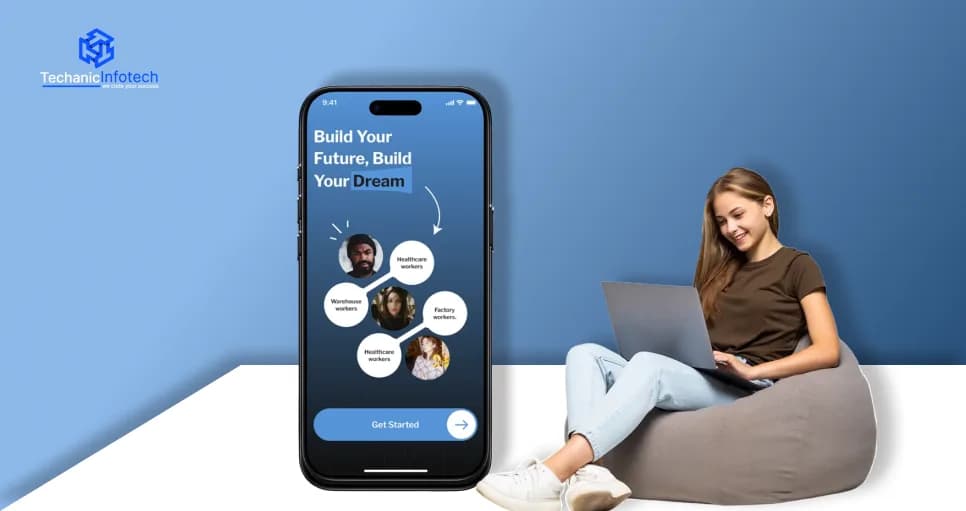
Job Portal App Development
Job Portal App Features for Creating a Perfect Recruitment Experience
November 26, 2025
November 26, 2025
In today's competitive job market, a job portal app must offer more than just job listings.
Incorporating effective features during the job portal app development process is crucial to enhancing user experience and improving job matching.
It must provide a seamless, personalized, and engaging experience for both job seekers and employers. Best job portal features are critical to ensure efficiency, trust, and scalability.
From advanced search filters to AI-powered job matching, the right set of functionalities can drastically improve the hiring process, reduce time-to-hire, and boost user satisfaction.
A well-designed portal balances essential tools, advanced options, and security measures, making it indispensable for modern recruitment and career-building needs.
Top Job Portal App features are the backbone of any job portal app, defining its usability, efficiency, and value to users.
They enhance the overall user experience by simplifying job search, application, and recruitment processes.
Features drive engagement through personalized recommendations, notifications, and interactive tools.
They improve efficiency for both job seekers and recruiters, reduce time-to-hire, and build trust through secure, reliable functionality.
Furthermore, well-chosen best job portal features differentiate your app from competitors, providing a unique value proposition that attracts both candidates and employers.
Considering that the best job portal apps ideas also play an important role in ensuring the long-term success of the application.
A well-designed portal makes it simple for job seekers to browse, search, and apply for positions while providing recruiters with an intuitive interface for managing applicants.
Top Job Portal App features like easy navigation, responsive design, clear calls-to-action, and a seamless application process reduce frustration and improve satisfaction.
An enhanced UX encourages users to spend more time on the platform, complete applications, and return regularly.
By prioritizing usability and accessibility, the portal becomes a preferred choice, increasing adoption rates and fostering long-term engagement for both candidates and employers.
Features like personalized job recommendations, notifications, saved job lists, and interactive dashboards keep users active.
For recruiters, engagement tools such as in-app messaging, alerts for new applications, and real-time candidate tracking maintain involvement.
Gamified elements or skill assessments can further increase interaction. Engaged users are more likely to apply for jobs, respond to messages, and share the platform with others.
Higher engagement also improves the portal’s reputation, encourages loyalty, and drives network effects, ultimately resulting in a more dynamic and active ecosystem for job seekers and employers.
Efficiency is critical in recruitment, reducing the time and effort needed to match candidates with employers.
Job portals achieve this through best job portal features like advanced search filters, AI-based recommendations, application tracking systems (ATS), and automated notifications.
Recruiters can quickly shortlist candidates, schedule interviews, and manage hiring pipelines without manual processes.
By automating repetitive tasks and optimizing workflows, a job portal ensures faster, more accurate, and consistent results.
Increased efficiency benefits all stakeholders, reduces operational costs, and positions the portal as a professional, reliable recruitment solution.
Trust is a cornerstone of a successful job portal. Job seekers must feel confident that the job listings are authentic and that their personal information is secure.
Recruiters need assurance that candidate data is reliable and the platform complies with privacy regulations.
Features like verified company profiles, user reviews, encrypted data storage, secure login systems, and transparent policies build credibility.
By consistently providing a safe and professional experience, the portal fosters loyalty and positive word-of-mouth.
Trust differentiates a platform in a crowded market, encouraging both job seekers and employers to actively use and recommend the portal.
Scalability ensures that a job portal can handle increasing numbers of users, listings, and applications without performance issues.
Job portal app design, like cloud-based infrastructure, optimized databases, load balancing, and modular architecture, allows seamless growth.
Scalable platforms can add new functionalities, expand to new regions, and accommodate peak traffic periods, such as job fairs or recruitment drives.
For employers, this means the portal can support large hiring campaigns; for job seekers, it ensures fast loading times and uninterrupted service.
Best job portal app features, such as AI-based job matching, automated resume screening, instant notifications, and integrated communication tools, accelerate recruitment.
Recruiters can quickly identify top candidates, schedule interviews, and manage applications efficiently.
By minimizing delays in the recruitment workflow, the platform ensures that positions are filled faster, improving employer satisfaction.
For job seekers, a faster process enhances their experience and increases the likelihood of securing the right role.
Job seekers benefit from customized job recommendations, location-based suggestions, skill-matching alerts, and saved searches. Recruiters gain access to candidate profiles that align with their requirements.
Personalization can extend to notifications, dashboard layouts, and content recommendations. By making the experience relevant to individual users, the platform increases engagement, satisfaction, and retention.
In today’s competitive market, personalization is essential for attracting and retaining both job seekers and employers.
Differentiation is key for a job portal to stand out in a crowded market. Unique or best job portal app features, such as AI-driven job matching, video interviews, skill assessments, predictive analytics, and integration with HR tools, set a portal apart from competitors.
Additional differentiators can include exceptional UX/UI, gamified experiences, employer branding tools, or mobile-first capabilities. A distinctive platform attracts more users, retains them longer, and establishes a strong brand presence.
Differentiation not only helps in marketing and positioning but also demonstrates innovation and value. By offering features that competitors lack, a job portal can become the preferred choice for both job seekers and employers.
A modern job portal is more than just a listing of vacancies, making it a dynamic platform connecting job seekers and employers efficiently.
From user-friendly profiles and advanced search tools to secure data handling and application tracking, these 10 must-have features create job portal app that is seamless, effective, and a trustworthy recruitment experience.
Users should be able to build detailed profiles with work experience, education, skills, and preferences.
This personal information helps match candidates to relevant jobs accurately. Employers benefit by maintaining company profiles and posting jobs efficiently.
Well-designed profiles improve engagement by allowing users to showcase portfolios, achievements, and certifications.
Profiles also serve as the foundation for personalized recommendations, tracking applications, and facilitating interactions between candidates and recruiters.
Filters such as location, salary range, job type (full-time, part-time, remote), industry, experience level, and posting date allow candidates to narrow results efficiently. Boolean search options improve precision for highly specific queries.
For employers, the best job portal app features help identify suitable candidates from a large database. Incorporating AI or machine learning for smart recommendations based on user profiles enhances job matching.
The goal is to save time and reduce frustration, ensuring users can find ideal opportunities or candidates without sifting through irrelevant listings.
A resume builder enables users to create professional resumes directly on the platform, even without prior formatting skills.
Templates and guided sections ensure consistency and completeness. Resume upload functionality allows users to import existing resumes in multiple formats, like PDF, DOCX, or TXT.
This feature should automatically parse information to populate user profiles for easier application processes. Employers benefit from structured resumes that are easy to review and compare.
Overall, this feature streamlines the application process, increases the quality of submissions, and ensures both candidates and recruiters save time while maintaining professional standards.
Automated job alerts notify candidates about relevant opportunities based on their preferences, profile, and search history.
Notifications can be delivered via email, SMS, or in-app alerts, ensuring users never miss suitable openings. Employers can receive alerts for new applicants or resume matches, improving response times.
Customization options let users choose frequency, keywords, and job types, creating a personalized experience. This feature enhances engagement by keeping users actively informed and reducing manual search efforts.
Timely alerts increase the likelihood of successful matches and improve user satisfaction, making the platform an indispensable daily tool for job seekers and recruiters.
An integrated ATS streamlines the recruitment process by tracking applications from submission to hiring.
Advanced best job portal app features may include automated scoring, analytics, and ranking of candidates based on criteria like skills, experience, and education.
By centralizing recruitment workflows, ATS improves efficiency, reduces hiring time, and enhances the overall experience for both employers and applicants.
A built-in messaging system facilitates direct communication between job seekers and employers.
Candidates can ask questions about roles, application status, or company culture. Recruiters can clarify details, schedule interviews, or provide updates without relying on external email or phone calls.
Some platforms integrate AI chatbots to answer common queries instantly. This improves engagement, reduces response delays, and builds trust.
In-app chat also ensures privacy and keeps interactions within the platform, making follow-ups organized and accessible, enhancing both candidate experience and recruiter efficiency.
Company profiles give job seekers insight into potential employers, including company culture, size, benefits, and mission.
Verified profiles improve credibility and transparency. Rich media content like photos, videos, and social links makes profiles engaging.
Candidate decisions are influenced heavily by company reputation, so this feature builds trust and reduces mismatched hires.
Overall, it strengthens the employer-employee connection and encourages transparency in the recruitment process.
Allowing users to save jobs or mark them as favorites improves convenience and organization. Candidates can easily revisit opportunities they are interested in, without repeating searches.
This feature also supports prioritization, letting users track applications or explore options later. Notifications can remind users about deadlines or updates for saved jobs.
For employers, it indicates interest levels and helps gauge candidate engagement. It also enhances user retention by encouraging repeated visits to the platform.
By providing a simple yet powerful way to manage potential opportunities, this feature significantly improves the user experience for both job seekers and recruiters.
Security is critical for protecting sensitive information like resumes, contact details, and company data.
Features like multi-factor authentication (MFA), encrypted storage, and secure payment processing (for premium services) are essential. Compliance with data protection regulations such as GDPR or CCPA builds trust with users.
Regular audits and secure coding practices reduce the risk of breaches. A secure login system also ensures that only authorized personnel have access to the admin dashboard or recruitment workflows.
By prioritizing security, job portals protect users’ privacy, maintain platform credibility, and prevent potential legal liabilities, creating a safe environment for both candidates and employers.
The admin dashboard is the control center for managing the portal efficiently. Administrators can oversee user activity, monitor job postings, approve content, and manage payments.
Analytics features provide insights into platform usage, popular jobs, active candidates, and employer engagement.
Reports can highlight bottlenecks in the recruitment process or popular search trends. Role-based access ensures that different admin personnel have appropriate privileges.
A well-designed dashboard streamlines operations, supports decision-making, and maintains platform quality.
It empowers admins to manage the ecosystem, resolve issues quickly, and optimize the portal for both employers and job seekers.
Top job portal apps go beyond basic listings, offering sophisticated tools to enhance user experience and streamline recruitment.
Advance features in job portal app leverage technology to provide smarter job matching, real-time communication, and data-driven insights.
From AI-powered recommendations and interactive dashboards to in-app messaging and analytics, these features make the hiring process faster, more efficient, and highly personalized for both job seekers and employers.
Besides basic features of the job portal app, including AI-based features, they also play a critical role.
AI-powered job matching uses machine learning algorithms to analyze a candidate’s profile, skills, experience, and preferences, then recommends the most relevant job openings.
It reduces manual search efforts and increases the accuracy of matches, benefiting both job seekers and recruiters. Employers can receive better-fit candidate suggestions, improving the quality of hires.
Continuous learning allows the AI to refine recommendations based on user interactions and application history. By prioritizing compatibility over simple keyword matching,
AI enhances engagement, reduces hiring time, and ensures candidates find opportunities aligned with their career goals, making the job portal smarter and more efficient.
Tests can include coding challenges, aptitude exams, technical questions, or situational scenarios tailored to specific roles.
Candidates benefit by showcasing competencies objectively, which may increase their chances of selection. Automated scoring and instant results streamline evaluation and save recruiters significant time.
Integrating assessments within the portal ensures a seamless application experience. It also helps in ranking candidates based on skill proficiency, reducing bias, and ensuring merit-based shortlisting.
For users, these tests provide feedback and self-awareness, aiding in career growth and preparation for future opportunities.
Video resumes let candidates present themselves beyond text-based profiles, highlighting communication skills, personality, and professionalism.
Advance features in job portal app, like scheduling, recording, and playback, enhance convenience for both parties. AI can be integrated to analyze tone, expressions, and speech patterns, offering deeper insights.
These tools reduce the dependency on traditional resumes alone, allowing a richer evaluation of soft skills and cultural fit.
Video functionality makes the hiring process more interactive, transparent, and engaging, especially for remote roles or global recruitment scenarios.
Chatbots provide 24/7 assistance to candidates and employers, answering common queries about job postings, application status, profile updates, or portal navigation.
AI-powered chatbots can handle multiple requests simultaneously, improving efficiency and reducing response delays. They also guide users through resume submission, skill tests, or interview scheduling.
For recruiters, chatbots can pre-screen candidates or collect essential information. Integrating natural language processing makes interactions conversational and intuitive.
By offering instant support, chatbots enhance user satisfaction, increase engagement, and ensure that platform users have a seamless experience without waiting for human intervention for routine queries.
These predictive analytics leverage historical data and AI algorithms to forecast trends, candidate behavior, and hiring outcomes.
For employers, it predicts which candidates are likely to succeed in a role, identifies potential skill gaps, and estimates time-to-hire.
Job seekers benefit from insights like which roles they are most suited for or how their profile compares to peers.
Analytics dashboards visualize trends, helping administrators optimize the platform, improve job recommendations, and refine recruitment strategies.
By turning data into actionable intelligence, predictive analytics reduces uncertainty, enhances decision-making, and makes the recruitment process proactive rather than reactive.
Geo-location features enable job portals to suggest openings near a candidate’s location or preferred areas. This is particularly useful for local job seekers, remote work opportunities, or location-sensitive roles.
Employers can also target candidates within specific regions, optimizing recruitment campaigns. Real-time location data allows notifications about nearby opportunities or events like job fairs.
Integrating maps and distance filters enhances usability, helping candidates plan commutes and relocation decisions.
Geo-location suggestions increase the relevance of job recommendations, improve application rates, and provide a personalized experience that aligns with a candidate’s geographic preferences and lifestyle needs.
Seamless integration with HR management systems, applicant tracking systems (ATS), and customer relationship management (CRM) tools streamlines recruitment workflows.
Employers can synchronize job postings, candidate profiles, and communication across multiple platforms, reducing manual data entry.
For candidates, integration ensures faster response times, smoother application tracking, and better feedback. It also allows advanced features like bulk emailing, interview scheduling, and automated follow-ups.
By connecting the job portal with enterprise tools, the hiring process becomes more efficient, organized, and scalable, benefiting both recruiters and job seekers.
Choosing the right features for a job portal app is crucial for creating a user-friendly, efficient, and competitive platform.
With job seekers and employers expecting seamless digital experiences, your feature selection must be strategic and user-centered.
By focusing on real needs, market trends, and scalability, you can build an app that stands out and delivers lasting value.
To create job portal app, understanding your target audience is crucial. Define whether your platform is for entry-level jobs, experienced professionals, or specific industries.
Conduct surveys, interviews, and research to understand the needs, preferences, and pain points of your audience. Consider factors like age, location, education, and job-seeking behavior.
Tailoring your app to this demographic ensures features are relevant, enhancing user engagement and satisfaction.
This clarity helps in designing an intuitive user interface and selecting job categories, filters, and tools that resonate with the audience’s expectations.
Evaluate features for the job portal, usability, and design, what works well, and what doesn’t. Pay attention to common user complaints or missing features in competitors’ apps.
By learning from their strengths and weaknesses, you can refine your own offering, offering unique value propositions.
Also, identify trends in the industry and ensure your app incorporates the latest technologies and features that users expect from job portals.
This competitive analysis ensures that your platform stays relevant and meets industry standards.
Identifying and addressing user pain points is key to developing a valuable job portal app.
Common issues job seekers face include cumbersome registration processes, irrelevant job recommendations, and poor communication with employers.
Talk to users to understand their frustrations, whether it's related to filtering jobs, receiving timely notifications, or managing applications.
By solving these problems with intuitive, well-thought-out features for job portal, you increase the chances of user retention.
Focusing on features helps to avoid its overload, ensuring a smooth, effective user experience.
Essential features should include job search, filter options, application tracking, and a user-friendly profile creation system.
Starting with these fundamentals allows you to validate the product, gather user feedback, and iterate on necessary improvements.
Once these core features are polished, you can progressively expand by adding more advanced features like skill assessments, video interviews, or AI-powered job recommendations.
A job portal should be built with growth in mind, where scalability means ensuring your app can handle increasing users, job listings, and data without compromising performance.
Design the infrastructure to accommodate future expansion in both the number of job listings and users.
Choose technologies and frameworks that allow you to scale easily and integrate new features down the line. Scalability isn’t just about handling growth; it’s also about future-proofing.
A flexible backend will allow you to integrate AI tools, analytics, or other services as the market and technology evolve.
User feedback is crucial for iterating and improving the job portal app. Regularly collect insights through surveys, focus groups, in-app reviews, and usage analytics.
Understanding what users like and dislike about the app helps prioritize feature improvements and refine the overall experience. Implementing feedback creates a sense of user ownership, fostering loyalty.
Incorporating user-driven improvements ensures that your app continually evolves in line with user expectations and remains competitive.
Certain features may require extensive backend work, such as AI-based job matching, while others may demand more advanced security measures, like data encryption or secure payment gateways.
It’s important to understand the job portal app development cost, technological complexity, and time commitment required for each feature.
Collaborate with developers to identify the best tech stack for your needs, and ensure that the employer dashboard features you envision are realistic within your budget and timeline constraints.
Ensure that the app’s UI is optimized for smaller screens, with simple navigation and fast loading times.
Mobile users should have access to all key features, including job search, application submission, and notifications, without any compromises.
Additionally, consider mobile-specific features like push notifications for new job listings or interview reminders.
A mobile-optimized experience will increase user engagement and retention, especially for job seekers who are often on the go or prefer using smartphones over desktops.
The cost of developing a job AI in job portal app increases as feature complexity rises.
Basic features are simple and inexpensive, but adding intermediate or advanced options like filters, dashboards, chat, or AI requires more time and expertise, raising costs.
Custom employer dashboard features and third-party integrations also add expenses due to unique development needs and API fees.
Security, UI/UX design, and scalability with candidate management features further increase the budget, especially when building a platform that must handle many users and data safely.
The following table shows the cost that will be affected as per the features included by showing their complexity level and impact on cost.
|
Feature |
Development Complexity |
Impact on Cost |
Estimated Cost Range |
|
Basic Features |
Low |
Low |
$100 – $200 |
|
Intermediate Features |
Medium |
Medium |
$400 – $800 |
|
Advanced Features |
High |
High |
$1000 – $1200 |
|
Custom Features |
High |
High |
$1200-$1500 (depending on customization) |
|
Third-Party Integrations |
Medium–High |
Medium–High |
$1500 – $2000 (integration only) + API fees |
|
Security Enhancement |
Medium–High |
Medium–High |
$1600 – $2000 |
|
UI/UX Design |
Medium–High |
Medium–High |
$1200-$1500 |
|
Scalability Features |
High |
High |
$3000 – $4000 |
The app development process is one of the first and most crucial steps before implementing any features.
Hiring a reputable job portal app development company like Techanic Infotech ensures your project begins with innovation and reliability.
Our expert development team builds powerful, user-friendly job portal solutions tailored to your business needs.
From seamless job search and smart filters to AI-driven matching and secure data handling, we deliver a feature-rich platform that drives real results.
With a strong focus on performance, scalability, and intuitive design, Techanic Infotech helps you stand out in a competitive market.
Whether you're creating a startup job board or an enterprise-level hiring platform, we provide end-to-end development, customization, and long-term support to bring your vision to life.
Building a successful job portal app requires choosing the right features that enhance user experience, improve efficiency, and support long-term scalability.
By focusing on user needs, incorporating advanced tools like AI-based matching, ensuring strong security, and adopting a mobile-first approach, you create a platform that stands out in today’s competitive market.
Each candidate management feature directly influences both functionality and development cost, making strategic planning essential.
Partnering with an experienced development company ensures your portal is innovative, reliable, and built for growth.
With the right feature set, your job portal can deliver meaningful value to both job seekers and employers.
Basic features include user registration, job listings, search filters, profile creation, resume upload, and secure login to ensure smooth functionality.
Basic features include user registration, job listings, search filters, profile creation, resume upload, and secure login to ensure smooth functionality.
Depending on features and complexity, the cost can range from $100 for basic features to $4000 for advanced scalability features.
Depending on features and complexity, the cost can range from $100 for basic features to $4000 for advanced scalability features.
AI enhances job matching accuracy, reduces manual work, and improves the overall hiring and job-search experience.
AI enhances job matching accuracy, reduces manual work, and improves the overall hiring and job-search experience.
Personalized job alerts, saved searches, interactive dashboards, and in-app communication help users stay active and engaged.
Personalized job alerts, saved searches, interactive dashboards, and in-app communication help users stay active and engaged.
Techanic Infotech offers custom solutions, advanced features, strong security, and end-to-end support, ensuring a high-performing and scalable job portal.
Techanic Infotech offers custom solutions, advanced features, strong security, and end-to-end support, ensuring a high-performing and scalable job portal.


Bharat Sharma is the CTO of Techanic Infotech, bringing deep technical expertise in software architecture, mobile app development, and scalable system design. He leads the engineering team with a strong focus on innovation, performance, and security.