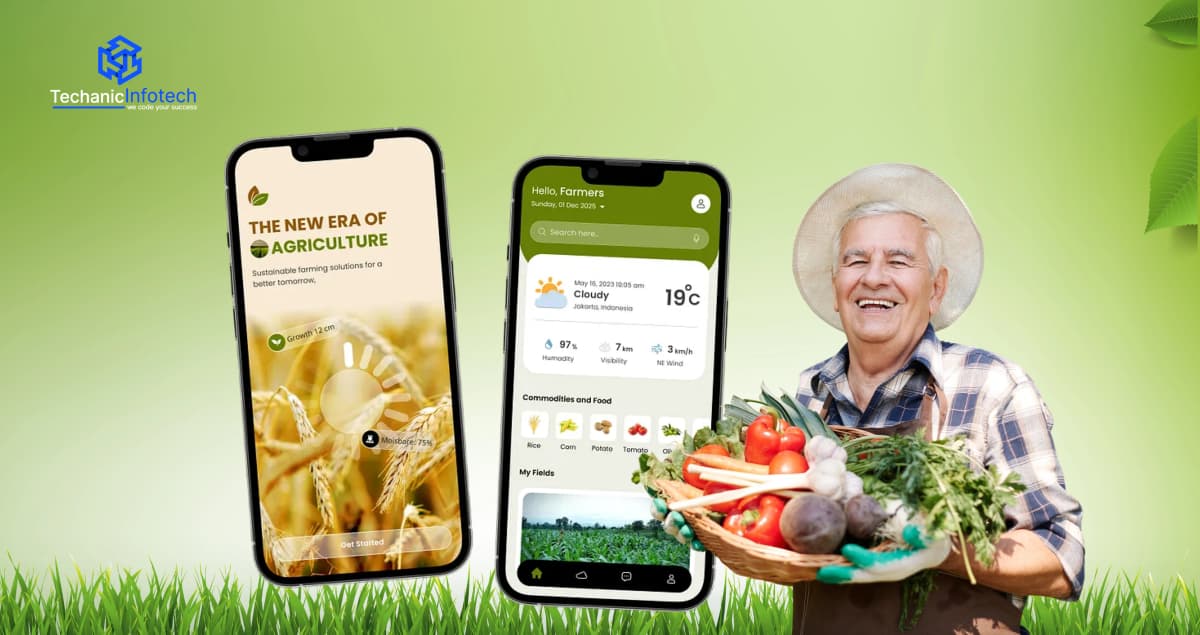
The agriculture industry is rapidly adopting digital solutions to improve productivity, reduce losses, and support smarter decision-making.
As a result, many agribusinesses and startups are exploring mobile solutions tailored for farmers, suppliers, and distributors.
Before moving forward, it’s important to understand the agriculture app development cost, which typically ranges between $20,000 and $120,000, depending on the app’s scope and features.
App complexity, core features, platform choice, and technology stack all play a major role in determining the final budget. From basic farm management tools to advanced apps with AI, IoT, and real-time analytics, costs can vary widely.
This complete breakdown explains where your investment goes and how to plan a scalable agriculture app without overspending.
The agriculture tech sector is expanding fast as farmers and businesses adopt digital tools to boost yields and efficiency.
Understanding the cost to develop a precision farming app is vital for anyone entering this space, given the rising demand and evolving technologies.
With mobile integrations, AI, IoT, and analytics reshaping farm operations, the market is projected to grow significantly in the coming years.
Here are some key agriculture market stats highlighting current and upcoming trends:
The global precision agriculture market is expected to reach $22.49 B by 2034.
Around 45% of farmers in developed countries use precision ag tech.
65% of ag companies adopted cloud solutions for data.
The precision farming market was valued at $10.35 B in 2023.
Digital agricultural software is growing at 12.8% CAGR (2025–2031).
AgriTech apps are transforming modern farming by combining technology with everyday agricultural operations.
With the rise of agriculture app development, farmers and agribusinesses now rely on digital tools to improve productivity, reduce risks, and make data-driven decisions across the entire farming lifecycle.
AgriTech apps provide instant access to weather forecasts, soil health insights, and crop performance data. This transparency helps farmers plan better and respond quickly to changes.
Understanding the cost of building a farming management app also allows startups to invest wisely in features that deliver long-term value.
Digital tools help automate irrigation, pest control, and resource planning, reducing manual effort and waste.
These efficiency gains often justify the smart agriculture app development cost, as farmers see measurable savings in water usage, labor, and input expenses over time.
Advanced analytics and AI-driven insights support smarter crop selection and planting schedules. AgriTech apps help predict yields and reduce seasonal risks.
Evaluating the farming mobile app development cost becomes easier when farmers see improvements in crop consistency and overall farm profitability.
AgriTech platforms connect farmers directly with buyers, suppliers, and distributors.
This removes intermediaries, improves price transparency, and helps farmers earn fair value for their produce while expanding their reach into regional and national markets.
Improved internet connectivity and smartphone usage in rural areas have accelerated AgriTech adoption.
Mobile-first solutions are now more practical and scalable, making the cost to make an agri marketplace app a worthwhile investment for businesses targeting digitally connected farming communities.
Estimating the cost of building an agriculture app helps businesses plan budgets and choose the right features from the start.
App complexity, platforms, and integrations all influence pricing.
Understanding how much it costs to develop an agriculture app allows startups and agribusinesses to make informed decisions and avoid unexpected development expenses.
The type of agriculture app you choose to build plays the most important role in determining overall development cost.
A basic farm management app focuses on tracking and reporting, while advanced agri marketplaces or smart farming apps require complex workflows and scalable architecture.
The cost to build an farming application also depends on whether the app targets individual farmers, agribusinesses, or large enterprises, along with the chosen revenue model, such as subscriptions or commissions.
|
App Type |
Estimated Cost |
|
Basic Farm Management App |
$20,000 – $35,000 |
|
Crop Monitoring App |
$30,000 – $50,000 |
|
Livestock Management App |
$35,000 – $60,000 |
|
Agri Marketplace App |
$45,000 – $90,000 |
|
Smart Agriculture / IoT App |
$70,000 – $120,000 |
The number of features and their technical complexity directly influence development timelines and budgets.
Core features help keep costs manageable, while advanced capabilities like AI-based insights, automation, and real-time analytics increase scope.
Planning features carefully helps control the custom agriculture app development cost, ensuring that essential tools are prioritized without overloading the budget with unnecessary complexity.
|
Feature Level |
Estimated Cost |
|
Basic Features |
$20,000 – $35,000 |
|
Medium Complexity Features |
$35,000 – $65,000 |
|
Advanced & AI-Based Features |
$60,000 – $120,000 |
User experience is critical for agriculture apps, as they must be easy to use for farmers with varying technical skills.
Clean layouts, simple navigation, and readable dashboards improve adoption.
The agriculture app development pricing model often includes UI/UX as a separate cost component, especially when custom designs, multilingual support, and accessibility features are required to enhance usability.
|
UI/UX Scope |
Estimated Cost |
|
Basic UI Design |
$3,000 – $6,000 |
|
Custom UI/UX Design |
$6,000 – $12,000 |
|
Advanced UX & Accessibility |
$10,000 – $18,000 |
Platform choice affects both cost and market reach. Android apps are widely preferred in farming communities, while iOS apps often demand higher testing standards.
Many businesses choose to build farming apps for Android first to reach a larger user base. Cross-platform development offers faster launches but may require compromises in performance or advanced native features.
|
Platform Choice |
Estimated Cost |
|
Android App |
$20,000 – $45,000 |
|
iOS App |
$25,000 – $50,000 |
|
Cross-Platform App |
$30,000 – $70,000 |
The backend powers data storage, user management, analytics, and system integrations. Apps using real-time data, weather feeds, or IoT devices require a scalable cloud architecture.
A strong backend directly affects performance and security, making it a key contributor to overall agriculture software development cost, especially for apps designed to scale across regions or user bases.
|
Backend Scope |
Estimated Cost |
|
Basic Backend |
$8,000 – $15,000 |
|
Scalable Cloud Backend |
$15,000 – $30,000 |
|
Advanced Data & API Integrations |
$25,000 – $45,000 |
Third-party integrations enhance app functionality by adding weather updates, maps, payment systems, and sensor data.
Each integration increases development time, testing requirements, and long-term maintenance effort.
These elements significantly influence the overall agriculture app development cost, especially when multiple APIs must work together seamlessly without affecting performance or reliability.
|
Integration Type |
Estimated Cost |
|
Weather & Maps APIs |
$3,000 – $6,000 |
|
Payment Gateway |
$3,000 – $7,000 |
|
IoT & Sensor Integration |
$10,000 – $25,000 |
Post-launch maintenance is essential for keeping the app secure, stable, and competitive.
Regular updates address bugs, improve performance, and introduce new features based on user feedback.
Planning maintenance early provides a clear app development cost breakdown, helping businesses avoid unexpected expenses as the app grows and scales with increased usage.
|
Maintenance Type |
Estimated Cost |
|
Annual Maintenance |
15%–25% of the initial cost |
|
Feature Enhancements |
$5,000 – $20,000/year |
|
Scaling & Performance Upgrades |
$10,000 – $30,000 |
Understanding the factors that influence agriculture app development cost is essential for accurate planning and budgeting.
Elements such as app type, features, platform choice, and integrations directly affect overall investment.
Knowing the cost to build a farming application helps businesses prioritize requirements, control expenses, and develop a scalable solution that delivers long-term value.
The overall cost depends heavily on the type of app you plan to build.
A basic farm management app is more affordable, while agri marketplaces or IoT-based smart farming solutions require advanced infrastructure and features.
This variation plays a major role in accurate agri app development cost estimation, as each app type demands a different level of investment.
The number and complexity of features directly influence development time and budget. Core tools keep costs manageable, while AI analytics, real-time monitoring, and automation increase scope.
Understanding agricultural technology app pricing helps businesses balance feature richness with practical cost control.
Choosing the right platform significantly affects development cost. Android apps are widely used in farming communities, while iOS apps often require additional testing and optimization.
Cross-platform mobile app development can reduce cost and time by sharing a single codebase across platforms.
A simple and intuitive interface improves adoption among users with different technical skills. Basic layouts are budget-friendly, while custom dashboards, multilingual support, and accessibility features add cost.
These elements are often reflected in overall agricultural technology app pricing, especially for user-focused applications.
Backend architecture, third-party integrations, and ongoing maintenance significantly affect total cost.
Weather APIs, payment systems, cloud infrastructure, and regular updates are essential for performance and scalability, making them key contributors to long-term development and operational expenses.
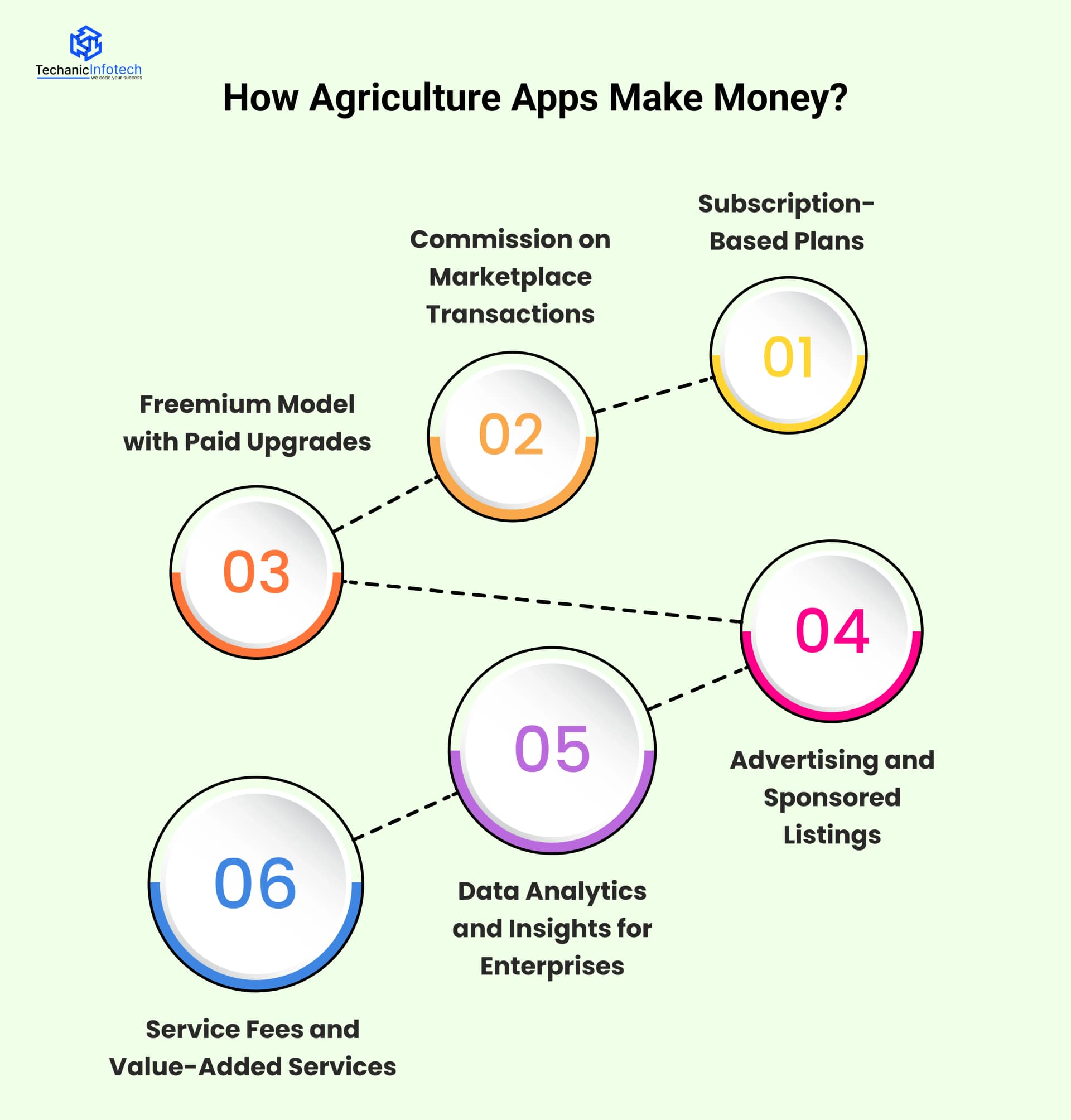
Agriculture apps generate revenue through smart digital strategies that balance user value with business growth.
From subscriptions and marketplaces to data insights and services, these platforms are built to scale profitably.
Understanding monetization models alongside the cost to develop an IoT-based farming app helps businesses plan sustainable, technology-driven agriculture solutions.
Many agriculture apps use subscription-based plans to offer premium features such as advanced analytics, crop alerts, and automation tools.
A clean interface and intuitive mobile app design help users see value quickly and upgrade with confidence. This model generates recurring revenue while allowing farmers to choose plans that match their operational needs.
Agri marketplace apps earn income by charging a small commission on each transaction between farmers, buyers, and suppliers.
This approach scales well as usage grows. Understanding the agri-tech mobile app cost breakdown helps platforms set fair commission rates while covering operational expenses and maintaining profitability.
Many agriculture apps follow a freemium model, offering essential features at no cost while reserving advanced tools for paid users.
Premium upgrades often include AI insights or reporting tools built through professional mobile app development services, making it easier to convert active users into long-term subscribers.
Some agriculture apps generate revenue through targeted advertising and sponsored listings from agribusiness brands.
These promotions are usually relevant and non-intrusive, allowing farmers to discover useful products while app owners earn additional income without charging users directly.
Agriculture apps collect valuable data on crop trends, weather patterns, and user behavior. When aggregated responsibly, this data can be sold as insights to enterprises.
A well-structured app tech stack ensures secure data handling, accurate analytics, and scalable reporting for business clients.
Apps may also charge service fees for expert consultations, logistics support, soil testing, or insurance facilitation.
These value-added services create additional revenue streams while delivering practical solutions that help farmers improve productivity and manage risks more effectively.
Techanic Infotech stands out as a trusted partner for businesses looking to build scalable and user-focused digital products.
With a deep understanding of industry-specific needs, the team delivers reliable solutions backed by strong technical expertise and strategic planning.
As an experienced agriculture app development company, Techanic Infotech combines intuitive design, modern technology stacks, and data-driven development to create high-performing applications.
From idea validation and UI/UX design to development, testing, and post-launch support, every stage is handled with precision and transparency.
The company focuses on cost-effective development, timely delivery, and long-term scalability, ensuring clients receive solutions that meet business goals while delivering real value to end users.
Agriculture apps have become powerful digital tools that support modern farming while opening multiple revenue opportunities for app owners.
From subscriptions and marketplace commissions to data insights and value-added services, these platforms are designed to generate sustainable income while delivering real value to farmers.
However, choosing the right monetization model requires careful planning, strong usability, and scalable technology. Understanding the agriculture app development cost helps businesses align features, pricing strategies, and long-term goals without overspending.
With the right balance of user experience, technology, and revenue planning, agriculture apps can achieve steady growth, improved adoption, and long-term profitability in an increasingly digital farming ecosystem.
The cost depends on app type, features, and platforms. A basic agriculture app may start around $20,000, while advanced apps with AI, IoT, or marketplace features can go up to $120,000 or more.
Core features include weather updates, crop planning tools, farm data tracking, alerts, and user-friendly dashboards. Advanced apps may also include analytics, GPS mapping, and automation for better decision-making.
Android is widely preferred due to its reach in rural areas, while iOS suits premium users. Cross-platform development is also popular for reducing costs and launching faster across multiple devices.
Development time typically ranges from 3 to 6 months, depending on feature complexity, design requirements, and integrations. Advanced apps with smart farming features may take longer.
Agriculture apps earn through subscriptions, marketplace commissions, ads, data insights, and value-added services like expert consultations, logistics, or insurance support.


Shailendra is a dedicated professional known for his strong client-focused approach and clear understanding of business needs. He brings a thoughtful understanding of client needs and focuses on building long-term relationships through clear communication and quality-driven work. With a blend of strategic thinking, content expertise, and a hands-on approach, Shailendra plays a key role in shaping content that aligns with both business goals and user expectations.