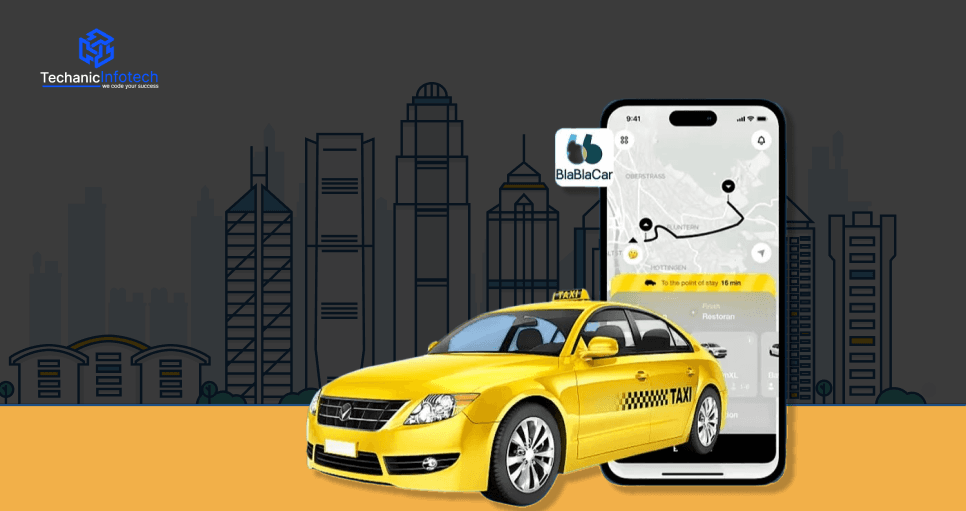
If you’re thinking about building a carpooling platform like BlaBlaCar, one of the first questions you will have is the cost. The good news is that creating such an app is possible for startups of all sizes, as long as you understand the features, technology, and budget involved. In this guide, we’ll break down the real cost to create an app like BlaBla, along with what affects the final price.
If you want to know the full BlaBla like app development cost, this article will give you a clear and simple overview. We’ll also cover the development process and what to expect when developing a platform similar to Bla Bla Car.
BlaBlaCar is one of the world's most popular long-distance carpooling apps. It matches drivers with vacant seats in their automobiles with passengers heading in the same direction.
Instead of scheduling pricey cabs or purchasing full-price tickets, individuals may share a journey, divide fuel expenses, and make travel more economical and socially accessible.
The firm operates in over 20 countries, with millions of active customers who rely on it for low-cost road excursions, interstate travel, and daily commuting.
BlaBlaCar gained popularity because it addressed two main problems at once: excessive travel prices and underutilized car seats. It helps drivers save money on petrol. For passengers, it provides easy transportation at a substantially lesser cost.
Another distinguishing feature of BlaBlaCar is its safety mechanism. Before sharing a ride, the site validates drivers' profiles, reviews, and travel history to ensure their safety.
The term "BlaBla" derives from how chatty users claim to be: Bla (not much talking), BlaBla (some talking), or BlaBlaBla (extremely talkative). This makes the experience more personalized and welcoming.
The global ride-sharing and car-pooling industry is booming, and an app model like BlaBlaCar offers compelling advantages for startups.
BlaBlaCar connects drivers with empty seats to passengers travelling in the same direction, creating a win-win: reduced travel costs for passengers and extra income for drivers. I
In 2022, BlaBlaCar reported 26 million unique active members, 90 million human connections and over €450 million saved by drivers.
With rising fuel costs, congestion and sustainability concerns, users increasingly prefer shared rides over owning or hiring vehicles alone. Developing a ride-sharing app similar to BlaBlaCar taps into this shift and offers you a business model that’s socially relevant and scalable.
BlaBlaCar’s revenue model shows impressive metrics: they charge commissions between 18-20% on each booking.This means if you launch a comparable platform, the cost to create an app like BlaBlaCar could be justified by steady revenue streams via fees, subscriptions, or premium services.
A car-pooling app like BlaBla offers flexibility. You can launch in one region, refine your model, then roll out in multiple cities or countries. Since BlaBlaCar has expanded into markets like India (its largest global market as of 2025)the opportunity exists for you too. The cost to build a ride-sharing app like BlaBla can deliver huge scale if you design for growth from day one.
Modern users care about sustainability. BlaBlaCar’s model helped avoid 2.5 million tonnes of CO₂ in 2024 alone.By aligning your app with environmental and sharing-economy goals, you not only attract users but also build a trusted brand. The cost to develop a car-pooling app like BlaBlaCar becomes an investment in user loyalty.
To build a powerful ride-sharing platform like BlaBla, Bla Bla, or BlaBlaCar, you need well-designed panels for users, drivers, and admins. Each panel plays a major role in ensuring smooth bookings, safety, and ride management.
These features help users search rides, book seats, and communicate smoothly.
Easy Registration & Login: Sign up using phone, email, or social logins.
Ride Search & Filters: Search rides by city, date, time, price, gender preference, luggage space, etc.
Seat Booking & Fare Estimate: View available seats and transparent pricing before booking.
In-App Chat With Driver: Coordinate pickup points or trip details.
Real-Time Ride Tracking: Track the driver’s location on the map.
Secure Payments: Pay via card, wallet, UPI, or other online methods.
Ratings & Reviews: Rate the driver and view past reviews before traveling.
Trip History: Check previous and upcoming bookings easily.
These features help drivers manage rides, bookings, and earnings effectively.
Driver Registration & KYC Verification: Upload ID, license, and vehicle details for approval.
Create & Publish Trips: Add routes, stops, boarding points, available seats, and pricing.
Manage Bookings: Accept or decline seat requests, view passenger details.
In-App Messaging: Communicate with passengers without sharing phone numbers.
Navigation & Route Optimization: Integrated GPS for smooth navigation.
Earnings Dashboard: Track daily, weekly, or monthly earnings.
Ride Status Update: Mark rides as “Started,” “Completed,” or “Cancelled.”
Vehicle & Seat Management: Update vehicle details and seat availability.
These tools allow you to manage the entire BlaBla-style ecosystem from the backend.
User & Driver Management: Approve, block, or verify accounts with full control.
Trip Management: Monitor upcoming, ongoing, or completed rides in real time.
Pricing & Commission Control: Set dynamic pricing, commission rates, cancellation charges.
Payment & Refund Management: Track transactions, issue refunds, manage payout cycles.
Safety & Verification Module: KYC checks, reporting system, dispute management.
Real-Time Analytics Dashboard: Track bookings, revenue, app performance, and active users.
Notification Management: Send push alerts for offers, ride updates, safety tips.
Content & Support Tools: Manage FAQs, customer support tickets, announcements, etc.
The cost to build an app like BlaBla is determined by factors such as app functionality, design complexity, technological stack, and the development team hired. However, the typical cost to create an app like BlaBlaCar is between $20,000 and $60,000 for a fully effective ride-sharing or BlaBla pooling platform.
A simple MVP version with basic features like ride posting, seat booking, payments, chat, and GPS is typically less expensive. However, the cost rises as you add additional services like real-time matching, AI-based route optimization, multi-city rollout, gender preferences, multi-language support, SOS, or subscription models.
It also depends on whether you build the app natively (for Android and iOS) or with a cross-platform framework like Flutter. Furthermore, if you're planning complicated features similar to large-scale mobility solutions, the expense may be comparable to that of taxi app development cost, especially if you include features like real-time location monitoring, surge pricing, or enhanced safety tools.
Here's a breakdown that will help you understand:
|
App Type |
Description |
Estimated Cost |
|
Basic MVP Version |
Basic features: trip posting, booking, payments, reviews |
$20,000 – $30,000 |
|
Mid-Level App |
Real-time tracking, chat, multi-language, verification, analytics |
$30,000 – $45,000 |
|
Advanced BlaBlaCar-Like App |
AI matching, dynamic pricing, automated KYC, multi-city support, admin dashboards |
$45,000 – $60,000 |
Before you estimate the total budget for your project, it’s important to understand the core elements that directly influence how much it will cost to develop an app like BlaBlaCar. Each factor affects the timeline, resources, and overall development effort.
The platform you select has a significant impact on the entire cost to build an app like BlaBlaCar. If you simply construct the app for Android, the development time is reduced and the cost is lower.
Building specifically for iOS is significantly more expensive due to rigorous restrictions and testing requirements. However, if you want to reach a bigger audience, like BlaBlaCar, developing for both Android and iOS is the best option, but it doubles development time, design work, and QA testing.
Cross-platform development (Flutter/React Native), which uses a single codebase for both platforms, can lower the cost to create an app like BlaBla.
Cost Estimate Based on Platform:
Android only: $10,000 – $20,000
iOS only: $12,000 – $22,000
Both platforms (native): $25,000 – $50,000
Cross-platform (Flutter): $18,000 – $35,000
Choosing the correct platform reduces the cost to develop an app like BlaBlaCar while still reaching your target audience.
The cost of your app increases as it becomes more complicated. A simple ride-sharing platform with basic features such as registration, ride posting, seat booking, chat, and payments is far less expensive than a sophisticated app with real-time GPS, automatic KYC, SOS alerts, smart route matching, wallets, or AI-based pricing. BlaBlaCar has numerous levels (user panel, driver panel, and admin panel), therefore adding a module increases development time.
The complexity to develop a carpooling app like BlaBla is directly proportional to the power of the backend. Real-time taxi app features need extensive APIs, huge servers, robust security, and continuous synchronization, which boosts the cost.
Cost Based on Complexity:
Basic MVP: $20,000 – $30,000
Medium complexity: $30,000 – $45,000
Fully advanced BlaBlaCar-like app: $45,000 – $60,000
More features = Higher BlaBla clone app development cost, so choosing wisely is important.
A good design has a direct influence on user retention. Apps like BlaBlaCar are recognized for their straightforward, welcoming, and clean style, which makes scheduling rides simple.
If you want to create an app like BlaBla, your taxi app design should not only appear attractive but also make navigation easy for drivers and passengers.
Custom drawings, animations, multi-language panels, and a contemporary interface need more effort and expertise. A premium design raises your brand's worth while also increasing the cost of developing an app similar to BlaBla.
Cost Estimate for UI/UX:
Basic UI/UX: $2,000 – $4,000
Professional UI/UX + custom icons: $4,000 – $7,000
Advanced UI/UX + animations + multilingual layouts: $7,000 – $12,000
High-quality UI/UX is required if the app is to compete with leading ride-sharing platforms and justify the final BlaBla-like app development cost.
The tech stack you chose has a significant impact on the final BlaBla-like app development cost. Native development (Swift for iOS and Kotlin for Android) provides the highest performance, fluid animations, and long-term stability, but comes at a larger cost because both platforms require distinct codebases. This is great for creating a large-scale platform like BlaBlaCar that includes advanced features such as AI route matching, robust GPS, and real-time notifications.
Cross-platform frameworks, like Flutter or React Native, allow you to create a single codebase for both Android and iOS. This lowers the cost of developing an app like BlaBla while maintaining quality.
Cost Based on Tech Stack:
Native (iOS + Android): $30,000 – $60,000
Cross-platform (Flutter/React Native): $20,000 – $40,000
Cross-platform is the ideal choice for entrepreneurs looking to create an app like BlaBla on a budget.
A ride-sharing service like Bla Bla is primarily reliant on its backend. The backend is responsible for real-time seat availability, trip creation, price, chat, payments, user verification, and location updates.
If your backend is inefficient, the entire app will slow down, crash during traffic jams, or provide erroneous transportation information.
A solid backend built using scalable technologies such as Node.js, MongoDB/PostgreSQL, AWS, Firebase, or microservices architecture is required to create an app like BlaBla. If you intend to expand into numerous cities or nations, scalable design becomes even more critical.
Backend Cost Range:
Basic backend: $5,000 – $10,000
Mid-level backend: $10,000 – $20,000
Advanced scalable backend: $20,000 – $35,000
The more robust your backend, the smoother and more dependable your carpooling app development experience will be.
The location of your mobile app development company has a significant influence on the cost of building an app like BlaBlaCar. Hiring developers from the United States, United Kingdom, or Western Europe can drastically boost the budget because hourly prices might range from $120 to $200 per hour. These teams provide valuable experience, but they may not be appropriate for companies with minimal resources.
Developers in India, Southeast Asia, and Eastern Europe provide the same technological talents at substantially lower costs, without sacrificing quality. This is one of the primary reasons why worldwide organizations outsource their BlaBla clone app development initiatives.
Average Hourly Rates by Region:
USA / Canada: $80 – $180/hr
Western Europe / UK: $60 – $150/hr
Eastern Europe: $30 – $60/hr
India / Asia: $20 – $40/hr
If you want to build an app similar to BlaBla, selecting the proper team location can save you up to 50% of the entire mobile app development cost.
Maintenance is one of the most significant long-term costs in BlaBla-like app development. Once your app is published, it will require ongoing upgrades to remain compatible with new Android/iOS versions, correct issues, enhance performance, and add new features. Maintenance is especially crucial for ride-sharing and carpooling services like BlaBlaCar since the app manages real-time GPS, payments, trip data, and user authentication, all of which must stay accurate and safe.
Server optimization, API monitoring, security patches, UI changes, and performance tweaking are regular monthly upgrades. If your app incorporates complex features like real-time chat or smart route matching, your maintenance expenses may rise.
Maintenance Cost Range:
Basic maintenance: $500 – $1,000/month
Mid-level maintenance: $1,000 – $2,500/month
Advanced multi-city platform: $2,500 – $5,000/month
Proper maintenance guarantees that the cost of developing an app like BlaBla is a long-term commitment rather than a one-time build.
Building an app similar to BlaBla, Bla Bla, or BlaBlaCar requires extensive testing and quality assurance.
Ride sharing applications manage live monitoring, seat reservations, real-time trip updates, payments, and user interactions; any flaw can degrade the user experience or possibly pose a safety risk. That is why extensive testing is essential to verify the app functions properly in real-world circumstances.
QA teams must check GPS accuracy, map synchronization, chat stability, payment dependability, ride creation flow, driver verification, app speed, and push notifications. Device compatibility testing ensures that the app functions properly on various screen sizes and operating systems.
Testing & QA Cost Range:
Basic QA: $2,000 – $4,000
Mid-level testing: $4,000 – $7,000
Advanced ride-sharing QA: $7,000 – $12,000
Including strong QA ensures your BlaBla clone app development cost doesn’t go to waste by launching a buggy or unstable app.
These factors do not look big at first but can majorly impact your cost to build an app like BlaBlaCar:
The administrative panel is the brain of any ride-sharing platform BlaBlaCar. It costs less to develop a simple admin panel with basic functionality like user administration, trip monitoring, and payment tracking.
However, adding additional dashboards, analytics modules, heatmaps, fraud detection tools, city-specific restrictions, and bespoke reporting complicates and increases the cost of the backend.
A robust admin panel offers you complete control over drivers, passengers, commissions, pricing, disputes, and safety, which is necessary for developing a large-scale app like BlaBlaCar. However, each new dashboard or analytic function increases development time and cost.
Admin Panel Cost Range:
Basic admin panel: $3,000 – $6,000
Advanced multi-dashboard system: $8,000 – $15,000
The smarter the admin panel, the higher your overall BlaBla clone app development cost.
If your goal is to launch your app in multiple cities or countries, like how BlaBlaCar operates globally, your development cost will naturally increase.
This is because the app needs zone-based pricing, city-wise ride availability, multiple tax rules, country-specific regulations, multi-language support, multi-currency payments, and region-based trip filters.
Building for one city is simple. But when you create dynamic modules that allow different rules for Delhi, Mumbai, New York, or Paris, the backend becomes more complex.
Cost Impact of Multi-Region Support:
Single city launch: No extra cost
Multi-city setup: +$5,000 – $10,000
Multi-country setup: +$10,000 – $20,000
If you plan to create an app like BlaBla for large-scale expansion, multi-region readiness greatly impacts development time and cost.
Safety is a major reason why apps like Bla Bla are trusted worldwide.
Adding advanced safety features, such as SOS buttons, panic alerts, emergency contacts, real-time ride sharing, and live driver tracking, significantly increases development complexity.
These features require extra backend logic, third-party APIs, verification modules, and real-time communication systems. Although they add to the cost, they also build trust and help your platform scale faster.
Cost Impact of Safety Features:
Basic safety (report feature): $1,500 – $3,000
Advanced safety (SOS, emergency alerts): $5,000 – $12,000
If you want to develop a car pooling app, these features aren’t optional, they're essential for user trust and platform credibility.
Adding AI features can significantly enhance the performance and intelligence of a Bla Bla or BlaBlaCar–style car pooling app. Smart algorithms can automatically match passengers with the best drivers, predict demand during peak hours, detect suspicious activity, and even suggest optimal pricing. AI also helps with fraud detection, fake profile prevention, and route optimization.
However, AI development requires specialized engineers, training datasets, machine learning models, and extra backend power, making it one of the most expensive parts of BlaBla-like app development.
Cost Impact of AI Features:
Basic AI (simple matching): $5,000 – $8,000
Mid-level AI (dynamic pricing, predictions): $8,000 – $15,000
Advanced AI (fraud detection, full automation): $15,000 – $30,000
If you want to develop an app similar to BlaBla, AI features can give you a competitive edge.
Developing a taxi app or car pooling app like BlaBlaCar runs on several third-party services.
These include Google Maps, SMS gateways, email services, identity verification APIs, payment gateways, cloud servers, and analytics tools. While these APIs save a lot of development time, each one comes with its own monthly or usage-based cost.
For example, Google Maps may charge per 1,000 map loads, SMS providers charge per OTP, and analytics tools may require monthly subscriptions. These API costs must be included when calculating the cost to build a ride sharing app like BlaBla.
Third-Party API Cost Estimate:
Maps APIs: $200 – $1,000/month
SMS/Email OTP: $100 – $500/month
Cloud hosting: $100 – $800/month
Analytics tools: $50 – $300/month
APIs add flexibility, but they also increase long-term operational expenses.
To compete with apps like BlaBlaCar, your platform must have built-in marketing tools.
Features like referral programs, promo codes, loyalty rewards, and banner ads help you attract users, retain customers, and boost engagement. These integrations require extra backend logic to track referrals, apply discounts, calculate rewards, and display dynamic offers.
Adding these tools increases development time but helps you grow faster once the app is live. It’s especially useful if you're launching in new cities or trying to scale your user base quickly.
Cost Impact of Marketing Features:
Basic offers & coupons: $1,000 – $3,000
Referral systems: $3,000 – $5,000
Loyalty points & reward engine: $4,000 – $8,000
If you're planning to create an app like BlaBla, built-in marketing features are key to fast and sustainable growth.
If you plan to launch your app in different countries or even across multilingual regions (like Europe or India), you need multi-language support.
This requires extra UI/UX design work because every screen must adjust to different text lengths, fonts, and layouts. You also need backend changes to store translated content, validation messages, notifications, and email templates.
For a BlaBla-like ride-sharing app, localization builds trust because users prefer apps available in their native language. However, this increases the overall BlaBla-like app development cost since designers and developers need to plan for culturally relevant elements, RTL support (like Arabic), and region-based formatting.
Cost Impact of Multi-Language Support:
Single extra language: $2,000 – $4,000
Full multilingual system (3–5 languages): $5,000 – $12,000
Advanced localization (RTL + region filters): $10,000 – $18,000
Localization helps your BlaBla clone app scale globally, just like BlaBlaCar did.
Best taxi apps like BlaBlaCar require strong servers because thousands of users may search for rides, track drivers, book seats, and chat in real time.
If your server isn’t optimized, the app may lag, crash, or show incorrect location data. This directly affects user trust.
To ensure smooth performance, you need scalable cloud architecture (AWS, Google Cloud, or Azure), load balancers, caching systems, and database optimization.
As your user base grows across cities, your server costs increase because more RAM, bandwidth, and CPU power are required. Traffic spikes during weekends and holidays also require autoscaling.
Server & Cloud Cost Estimate:
MVP-level traffic: $100 – $300/month
Growing user base: $300 – $800/month
High-traffic multi-city scale: $1,000 – $3,000/month
Strong cloud infrastructure is essential when you develop an app like BlaBlaCar, ensuring reliability and real-time accuracy for every ride.
Creating a successful ride-sharing or carpooling platform like BlaBla requires strong planning, the right technology, and a clear development roadmap.
Below is a simple, beginner-friendly guide that explains how you can develop an app like BlaBlaCar from idea to launch.
Before building the mobile app, research the ride-sharing market in your region. Identify what users need, cheaper travel, long-distance rides, college rides, or daily office commuting. Understanding your niche helps you decide what features to include and how to position your platform.
This research phase decides how you will create a ride sharing app like BlaBla that is relevant to your target audience.
Next, list out the essential features for both drivers and passengers. Must-have features include ride search, trip posting, seat booking, in-app chat, GPS tracking, payments, and ratings.
Advanced features like gender preferences, SOS, AI matching, and multi-city support can be added later.
Plan your MVP first, it keeps your BlaBla-like app development cost under control.
Decide whether you want to build native apps (Android/iOS separately) or cross-platform apps (Flutter/React Native).
Native apps offer better performance.
Cross-platform apps are more affordable and faster to launch.
If your goal is to build an app like BlaBla quickly and cost-effectively, cross-platform is a great choice.
Design plays a huge role in user experience. Your layout must be simple, clean, and intuitive, just like BlaBlaCar.
Focus on smooth navigation, clear buttons, and a user-friendly ride booking flow.
Good UI/UX increases app retention and builds trust.
This step includes developing the engine behind your app:
User registration
Driver verification
Trip creation
Seat booking
GPS & live tracking
Payments
Notifications
Admin dashboard
A strong backend ensures your app runs fast and handles thousands of bookings in real time. This is the most critical step when you develop an app like BlaBlaCar.
Add essential safety features such as SOS, emergency contacts, verified profiles, and reporting tools. Ride-sharing apps must prioritize user trust.
Ride-sharing apps require heavy testing because they involve live locations, payments, chats, and matching. Test the app for usability, GPS accuracy, speed, and security.
Release your app on Android/iOS and promote it through referrals, social media ads, student programs, or partnership campaigns. Strong marketing helps you build initial traction quickly.
After launch, keep improving the app. Add new features, expand to new cities, optimize the backend, and introduce AI features. Continuous updates ensure your app grows over time, just like BlaBlaCar did.
Building a ride-sharing or carpooling platform like BlaBla, doesn't always have to be expensive. With the right planning and smart decisions, you can reduce the overall development cost without affecting quality. Here are some helpful tips to make your BlaBla clone app development more budget-friendly:
Instead of building every feature at once, launch a simple MVP with core features like user signup, trip posting, seat booking, payments, ratings, and chat. This reduces your initial cost to build an app like BlaBla and helps you understand what users actually want.
Pick Flutter or React Native so you can build one app for both Android and iOS. This cuts development time by nearly 40% and lowers the cost to develop an app like BlaBlaCar without compromising performance.
Whenever possible, use ready-made modules such as payment gateways, maps, chat APIs, OTP verification tools, and admin templates. This avoids building everything from scratch and lowers cost significantly.
Don’t add AI matching, dynamic pricing, or multi-city rollout in Version 1. These features take time and increase backend work. Add them gradually once your app gains users.
Hiring a skilled team from countries like India or Eastern Europe can reduce development costs by 50–60%. They offer high-quality work at affordable rates, which helps optimize your BlaBlaCar clone app development cost.
Cloud platforms like AWS, Firebase, and DigitalOcean allow you to pay only for what you use. This avoids expensive infrastructure costs, especially in the early stages.
Clear documentation, wireframes, and user journeys reduce rework. When developers know exactly what to build, it saves time, reduces errors, and keeps your ride-sharing app development cost low.
A well-structured backend ensures that adding new features or expanding to new cities is cheaper and faster in the future.
Building a ride-sharing platform like BlaBlaCar requires the perfect blend of technology, strategy, and scalability and that’s exactly where Techanic Infotech stands out.
We don’t just build apps; we engineer complete mobility ecosystems designed for real-world performance.
With deep experience in ride-sharing, carpooling, and on-demand mobility app development, our team knows what it takes to create a secure, fast, and user-friendly platform. From real-time GPS tracking and automated KYC to AI-based matching, dynamic pricing, multi-city scaling, and powerful admin dashboards, we cover every detail needed to launch a successful mobility app.
As a leading taxi app development company, we help you reduce development cost, speed up time to market, and ensure your app is built with clean code, modern UI, and scalable backend architecture.
Building a ride-sharing or carpooling platform like BlaBlaCar is an amazing opportunity for organizations wishing to access the rapidly developing mobility sector.
With the appropriate strategy, features, and technology, you can create a scalable, user-friendly, and lucrative platform that seamlessly links drivers and passengers.
The entire cost of building an app like BlaBla is determined by features, design, backend strength, and development method; however, smart choices such as MVP development and cross-platform technology may help keep the budget under control.
Working with an experienced development team guarantees that your app is secure, smooth, and future-ready.
The cost typically ranges from $20,000 to $60,000, depending on features, tech stack, real-time GPS, design complexity, and whether you build an MVP or full version.
A basic MVP takes around 10–14 weeks. A full-featured, multi-city platform can take 4–6 months, including design, backend development, and testing.
Core features include trip posting, ride search, GPS tracking, in-app chat, payments, ratings, verification, and a powerful admin dashboard.
Yes. Using cross-platform development, starting with an MVP, and outsourcing to an experienced team can significantly reduce the BlaBla clone app development cost.
Popular choices include Flutter/React Native for mobile apps and Node.js, MongoDB, PostgreSQL, AWS, and Firebase for a scalable backend
Techanic Infotech delivers scalable mobility apps with real-time features, clean UI, secure payments, IoT/GPS integrations, and end-to-end support, from planning to launch.


Abhishek Jangid is the CEO of Techanic Infotech, with extensive experience in mobile app and web development. He specializes in helping businesses turn innovative ideas into scalable digital solutions through strategic planning and modern technology.