Healthcare App Development
How to Build a Pharmacy App: Features, Cost & Development Guide
February 6, 2026
February 6, 2026
Building a pharmacy app has become one of the smartest moves for healthcare brands looking to meet patients where they are.
People want quick prescription refills, medication reminders, and easy access to pharmacists without waiting in line, and a well-designed app delivers all of that.
Suppose you’re planning to build a pharmacy app. The process goes far beyond basic coding. You need the right features, a secure backend, and a user experience that feels simple and trustworthy.
In this guide, you’ll learn the essential steps, from researching your market to launching a fully functional product. With the right approach,
You can create an app that helps patients stay on track and keeps your pharmacy competitive.
The pharmacy app space is growing fast as more people turn to digital tools for medicine orders, refills, and healthcare info.
Today’s patients expect speed and convenience, and that’s pushing demand for mobile solutions.
In this environment, pharmacy app development isn’t just smart, it’s becoming essential for brands that want to stay competitive.
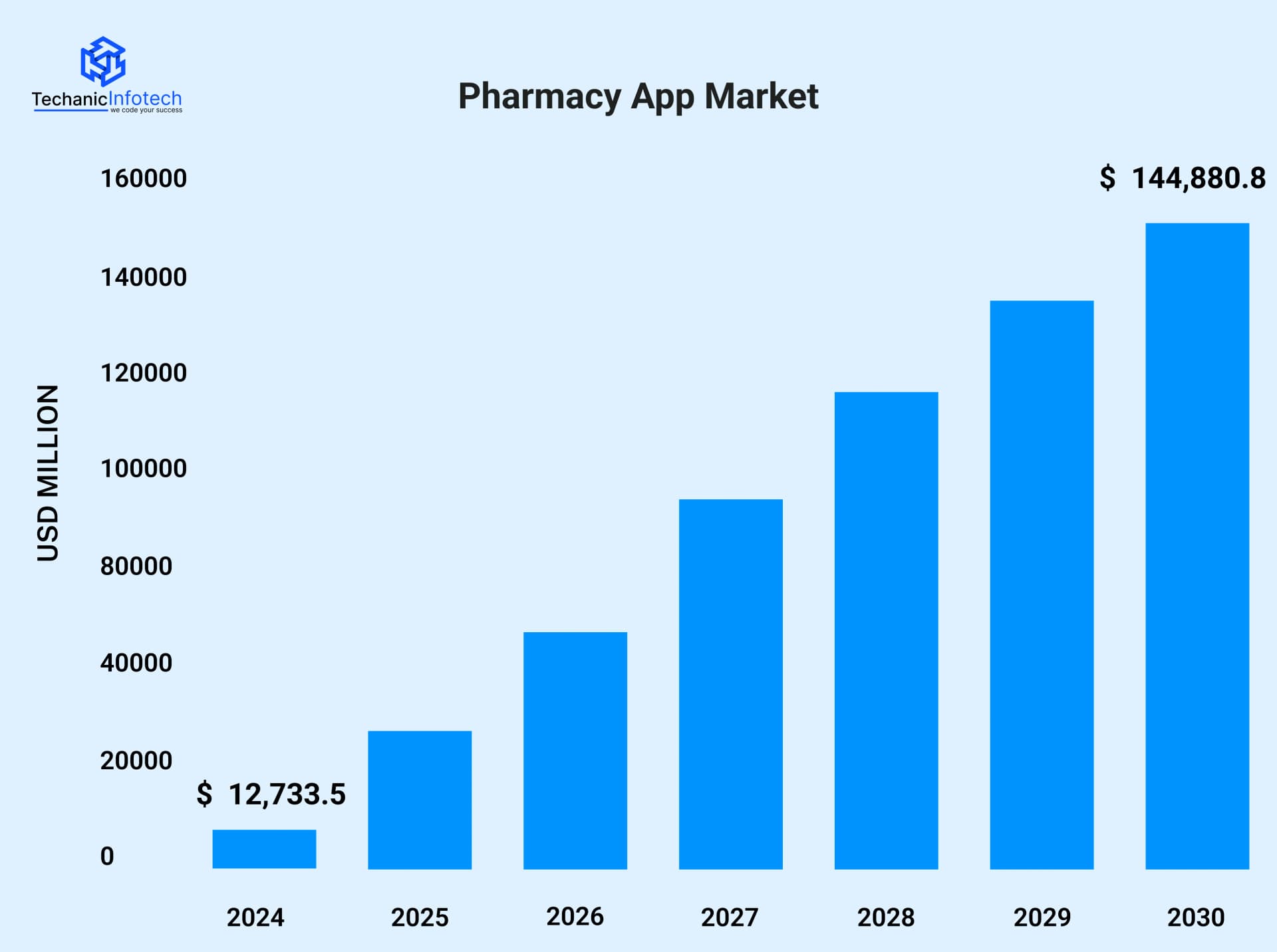
The global online pharmacy app market was valued at approximately USD 12,733.5 million in 2024 and is projected to surge dramatically by 2030.
The pharmacy delivery app market size hit approximately $4.5 billion in 2024, with strong growth ahead.
Digital pharmacy solutions are part of a broader $134.9 B market in 2024, growing toward nearly $483.5 B by 2032.
Consumer penetration of online pharmacy services is rising, with digital shoppers topping 2.7 billion worldwide in 2024.
Pharmacy apps fall into several categories, each serving a different purpose in the patient journey.
Knowing these types helps you choose the right direction when you plan to create a pharmacy app and build features that truly matter.
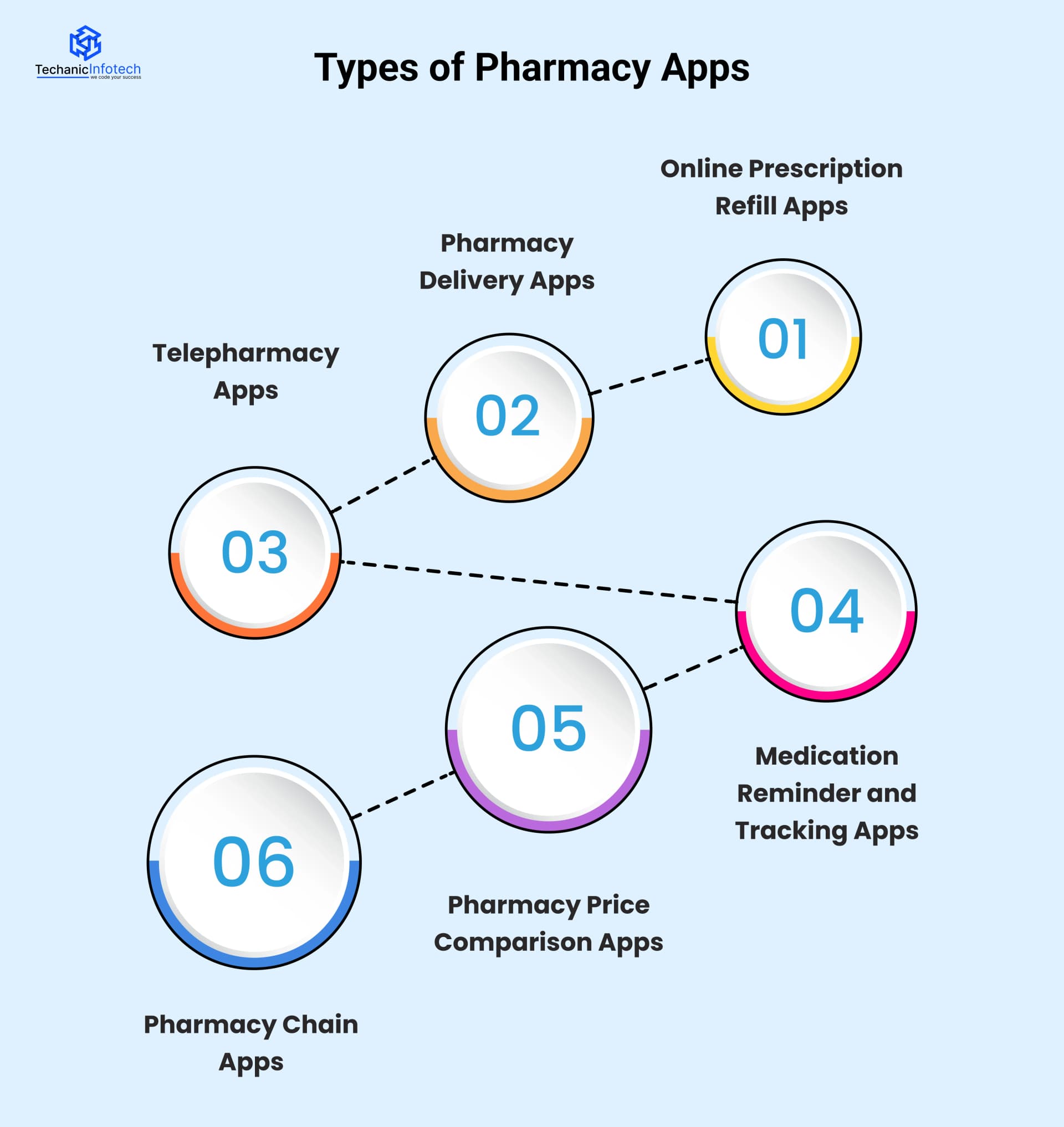
These apps simplify the refill process by letting users upload prescriptions, request refills, and track updates directly from their phones.
They cut down wait times, reduce phone calls, and improve overall convenience for recurring medication needs.
These platforms focus on fast doorstep delivery of medications. Users can place orders, schedule delivery windows, and follow real-time tracking.
As part of online pharmacy app development, these apps help pharmacies meet rising expectations for fast, contactless medication access.
Telepharmacy apps connect patients with licensed pharmacists through chat or video sessions.
They make it easy to ask questions, review medications, and receive guidance without visiting a store. This creates accessible, on-demand pharmacist support from anywhere.
These apps help users stay consistent with their treatment plans. They send dose reminders, track adherence, and organize multiple medications in one dashboard.
They’re also a growing focus in medicine delivery app development and digital pharmacy app development, helping patients manage daily routines more reliably.
These apps let users compare drug prices across pharmacies, locate discounts, and access savings programs.
They make cost transparency easy and help patients find the most affordable option for both brand-name and generic medications.
Large pharmacy chains use these all-in-one apps to combine refills, delivery, rewards, and health services.
They streamline customer interactions, build loyalty, and give users a single hub for everything related to their prescriptions and wellness.
A pharmacy app gives patients convenient access to essential services while helping pharmacies streamline operations.
When you build a pharmacy app, you create a modern tool that boosts trust, increases engagement, and supports better medication management for everyday users.
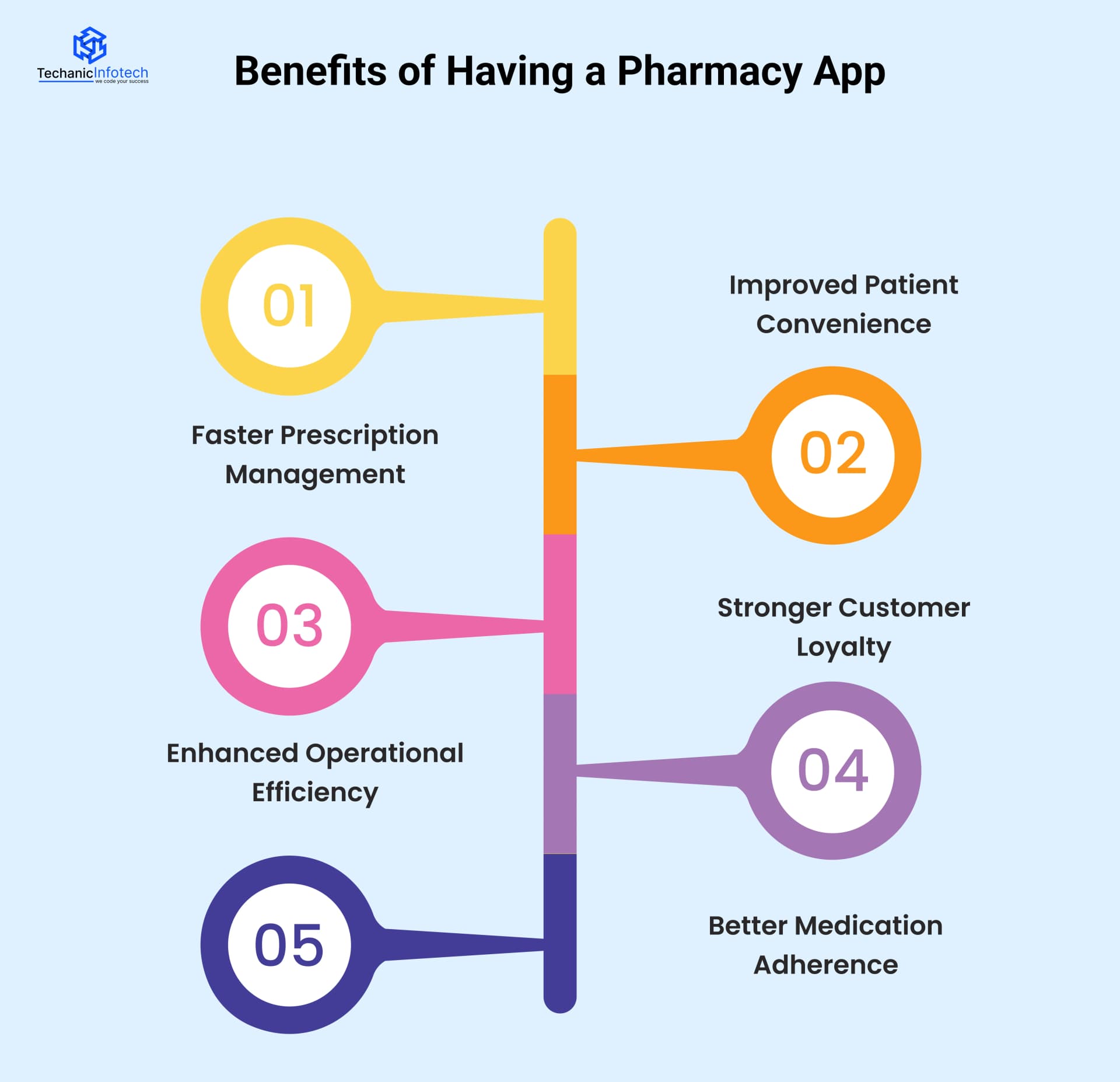
A pharmacy app makes everyday tasks easier by offering quick access to refills, delivery options, and reminders.
Patients can manage their medications anytime without calling or visiting the pharmacy, creating a smoother and more stress-free experience.
Users can upload prescriptions, request refills, and track updates in one place.
As part of pharmacy delivery app development, this reduces wait times, cuts paperwork, and ensures patients always know their medication status without repeated follow-ups.
A well-designed app keeps customers coming back by offering rewards, personalized recommendations, and consistent service.
When patients feel supported and valued, they’re more likely to rely on the same pharmacy for all their long-term healthcare needs.
With automated refills, digital records, and reduced phone traffic, pharmacies save time and resources.
These features, common in e-pharmacy app development, help improve workflows, reduce errors, and free staff to focus on meaningful patient care.
In-app reminders help patients stay on schedule with their medications.
By reducing missed doses and offering simple tracking tools, pharmacies can support better health outcomes and help users remain consistent with their treatment plans.
A pharmacy app sets a brand apart by offering modern, mobile-first services customers now expect.
Ongoing mobile app maintenance keeps performance sharp, helping pharmacies attract more users, maintain engagement, and stay ahead of competitors.
A successful pharmacy app needs simple, reliable pharmacy app features that support real user needs.
The right tools help patients manage prescriptions with ease while giving pharmacies a smarter, faster way to deliver dependable and convenient service.
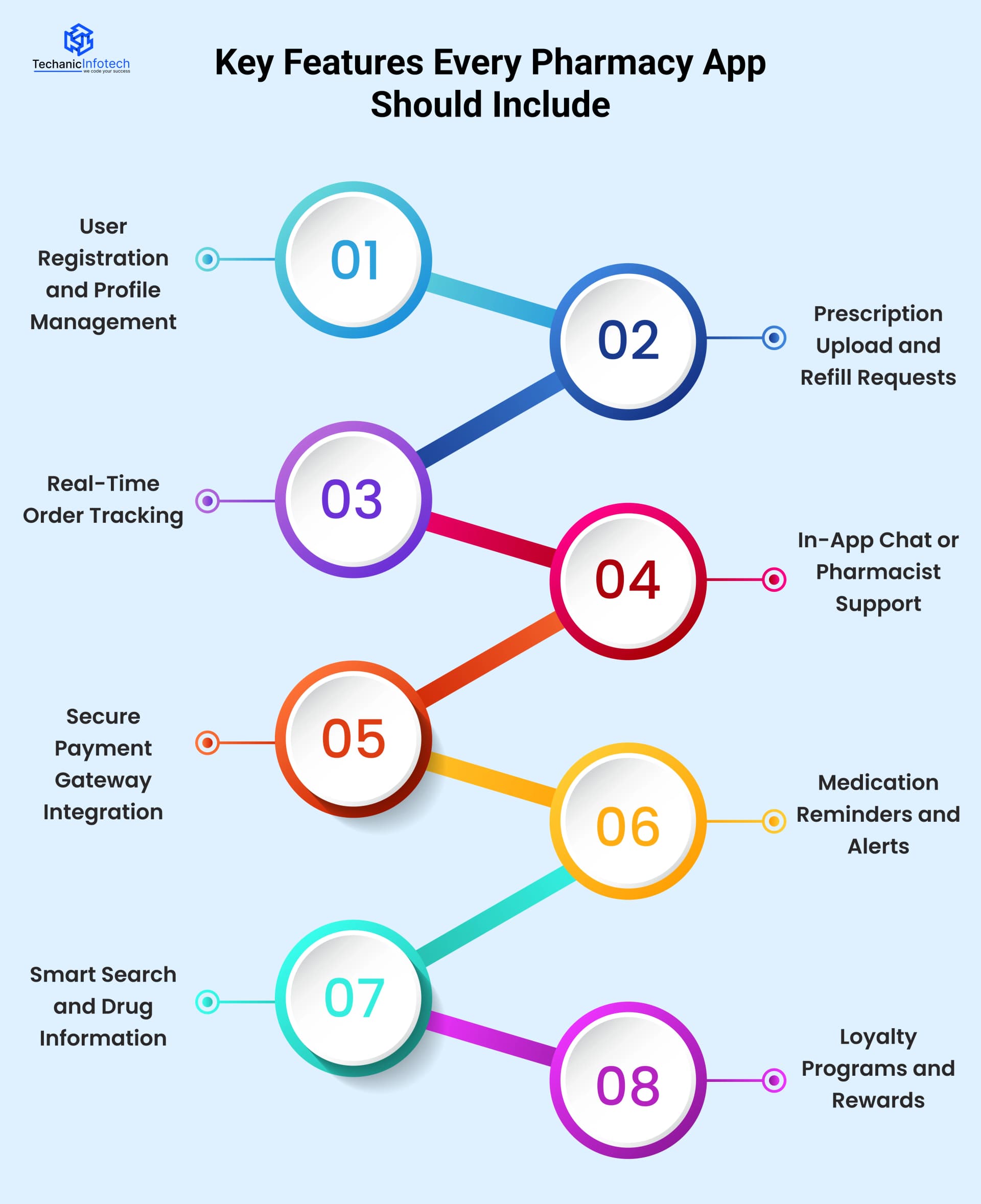
A clean onboarding flow helps users create accounts, store personal details, and manage preferences in one place.
These mobile app features make it easier for patients to track prescriptions, review history, and receive personalized services based on their health routines.
This feature lets users upload prescriptions, request refills, and track approvals in minutes.
It reduces wait times and phone calls while helping pharmacies process requests faster, maintain clear records, and keep refill workflows well organized.
Order tracking gives patients complete visibility into their medication status, from processing to delivery.
As part of modern pharmacy app development, this builds trust by offering real-time updates and keeping users informed every step of the way.
A built-in chat or video feature connects users with licensed pharmacists for quick help and guidance.
It boosts accessibility, strengthens engagement, and gives patients a reliable way to get answers without visiting the pharmacy in person.
A pharmacy app needs safe, easy payment options. Secure gateways let users pay for prescriptions and services confidently.
Encryption and trusted processors protect financial information while ensuring a smooth, hassle-free checkout experience.
Automated reminders keep patients on schedule with their medications.
These tools, now common in mobile app development, help reduce missed doses, support better treatment outcomes, and simplify daily routines for users managing multiple prescriptions.
A strong search feature helps users quickly locate medications, compare options, and access essential drug details.
Accurate information empowers patients to understand dosages, side effects, and usage instructions, creating a safer and more user-friendly experience.
Rewards and discount programs encourage repeat use by offering points, perks, or exclusive savings.
These features align with mobile app development trends, helping pharmacies increase engagement, strengthen customer relationships, and stand out in a competitive market.
Building a pharmacy app takes careful planning, the right tech choices, and real attention to user needs.
When you’re ready to build a pharmacy app, these steps help you move from concept to launch with confidence and clarity.
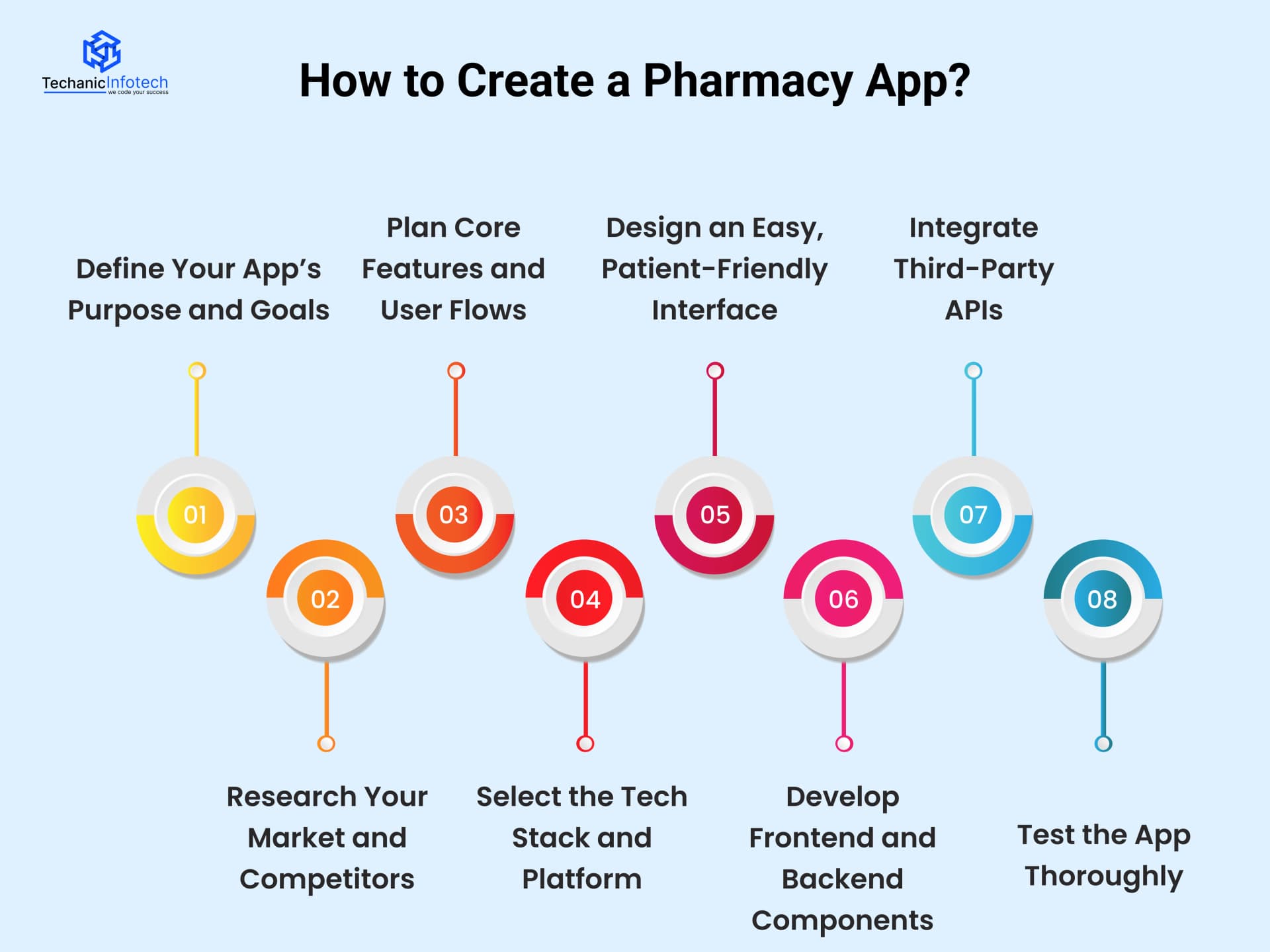
Start by identifying the problem your app will solve. Outline your target audience, expected features, and long-term goals.
A clear vision ensures your development process stays focused and results in an app that meets real patient needs.
Study existing apps to understand strengths, gaps, and user expectations.
This research helps you create a pharmacy app that stands out by offering better features, smoother usability, and a value proposition tailored to your audience.
Decide whether your app will focus on refills, delivery, reminders, telepharmacy, or a complete platform.
Choosing the right model ensures the entire structure supports your users and business goals effectively.
Build a clear feature list and map every step of the user journey.
Incorporating online pharmacy app development best practices ensures your app feels intuitive, organized, and simple for users managing prescriptions or browsing services.
Pick technology based on performance needs, budget, and app complexity.
Referencing a mobile app tech stack guide helps ensure you choose tools that support speed, reliability, and long-term scalability for both iOS and Android.
Focus on clean layouts, readable fonts, and smooth navigation.
Using a mobile app design guide helps you build an experience that feels welcoming, trustworthy, and effortless for users of all ages.
Developers bring your designs to life through user-facing screens and secure backend systems.
Strong development ensures your app handles tasks like refills, payments, and profile management without lag or errors.
Add APIs for payments, delivery tracking, SMS alerts, or prescription verification.
These integrations make your app more powerful, efficient, and prepared for real-world pharmacy operations without reinventing the wheel.
Run performance checks, security tests, and usability reviews.
Thorough testing, an essential part of pharmacy mobile app development, helps identify bugs early and ensures patients get a smooth, dependable experience from the start.
Publish your app across major platforms and monitor user behavior. Following best practices for how to publish an app on the App Store ensures a clean launch.
Continuous updates help you fix issues, add new features, and keep users engaged.
The mobile app development cost for a pharmacy app typically ranges from $10,000 to $90,000+, depending on features, design needs, integrations, and compliance requirements.
The final price depends heavily on the app’s complexity, development team, and long-term support needs.
|
Cost Factor |
Estimated Cost Range |
What This Includes |
|
Basic Features & MVP Setup |
$10,000 – $30,000 |
Core functions like login, profiles, and refills. |
|
Advanced UI/UX Design |
$5,000 – $12,000 |
Custom screens, animations, and user-friendly flows. |
|
Backend Development |
$7000 – $25,000 |
Databases, servers, logic, secure data handling. |
|
Third-Party API Integrations |
$2000 – $8000 |
Payments, delivery tracking, SMS alerts, verification. |
|
HIPAA Compliance & Security Setup |
$4000 – $15,000 |
Data encryption, secure workflows, and user privacy. |
|
Delivery & Tracking System |
$5,000 – $12,000 |
Driver app, maps, live order tracking. |
|
Testing & Quality Assurance |
$3000 – $8000 |
Bug fixes, performance checks, security testing. |
|
Post-Launch Support & Maintenance |
$4000 – $15,000 |
Updates, new features, performance improvements. |
Building a scalable pharmacy app starts with choosing the right tech partner, and that’s exactly where Techanic Infotech makes a difference.
As a leading mobile app development company, Techanic Infotech focuses on creating fast, secure, and user-friendly pharmacy solutions built for long-term growth.
Their team understands the unique needs of modern pharmacies from prescription management to delivery tracking, and develops apps that handle high traffic, strong security demands, and seamless user experiences.
With a commitment to clean design, reliable performance, and future-ready technology, Techanic Infotech helps brands launch pharmacy apps that scale effortlessly as their customer base grows.
When you want a product built to last, Techanic Infotech delivers exactly that.
Building a strong digital presence in today’s healthcare market starts with the right strategy, the right features, and the right development partner.
When you choose to build pharmacy app solutions that are fast, secure, and easy to use, you give patients the convenience they expect while strengthening your brand’s competitiveness.
A well-designed pharmacy app streamlines refills, improves medication adherence, and delivers a smoother, more dependable experience for every user.
As the demand for digital healthcare continues to grow, investing in a scalable, user-friendly app becomes more than a smart move; it becomes essential.
With thoughtful planning and ongoing improvements, your pharmacy app can grow into a long-term asset that drives trust, loyalty, and real business results.
The cost to build a pharmacy app usually ranges from $20,000 to $120,000, depending on features, design, integrations, and compliance requirements. More complex apps with delivery tracking, telepharmacy, and HIPAA security tend to fall on the higher end.
Most pharmacy apps take three to nine months to develop. Timelines depend on feature complexity, design requirements, and backend integrations. Apps with advanced features like real-time tracking or telepharmacy support require additional development and testing time.
A pharmacy app should offer prescription uploads, refills, delivery tracking, secure payments, medication reminders, pharmacist chat, and user profiles. These features make the app more convenient, reliable, and patient-friendly, improving overall engagement and user satisfaction.
Yes, any pharmacy app handling patient data, prescriptions, or medical information must follow HIPAA rules. This includes encryption, secure data storage, access controls, and regular audits to ensure patient privacy and system security remain fully protected.
Absolutely. Pharmacy apps commonly integrate payment gateways, SMS services, delivery tracking tools, and prescription verification APIs. These integrations help streamline operations, improve user convenience, and reduce development time while providing a richer, more efficient app experience.


Neha Sharma is a tech expert at heart who loves exploring new technologies and turning complex ideas into easy-to-understand content. With a passion for learning and writing, she enjoys sharing insights on emerging tech, digital products, and innovation that help businesses stay ahead.