Classified App Development
How to Create a Classified App: Step-by-Step Development Guide
January 2, 2026
January 2, 2026
Key Takeaways
Classified apps are rapidly growing digital marketplaces that make buying, selling, and service exchange easier across industries.
To successfully create a classified app, you must define the business model, choose the right niche, and plan essential features like listings, search filters, chat, and user profiles.
Development cost varies widely based on complexity, from basic MVP builds to advanced marketplace solutions with smart search and monetization tools.
Classified apps earn money through premium listings, ads, subscriptions, commissions, and lead generation, making them highly profitable long-term.
A complete development process includes planning, designing, building, testing, deployment, and post-launch support to ensure long-term growth.
With the right approach and development partner, entrepreneurs can build scalable, revenue-generating platforms for local or global audiences.
Buying, selling, and exchanging items online has never been easier, and classified apps are a big reason why. Today, businesses and entrepreneurs want to create a classified app that helps users post ads, find products or services, and connect instantly.
From electronics and vehicles to rental listings and jobs, classified platforms have become a go-to marketplace for almost everything.
In this classified app development guide, we will walk you through the entire journey: planning, design, features, cost, tech stack, monetization, and launch strategy.
This blog will help you understand what it takes to develop a classified app successfully for a niche audience or a full marketplace.
The market for classified applications and platforms is experiencing significant global growth as more users turn to digital marketplaces to buy and sell products, find services, and connect locally.
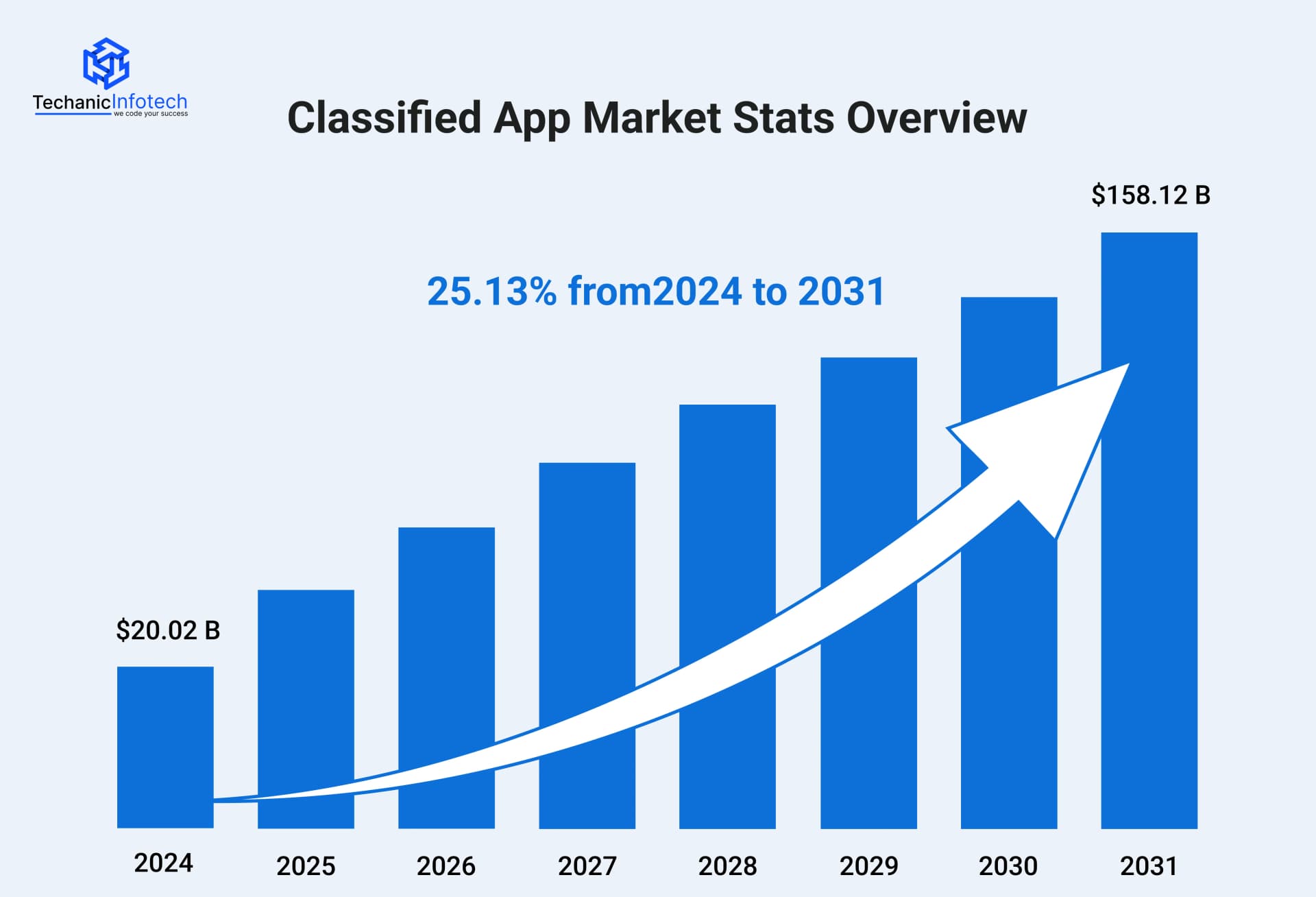
Industry trends show that classified platforms are becoming essential digital marketplaces across sectors like vehicles, real estate, jobs, and personal items.
The global online classified market was valued at approximately USD 20.02 billion in 2024 and is projected to surge to about USD 158.12 billion by 2031, growing at an impressive CAGR of around 25.80% during this period.
Another forecast suggests the online classified market could reach USD 170.40 billion by 2032, supported by increasing internet access and digital adoption worldwide
Research also highlights a strong expansion trend in online classified ad platforms, expected to grow by USD 34.30 billion between 2024 and 2029 at a CAGR of about 12.6%, reflecting rising demand for digital ad-based marketplaces.
Across regions, growth is fuelled by mobile accessibility, localized trading preferences, AI-driven personalization, and the shift from traditional print ads to mobile-optimized classified apps.
Before you begin to create a classified application, it’s important to understand the different types of classified platforms available today. Each category serves a unique audience and industry, and choosing the right type will shape your features, monetization, and user experience.
Below are the most common types of classified applications found in the market:
These apps list almost everything, furniture, electronics, books, vehicles, appliances, and more. Users can buy, sell, or exchange items locally or nationwide. If you want to build a classified app for wide usage, this model is flexible and scalable.
These platforms focus on renting, leasing, or selling property. Users can explore homes, offices, land, apartments, and commercial spaces.
Features like location filters, virtual tours, and map search make this model very useful. Anyone planning to develop a classified app for the property market can tap into a large, growing audience.
Instead of products, these apps help connect employers with job seekers.
Users can search openings, upload resumes, filter roles by location or skill, and apply directly within the app. Many businesses rely on job-based classified application development to create recruitment platforms.
Car, bike, and truck listings are extremely popular. This type allows users to browse new and used vehicles, compare prices, view specs, and contact sellers.
If you want to make a classified app for a niche audience, vehicle marketplaces are proven high-traffic destinations.
These platforms help users find electricians, plumbers, tutors, cleaners, and other local services.
Instead of selling products, they connect people with skilled professionals. Businesses offering classified app development services often recommend this option for entrepreneurs entering the service industry.
These apps focus on a specific interest,, such as pets, luxury goods, antiques, wedding items, or collectibles.
Niche markets may be smaller, but competition is lower. Building a targeted platform can attract dedicated buyers and sellers.
To create a classified app that attracts buyers and sellers, you need the right set of features. These features improve user experience, build trust, and help the platform grow.
Below are essential features every classified app must include:
User Registration & Profiles: Users should be able to sign up easily using email, phone numbers, or social logins. Profiles help build trust and create transparency between buyers and sellers.
Post Listing/Ad Creation: A core feature of classified app development is allowing users to post listings. They should be able to upload images, add descriptions, set prices, choose categories, and manage posts.
Advanced Search & Filters: Users must be able to find items quickly. Filter options like price, location, category, brand, distance, or condition improve search accuracy.
Location-Based Browsing: Classified apps depend heavily on local discovery. GPS-based search helps users find nearby listings, boosting engagement.
Chat & Communication: In-app chat allows buyers and sellers to communicate without sharing personal contact details. It makes the process safer and smoother.
Secure Payments: If you plan to allow in-app transactions, payment gateways are essential. Users must feel safe making purchases through the app.
Ratings & Reviews: Ratings build trust. Before buying or selling, users can check past customer feedback for confidence.
Push Notifications: Alerts for price drops, new messages, listing status, and offers improve engagement and retention.
Admin Dashboard: A powerful admin panel helps manage users, ads, reports, categories, payments, and analytics. This is a critical part of classified application development.
Image & Video Support: High-quality visuals help listings stand out. Photos and videos attract buyers and increase conversions.
Building a classified app is not just about design and coding, it’s about strategy, planning, audience understanding, monetization, user experience, and long-term maintenance.
If you want to create a classified app that stands out in the market, you need a structured approach.
Below is a complete step-by-step guide to classified app development to help you build your marketplace from concept to launch.
Every successful project starts with clarity.
Decide the purpose of your platform, will you build a classified app for everything like OLX or focus on specific categories such as cars, real estate, jobs, or pets?
Research your competitors, target audience, pricing models, revenue plans, and key differentiators. Knowing your market direction helps reduce development costs and time. This stage shapes the foundation for the entire classified application development process.
Choosing the right app model is one of the most important decisions in mobile app development. Your model decides who your users will be, what features you need, and how you will earn money.
Classified apps generally fall into two categories: wide marketplaces and niche platforms. Wide marketplaces list almost anything, products, jobs, services, rentals, and vehicles, similar to OLX or Craigslist. Niche platforms focus on one category, such as real estate, used cars, electronics, pets, or jobs.
When you create a classified app, choosing the right model ensures your app has direction, purpose, and a strong market fit.
Once the app model is clear, the next step is deciding what features to include. Features shape the user journey and define how buyers and sellers interact.
To successfully develop a classified app, you need a strong list of essentials: account creation, listing management, smart search filters, location-based browsing, image uploads, user chat, notifications, and an admin panel.
Optional features like payment processing, premium ads, reviews, and wishlist tools make the app even more powerful.
When building this list, think from the user’s perspective: How easy is it to post an item? How quickly can someone find what they want? How secure is communication?
The stronger your feature planning, the smoother your development process will be. Features are not just add-ons; they are the backbone of a successful classified application.
User experience is one of the most important parts of classified app development. Before development starts, you need to map out how users move through the app, how they browse listings, search items, contact sellers, and create ads.
Wireframes visually outline every screen and interaction, helping teams understand layout and navigation early. This step avoids confusion during development, improves design accuracy, and saves time and cost later by preventing redesigns and feature misalignment.
Once wireframes are approved, designers move into full visual design.
This includes creating layouts, color themes, icons, buttons, listing cards, navigation styles, and screen structure. Since most users browse on phones, the UI must be clean, responsive, and fast.
Good UI attracts users, and good UX keeps them engaged. Strong mobile app design improves trust, smooths user flow, increases conversions, and makes your classified marketplace feel professional and reliable, setting the foundation for long-term success.
Now real engineering begins. Frontend developers build screens and visual elements users interact with, such as listings, chat windows, search pages, and profile screens. Backend developers handle server logic, APIs, data storage, filtering algorithms, push notifications, and app security.
To create an on-demand classified app, speed and scalability are key. Classified apps must handle thousands of images, user messages, and listing updates daily, so a strong mobile tech stack is essential.
Search and location tools are the heart of classified platforms. Users should be able to easily find items or services nearby. Add GPS-based browsing, city filters, price sorting, distance sorting, and category tagging. These tools help users make faster decisions and improve listing visibility.
This is a defining step in the complete guide to classified app development because search experience determines user satisfaction.
Classified apps work like digital marketplaces, so users need ways to communicate privately, safely, and instantly. Build an in-app chat system that lets buyers and sellers connect without sharing phone numbers.
Add push notifications to alert users about messages, saved listings, similar items, or price changes. Build an ad posting system that allows users to upload photos, describe items, and add price, location, and categories.
These three components determine how active and engaged your platform becomes.
Before launch, the entire app must go through detailed testing and quality assurance.
QA teams check every feature, screen, and user action to make sure the app works smoothly without bugs or crashes. Functional testing confirms posting, chat, and payments work correctly.
Performance testing checks app speed, while security testing protects user data. Compatibility testing ensures the classified app runs perfectly on different devices and screen sizes. This step is critical for delivering a stable product and preventing issues after launch. The stronger your testing process, the better your user experience and app ratings will be.
Once the app is tested and approved, it’s time to publish it for users. First, developers upload the mobile app to Play Store for Android users.
Then, they launch the app to the App Store for iOS users. Each store requires app descriptions, screenshots, keywords, policies, and category selection. Server setup, database configuration, and version management also happen in this stage.
After approval, the app becomes officially available for public download. This is one of the most exciting phases, your marketplace goes live and starts gaining users in real time.
Going live isn’t the end, it’s the beginning of growth. After launch, users will send feedback, report bugs, request new features, and share improvement ideas.
Post-launch support includes fixing app issues, updating UI designs, adding new filters or categories, improving speed, and optimizing chat or posting features. This keeps the app modern, secure, and relevant.
Without proper support, even a great classified platform may lose users over time. Continuous monitoring and improvements ensure long-term success and help your app stay ahead in a competitive market.
One of the most important questions businesses ask is, "How much does it cost to develop a classified app?" The truth is, there is no single fixed price.
The final cost range between $5,000 and $90,000+ depends on factors like features, technology, design complexity, backend strength, security needs, and development team experience.
On average, the cost to create a mobile app can range anywhere from a basic MVP to a full-scale marketplace platform with advanced features.
A simple classified app with essential functions like signup, posting ads, search filters, and chat may fall on the lower end of the budget range. Meanwhile, a fully scalable application, similar to OLX, Craigslist, or Facebook Marketplace, will require more development hours, stronger server capacity, secure communication systems, and smarter search algorithms.
These additions increase the investment but also boost long-term performance and profitability.
|
App Type |
What You Get |
Estimated Cost Range |
|
Basic Classified App (MVP) |
User login, create posts, categories, search filters, simple chat, basic admin panel |
$5,000 – $20,000 |
|
Mid-Level Classified App |
Better UI/UX, location features, push notifications, image uploads, stronger backend, analytics dashboard |
$20,000 – $45,000 |
|
Advanced Classified App |
Premium UI/UX, payments, AI search, GPS engine, heavy image storage, strong security, scaling architecture |
$45,000 – $90,000+ |
If you plan to create a classified application, it's important to know how these platforms generate revenue. Classified apps are successful because they don’t rely on a single source of income, they combine multiple revenue streams to earn consistently.
Here are the most common and effective ways classified marketplaces make money:
One of the biggest revenue drivers for classified platforms is paid visibility. Users can pay to push their ad to the top of search results or place it in special highlight sections.
This works especially well for categories like real estate, cars, premium electronics, and job postings, where sellers want instant attention. Featured listings increase exposure and improve sales, and because the upgrade is optional, it doesn’t affect user trust.
Another popular model is subscription access. This can include benefits like unlimited listings, higher posting limits, ad-free browsing, priority ranking, or extra media uploads. Users can choose monthly or yearly plans. Subscription revenue gives platforms stable recurring income instead of one-time payments.
Some classified apps take a small commission when a product or service sells. This encourages users to post freely because they only pay when something is sold. It is extremely effective for niche marketplaces like service-based listings, second-hand stores, and even digital product platforms.
Almost every major classified platform earns revenue from ads. They display banner ads, popup ads, sponsored posts, Google AdMob ads, or brand partnerships. Since these apps attract heavy traffic, advertisers pay well for placement. Even if users do not spend money, the platform still earns through impressions and clicks.
Many classified apps sell qualified leads to businesses. For example, real estate agents, service professionals, and recruiters may pay to contact potential customers or job seekers. This model converts platform traffic into guaranteed revenue.
Some apps charge users to list items, especially in categories with high value like cars, real estate, or job postings. Charging per listing reduces spam, improves listing quality, and creates a steady revenue stream.
If you’re planning to create a classified app or transform a marketplace idea into a working digital platform, Techanic Infotech can help bring it to life. As a leading classified app development company, we design and build feature-rich, scalable applications that connect buyers and sellers with speed, security, and simplicity.
Our team specializes in modern UI/UX, fast search engines, real-time chat systems, location-based discovery, secure data handling, admin dashboards, and strong backend architecture. Whether you want a general marketplace like OLX or a niche platform for vehicles, jobs, property, or services, we tailor the app to fit your audience and business model.
From planning to deployment and even post-launch support we deliver classified apps that are powerful, affordable, and built for long-term success. Ready to launch your platform? We’re here to build it with you.
Classified apps have become a major part of how people buy, sell, hire, and connect online. With the right planning, smart features, and strong development strategy, anyone can create a classified app that delivers real value to users and stands out in the market.
Success depends on clarity of purpose, good user experience, strong performance, and long-term maintenance.
Whether you’re targeting a niche audience or building a large marketplace, the opportunity is huge. With the right development partner and a solid vision, your classified app can grow fast and become a reliable digital business.
The cost depends on app size, features, design, technology, and development location. On average, a basic version may cost around $10,000–$20,000, while advanced platforms can go as high as $45,000–$90,000+.
A simple MVP may take 2–3 months. A full marketplace with advanced features, payment systems, search filters, and chat may take 5–8 months or more.
Yes, if you want to reach maximum users. You can upload a classified app to Play Store and also launch a classified app for iOS on the App Store. Many businesses choose cross-platform development to save time and cost.
Android and iOS are the most important. You can also build a web classified platform for desktop users. A multi-platform approach improves visibility and user engagement.
Monetization options include paid listings, featured ads, subscriptions, commissions, in-app advertising, and lead generation. Many successful apps blend multiple revenue streams.


Neha Sharma is a tech expert at heart who loves exploring new technologies and turning complex ideas into easy-to-understand content. With a passion for learning and writing, she enjoys sharing insights on emerging tech, digital products, and innovation that help businesses stay ahead.