Dating App Development
How to Develop an App Like Happn: Features, Cost, and Development Strategy
December 8, 2025
December 8, 2025
Dating apps have completely transformed how people meet, and location-based platforms are leading this shift.
Instead of endlessly swiping through random profiles, users now prefer apps that match them with people they actually encounter in real life.
That's why Happn became popular: it adds a spark of coincidence to online dating and turns everyday encounters into meaningful connections.
If you’re planning to develop an app like Happn, the idea goes far beyond building another dating platform.
It’s about creating a user experience that feels personal, spontaneous, and fun. With the smart use of geolocation, privacy-focused features, and a clean UI, brands can launch a dating app that truly stands out in today’s competitive market.
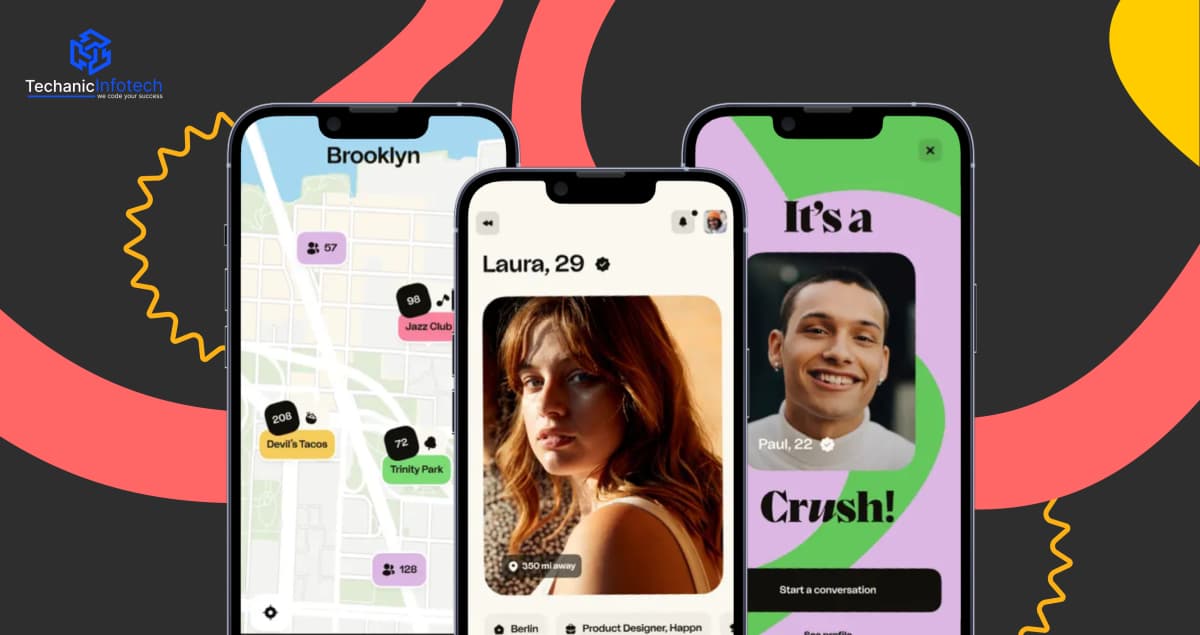
Happn is a location-based dating app that connects people who have crossed paths in real life.
Instead of showing a random profile from faraway locations, it highlights users who were physically near each other during the day; at a cafe, on the subway, in a park, or anywhere else.
These real-world connections make online dating feel more natural and spontaneous.
Happn became popular because it blends technology with coincidence. It gives people a second chance to connect with someone they noticed but never approached.
Location-based matching feels natural and real.
Alerts show who you crossed paths with in real life.
Strong privacy controls make users feel safe.
Charms and boosts help users get noticed faster.
Clean UI/UX makes dating simple and fun.
Dating apps like Happn are reshaping modern matchmaking by combining real-time geolocation with seamless user experience, making them a highly scalable and profitable business model.
.webp&w=1920&q=75)
Location-based matching increases user curiosity and engagement.
Rising demand for hyper-personalized and instant dating experiences.
Multiple monetization models: subscriptions, in-app purchases, ads, and premium boosts.
High user retention due to real-life crossing paths feature.
Scalable tech architecture that supports global expansion.
Lower acquisition cost compared to traditional social platforms.
Increasing investor interest in social discovery and dating platforms.
Strong revenue potential even with a small active user base.
Room for innovation with AI matchmaking, gamification, and virtual dating.
Opportunity to target niche markets (LGBTQ+, professionals, pet lovers, travelers, etc.)
The global online dating market is projected to reach $17.3 billion by 2030.
Over 414 million people worldwide actively use dating apps every month.
With strong marketing, user-centric features, and a seamless experience, a Happn-like app can generate long-term revenue while building an active and loyal user community.
Dating apps are no longer just about matching profiles; users expect smart features, safety, and a fun experience that feels instant and personal.
To compete in today’s market, your app must combine essential functionality with modern innovation.
User Registration & Social Login
A smooth onboarding experience builds trust from the start. When you create a mobile app, allow sign-ups through email, phone, Google, and social platforms so users can join quickly and without friction.
Personalized Profiles
Profiles should capture age, job role, hobbies, relationship preferences, and interests. Richer profiles lead to more meaningful matches and higher conversation rates.
Location-Based Matches
Users should automatically discover people nearby without manually searching. Real-time proximity boosts match relevance and makes dating feel spontaneous.
Adding a swiping feature further enhances engagement by allowing users to quickly like or skip profiles with intuitive gestures.
Real-Time Chat
Once both users like each other, they should instantly access a secure messaging system that supports text, emojis, and media sharing. A smooth chat experience is essential for retention and engagement.
Notifications & Match Alerts
Timely alerts for new likes, messages, profile interactions, and match requests keep users active. These features are the foundation of Happn clone app development and strongly influence daily app usage.
Interest-Based Compatibility Algorithm
Instead of relying only on location, the system can evaluate music taste, activities, weekend choices, travel preferences, and lifestyle factors to recommend ideal matches. This feature highlights how to build an app like Happn that delivers more relevant results.
In-App Voice and Video Dating
Voice calls, video calls, and quick intro videos help users verify authenticity and build trust faster. This reduces drop-offs and encourages deeper interaction before meeting offline.
AI-Powered Safety and Background Screening
Artificial intelligence can detect fake photos, spam behavior, and abusive language in real time. Adding identity verification through selfie match or ID scan improves safety and reduces catfishing incidents.
Real-Time Location Timeline (User-Controlled)
With user permission, the app can show where and when two people crossed paths. It adds excitement to the experience while still giving full control over privacy and visibility.
Gamified Connections & Social Events
Features like compatibility quizzes, ice-breaker challenges, swipe streak rewards, and group meetups create a fun and social environment. Dating apps that add these elements consistently rank high for providing the best features in dating app user experiences.
Building a modern dating application takes strategy, innovation, and a deep understanding of user psychology.
Today’s users expect real connections, powerful safety tools, and an experience that feels fun and effortless.
The steps below explain how a dating app grows from an idea into a fully functioning product.
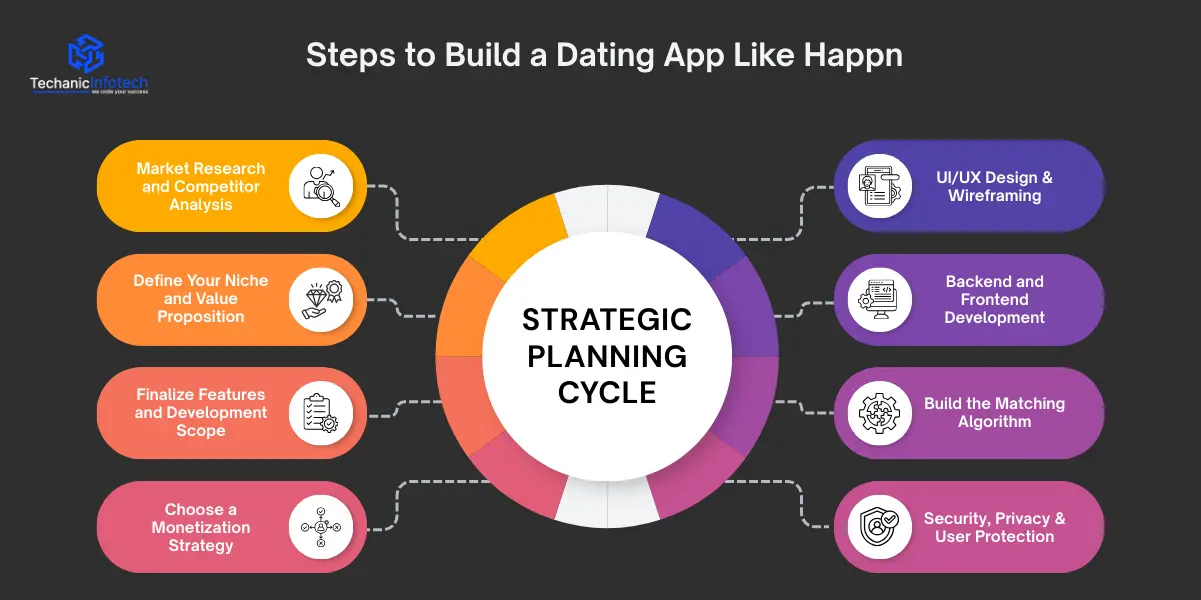
Every successful dating app development project starts with understanding market demands.
Analyze why apps like Tinder, Bumble, and Happn succeed, and what users still complain about, such as fake profiles, poor matches, and weak security.
Research helps define opportunities for improvement, ensuring your app solves real user frustrations instead of recreating existing ones.
Generic platforms get lost, while niche apps grow fast. Your dating app could be built for professionals, travelers, fitness lovers, or proximity-based matches like Happn.
Clarify who the app is built for and what makes it different. When you build an app like Happn, the real value lies in creating a strong emotional reason for users to choose your platform over others.
Make a feature list that includes both basic and advanced tools.
Standard features include profile creation, match suggestions, and chat. Advanced features may include video calls, AI matching, compatibility quizzes, or in-app events.
Deciding what to include in the MVP ensures faster launching, lower risk, and controlled budgeting for future updates while developing dating apps for scalability.
Plan your earning model early so revenue is built into the product flow naturally. The most profitable dating apps offer subscription tiers, boosts, super likes, coins, and limited viewing options.
In-app ads and referral rewards can also contribute to revenue. Money-making features should feel helpful rather than pushy for long-term success when you think about how to develop an app like Happn for strong ROI.
Once features are finalized, designers build screen flows, wireframes, mockups, and prototypes. The interface must be simple, visual, and emotionally engaging.
Swipes, cards, likes, prompts, and chat layouts should feel smooth and enjoyable.
A well-executed design reduces confusion, keeps users active, and increases one of the key goals in developing dating apps that encourage social bonding.
In this phase, code and architecture bring the app to life. Developers integrate servers, databases, chat systems, map APIs, notifications, and purchase systems.
Real-time messaging and location accuracy must be fast and reliable. Support for Android, iOS, and web helps scale user growth.
This phase decides how well the app performs under heavy usage, especially when you build an app like Happn for millions of users.
A dating app succeeds only if the recommendations feel relevant. The matching algorithm may use proximity, shared interests, personality traits, behavioral tendencies, or quiz responses.
AI can support prediction and compatibility scoring. A smart matching structure increases the number of conversations and in-app time, which is why it’s one of the most important steps in mobile app development.
User safety is non-negotiable. To protect the community, the app should include:
Profile and ID verification
AI-based fraud detection
Block/report options
Data encryption
Privacy settings and visibility controls
Users feel more confident sharing information when their safety is prioritized, a major trust factor while developing dating apps for long-term retention.
Before launch, the app is tested across multiple devices, regions, and internet conditions.
QA teams check chat speed, GPS accuracy, battery performance, payments, and notifications. Bugs, crashes, and UX issues are fixed using advanced automated testing solutions for mobile applications until the experience feels stable
Testing also ensures new users don’t abandon the app during onboarding, an essential part of how to develop an app like Happn successfully.
Once everything works smoothly, the app is launched on app stores with a powerful marketing plan. Influencers, PR partnerships, referral bonuses, paid ads, and digital events help attract users.
After launch, user feedback and analytics shape future upgrades, such as new filters, interactive prompts, and seasonal features.
This evolution is crucial when you build an app like Happn for long-term scalability and global growth.
The estimated cost to develop an app like Happn ranges between $35,000 and $180,000, depending on app scale, UI/UX complexity, and the number of custom features you want to include.
Below is a complete breakdown to understand the investment better.
|
Design Element |
Estimated Cost |
|
Wireframing & User Flow |
$2,000 – $4,500 |
|
UI Mockups & Prototyping |
$3,500 – $8,000 |
|
Animation & Micro-interactions |
$2,000 – $6,000 |
|
Total |
$7,500 – $18,500 |
A strong UI/UX is the foundation of a successful location-based dating product. Animated transitions, high-quality visuals, and an intuitive flow help users match faster and stay connected.
This is the first component that heavily influences the overall dating app development cost.
|
Core Development Type |
Estimated Cost |
|
Hybrid App (Android + iOS) |
$14,000 – $45,000 |
|
Native App (iOS + Android) |
$28,000 – $80,000 |
|
Total |
$14,000 – $80,000 |
Core development includes user onboarding, profile setup, recommendations, in-app messaging, real-time proximity matching, and personal feed.
Whether you plan to develop an app like Happn using a hybrid or native tech stack determines time and cost.
|
Backend Scope |
Estimated Cost |
|
CMS & User Management |
$4,500 – $8,500 |
|
Reporting & Analytics |
$3,000 – $7,000 |
|
Promotions & Subscription Control |
$3,000 – $6,500 |
|
Total |
$10,500 – $22,000 |
Backend architecture manages real-time chat, subscriptions, data storage, reporting, and analytics.
A user-friendly admin dashboard helps manage active users, campaigns, and premium features seamlessly.
|
API Type |
Estimated Cost |
|
Map & Geolocation API |
$2,500 – $5,000 |
|
Payment Gateway |
$1,800 – $4,200 |
|
SMS/OTP & Push Notification |
$1,200 – $3,500 |
|
Total |
$5,500 – $12,700 |
Dating apps depend on premium APIs for location accuracy, secure online payments, OTP authentication, push notifications, social login, and content moderation.
These add convenience but also increase cost.
|
Testing Area |
Estimated Cost |
|
Manual & Automation Testing |
$3,000 – $7,500 |
|
Security & Load Testing |
$2,500 – $6,000 |
|
App Store / Play Store Launch Support |
$1,200 – $3,000 |
|
Total |
$6,700 – $16,500 |
Rigorous QA guarantees smooth geolocation usage, crash-free messaging, and fast authentication. This step ensures the app is stable enough to launch and scale.
If you plan to make an app like Happn, performance testing is critical because thousands of users may be active simultaneously.
A dating app like Happn makes money by blending free user access with high-value paid upgrades.
The business model is built on emotional motivation; people pay for features that help them match faster, get more visibility, and stand out at the right moment.
Free users enjoy full access to chatting and matching, but the most attractive features stay premium, making monetization seamless instead of pushy.
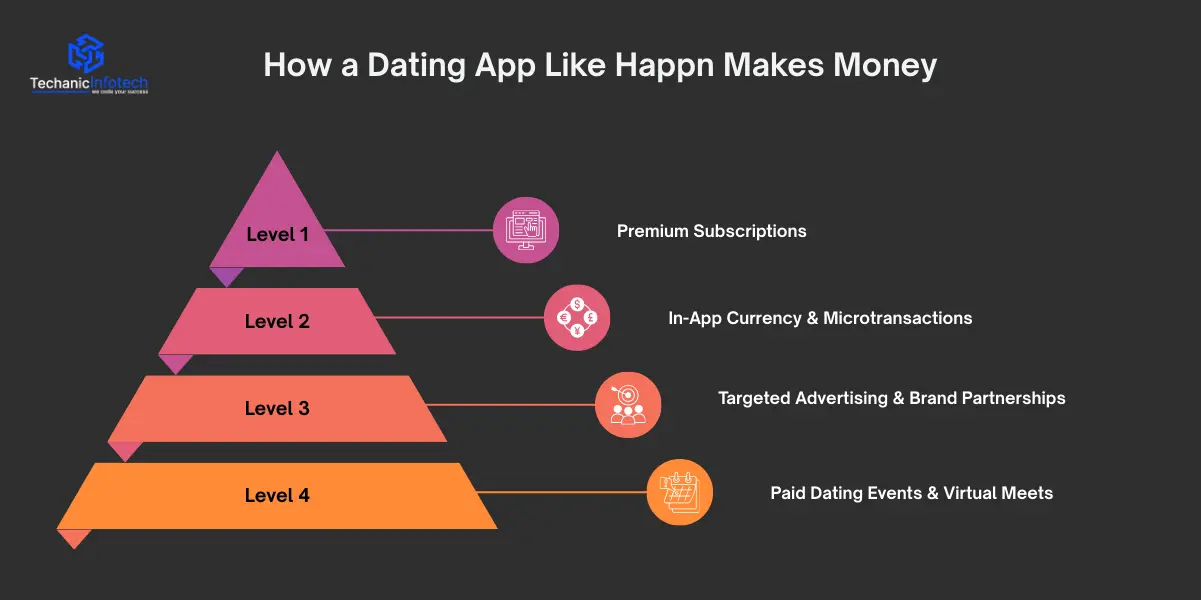
Premium plans generate the most predictable and recurring revenue for dating platforms. Users subscribe to unlock exclusive benefits that dramatically improve their dating success.
Understanding this model is crucial if you're researching how to create a dating app like Happn. Typical premium perks include:
Unlimited likes and profile actions
Ad-free dating experience
See who liked your profile before matching
Enhanced privacy and incognito mode
Advanced matchmaking filters
These emotional upgrades push users toward monthly subscription purchases.
Another high-earning revenue channel comes from small coin-based purchases. These features appeal to users who want instant visibility or direct expression of interest.
If a business plans to develop an app similar to Happn, microtransactions can become one of the strongest profit engines. Popular purchases include:
Send charms or superlikes
Spotlight boost to rank higher for a short time
Location-specific visibility boost
Microtransactions create urgency, leading to impulse-based conversions.
Happn allows brands to promote events and products using precise behavioral targeting.
This builds a reliable passive income stream while keeping the user experience engaging. Most common ad formats include:
Sponsored profiles and social ads
In-feed location-based campaigns
Event and nightlife promotions
This model is also widely used when companies develop an app like LGBTQ, where audience segmentation and lifestyle-specific promotions drive strong returns.
Some dating apps expand monetization through paid activities that connect users beyond swipes. Examples include:
Virtual speed-dating sessions
Community-interest meetups
Exclusive themed events
These event-based earnings add a strong secondary revenue layer and increase user retention.
By combining subscriptions, micro-payments, advertising, and paid events, Happn creates a diverse revenue model that keeps the business profitable without restricting free users, making it one of the smartest monetization systems in the dating industry.
Choosing the right development team is one of the most crucial steps when building a location-based dating platform.
The quality of the team impacts everything: performance, UI/UX, scalability, feature innovation, and time to launch.
Rather than selecting developers just based on price, it’s important to assess skills, experience, and long-term support.
%20(1201%20x%20450%20px).webp&w=1920&q=75)
If you want to develop an app like Happn, you need a team that understands geolocation algorithms, real-time chat, feed personalization, and user-matching logic.
Review their portfolio and request App Store/Play Store links of past launches so you can evaluate real functionality instead of relying only on sales claims.
Smooth collaboration comes from clarity. If you're researching how to create an app like Happn, pay attention to whether the team asks smart questions, provides technical suggestions, and communicates proactively.
Weekly progress reports, milestone tracking, and quick responses prevent delays and ensure both sides stay aligned throughout development.
A scalable dating app needs a solid tech stack. Native (Kotlin/Swift) and cross-platform (Flutter/React Native) frameworks must be backed by strong backend systems like Node.js, Firebase, PostgreSQL, and AWS.
The right stack controls performance, user matching speed, and data security, all essential for the monetization of dating Apps because revenue depends heavily on user engagement and smooth functionality.
Building the app is only step one. Dating platforms require ongoing optimization, new features, bug fixes, and security upgrades.
Ensure the development team offers long-term maintenance and stays available after the app launches so your platform can evolve based on user behavior and market demands.
A low quote often means weak architecture, minimal testing, outdated UI, or unreliable support.
The best development team isn’t just a coding vendor; it’s a partner who helps you build a product that scales, retains users, and generates revenue.
Investing in the right team saves money in the long run by reducing redesigns, crashes, and delayed releases.
Techanic Infotech stands out as the best partner for your dating app project because the team understands real-time matchmaking, geolocation technology, personalized feeds, and secure chat architecture better than most competitors.
With proven experience in building social and relationship-based apps, they focus on fast performance, high-end UI/UX, and scalable backend systems that support millions of users.
Whether you want to develop an app like Happn or create a completely fresh dating concept, the team provides end-to-end support planning, design, development, testing, and post-launch upgrades.
As a trusted dating app development company, Techanic Infotech also offers transparent pricing, milestone-based delivery, and long-term maintenance to make sure your app continues to grow and generate revenue in a competitive market.
Building a location-based dating platform is a powerful opportunity in a market where users constantly seek meaningful connections through technology.
With the right strategy, engaging UI/UX, smart matching algorithms, and scalable architecture, your app can compete with the biggest names in the industry.
If you’re planning to develop an app like Happn, partnering with an experienced team ensures faster development, better performance, and stronger monetization.
Focus on features that enhance user experience, privacy, and real-time interaction, and success becomes achievable. A well-designed dating app isn’t just a product; it’s a long-term digital business
On average, development takes 3–6 months, depending on app features, UI/UX complexity, and platform choices.
You can build a Happn-style app with unique branding and enhanced features to stand out in the market.
Launching on both Android and iOS ensures maximum user reach and faster growth.
Yes, geolocation API, chat API, and push notification services can be integrated securely.
No. They earn through subscriptions, microtransactions, ads, boosts, and paid events.

Abhishek Jangid is the CEO of Techanic Infotech, with extensive experience in mobile app and web development. He specializes in helping businesses turn innovative ideas into scalable digital solutions through strategic planning and modern technology.