
Search engine optimization (SEO) is essential for modern web applications, including those built with Angular.
Since Angular is a powerful front-end framework developed by Google, it enables developers to create dynamic, single-page applications (SPAs).
However, these applications rely heavily on JavaScript rendering, which can create challenges for search engine crawlers.
By understanding how search engines interact with Angular apps and applying best practices, businesses can significantly improve visibility, traffic, and overall digital performance.
SEO is vital for Angular sites because its client-side rendering can hinder search engine crawlers.
Optimizing ensures your dynamic content is indexed, boosting visibility, organic traffic, and overall user engagement.
Angular applications often depend on client-side rendering, which can limit how search engines interpret and index content.
Implementing strategic SEO practices ensures search engines can efficiently crawl, index, and rank your pages, significantly boosting online visibility and discoverability.
Effective search engine optimization enables Angular applications to rank higher for relevant search queries.
Improved rankings attract high-quality organic traffic, reduce reliance on paid advertising, and support consistent, long-term growth.
SEO best practices, including optimized page speed, creating a mobile application with a responsive design, structured data, and clean navigation, enhance overall usability.
These improvements not only strengthen search rankings but also increase engagement, extend session duration, and lower bounce rates.
Websites that appear at the top of search engine results are often perceived as more reliable and authoritative.
A well-optimized Angular application enhances brand trust, reinforces industry expertise, and establishes a credible digital presence.
Higher rankings attract more targeted, intent-driven visitors.
When optimized content aligns with user needs and search intent, it improves engagement, increases lead generation, and delivers a stronger return on investment.
Search engines crawl Angular apps by executing JavaScript to "render" the page. Unlike static HTML, the crawler must wait for the framework to load content before it can index it.
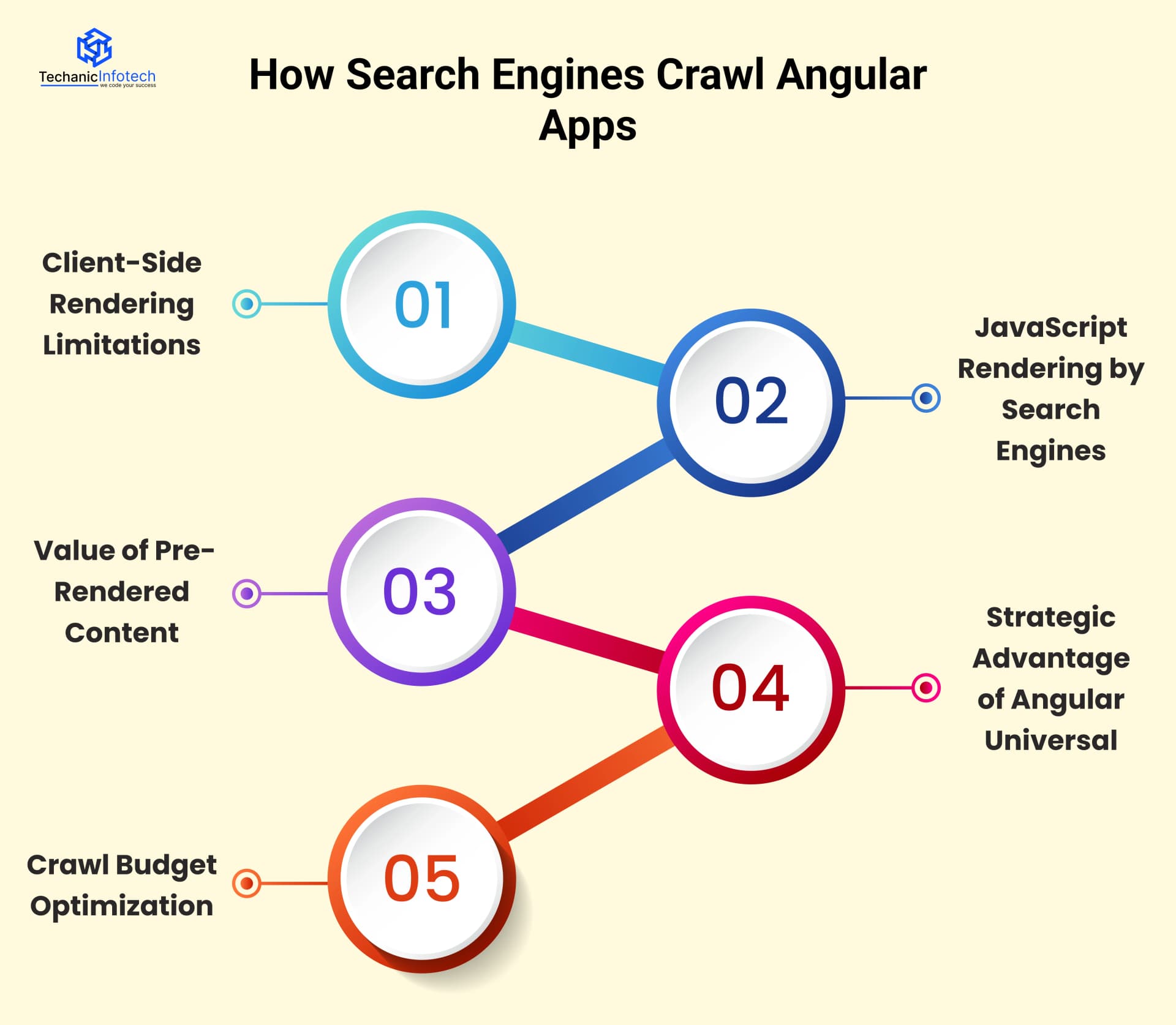
Angular applications primarily rely on client-side rendering (CSR), where content is generated in the browser using JavaScript.
While powerful for dynamic experiences, this approach can create indexing challenges if search engine bots cannot fully execute scripts, potentially leading to incomplete or delayed content visibility in search results.
Modern search engines like Google are capable of rendering JavaScript.
However, indexing typically occurs in two phases: an initial crawl of the raw HTML, followed by a secondary rendering process where JavaScript is executed.
Providing pre-rendered HTML ensures that search engine crawlers immediately access meaningful, content-rich pages without waiting for JavaScript execution.
This significantly improves indexing speed, enhances content visibility, and reduces the risk of critical information being overlooked.
Implementing Angular Universal enables server-side rendering (SSR), delivering fully rendered HTML directly to search engines and users.
This approach improves crawl efficiency, strengthens indexing reliability, and enhances overall SEO performance.
Large-scale Angular applications with extensive dynamic routes can quickly consume a search engine’s crawl budget.
Optimizing internal linking structures, streamlining routing configurations, and eliminating redundant URLs help search engines efficiently navigate and prioritize important pages.
Optimizing Angular websites for search engines requires strategic technical enhancements and performance improvements.
By implementing SEO best practices, businesses can improve crawlability, boost visibility, enhance user experience, and achieve sustainable organic growth.
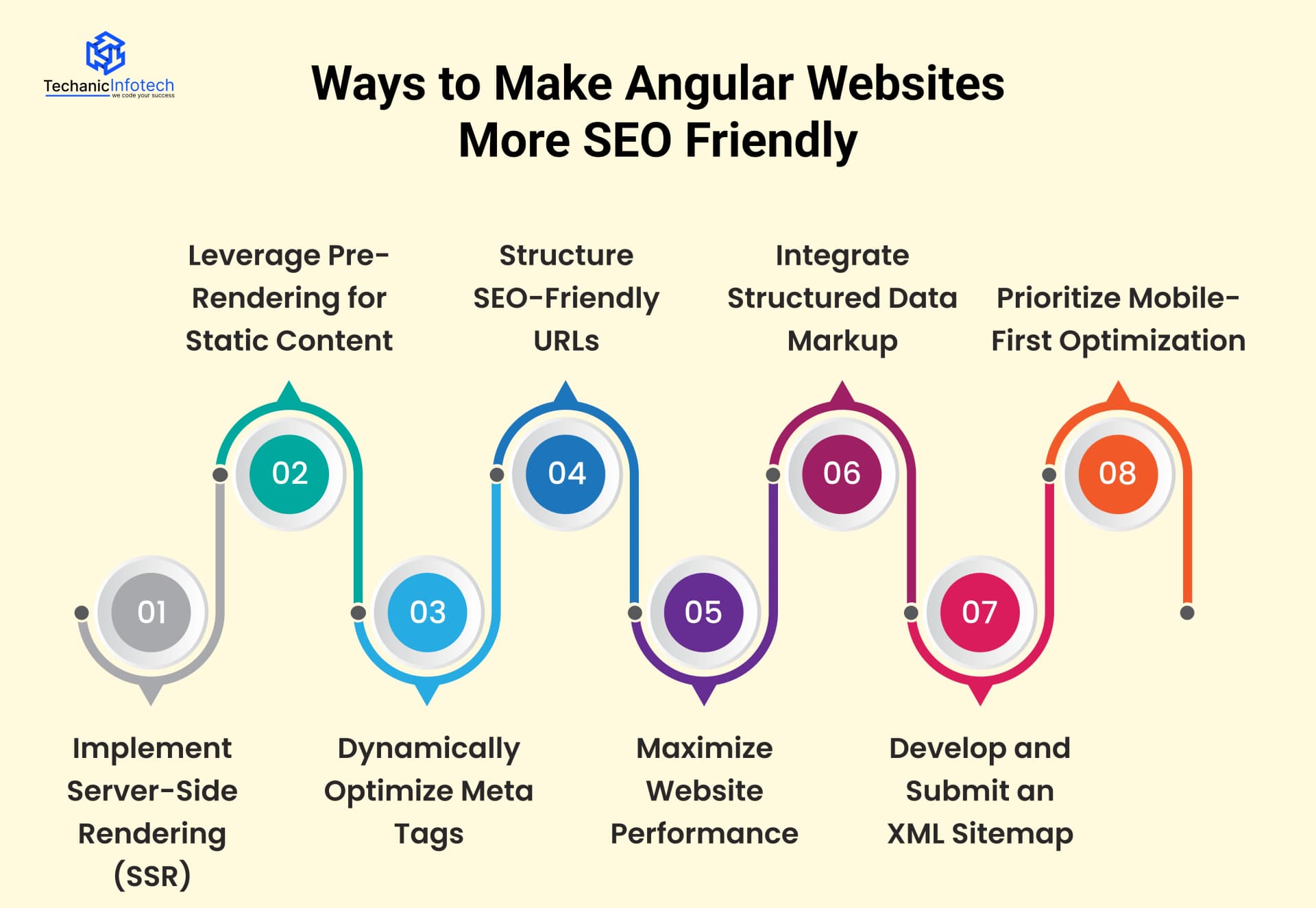
Adopt server-side rendering using Angular Universal to ensure fully rendered HTML pages are delivered directly to search engines and users.
This approach enhances crawlability, accelerates indexing, improves initial page load speed, and ensures dynamic content is accurately interpreted, ranked efficiently, and displayed consistently across search results.
Use pre-rendering during the building of an AI application process to generate static HTML files for essential pages such as landing pages, service descriptions, and blogs.
This guarantees immediate accessibility for search engine crawlers, strengthens indexing reliability, improves content visibility, and supports stable, long-term organic search performance.
Implement dynamic title tags and meta descriptions for each route using Angular’s Meta service to ensure every page is uniquely optimized.
Well-crafted, keyword-aligned metadata enhances search relevance, improves click-through rates, increases visibility in competitive search results, and communicates clear value to potential visitors.
Create clean, descriptive, and keyword-focused URLs that reflect logical site structure and content hierarchy.
Structured URLs improve user navigation, enhance search engine understanding, and contribute to stronger indexing performance and credibility.
Optimize overall application performance by compressing images, reducing JavaScript bundle sizes, enabling lazy loading, implementing code splitting, and applying browser caching techniques.
Faster load times enhance user experience, decrease bounce rates, improve engagement metrics, and positively influence search engine rankings and conversion rates.
Incorporate structured data using schema markup in JSON-LD format to provide detailed context about your content.
Structured data helps search engines interpret information accurately, increases eligibility for rich snippets, improves search appearance, enhances click-through rates, and strengthens overall visibility in competitive results.
Generate a comprehensive XML sitemap that includes all important routes, updated pages, and priority content.
Submitting the sitemap to search engines ensures efficient crawling, faster discovery of new or modified content, improved indexing coverage, and better overall search visibility across your Angular application.
Adopt a mobile-first design strategy to align with modern search engine ranking algorithms that prioritize mobile usability.
Ensure responsive layouts, fast loading speeds, intuitive navigation, and optimized performance across devices to enhance user satisfaction, increase engagement, and maintain strong, sustainable search rankings.
While website development services for Angular with perfect SEO, it’s essential to consider rendering strategies, content accessibility, performance, and proper routing.
Careful planning ensures better indexing, improved rankings, and a seamless user experience.
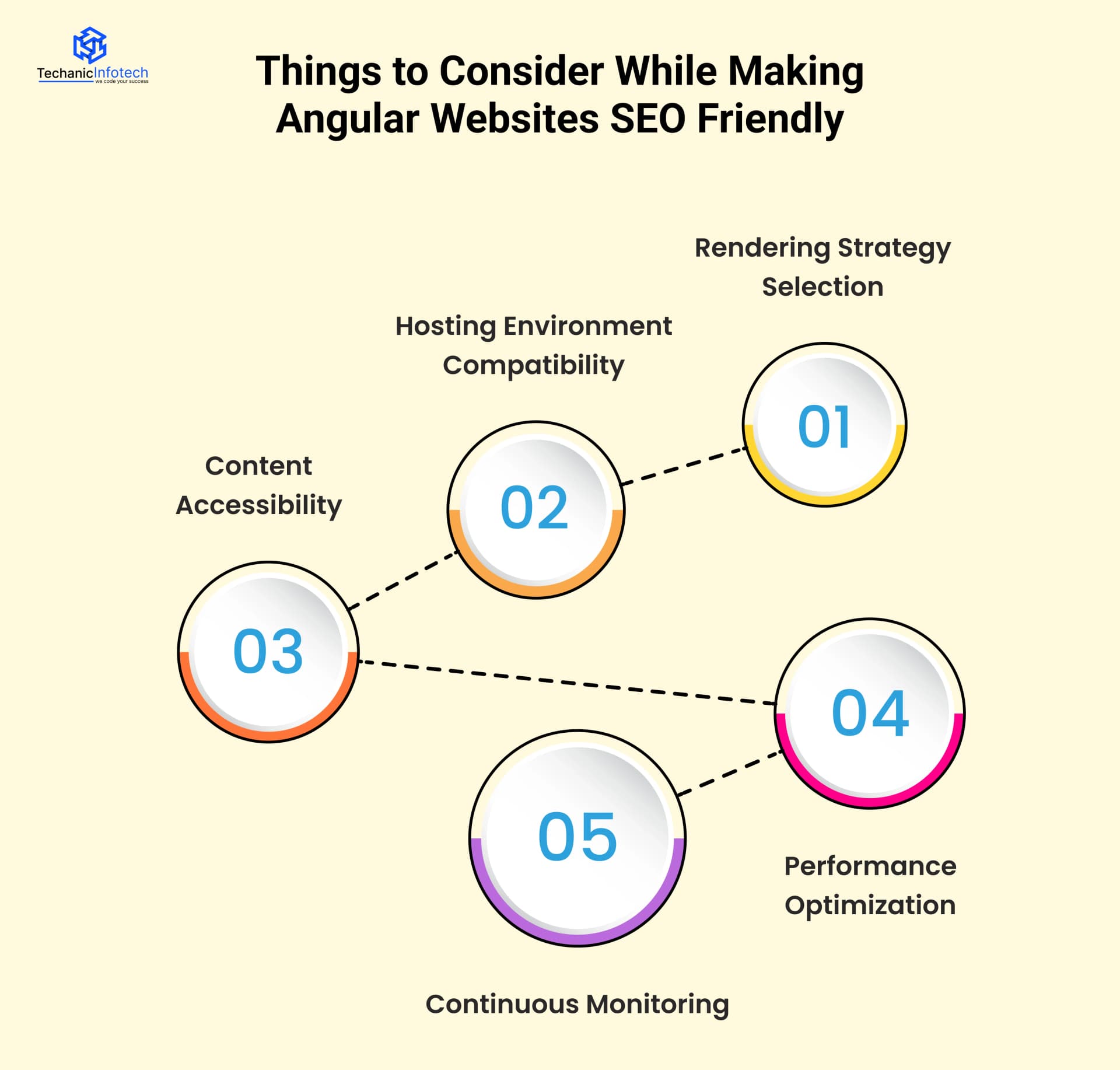
Carefully evaluate and select the most suitable rendering approach: client-side rendering (CSR), server-side rendering (SSR), or pre-rendering, based on your project scope, scalability requirements, performance expectations, and long-term SEO objectives.
The right rendering strategy directly impacts crawlability, indexing efficiency, user experience, and overall search visibility.
Verify that your hosting infrastructure fully supports server-side rendering if implementing Angular Universal.
Proper server configuration, adequate resources, caching mechanisms, and optimized deployment settings are critical to maintaining high performance, minimizing response times, and ensuring stable, SEO-friendly content delivery.
Ensure that all essential and indexable content is immediately accessible without requiring user interactions such as clicks, scrolls, or form submissions.
Search engines should be able to crawl meaningful information directly from the rendered page, improving discoverability, indexing reliability, and overall search performance.
Optimize JavaScript bundles, enable compression, remove unnecessary dependencies, implement lazy loading, and streamline assets to improve speed.
Enhanced performance strengthens user experience, reduces bounce rates, and positively influences search engine evaluation metrics.
Regularly monitor website performance, crawl status, and indexing issues using tools like Google Search Console.
Ongoing analysis helps identify technical SEO errors, track visibility trends, resolve structured data issues, and ensure your Angular application maintains consistent and optimized search performance.
Angular applications often face unique SEO challenges due to JavaScript rendering.
Common mistakes like ignoring SSR, poor routing, and missing metadata can hurt indexing, search visibility, and overall website performance.
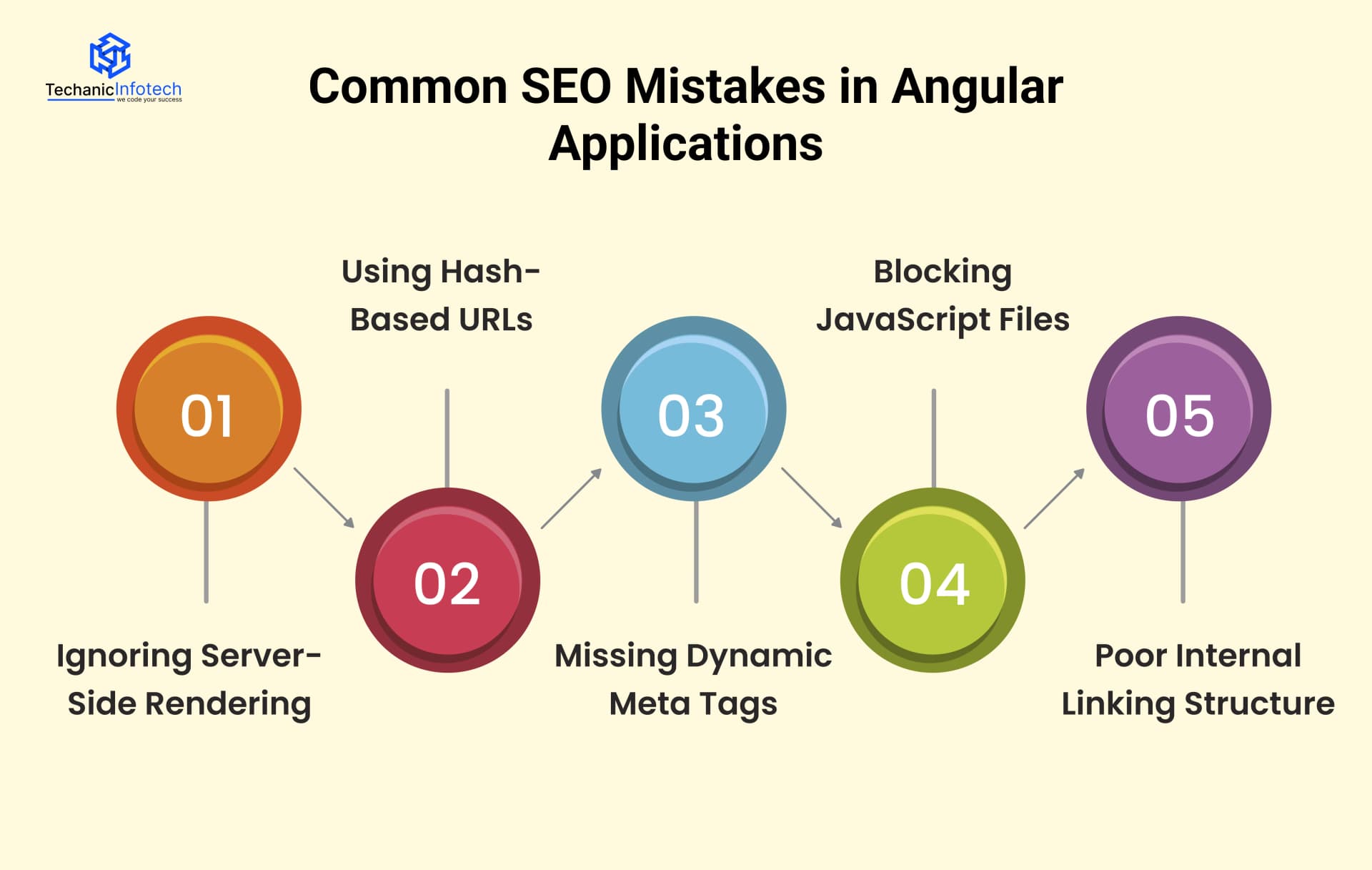
Implementing server-side rendering (SSR) or pre-rendering ensures that fully rendered HTML is delivered to search engines, improving crawl efficiency, indexing accuracy, and overall organic visibility.
Hash-based routing restricts SEO effectiveness because search engines may not treat URL fragments as distinct, indexable pages.
Implementing clean, path-based URLs enhances crawlability, strengthens page authority distribution, and supports more accurate indexing.
Failing to generate unique, dynamic title tags and meta descriptions for each route weakens keyword targeting and reduces search relevance.
Optimized metadata improves click-through rates, strengthens search visibility, enhances user engagement, and ensures every page communicates a clear, compelling value proposition.
Blocking critical JavaScript resources in the robots.txt file can prevent search engine crawlers from properly rendering Angular content.
Without access to essential scripts, pages may appear incomplete or empty, negatively impacting indexing accuracy, search rankings, and overall organic discoverability.
An ineffective internal linking strategy makes it difficult for search engines to discover and prioritize deeper pages within Angular applications.
Strong, logical internal linking improves crawl paths, distributes link equity effectively, enhances user navigation, and strengthens the overall SEO structure of the website.
Making Angular websites SEO friendly requires a strategic combination of technical optimization and content best practices.
Implementing server-side rendering with Angular Universal, optimizing metadata, improving performance, and maintaining clean URL structures significantly enhances visibility.
Additionally, structured data, mobile responsiveness, and continuous performance monitoring contribute to long-term SEO success.
By understanding how search engines process Angular apps and addressing common pitfalls, businesses can unlock greater organic traffic, stronger brand authority, and improved conversions.
Angular is not bad for SEO, but it requires proper optimization, such as server-side rendering or pre-rendering, to ensure search engines can index content effectively.
Angular Universal is a server-side rendering solution for Angular that generates fully rendered HTML pages for improved SEO and performance.
Yes, Google can crawl JavaScript websites, but rendering may be delayed. Proper optimization ensures better indexing reliability.
Server-side rendering delivers pre-rendered HTML to search engines, ensuring content is immediately accessible and indexed correctly.
No, hash routing is not SEO friendly. Use path-based routing to create clean, search engine-optimized URLs.


Bharat Sharma is the CTO of Techanic Infotech, bringing deep technical expertise in software architecture, mobile app development, and scalable system design. He leads the engineering team with a strong focus on innovation, performance, and security.