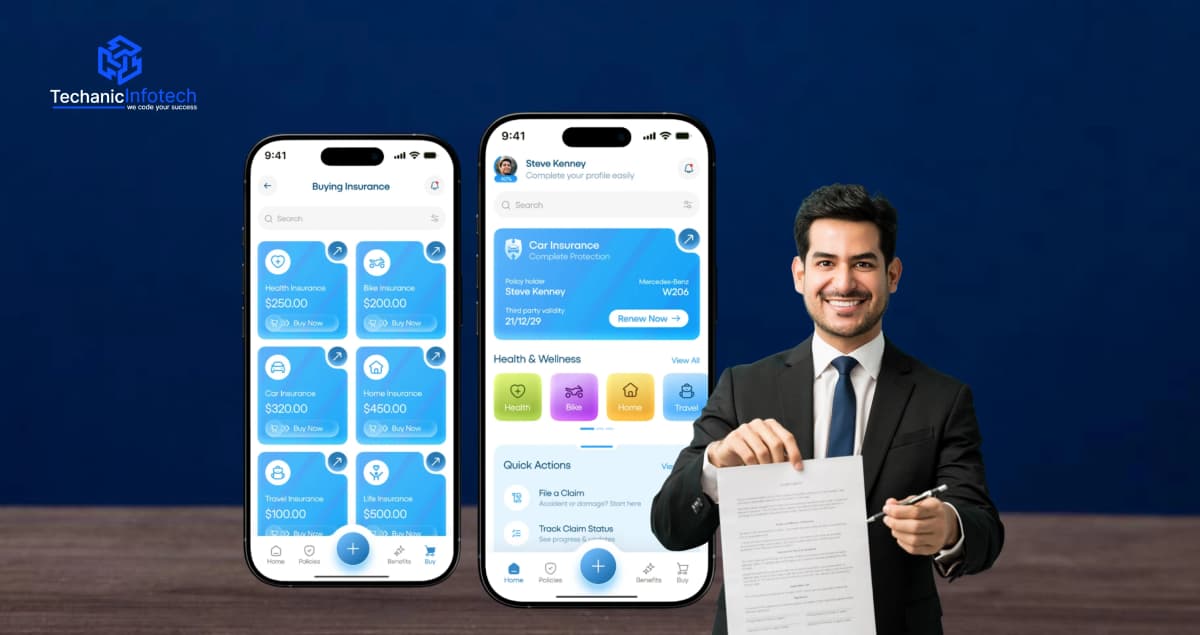
Insurance App Development
Cost to Develop an Insurance App in 2026: Complete Breakdown
January 29, 2026
January 29, 2026
Insurance companies are rapidly moving toward digital-first experiences, making mobile apps a core business investment in 2026.
From policy management to instant claims processing, insurance apps now shape customer trust and retention.
However, before starting development, understanding the insurance app development cost is essential for accurate planning.
Costs vary based on app type, features, security standards, and compliance requirements. Whether you’re building a customer-facing app, an agent portal, or a full-service insurance platform, budgeting correctly helps avoid delays and scope creep.
In this guide, we break down development expenses, key cost drivers, and real-world estimates to help insurers and startups make informed decisions while building secure, scalable, and user-friendly insurance applications for the U.S. market in the coming digital era.
Insurance apps are mobile or web-based platforms that allow users to manage insurance policies digitally.
They help customers buy coverage, view policy details, pay premiums, file claims, and communicate with insurers easily, offering faster service, transparency, and improved customer experience.
Users sign up, verify identity, and create profiles to access insurance services.
The app displays policy options, coverage details, and premium information.
Secure payment gateways enable premium payments and renewals.
Claims can be filed digitally with document uploads and status tracking.
Insurers process requests using backend systems and notify users in real time.
The insurance industry continues to shift toward digital-first solutions, with mobile apps playing a major role in customer engagement and service delivery.
In 2026, rising adoption, automation, and user expectations are directly influencing insurance app development pricing, as insurers invest more in secure, scalable, and feature-rich mobile applications.
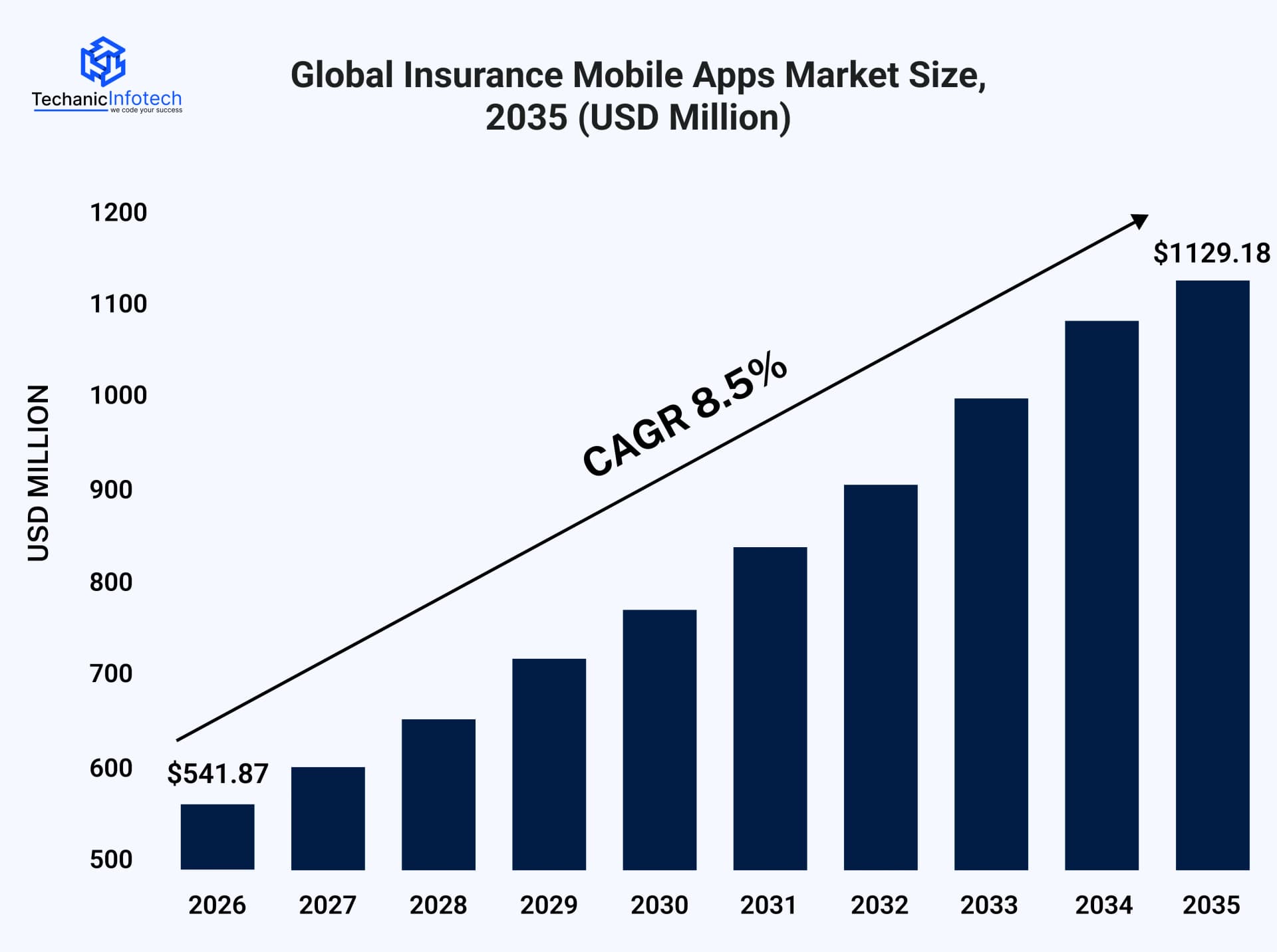
The global insurance mobile apps market is valued at around USD 541.87 million in 2026 and is expanding steadily.
Over 70% of U.S. insured individuals use mobile apps for policy servicing and claims.
Approximately 69% of insurance customers prefer managing policies via mobile apps.
Digital distribution channels make up around 40% of insurance sales in developed markets.
Smartphone penetration supports rapid adoption, with billions of global subscriptions backing app reach.
Insurance apps are designed to meet different user needs across the insurance ecosystem.
Each app type serves a specific purpose, improves efficiency, and supports better customer and business outcomes.
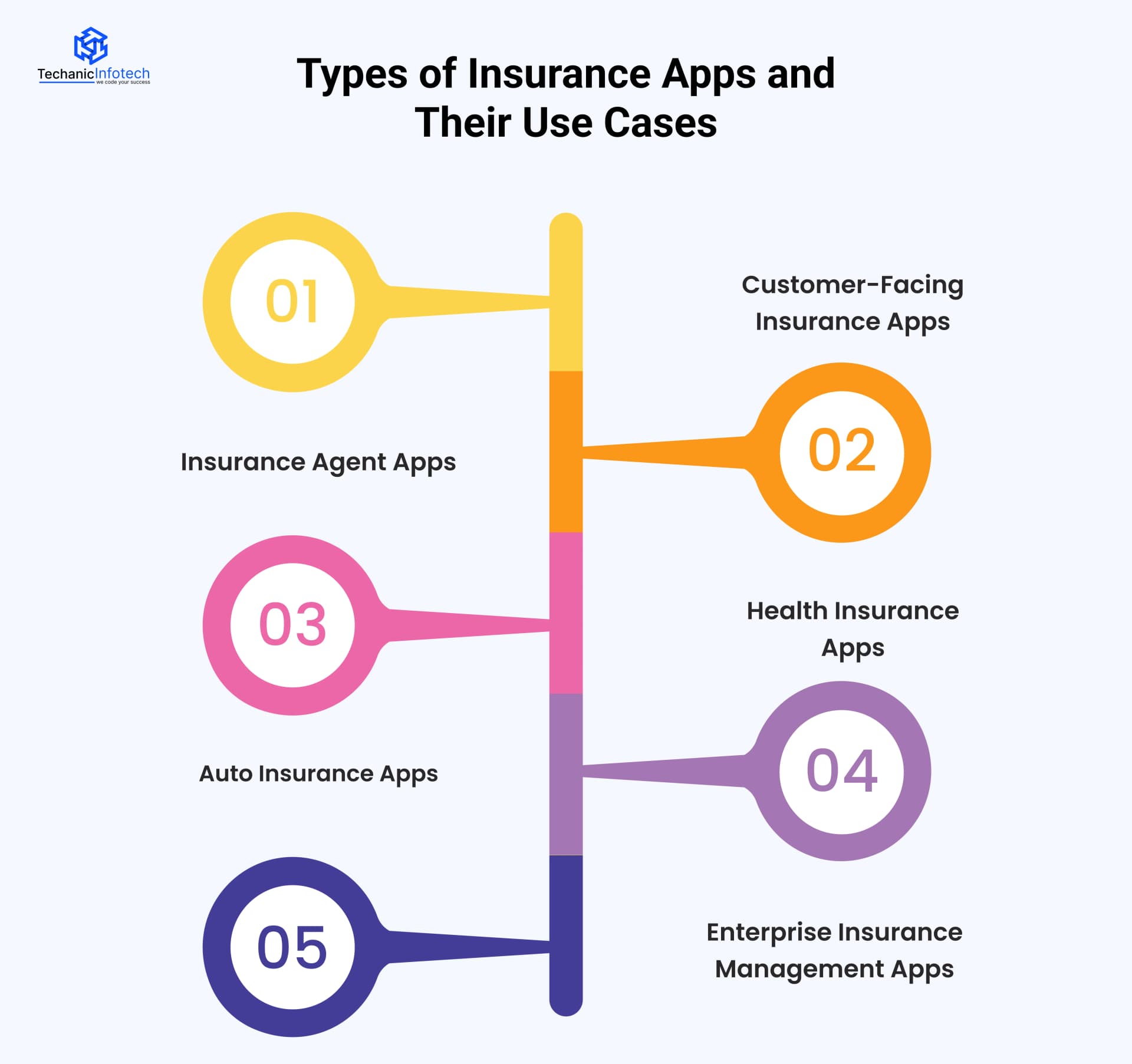
Customer-facing insurance apps are built for policyholders to manage insurance services digitally. These apps allow users to buy policies, view coverage details, pay premiums, and file claims.
Understanding the cost to build an insurance app in 2026 helps insurers plan features that balance functionality, security, and long-term customer value.
Use Cases
Buying and renewing insurance policies online
Viewing policy documents and coverage details
Filing and tracking insurance claims
Making premium payments and receiving reminders
Insurance agent apps support brokers and sales teams by simplifying customer and policy management.
They offer tools for lead tracking, instant quotes, and digital onboarding. Clear visibility into insurance app development expenses helps insurers optimize agent productivity without overspending on non-essential features.
Use Cases
Capturing and managing customer leads
Generating real-time insurance quotes
Onboarding new policyholders digitally
Tracking sales performance and commissions
Health insurance apps improve access to healthcare services by enabling digital policy management and claims processing.
Built using secure mobile app development practices, these apps connect policyholders, hospitals, and insurers while ensuring data privacy and smooth healthcare coordination.
Use Cases
Finding in-network hospitals and clinics
Accessing digital health insurance cards
Submitting and tracking medical claims
Managing wellness programs and benefits
Auto insurance apps focus on vehicle-related coverage and claims. They allow users to report accidents, upload photos of damage, and request roadside assistance.
These apps also support faster claim settlements and better customer communication through real-time updates.
Use Cases
Reporting accidents and vehicle damage
Uploading inspection images
Tracking claim and repair status
Requesting roadside assistance
Enterprise insurance management apps are internal platforms used to manage underwriting, compliance, and analytics.
Shaped by evolving mobile app development trends, these apps help insurers automate workflows, improve data accuracy, and support smarter business decisions at scale.
Use Cases
Managing underwriting and risk assessment
Ensuring regulatory compliance
Generating operational and financial reports
Streamlining internal insurance processes
Estimating the cost of building an insurance app in 2026 depends on features, platform choice, and complexity.
Understanding the mobile app development cost helps businesses plan budgets, prioritize essential functionality, and make informed decisions before starting the insurance app development journey.
UI/UX design focuses on clarity, trust, and ease of use for insurance apps. Following a proven mobile app design guide, this phase includes wireframes, user flows, visual hierarchy, and accessibility standards.
A strong design reduces friction, builds credibility, and improves onboarding, especially for first-time insurance app users.
|
Design Scope |
Estimated Cost |
|
Basic UI/UX (MVP) |
$20,000 – $30,000 |
|
Advanced UX & Branding |
$30,000 – $45,000 |
Frontend development brings designs to life and handles everything users interact with.
During the insurance app development process, this includes dashboards, policy views, forms, and responsive layouts. Costs vary based on platform choice, animations, and cross-device compatibility.
|
Frontend Scope |
Estimated Cost |
|
Single Platform (iOS or Android) |
$25,000 – $40,000 |
|
Cross-Platform or Dual Platform |
$40,000 – $60,000 |
The backend manages users, policies, claims, and data flows. It plays a major role in the overall insurance app development cost because it must be scalable, secure, and reliable.
A strong backend ensures fast performance and smooth integrations with third-party services.
|
Backend Scope |
Estimated Cost |
|
Basic Backend (MVP) |
$30,000 – $50,000 |
|
Scalable Enterprise Backend |
$50,000 – $80,000 |
Security is non-negotiable, especially for apps handling sensitive data. Costs often align closely with the health insurance app development cost due to strict compliance needs.
This component includes encryption, secure authentication, role-based access, and regulatory standards like HIPAA or GDPR.
|
Security Level |
Estimated Cost |
|
Standard Security Setup |
$20,000 – $35,000 |
|
Advanced Compliance & Audits |
$35,000 – $60,000 |
Payment systems allow users to pay premiums, renew policies, and manage billing securely. These mobile app features must support recurring payments, invoices, and transaction history. A smooth billing experience directly impacts conversions and user trust.
|
Payment Scope |
Estimated Cost |
|
Basic Payment Gateway |
$20,000 – $30,000 |
|
Advanced Billing & Automation |
$30,000 – $45,000 |
Claims management enables users to submit claims, upload documents, and track progress digitally.
The life insurance app development cost often increases at this stage due to workflow automation and validation rules. Efficient claims handling improves customer satisfaction and reduces operational overhead.
|
Claims Feature Level |
Estimated Cost |
|
Basic Digital Claims |
$25,000 – $40,000 |
|
Advanced Claims Automation |
$40,000 – $70,000 |
Notifications keep users informed about claim updates, renewals, and payments. This component adds to the insurance mobile app development cost but significantly improves engagement.
Push notifications, emails, and SMS alerts ensure timely communication without manual follow-ups.
|
Notification Scope |
Estimated Cost |
|
Push Notifications Only |
$20,000 – $25,000 |
|
Multi-Channel Alerts |
$25,000 – $35,000 |
Testing ensures performance, security, and reliability across devices. Following a solid mobile app tech stack guide, QA includes functional testing, load testing, and security checks. Proper testing prevents crashes, protects user data, and improves app store ratings.
|
Testing Level |
Estimated Cost |
|
Basic QA Testing |
$20,000 – $30,000 |
|
Full Performance & Security Testing |
$30,000 – $50,000 |
Deployment includes preparing builds, configuring servers, and meeting store guidelines. Whether you want to launch an app on the App Store or Google Play, this step ensures smooth approval and a stable release experience for early users.
|
Launch Scope |
Estimated Cost |
|
Standard App Launch |
$20,000 – $25,000 |
|
Launch + Post-Launch Support |
$25,000 – $35,000 |
Maintenance covers updates, bug fixes, security patches, and performance improvements. Ongoing support keeps the app compliant with regulations and user expectations, ensuring long-term stability and scalability after launch.
|
Maintenance Type |
Estimated Cost |
|
Basic Annual Maintenance |
$20,000 – $30,000 |
|
Advanced Support & Upgrades |
$30,000 – $50,000 |
Modern insurance platforms rely on well-planned insurance app features to deliver smooth user experiences and operational efficiency.
Each feature adds technical complexity, affects timelines, and plays a direct role in shaping development budgets and long-term scalability.
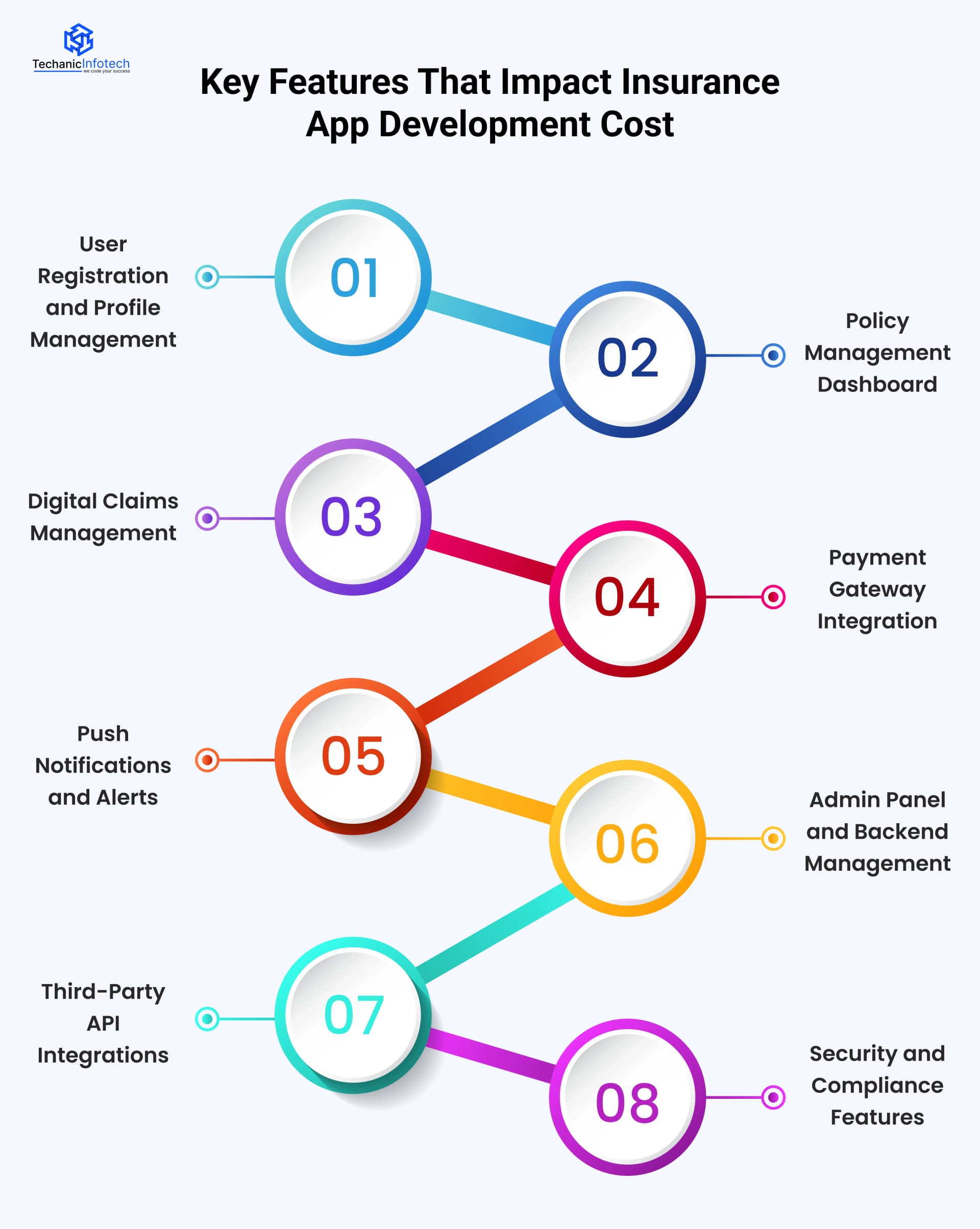
User registration enables secure onboarding through email, phone, or social logins. Profile management lets users update personal details, nominees, and policy preferences.
Adding advanced mobile app features like multi-factor authentication, role-based access, and encrypted storage increases development effort and overall cost.
A policy dashboard allows users to view active plans, coverage details, renewal dates, and policy documents.
Building real-time updates, smart reminders, and downloadable files requires strong backend logic and APIs, which directly impacts development complexity and pricing.
Claims management lets users submit claims, upload documents, and track approval status digitally.
Optimizing workflows using automation and paperless processes supports eco-friendly app development, but advanced validation logic and integrations increase development time and technical investment.
Payment gateways enable premium payments, renewals, and refunds within the app.
Supporting multiple payment options, recurring billing, and compliance standards increases testing and security needs, making this feature a major contributor to overall insurance app development cost.
Push notifications inform users about policy renewals, claim updates, and payment reminders. Basic alerts are simple, but personalized, behavior-based notifications require real-time triggers and user segmentation, which adds backend processing and long-term maintenance effort.
An admin panel helps insurers manage users, policies, claims, and reports from one dashboard. Advanced analytics, role permissions, and audit logs increase system complexity and play a key role in defining the cost to build an insurance app in 2026.
Insurance apps often integrate with payment gateways, KYC services, CRM systems, and analytics tools. Each API requires custom development, testing, and updates, increasing technical dependencies and influencing both initial development and ongoing operational costs.
Security features protect sensitive user and financial data through encryption, secure authentication, and regulatory compliance. Regular audits, updates, and monitoring add to app maintenance and support, making security a continuous cost factor rather than a one-time expense.
Choosing the right technology partner is crucial for building a secure, scalable, and user-friendly insurance application.
Techanic Infotech stands out as a trusted insurance app development company with deep expertise in creating custom insurance solutions tailored to business goals.
From intuitive UI/UX design and robust backend development to compliance-focused security and seamless third-party integrations, Techanic Infotech covers the complete development lifecycle.
Their team understands industry regulations, data privacy requirements, and evolving user expectations, ensuring long-term reliability and performance.
With a strategic, consultative approach, they help insurers reduce risks, control costs, and launch future-ready apps that deliver real value to customers and drive digital transformation.
Understanding the factors that shape insurance app development is essential for building a scalable and user-friendly product in 2026.
From core features like user onboarding and claims management to advanced security, integrations, and admin controls, every decision influences performance and budget.
Planning features strategically helps avoid unnecessary complexity while still meeting user expectations and regulatory requirements.
A clear roadmap, the right tech stack, and experienced developers ensure better outcomes and long-term growth.
Most importantly, evaluating insurance app development cost early allows businesses to balance functionality, quality, and future scalability, ensuring the app delivers real value without exceeding budget limits.
The cost to develop an insurance app in 2026 typically ranges from $20,000 to $120,000 or more. Pricing depends on features, platforms, security requirements, integrations, and the overall complexity of the insurance solution.
The cost to develop an insurance app in 2026 typically ranges from $20,000 to $120,000 or more. Pricing depends on features, platforms, security requirements, integrations, and the overall complexity of the insurance solution.
Key cost-driving features include claims management, payment gateways, admin dashboards, third-party integrations, and advanced security. The more automation, customization, and compliance requirements involved, the higher the insurance app development cost becomes.
Key cost-driving features include claims management, payment gateways, admin dashboards, third-party integrations, and advanced security. The more automation, customization, and compliance requirements involved, the higher the insurance app development cost becomes.
A basic insurance app can take 3–4 months to develop, while a feature-rich solution may require 6–9 months. Development time varies based on app complexity, design needs, testing, and regulatory approvals.
A basic insurance app can take 3–4 months to develop, while a feature-rich solution may require 6–9 months. Development time varies based on app complexity, design needs, testing, and regulatory approvals.
es, security is critical in insurance apps due to sensitive personal and financial data. Implementing encryption, secure authentication, and compliance standards adds development effort but is essential for user trust and legal protection.
es, security is critical in insurance apps due to sensitive personal and financial data. Implementing encryption, secure authentication, and compliance standards adds development effort but is essential for user trust and legal protection.
Yes, costs can be optimized by prioritizing essential features, starting with an MVP, using cross-platform development, and choosing an experienced development partner. Proper planning helps control budgets without compromising app performance or security.
Yes, costs can be optimized by prioritizing essential features, starting with an MVP, using cross-platform development, and choosing an experienced development partner. Proper planning helps control budgets without compromising app performance or security.


Bharat Sharma is the CTO of Techanic Infotech, bringing deep technical expertise in software architecture, mobile app development, and scalable system design. He leads the engineering team with a strong focus on innovation, performance, and security.