AI Development
AI Inventory Management in Australia: Benefits, USE Cases, and Adoption Strategies
April 1, 2026
April 1, 2026
Key Takeaways
AI inventory management automates stock tracking, forecasting, and replenishment, helping businesses reduce manual work, improve accuracy, and streamline overall operations.
AI analyzes historical data and trends to predict demand accurately, reducing stockouts and overstocking while ensuring optimal inventory levels across business operations.
While initial investment may be high, AI reduces long-term operational costs by minimizing errors, optimizing stock, and improving supply chain efficiency.
From small startups to large enterprises, AI inventory systems offer scalable solutions that grow with business needs and support long-term expansion.
Businesses adopting AI inventory management can respond faster to market changes, improve customer satisfaction, and stay ahead in increasingly data-driven and competitive industries.
Managing inventory efficiently is becoming more complex as businesses scale and customer expectations grow.
So, how can companies stay accurate, reduce waste, and improve demand forecasting at the same time?
This is where AI inventory management in Australia is making a real impact. By using advanced analytics, automation, and real-time data, businesses can streamline operations and make smarter decisions.
From retail to manufacturing, AI-driven systems are transforming traditional inventory practices.
In this guide, we’ll explore the key benefits of AI inventory management, real-world use cases across industries, and practical adoption strategies that help Australian businesses stay competitive and future-ready.
AI inventory management in Australia refers to the use of artificial intelligence technologies to automate, optimise, and streamline inventory processes across industries.
By integrating AI in inventory management systems, businesses can track stock levels in real time, predict demand, and reduce overstocking or stockouts.
These systems use data analytics, machine learning, and automation to improve accuracy and efficiency in supply chain operations.
From retail and eCommerce to manufacturing, AI-driven inventory tools help companies make smarter decisions, cut operational costs, and respond quickly to market changes while maintaining better control over their inventory flow.
AI is transforming how businesses manage inventory by improving accuracy, efficiency, and decision-making. It helps reduce manual errors, optimise stock levels, and streamline operations, making inventory management faster, smarter, and more cost-effective.
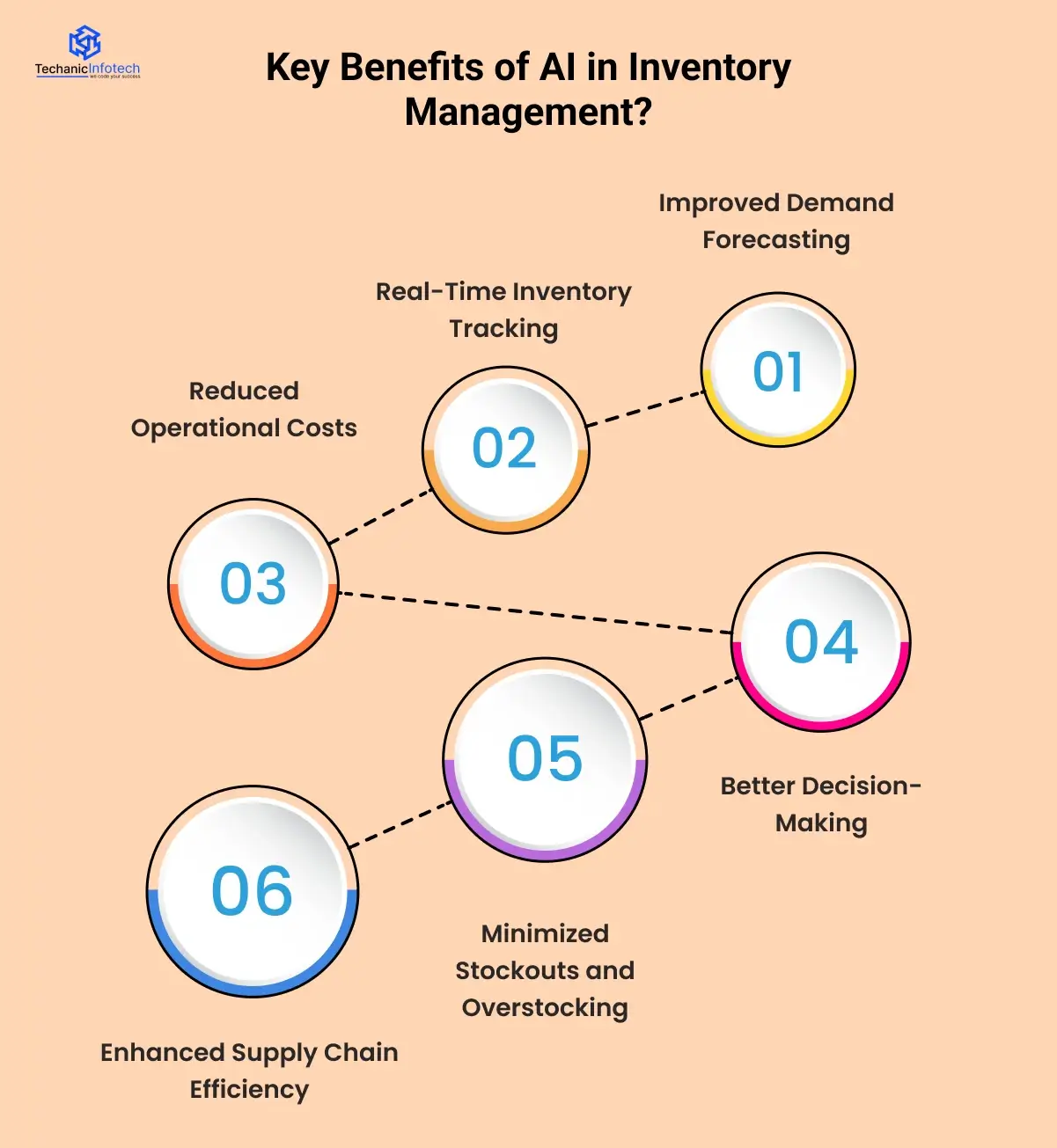
AI analyzes historical data and trends to predict future demand accurately. This helps businesses maintain optimal stock levels, reduce excess inventory, and avoid stockouts during peak demand periods.
Inventory management using AI enables real-time tracking of stock across multiple locations. Businesses gain better visibility into inventory movement, improving control, reducing losses, and ensuring timely replenishment when needed.
Automation lowers manual effort and errors, reducing overall expenses. While the initial cost of AI app development may seem high, it delivers long-term savings through improved efficiency and optimised inventory processes.
AI provides data-driven insights that help businesses make informed decisions. It identifies patterns, trends, and inefficiencies, enabling smarter inventory planning and improved supply chain management strategies.
AI balances inventory levels by predicting demand and supply fluctuations. This ensures products are available when needed while preventing excess stock that can lead to storage costs and wastage.
AI streamlines supply chain processes by optimising inventory flow and supplier coordination. It improves delivery timelines, reduces delays, and ensures smoother operations across the entire inventory management system.
AI is reshaping inventory operations by automating processes, improving forecasting, and enhancing visibility. With machine learning in inventory management, businesses reduce inefficiencies, optimise stock levels, and build smarter, data-driven systems.
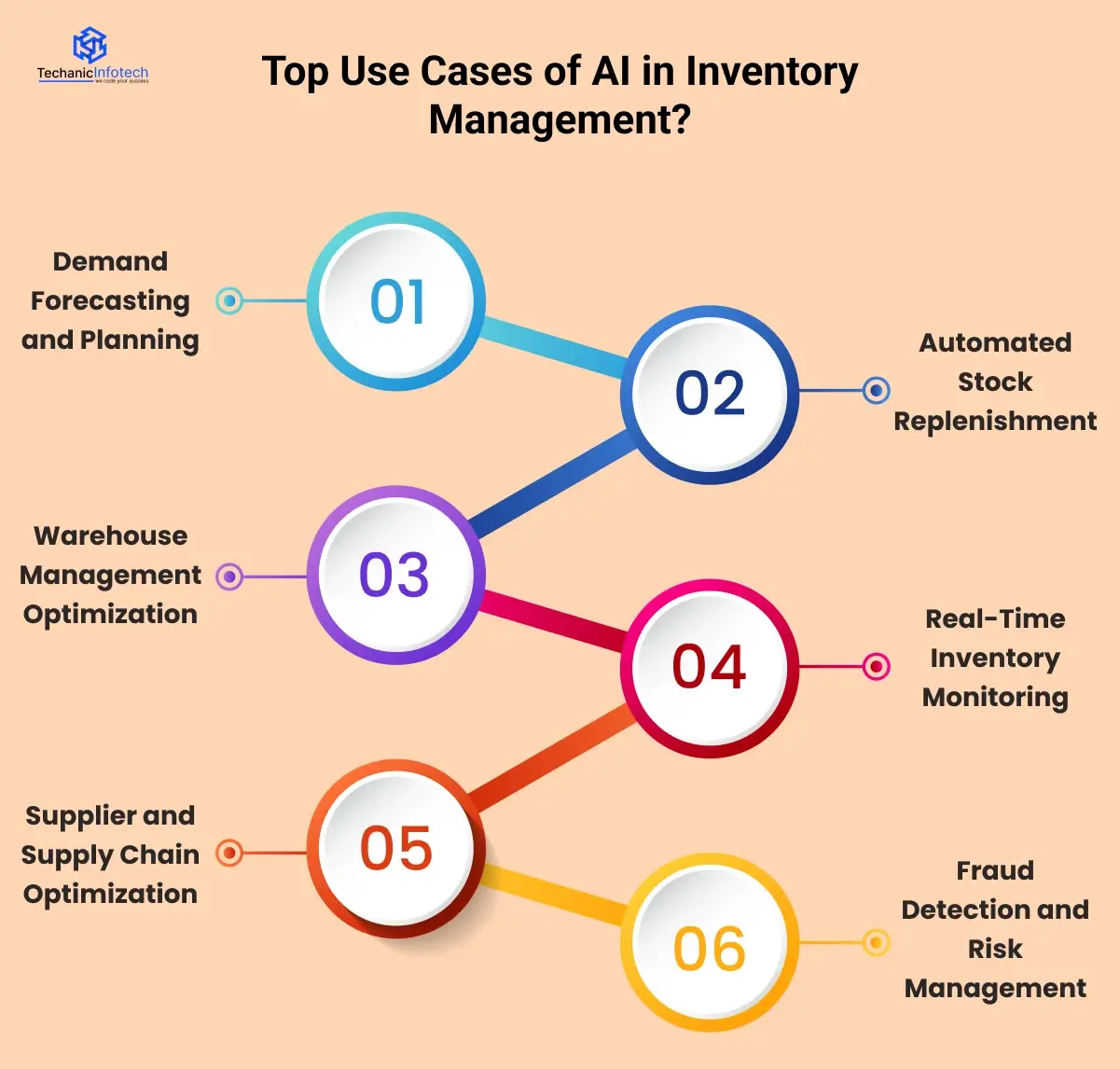
Using AI development for business applications, companies leverage advanced models to analyse trends and predict demand accurately. This improves planning, reduces waste, and ensures products are available during peak demand periods.
AI systems automatically trigger reorders when stock levels drop below a threshold. This reduces manual intervention, prevents stockouts, and ensures continuous product availability without overstocking inventory.
AI improves warehouse operations by optimising storage layouts, picking routes, and inventory placement. This increases efficiency, reduces handling time, and enhances overall productivity in inventory management systems.
AI provides real-time tracking of stock movement across locations. Businesses gain complete visibility, reduce losses, and respond quickly to changes in demand or supply chain disruptions.
AI evaluates supplier performance, delivery timelines, and costs. It helps businesses choose reliable vendors, reduce delays, and maintain smooth inventory flow across the supply chain network.
AI detects unusual patterns and anomalies in inventory data. This helps identify theft, fraud, or errors early, ensuring better control, improved security, and more accurate inventory records.
AI adoption in Australia is accelerating as businesses seek efficiency and competitive advantage. With AI supply chain optimisation in Australia, companies are integrating smarter inventory systems to reduce costs and improve operational performance.
Businesses often begin with pilot programmes using AI-powered inventory management solutions to test performance. This approach reduces risk, allows experimentation, and helps companies scale solutions based on real-world results.
Companies are aligning AI with current ERP and inventory systems. Following the latest mobile app development trends, they ensure seamless integration, improved user experience, and better operational efficiency across platforms.
Australian businesses leverage AI for demand forecasting and inventory planning. Predictive analytics helps reduce stockouts, manage supply efficiently, and improve overall decision-making across inventory and logistics operations.
Large enterprises are leading AI adoption due to better budgets and infrastructure. Their ability to invest in advanced tools enables faster implementation and more effective inventory system optimisation.
Different sectors adopt AI based on their needs. Using AI inventory management use cases and AI tools used for mobile app development, industries like retail and manufacturing customise solutions for maximum efficiency.
Many businesses rely on ready-made platforms like an AI stock management system in Australia to reduce development time. These tools offer quick deployment and essential features without heavy upfront investment.
Automation is a key driver of AI inventory management in Australia, helping businesses handle repetitive tasks like stock tracking and reporting, improving productivity while reducing manual errors and operational workload.
Australian businesses continue to increase investments in AI inventory systems. With rising demand, companies are planning long-term adoption strategies to scale operations and stay competitive in evolving market conditions.
Implementing AI Inventory management in Australia requires clear planning, the right tools, and a scalable approach. Businesses must align technology with goals to ensure smooth adoption, improved efficiency, and long-term operational success.
Start by identifying specific objectives like reducing stockouts or improving forecasting. Clear goals guide implementation, ensure focused development, and make it easier to measure performance and overall success.
Selecting the right technology stack for AI-based applications is essential. It ensures compatibility, faster deployment, better performance, and long-term scalability for evolving inventory management and business needs.
Implement scalable AI in inventory management systems that grow with your business. This allows you to begin with core features and expand gradually without major system redesign or additional heavy investment.
AI systems rely on high-quality data. Clean, structured, and accurate data improves predictions, reduces errors, and ensures the system delivers reliable insights for better inventory decision-making.
Provide proper training to employees and stakeholders. Understanding AI tools ensures smoother adoption and better utilisation, and minimises resistance while improving overall operational efficiency.
Following a guide to AI app development helps in continuous monitoring and optimisation. Regular updates improve performance, adapt to changes, and ensure the system delivers consistent, long-term value.
In conclusion, AI inventory management is transforming how Australian businesses handle stock, demand, and supply chain operations.
By leveraging intelligent systems, companies can reduce errors, improve forecasting accuracy, and streamline workflows across departments.
From small retailers to large enterprises, adopting AI-driven solutions enables better decision-making and long-term cost savings.
However, successful implementation depends on clear goals, the right technology, and continuous optimization.
Businesses that invest strategically in AI can stay competitive, respond faster to market changes, and deliver better customer experiences.
As adoption grows, AI inventory management will continue to play a crucial role in driving efficiency, scalability, and innovation across industries in Australia.
AI inventory management uses artificial intelligence to automate stock tracking, demand forecasting, and replenishment. It helps businesses improve accuracy, reduce manual work, and optimize overall inventory operations efficiently.
AI analyzes real-time data and historical trends to reduce human errors. It ensures accurate stock levels, minimizes discrepancies, and provides better visibility across inventory systems for improved control.
Industries like retail, eCommerce, manufacturing, healthcare, and logistics widely use AI inventory systems in Australia to streamline operations, manage stock efficiently, and improve supply chain performance.
Costs vary based on features and complexity. While initial investment can be high, AI systems reduce long-term operational costs by improving efficiency, reducing waste, and automating manual processes
Yes, small businesses can adopt AI using cloud-based or ready-made solutions. These tools are affordable, scalable, and help improve inventory control without requiring large upfront investments.
AI uses historical sales data, trends, and external factors to predict demand accurately. This helps businesses maintain optimal stock levels and avoid overstocking or stock shortages.
Key features include real-time tracking, demand forecasting, automated replenishment, analytics dashboards, and integration with supply chain systems to improve efficiency and decision-making.
Yes, AI systems use encryption and security protocols to protect data. Proper implementation ensures safe handling of sensitive business and inventory information across platforms.
Implementation typically takes a few weeks to months, depending on system complexity, integrations, and customisation required for business-specific inventory management needs.
AI will continue evolving with better automation, predictive analytics, and real-time insights. Businesses will rely more on AI to improve efficiency, reduce costs, and enhance supply chain operations.


Bharat Sharma is the CTO of Techanic Infotech, bringing deep technical expertise in software architecture, mobile app development, and scalable system design. He leads the engineering team with a strong focus on innovation, performance, and security.