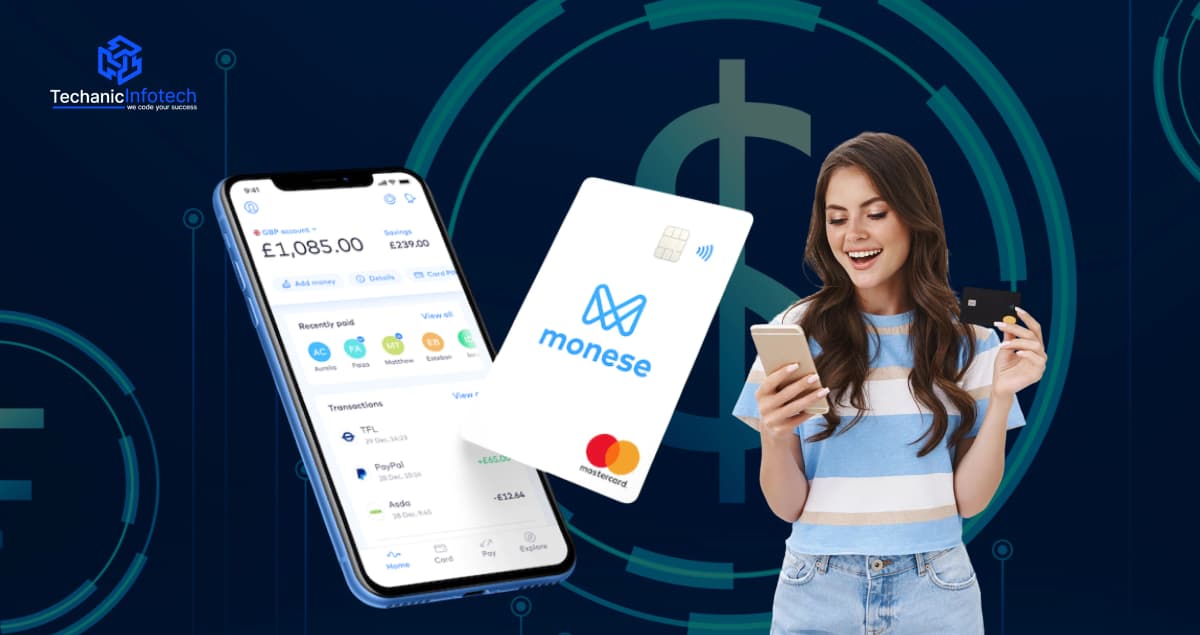
Digital banking adoption continues to accelerate in 2026 as users demand faster, branch-free financial services.
Monese has set a benchmark by offering secure, mobile-first eWallet and digital banking solutions.
Building a Monese-like eWallet app today requires more than copying features; it demands regulatory expertise, robust security, scalable architecture, and real-world fintech experience.
This guide explains how to build an eWallet app like Monese, covering core features, development steps, technology stack, realistic costs, and monetization strategies.
The focus is on practical insights that help founders, startups, and enterprises make informed decisions.
A Monese-style eWallet app is a regulated digital financial platform designed to replace or complement traditional banking services.
It enables users to store, send, and receive money digitally through a mobile ap..p
Offers multi-currency wallets and international money transfers
Provides IBAN or virtual bank accounts via licensed banking partners
Supports debit cards (virtual and physical) for online and offline payments
Integrates budgeting tools, transaction analytics, and real-time alerts
Operates under strict KYC, AML, GDPR, and PCI-DSS compliance standards
Such apps prioritize transparency, security, and ease of use—key trust signals for both users and regulators.
An eWallet app like Monese offers secure digital payments, real-time transaction tracking, multi-currency support, and instant money transfers.
eWallet app features include security features, user-friendly onboarding, budgeting tools, and seamless integration with banking and payment services.
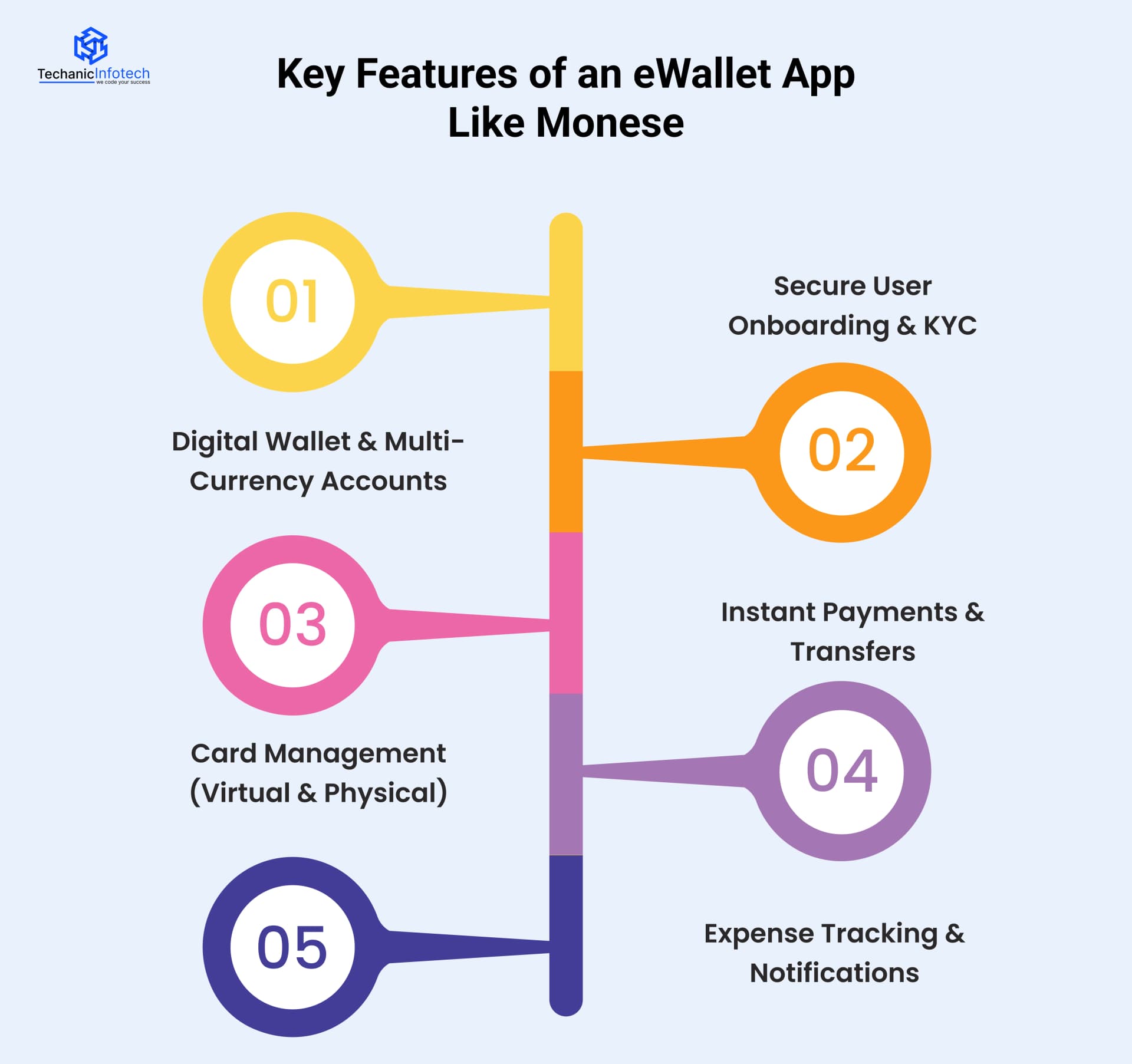
User trust begins with compliant onboarding. A Monese-like app uses identity verification, document uploads, and biometric authentication to meet KYC and AML regulations.
Automated verification reduces friction while ensuring legal compliance. This balance between security and convenience is essential for user adoption and regulatory approval.
Users can hold, exchange, and manage multiple currencies in one place.
Real-time balance updates, transaction histories, and exchange rate transparency improve financial control.
This feature is critical for international users and freelancers.
The app enables peer-to-peer payments, bank transfers, and international remittances using secure APIs.
Transactions are processed in real time or near real time, ensuring speed and reliability, key expectations in modern fintech apps.
Users can issue virtual cards instantly and manage physical cards through the app.
Features like spending limits, card freezing, and transaction alerts enhance security and user confidence.
Smart categorization, analytics, and push notifications help users understand spending patterns.
These insights improve engagement and position the app as a financial management tool, not just a payment app.
An eWallet app development process involves structured steps to build a secure, user-friendly digital payment solution.
It covers planning, design, development, testing, and deployment to ensure smooth transactions and reliable financial services.
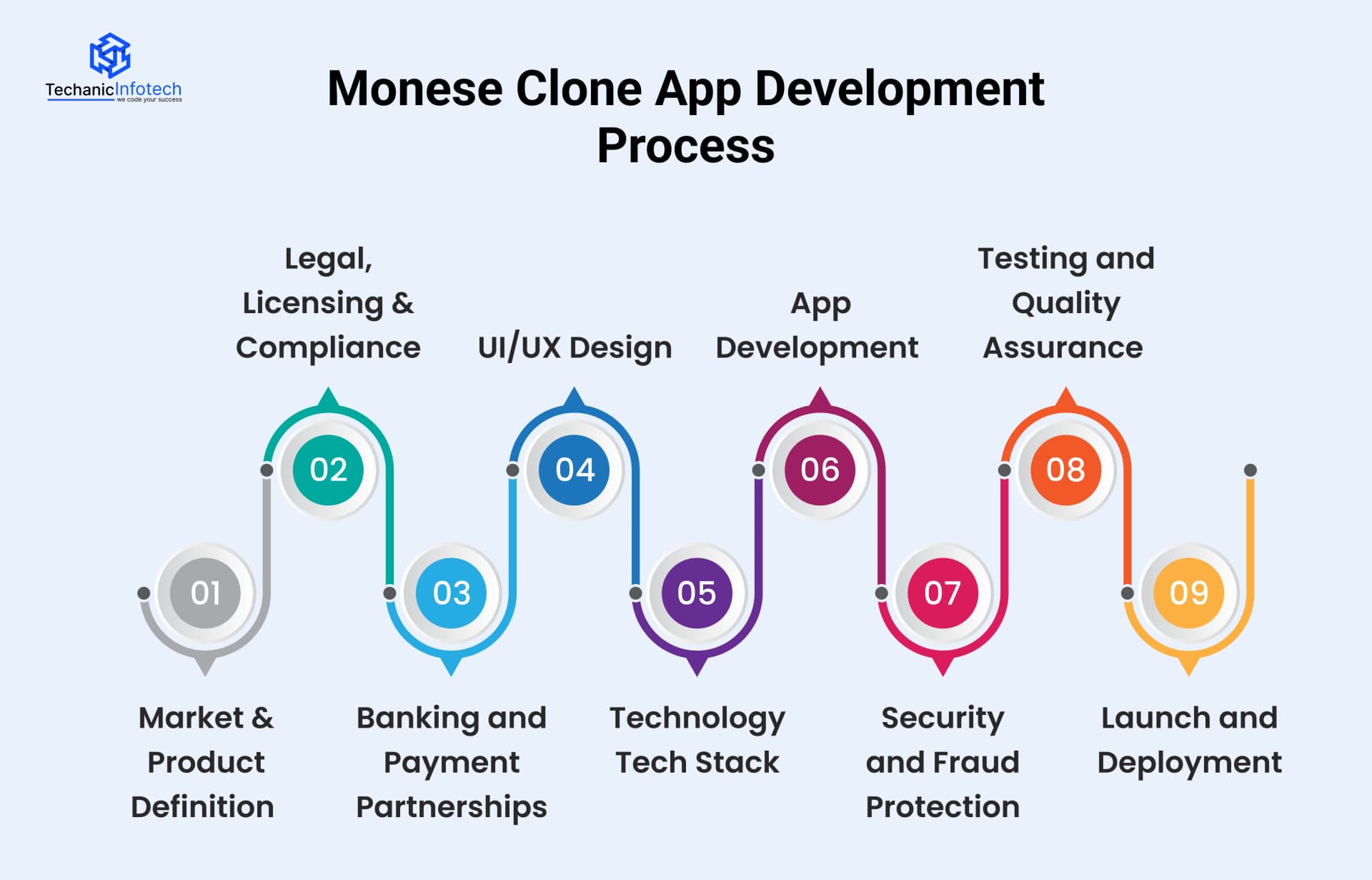
Analyse target customers, business goals, and competitors. Decide on supported countries, core features, and pricing model.
Define a clear MVP scope focusing on essential features like onboarding, wallet, cards, and transfers to reduce cost and development risks.
Obtain required financial licenses or partner with a regulated institution. Ensure compliance with KYC, AML, GDPR Aand PCI DSS regulations.
Legal approval is mandatory to operate, protect user data, prevent fraud, and avoid regulatory penalties.
Banking and payment partners provide essential financial infrastructure. Integrate Banking-as-a-Service providers, card issuers, and payment gateways.
These partnerships enable account creation, card issuing, money transfers, and payment processing while reducing development complexity and regulatory burden.
UI/UX design ensures the app is easy to use and visually appealing. Design intuitive onboarding, dashboard, and transaction flows.
Create wireframes and prototypes, test with real users, and refine designs to improve usability, engagement, and customer satisfaction.
Selecting the right technology stack is crucial for performance and scalability. Choose mobile frameworks, backend technologies, databases, and cloud platforms.
The stack should support secure transactions, API integrations, real-time updates, and future feature expansion efficiently.
This phase involves building the application’s frontend and backend components.
Develop features such as user authentication, KYC integration, wallet management, cards, payments, and notifications.
Follow agile development practices to deliver updates efficiently and manage changes smoothly.
Security is critical in financial applications. Implement encryption, secure authentication, biometric login, and two-factor authentication.
Monitor transactions for fraud, maintain audit logs, and follow security standards to protect users’ funds and sensitive information.
Testing ensures the app performs reliably and securely. Conduct functional, performance, usability, and security testing.
Validate compliance requirements, identify bugs, and fix issues. Thorough quality assurance minimizes risks and ensures a smooth user experience.
Launch the app by deploying it to production servers and app stores. Perform a soft launch to monitor system performance and gather feedback.
Resolve issues quickly, scale infrastructure, and prepare customer support for user onboarding.
A robust app requires the right eWallet app tech stack to ensure performance, security, and scalability.
Frontend, backend, databases, APIs, and cloud infrastructure work together to deliver a reliable digital payment experience.
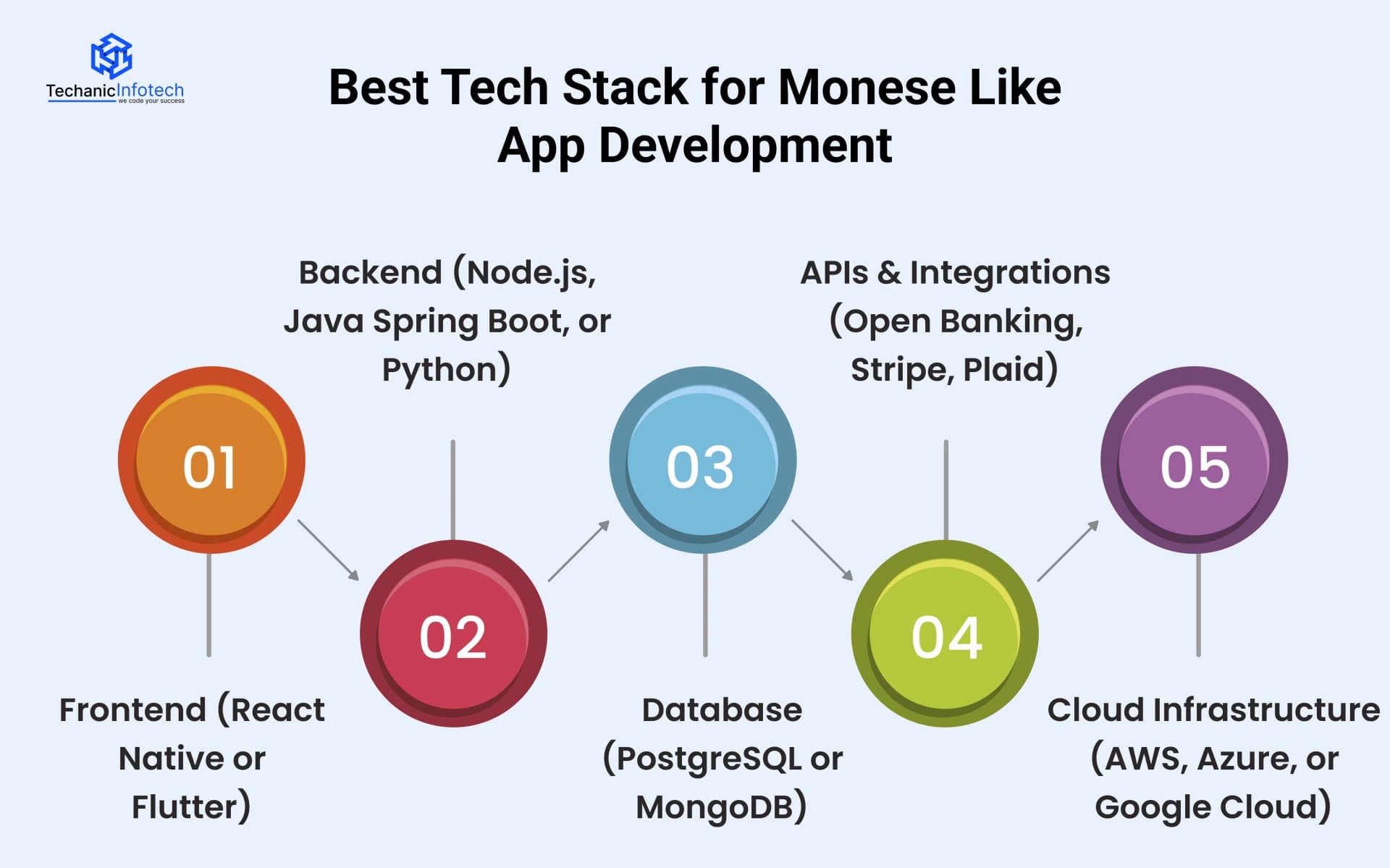
React Native and Flutter enable cross-platform development using a single codebase for Android and iOS.
They deliver near-native performance, fast load times, and consistent UI design while supporting accessibility standards for a smooth, user-friendly experience in building an app like Monese.
The backend handles business logic, authentication, and transaction processing.
Technologies like Node.js, Spring Boot, or Python are built for scalability and performance, allowing the system to manage high transaction volumes securely and respond quickly to user requests.
PostgreSQL and MongoDB store user, transaction, and wallet data securely.
With encryption and access controls, they ensure data integrity, high availability, and regulatory compliance while supporting both structured and unstructured financial data efficiently in the Monese like application.
Third-party APIs enable secure bank connectivity, payment processing, and identity verification.
Integrating services in monese like app, including Open Banking, Stripe, and Plai,d reduces development time, improves reliability, and ensures compliance with financial regulations and industry standards.
Cloud platforms provide scalable computing, secure storage, and global availability.
Using AWS, Azure, or Google Cloud in monese like app ensures redundancy, automated backups, disaster recovery, and the ability to handle sudden traffic spikes without service disruption.
Building an eWallet app like Monese requires careful investment planning, as costs depend on features, security, compliance, and scalability.
A clear eWallet app development cost breakdown helps businesses estimate budgets and choose the right development approach.
An MVP eWallet focuses on essential functionality such as user registration, wallet balance, basic transfers, and standard security features.
Considering the cost of developing the MVP versions ranges from $20,000 to $35,000, as per its complexity level.
It is ideal for startups testing market demand, gathering user feedback, and validating business ideas with minimal investment and faster time-to-market.
A standard eWallet app includes features such as multi-currency wallets, card linking, transaction history and analytics, push notifications, and improved security controls.
Because of these expanded capabilities and third-party integrations, development costs typically range between $200,000 and $70,000+, making it suitable for growing digital finance businesses.
An enterprise-grade eWallet app supports advanced features including full KYC and AML compliance, AI-driven analytics, high-performance backend architecture, global scalability, and a premium user experience.
Due to complex integrations, regulatory requirements, and scalability needs, development costs usually fall between $80,000 and $120,000.
Custom UI/UX design, branding, and regulatory compliance significantly influence total cost.
Implementing standards such as PCI-DSS, GDPR, and local financial regulations requires legal consulting, audits, and secure system design.
Depending on complexity and region, these activities typically add $10,000 to $30,000 to the project.
Ongoing maintenance ensures the app remains secure, stable, and up to date.
It includes bug fixes, performance optimization, security updates, feature enhancements, and server costs.
Typically, eWallet app maintenance requires 15–20% of the initial development budget annually.
Following is the table that shows the overall price ranges, app type, key features included, and their complexity level, that’s completely short brief of the cost.
|
App Type / Phase |
Price Range ( USD ) |
Key Features |
Complexity Level |
|
MVP Version |
$20,000 – $35,000 |
• User registration & login • Wallet balance management • Basic money transfers • Standard security features • Faster time-to-market |
Low |
|
Standard eWallet App |
$40,000 – $70,000 |
• Multi-currency wallet support • Card & bank linking • Transaction history & analytics • Push notifications • Enhanced security controls |
Medium |
|
Enterprise-Grade eWallet App |
$80,000 – $120,000 |
• Full KYC & AML compliance • AI-driven analytics & insights • High-performance backend • Global scalability • Premium UI/UX experience |
High |
|
Design & Compliance Costs |
$10,000 – $30,000 |
• Custom UI/UX & branding • PCI-DSS compliance • GDPR & local regulations • Legal consulting & audits • Secure system architecture |
Medium–High |
|
Ongoing Maintenance |
15–20% of initial cost/year |
• Bug fixes & performance tuning • Security patches & updates • Feature enhancements • Server & infrastructure costs |
Ongoing |
eWallet apps generate revenue through multiple streams, including transaction fees, subscriptions, currency exchange, card usage, and partnerships.
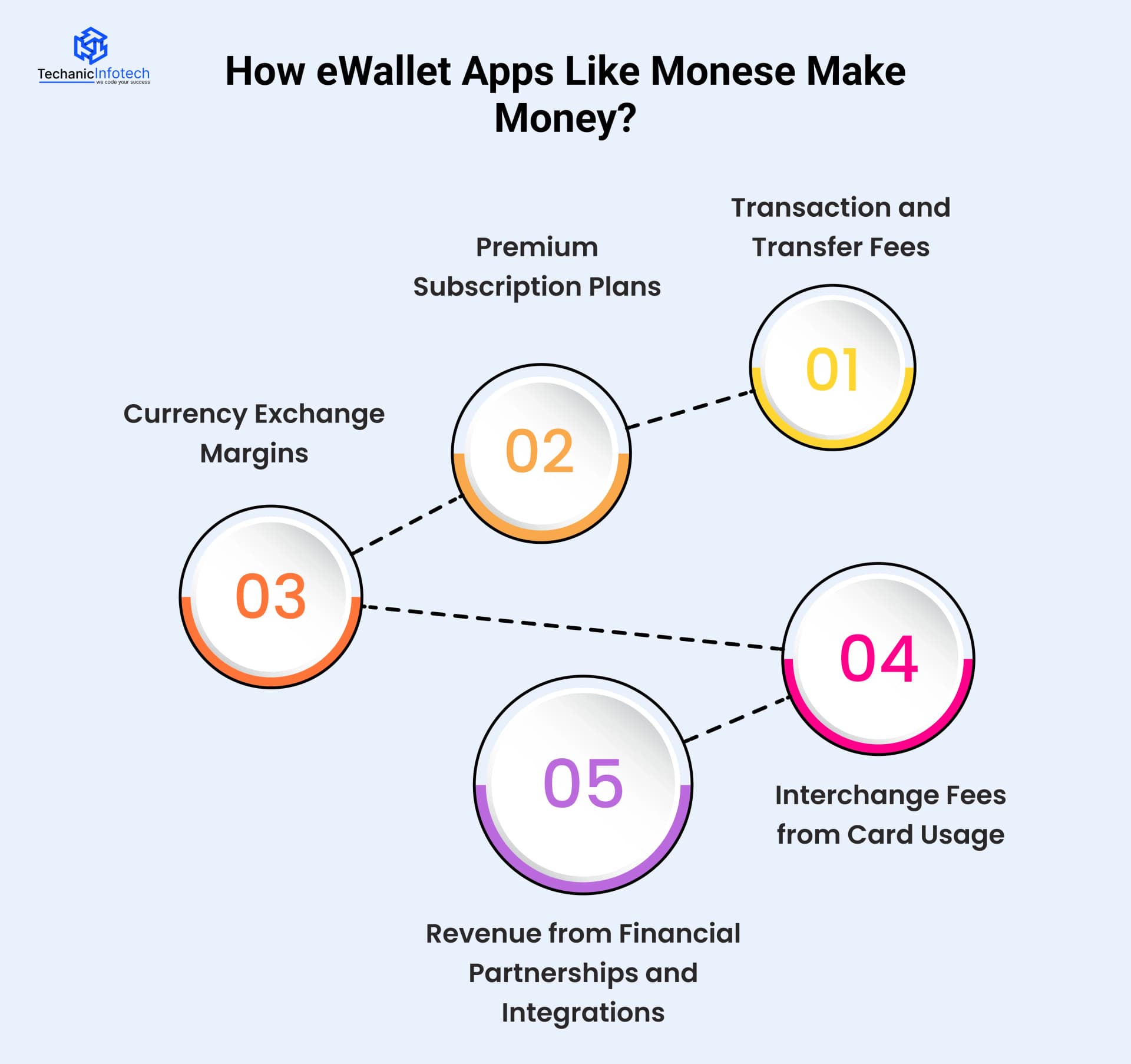
Following the points that show how these eWallet apps like Monese make money.
eWallet apps earn revenue by charging small fees on peer-to-peer transfers, international remittances, or merchant payments.
These fees are usually minimal per transaction but generate significant income at scale. Transparent pricing builds user trust while ensuring steady cash flow from frequent, high-volume transactions.
Premium plans offer users enhanced features such as higher transfer limits, reduced fees, priority support, advanced analytics, or exclusive financial tools.
Monthly or annual subscriptions provide predictable recurring revenue and improve customer retention while allowing users to choose value-added services based on their needs.
eWallets generate income by adding a margin to real-time foreign exchange rates. Even small spreads can be profitable when users frequently exchange currencies.
Competitive exchange rates attract international users, while automated FX management ensures consistent revenue without significantly impacting user experience.
When users make payments using virtual or physical cards linked to the eWallet, the app earns interchange fees from card networks and merchants.
These fees are shared among issuing banks, networks, and the wallet provider, creating passive revenue from everyday card transactions.
Strategic partnerships with banks, insurers, lenders, or investment platforms open additional revenue streams.
eWallet apps earn commissions through referrals, co-branded services, or embedded financial products, enhancing app value while diversifying income sources and reducing reliance on transaction-based revenue.
Choosing the right eWallet development partner ensures expertise in fintech, regulatory compliance, secure architecture, transparent processes, and long-term support, enabling a reliable, scalable, and user-friendly digital payment solution.
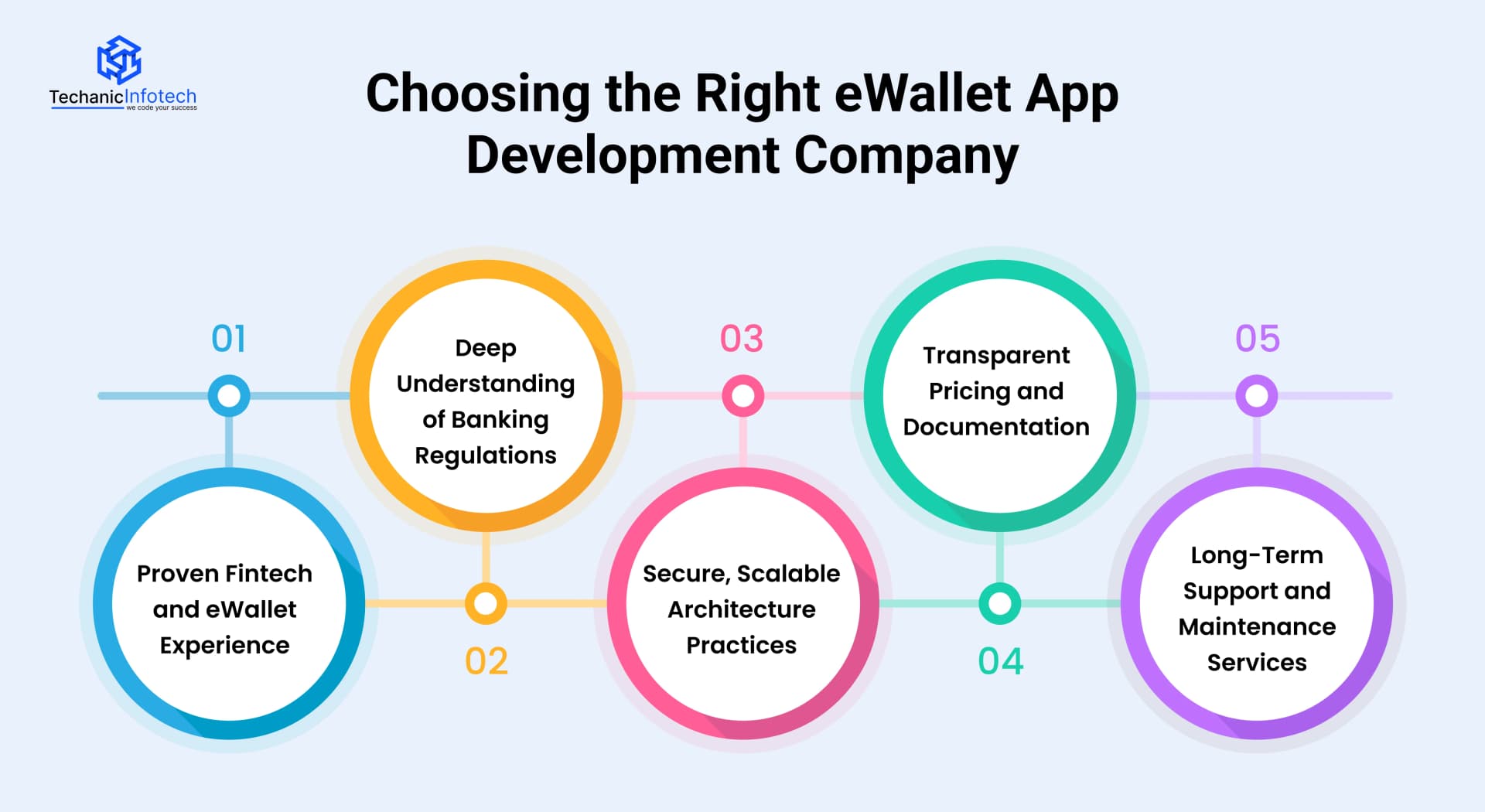
Partnering with developers experienced in fintech and eWallet solutions ensures familiarity with digital payment workflows, user expectations, and industry best practices.
Their expertise reduces development errors, accelerates delivery, and enables the creation of innovative features that enhance usability, security, and adoption rates, providing a competitive edge in the market.
Compliance with banking regulations, including KYC, AML, PCI-DSS, and GDPR, is critical for eWallet apps.
A development partner with regulatory expertise ensures the app meets legal requirements, avoids penalties, and builds trust with users and financial institutions, while seamlessly integrating compliance into workflows without compromising user experience.
Developing a secure and scalable architecture is essential for handling high transaction volumes while protecting sensitive financial data.
This includes encrypted storage, secure APIs, load balancing, and cloud scalability. Such practices ensure reliability, performance, and data integrity, preparing the platform for growth and unexpected spikes in user activity.
Clear pricing models and detailed documentation help businesses understand development costs, timelines, and deliverables.
Transparency reduces the risk of hidden fees, ensures accountability, and facilitates smooth communication.
Comprehensive documentation also supports future updates, onboarding of new team members, and easier maintenance of the eWallet app.
Ongoing support and maintenance are vital for keeping the eWallet app secure, optimized, and up to date with evolving technologies and regulations.
This includes bug fixes, performance improvements, security patches, and feature enhancements, ensuring continuous reliability, user satisfaction, and long-term growth of the digital payment platform.
Techanic Infotech is the best eWallet app development company that helps businesses build secure, scalable eWallet apps inspired by platforms like Monese.
With strong fintech expertise, the team delivers end-to-end eWallet app development from compliance planning and UX/UI design to API integration and app store launch.
Techanic Infotech focuses on regulatory-ready architecture, ensuring KYC, AML, PCI-DSS, and GDPR compliance without compromising user experience.
Using modern tech stacks such as Flutter, React Native, Node.js, and cloud platforms, they create high-performance digital wallets with multi-currency support, instant payments, and smart analytics.
Building a Monese-like eWallet app in 2026 is a high-opportunity but regulation-heavy venture.
Success depends on real fintech expertise, compliant architecture, and a user-first approach.
Rather than focusing solely on features, businesses must prioritize trust, security, and long-term scalability.
With the right strategy, technology stack, and development partner, a Monese-style app can become a reliable digital banking solution that meets modern user expectations and regulatory standards while delivering sustainable revenue growth.
No, a banking license is not mandatory; most eWallet apps operate by partnering with licensed banks via secure APIs and integrations.
Development typically ranges from 4 to 8 months, depending on app complexity, feature set, compliance requirements, and integration with third-party services.
Yes, launching with an MVP is recommended to validate market demand, gather user feedback, and iteratively enhance features cost-effectively.
When built using strong encryption, secure APIs, regular audits, and regulatory compliance standards, eWallet apps provide high levels of security for users.
Yes, eWallet apps can be published on both platforms once they meet all store guidelines and financial regulatory requirements.


Abhishek Jangid is the CEO of Techanic Infotech, with extensive experience in mobile app and web development. He specializes in helping businesses turn innovative ideas into scalable digital solutions through strategic planning and modern technology.