
EWallet App Development
Digital Transformation in Banking & Finance : Key Benefits, & Challenges
March 17, 2026
March 17, 2026
Digital transformation is reshaping the banking and financial services industry at an unprecedented pace.
With the rise of fintech innovations, evolving customer expectations, and increasing regulatory pressure, traditional financial institutions must adapt or risk becoming obsolete.
From AI-powered analytics to cloud-based banking systems, digital transformation is no longer optional—it’s a strategic necessity for growth, efficiency, and long-term sustainability.
In this guide, we’ll explore the key benefits, major challenges, and practical solutions driving digital transformation in banking and finance.
Digital transformation in banking and finance refers to the integration of advanced digital technologies into financial services to improve operations, customer experience, and decision-making.
It involves rethinking traditional processes and adopting technologies such as:
Artificial Intelligence (AI)
Cloud computing
Blockchain
Big data analytics
Robotic Process Automation (RPA)
The goal is simple: deliver faster, smarter, and more secure financial services.
Digital transformation is powered by several advanced technologies that are reshaping banking operations.
Unlike the simple lists often seen, here we’ll explain how these technologies actually impact banks and their customers.
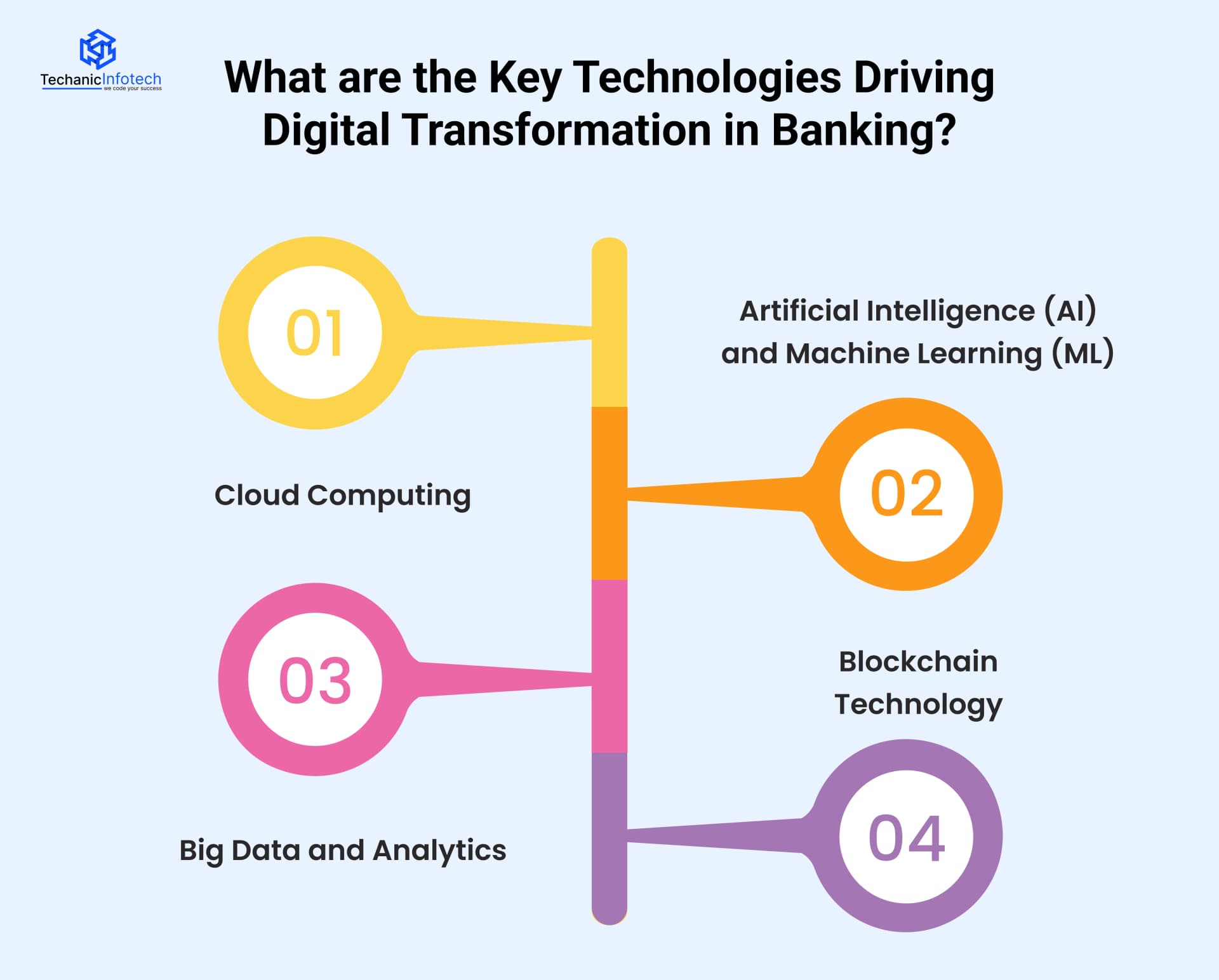
AI and ML allow banks to analyze huge amounts of data, detect fraud in real time, and automate repetitive tasks.
Beyond efficiency, AI powers chatbots and virtual assistants, giving customers instant support and tailored financial advice.
For example, predictive algorithms can anticipate a customer’s spending patterns, enabling banks to offer personalized financial products.
Cloud technology provides scalable infrastructure and flexibility, allowing banks to deploy new digital services quickly.
It reduces the need for expensive on-site servers and improves disaster recovery capabilities. Many banks now run mission-critical applications in the cloud to handle peak transaction loads securely.
Blockchain creates a secure, decentralized ledger for transactions, particularly useful in cross-border payments and trade finance.
By eliminating intermediaries, blockchain not only reduces mobile app development costs but also speeds up processing time while ensuring transparency.
Banks generate massive amounts of data every day. Using analytics, institutions can track customer behavior, forecast market trends, and personalize financial services.
These insights drive smarter decisions, better risk management, and more relevant product offerings.
Digital transformation offers transformative advantages for both financial institutions and their customers.
By leveraging modern technologies, banks can streamline operations, enhance customer experiences, and make smarter business decisions.
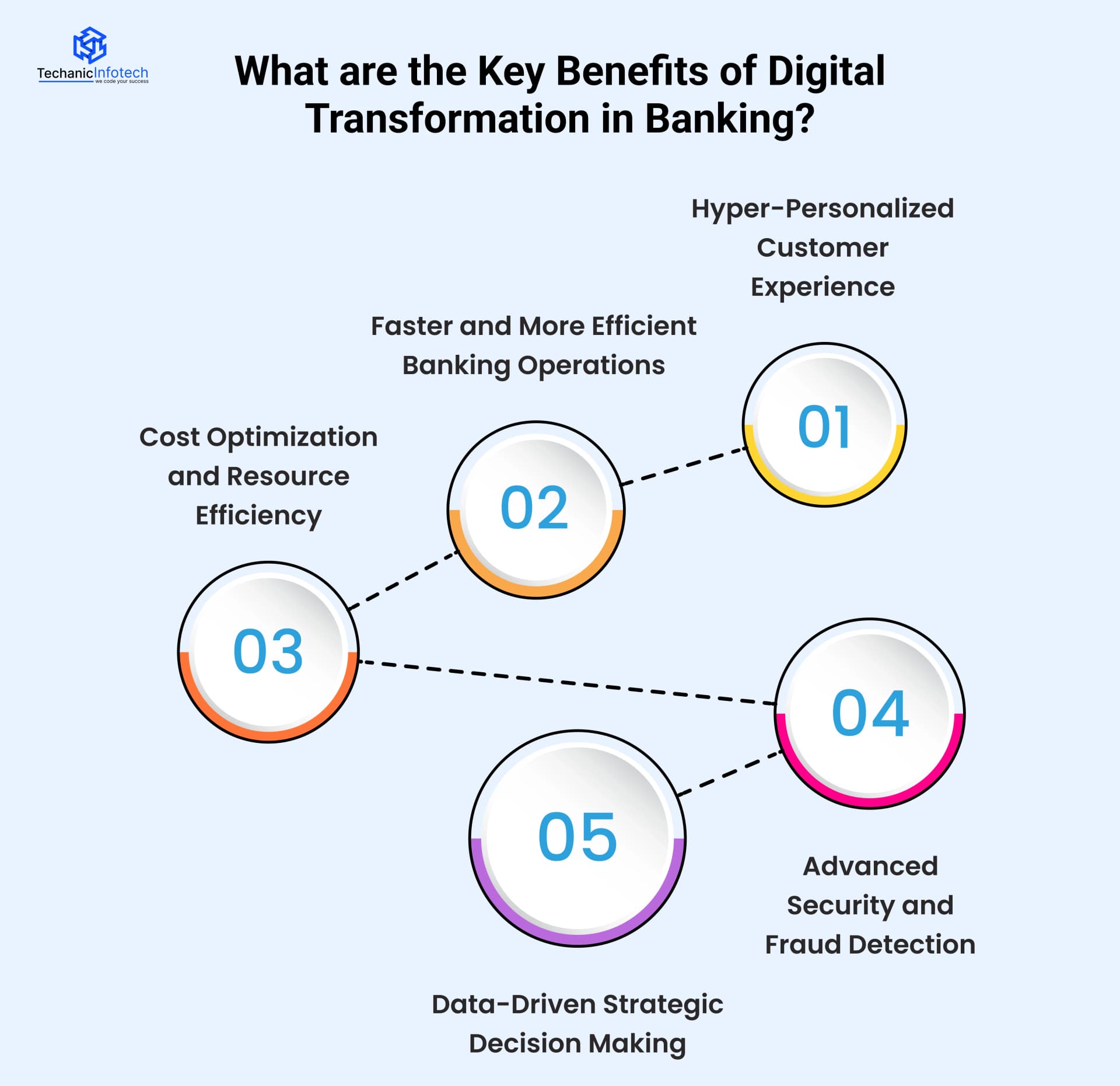
AI-powered insights allow banks to deliver tailored financial products and services. Customers can perform tasks such as transferring funds, paying bills, applying for loans, or checking balances instantly through mobile apps and online platforms. This personalization builds loyalty and improves satisfaction.
Automation technologies reduce manual processes, enabling transactions that once took hours or days to be completed in seconds. Digital onboarding lets customers open accounts quickly through online verification, improving convenience and operational efficiency.
Digital systems reduce eWallet app development cost by automating repetitive tasks and minimizing reliance on physical branches. This allows banks to allocate resources strategically, reduce errors, and focus on growth initiatives.
AI-driven security systems monitor transactions in real time to detect unusual patterns and prevent fraud. These technologies protect sensitive financial data, reduce financial crime risk, and enhance customer trust.
By analyzing large volumes of financial and customer data, banks gain actionable insights. These insights help in designing personalized products, predicting eWallet app development trends, and optimizing services for better business outcomes.
While digital transformation brings immense benefits, financial institutions face several significant challenges that must be addressed strategically.
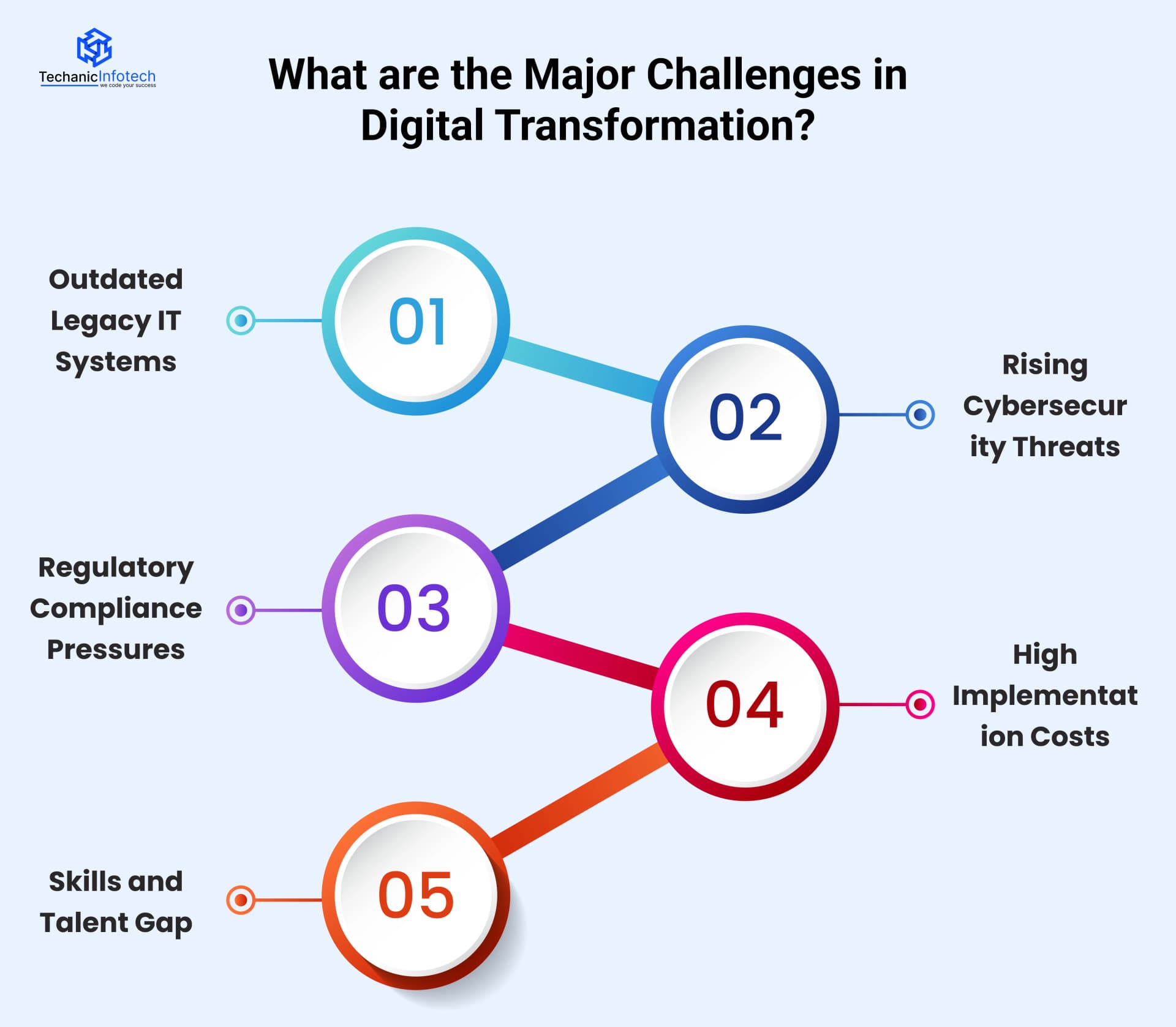
Many banks rely on legacy infrastructure that is difficult to integrate with modern digital solutions. Upgrading these systems requires high investment and technical expertise, and slow adoption can delay innovative services.
As banking moves online, cyberattacks are increasingly targeting sensitive customer and financial data. Banks must deploy advanced cybersecurity measures, real-time monitoring, and encryption to prevent breaches and protect trust.
Financial institutions operate in a highly regulated environment. Digital transformation initiatives must comply with strict rules on data privacy, anti-money laundering, and reporting, or face legal and financial penalties.
Adopting technologies like AI, blockchain, and cloud computing requires significant financial resources. Smaller banks may struggle to fund large-scale projects without careful planning and phased implementation.
Digital transformation demands expertise in areas such as AI, cybersecurity, cloud computing, and data analytics. Many banks face a shortage of skilled professionals, making workforce training and upskilling essential.
To successfully implement digital transformation, banks must adopt strategic, technology-driven solutions that address operational, security, and skill gaps.
Gradually replacing outdated infrastructure with modular, cloud-ready platforms allows banks to integrate new technologies without disrupting existing operations. Microservices architecture ensures flexibility and faster adoption of innovative solutions.
Banks must implement advanced encryption, biometric authentication in eWallet apps, and real-time monitoring to protect sensitive data. Proactive cybersecurity reduces the risk of breaches and builds customer trust.
Investing in employee training programs in AI, data analytics, and cybersecurity ensures banks have the skilled workforce needed to drive digital initiatives successfully. Continuous learning accelerates adoption and innovation.
Collaborating with fintech app development with startups allows banks to access cutting-edge technologies, launch innovative financial products, and enhance customer experiences without building everything in-house.
Migrating systems to the cloud improves scalability, operational efficiency, and flexibility. Cloud platforms also enable rapid deployment of new mobile app development services while reducing infrastructure costs.
Several global financial institutions have successfully embraced digital transformation, demonstrating how technology can revolutionize banking operations and customer experiences.
JPMorgan Chase has invested billions of dollars in cutting-edge digital technologies to upgrade its mobile banking platforms and enhance customer services.
The bank leverages AI and advanced analytics to detect fraudulent transactions in real time, while also providing personalized financial recommendations tailored to each customer.
Bank of America introduced Erica, an AI-powered virtual assistant integrated into its mobile app.
Erica helps customers manage their finances, track spending patterns, and receive intelligent financial advice instantly, making banking simpler, faster, and more convenient.
Goldman Sachs has launched digital banking platforms that offer online savings accounts and lending services.
These initiatives showcase how even traditional investment banks can innovate through digital transformation, delivering seamless and accessible financial services to modern customers.
These examples clearly illustrate how technology is reshaping the banking industry from fraud detection and personalized services to AI-powered virtual assistants and online banking platforms. Banks that invest in digital transformation not only improve efficiency but also create more satisfying and secure experiences for their customers.
The banking industry is poised for rapid evolution as digital innovation continues to reshape financial services. Emerging technologies are set to define the next era of banking, making services faster, smarter, and more accessible.
Artificial intelligence will increasingly assist customers with personalized financial advice, investment recommendations, and budgeting insights.
These AI-driven advisors enable banks to provide highly tailored solutions at scale, enhancing customer satisfaction.
Blockchain technology is expected to streamline transactions, particularly for cross-border payments, by ensuring security, transparency, and speed.
As adoption grows, banks will reduce costs and processing times while improving trust.
The development of eWallet apps will become ubiquitous, allowing consumers to manage multiple accounts, make instant payments, and track spending seamlessly.
Contactless and mobile payment systems will redefine convenience in everyday transactions.
Open banking initiatives will allow third-party developers to create apps and services that integrate directly with banking systems.
This fosters innovation, competition, and more personalized financial services for customers.
Financial services will increasingly be embedded into non-banking platforms, such as e-commerce apps or ride-sharing services.
This trend will enable frictionless transactions and new revenue streams for banks while enhancing customer experiences.
Digital transformation in banking and finance is no longer optional; it is essential for survival in an increasingly digital world.
Financial institutions must adopt modern technologies to improve operational efficiency, enhance customer experiences, and stay competitive in the rapidly evolving financial landscape.
While challenges such as legacy systems, cybersecurity risks, and regulatory compliance remain significant, strategic investments in digital technologies and skilled talent can help banks overcome these obstacles.
By leveraging technologies such as artificial intelligence, cloud computing, blockchain, and data analytics, banks can create innovative financial services that meet the needs of modern consumers.
The future of banking will be shaped by digital innovation, and institutions that embrace transformation today will lead the financial industry tomorrow.
Digital transformation in banking is the use of advanced technologies like AI, cloud, blockchain, and data analytics to modernize operations, improve customer experience, and enable data-driven decisions.
It increases efficiency, reduces costs, and enhances services, helping banks meet modern customer expectations and stay competitive.
Key technologies include AI, cloud computing, blockchain, big data analytics, and automation tools for faster, smarter, and more secure banking.
Challenges include legacy systems, cybersecurity risks, regulatory compliance, high costs, and talent gaps.
It depends on scale and complexity; small projects take months, enterprise-wide changes can take years.


Abhishek Jangid is the CEO of Techanic Infotech, with extensive experience in mobile app and web development. He specializes in helping businesses turn innovative ideas into scalable digital solutions through strategic planning and modern technology.