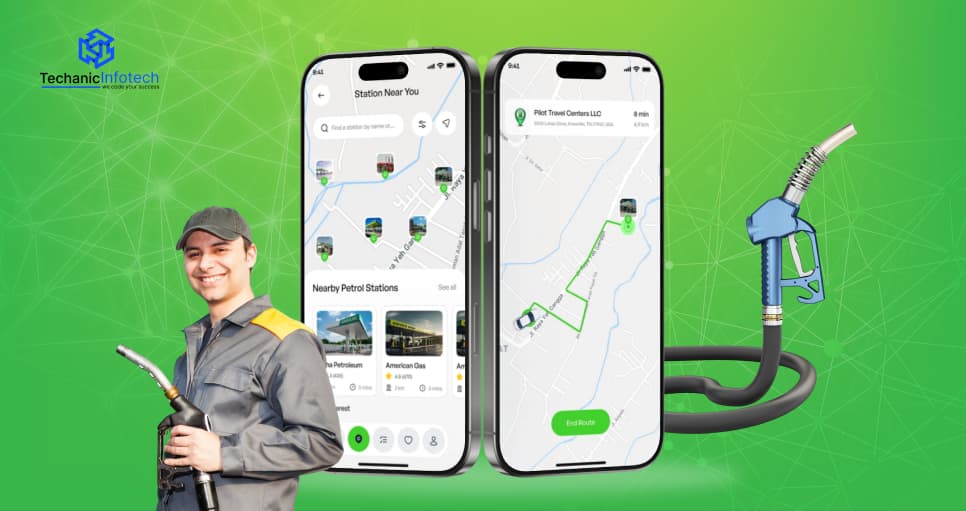
Fuel Delivery App Development
Fuel Delivery App Tech Stack: Technologies, Architecture & APIs Explained
January 16, 2026
January 16, 2026
Key Takeaways
A well-planned fuel delivery app tech stack is essential for building a secure, scalable, and high-performing on-demand fuel delivery platform.
Choosing the right frontend and backend technologies ensures a smooth user experience, real-time tracking, and efficient order management.
Strong architecture and reliable APIs enable seamless communication between users, drivers, admins, and third-party services.
Cloud infrastructure and security layers help fuel delivery apps handle peak demand while protecting sensitive user and payment data.
Investing in future-ready technologies supports long-term growth and keeps fuel delivery apps competitive in evolving markets.
Fuel delivery apps are transforming how consumers and businesses access fuel on demand, making technology the backbone of a reliable and scalable platform.
Understanding the fuel delivery app tech stack is essential for building an app that performs smoothly, stays secure, and scales with growing demand.
From intuitive mobile interfaces to powerful backend systems, every layer plays a critical role in real-time tracking, payments, and order management.
This guide breaks down the technologies, system architecture, and APIs that power modern fuel delivery solutions.
Whether you’re a startup founder or an enterprise decision-maker, knowing how each component fits together helps you make smarter technical choices, control development cost, and launch a fuel delivery app built for long-term success in the competitive U.S. market.
The fuel delivery app tech stack defines how efficiently an on-demand fuel platform operates, scales, and stays secure.
It includes frontend interfaces, backend systems, APIs, and cloud infrastructure.
A well-planned fuel delivery app technology stack ensures smooth order management, real-time tracking, secure payments, and long-term scalability for modern fuel delivery businesses.

The global mobile fuel delivery market is forecast to grow from about $5.4 B in 2024 to $8.9 B by 2031, at a 7.3% CAGR.
Market value for mobile fuel delivery services is expected to reach around $11.93 B by 2035.
Around 60% of the fuel delivery market share is driven by app-based ordering, showing the dominance of digital platforms.
The Asia-Pacific region holds about 48% of global mobile fuel delivery demand, indicating strong regional adoption.
A significant 57% of fuel consumers prefer on-demand refueling services for time savings and convenience.
Frontend and backend systems power every feature in modern fuel delivery platforms. Understanding backend and frontend technologies behind fuel delivery app features helps businesses build fast, secure, and scalable solutions that support seamless user experiences and day-to-day operations.
Cross-platform frameworks help build Android and iOS apps faster using a single codebase. A strong mobile app tech stack reduces development time, ensures consistent UI, and supports real-time features like order tracking, notifications, and live fuel delivery status updates.
State management handles real-time data such as order status, driver location, and payment confirmation. A reliable On-demand fuel delivery app tech stack keeps the interface stable, prevents UI glitches, and delivers smooth updates without unnecessary refreshes.
Frontend map components display live vehicle tracking, service areas, and delivery ETAs. These integrations enhance transparency, help users monitor fuel trucks in real time, and build trust through accurate, location-based updates.
Frontend security includes secure authentication flows, encrypted data handling, and protected API communication. Performance optimization ensures fast load times, smooth interactions, and consistent app behavior, even during peak fuel delivery demand.
Server-side languages like Node.js, Python, or Java form the core backend technologies for fuel delivery apps, handling business logic, system workflows, and data processing. They manage orders, pricing rules, fuel availability, and user interactions while supporting scalability and reliable performance.
Databases store critical data such as user profiles, order history, payments, and fleet details. In mobile app development, both SQL and NoSQL databases are used to ensure fast data access, secure storage, and smooth handling of high transaction volumes.
Authentication systems control secure access for users, drivers, and administrators. As a vital part of the fuel delivery app tech stack, role-based permissions protect sensitive data, maintain system integrity, and help meet security and compliance requirements.
Cloud infrastructure supports auto-scaling, load balancing, and high availability. It allows fuel delivery platforms to manage peak demand, reduce downtime, and deliver consistent performance as operations expand across multiple locations.

A well-planned fuel delivery app architecture ensures smooth performance, secure transactions, and real-time coordination between users, drivers, and admins.
It defines how each technical layer interacts, supports scalability, and enables businesses to build reliable fuel delivery platforms that meet modern user expectations and operational demand.
The user app layer includes customer and driver applications that enable fuel booking, order tracking, payments, and notifications. It focuses on smooth navigation, real-time updates, and reliable performance to deliver a seamless on-demand fuel delivery experience.
|
Key Functions |
Description |
|
Fuel Booking |
Allows users to place fuel orders easily |
|
Live Tracking |
Shows real-time delivery location |
|
Payments |
Supports secure digital transactions |
|
Notifications |
Sends order and delivery updates |
This layer supports business operations by managing orders, fleet activity, pricing, users, and analytics. Built using modern fuel delivery mobile app technology, dispatchers can assign fuel trucks, track delivery status, and handle exceptions, ensuring efficient coordination and faster service fulfillment.
|
Key Functions |
Description |
|
Order Management |
View and manage all fuel orders |
|
Fleet Control |
Assign and track fuel trucks |
|
Pricing Rules |
Configure dynamic pricing |
|
Reports |
Monitor performance and metrics |
Backend business logic processes core workflows such as order validation, pricing calculations, fuel availability checks, and delivery status updates. It ensures the app functions correctly, applies business rules consistently, and supports scalability as demand increases.
|
Key Functions |
Description |
|
Order Processing |
Validates and manages orders |
|
Pricing Engine |
Calculates fuel costs |
|
Availability Checks |
Confirms fuel supply |
|
Status Updates |
Manages delivery progress |
The database layer stores structured and unstructured data, including user profiles, orders, payments, and fleet records. A well-designed database is essential to create a fuel delivery app that supports fast data retrieval, accuracy, secure storage, and high transaction volumes across service locations.
|
Key Functions |
Description |
|
User Data |
Stores profiles and preferences |
|
Order Records |
Maintains order history |
|
Payment Logs |
Saves transaction details |
|
Fleet Data |
Tracks vehicle information |
This layer provides scalable hosting, load balancing, and system reliability. Cloud infrastructure ensures high availability, handles traffic spikes, supports data backups, and enables the fuel delivery app to expand smoothly into new regions.
|
Key Functions |
Description |
|
Auto-Scaling |
Handles traffic growth |
|
Load Balancing |
Distributes system load |
|
Backups |
Protects critical data |
|
Monitoring |
Tracks system performance |
The security and compliance layer protects user data and transactions through encryption, access control, and secure authentication. It helps fuel delivery platforms meet regulatory requirements, prevent breaches, and maintain user trust across all app interactions.
|
Key Functions |
Description |
|
Data Encryption |
Secures sensitive information |
|
Access Control |
Manages user permissions |
|
Secure APIs |
Protects data exchange |
|
Compliance |
Meets industry regulations |
Fuel delivery app APIs play a critical role in connecting different system components and third-party services.
They enable secure payments, real-time tracking, user authentication, and performance analytics, ensuring smooth communication between mobile apps, backend systems, and external platforms.
Payment gateway APIs are a core part of the fuel delivery app technology stack, enabling secure digital transactions and support for cards, wallets, and online payments. They ensure encrypted checkout flows and compliance with financial security standards.
Maps and GPS APIs are widely used in mobile app development services to deliver real-time location tracking, route optimization, and accurate delivery ETAs. They help drivers navigate efficiently while allowing users and admins to monitor fuel truck movement.
Notification APIs support push notifications, SMS, and email alerts using modern fuel delivery mobile app technology. They keep users informed about order confirmations, delivery updates, delays, and payment status, improving communication and user engagement.
Authentication APIs manage secure user registration, login, and role-based access control. They protect sensitive data by verifying identities and ensuring customers, drivers, and admins access only authorized features within the app.
Analytics APIs collect data on user behavior, delivery performance, and system usage. These insights help fuel delivery businesses optimize operations, improve service quality, and make informed decisions for long-term scalability.
Emerging innovations are reshaping how fuel delivery platforms operate, scale, and compete. A future-ready On-demand fuel delivery app tech stack focuses on automation, intelligence, and data-driven systems that improve efficiency, safety, and user experience while supporting long-term business growth.
Artificial intelligence helps fuel delivery apps predict demand, optimize delivery routes, and adjust pricing dynamically. Predictive analytics reduces fuel shortages, minimizes delivery delays, and improves decision-making by analyzing historical data, user behavior, and real-time operational patterns across service areas.
IoT-enabled sensors monitor fuel levels, tank conditions, and dispensing accuracy in real time. When integrated into the fuel delivery app tech stack, IoT improves safety, reduces fuel loss, enables proactive maintenance, and provides live operational insights for smarter fleet and inventory management.
Automation streamlines order allocation, driver assignment, and delivery scheduling. Smart dispatching systems reduce manual intervention, improve response times, and ensure optimal resource utilization, helping fuel delivery businesses handle higher order volumes with consistent service quality.
Blockchain technology adds transparency and trust to payments, fuel sourcing, and transaction records. As part of a modern tech stack for fuel delivery apps, blockchain reduces fraud risks, ensures tamper-proof data, and builds stronger accountability between customers, vendors, and operators.
Machine learning analyzes customer preferences, delivery performance, and usage trends, key trends in mobile app development, to personalize experiences and improve retention. Advanced analytics help fuel delivery apps refine operations, forecast growth opportunities, and continuously optimize system performance as platforms scale.
Techanic Infotech delivers robust, future-ready technology solutions designed to support modern fuel delivery platforms.
As a trusted fuel delivery app development company, the team focuses on building scalable architectures that handle real-time orders, payments, and fleet operations without performance issues.
Their tech stack is carefully selected to ensure high security, seamless API integrations, and compliance with industry standards.
From cloud-based infrastructure to advanced backend systems, every layer is optimized for reliability and growth.
Techanic Infotech also customizes solutions based on business needs, helping startups and enterprises launch a fuel delivery app that scales smoothly, stays secure, and adapts easily to evolving market demands.

In conclusion, building a successful fuel delivery platform depends heavily on choosing the right fuel delivery app tech stack.
From frontend interfaces and backend systems to APIs, cloud infrastructure, and future-ready technologies, every component plays a vital role in performance, security, and scalability.
A well-planned tech stack ensures smooth operations, real-time tracking, secure payments, and a seamless user experience.
It also helps businesses adapt to growing demand and evolving customer expectations without constant rework.
By investing in the right technologies and architecture from the start, fuel delivery startups and enterprises can reduce risks, control development costs, and create a reliable on-demand solution built for long-term success.
A fuel delivery app tech stack includes frontend, backend, APIs, databases, and cloud tools that power app performance, security, real-time tracking, payments, and overall system scalability.
Fuel delivery apps use React Native or Flutter, Node.js or Python, cloud platforms, payment gateways, GPS APIs, and secure databases to ensure smooth operations and reliable on-demand services.
Strong architecture ensures scalability, data security, real-time communication, and system stability, helping fuel delivery apps handle high traffic, growing orders, and complex fleet operations efficiently.
APIs enable integrations for payments, maps, notifications, authentication, and analytics, allowing seamless data exchange between mobile apps, backend systems, and third-party services in fuel delivery platforms.
The tech stack impacts development cost based on complexity, scalability, security requirements, third-party integrations, and future upgrades, making smart technology selection critical for long-term business success.


Shailendra is a dedicated professional known for his strong client-focused approach and clear understanding of business needs. He brings a thoughtful understanding of client needs and focuses on building long-term relationships through clear communication and quality-driven work. With a blend of strategic thinking, content expertise, and a hands-on approach, Shailendra plays a key role in shaping content that aligns with both business goals and user expectations.