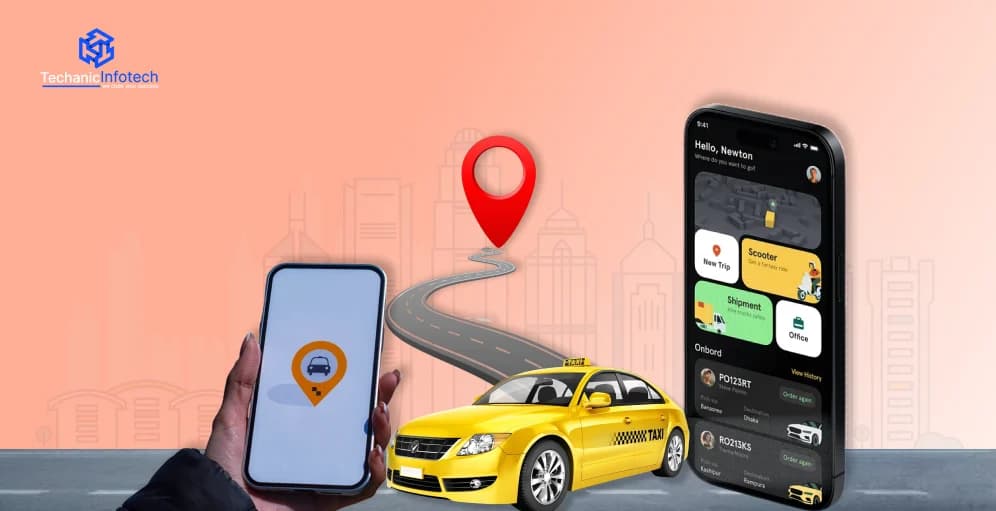
Taxi apps generate revenue through a combination of commissions, dynamic pricing, subscriptions, and partnerships that enable a scalable and profitable business model.
By connecting riders and drivers on a digital platform, these apps eliminate traditional taxi inefficiencies and create multiple monetization opportunities.
Their flexible models allow them to operate as aggregators, fleet owners, or hybrid systems depending on regional demand and operational goals.
With the rise of digital payments and mobile connectivity, these platforms have become essential for urban transportation.
Understanding the concept of how to develop a taxi booking app and how taxi apps make money helps entrepreneurs to develop sustainable taxi startup revenue strategies and ensure long-term success in a highly competitive market.
Taxi apps operate by digitally connecting passengers with nearby drivers through GPS-based matching.
Users request rides, and the app automatically assigns the closest available driver to minimize wait time.
The platform calculates fares using distance, time, and demand-based pricing algorithms. Payments are processed through integrated gateways, allowing cashless transactions.
Drivers receive navigation support, trip details, and earnings insights within their dedicated app. Real-time tracking increases transparency, while rating systems ensure quality and safety.
Behind the scenes, the admin panel manages bookings, driver verification, payments, analytics, and support. This seamless workflow enables fast, convenient, and reliable transportation for users.
Taxi app business models outline how ride-hailing platforms operate, generate revenue, and manage drivers and riders efficiently.
These models define whether the company acts as an aggregator, owns fleets, or uses hybrid systems.
Besides the taxi booking app design, it's also important to consider the taxi app business model to know the overall cost earned from these types of taxi apps.
Understanding Uber-like app business models to consider how taxi apps make money helps entrepreneurs build scalable, profitable, and competitive taxi businesses in a rapidly evolving mobility market.
The marketplace or aggregator model is the most widely used taxi app business model.
In this approach, the platform does not own cars but connects independent drivers with passengers and contacts about their pickup time or destination point.
The best taxi apps earn revenue primarily through commissions on each completed ride and may add surge pricing or subscription options for drivers.
This model offers rapid scalability because there is no need to maintain a vehicle fleet. It also provides flexibility for drivers to join on their own terms.
The aggregator model is ideal for startups aiming to expand quickly in multiple regions with minimal operational overhead and maximum market adaptability.
In the fleet ownership model, the company owns and manages its own set of vehicles. Drivers either work as employees or rent the cars from the company.
This model provides full control over pricing, service quality, branding, and vehicle standards for the driver as well as passengers.
Although the initial investment is high, profits can be more predictable because revenue from every ride stays with the company.
This approach is suitable for businesses that want a consistent customer experience and reliability, saving them from the chances of a taxi booking app fail.
Fleet ownership is often used in areas with strict regulations or by companies targeting premium transportation services such as airport rides, executive travel, or luxury mobility.
The hybrid taxi app model combines elements of both aggregator and fleet ownership systems. The platform operates its own vehicles while also allowing independent drivers to join.
This setup provides flexibility, faster expansion, and better control over service quality. The owned fleet ensures reliability during high-demand periods, while partner drivers help cover more geographic areas.
Hybrid models are especially effective in competitive markets where consistency and scalability are equally important. They also allow businesses to introduce premium fleets while still serving budget customers.
This diversified approach helps mitigate risks, optimize profits, and adapt to both regulated and unregulated environments.
In the franchise or subscription model, the main company licenses its brand, technology, and operational processes to regional partners.
Franchisees pay a setup fee, recurring subscription charges, or revenue-sharing percentages to operate the service locally. This model enables rapid geographical expansion with reduced cost to develop a taxi app.
Local operators handle driver onboarding, fleet management, and regulatory compliance while benefiting from the established brand and technology.
For the parent company, this structure generates stable income from franchise fees and subscriptions without a heavy operational burden.
It is especially effective in markets where localization and regional expertise significantly influence success.
The corporate mobility model focuses on providing tailored transportation solutions to businesses.
Companies sign contracts with taxi app providers to offer employee travel services, shuttle programs, or expense-managed rides.
The platform earns revenue through monthly subscriptions, bulk ride packages, or negotiated corporate rates.
This model is attractive because it offers predictable, recurring revenue and long-term partnerships. Businesses benefit from centralized billing, ride monitoring, and improved travel efficiency.
Taxi apps adopting this model can tap into high-value clients, reduce market fluctuations, and create a premium service ecosystem for corporate users.
In this model, the taxi platform rents or leases vehicles to drivers for daily, weekly, or monthly fees.
Drivers use these vehicles to operate on the app, earning income while the company makes consistent rental revenue.
This approach reduces the barrier to entry for drivers who don’t own cars and ensures a steady income source for the platform. Car leasing may include maintenance, insurance, and fuel packages.
Rental Vehicle model works well in regions with high vehicle costs or strict entry requirements encourage users to develop a car auction app for giving vehicles for rent.
It provides predictable cash flow, better control over driver supply, and the opportunity to expand into EV fleets.
Taxi apps generate income through multiple monetization channels designed to ensure scalability and profitability.
From ride commissions and surge pricing to driver subscriptions, advertising, and premium services, each revenue stream contributes to sustainable growth.
These diversified models help platforms handle market fluctuations, enhance customer value, and maintain long-term stability in the competitive ride-hailing industry.
Commission fees are the primary revenue source for most taxi apps. The platform charges drivers a percentage, typically 10% to 30% on every completed ride.
This model ensures earnings scale with usage, making it ideal for high-volume markets. Commission-based revenue supports operational costs such as app maintenance, customer support, and marketing.
Some platforms adjust commission rates based on location, demand, or driver performance. Transparent commission structures help attract and retain drivers, while additional incentives encourage continued participation.
As ride volume grows, commission fees become a significant and sustainable profit driver for taxi app companies.
Surge or dynamic pricing increases fares during high-demand periods such as rush hours, holidays, or bad weather.
By raising prices, the platform encourages more drivers to come online, balancing supply and demand. The company earns additional revenue from the higher fare, while drivers earn more per trip.
Dynamic pricing helps stabilize the ecosystem, ensuring riders still get rides during peak times. It also boosts revenue predictability and compensates for operational fluctuations.
Many taxi apps rely on sophisticated algorithms to calculate surge pricing in real time, ensuring fairness, transparency, and profitability while managing rider expectations effectively.
Some taxi platforms charge drivers subscription or activation fees to access premium features in taxi booking app or secure a spot on the platform.
These fees may include monthly memberships, priority ride access, reduced commissions, or access to analytics tools. New drivers might pay a one-time onboarding or verification fee to join.
This model provides predictable revenue for the platform, independent of ride volume. It also allows drivers to select plans based on their usage needs.
Subscription models often work well in regions with high driver demand, where enhanced visibility or lower commissions significantly improve earning potential for professional drivers.
Cancellation fees compensate drivers and platforms when passengers cancel rides after a certain time.
These fees discourage unnecessary cancellations, ensuring smoother operations and better resource utilization.
A portion of the cancellation fee goes to the driver for time and fuel wasted, while the platform earns the remaining percentage.
This revenue model helps stabilize driver earnings and reduces the impact of inconsistent ride demand. Apps often adjust cancellation policies based on trip type, market conditions, or rider behavior.
Although not a major income source, cancellation fees provide an important supplementary stream that enhances operational efficiency and platform reliability.
Brands pay for banner ads, video ads, sponsored car listings, or promotional placements shown to riders during booking or trip tracking.
Advertisers benefit from targeted audience segments based on ride history, location, and demographics.
Platforms can integrate partnerships with restaurants, events, or retail businesses to offer contextual promotions. This non-intrusive revenue model allows taxi apps to earn money even when riders are not actively booking.
The key advantage is its scalability; larger user traffic directly increases advertising revenue without impacting core transportation operations.
Premium service offerings include luxury rides, priority pickups, chauffeur-driven vehicles, airport transfers, and business-class options.
These services are priced higher than standard rides, creating an additional revenue layer for the platform. It also attracts customers who seek comfort, reduced wait times, or high-quality vehicles.
For drivers, premium rides often yield higher earnings, encouraging them to maintain well-equipped cars. The platform may charge higher commissions on premium trips or apply service fees.
This segment appeals to corporate clients, travelers, and special occasions, helping diversify revenue and elevate brand positioning in competitive transportation markets.
Corporate partnerships allow taxi apps to collaborate with businesses, hotels, airlines, or event agencies to provide dedicated transportation services.
Revenue comes from bulk ride agreements, negotiated pricing, or monthly subscription packages offered to corporate clients.
Companies benefit from consolidated billing, priority vehicles, and improved travel efficiency for employees or customers.
Taxi apps gain long-term, stable income with reduced ride-level fluctuations. These partnerships often include branded pickup zones, concierge services, or business traveler programs.
By serving corporate clients, platforms build stronger market presence while ensuring predictable revenue that complements consumer-based ride earnings throughout the year.
Many taxi apps allow riders to tip drivers directly within the app. While tips primarily benefit drivers, some platforms take a small share to cover processing fees or platform costs.
Even a minimal percentage can generate significant revenue when scaled across millions of rides.
In-app tipping promotes driver satisfaction, encourages better service, and enhances the passenger experience. Platforms may suggest tip amounts or provide incentives for tipping.
Although not a primary revenue driver, platform participation in tips creates an additional income channel while maintaining transparency, convenience, and fairness for both riders and drivers.
Some taxi apps offer subscription plans that give riders benefits such as discounted fares, free cancellations, priority booking, or premium support.
Riders pay a recurring weekly, monthly, or annual fee to access these perks. This model ensures steady revenue for the platform, even when ride volume fluctuates.
Subscriptions also improve customer loyalty, as users who purchase plans tend to book rides more frequently.
These packages work especially well in urban areas where people rely on taxis for daily commuting.
For the platform, rider subscriptions help reduce churn, boost predictability, and strengthen long-term customer relationships.
Renting cars to drivers is a profitable revenue stream where platforms lease vehicles directly to drivers for a daily or weekly fee.
Drivers benefit by operating without vehicle ownership, while platforms earn consistent rental income.
These rentals often include insurance, servicing, and maintenance, creating an all-inclusive solution that attracts drivers without personal vehicles.
This renting cars to the drivers model helps increase driver supply and ensures availability during peak hours.
For the platform, it serves as a stable revenue source independent of ride volume and works well in markets with low car ownership rates or strict vehicle requirements.
The cost structure of taxi apps is shaped by a combination of technology investments, operational expenses, and market-driven incentives required to run a reliable, scalable ride-hailing platform.
From building and maintaining the app’s core digital infrastructure to acquiring drivers, attracting customers, and ensuring safety and regulatory compliance, each cost component plays a vital role in platform performance.
Understanding these costs helps explain how taxi apps price rides, compete in crowded markets, and sustain long-term profitability.
Taxi apps require substantial spending on building and maintaining mobile apps, backend systems, and cloud infrastructure.
Core costs include UI/UX design, real-time GPS tracking, mapping integrations, payment gateways, user databases, and driver/rider matching algorithms.
Continuous updates are essential to fix bugs, improve performance, and stay compatible with new OS versions.
Server hosting, cybersecurity measures, and scaling infrastructure add recurring expenses. As user volumes grow, companies invest in load balancing, microservices, and analytics tools.
Overall, this category forms a major ongoing cost because reliability, speed, and usability directly affect user retention and marketplace efficiency.
Taxi platforms must attract and retain drivers to maintain a reliable supply. To do this, they offer onboarding bonuses, referral rewards, guaranteed earnings, and temporary surge incentives.
Costs also include training programs, background checks, vehicle inspections, and onboarding staff.
Because competition is high, many companies spend aggressively to ensure they have enough active drivers during peak hours.
Over time, these expenses may decline as the platform scales, but in most markets, driver incentives remain one of the largest operational costs for ride-hailing companies.
Marketing costs include digital advertising, brand campaigns, promo codes, first-ride discounts, and loyalty programs aimed at attracting riders and drivers.
Taxi apps often rely heavily on performance marketing, Google, Facebook, and app-store ads to acquire users quickly.
Offline marketing, such as billboards, partnerships with events, and local sponsorships, adds further expenses. Promotions are used to stimulate demand during slow periods or when expanding into new cities.
Because ride-hailing is a competitive market, companies frequently invest in an aggressive taxi app monetization strategy to gain market share, making marketing and promotions a continuous and significant cost driver.
Insurance is mandatory for ride-hailing operations and includes commercial vehicle insurance, driver liability coverage, passenger insurance, and sometimes accident protection programs.
Companies must comply with local transportation regulations, licensing fees, safety requirements, and data privacy rules.
Compliance costs also cover legal teams, audits, regulatory filings, and updating internal systems to meet changing laws. In certain regions, platforms contribute to taxes, safety funds, or municipal fees.
The combination of insurance premiums and regulatory compliance creates a substantial recurring cost that ensures the platform operates legally while protecting drivers, riders, and the company from risk.
Taxi apps need 24/7 customer support to resolve issues such as trip disputes, payment errors, lost-and-found items, safety concerns, and technical problems.
Costs include staffing call centers, training agents, integrating ticketing systems, and using AI chatbots to automate responses.
Multilingual support is often required in diverse markets. Quality support helps maintain trust and retain both drivers and riders.
Additionally, customer-support teams collaborate with safety units to handle emergencies or investigate incidents.
Providing timely, effective help is essential for user satisfaction, making customer support a continual operational expense for ride-hailing platforms.
Investments go into AI-driven dispatch systems that match drivers to riders faster, optimize routes, and reduce idle time.
Companies also build or license mapping technologies, real-time traffic models, and predictive demand algorithms.
Safety tech such as driver monitoring, incident detection, emergency-button systems, and identity verification requires sustained R&D spending.
Advanced features like fraud detection, electric-fleet optimization, and autonomous-vehicle research add further costs.
R&D is essential for staying competitive, lowering operational inefficiencies, and creating long-term technological advantages in the ride-hailing ecosystem.
Companies operating in competitive service-based industries such as transportation, logistics, and mobility face numerous obstacles that affect long-term profitability and growth.
These challenges arise from external market forces, regulatory environments, workforce dynamics, and shifting customer expectations, where following the best taxi app monetization strategy is crucial.
The following points explain five major challenges: high competition, regulatory hurdles, driver retention, market saturation, and balancing pricing with customer satisfaction..
High competition significantly pressures profitability by forcing companies to continuously lower prices, increase promotions, and improve service quality to attract and retain customers.
In industries with numerous players offering similar services, businesses struggle to differentiate their value propositions, resulting in shrinking profit margins.
Competitors may engage in aggressive marketing or adopt innovative technologies that require additional investment to keep up.
Ultimately, intense competition demands constant innovation, efficient cost management, and strategic positioning to stand out in an overcrowded market while still delivering services that meet customer needs.
Regulatory hurdles create operational complexities that can slow growth, raise costs, and limit profitability.
Governments may enforce rules related to worker classification, safety, licensing, environmental standards, or pricing controls.
These changes can increase operational expenses and reduce flexibility in adapting the Uber-like app business model.
In some regions, regulatory restrictions may even limit market entry or expansion, reducing potential revenue opportunities.
Companies must navigate evolving policies while ensuring adherence to local laws, which can divert resources away from innovation and customer service.
Driver retention is a major challenge because high turnover disrupts service quality, increases training costs, and complicates workforce planning.
Drivers often leave due to long hours, fluctuating income, limited benefits, or job dissatisfaction, especially in gig-based sectors
Recruiting new drivers is expensive and time-consuming, and shortages can lead to delays, poor customer experiences, and lost revenue.
Additionally, competition from rival companies offering better incentives intensifies the struggle to retain talent.
To maintain consistent service levels, businesses must invest in fair compensation, incentives, support programs, and better working conditions.
Improving retention strengthens reliability, boosts morale, and reduces operational inefficiencies.
Market saturation occurs when too many companies compete for the same customer base, resulting in reduced growth potential and intense pressure on pricing.
In saturated markets, customer acquisition becomes costly because most potential users already have preferred providers.
Businesses may respond with discounts, loyalty rewards, or expanded services, which further reduce profit margins.
Expansion into new geographic areas may also prove challenging due to similar levels of saturation or regulatory barriers.
Saturation limits opportunities for differentiation and forces companies to fight harder for incremental market share.
Balancing pricing with customer satisfaction is difficult because raising prices can improve revenue but risks deterring customers, while lowering prices may attract users but harm profitability.
Customers expect affordability, reliability, and high service quality simultaneously, making it challenging for companies to meet expectations without increasing costs.
Operational expenses such as fuel, wages, and technology often fluctuate, putting additional strain on taxi startup revenue strategies.
Companies must analyze customer behavior, manage costs efficiently, and offer value-enhancing features to justify prices to develop an app like Lyft.
Achieving the right balance requires ongoing market research, transparent communication, and strategic pricing models that align business sustainability with customer expectations.
As the transportation industry continues to evolve, taxi apps are exploring new and innovative revenue models to stay competitive, profitable, and responsive to changing customer expectations.
From dynamic pricing and subscription plans to partnerships and in-app services, the future of taxi app revenue models is becoming more adaptive and multi-layered.
Understanding these emerging taxi booking app trends is essential for businesses aiming to thrive in the next phase of mobility.
Autonomous vehicles and robotaxis are reshaping the future of taxi app revenue models by reducing dependency on human drivers and lowering operational expenses.
With self-driving fleets, companies can operate round-the-clock services while improving ride availability and consistency.
Revenue models will shift toward fleet ownership, subscription-based robotaxi access, surge-based pricing, and partnerships with urban mobility planners.
Maintenance contracts, battery-swap services, and predictive analytics tools will become essential secondary revenue streams.
Ultimately, autonomous operations will enable higher profit margins and scalable transportation networks across urban and suburban regions.
AI-powered route optimization will transform revenue models by improving fleet efficiency, reducing fuel expenses, and increasing completed rides per hour.
By predicting traffic patterns, demand hotspots, and rider behavior, AI helps taxi platforms dynamically adjust pricing and reduce idle time.
Additionally, AI can support personalized pricing, smart ride-matching, and micro-transit services that group riders with similar routes.
AI-driven efficiency also attracts enterprise clients seeking reliable logistics and employee transportation solutions to create an app like Uber, expanding revenue opportunities.
Integrated multimodal transportation apps combine taxis, bikes, scooters, public transit, and ride-sharing within a single platform, opening new revenue opportunities.
These super-apps monetize through cross-service commissions, subscription bundles, and partnerships with transit authorities.
Taxi platforms can introduce dynamic pricing for first-mile and last-mile connectivity, generating consistent demand.
Multimodal systems also enable insights-driven advertising, insurance add-ons, and corporate mobility packages. Ultimately, they position taxi apps as comprehensive urban mobility ecosystems.
Green mobility incentives encourage taxi platforms to adopt electric vehicle fleets, creating new revenue streams and sustainability benefits.
Governments often offer subsidies, tax credits, and reduced licensing fees for EV-based fleets, lowering operational costs.
EV taxis also reduce fuel expenses, enabling higher margins per ride. Platforms may charge eco-friendly ride premiums or offer green subscription packages. Partnerships with charging-station providers can generate shared revenue.
Additionally, data from EV fleet usage supports predictive maintenance services, battery-health analytics, and energy optimization tools.
Embracing EVs enhances brand reputation, attracts environmentally conscious riders, and positions the platform for future carbon-neutral mobility regulations.
Techanic Infotech is known as the best taxi app development company with end-to-end solutions tailored for startups and enterprises.
Their team builds scalable apps with advanced features like real-time tracking, AI-based route optimization, driver management, secure payments, and robust admin dashboards.
Techanic Infotech offers UI/UX design, backend architecture, cloud deployment, and continuous maintenance to ensure high performance.
With expertise in Android, iOS, and cross-platform frameworks, they deliver customizable solutions that fit a unique Uber-like app business model.
Their consultation and technical support help clients launch reliable, competitive, and revenue-driven taxi platforms.
The taxi app industry is entering a transformative phase driven by automation, artificial intelligence, sustainability, and multimodal travel ecosystems.
These advancements are reshaping revenue models by increasing efficiency, reducing costs, and opening new monetization channels.
Companies adopting EV fleets, AI tools, and integrated mobility solutions will gain a long-term competitive edge.
To thrive in this evolving landscape, businesses need scalable, innovative, and user-centric platforms.
Partnering with experienced development firms ensures readiness for future mobility trends and helps build sustainable, high-performing taxi solutions.
Taxi apps generate revenue through commissions on rides, surge pricing, subscription plans, advertising, cancellation fees, corporate partnerships, and in-app promotions.
Most taxi apps charge a commission ranging from 15% to 30% per ride. The percentage varies based on region, service type, demand, and platform policies.
Yes, taxi apps may apply extra fees such as booking fees, convenience fees, surge charges, tolls, waiting time fees, and cancellation charges. These fees vary by location, service type, and demand levels.
Taxi apps can be profitable, especially in high-demand urban markets. Profitability depends on operational efficiency, commission structure, fleet availability, customer retention, and technology adoption.
Taxi apps commonly use commission-based models, subscription plans, dynamic pricing, franchise models, corporate transportation solutions, and advertisement-based monetization.


Abhishek Jangid is the CEO of Techanic Infotech, with extensive experience in mobile app and web development. He specializes in helping businesses turn innovative ideas into scalable digital solutions through strategic planning and modern technology.