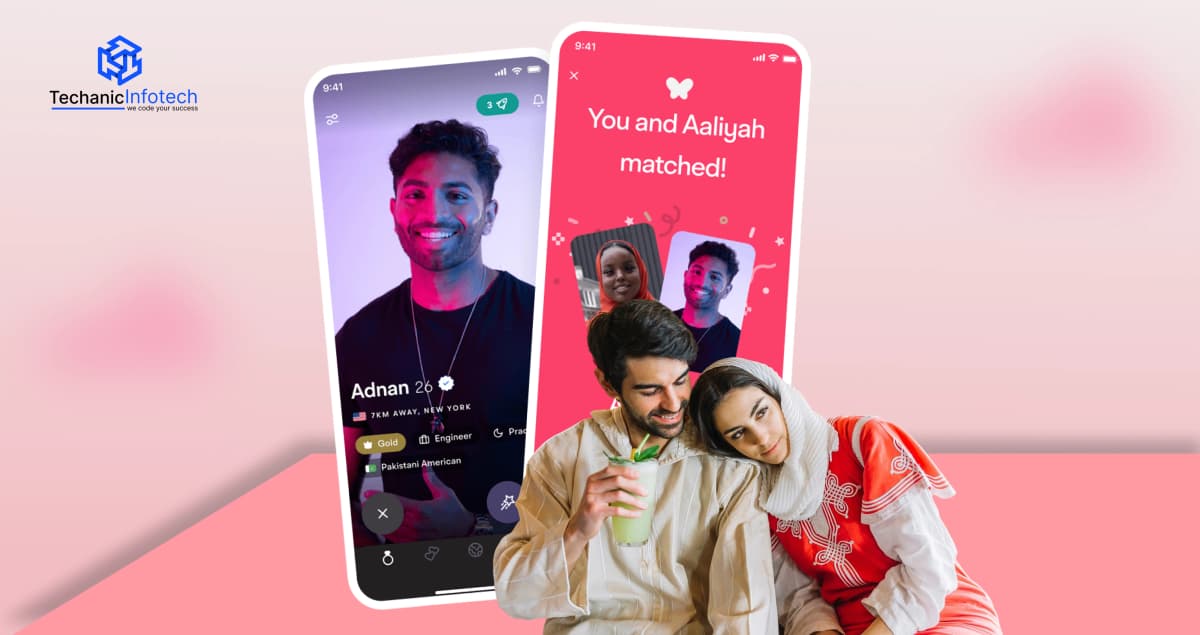
Building a Muslim dating app like Muzz starts with understanding faith, trust, and modern user expectations.
Unlike mainstream dating platforms, Muslim-focused apps must balance meaningful matchmaking with cultural values, privacy, and respect.
From faith-based profile settings to secure communication and moderation, every feature should support genuine connections that align with Islamic principles.
If you’re planning to build a halal dating app, it’s essential to combine thoughtful UX design with reliable technology and strong safety measures, with development costs typically ranging between $20,000 and $160,000 based on features and complexity.
In this guide, we’ll walk through the key steps, features, and technical considerations needed to create a scalable, user-friendly Muslim dating app that delivers real value while maintaining trust and authenticity.
Understanding the market demand for Muslim dating apps starts with real numbers showing how this niche is growing fast and attracting millions of users worldwide.
Single Muslims are increasingly turning to digital platforms that respect cultural values and faith-based matchmaking, making apps like Muzz a compelling product opportunity for developers and businesses alike.
Muzz has over 15 million registered users worldwide.
The app reports 500,000 success stories of couples formed.
Roughly 67% of users are male and 33% female, highlighting engagement patterns.
Muslim Match.com apps hit 1 million total downloads with a 40% annual registration increase.
Muslima, another halal platform, has 7.5 million users globally.

Muslim dating apps are built around faith, trust, and long-term intentions, while traditional dating apps focus more on casual discovery.
The core difference lies in values, privacy expectations, matrimony app features, and how relationships are formed and guided.
|
Aspect |
Muslim Dating Apps |
Traditional Dating Apps |
|
Purpose |
Marriage-focused and serious relationships |
Casual dating, networking, or relationships |
|
Cultural Values |
Aligned with Islamic principles and halal guidelines |
No religious or cultural restrictions |
|
Profile Preferences |
Faith-based filters (sect, prayer habits, intentions) |
General interests, lifestyle, and appearance |
|
Privacy & Modesty |
Strong privacy controls and modest interactions |
Open profiles and public visibility |
|
Family Involvement |
Optional chaperone or wali features |
No family or third-party involvement |
|
Communication Style |
Respectful, moderated, and value-driven |
Open, informal, and less restricted |
|
User Trust & Safety |
High emphasis on verification and moderation |
Basic safety feature, varies by platform |
Building a Muslim dating platform requires a thoughtful balance of faith, privacy, and technology.
The right halal dating app features help create respectful connections, ensure user safety, and support serious matchmaking while meeting modern expectations of usability, trust, and engagement.

Faith-based profiles allow users to highlight religious values such as sect, prayer frequency, modesty preferences, and marriage intent. When creating a dating app for Muslim users, these filters ensure matches are spiritually and culturally aligned, helping users connect with like-minded partners instead of browsing irrelevant profiles.
Improves match accuracy and user satisfaction
Reduces churn by showing more relevant profiles
Privacy controls let users blur photos, hide profiles from non-matches, and control who can initiate conversations. These halal matchmaking app features create a safe, respectful environment that aligns with Islamic values while encouraging hesitant users to join and stay active.
Builds trust among conservative users
Increases sign-ups from privacy-conscious audiences
Chaperone mode allows users to add a trusted family member to conversations. In muslim dating app development, this feature promotes transparency and reassures families, especially for users seeking serious, marriage-focused relationships rather than casual interactions.
Strengthens credibility as a serious matchmaking platform
Encourages family-approved engagement and commitment
Secure in-app messaging includes moderation, limited media sharing, and reporting tools to prevent inappropriate behavior. During muzz app development, these tools help maintain respectful communication while still allowing users to connect comfortably and naturally.
Creates a safer communication environment
Reduces abuse, spam, and fake engagement
Profile verification through photos, IDs, or AI checks helps eliminate fake accounts and scammers. These best dating app features, combined with active moderation, ensure only genuine users interact on the platform.
Increases user trust and platform credibility
Improves retention by reducing fake profiles
A smart matchmaking engine uses user preferences, faith-based data, and behavior patterns to suggest compatible matches. If you plan to build a halal dating app, this feature keeps discovery meaningful and avoids swipe fatigue common on mainstream platforms.
Boosts engagement and daily app usage
Increases successful matches and long-term retention
Understanding the cost to build a Muslim dating app like Muzz helps businesses plan features, timelines, and budgets effectively.
On average, development expenses range between $20,000 – $160,000, depending on complexity, platform choice, and features.
This matrimonial app development cost typically covers everything from product design to post-launch support.
|
Cost Component |
Detailed Description |
Estimated Cost (USD) |
|
Product Discovery & Planning |
Market research, feature roadmap, user personas, and technical planning |
$2,000 – $6,000 |
|
UI/UX Design |
Wireframes, user flows, visual design, and usability testing |
$4,000 – $12,000 |
|
Frontend App Development |
iOS, Android, or cross-platform development with responsive UI |
$8,000 – $20,000 |
|
Backend Development & APIs |
Server architecture, databases, APIs, cloud setup, and integrations |
$10,000 – $35,000 |
|
User Authentication & Profiles |
Secure login, profile creation, and account management |
$3,000 – $8,000 |
|
Matchmaking Algorithm |
Faith-based matching logic and smart recommendations |
$5,000 – $20,000 |
|
Messaging & Interaction Features |
In-app chat, media sharing, and moderation tools |
$4,000 – $12,000 |
|
Privacy, Security & Verification |
Data encryption, photo/ID verification, and reporting systems |
$4,000 – $15,000 |
|
Admin Panel & Moderation Tools |
User management, content review, analytics, and controls |
$3,000 – $10,000 |
|
Third-Party Integrations |
Payment gateways, notifications, analytics, SMS, and email services |
$2,000 – $7,000 |
|
Testing & Quality Assurance |
Functional, performance, security, and device testing |
$3,000 – $8,000 |
|
Deployment & App Store Submission |
App store compliance, release management, and approvals |
$2,000 – $5,000 |
|
Post-Launch Support & Maintenance |
Bug fixes, updates, and performance optimization |
$3,000 – $10,000 |
|
Total Estimated Cost |
End-to-end Muslim dating app development |
$20,000 – $160,000 |
Building a faith-focused platform requires a clear strategy, cultural understanding, and strong technical execution.
A successful muslim matrimony app development process balances Islamic values, user trust, and modern technology.
Below are the detailed steps to create a scalable, secure, and user-friendly halal dating app similar to Muzz.

Begin by deeply analyzing Muslim user behavior, expectations, age groups, and regional trends, especially within the U.S. market. Study existing platforms, user reviews, and unmet needs while also evaluating the dating app development cost for Muslim apps.
This research helps define feasibility, pricing strategies, monetization options, and realistic feature priorities before development begins.
Clearly define whether your app is marriage-first, family-approved, or serious matchmaking-focused.
Establish halal guidelines for profile content, interactions, and moderation by understanding how dating app algorithms work in value-based matching.
A well-defined vision ensures consistent decisions across design, features, and community rules while strengthening long-term brand trust.
List all potential features, then prioritize essentials like faith-based filters, verification, privacy settings, and messaging.
When you plan to build a halal dating app, defining a focused MVP helps control costs, reduce development time, and validate real user demand before expanding into advanced features like AI recommendations or premium tools.
Create a clean, respectful interface guided by a reliable dating app design guide. Focus on clarity, minimalism, and easy navigation while avoiding flashy or casual dating visuals.
Strong UI/UX design helps users feel safe sharing information, improves onboarding completion, and encourages longer engagement through thoughtful, trust-driven layouts.
Select scalable and secure frontend and backend technologies based on performance and growth goals.
In Islamic dating app development, the tech stack must support real-time messaging, verification, moderation, and data security.
Choosing the right infrastructure early ensures smooth performance, easier maintenance, and flexibility for future feature expansion.
Develop secure onboarding flows using email, phone, or social login options with multi-step verification.
Include detailed profile fields focused on faith, lifestyle, and marriage intent. Strong profile systems are essential for matchmaking app development for Muslims, as they improve match quality, reduce fake accounts, and boost overall platform credibility.
Create a matchmaking engine that prioritizes values, compatibility, and long-term intent rather than swipe-based attraction.
In matrimony app development, intelligent recommendations based on preferences and behavior increase meaningful connections, improve success rates, and keep users engaged without overwhelming them with irrelevant matches.
Build in-app messaging with moderation tools, reporting systems, and optional wali or chaperone modes.
Effective halal dating app development ensures communication remains respectful, secure, and aligned with Islamic principles while still allowing users to interact naturally and comfortably within clear boundaries.
Conduct thorough testing across devices, operating systems, and user scenarios. Focus on security vulnerabilities, performance stability, and moderation workflows.
Proper testing in muslim dating app development ensures compliance with app store policies, data protection laws, and delivers a smooth, trustworthy experience at launch.
Prepare a structured launch plan covering onboarding, support, and marketing before you launch an app on App Store and Google Play.
After launch, monitor analytics, user feedback, and engagement closely. Use real data to refine features, improve matchmaking, and confidently scale the app to new regions or audiences.
Choosing the right monetization strategy is essential for building a sustainable Islamic dating app without compromising trust or values.
Unlike mainstream platforms, faith-based apps must balance revenue with modesty, privacy, and respect.
These dating app business models focus on ethical growth, long-term engagement, and value-driven experiences aligned with Islamic principles.

A freemium model allows users to access basic features for free while offering paid subscriptions for advanced tools.
In muslim dating app development, premium plans often include unlimited messaging, advanced faith filters, and priority matches. This model builds trust by letting users experience real value before upgrading.
Tiered memberships offer different plans based on user intent and budget. For a dating app for Muslims, basic tiers may unlock messaging, while higher tiers include visibility boosts or matchmaking support.
This flexibility encourages upgrades without pressuring users, supporting both accessibility and steady revenue.
Instead of monthly subscriptions, users can pay only for features they need, such as profile boosts or message credits.
This model supports flexible spending and works well alongside dating app maintenance, as revenue can scale with feature usage and ongoing platform improvements.
Profile boosts increase visibility for a limited time, helping serious users connect faster. In niche dating app development, this feature must be balanced carefully to avoid unfair exposure.
Ethical limits ensure that visibility tools support genuine matchmaking without turning the app into a popularity contest.
Charge a small fee for enhanced verification, such as ID checks or family-approved badges. In muslim matchmaking app development, trust is critical.
Paid verification reduces fake profiles, improves safety, and creates a revenue stream that directly enhances platform quality.
Offer premium concierge-style matchmaking, including curated matches or personal guidance. Partnering with a professional matrimony app development company helps integrate these services smoothly.
This model aligns well with marriage-focused users who value structured, high-touch support.
Display limited ads from halal-friendly brands like education platforms, wedding services, or lifestyle products.
In halal matrimony app development, ads must remain non-intrusive and privacy-safe. When done right, advertising adds revenue without harming user trust or experience.
Host paid virtual events, local meetups, or relationship workshops focused on Islamic values.
In Islamic dating app development, community-driven monetization strengthens engagement while offering real value beyond digital matchmaking, positioning the app as a trusted relationship platform.
Building a custom Muslim dating app like Muzz requires more than just technical expertise; it demands a deep understanding of faith, privacy, and user trust.
At Teachnatic Infotech, we specialize in creating secure, scalable, and culturally respectful dating platforms designed for serious, marriage-focused users.
As an experienced dating app development company, we also focus on matrimonial-friendly features such as faith-based matchmaking, privacy controls, profile verification, and moderated communication.
Our team combines thoughtful UI/UX design with robust backend development to deliver smooth performance and long-term scalability.
From idea validation and MVP development to launch and ongoing support, Teachnatic Infotech works as a strategic partner, helping you build a Muslim dating app that aligns with Islamic values while meeting modern user expectations and business goals.

Building a successful Islamic dating platform requires more than just technology; it demands cultural understanding, trust, and a user-first approach.
From ethical monetization models to privacy-focused features and faith-based matchmaking, every decision should align with Islamic values while meeting modern user expectations.
When you plan to build a halal dating app, focusing on transparency, safety, and long-term relationships helps create a platform that users truly trust.
The right development strategy, combined with thoughtful design and scalable technology, ensures sustainable growth and meaningful connections.
By balancing business goals with respect for faith and community, you can create a dating app that stands out in a competitive market and delivers lasting value for both users and stakeholders.
A Muslim dating app focuses on faith-based matchmaking, privacy, and serious relationship intent. It includes halal guidelines, modest interaction features, and optional family involvement, helping users find compatible partners while respecting Islamic values.
The cost typically ranges from $10,000 to $90,000+, depending on features, platforms, design complexity, and security requirements. Advanced matchmaking, verification, and moderation features can increase the overall development budget.
Yes, halal dating apps prioritize user safety through profile verification, privacy controls, moderation tools, and secure messaging. These features reduce fake profiles and ensure respectful interactions aligned with cultural and religious expectations.
Absolutely. Most Islamic dating apps are designed for serious, marriage-oriented users. Features like faith-based filters, compatibility matching, and chaperone modes help users connect with long-term intentions rather than casual dating.
Development usually takes 4 to 8 months, depending on the app’s complexity, features, and team size. An MVP can be launched faster, while advanced features require additional planning and testing.

Abhishek Jangid is the CEO of Techanic Infotech, with extensive experience in mobile app and web development. He specializes in helping businesses turn innovative ideas into scalable digital solutions through strategic planning and modern technology.