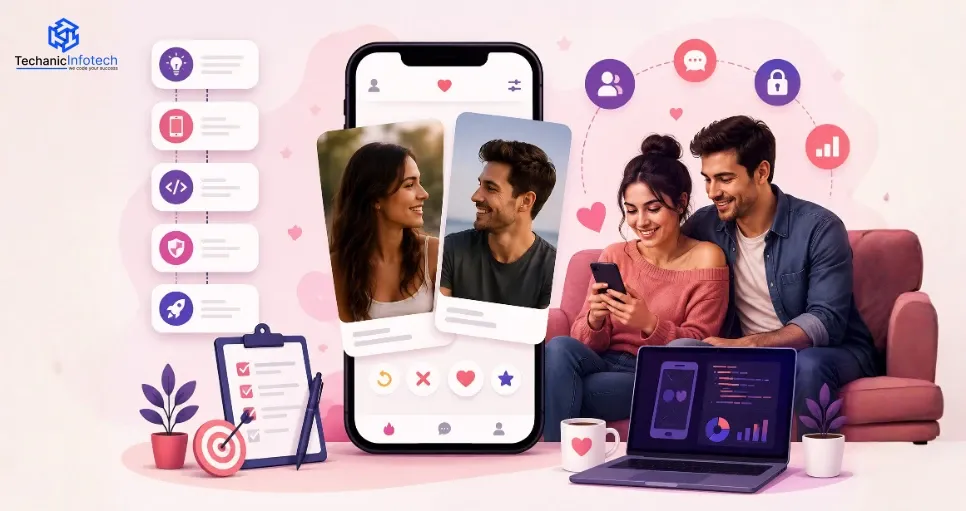
The online dating industry is growing rapidly, creating huge opportunities for startups and businesses. If you are planning to build a modern matchmaking platform, understanding casual dating app development is the first step toward success.
From user-friendly features to engaging designs and smart matching systems, creating a successful dating app requires the right strategy and technology. This guide covers everything you need to know to develop a casual dating app that attracts users, boosts engagement, and stands out in the competitive market.
A casual dating app is a mobile or web platform designed for people looking to connect without the expectations of a long-term commitment.
Unlike traditional dating apps focused on serious relationships, casual dating apps prioritize flexibility, spontaneity, and fun interactions.
Users typically seek friendships, short-term dating, or simply meaningful conversations with like-minded individuals.
Popular dating apps like Grindr, Tinder, Bumble, and Hinge have options catering to casual dating, and newer platforms continue to emerge, offering enhanced safety features, profile verification, and AI-powered matchmaking.
In 2025, casual dating apps are thriving, reflecting modern dating trends that emphasize authenticity and user choice.
Before you jump into casual dating app development, it’s important to understand how rapidly the industry is growing. The online dating market continues to expand as more users rely on mobile apps to build connections, meet new people, and explore modern relationships.
The global online dating market is expected to cross $12.5 billion in 2026, with steady growth projected over the next decade.
More than 350 million users worldwide actively use dating apps, and millions pay for premium subscriptions and in-app features every month.
Popular platforms like Tinder, Bumble, and Hinge continue generating massive revenue through subscriptions, AI-powered matching, and premium engagement tools.
Gen Z and Millennials are driving the next wave of growth, with users increasingly preferring niche and interest-based dating experiences such as music matching, astrology-based compatibility, fitness communities, and AI-assisted matchmaking.
Fun fact? The expansion of casual dating apps has stimulated entrepreneurs to build niche platforms that pair users through their playlist preferences.
This moment represents an excellent opportunity to create a dating app that stands out through its novelty and scalability.
Alright, here’s the real deal: users expect more than just swiping through profiles; they want a smooth, engaging, and interactive experience. To build a successful platform, you need to focus on the right dating app features that improve user engagement, safety, and overall experience.
Here are some essential dating app features that can help your app stand out in the competitive market:
A personalized profile system helps users create a stronger first impression and makes the app more engaging. Users should have the freedom to add photos, write unique bios, share interests, and highlight their lifestyle or personality.
Allowing profile customization helps people connect with matches who share similar preferences and interests. Simple editing options also encourage users to regularly update their profiles, keeping the platform active and engaging.
A fast and intuitive matching system is one of the most important parts of a modern dating platform. Users should be able to browse profiles effortlessly and interact without delays or interruptions.
Features like quick reactions, super likes, and gesture-based interactions can make the experience more engaging and interactive. A smooth user flow keeps people active on the app for longer periods and improves overall user retention.
A seamless messaging system helps users build connections after matching. The chat experience should be simple, fast, and easy to use so conversations can start instantly without complications.
Adding features like emojis, GIFs, voice messages, and media sharing makes interactions more engaging and enjoyable. Strong privacy controls and moderation tools also help create a safe and comfortable environment, improving user trust and retention.
Location-based matching helps users discover nearby profiles, making connections and meetups more convenient. Real-time geolocation improves match relevance, while location filters allow users to search by city, area, or preferred places for a more personalized experience.
Advanced filters help users find more relevant matches based on preferences like age, gender, interests, and lifestyle choices. Personalized filtering improves the user experience, increases engagement, and helps users connect with people who match their expectations more accurately.
Icebreaker prompts are valuable features in dating app development that help users start conversations more naturally. Fun questions and creative one-liners increase engagement, reduce awkwardness, and encourage active communication within the app.
Video and voice chat features help users build stronger and more genuine connections before meeting in person. These features improve user trust, enhance communication, and provide a safer and more comfortable dating experience.
Push notifications help keep users engaged by reminding them about new matches, messages, and activity updates. Personalized and timely notifications encourage users to return to the app regularly without making the experience feel spammy.
User trust is essential in dating app development, making profile verification an important feature. Options like photo verification and social media linking help reduce fake accounts, improve security, and create a safer experience for users. Verified profiles also build credibility and encourage more genuine connections.
Creating a successful dating platform requires more than just swipe features. To create a dating app that stands out, you need the right strategy, engaging features, strong security, and a smooth user experience that keeps users connected and active.
Before starting app development, it is important to understand your target audience and their preferences. Identifying whether your platform is for a broad audience or a niche market will help shape the app’s design, features, and overall user experience.
For example, if you plan to create an LGBTQ dating app, your platform should focus on inclusivity, privacy, and community-driven features that meet user expectations. Understanding your audience also helps in choosing the right branding, marketing strategies, and monetization model for long-term success.
After identifying your audience, the next step is choosing the right dating app business models to generate revenue from your platform. Popular monetization strategies for dating apps include the following:
Freemium model: Provide free basic features that users can enhance through paid premium options.
Subscription model: The subscription model charges users a monthly or yearly fee to access premium app features.
In-app purchases: The in-app purchases offer additional features, such as profile boosting capabilities and the option to send gifts or check who viewed your profile.
When you develop a monetization strategy before building your app, you can better organize your app's features and user flow.
Choosing the correct tech stack becomes essential when you want to develop a casual dating app.
Your app's performance, together with its scalability and future functionality, depends on the selected tech stack. Some essential technologies to consider are:
Frontend development: This is what users interact with. iOS developers should select Swift, while Android developers should choose Kotlin to achieve optimal application performance. You can develop for both platforms at the same time using cross-platform frameworks such as React Native.
Backend development: Reliable backend technologies are necessary to manage databases as well as user authentication alongside real-time chat capabilities. Node.js, together with Ruby on Rails and Python combined with Django, are widely used backend technologies. Your application can run on cloud hosting services such as AWS, Google Cloud, or Azure.
Database: Using scalable databases such as PostgreSQL or MongoDB enables efficient management of extensive user datasets.
Real-time features: To provide real-time chat and notification capabilities, you should implement WebSockets or Firebase.
Selecting the optimal tech stack for your dating app enables both functionality and scalability to support your expanding user base.
Selecting technologies that scale efficiently enables your app to maintain speed, security, and easy maintenance as it grows.
The development of an intuitive interface that users can navigate with ease serves as a fundamental factor in maintaining user engagement. A strong dating app design guide focuses on simple functionality, smooth navigation, and a user-friendly experience to keep users active and engaged.
Make sure to incorporate:
User-friendly interface: The app interface should include straightforward navigation and hassle-free access to essential functions such as messaging capabilities, profile creation processes, and swipe actions.
Attractive visuals: A sleek and simple design integrates entertaining aspects, which ensure users have a light-hearted gaming experience.
Responsive design: Ensure your app functions smoothly on all screen sizes and devices, including tablets and smartphones.
A design that combines aesthetic appeal with functionality will motivate users to spend more time on the platform, which results in better retention rates.
Now, it’s time to build out the key features that make your app truly stand out. We've already discussed these in detail, but here’s a quick recap of must-have features:
User Profiles: Customizable profile setups that allow users to highlight their personality.
Matching Algorithm: Implement algorithms based on location, interests, or preferences.
In-App Messaging & Chat: Allow real-time communication with text, voice notes, and multimedia sharing.
Location-Based Services: Show potential matches within a specified geographic area.
Push Notifications: Alerts for new messages, matches, or updates.
Premium Features: Subscription-based features like boosting profiles or additional filters.
Building these features as per evolving dating app trends will ensure smooth user interactions and an engaging experience. Make sure to test every feature thoroughly to iron out any bugs or glitches.
Security is paramount, especially when dealing with sensitive data on a dating app. Users trust your app with personal information and expect a safe environment.
Some essential dating app security measures include:
Data encryption: Encrypt sensitive user data both during transmission and in storage.
Secure authentication: Implement two-factor authentication (2FA) and password hashing.
User moderation: Use AI-based systems to detect inappropriate content and block or warn users who violate the terms of service.
Privacy settings: Allow users to control who can see their profile and personal information.
By integrating these security measures, you’ll not only keep users safe but also build trust, ensuring they feel comfortable using your app long-term.
After thorough development and testing of your app, you should proceed to launch it. You need to have a well-thought-out launch strategy before you proceed with launching your app.
Testing your app with a limited audience before launch allows you to obtain feedback and make necessary changes.
When your app is prepared for public release, launch it on both the App Store and Google Play platforms. An initial marketing campaign can help generate interest and drive app downloads.
Starting your online dating app business with an impactful launch requires early promotion through paid advertising, influencer partnerships, or viral social media campaigns.
Post-launch, you should keep checking both user feedback and app performance. The continuous implementation of updates and enhancements is crucial for maintaining user satisfaction and engagement.
Maintaining relevance in the dating app sector requires you to address user feedback through feature additions, security improvements, and design adjustments.
Your infrastructure should support the increased demand as your user base expands.
You need to prioritize scaling when you upgrade servers, extend features, or improve customer support.
So, once you have figured out how to create a casual dating app, it includes feature construction and design completion as well as platform security. The next stage requires your attention because it involves attracting users to utilize your app.
Effective marketing of your dating app extends beyond simply running advertisements because it requires building connections with target users while generating excitement and establishing trust.
Get ready to understand the effective marketing strategies needed to promote your casual dating app within today's challenging, competitive environment.
The act of downloading dating apps represents a deeper engagement with the brands behind them. The voice of your brand needs to address and resonate with your audience's aesthetic.
Your casual dating app needs visuals and messaging that match its fun and flirty or relaxed vibe across all marketing channels.
Tip: Maintain consistent branding through uniform colors, fonts, and text across your app, website, and social media platforms to create powerful brand recognition.
Begin spreading the news about your app before its official launch date. Generate early interest in your app through sneak peeks and exclusive beta access while maintaining a countdown to launch.
Post sneak peeks and comical dating memes as well as behind-the-scenes content about your app across Instagram, TikTok, and Reddit. Being included in a launch story provides people with a sense of being insiders.
Organic influencer marketing achieves remarkable results within the dating app industry. Connect with dating coaches and lifestyle influencers as well as local content creators who match your app’s style.
Users can utilize your app to share their dating experiences and demonstrate its features, or organize entertaining challenges.
Pro Tip: Authentic content always outperforms staged ads.
This is where smart blogging comes in. Create a blog that delivers dating tips and relationship advice and teaches people how to use dating apps with posts such as:
The five best first messages that achieve results on casual dating apps
Developing a memorable dating profile with practical examples
“Is Casual Dating Right for You? Here’s What the Experts Say”
Ensure you distribute keywords such as how to make a casual dating app, casual dating app development, and others for cross-niche traffic throughout your content.
Leverage advertising platforms such as Meta (Facebook/Instagram), Google Ads, and TikTok to deliver ads targeted by location, interests, relationship status, and user behavior.
Experiment with a variety of creative styles, including fun, emotional, and benefit-focused content, to discover which types perform best. A/B testing is your best friend here.
Dating apps thrive on community. Use incentives like free premium features and profile boosts to motivate users to invite their friends.
Establishing a strong referral program boosts user growth while enhancing retention because users who invite friends carry social proof to the platform.
You must optimize your App Store Optimization (ASO) strategies effectively. Use high-intent keywords to refine your title and description together with your app's visuals.
Casual dating app for young singles
Easy-to-use dating app with a swipe feature
Best dating app for casual connections
Happy users should receive your encouragement to share positive reviews and ratings because they impact your app's success.
Ignite interest through launch parties, whether they're online or in-person, and engage audiences with live Q&As and Reddit, Discord, or Instagram Live "Ask Me Anything" sessions. Your brand develops its unique personality through this approach while establishing direct connections with users.
Organize themed “match-up” nights where users receive exclusive access or rewards for participating.
The initial marketing strategy you create won't be flawless, but don't worry about that. Use Mixpanel, Amplitude, or Firebase Analytics to identify what parts of your strategy work best and where users stop using your product.
Test your creatives, copy, landing pages, and onboarding flow repeatedly to achieve higher conversion rates.
Looking to meet new people without the pressure of long-term commitments? Casual dating apps make it easy to connect, chat, and see where things go – whether you’re looking for something fun, spontaneous, or a dating app idea.
Here are some of the top apps perfect for casual dating:
Tinder revolutionized the dating scene with its simple swipe interface and low-pressure vibe.
It remains the benchmark for casual dating and is often the first reference point for those aiming to create an app like Tinder.
Bumble introduced a unique twist by letting women make the first move.
Its empowering and respectful dynamic makes it a standout model for anyone looking to create an app like Bumble with a more thoughtful dating experience.
Hinge encourages more meaningful conversations through profile prompts and limited daily matches.
It’s a great example for building an app that balances casual dating with deeper interaction.
Feeld is perfect for users exploring open relationships or non-traditional connections. It shows how catering to a specific community can build a loyal user base.
Pure is spontaneous and to-the-point– ideal for people looking to meet quickly and casually. Its minimalist, time-sensitive setup shows how simplicity can drive engagement.
With inclusive design and detailed questionnaires, OkCupid appeals to a wide range of users.
It offers inspiration for dating apps that blend fun with personality-based matchmaking.
CasualX focuses solely on no-strings-attached relationships, offering a direct and private space for casual dating. It's a great model for building a niche-first dating experience.
The cost to create a dating app shows significant variation based on its features, complexity, technology stack, and the development team you hire. A simple casual dating application with core functionalities such as user registration, profile creation, swiping, messaging, and geolocation can typically cost between $10,000 and $30,000.
A standard-level dating app with enhanced UI/UX, advanced matching algorithms, push notifications, subscription plans, and improved backend infrastructure generally falls within the range of $30,000 to $55,000.
On the other hand, developing an advanced casual dating app with AI-powered matchmaking, video calling, live streaming, real-time chat, premium memberships, admin dashboards, analytics, and high-end security features may require an investment of $55,000 to $90,000+.
The overall dating app development cost also depends on multiple factors, including platform selection (iOS, Android, or both), app design customization, backend scalability, third-party integrations, and post-launch maintenance services. Choosing the right mobile app development company can help businesses maximize their investment while ensuring long-term app performance and scalability.
| App Type | Estimated Cost | Features Included |
|---|---|---|
| Basic Casual Dating App | $10,000 – $30,000 | User profiles, swipe functionality, basic matching, messaging, geolocation, login/signup |
| Standard Casual Dating App | $30,000 – $55,000 | Advanced UI/UX, push notifications, subscription plans, smart matching, in-app purchases |
| Advanced Casual Dating App | $55,000 – $90,000+ | AI-based matchmaking, video chat, live streaming, premium features, real-time analytics, scalable backend |
So, you’ve decided to build a casual dating app– awesome move! But before you dive into the code and colors, it's good to know what not to do.
The most innovative dating concepts won't succeed if you overlook important elements. You can protect yourself from wasting time and money while preventing user frustration by steering clear of typical development mistakes at the start.
These five mistakes should be avoided when you develop a casual dating app if you want to prevent common development challenges.
Safety isn’t just a nice-to-have– it’s a must. When you neglect to integrate safety features such as profile verification or content filters, your app will lose user trust immediately.
Yes, swiping is fun. When you develop a casual dating app that focuses solely on swiping profiles left or right, it will quickly become shallow. Incorporate icebreaker prompts together with shared interests and conversation starters to maintain user engagement.
Clunky, outdated interfaces are a buzzkill. Your casual dating app must always remain sleek and modern with an emphasis on mobile-first design. Your users want fun experiences avoid making them feel like they’re working.
Creating a dating app that tries to cater to everyone usually results in failure. Developing a dating app presents major difficulties because it requires precise knowledge about your target audience. Identify what kind of atmosphere your app offers, such as spontaneous hookups or casual conversations, and maintain that focus.
Your monetization strategy needs to be integrated into your initial business plan. Integrate your monetization approach right from the start rather than awkwardly adding it to your system later.
Once you’ve got users swiping, chatting, and matching, the next step is turning that engagement into income.
Whether you're looking to build a casual dating app or refine an existing one, choosing the right monetization model is key to long-term success.
Here are some proven ways to keep both your users and your revenue flowing:
Users can access basic features at no cost, while premium features such as unlimited swipes and advanced filters require payment.
Users can purchase weekly, monthly, or annual subscriptions, which provide access to exclusive features including read receipts, match recommendations, and profile boosts.
Enable users to purchase virtual items like “Super Likes,” “Boosts,” and “Roses,” which allow them to connect more quickly and gain visibility.
Show free users targeted advertisements, but limit their number to maintain a positive experience. The placement of video ads during match intervals or swipe breaks proves to be effective.
Collaborate with nearby venues to host offline gatherings or organize online events that provide meeting opportunities for users. Provide users access to exclusive app features or benefits during these times.
Create partnerships with brands specialized in travel, fashion, and lifestyle to gain referral commissions from user purchases.
Users can pay a minor fee to send messages without matching for ultra-casual experiences, which promotes fast connections and spontaneous interactions.
If you're looking to make a casual dating app, partnering with the right team is essential for success. Techanic Infotech, a leading dating app development company, offers comprehensive solutions to bring your vision to life.
Our team specializes in creating intuitive, engaging, and secure platforms that cater to your unique audience.
From seamless user interfaces to advanced features like profile matching and messaging systems, we ensure your app is ready to stand out in a competitive market.
With our expertise, we can help you build a casual dating app that’s not only user-friendly but also designed for long-term success.
The flourishing dating app industry presents an ideal opportunity to develop a casual dating application that distinguishes itself from others.
A solid tech stack combined with essential features such as swipe mechanics and user verification creates an engaging dating app platform.
Effective monetization approaches generate profits, and strong marketing drives user base expansion. Steer clear of typical mistakes while studying successful apps and give top priority to both security and UX to ensure sustained success.
Ready to turn your idea into reality? Build a dating app that users adore with Techanic Infotech’s high-performance development expertise. Let’s connect today!
The cost varies based on features, design complexity, and development time. A basic app can start at $10,000 to $30,000+, depending on the project requirement.
Popular technologies include: Frontend: React Native (cross-platform), Swift (iOS), Kotlin (Android) Backend: Node.js, Ruby on Rails, Django Database: PostgreSQL, MongoDB Real-time features: Firebase, WebSockets
Popular monetization models include: Freemium subscriptions (Tinder Gold, Bumble Boost) In-app purchases (Super Likes, Boosts) Ads & sponsored profiles Affiliate marketing & premium events
To ensure user safety: Profile verification (photo, phone, social media) AI-powered moderation (detect fake profiles & harassment) Block/report features & privacy controls End-to-end encryption for chats
A basic version (MVP) takes 3–6 months A fully-featured app with custom algorithms may require 6–12 months
A successful casual dating app should include essential features like user registration, profile creation, swipe and match functionality, real-time chat, push notifications, and geolocation-based matching. Advanced features such as AI-based recommendations, video calls, voice notes, and compatibility quizzes can further improve user engagement and retention.
Building a dating app for both iOS and Android is the ideal approach for reaching a wider audience. Many businesses choose cross-platform technologies like React Native or Flutter because they help reduce development costs and speed up the launch process while maintaining a smooth user experience across devices.
Some of the biggest challenges in dating app development include maintaining user privacy, preventing fake profiles, building accurate matching algorithms, and keeping users engaged over time. Developers also need to ensure the app can handle increasing traffic as the user base grows. Choosing the right technology and security measures plays a major role in overcoming these challenges.
Yes, AI can greatly improve the performance and user experience of a dating app. Artificial intelligence helps provide smarter match recommendations, detect fake accounts, personalize user suggestions, moderate chats, and improve customer support through AI-powered chatbots. These features can increase user engagement and improve retention rates.
The dating app industry is expected to continue growing in 2026 due to rising smartphone usage and changing social trends. Businesses investing in dating app development can benefit from multiple revenue streams such as subscriptions, in-app purchases, and advertising. The growing demand for AI-powered matchmaking and niche dating platforms also creates strong opportunities for long-term business growth.


Abhishek Jangid is the CEO of Techanic Infotech, with extensive experience in mobile app and web development. He specializes in helping businesses turn innovative ideas into scalable digital solutions through strategic planning and modern technology.