
On-demand apps continue to reshape how people access services, products, and expertise. From food delivery to healthcare consultations, users now expect instant solutions at their fingertips.
In 2026, profitability in the on-demand industry will depend on smart technology integration, niche targeting, sustainability, and seamless user experiences.
With AI, automation, and data analytics driving efficiency, businesses can reduce operational costs while increasing customer satisfaction.
Emerging consumer preferences such as eco-friendly services, personalized offerings, and subscription-based convenience are also influencing app success.
Entrepreneurs who identify real-world problems and build scalable digital platforms around them will gain a competitive advantage.
This guide explores profitable on-demand app ideas, revenue strategies, key technologies, challenges, and practical steps to help you launch a successful app in 2026 and beyond.
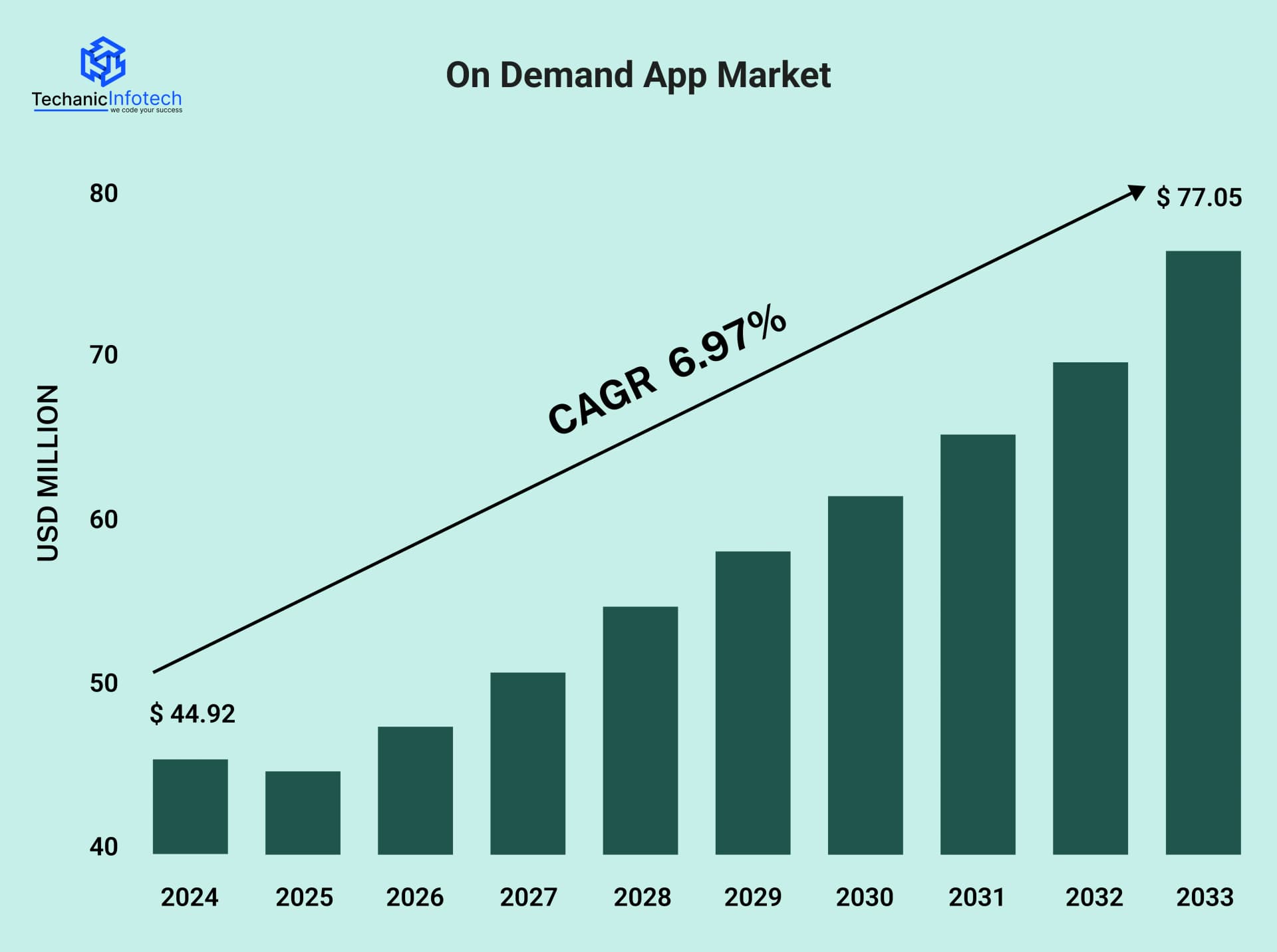
The on-demand services market size is valued at USD 44.92 million in 2024 and is projected to reach USD 77.05 million by 2033, growing at a CAGR of 6.97% by 2025 to 2033.
Growth is driven by the digital transformation, with over 7.6 billion mobile users globally, boosting the demand for app-based services.
More than 65% of global consumers have used at least one on-demand service, where the online food delivery segment processed over 1.3 billion orders in 2023.
Ride-sharing platforms facilitate over 20 million rides daily worldwide, and in the United States, 42% of adults have used at least one on-demand service app.
The industry includes over 8 million independent contractors globally, with more than 70% of service providers using AI-based scheduling tools to optimise operations.
In 2026, profitable on-demand apps combine AI automation, niche targeting, sustainable practices, and hybrid revenue models.
Success depends on scalability, seamless user experience, operational efficiency, and data-driven decision-making that maximizes retention and long-term growth.
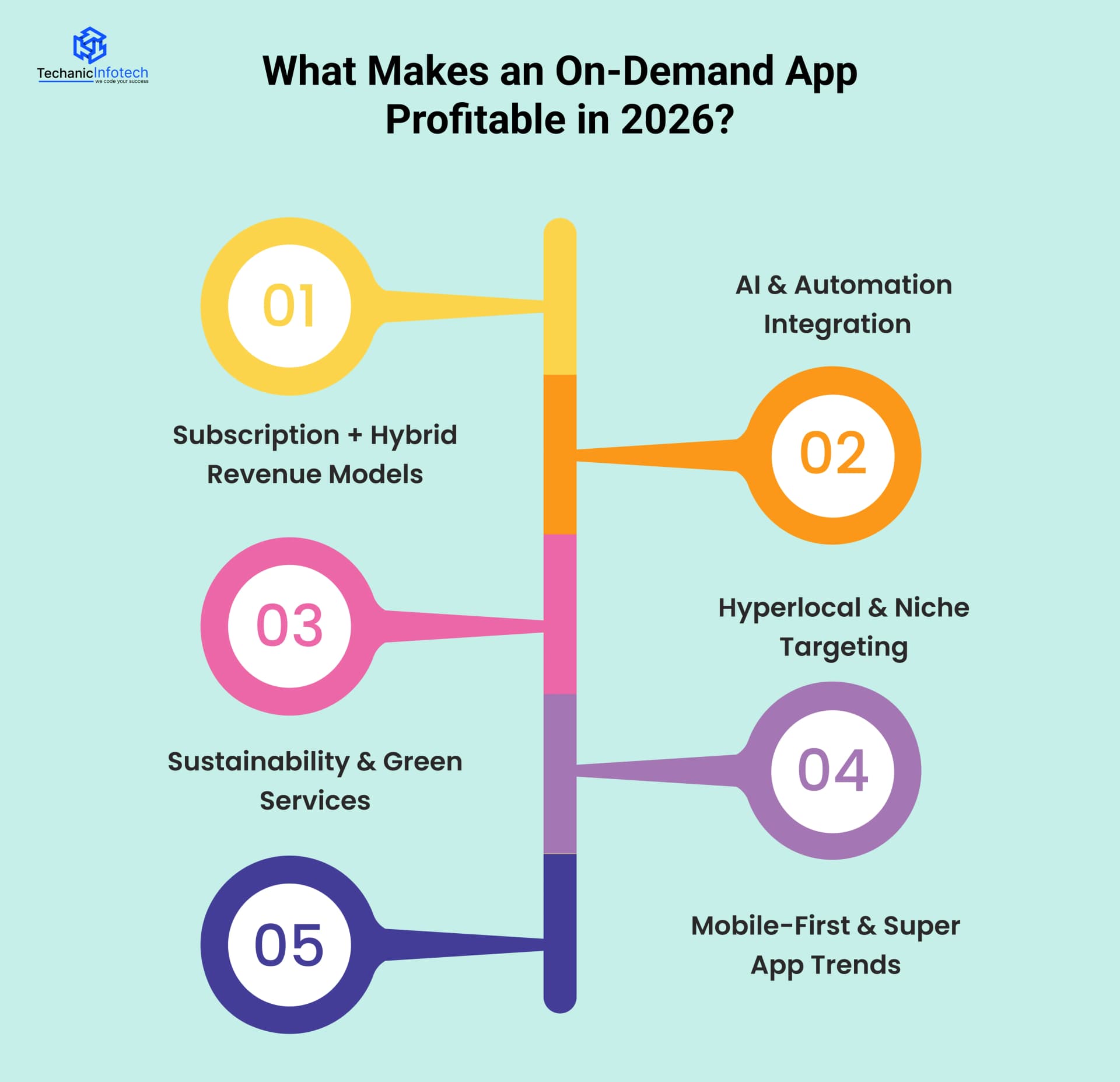
AI-driven algorithms optimize matching, pricing, customer support, and predictive analytics. Automation reduces mobile app development costs and improves efficiency.
Chatbots, smart scheduling, and demand forecasting enhance user experience while minimizing human error, helping businesses scale faster and increase long-term profitability.
Relying solely on commissions limits growth. Successful apps combine subscriptions, commissions, and premium features.
Hybrid models ensure predictable revenue streams while maximizing lifetime customer value. Offering tiered plans also improves user retention and recurring income.
Targeting specific communities or niche markets reduces competition and improves service personalization.
Hyperlocal strategies help businesses dominate smaller markets before scaling. Focused offerings build stronger brand loyalty and higher conversion rates.
Consumers increasingly prefer eco-friendly services. Apps promoting sustainable deliveries, EV solutions, or green products gain competitive advantages.
Integrating carbon tracking, recyclable packaging, and environmentally responsible operations enhances brand reputation and attracts conscious users.
Mobile-first experiences with intuitive interfaces drive engagement. Super apps offering multiple on-demand app development services within one ecosystem increase retention.
Seamless payments, integrated wallets, and multi-service access encourage repeat usage and stronger user dependency.
In 2026, top on-demand app ideas focus on AI integration, sustainability, hyperlocal services, and convenience-driven solutions.
Startups that address real-world problems with scalable, tech-enabled platforms can capture high-demand markets and long-term profitability.
An AI-driven platform that connects users with verified plumbers, electricians, cleaners, and technicians instantly.
Smart algorithms match customers based on urgency, location, budget, and ratings.
Predictive scheduling, automated pricing estimates, and chatbot support enhance convenience and service efficiency.
Apps enabling virtual doctor consultations, e-prescriptions, lab bookings, and home sample collection.
AI symptom checkers and wearable integration improve preliminary diagnosis.
These platforms reduce hospital visits, enhance accessibility in rural areas, and offer secure digital health records management.
Platforms connecting users with licensed therapists via video, chat, or voice sessions.
Mobile app features include mood tracking, guided meditation, AI journaling assistants, and anonymous support groups.
Flexible scheduling and subscription plans make mental healthcare more accessible and stigma-free.
Apps that locate nearby EV charging stations, show real-time availability, and enable digital payments.
Mobile battery vans provide emergency roadside charging. Subscription plans, route-based charger suggestions, and green energy tracking enhance convenience for EV owners.
Ultra-fast grocery delivery platforms leveraging dark stores, AI inventory forecasting, and hyperlocal warehouses.
Personalized recommendations, scheduled recurring orders, and eco-friendly packaging improve customer loyalty.
Integration with smart kitchens enables automated restocking notifications for essentials.
Platforms connecting home chefs with nearby customers seeking authentic, homemade meals.
Users can browse cuisines, dietary preferences, and ratings. AI-driven demand forecasting supports cooks, while secure payments and subscription meal plans ensure consistent income and quality.
Apps offering instant vet consultations, pet grooming bookings, walking services, and vaccination reminders.
GPS-enabled tracking for walkers and digital pet health records increase transparency. Subscription wellness plans and emergency video consultations enhance pet healthcare accessibility.
Mobile-first marketplaces for hiring freelancers for small, quick tasks like design edits, translations, coding fixes, or errands.
AI-based skill matching and instant payment escrow systems streamline transactions, enabling flexible gig opportunities for global professionals.
Apps providing doorstep laundry pickup, washing, ironing, and delivery services.
Real-time order tracking, subscription plans, eco-friendly detergents, and express delivery options enhance customer experience.
Integration with apartment communities ensures recurring business and operational efficiency.
Platforms connecting certified beauticians and stylists with customers at home. Services include haircuts, makeup, spa treatments, and grooming.
In-app scheduling, service customization, secure payments, and verified professional profiles ensure convenience and trust.
Apps offering caregiver booking, medication reminders, emergency alerts, and virtual health monitoring.
Family members can track updates in real time. Integration with wearable devices ensures safety, while subscription-based support plans provide long-term elderly care solutions.
Mobile platforms that connect users with nearby mechanics for doorstep repairs, oil changes, tire replacements, and diagnostics.
Real-time tracking, digital invoices, and AI-based issue prediction improve transparency, reduce workshop visits, and enhance vehicle maintenance efficiency.
Platforms enabling users to rent tools, electronics, vehicles, fashion, or event equipment locally.
Secure identity verification, digital contracts, and insurance integration reduce risk. These apps promote cost savings, sustainability, and community-driven resource sharing.
Green logistics platforms using electric vehicles, bicycles, and route-optimization AI to reduce emissions.
Businesses can track carbon footprints per delivery. Eco-conscious consumers prefer sustainable options, creating opportunities for environmentally responsible last-mile delivery services.
Apps allowing users to book tutors, fitness trainers, music teachers, or coding mentors instantly.
Live video sessions, skill tracking dashboards, and AI-based learning recommendations personalize education, making skill acquisition flexible, accessible, and outcome-driven.
In 2026, profitable on-demand apps depend on diversified revenue streams such as commissions, subscriptions, freemium models, surge pricing, and in-app advertising.
Combining multiple monetization strategies ensures predictable income, higher customer lifetime value, and long-term business scalability.
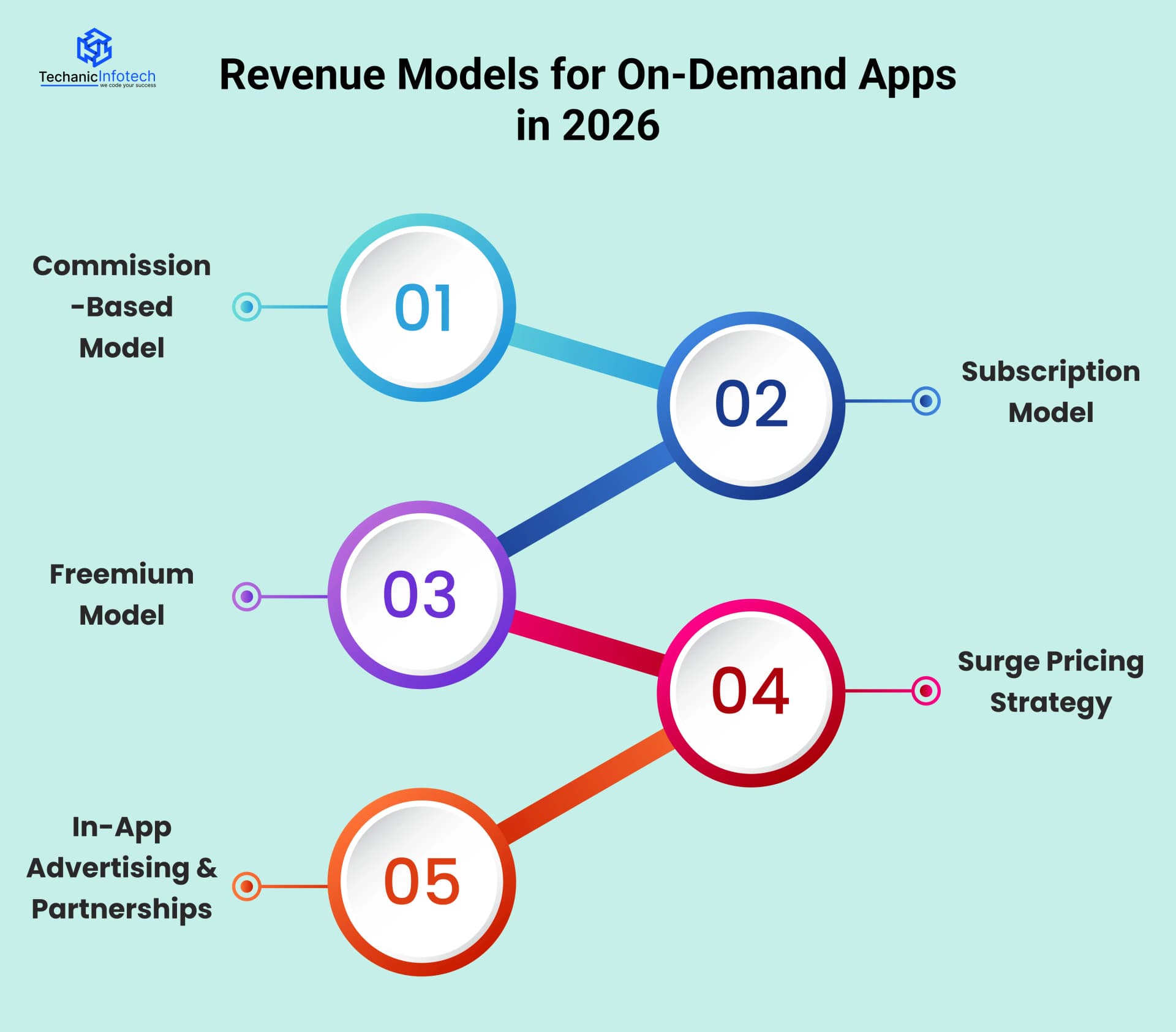
The platform earns a fixed percentage or variable fee from every completed transaction between customers and service providers.
Commission rates may differ by category or volume. This performance-driven model scales naturally with growth, aligns platform success with vendor earnings, and requires minimal upfront cost from users.
Users or providers pay recurring monthly or annual fees for premium benefits such as priority bookings, reduced commissions, exclusive deals, analytics dashboards, or faster payouts.
This model generates predictable revenue, increases retention, strengthens brand loyalty, and supports long-term customer lifetime value optimization.
Core features remain free to attract a large user base, while advanced capabilities like premium support, enhanced visibility, AI-powered insights, or ad-free experiences require payment.
This model lowers entry barriers, encourages user engagement, and strategically converts high-intent users into paying subscribers.
Dynamic pricing algorithms adjust service rates based on demand, location, weather, traffic, or time sensitivity.
During peak periods, higher prices balance supply and demand while incentivizing more providers to participate.
This strategy maximizes revenue, improves service availability, and optimizes operational efficiency.
Revenue is generated through sponsored listings, banner ads, affiliate marketing, and strategic brand partnerships.
Contextual and behavior-based targeting enhances ad relevance and conversion rates.
Carefully integrated advertising maintains user experience while unlocking additional monetization beyond core service transactions.
In 2026, on-demand apps will be powered by advanced technologies like AI, cloud computing, GPS tracking, secure payment gateways, and real-time communication tools.
These technologies enhance scalability, improve user experience, optimize operations, and ensure secure, seamless service delivery.\
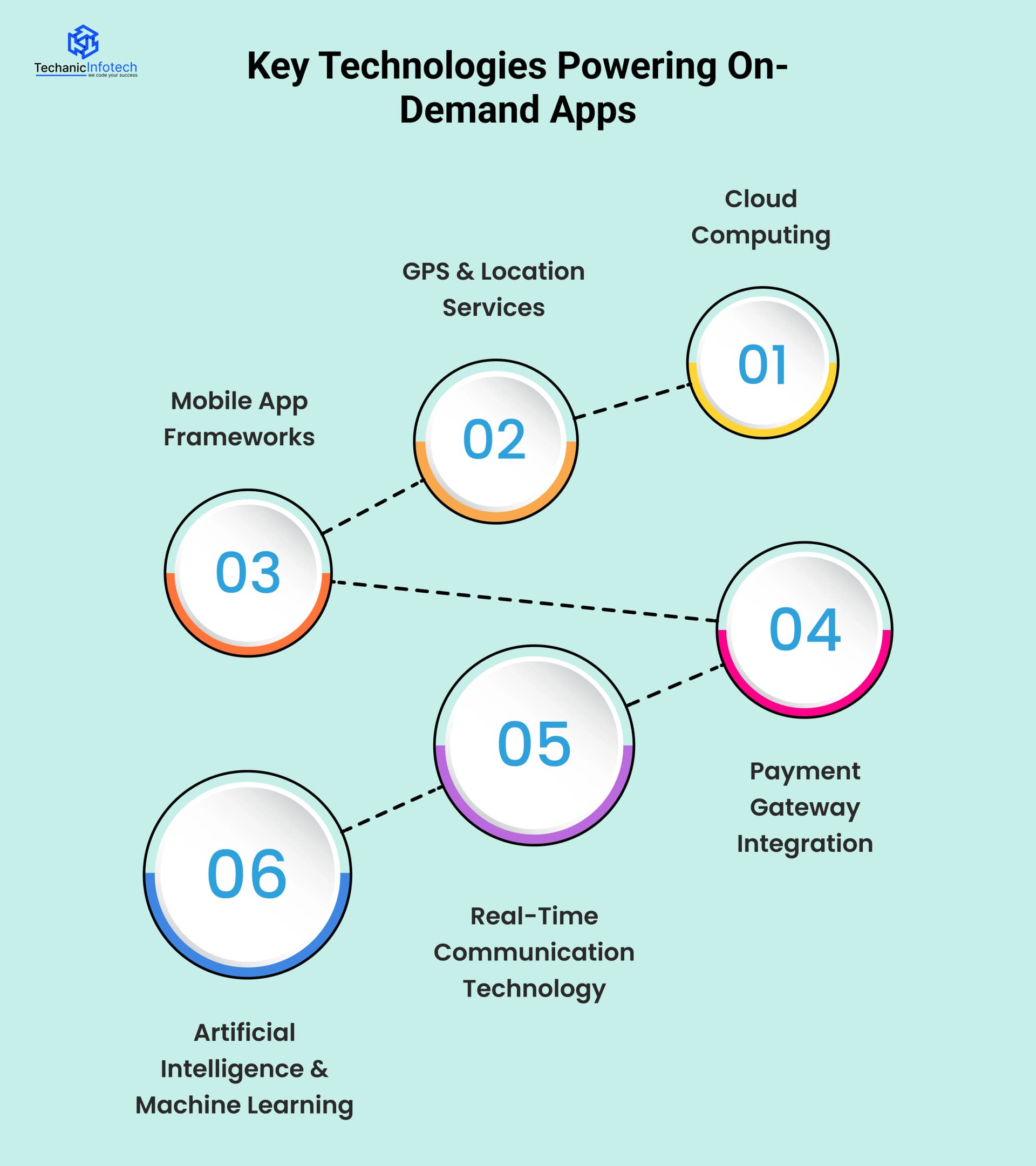
Cloud computing enables on-demand apps to scale efficiently and handle fluctuating user demand.
Platforms like AWS, Google Cloud, and Azure provide storage, databases, and computing power.
This ensures high availability, fast performance, data backup, and seamless expansion without heavy infrastructure investment.
GPS technology is essential for services like ride-hailing and food delivery.
It enables real-time tracking, route optimization, and accurate location matching between users and service providers.
Integrated maps and geolocation APIs improve navigation, enhance customer experience, and increase operational efficiency.
Modern frameworks such as Flutter, React Native, and Swift power smooth and responsive user interfaces.
They enable cross-platform development, reducing costs and the minimum viable product development time.
These frameworks ensure consistent performance across Android and iOS devices while supporting interactive features and seamless updates.
Secure payment gateways like Stripe, PayPal, and Razorpay enable seamless digital transactions.
They support multiple payment methods, including credit cards, wallets, and UPI.
Encryption and tokenization ensure transaction security, while automated billing and refund management improve overall user trust and convenience.
Technologies like WebSockets, Firebase, and push notification services enable instant communication between users and service providers.
Real-time chat, order updates, alerts, and live status tracking enhance engagement.
This technology ensures users receive immediate updates, improving transparency and overall satisfaction.
AI and ML enhance personalization and operational efficiency in on-demand apps.
They power recommendation engines, demand forecasting, dynamic pricing, and fraud detection.
By analyzing user behavior and historical data, these technologies optimize services, reduce operational costs, and deliver smarter user experiences.
Launching on-demand app ideas with the mobile app development process in 2026 comes with challenges such as intense competition, high operational costs, regulatory compliance, and user retention issues.
Overcoming these risks requires strategic planning, strong technology infrastructure, and continuous performance optimization.
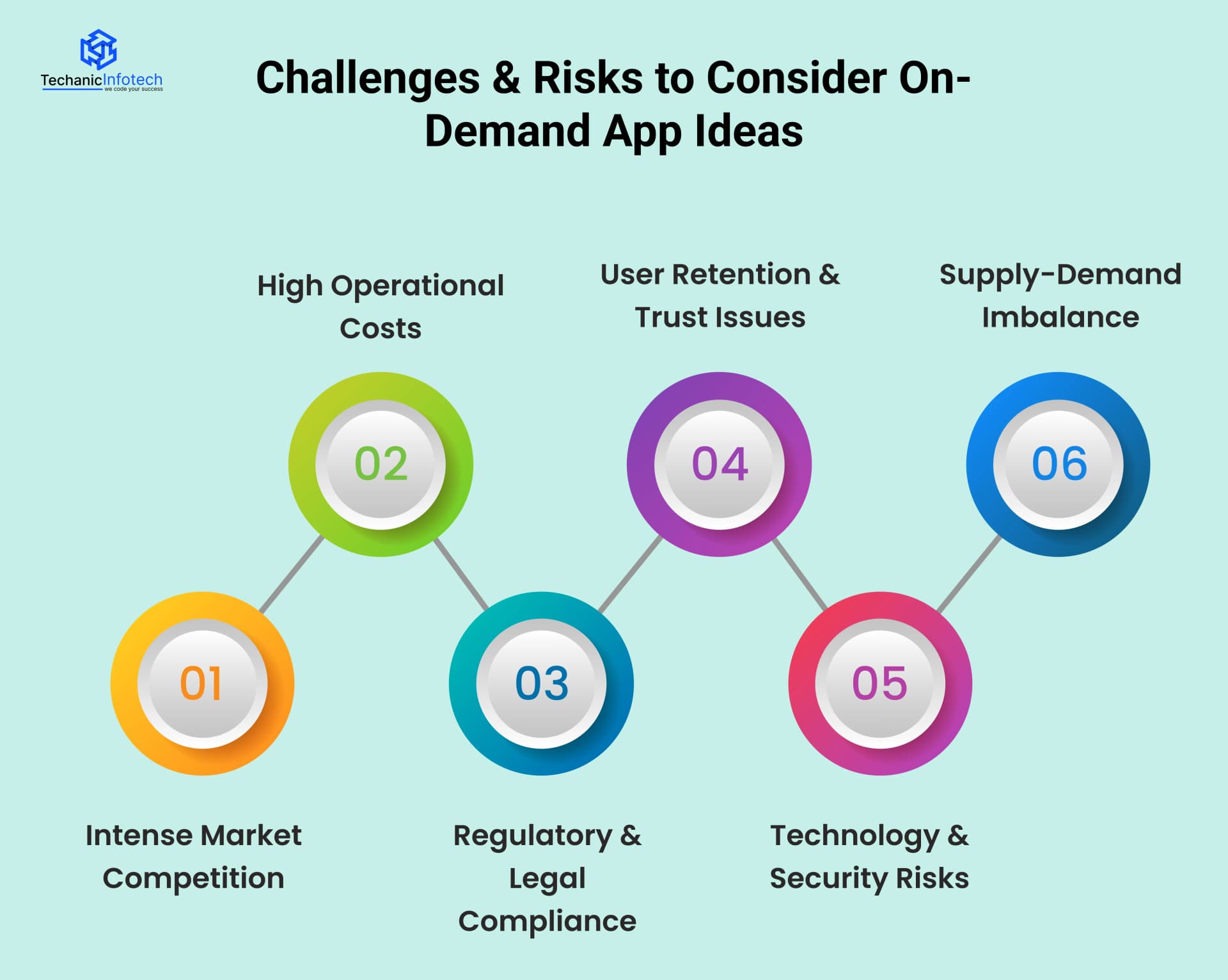
The on-demand industry is highly competitive, with established players dominating many niches.
New entrants must offer unique value propositions, better pricing, or superior user experience to stand out.
Without strong differentiation and marketing strategies, customer acquisition costs can become extremely high and unsustainable.
Managing logistics, delivery networks, customer support, and mobile app tech stack infrastructure requires significant investment.
Expenses such as driver incentives, promotions, cloud hosting, and maintenance can quickly add up.
Poor cost control or inaccurate financial planning may reduce profitability and strain long-term business sustainability.
On-demand businesses must comply with local labor laws, licensing requirements, tax regulations, and data protection policies.
Regulations may vary across regions, increasing complexity, especially in the process of green app development.
Failure to meet legal standards can result in fines, lawsuits, or operational shutdowns, affecting brand reputation and growth.
Attracting users is easier than retaining them. Poor service quality, delayed deliveries, hidden charges, or security concerns can damage trust. Negative reviews spread quickly online.
Consistently delivering reliable services and transparent pricing is essential to building long-term loyalty and customer satisfaction.
System crashes, payment failures, or data breaches can severely impact business credibility.
On-demand apps handle sensitive personal and financial data, making them attractive targets for cyberattacks.
Regular updates, strong encryption, and robust cybersecurity measures are necessary to maintain smooth operations and protect users.
Maintaining the right balance between service providers and customer demand is challenging.
Excess supply leads to idle workers and losses, while low supply causes delays and poor user experience.
Accurate demand forecasting and dynamic pricing strategies are crucial for operational efficiency and profitability.
Launching a profitable on-demand app in 2026 requires strategic planning, market validation, and a scalable business model.
From building an MVP to optimizing user experience and marketing, each step plays a crucial role in long-term success.
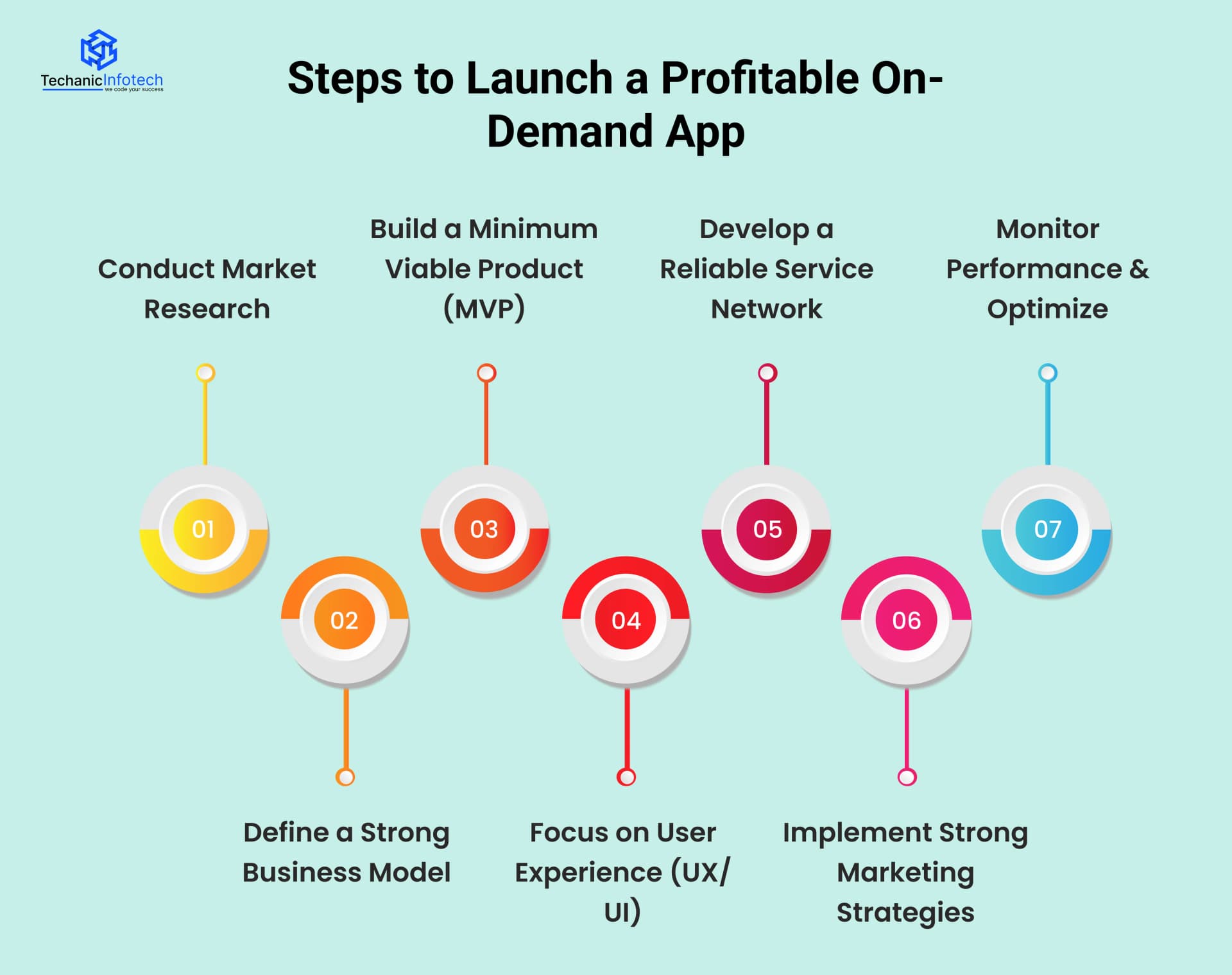
Start by identifying a real market need and analyzing competitors. Understand customer pain points, pricing expectations, and demand for mobile app development trends.
Detailed research helps validate your idea, define your target audience, and reduce risks before investing heavily in development and marketing.
Choose how your app will generate revenue from commissions, subscriptions, service fees, or advertising.
A clear monetization strategy ensures sustainable growth. Calculate operational costs and profit margins early to avoid financial challenges after launch.
Develop a basic version of your app with core features. An MVP allows you to test functionality, gather user feedback, and improve the product before full-scale launch.
This approach saves mobile app development timeline, reduces costs, and minimizes business risks.
A simple, intuitive interface improves customer satisfaction and retention. Ensure smooth navigation, quick booking, secure payments, and real-time tracking.
A well-designed app encourages repeat usage and positive reviews, strengthening brand reputation.
Partner with dependable service providers, vendors, or delivery personnel. Their performance directly impacts customer satisfaction.
Proper onboarding, training, and performance monitoring help maintain consistent service quality and operational efficiency.
Use digital marketing, social media campaigns, referral programs, and promotions to attract users.
Early-stage offers and discounts help build an initial customer base. Consistent branding and targeted advertising increase visibility and drive app downloads.
After launch, track key performance indicators like user retention, order frequency, and revenue.
Use analytics to identify improvement areas. Continuous updates, feature enhancements, and data-driven decisions ensure long-term profitability and competitive advantage.
Techanic Infotech is a reliable mobile app development company delivering scalable and future-ready on-demand applications tailored to your business goals.
Our team follows a strategic app development process, from research and UI/UX design to deployment and post-launch optimization.
We focus on performance, security, and seamless user experiences using modern frameworks and the right tech stack.
Whether you need AI integration, real-time tracking, or secure payment gateways, our experts provide end-to-end on-demand app development services.
We prioritize transparency in mobile app development cost, ensure timely delivery aligned with your mobile app development timeline, and build scalable solutions that grow with your business.
On-demand app ideas in 2026 present massive opportunities for entrepreneurs willing to innovate and solve real-world problems.
Profitability depends on AI integration, niche targeting, sustainability, and hybrid revenue models that ensure recurring income.
Businesses that embrace automation, real-time technology, and mobile-first strategies will outperform competitors in an increasingly digital economy.
However, success requires strategic planning, cost control, strong service networks, and continuous optimization.
Building a scalable MVP, focusing on user experience, and leveraging advanced analytics can significantly reduce risks.
With the right execution and a reliable development partner, startups can transform high-demand on-demand app ideas into sustainable businesses.
The future belongs to platforms that deliver speed, convenience, personalization, and value all within a seamless digital ecosystem.
AI-powered home services, telemedicine, EV charging apps, hyperlocal delivery platforms, and sustainable logistics apps are among the most profitable and scalable on-demand business ideas in 2026.
Development costs vary based on features, complexity, tech stack, and platform choice. A basic MVP costs less, while AI-powered scalable apps require higher investment and advanced infrastructure.
An MVP typically takes 3–6 months, while a fully featured, scalable app may require 6–12 months, depending on complexity, integrations, and customization requirements.
Hybrid models combining commissions, subscriptions, freemium upgrades, and surge pricing work best. They create predictable recurring revenue while maximizing lifetime customer value and profitability.
Startups should focus on niche targeting, superior UX, strong branding, and innovative features like AI automation. Hyperlocal expansion and sustainable practices also improve long-term competitive advantage.


Abhishek Jangid is the CEO of Techanic Infotech, with extensive experience in mobile app and web development. He specializes in helping businesses turn innovative ideas into scalable digital solutions through strategic planning and modern technology.