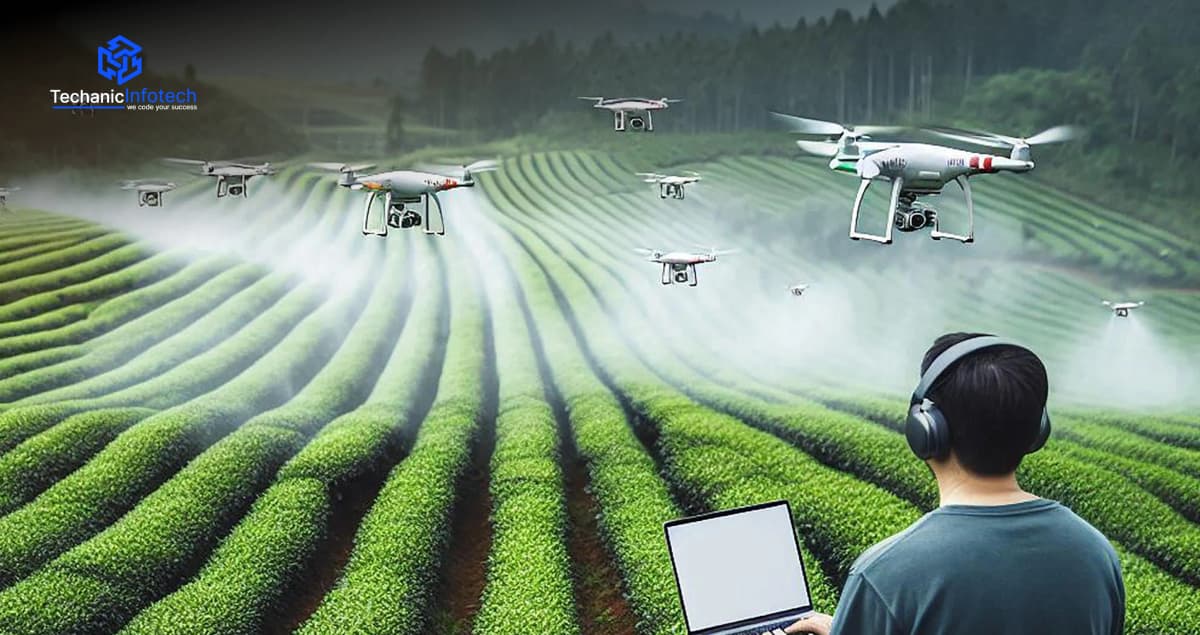
Agriculture App Development
AI Agriculture App Development for Smart Farming in 2026
February 12, 2026
February 12, 2026
AI agriculture app development is transforming traditional farming into a data-driven, intelligent ecosystem.
By integrating artificial intelligence, machine learning, IoT, and cloud computing, smart farming apps help farmers optimize productivity, reduce operational costs, and make informed decisions.
These applications analyze soil health, crop conditions, weather patterns, and pest risks in real time, enabling precision agriculture at scale.
With global food demand rising and resources becoming scarce, AI-powered agriculture solutions are no longer optional they are essential.
Smart farming apps empower agribusinesses and farmers with predictive insights, automation, and actionable recommendations, improving yields while promoting sustainability.
As digital adoption in agriculture increases, AI apps are shaping the future of efficient, resilient, and profitable farming.
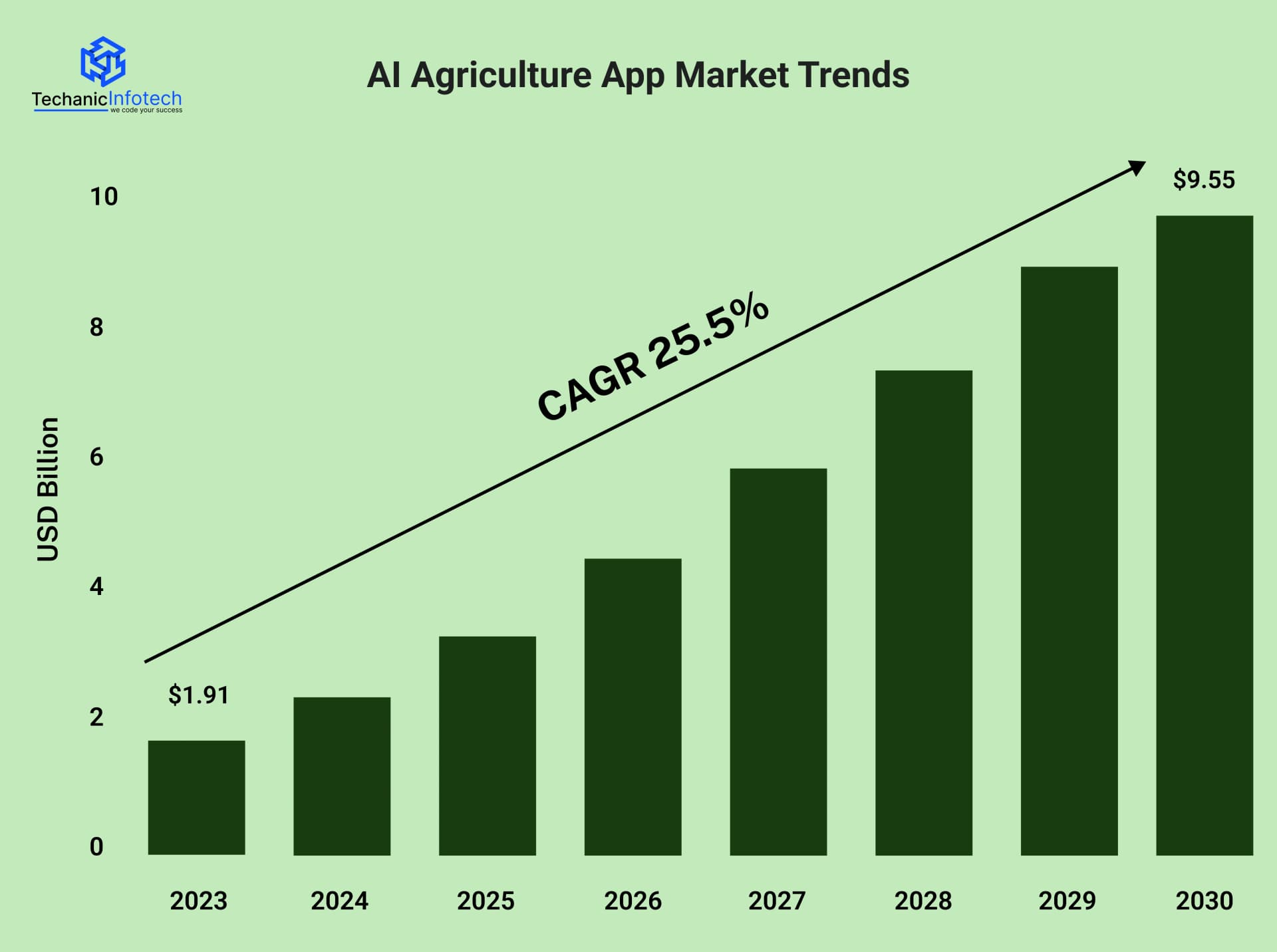
The global artificial intelligence in agriculture market size was valued at USD 1.91 billion in 2023 and is projected to grow at a CAGR of 25.5% from 2024 to 2030.
Based on components, the software segment dominated artificial intelligence in the agriculture market and accounted for a revenue share of 53.9 % in 2023.
North America dominated artificial intelligence in the agriculture market and held the largest share of 35.9% in 2023.
Revenue in the agriculture app market is expected to reach USD 9.55 billion by 2030
In terms of revenue, North America accounted for 37.2% of the global generative ai in agriculture market in 2024.
Considering the key mobile app features is important for successfully developing the AI agriculture app.
This section outlines the core functionalities of the AI agriculture app, including data collection, crop monitoring, and many more.
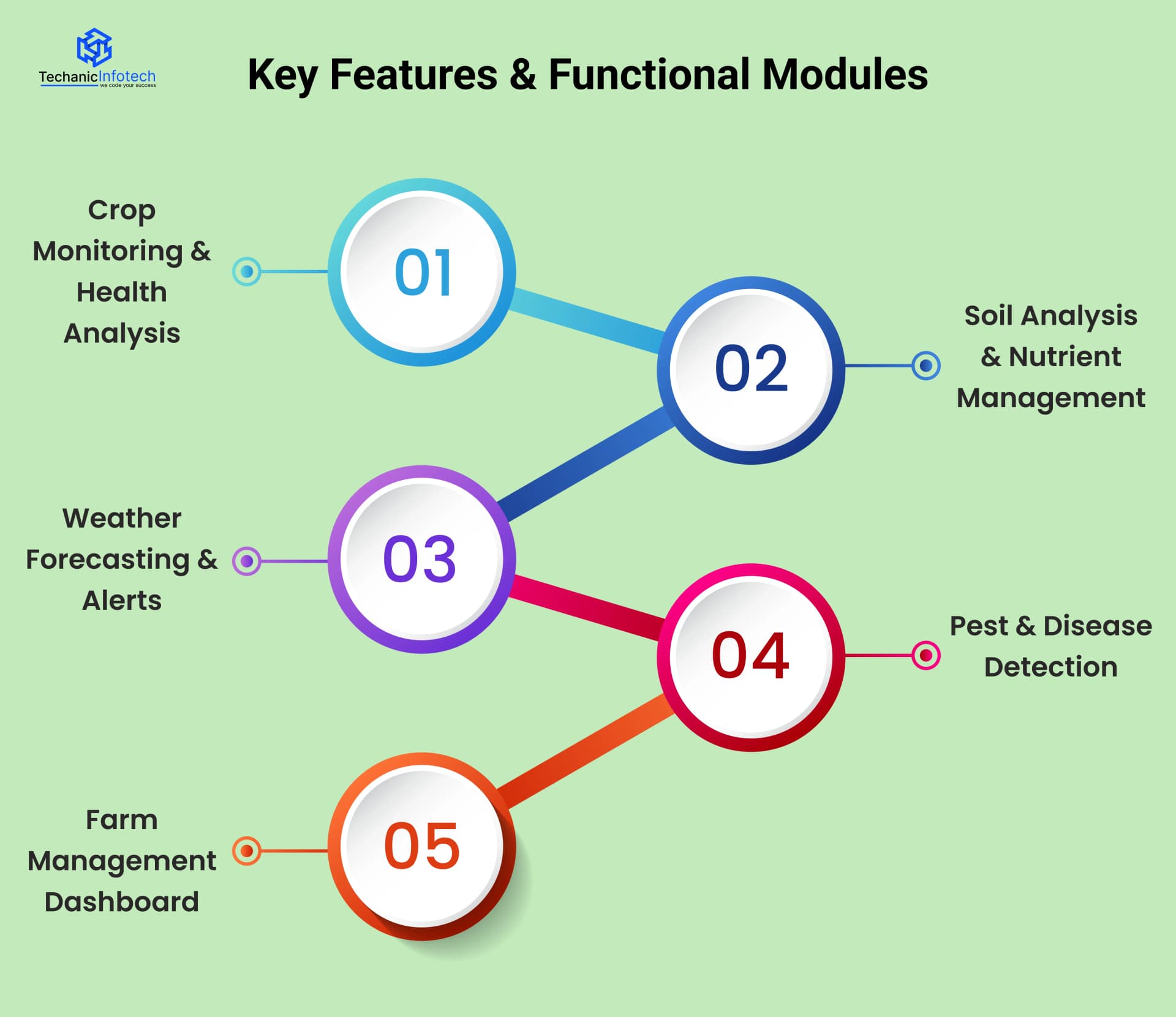
AI-powered crop monitoring uses satellite imagery, drones, and IoT sensors to track crop growth and detect diseases early.
By analyzing plant color, moisture, and growth patterns, the app provides actionable insights that help farmers prevent yield loss and improve crop quality efficiently.
This module analyzes soil composition, moisture levels, and nutrient content using sensor data and AI models.
It recommends optimal fertilizers and irrigation schedules, helping farmers maintain soil health, reduce waste, and increase crop productivity while supporting sustainable farming practices.3. Weather Forecasting & Alerts
AI-driven weather forecasting integrates historical data and real-time climate inputs to deliver accurate predictions.
Farmers receive timely alerts about rainfall, frost, droughts, or heatwaves, enabling proactive planning and minimizing weather-related crop damage.
Using computer vision and machine learning, the app identifies pests and crop diseases from images captured via smartphones or drones.
Early detection allows targeted treatment, reducing chemical usage, lowering costs, and protecting both crops and the environment.
A centralized dashboard provides real-time insights into farm operations, including crop status, resource usage, and financial metrics.
This feature improves decision-making, enhances productivity tracking, and simplifies farm management for both small and large-scale farmers.
Considering the role of artificial intelligence and machine learning is essential for developing an effective AI agriculture app.
This section explains how AI and ML models analyze agricultural data, predict outcomes, and support intelligent decision-making for farmers.
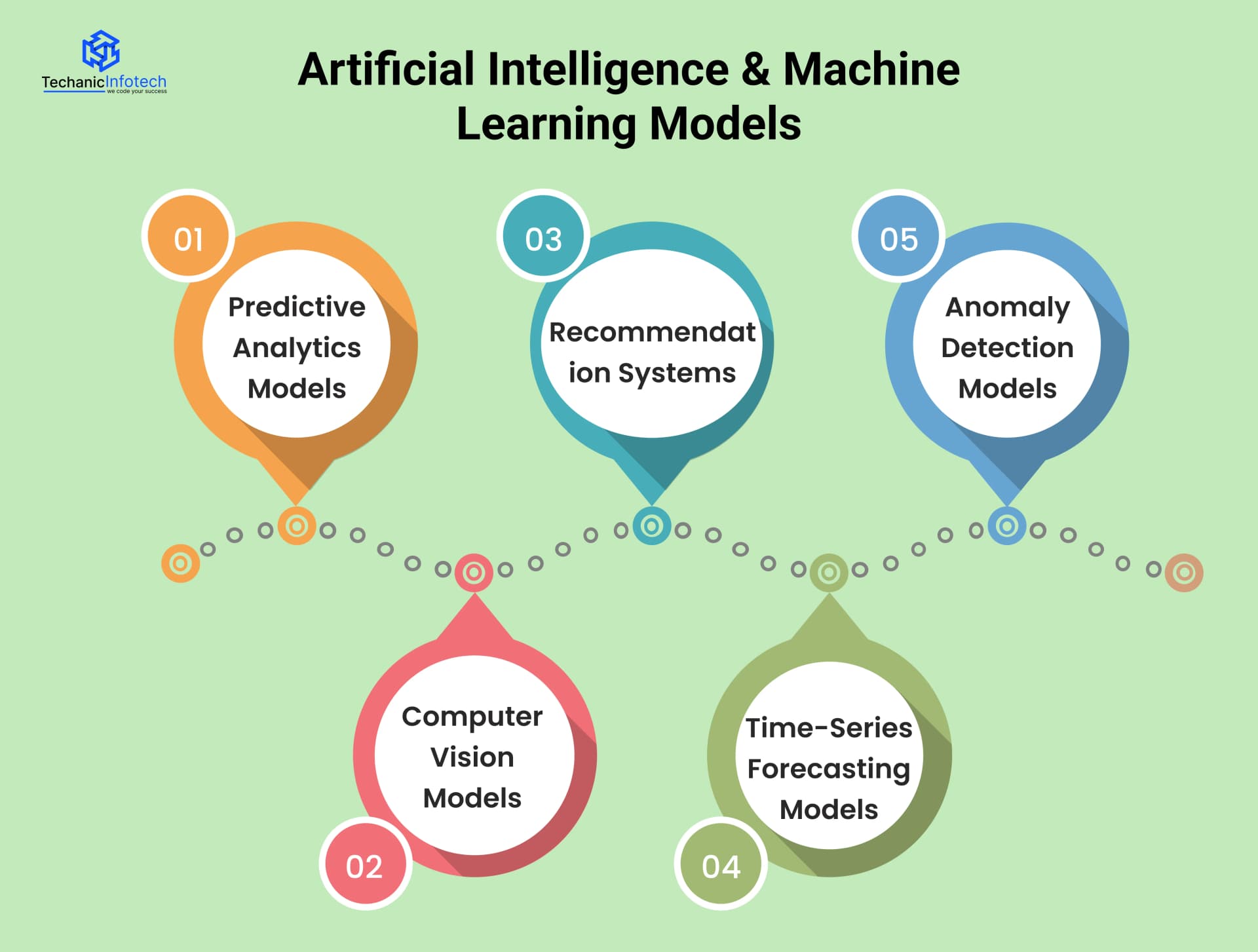
Predictive models analyze historical and real-time farm data to forecast crop yields, pest outbreaks, and irrigation needs.
These insights help farmers plan effectively, reduce risks, and maximize productivity through informed, data-backed decisions.
Computer vision enables image-based analysis for crop disease detection, weed identification, and growth monitoring.
By processing images from drones or mobile devices, these models deliver fast, accurate diagnostics without requiring manual field inspections.
AI-driven recommendation engines suggest optimal planting schedules, fertilizers, and crop varieties based on soil data, weather conditions, and past performance.
This personalized guidance helps farmers improve yields and resource efficiency.
Time-series models analyze weather, soil moisture, and crop growth mobile app development trends over time.
They enable accurate forecasting of seasonal patterns, irrigation demand, and harvest timelines, supporting long-term farm planning.
These models identify irregular patterns in sensor data, such as sudden moisture drops or disease indicators.
Early anomaly detection allows farmers to take corrective actions quickly, preventing costly losses and operational disruptions.
Selecting the right mobile app tech stack is vital for successful AI agriculture app development.
This section details the core programming languages, frameworks, cloud services, and databases that enable reliable performance, efficient data processing, and smooth integration of AI-powered functionalities.
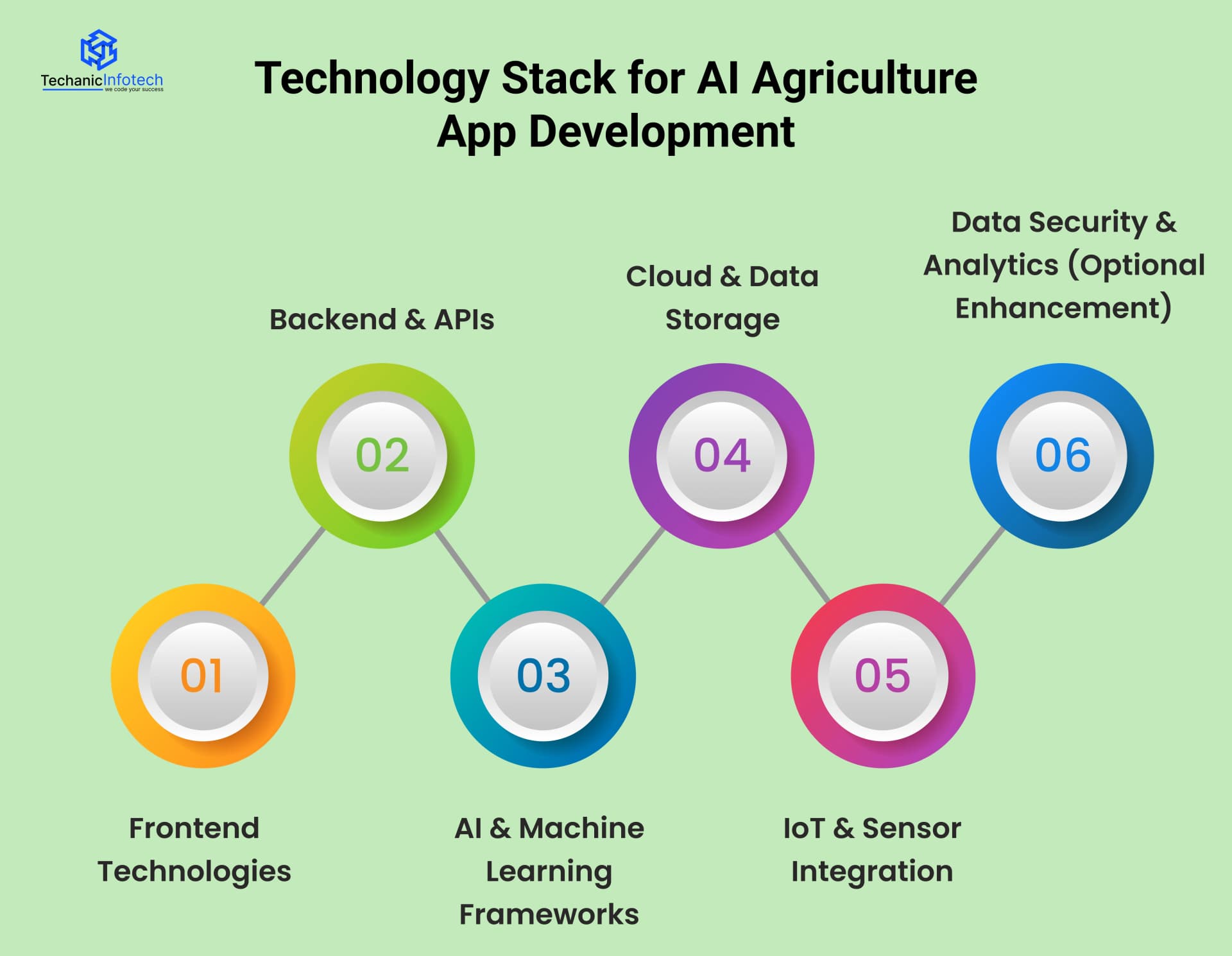
Modern frameworks such as React Native and Flutter enable cross-platform mobile application development with intuitive and responsive user interfaces.
These technologies deliver smooth performance, offline functionality, and simplified navigation, making the app accessible to farmers with diverse levels of technical expertise.
Scalable backend architectures built with Node.js, Python, or Java manage data processing, business logic, and system workflows efficiently.
RESTful and GraphQL APIs ensure seamless communication between mobile apps, AI models, IoT devices, and third-party agricultural platforms.
Advanced frameworks such as TensorFlow, PyTorch, and Scikit-learn power machine learning and deep learning capabilities.
These tools support image recognition for crop disease detection, predictive analytics for yield forecasting, and real-time decision-making to enable smart and precision farming.
Cloud platforms like AWS, Microsoft Azure, and Google Cloud offer scalable infrastructure, high-performance computing, and integrated AI services.
They ensure secure data storage, real-time analytics, automated backups, and high availability for agriculture applications.
IoT platforms connect soil sensors, weather stations, drones, and smart irrigation systems to enable continuous data collection.
This real-time sensor data enhances AI accuracy, supports automated farming operations, and allows comprehensive monitoring across large agricultural environments.
Robust security frameworks and analytics tools ensure data privacy, compliance, and actionable insights.
Encryption, role-based access, and advanced dashboards help farmers and agribusinesses make data-driven decisions with confidence.
Ensuring the success of an AI agriculture app requires adopting effective methods for the mobile app development process.
This section outlines best practices such as intuitive interfaces, high-quality data integration, adaptive machine learning, offline functionality, and iterative testing for maximum usability and impact.
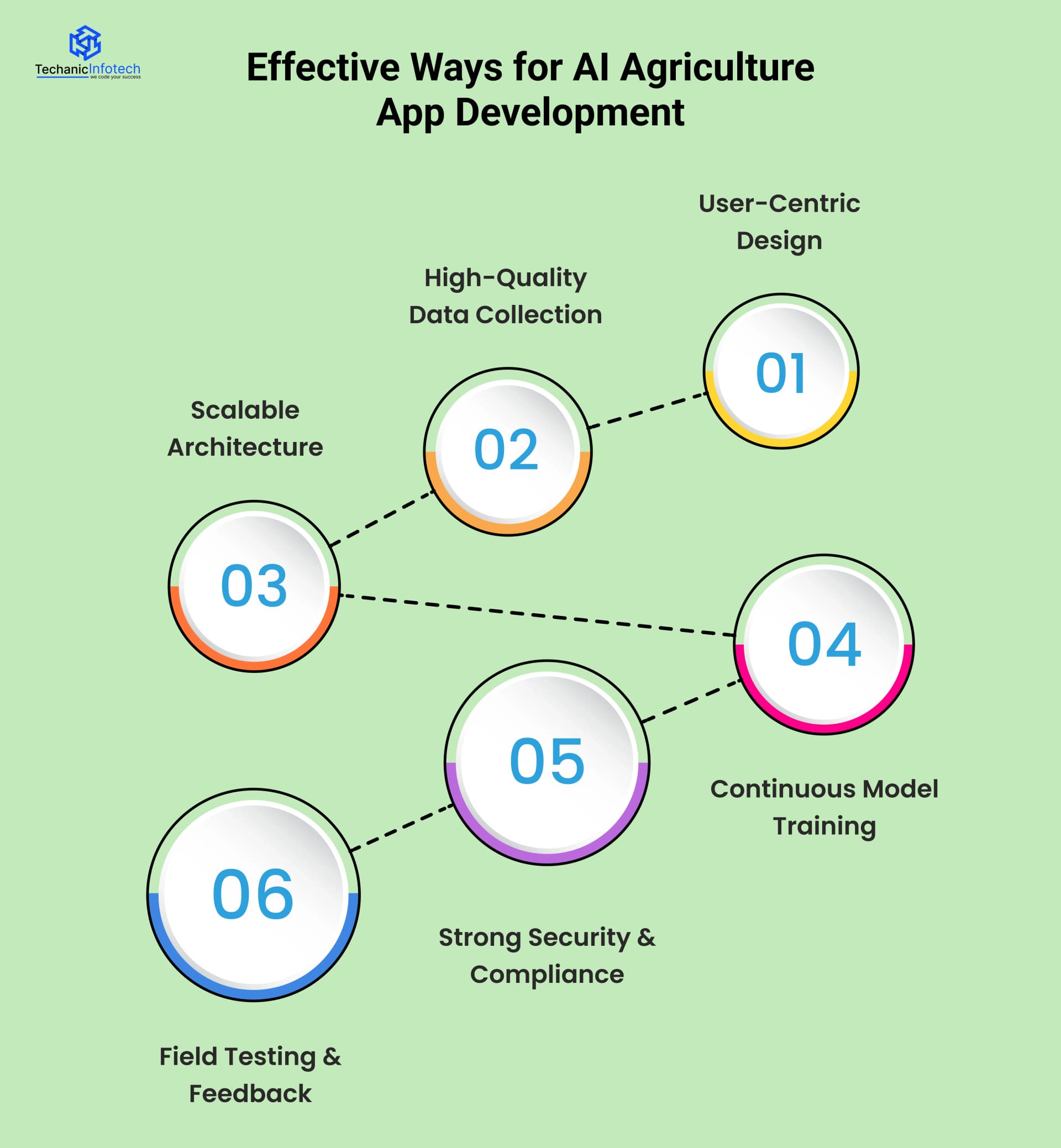
The application must have a unique mobile app design to help deeply understand farmers’ needs, challenges, and working conditions.
Emphasis on simplicity, intuitive navigation, local language support, and offline functionality ensures accessibility, encourages adoption, and improves long-term engagement across diverse agricultural communities.
Accurate and dependable AI-driven insights rely heavily on high-quality data collection.
Integrating validated field sensors, satellite imagery, weather data, and historical agricultural datasets enhances model accuracy, enabling precise analysis and delivering reliable, actionable recommendations to farmers.
A scalable and flexible application architecture is essential to accommodate a growing user base and evolving feature requirements.
Cloud-native infrastructure supports high performance, seamless updates, efficient resource management, and cost-effective scaling as demand and data volumes increase.
AI models must be continuously trained and updated using new environmental, climatic, and crop-related data.
This ongoing learning process allows the system to adapt to changing conditions, improve prediction accuracy, and maintain long-term reliability by following a mobile app maintenance strategy in dynamic agricultural environments.
Strong security measures, including data encryption, secure authentication, and compliance with regional data protection regulations, are critical to protecting sensitive farmer information.
Robust security builds trust, supports ethical AI deployment, and ensures legal and regulatory accountability.
Extensive field testing in real farming environments helps validate application performance, usability, and relevance.
Continuous feedback from farmers enables iterative improvements, feature refinement, and ensures the solution delivers meaningful, practical value in everyday agricultural operations.
Considering potential risks is crucial for successful AI agriculture app development.
This section identifies challenges such as data inaccuracy, high mobile app development cost, connectivity issues, user adoption barriers, and security concerns, along with strategies to mitigate them effectively.
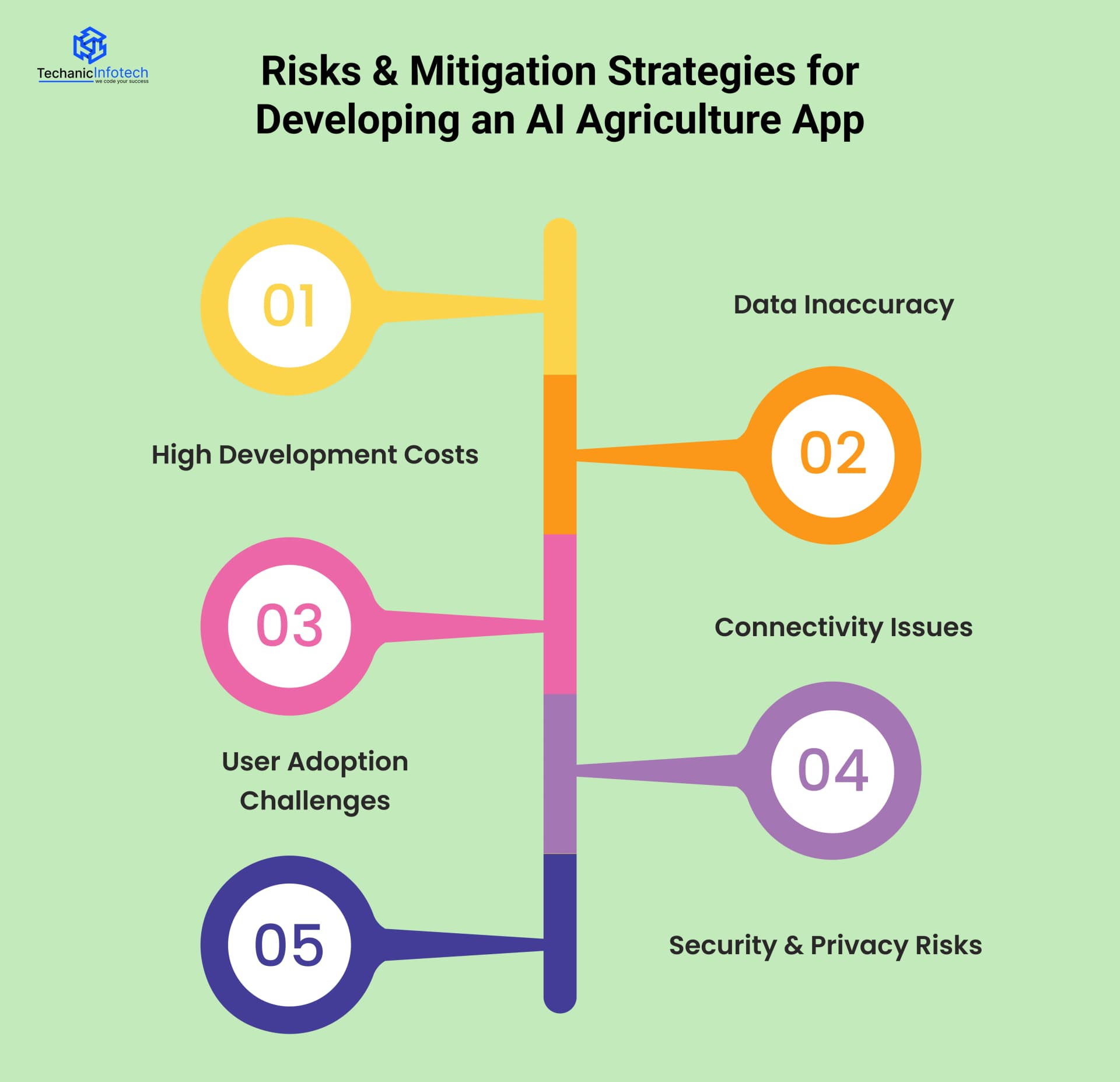
Inaccurate or inconsistent data can severely affect AI predictions and decision-making.
This risk can be reduced by integrating verified data sources, regularly calibrating sensors, applying automated data validation techniques, and continuously monitoring data quality.
AI-driven agriculture applications often require significant investment in infrastructure, data, and expertise.
Cost risks can be mitigated through modular minimum viable product development, cloud-based platforms, reusable components, and MVP-focused strategies that optimize resources and reduce initial expenses.
Poor or unstable internet connectivity in rural farming regions can limit application functionality.
Implementing offline capabilities, local data processing, and edge computing solutions ensures uninterrupted access and consistent performance despite network limitations.
Resistance to adopting new technologies may arise due to limited digital literacy or trust concerns.
Offering intuitive interfaces, hands-on training, local language support, and clearly communicated benefits helps increase farmer confidence and long-term adoption.
AI agriculture apps handle sensitive operational and personal data that requires strong protection.
Employing advanced encryption, secure authentication mechanisms, regular security audits, and regulatory compliance minimizes privacy risks and strengthens user trust.
The mobile app development cost specially for an AI agriculture app, depends on the level of intelligence, features, and scalability required, ranging from basic rule-based tools to advanced, enterprise-grade AI solutions.
A basic AI agriculture app typically costs between $5,000 and $20,000 and provides essential digital tools for farmers.
It includes features such as weather forecasting, crop planning, fertilizer reminders, and rule-based advisory systems.
This cost range suits MVPs, pilot projects, and small farms seeking affordable technology adoption.
This table focuses on rule-based automation and decision support, ideal for small farms or pilot projects.
|
Component |
Description |
Estimated Cost |
|
Weather Forecasting |
Localized weather predictions to support daily farm decisions |
$3,000 – $5,000 |
|
Crop Planning Tools |
Seasonal crop recommendations and planting schedules |
$2,500 – $4,000 |
|
Fertilizer & Irrigation Reminders |
Rule-based alerts for the input application |
$2,000 – $4,000 |
|
Advisory System |
Predefined AI rules for basic farming guidance |
$1,500 – $3,000 |
|
App Development & UI |
Core app design, dashboard, and deployment |
$1,000 – $4,000 |
A mid-level AI agriculture app generally requires an investment of $20,000 to $35,000, offering more intelligent, data-driven capabilities.
These apps use machine learning to analyze crop health, predict yields, and assess soil conditions while integrating external APIs, satellite data, or IoT devices for improved accuracy.
The table introduces machine learning and real data analysis, suitable for commercial farms and agri-tech startups.
|
Component |
Description |
Estimated Cost |
|
Machine Learning Models |
Crop health analysis and yield prediction |
$8,000 – $12,000 |
|
Soil & Field Analytics |
Soil condition assessment using data inputs |
$6,000 – $9,000 |
|
API & Data Integration |
Weather APIs, satellite data, IoT sensors |
$5,000 – $8,000 |
|
Smart Dashboards |
Data visualization and decision insights |
$5,000 – $10,000 |
|
System Development & Testing |
App optimization and scalability prep |
$6,000 – $8,000 |
Advanced AI agriculture apps are enterprise-grade solutions with green app development costs starting from $35,000 and exceeding $60,000+.
They employ deep learning, computer vision, drone imagery, and real-time data processing to deliver precision farming, automation, and strategic insights for large-scale agricultural businesses.
The following table shows the price distribution of the advanced AI agriculture app as per its components.
|
Component |
Description |
Estimated Cost |
|
Deep Learning Models |
Advanced crop modeling and predictions |
$20,000 – $30,000 |
|
Computer Vision |
Image-based crop disease and growth detection |
$15,000 – $25,000 |
|
Drone & Satellite Integration |
Real-time aerial data processing |
$10,000 – $15,000 |
|
Automation & Precision Farming |
AI-driven recommendations and actions |
$10,000 – $15,000 |
|
Enterprise System Architecture |
High-scale backend and analytics engine |
$15,000 – $20,000+ |
To remain accurate and relevant, AI models must be continuously retrained using updated agricultural, environmental, and seasonal datasets, with annual costs typically ranging from $6,000 to $22,000.
Ongoing optimization enhances prediction accuracy, adapts to climate variability, and ensures consistent system performance over the mobile app development timeline.
The given table shows the cost division for AI model retraining and optimization of the application.
|
Component |
Description |
Estimated Cost |
|
Data Refresh & Labeling |
Updating seasonal and environmental datasets |
$3,000 – $7,000 |
|
Model Retraining |
Periodic retraining for accuracy improvement |
$4,000 – $10,000 |
|
Climate Adaptation Tuning |
Adjustments for climate variability |
$2,000 – $6,000 |
|
Performance Optimization |
Model efficiency and response-time tuning |
$1,000 – $4,000 |
|
Monitoring & Validation |
Accuracy testing and benchmarking |
$1,000 – $3,000 |
Sustaining AI-driven operations requires robust cloud infrastructure for secure data storage, high-performance computing, and real-time analytics, generally costing $7,000 to $25,000 per year.
Expenses scale with user growth, increasing data volumes, and advanced workloads such as satellite imagery analysis and drone-based data processing.
The given table shows the estimated cost of cloud infrastructure, data storage, and processing required to support AI operations, real-time analytics, and scalable agricultural data management.
|
Component |
Description |
Estimated Cost |
|
Cloud Computing Resources |
AI workloads and processing power |
$4,000 – $10,000 |
|
Data Storage |
Crop, sensor, and historical data storage |
$2,000 – $6,000 |
|
Real-Time Analytics |
Live data ingestion and processing |
$2,000 – $7,000 |
|
Satellite & Image Processing |
High-performance image analysis |
$1,000 – $7,000 |
|
Scalability & Load Handling |
Support for user and data growth |
$1,000 – $5,000 |
Regular security enhancements, compliance updates, encryption protocols, and system upgrades are essential for protecting sensitive agricultural data, with estimated annual costs between $3,000 and $15,000.
These measures ensure platform stability, regulatory adherence, and long-term trust, particularly for enterprise and multi-region deployments.
The given table shows the estimated cost of security, compliance, and system upgrades required to protect agricultural data, ensure regulatory adherence, and maintain system stability over time.
|
Component |
Description |
Estimated Cost |
|
Data Encryption |
Protection of sensitive agricultural data |
$1,000 – $4,000 |
|
Compliance Updates |
Regulatory and policy adherence |
$1,000 – $5,000 |
|
Security Audits |
Vulnerability and penetration testing |
$1,000 – $4,000 |
|
System Upgrades |
Software patches and infrastructure updates |
$1,000 – $5,000 |
|
Access Control & Monitoring |
Access Control & Monitoring |
$1,000 – $2,000 |
Continuous system monitoring, proactive bug resolution, backend optimization, and infrastructure scaling typically require $3,000 to $15,000 annually.
These efforts maintain high availability and reliability, especially during peak farming seasons, while supporting sustainable long-term platform growth.
The given table shows the estimated cost of the performance monitoring, bug resolutions, and scalability.
|
Component |
Description |
Estimated Cost |
|
System Monitoring |
Uptime, latency, and performance tracking |
$1,000 – $5,000 |
|
Bug Fixes |
Issue resolution and maintenance |
$1,000 – $6,000 |
|
Backend Optimization |
Database and server performance tuning |
$1,000 – $5,000 |
|
Infrastructure Scaling |
Handling peak-season demand |
$1,000 – $6,000 |
|
Reliability Improvements |
Failover and redundancy setup |
$1,000 – $3,000 |
Techanic Infotech is a well-known agriculture app development company that specializes in building advanced AI agriculture apps tailored for smart farming solutions.
With deep expertise in AI, machine learning, IoT, and cloud technologies, our team delivers scalable, secure, and user-friendly applications.
We follow E-E-A-T principles by combining industry experience, technical excellence, and data-driven strategies to ensure reliable outcomes.
From ideation and MVP development to deployment and ongoing optimization, Techanic Infotech offers end-to-end AI agriculture app development services.
Our solutions empower farmers and agribusinesses with real-time insights, predictive analytics, and automation, helping them improve productivity, sustainability, and profitability in an increasingly competitive agricultural landscape.

AI agriculture app development is redefining smart farming by enabling precision, efficiency, and sustainability.
Through intelligent data analysis, predictive insights, and automation, these apps help farmers overcome challenges such as climate uncertainty, resource limitations, and operational inefficiencies.
By leveraging the right AI models, technology stack, and development strategies, businesses can create impactful solutions that deliver real value to the agricultural sector.
However, success depends on data accuracy, scalability, security, and user adoption. Partnering with an experienced development company ensures reliable implementation and long-term growth.
As agriculture continues to evolve digitally, AI-powered farming apps will play a crucial role in feeding the future sustainably and profitably.
An AI Agriculture App uses artificial intelligence, machine learning, and real-time data to help farmers monitor crops, predict yields, optimize irrigation, detect pests and diseases early, and make data-driven farming decisions that increase productivity and reduce costs.
The app analyzes data from multiple sources, including IoT sensors, satellite imagery, drone data, weather APIs, soil reports, and historical farm data. These datasets are processed using AI models to deliver real-time insights and actionable recommendations.
Yes. The app is designed to be scalable and flexible, making it suitable for smallholder farmers, medium-scale farms, and large commercial agricultural operations. Features and recommendations adapt based on farm size, crop type, and regional conditions.
Yes. The app supports offline functionality for core features such as data entry, basic analytics, and alerts. Once an internet connection is available, data automatically syncs to ensure up-to-date insights.
Data security is a top priority. The app uses encryption, secure cloud infrastructure, role-based access control, and compliance with data protection regulations to ensure that farmer data remains private, safe, and fully under the user’s control.


Shailendra is a dedicated professional known for his strong client-focused approach and clear understanding of business needs. He brings a thoughtful understanding of client needs and focuses on building long-term relationships through clear communication and quality-driven work. With a blend of strategic thinking, content expertise, and a hands-on approach, Shailendra plays a key role in shaping content that aligns with both business goals and user expectations.