
Thinking about launching a Shopify store in 2026 but unsure how much budget you’ll need? You’re not alone. One of the most common questions businesses ask is about the Shopify store development cost in 2026 and what actually influences it.
On average, the cost to develop a Shopify store ranges between $8,000 and $70,000+, depending on design, features, and integrations. From understanding the Shopify website development cost to planning the right Shopify store development budget, every choice matters.
Factors like Shopify store features and pricing, third-party apps, and the Shopify store development timeline all play a role in final pricing.
In this guide, we’ll break down Shopify ecommerce development pricing in a simple way, helping you plan costs clearly without confusion or surprises.
Shopify is a popular cloud-based eCommerce platform that enables anyone to create, manage, and grow an online store without needing deep technical knowledge.
It provides a complete set of tools, including product management, order processing, secure payments, inventory controls, and marketing features, so merchants can focus on selling while Shopify handles the technology and hosting.
One of the main reasons businesses choose Shopify is its ease of use. Even beginners can set up a professional store quickly thanks to intuitive dashboards, drag-and-drop builders, and built-in features for SEO, marketing, and analytics.
Another strong advantage is Shopify’s massive global ecosystem. In 2025, Shopify powered over 6.5 million active online stores, serving merchants in more than 175 countries. These stores collectively see hundreds of millions of buyers and record significant sales volume each year.
Businesses also choose Shopify because it’s scalable, whether you’re selling a few products locally or running a large enterprise store with global customers, the platform can handle growth.
Plus, features like integrations with third-party apps, multichannel selling, and built-in analytics make Shopify a versatile choice for modern online commerce.
When planning your Shopify store development cost in 2026, it’s helpful to understand how costs vary from basic to advanced stores. The cost to develop a eCommerce website depends on design complexity, functionality, custom integrations, and overall business goals.
Below we break down how much different types of Shopify stores typically cost.
A basic Shopify store is ideal for startups and small businesses. It usually includes:
A ready-made theme with simple customization
Essential pages like Home, Shop, Cart, Checkout
Basic product management and payment setup
Standard Shopify apps
This type of store delivers a functional online presence quickly and at a lower Shopify ecommerce development pricing. Most costs here cover setup, theme tweaks, and essential store configuration. Even with Shopify subscription fees included, this option remains affordable for early-stage sellers.
A mid-level store offers more features and polished design. It typically includes:
Custom or premium theme design
Advanced product filters and categories
Third-party app integrations
SEO optimization and marketing tools
This level requires more work from designers and developers, raising the Shopify store pricing breakdown. It’s a strong choice for brands targeting higher conversion rates and better user experience, as more customization increases both usability and performance.
An advanced or enterprise store supports large catalogs, high traffic, and specialized workflows.
This setup often includes:
Fully custom design and UI/UX
Complex integrations (ERP, CRM, APIs)
Automation, analytics, and custom apps
Multi-region and multi-currency support
Stores at this level demand extensive ecommerce app development process and often include premium tools and features that improve store performance and scalability. This makes advanced stores the highest point in Shopify store development cost in 2026.
The cost of Shopify store development is not fixed. It depends on multiple factors related to your business goals, store complexity, and technical requirements.
Whether you are launching a small online shop or building a large-scale ecommerce brand, understanding these factors helps you plan the right budget and avoid surprises later.
Below are the key elements that directly influence Shopify store development pricing.
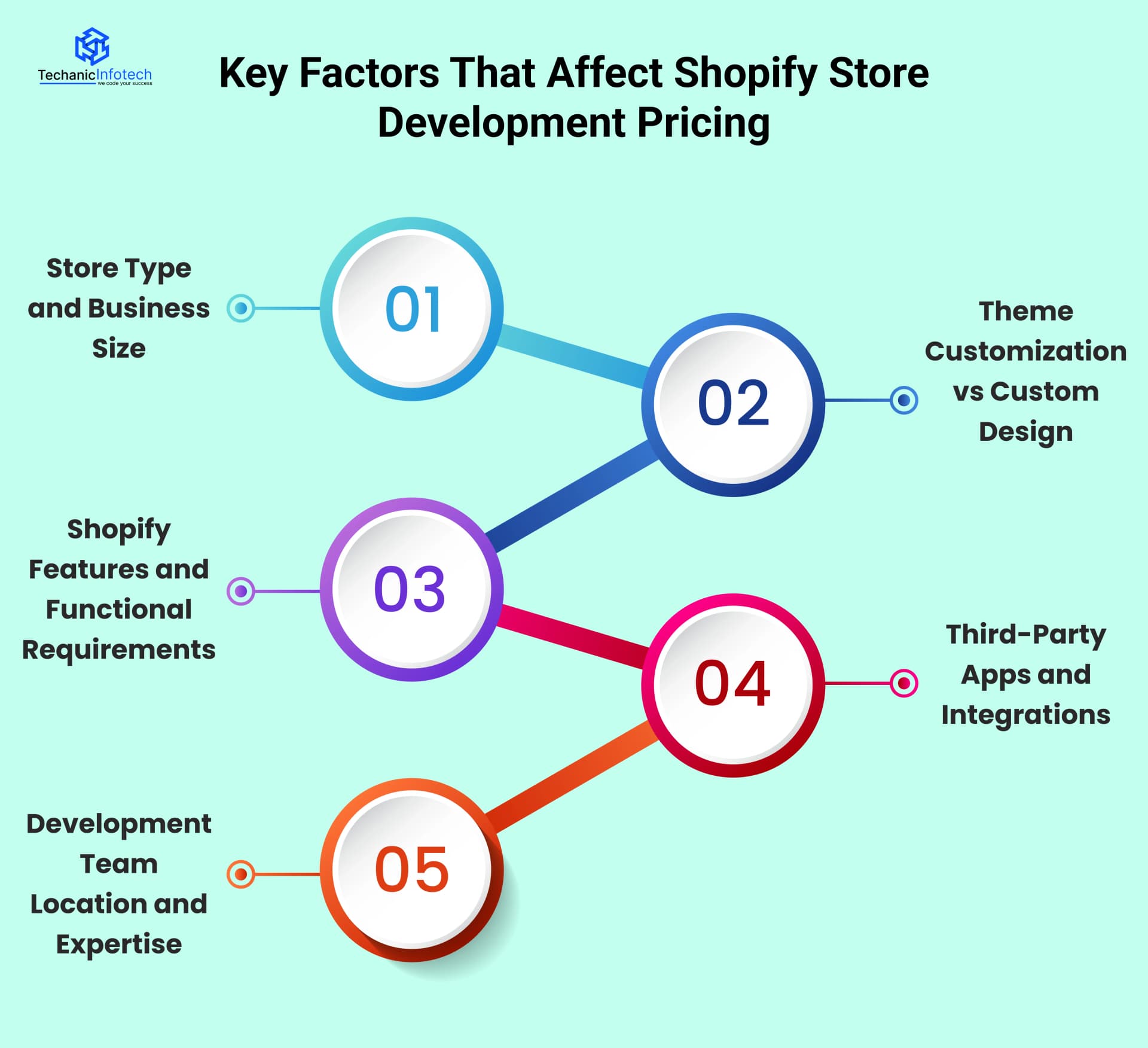
The type of Shopify store you want to build plays a major role in overall cost. A simple store with a few products and basic pages requires less time and effort compared to a large ecommerce store with thousands of products, multiple collections, and advanced workflows.
Small businesses usually need basic product listings, checkout setup, and essential pages. Medium and enterprise-level stores often require custom logic, advanced inventory management, automation, and performance optimization.
Average cost:
Small Shopify store: $1,500 – $3,000
Medium business store: $3,000 – $6,000
Large or enterprise Shopify store: $6,000 – $12,000+
Using a pre-built Shopify theme is more affordable and faster. Many businesses choose premium themes and customize colors, fonts, layouts, and sections to match their brand. This option works well for startups and small businesses.
Custom Shopify design, on the other hand, means building the UI/UX from scratch. This gives you full control over branding, user flow, and customer experience but requires more design and development time.
Average cost:
Theme customization: $800 – $2,000
Premium theme purchase: $150 – $350
Fully custom Shopify design: $3,000 – $6,000
The more features your Shopify store needs, the higher the development cost. Basic stores include standard product pages, cart, checkout, and payment setup. Advanced stores may require custom filters, subscription models, dynamic pricing, custom checkout logic, or multilingual support.
Custom eCommerce platform features often need Shopify app customization or custom coding using Liquid, APIs, and backend logic, which increases pricing.
Average cost:
Basic features: Included in base cost
Advanced built-in features: $1,000 – $3,000
Custom Shopify functionality: $3,000 – $6,000+
Most Shopify stores rely on third-party apps for payments, shipping, marketing, reviews, CRM, analytics, and automation. Some apps are free, while others charge monthly fees. Custom integrations with tools like ERP systems, accounting software, or marketing platforms increase development effort.
If apps need customization or API-based integration, development costs rise further.
Average cost:
Standard app setup: $300 – $800
Multiple app integrations: $800 – $2,000
Custom API integrations: $2,000 – $4,000
The cost of Shopify store development also depends on who builds it. Freelancers may charge less but may lack scalability or long-term support. Professional Shopify development companies provide structured workflows, experienced developers, QA testing, and ongoing support.
Teams based in different regions charge differently based on expertise and market rates.
Average cost:
Freelancers: $25 – $50/hour
Mid-level agencies: $40 – $80/hour
Expert Shopify development companies: $80 – $150/hour
When planning your Shopify development cost in 2026, most businesses focus on visible elements like design and features.
However, several hidden factors can quietly increase the mobile app development cost if they are not planned early. Understanding these helps you build a realistic Shopify store and avoid last-minute surprises.
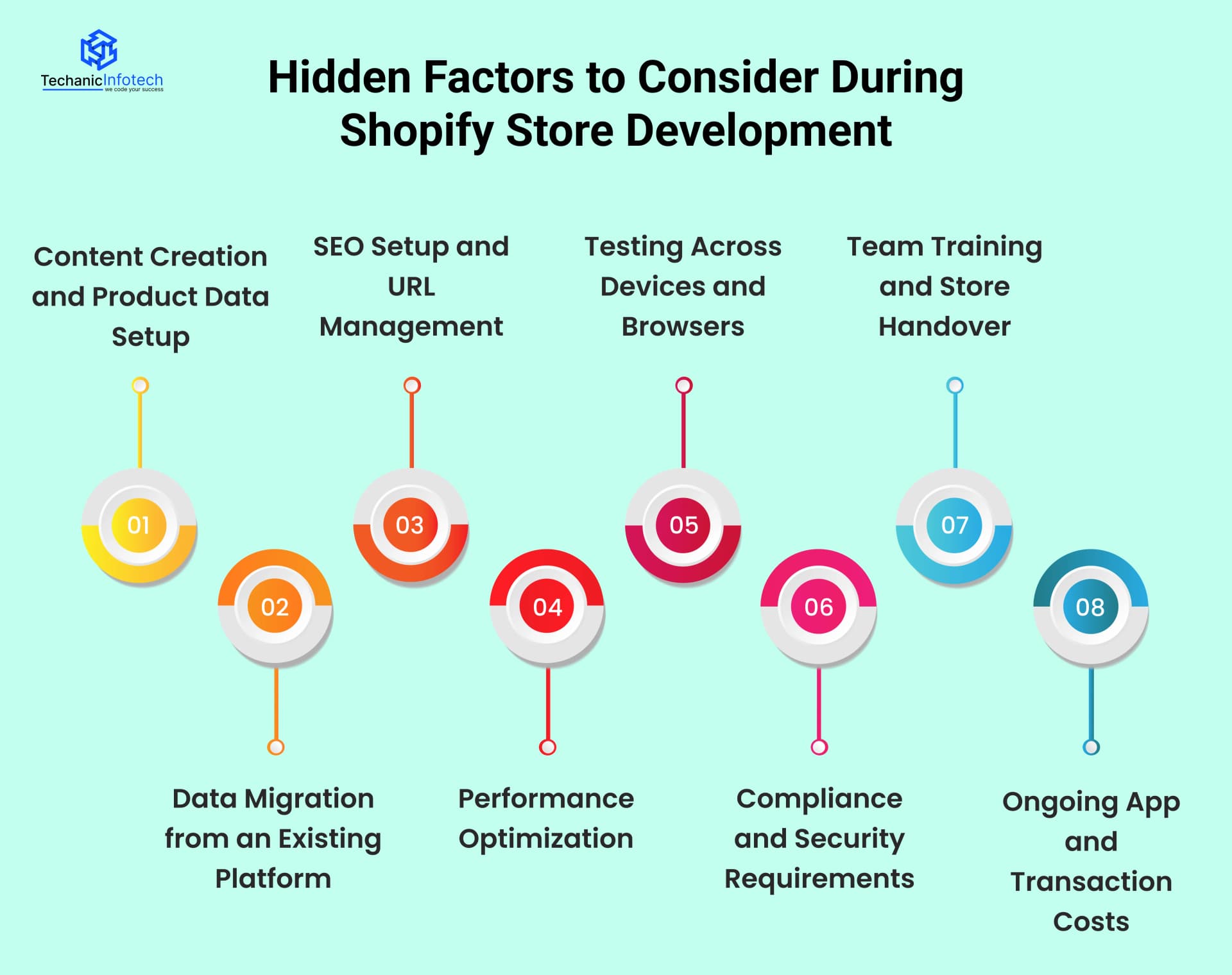
Adding products to a Shopify store is not just about uploading images. Writing product descriptions, setting up variants, pricing, SKUs, and collections takes time.
If you have a large catalog, content creation and data entry can significantly affect the pricing, especially when accuracy and SEO are important.
If you’re moving from another platform, data migration becomes a hidden cost. Transferring products, customers, orders, and URLs must be done carefully to avoid data loss. This process often increases the Shopify ecommerce development pricing, especially for stores with complex data structures.
Basic SEO settings are simple, but proper optimization requires extra effort. Tasks like URL redirects, metadata setup, structured content, and search-friendly navigation add to the Shopify store pricing breakdown. Skipping this step can impact long-term visibility and sales.
Speed matters in eCommerce. Image optimization, theme performance tuning, and app load management are often overlooked. These improvements may not be obvious upfront but influence both user experience and conversion rates, impacting the overall cost for Shopify development services.
Testing ensures your store works smoothly on different devices, browsers, and screen sizes. This includes checkout testing, payment flow validation, and mobile responsiveness. Quality testing adds time and cost but prevents future issues that could hurt sales.
Depending on your region, compliance requirements such as GDPR, cookie consent, and secure payment handling may apply. Implementing these correctly can slightly increase the Shopify store development cost, but they are essential for legal safety and customer trust.
Once the store is built, your team needs to know how to manage products, orders, and content. Training sessions, documentation, and post-launch support are often underestimated but necessary for smooth operations.
Some Shopify apps charge monthly fees, and payment gateways may include transaction charges. These recurring costs are part of the long-term Shopify store budget, even though they don’t appear during initial development.
By considering these hidden factors early, businesses can better control their Shopify store development timeline, avoid unexpected expenses, and launch a store that performs well from day one.
Below is an estimated cost breakdown of common Shopify store features. Actual pricing may vary based on complexity, customization level, and the development team you choose.
|
Feature |
Description |
Average Cost |
|
Store Setup & Configuration |
Shopify account setup, store settings, taxes, shipping zones, and payment configuration. |
$300 – $600 |
|
Theme Installation & Customization |
Installing a theme and customizing layout, colors, fonts, and branding elements. |
$500 – $1,200 |
|
Custom UI/UX Design |
Fully custom design for homepage, product pages, and user journey. |
$2,500 – $5,000 |
|
Product & Collection Setup |
Adding products, variants, collections, tags, and pricing setup. |
$300 – $800 |
|
Payment Gateway Integration |
Integration of cards, PayPal, Stripe, Apple Pay, and local payment methods. |
$200 – $500 |
|
Shipping & Tax Configuration |
Setting up shipping rules, delivery zones, and automated tax calculations. |
$200 – $500 |
|
Third-Party App Installation |
Installing and configuring apps for reviews, marketing, analytics, or automation. |
$300 – $800 |
|
Custom Shopify App Development |
Developing custom apps for advanced workflows or unique business logic. |
$2,000 – $5,000+ |
|
Advanced Search & Filters |
Product filters by price, size, color, availability, and smart search. |
$600 – $1,500 |
|
Subscription & Membership Features |
Recurring billing, subscription products, and membership access. |
$800 – $2,000 |
|
Multi-Language & Multi-Currency |
Supporting global customers with multiple languages and currencies. |
$700 – $1,800 |
|
SEO Optimization Setup |
Meta tags, URLs, sitemap, speed optimization, and basic SEO setup. |
$400 – $1,200 |
|
Performance & Speed Optimization |
Improving load speed through code, image, and script optimization. |
$500 – $1,500 |
|
Security & Compliance Setup |
SSL, GDPR compliance, cookie banners, and secure checkout setup. |
$300 – $700 |
|
Testing, Launch & Deployment |
End-to-end testing, bug fixing, store launch, and post-launch checks. |
$300 – $600 |
A fully featured Shopify store usually costs $3,000 – $10,000+, depending on features and customization. Choosing only the features you truly need helps control your Shopify development budget.
The Shopify store development timeline depends on the size of the store, design complexity, and the features you want to include.
While Shopify is known for faster setup compared to other platforms, a well-planned store still goes through multiple stages to ensure quality and performance.
On average, Shopify store development can take anywhere from 3 weeks to 3 months.
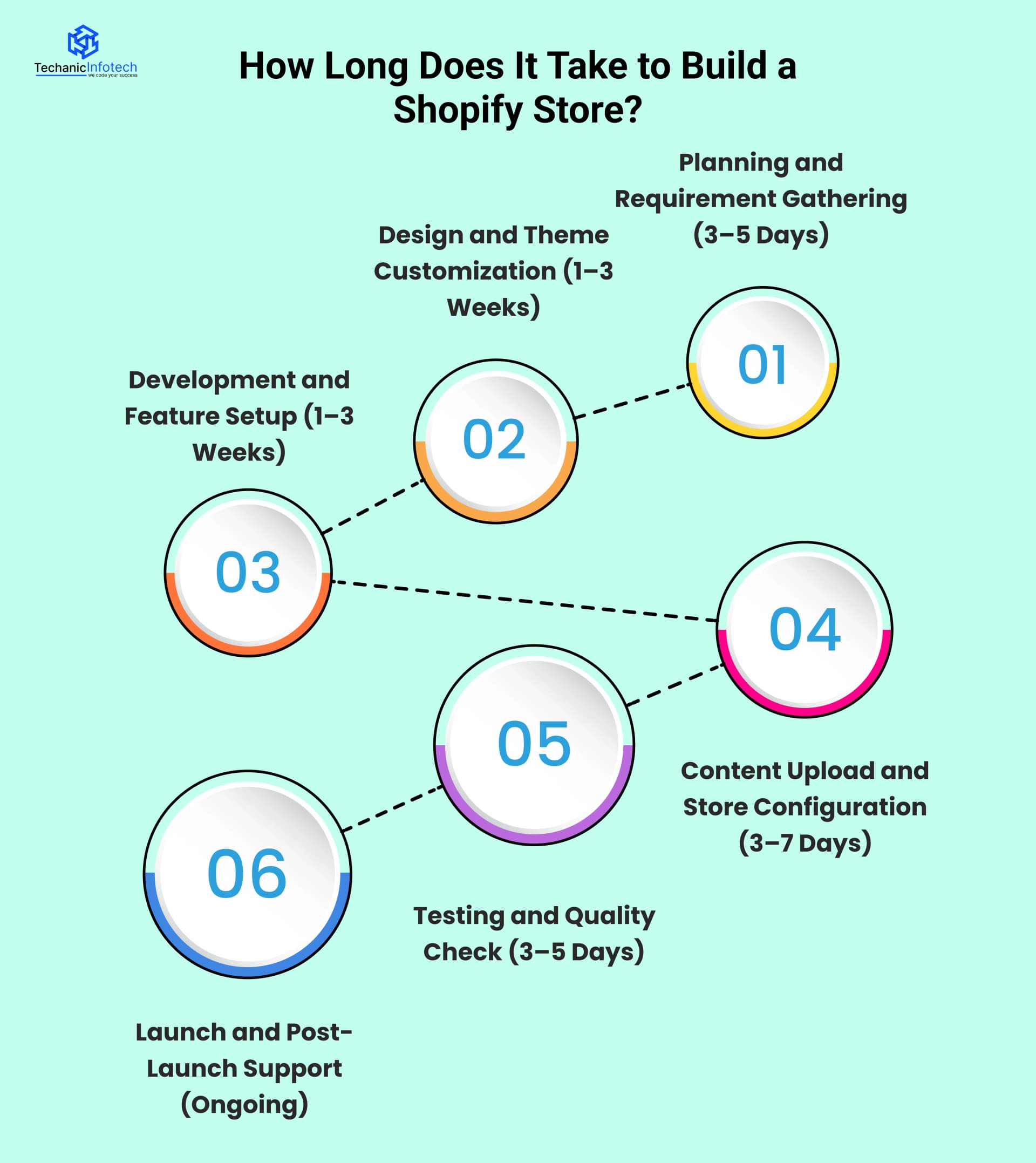
This stage focuses on understanding your business goals, target audience, and store requirements. Product categories, payment methods, shipping rules, and basic store structure are finalized here. Clear planning helps avoid delays later.
Once requirements are set, designers customize or design the Shopify theme. This includes layout changes, branding elements, and mobile optimization. Simple stores move faster, while custom designs take more time.
In this phase, developers configure store settings, integrate apps, set up payment gateways, and add key functionalities. Custom features or complex logic can extend this stage slightly.
Products, images, descriptions, pricing, and policies are added. Navigation menus and collections are also finalized during this step.
The store is tested for responsiveness, checkout flow, and performance across devices. Bugs are fixed before launch.
After launch, small adjustments, monitoring, and updates help ensure smooth operations.
This structured app development timeline helps businesses plan their Shopify store development budget and launch confidently.
Building a Shopify store doesn’t have to stretch your budget if you plan it the right way. Many businesses overspend due to unnecessary features or poor planning.
By following smart strategies, you can control the budget while still launching a high-quality online store.
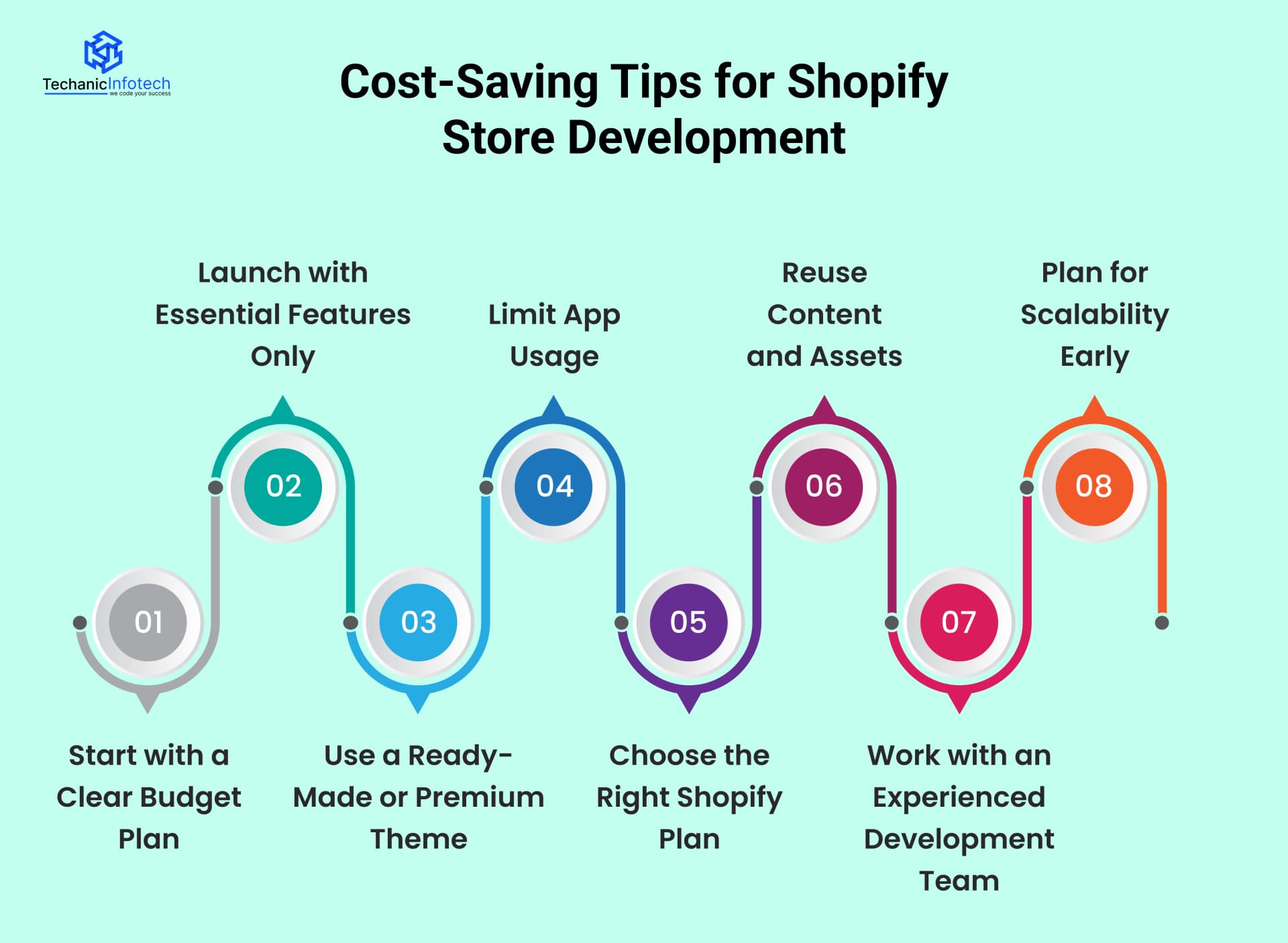
Before development begins, define your goals and decide how much you’re willing to spend. A clear Shopify store pricing structure helps avoid last-minute changes that often increase costs. Focus on what your store needs now, not everything you may need in the future.
Adding too many features at once increases the cost to create a Shopify store. Start with core features like product listings, checkout, and payments. Advanced features can be added later once your store starts generating revenue.
Custom UI/UX design looks great but can raise the Shopify website development cost. Ready-made or premium themes offer professional designs at a lower price and are easy to customize.
While apps add functionality, too many apps increase both development and monthly costs. Choose only essential apps to reduce Shopify app integration cost and keep your store fast.
Selecting the right Shopify plan helps manage costs effectively. Start with a basic plan and upgrade only when your business grows.
If you already have product images, descriptions, or branding materials, reuse them. This reduces content creation costs and speeds up development.
An experienced team may cost more initially but helps avoid errors, rework, and delays. This often lowers the overall cost for Shopify development services in the long run.
Designing your store with future growth in mind avoids expensive changes later. This helps keep the Shopify store pricing breakdown under control.
Using these tips, businesses can build a reliable Shopify store while keeping costs manageable and predictable.
Techanic Infotech helps businesses create scalable and cost-effective Shopify stores that are built for growth. From planning and design to development and launch, the team focuses on keeping the Shopify store development cost under control without compromising quality.
If you need a simple store or a feature-rich solution, Techanic Infotech follows a clear process to manage the expense and meet timelines.
With experience in custom features, app integrations, and performance optimization, our eCommerce website development services help businesses plan a realistic store development budget and deliver a smooth, conversion-focused shopping experience.
Understanding the Shopify store development cost in 2026 helps businesses plan smarter and avoid unexpected expenses.
From store size and features to timelines and hidden factors, every decision affects the final budget. While the cost to develop a Shopify store can vary, careful planning and the right development approach make a big difference.
By focusing on essential features, using the right themes, and controlling app usage, businesses can manage their Shopify store development budget effectively. With a clear strategy and an experienced development partner, Shopify remains a reliable and flexible platform for building a successful eCommerce store in 2026.
The Shopify store development cost in 2026 typically ranges from $8,000 to $70,000, depending on store size, design, features, and integrations.
A basic Shopify store can be built in 3–4 weeks, while more advanced or enterprise-level stores may take 2–3 months.
Costs increase due to custom design, advanced features, third-party apps, data migration, performance optimization, and ongoing maintenance.
Yes. Ongoing costs include Shopify subscription plans, paid apps, transaction fees, maintenance, and updates.
Yes. Shopify is easy to use, scalable, and cost-effective, making it a good choice for small and growing businesses in 2026.


Abhishek Jangid is the CEO of Techanic Infotech, with extensive experience in mobile app and web development. He specializes in helping businesses turn innovative ideas into scalable digital solutions through strategic planning and modern technology.