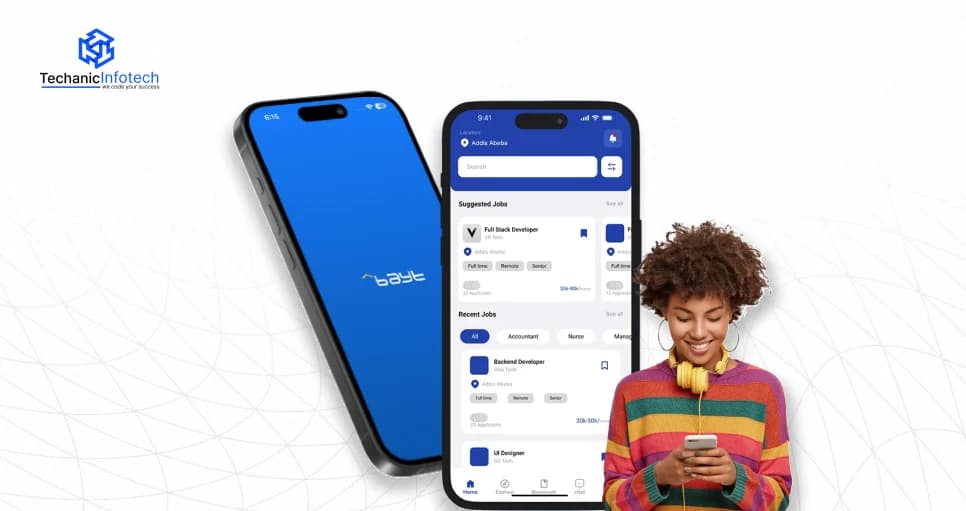
Bayt is one of the most popular job platforms in the Middle East, connecting millions of job seekers and employers every month. With the demand for digital hiring solutions growing rapidly, many startups and businesses now want to build similar platforms. If you’re wondering how much it costs to develop an app like Bayt, this guide will give you a clear, practical breakdown.
We’ll explore the cost to create a job portal like Bayt, the features you need, how the development process works, and what influences the overall budget. Whether you want a basic job board or a fully advanced recruitment platform, understanding the real app development cost will help you plan your investment wisely.
Let's break it down in simple language.
Bayt is one of the leading job platforms in the Middle East, helping millions of job seekers connect with employers across various industries.
It works as a digital marketplace where companies can post job openings, and candidates can apply directly through the website or mobile app. Bayt simplifies the hiring process by giving both sides, recruiters and job seekers, a smooth and organized way to manage applications, shortlist candidates, and track opportunities.
For job seekers, Bayt provides tools to upload resumes, create professional profiles, set job alerts, explore company pages, and track applications.
Users can filter jobs based on location, salary, experience level, and job type. The platform also includes helpful resources like CV writing services, skill assessments, and career advice.
For employers, Bayt offers advanced hiring tools. Companies can post job listings, receive applications, search through a large CV database, and use filters to find the right candidates quickly. Recruiters can also manage their hiring pipeline, schedule interviews, and communicate with applicants, all within the platform.
Job seekers sign up using email or social accounts and create a detailed professional profile. Employers register their companies and verify business details.
Employers post open positions with job descriptions, salary ranges, and requirements. Meanwhile, job seekers browse through thousands of listings and use advanced filters to find the right fit.
Candidates apply to jobs by submitting their resume and profile. Employers then review applications, shortlist candidates, and check their qualifications.
Bayt provides built-in messaging tools so recruiters can communicate with applicants directly. They can also schedule interviews or request additional information.
Once a candidate is selected, the hiring process continues outside the platform, but both sides can return to Bayt for tracking, updates, or future opportunities.
In simple terms, Bayt acts like a bridge between employers and job seekers, offering a fast, organized, and effective way for both sides to interact and complete the hiring process.
If you're planning to build a recruitment platform similar to Bayt, one of the first questions you’ll have is the cost to develop an app like Bayt. The truth is, the budget depends on features, complexity, and the development team you choose. On average, the job portal development cost ranges between $15,000 to $100,000.
A basic job portal app with essential features like job listings, user profiles, resume uploads, applications, and admin panel usually costs around $15,000–$30,000. This is suitable for startups or early-stage businesses wanting a simple, functional platform.
A mid-level Bayt-like job platform with advanced search filters, recruiter dashboards, real-time notifications, multi-language support, and candidate screening tools typically costs $30,000–$60,000. Most businesses fall into this range because it provides a good balance of features, usability, and scalability.
For companies wanting a fully advanced recruitment platform, the cost to create a job portal like Bayt goes up to $80,000–$100,000+. This includes AI-powered job matching, automated screening, resume parsing, subscription systems, in-app chat, company branding pages, applicant tracking systems (ATS), and enterprise-grade security.
The location and expertise of your development team also affect your final quote.
US/UK teams: More expensive
India or Eastern Europe: High-quality development at affordable rates
Your final Bayt-like app development cost will depend on your app’s complexity, number of features, design quality, and long-term scalability.
In simple words, your budget is shaped by what kind of app you want to build, a basic job board, a mid-level job portal, or a fully advanced Bayt clone platform.
Building a job platform involves multiple components, from features to design, backend systems, and security. All these elements influence the overall cost to develop an app like Bayt. Below are the top factors that determine the pricing of a Bayt-style job portal.
The biggest factor affecting the cost to create an app like Bayt is the complexity of the application.
A simple job portal with basic job listings, user profiles, and resume uploads will naturally cost less. However, as you add advanced features like AI-based job recommendations, applicant tracking systems (ATS), in-app chat, resume parsing, multi-role dashboards, and recruiter screening tools, the price increases.
A basic app may cost around $15,000–$30,000, while a mid-level platform ranges from $30,000–$60,000. A fully advanced system, similar to Bayt, can reach $80,000–$100,000+. The more complex the workflows, the higher the Bayt clone app development cost becomes.
|
Complexity Level |
Feature Depth |
Cost Influence |
|
Basic |
Essential features only |
Low |
|
Medium |
More job portal tools |
Moderate |
|
Advanced |
Full Bayt-style system |
High |
The cost to build an app like Bayt increases as the number of job portal features grows. A simple job posting and application system is affordable, but modern job portals need much more. Features like applicant tracking, skill tests, resume builders, job alerts, company pages, subscription plans, chat options, and AI-matching systems require extra development time.
Also, admin panel features (analytics, job moderation, user management) add to the cost to create a job portal like Bayt. Each feature requires design, development, testing, and integration.
|
Feature Type |
Examples |
Cost Influence |
|
Basic |
Job listings, profiles |
Low |
|
Medium |
Filters, company pages |
Medium |
|
Advanced |
AI-matching, ATS |
High |
A clean, smooth, and professional job portal UI/UX is essential for job apps. Higher-quality designs, custom animations, color themes, icons, accessibility features, add to the cost to create a job platform app like Bayt.
While basic designs cost less, premium layouts with interactive dashboards, recruiter panels, and mobile-first experiences increase the design hours and overall budget. If you want to build a polished platform that attracts both job seekers and employers, you must invest more in UI/UX.
|
Design Level |
Description |
Cost Influence |
|
Basic |
Simple screens |
Low |
|
Advanced |
Polished, animated UI |
High |
The backend is the “engine” of a Bayt-like job portal. It handles all data flow between users, recruiters, and the admin panel. A strong backend ensures your app loads fast, processes data correctly, and scales as your platform grows. Because of this, backend development is one of the biggest contributors to the cost to develop an app similar to Bayt.
A job platform requires multiple core backend components such as:
Secure database systems to store resumes, job posts, company profiles, messages, and user data.
Role-based dashboards for admins, job seekers, and employers.
Resume parsing and AI-powered matching for smarter job suggestions.
ATS workflows that manage screening, shortlisting, and interview scheduling.
Real-time services like notifications, messaging, and job alerts.
Cloud infrastructure for storage, scalability, and uptime.
If your app needs advanced features like multi-level ATS, AI suggestions, video interviews, or automated resume filtering, the backend becomes more complex. More complexity means more development time which increases the mobile app development cost.
|
Backend Type |
Complexity Level |
Cost Influence |
|
Simple |
Basic listings + CRUD |
Low |
|
Medium |
Multi-role dashboards + notifications |
Moderate |
|
Advanced |
ATS + automation + AI matching |
High |
Your choice of platform significantly affects the cost to build an app like Bayt. If you decide to build only for Android or only for iOS, your development time and budget reduce considerably. However, if your target market is large and diverse, like Bayt’s, then launching on both platforms is important for reaching more users.
Lowest cost
Larger user base in Asia, Middle East, and Africa
Ideal for startups who want to test the market first
Higher mobile app development and testing cost due to stricter guidelines
Best for premium markets such as UAE, Qatar, Kuwait, Europe, and USA
Building for both platforms immediately doubles the development effort:
Two separate codebases (if built natively)
Two sets of UI adjustments
Two sets of QA and testing
More time and higher maintenance
This directly increases the cost to make an app like Bayt but also gives you the maximum reach, better engagement, and stronger competition with existing platforms.
Cross-platform frameworks like Flutter or React Native can reduce the cost, but native builds offer better performance.
|
Platforms |
Pros |
Cost Influence |
|
One (Android or iOS) |
Cheaper, faster launch |
Low |
|
Both Platforms |
Wider reach, Bayt-level visibility |
High |
Third-party integrations significantly impact the cost to create an app like Bayt because modern job portals rely heavily on external tools to enhance functionality and user experience. These integrations save development time but increase overall expenses depending on the APIs you choose.
A Bayt-like platform may require:
Payment gateways (Stripe, PayPal, Payfort) for subscriptions or employer plans.
Resume parsing APIs (Sovren, RChilli) to analyze and extract data from CVs.
Email and SMS services (SendGrid, Twilio) for notifications.
Analytics tools (Google Analytics, Mixpanel) for user tracking.
Cloud storage (AWS, Google Cloud) for storing resumes and job media files.
Maps or location services for job-location accuracy.
Advanced integrations like AI-based resume filtering or video-interview tools drastically increase the Bayt clone app development cost. Each integration comes with subscription fees, setup time, and customization requirements.
|
Integration Type |
Examples |
Cost Influence |
|
Basic |
SMS, Email APIs |
Low |
|
Moderate |
Payment gateway, analytics |
Medium |
|
Advanced |
Resume parsing, AI, video interview tools |
High |
Your choice of development team heavily influences the final cost to develop a job portal like Bayt. Development charges differ from country to country, and so does the expertise and quality of service.
Hiring a team from regions like the USA, Canada, UK, or Australia will dramatically increase your budget, while experienced companies in India or Eastern Europe deliver high-quality work at much more affordable rates.
Hourly rate comparison:
USA/UK developers: $80–$150+ per hour
India/Eastern Europe developers: $20–$40 per hour
If you want to reduce the cost to develop an app similar to Bayt without compromising quality, choosing skilled offshore teams is the best option. Moreover, experienced companies with job portal expertise can deliver faster, cleaner, and more scalable code.
|
Region |
Typical Hourly Rate |
Cost Influence |
|
USA / Europe |
High ($80–$150/hr) |
High |
|
India / Eastern Europe |
Affordable ($20–$40/hr) |
Low–Medium |
The technology stack (frontend, backend, database, and cloud services) plays a huge role in the cost to develop a job platform app like Bayt.
High-quality tech stacks ensure better speed, security, scalability, and user experience, but they can also increase the development cost.
React Native / Flutter for cross-platform apps (cost-effective)
Swift (iOS)
Kotlin/Java (Android)
Node.js, Python (Django), Ruby on Rails – fast, scalable, and efficient
PHP (Laravel) – budget-friendly
PostgreSQL, MongoDB, Firebase
AWS, Google Cloud, Azure
Choosing modern technologies makes your platform stable and competitive, but also increases the job portal development cost due to higher development effort. On the other hand, outdated tech reduces cost but affects long-term performance.
|
Stack Type |
Examples |
Cost Influence |
|
Basic |
PHP + Shared Hosting |
Low |
|
Standard |
Node.js + MySQL + Cloud |
Medium |
|
Advanced |
Node.js/Python + AWS + AI + Microservices |
High |
Security is one of the most important cost factors when calculating the cost to develop an app like Bayt, because the best job portals handle highly sensitive data.
This includes resumes, contact details, user profiles, employer information, salary ranges, and confidential recruitment activities. To protect all of this, your app must follow strict security standards and compliance policies.
A Bayt-like platform needs:
End-to-end encryption for user and employer data
GDPR compliance for international users
Secure login & authentication (2FA, OTP, biometrics)
Role-based access control (RBAC)
Data backup & recovery systems
Anti-bot and anti-spam systems
Secure cloud hosting (AWS, GCP, Azure)
Implementing these safety layers increases development hours and therefore increases the cost to make an app like Bayt. However, without strong security, your app is vulnerable to hacks, data breaches, and legal issues which can be far more costly in the long run.
|
Security Level |
Features Included |
Cost Influence |
|
Basic |
SSL, secure login |
Low |
|
Moderate |
Role-based access, encrypted data |
Medium |
|
Advanced |
GDPR, 2FA, anti-bot, full encryption |
High |
After your job portal goes live, ongoing maintenance is essential and it plays a major role in the long-term Bayt-like app development cost.
Even the best apps require continuous updates to improve performance, fix bugs, optimize speed, enhance security, and keep up with new Android/iOS versions.
Maintenance includes:
Bug fixes & performance optimization
App updates for new OS versions
Security patches & monitoring
Scaling servers as user activity grows
Adding new features based on user feedback
Regular UI/UX improvements
Database optimization
Managing cloud cost (AWS/GCP/Azure)
Typically, annual maintenance costs are around 15–20% of the original development cost. For example, if the cost to build a job portal like Bayt is $40,000, yearly maintenance may cost around $6,000–$8,000.
Post-launch costs ensure your platform stays competitive, secure, and stable which is crucial for any long-term job portal app like Bayt.
|
Maintenance Type |
Description |
Cost Influence |
|
Basic |
Occasional fixes & updates |
Low |
|
Regular |
Monthly updates, security checks |
Medium |
|
Advanced |
Feature upgrades, scaling, full monitoring |
High |
Job portals like Bayt follow multiple revenue streams to generate a consistent and scalable income. Because these platforms connect employers and job seekers, they have several monetization opportunities that contribute to the overall business profitability.
Understanding these models will also help you plan the monetization strategy if you want to reduce your Bayt-like app development cost and grow sustainably.
Employers pay to post job openings. Free listings exist, but premium job posts get higher visibility, featured placement, and priority ranking on search results. This is one of the strongest and most stable revenue streams.
Companies purchase monthly or yearly subscription packages to unlock advanced tools such as:
Access to the CV database
Unlimited job posting
Advanced filters
Applicant tracking features
Bulk messaging to candidates
These subscription plans significantly boost revenue.
Platforms like Bayt allow recruiters to browse candidate profiles and resumes. Access to the CV database is a paid feature, generating recurring income.
Job seekers can purchase:
Featured profile placement
Resume writing services
Profile boosting
Skill assessments
These micro-transactions are small but frequent, adding predictable income.
Job portals earn money from banner ads, sponsored job listings, and promoted employer profiles. Companies pay extra to appear on top of search results or homepage placements.
Large enterprises purchase custom hiring packages, including ATS tools, analytics dashboards, and branded company pages. These enterprise solutions offer high-profit margins.
Some platforms also act as recruitment partners, charging commission for successful placements or offering managed hiring services.
Job portals like Bayt succeed because they diversify their revenue. When building a similar platform, choosing the right monetization model helps balance your cost to develop a job portal like Bayt and ensures long-term financial growth.
Building a powerful, scalable, and user-friendly job platform requires the right technology partner. As a trusted job portal development company, Techanic Infotech specializes in creating feature-rich recruitment platforms similar to Bayt.
Our team handles everything, from UI/UX design and backend architecture to AI-based job matching, ATS integrations, and secure cloud deployment.
We also focus on performance, data security, and smooth user experience, ensuring your platform stands out in a competitive market. Whether you're a startup or an enterprise, we build custom solutions that fit your budget and long-term goals. With Techanic Infotech, you get a complete, end-to-end development experience that turns your job portal idea into a successful digital product.
Creating a job portal like Bayt is a smart business opportunity in today’s digital hiring world. Whether you want a basic platform or a feature-rich Bayt clone, your overall budget depends on factors like features, design quality, backend complexity, and developer location.
In most cases, the cost to develop an app like Bayt ranges from $15,000 to $100,000, depending on how advanced you want your platform to be. With the right development strategy and monetization model, your job portal can attract both job seekers and employers, offering long-term profitability.
And with a reliable tech partner like Techanic Infotech, building a scalable, secure, and high-performing recruitment app becomes fast, simple, and cost-effective.
The cost generally ranges between $15,000–$100,000, depending on features, platforms, and complexity.
A basic version may take 2–3 months, while a full-featured job portal can take 6–8 months.
Job listings, filters, recruiter dashboards, resume uploads, ATS workflows, messaging, and admin panel tools.
Yes. Using cross-platform development, prioritizing MVP features, and hiring offshore developers lowers overall costs.
Yes. They earn through paid listings, employer subscriptions, ads, premium job seeker services, and enterprise hiring solutions.


Bharat Sharma is the CTO of Techanic Infotech, bringing deep technical expertise in software architecture, mobile app development, and scalable system design. He leads the engineering team with a strong focus on innovation, performance, and security.